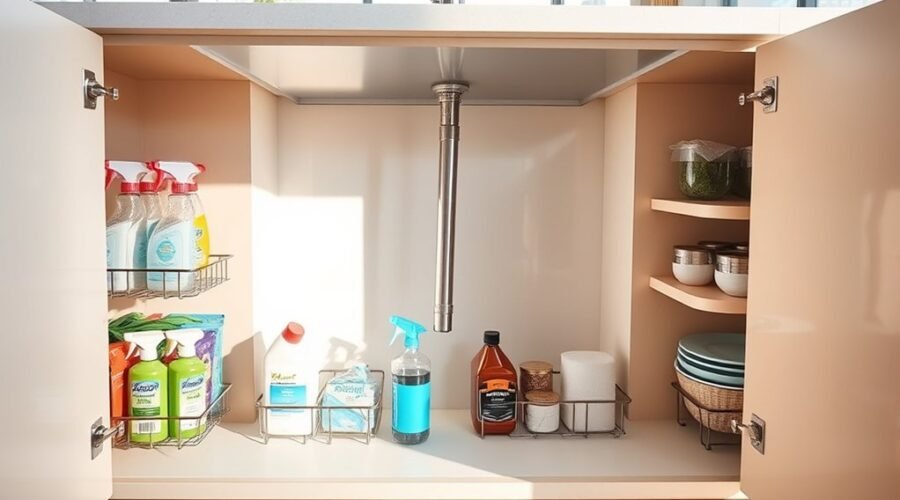
A corner kitchen sink often creates wasted space and constant clutter, but it can be organized with a few smart choices. A waterproof liner helps protect the cabinet, while only the most used supplies stay inside. Compact organizers can fit around pipes, and door-mounted storage adds more room without crowding the area. The real challenge is keeping it all accessible, especially when the layout works against every extra inch.
Protect the Corner Sink Cabinet
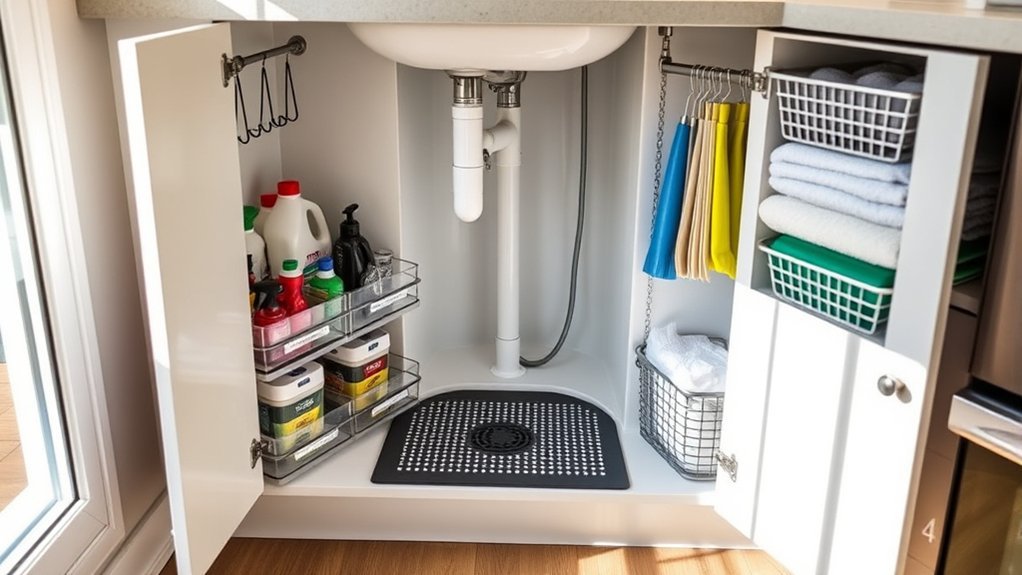
A waterproof liner or mat can help protect the corner sink cabinet base from water damage and stains while keeping the space cleaner and more durable.
To protect the corner sink cabinet, a flexible silicone waterproof liner with a small lip works well because it can be cut around plumbing fixtures and still create a smooth, stable surface for organizing the space. Liners without raised patterns are preferable, since they let organizers roll or slide without snagging.
Cost-effective waterproof shelf liners also offer a practical option when custom sizing is needed for an awkward cabinet shape. The goal is simple: shield the cabinet base from leaks, splashes, and grime without adding friction.
Regular checks for moisture help preserve a dry interior and reduce the chance of mold or mildew. With a fitted liner in place, the cabinet stays cleaner, lasts longer, and supports a more independent, efficient kitchen system.
Sort What Stays Under the Sink
With the cabinet base protected, the next step is deciding what belongs under the sink. A disciplined sort helps the sink cabinet work harder and frees valuable space for daily use. Keep only the cleaning supplies reached often, and remove expired products, duplicates, and empty containers. This restraint supports a calmer routine and makes each item easier to find.
Practical organizing tips can guide the reset:
- Group essentials into clear caddies for fast identification.
- Place everyday items at the front, with bulk or backup items behind them.
- Reserve the back or upper zones for larger pieces used less often.
Each category should have a fixed place so nothing drifts into clutter again. When the contents are reduced to necessities, access improves and the cabinet feels lighter, more functional, and easier to maintain.
The result is a sharper system, not a crowded storage pocket, and that brings a small but real sense of liberation.
Fit Organizers Around the Plumbing
Adjustable two-tier organizers can be set to different heights, making it easier to work around pipes while using the cabinet’s vertical space.
A plumbing-friendly shelf layout should leave room for traps and valves without wasting open gaps.
Modular bins, pull-out trays, or small turntables can then fill the remaining space and keep supplies accessible.
Adjustable Two-Tier Organizers
Two-tier organizers that adjust around plumbing make better use of the awkward space beneath a corner kitchen sink by stacking storage vertically without blocking access. For an organization project, adjustable two-tier organizers give a clear path to order and freedom from clutter. They fit around pipes, keep cleaning products visible, and support up to 50 lbs.
- Use the upper tier for sponges and brushes.
- Place spray bottles and solutions on the lower tier.
- Choose front or back opening for easier reach.
Assembly is usually simple, so setup does not become another burden. The durable frame helps the system hold daily-use items without sagging.
Plumbing-Friendly Shelf Layouts
Plumbing-friendly shelf layouts make the most of a corner sink cabinet by working around pipes instead of fighting them.
Modular under-sink storage, such as HÅLLBAR bins, can be arranged to fit plumbing and reclaim wasted space.
Two-tier organizers with adjustable height keep smaller items above and larger bottles below, preserving clear access.
Pull-out trays slide forward so cleaning supplies at the back remain reachable without disrupting the setup.
Specialty organizers for awkward spaces add stability and reduce tipping when items are removed.
Labeling containers keeps organizing simple and helps each bottle return to its place.
The result is a cabinet that feels open, controlled, and easier to maintain, giving the user more freedom and less friction during daily cleaning.
Store Cleaning Supplies by Frequency
Frequently used cleaning supplies, such as dish soap and sponges, should be placed at the front of the cabinet so they are easy to reach. This simple sink storage approach reduces wasted motion and keeps daily routines efficient.
To organize under the kitchen sink with more freedom, group items by use and store them with intent.
- Keep dish soap, sponges, and cleaning sprays in front for fast access.
- Place seasonal or specialty products toward the back or on higher shelves.
- Use clear containers, labels, caddies, or baskets to separate supplies and make every item visible.
A steady purge of expired or unused products prevents clutter from taking over the space.
When each item has a logical place, under-sink storage works harder with less effort. The result is a cleaner cabinet, faster cleanup, and more room for only what is truly needed.
Use the Doors for Extra Storage
The cabinet doors can add useful storage with door-mounted hooks for lightweight tools and spray bottles.
Slim door bins offer a simple way to keep small items organized and easy to reach. These options help use vertical space without crowding the cabinet interior.
Door-Mounted Hooks
Door-mounted hooks make use of the cabinet doors for extra storage, keeping lightweight items like dish towels, sponges, and spray bottles within easy reach. They help reclaim under-sink space and support better organization without crowding shelves or floors.
For a corner sink, that means more freedom to store larger items below while keeping cleaning tools visible and ready.
- Install adhesive or screw-in hooks on the inside of each door.
- Group similar items together for faster access and less clutter.
- Use small caddies or containers to keep loose items secure.
Placed well, door-mounted hooks turn wasted space into a practical system. They keep essentials accessible, streamline cleaning routines, and reduce the friction of searching for supplies.
Slim Door Bins
Slim door bins add storage to the inside of cabinet doors, using vertical space that often goes unused in a corner sink setup.
These slim door bins help organize small cleaning supplies, sponges, and trash bags without crowding the main cabinet. Mounted with adhesive backing or screws, they fit many cabinet doors and materials.
Transparent styles make contents easy to see, so items can be grabbed fast and returned without search or delay. This setup helps maximize vertical space while keeping the corner area open and manageable.
Keep the Cabinet Easy to Maintain
Simplifying upkeep starts with protecting the cabinet interior with a waterproof mat or liner to catch spills and stains. In a corner sink cabinet, that simple barrier keeps the sink area cleaner, even around the garbage disposal and plumbing.
A bottom pull-out drawer helps supplies slide out without digging, while stackable drawers keep vertical space open and surfaces easy to wipe.
- Remove expired or rarely used items often.
- Store cleaners in clear, labeled containers for instant identification.
- Use modular trays so items return to place fast.
This approach reduces clutter and gives each tool a fixed home. Stackable drawers and shelves make the cabinet feel less trapped, while pull-out organizers support quick access with less bending and reaching.
Maintenance stays light when every item is visible, portable, and easy to reset. The result is a freer, calmer space that supports daily cleaning instead of resisting it.
Frequently Asked Questions
What to Do With the Space Behind a Corner Kitchen Sink?
He would use the space behind a corner sink for hidden storage solutions, choosing stackable bins or a turntable. With plumbing access considerations, he would solve corner sink challenges while maximizing awkward areas efficiently.
What Are the Drawbacks of a Corner Kitchen Sink?
The drawback is plain: a corner kitchen sink can be a millstone. Plumbing accessibility suffers, cleaning challenges multiply, limited storage persists, and maintenance issues increase, leaving freedom reduced and daily use awkward.
How to Organize Space Under a Kitchen Sink?
Use storage solutions that respect plumbing access: modular bins, two-tier organizers, and clear containers. Sort cleaning products by purpose, add pull-out trays or lazy Susans, and install wall-mounted shelves for space saving ideas.
What Is a Good Organiser for Under the Kitchen Sink?
A two-tier adjustable organizer suits most sinks, even if plumbing seems troublesome. It enables sink storage solutions with pull out bins, tension rods, and stackable organizers, freeing cluttered corners and restoring easy access to essentials.
Conclusion
In a corner kitchen sink cabinet, order begins with protection and purpose. A waterproof liner guards against grime, while careful sorting keeps only daily essentials within reach. Adjustable organizers and clear caddies work around awkward plumbing, turning wasted space into useful storage. Door-mounted hooks and bins add another layer of access. With simple, steady upkeep, the cabinet stays streamlined, sanitary, and sensible—proof that even the most awkward angle can become an asset.