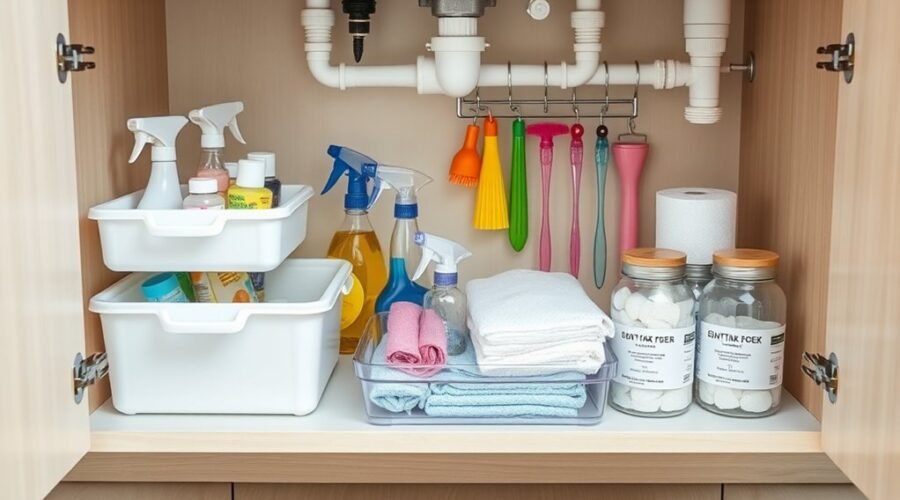
Organizing cleaning supplies under the kitchen sink begins with clearing out the cabinet and sorting each item by use and condition. From there, the right bins and drawers can turn a cramped space into a workable system, even with pipes in the way. A few simple choices can make daily essentials easier to reach and clutter much easier to control. What works best depends on the cabinet layout.
Empty the Under-Sink Cabinet First
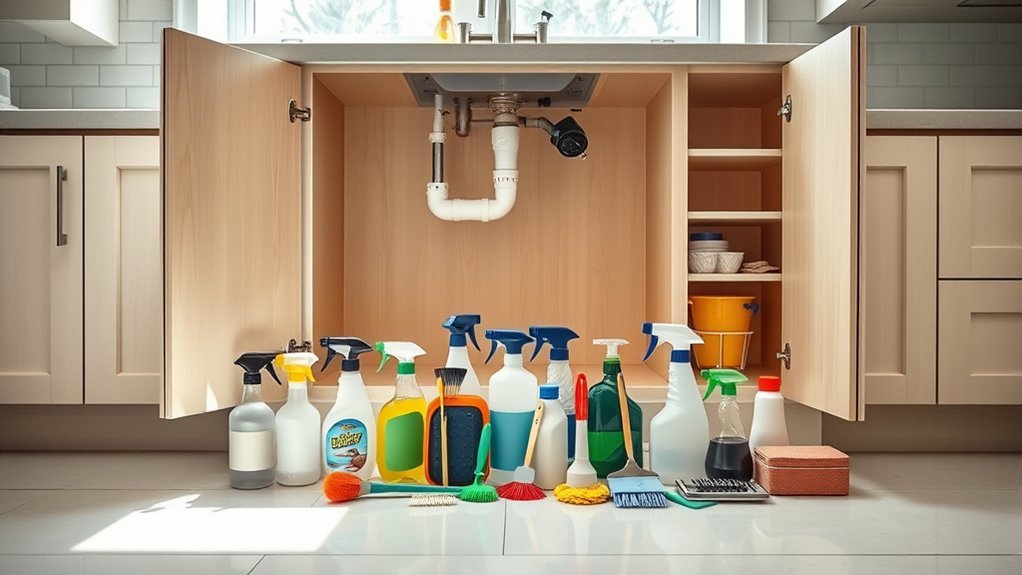
Start by removing everything from under the sink so the space is fully visible and easier to assess. This first pass creates room for honest decluttering and reveals what is actually being kept there.
Each item should be checked for expiration, damage, or simple irrelevance. Outdated cleaners, empty bottles, and forgotten duplicates can be set aside for disposal, leaving only useful cleaning supplies.
Once the cabinet is empty, the interior should be wiped down to remove spills, residue, and dust that may have built up over time. A clean surface supports better storage solutions and makes later work more efficient.
Clear access also helps identify whether the existing layout limits freedom of movement or wastes space. At this stage, the goal is not perfect arrangement but removal, visibility, and readiness.
These organizing tips prepare the cabinet for the next steps without clutter or confusion.
Sort Cleaning Supplies by Category
Cleaning supplies are best grouped by type, with similar items such as dish soap, all-purpose cleaners, and trash bags kept together.
Clear bins or labeled containers help separate each category and make items easy to find.
Daily essentials should stay at the front, while less-used products can be placed farther back.
Group Like Items
A well-sorted supply cabinet makes routine cleaning easier by grouping similar items together. Cleaning products can be arranged by function, with multi-surface sprays, dishwashing supplies, and trash bags kept in separate sections.
This organizing method creates a simple storage system that reduces searching and helps each item serve its purpose quickly. Everyday used items, such as sponges and cloths, belong near the front or in small door bins for fast reach, while backup supplies can stay farther back.
Less-used items should not crowd the space. Regular checks help remove expired or duplicate products and keep only what is needed.
Assign Clear Bins
Clear bins make it easy to sort cleaning supplies by category and see what is available at a glance. Under the sink, each bin can hold a clear group of cleaning supplies, such as all-purpose cleaners, dishwashing supplies, or trash bags.
Labels keep the system simple and support fast retrieval without wasted effort. These organization ideas also help maintain order, since similar items stay together and clutter stays contained.
Stackable clear bins can use vertical space efficiently while preserving visibility. Regular checks remove expired or unused products, so only useful items remain.
This approach gives the area structure, reduces frustration, and keeps routine cleaning more manageable.
Place Daily Essentials Front
With bins already grouped by category, the next step is to keep daily-use items closest at hand. In the sink cabinet, dish soap, multi-surface cleaner, and other cleaning basics should sit at the front, where they are easy to grab on a daily basis.
Similar items, such as sponges, brushes, and trash bags, can stay together so each cleaning task moves faster with less searching. Clear or labeled bins help make essentials visible at a glance.
Less-used products, including seasonal cleaners, belong toward the back to preserve space and reduce clutter. Regular checks keep the layout useful, allowing the cabinet to adapt as habits change and making home care feel lighter, freer, and more intentional.
Choose Under-Sink Organizers That Fit Around Pipes
Choosing under-sink organizers starts with measuring the cabinet carefully so the design works around pipes and other protrusions. The goal is simple: under-sink organizers should fit around plumbing fixtures without wasting space or blocking access.
Smart choices create order without forcing a cramped setup.
- Use two-tier organizers to stack supplies vertically, keeping larger bottles below and smaller items above.
- Select pull-out drawers that fit around plumbing fixtures, so items slide out instead of requiring deep reaching.
- Choose adjustable organizers that can be sized to the cabinet’s exact dimensions.
- Confirm the frame is sturdy enough to support heavy bottles and tools, with some models holding up to 50 lbs.
This approach frees the cabinet from clutter and makes the most of awkward space.
With the right fit, the area under the sink becomes a practical, independent storage zone rather than a catchall.
Keep Daily Cleaning Items Within Reach
Frequently used cleaning items belong at the front of the under-sink area, where dish soap, sponges, and multi-surface cleaners can be reached quickly without digging through clutter.
This simple setup supports cleaning and organizing by keeping daily tools visible and easy to return after use. Accessibility improves when the most common products stay in the same place, reducing friction during routine chores and giving the user more control over the space.
Pull-out drawers can make back-row items easier to access, but they should serve the goal of quick reach, not add complexity.
Clear bins and label containers help separate trash bags, dishwasher pods, and backups so each item has a defined home. With this structure, the cabinet feels orderly and ready, not restrictive.
A few deliberate choices protect time, limit confusion, and keep essential supplies within immediate reach.
Use Vertical Space to Store More
Stackable bins and tiered storage can turn unused height into organized space for cleaning supplies.
Vertical dividers help keep bottles, cloths, and smaller items separated and easy to reach.
With these methods, cabinet space can hold more without becoming cluttered.
Stackable Bins
A set of stackable bins can make far better use of the space under the sink by extending storage upward instead of spreading items across the cabinet floor.
These stackable bins help organize cleaning supplies into clear categories, giving each product a defined place. Practical storage solutions like these reduce clutter and free the cabinet from chaotic piles.
- Maximize vertical capacity without crowding the base.
- Keep similar cleaning supplies together for faster access.
- Choose adjustable bins to fit plumbing and cabinet size.
- Use clear bins to see contents at a glance.
With a simple stackable system, the under-sink area can hold more while remaining orderly.
That makes daily cleaning easier and supports a more independent, uncluttered home.
Tiered Storage
Tiered storage builds on the space-saving benefits of stackable bins by adding a second level of organization under the sink.
It uses vertical space to hold more cleaning supplies without crowding the cabinet floor. Two-tier organizers can fit around plumbing, with the upper shelf keeping sponges and cloths within easy reach and the lower level storing larger spray bottles.
Sliding drawers and stackable bins support quick access, so items at the back are no longer trapped. A Lazy Susan can be added to improve visibility and rotation.
These vertical storage options can support up to 50 lbs. of cleaning products, making tiered storage a practical way to simplify access and free the under-sink area from clutter.
Vertical Dividers
Vertical dividers turn cabinet height into usable storage by creating designated sections for cleaning supplies. This structure supports organization and keeps each item visible, reachable, and free from clutter.
- Separate sprays, cloths, and refills into clear vertical dividers.
- Add stackable bins or sliding drawers for better accessibility at different heights.
- Install tension rods to hang cleaning cloths or spray bottles and free shelf space.
- Review the layout regularly to keep frequently used cleaning supplies easy to retrieve.
Clear vertical storage solutions reduce wasted space and help maintain a calm, efficient cabinet.
With a simple system in place, the area under the sink works harder without trapping supplies in chaos.
Maintain a Clutter-Free Under-Sink Cabinet
The under-sink cabinet can stay orderly when expired or unused cleaning supplies are regularly removed, leaving only what is needed and making items easier to reach.
To organize the space, clear bins can group similar products and make every item visible at a glance. Frequent-use cleaners belong at the front, while backups and specialty items can sit farther back. This simple layout reduces searching and supports a calmer routine.
Vertical storage solutions, such as pull-out drawers and stackable bins, help maximize limited cabinet height without adding clutter. A steady declutter habit protects the system and keeps the area from becoming crowded again.
A brief maintenance routine every few months allows a quick check of contents, dates, and placement. With consistent attention, the cabinet remains practical, accessible, and free from unnecessary pressure.
Frequently Asked Questions
What Is the Best Way to Organize Everything Under the Sink?
The best approach is grouping cleaning product categories into pull-out bins, then adding space saving techniques, labeling systems, and accessibility solutions. A detached organizer would keep frequently used items frontmost and declutter regularly for lasting order.
What Is the Best Organiser for Under the Kitchen Sink?
A well-chosen under-sink organizer is a lighthouse in cluttered waters. The best options combine cleaning caddies, drawer dividers, stackable bins, and shelf risers, giving supplies clear access, order, and freedom from cramped chaos.
What Not to Store Under the Kitchen Sink?
They should not store food, medications, papers, rust-prone tools, or rarely used items under the sink. For cleaning product safety, moisture damage prevention, easy access solutions, and eco friendly alternatives, keep only essentials nearby.
What Should Be Kept Under the Kitchen Sink?
Despite cramped space, it should hold cleaning product essentials: dish soap, dishwasher pods, sprays, sponges, and trash bags. Space saving solutions like clear bins help. Eco friendly options fit too, with maintenance tips keeping it orderly.
Conclusion
A well-organized under-sink cabinet can make everyday cleaning feel easier and faster. In many homes, the space under the kitchen sink measures only about 18 to 24 inches wide, yet it often holds a surprising amount of clutter. By emptying the cabinet, sorting supplies, choosing the right organizers, and using vertical storage, that small area can work efficiently. With regular decluttering, the space stays tidy, accessible, and ready for routine cleaning tasks.