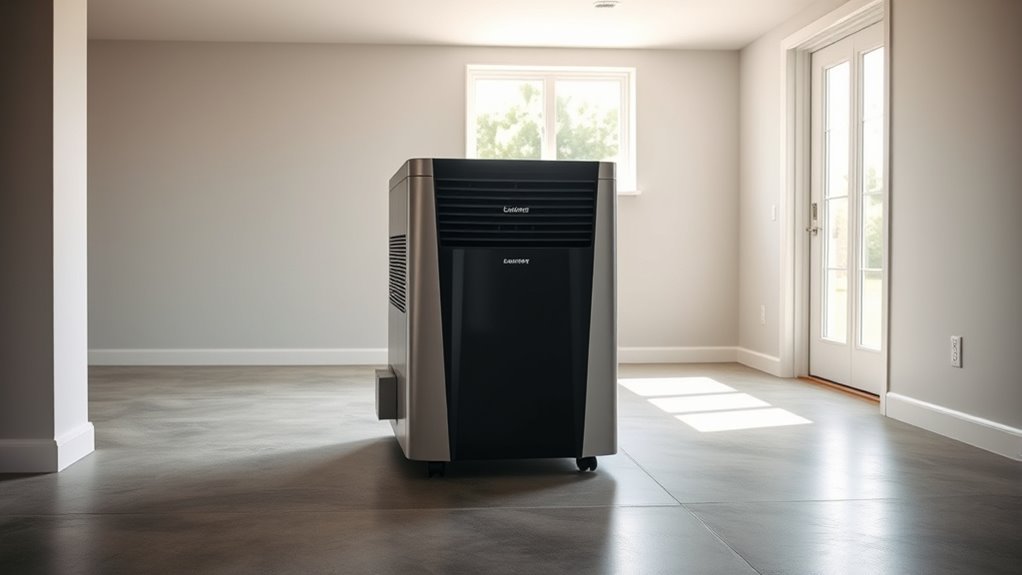
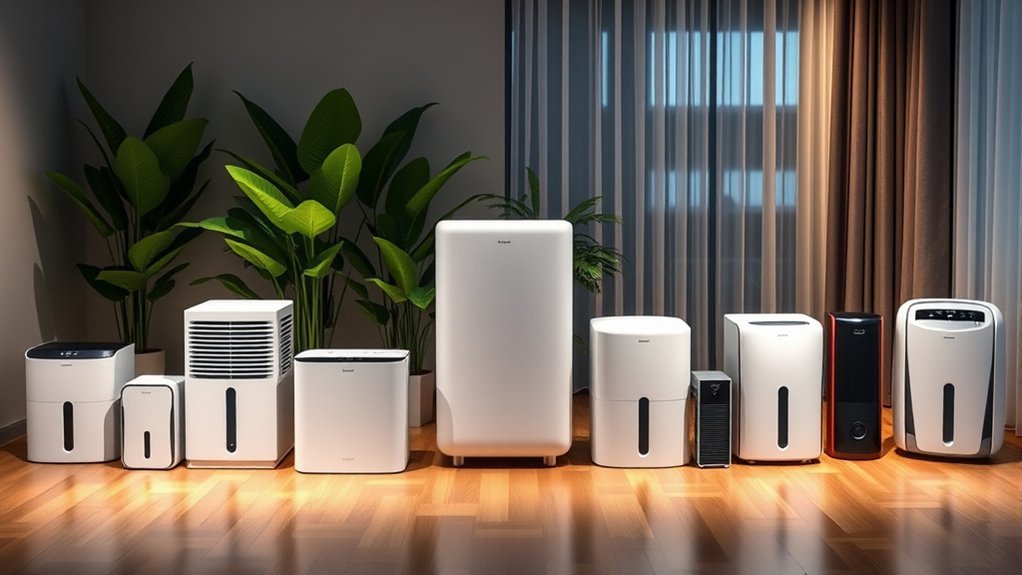
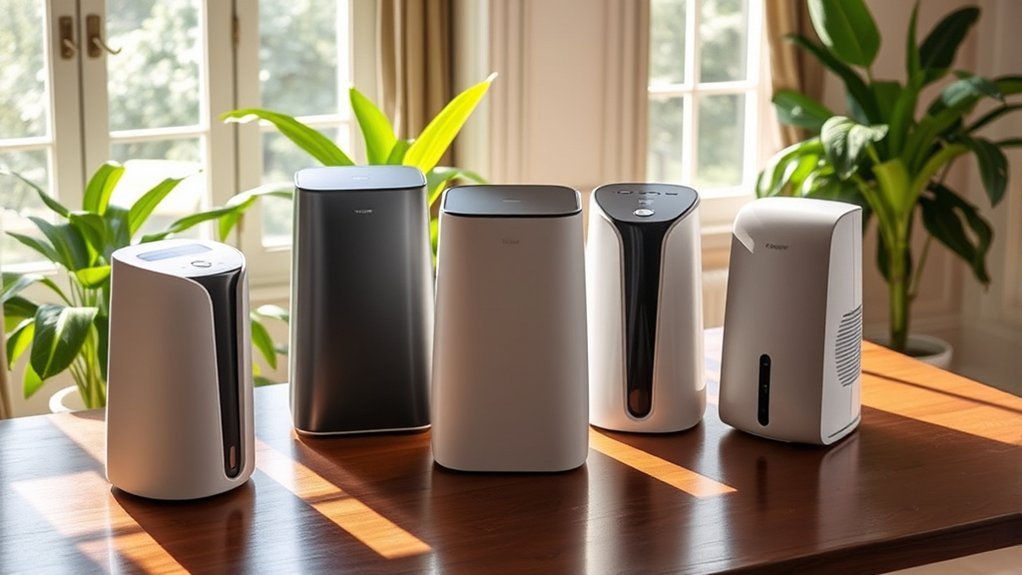
A good 35-pint dehumidifier for a basement should remove moisture steadily, restart after a power outage, support practical drainage, and maintain your chosen humidity level without constant attention. After removing mismatched 34-pint, 40-pint, 50-pint, duplicate, and insufficiently verified listings, this guide compares four relevant 35-pint options from Midea, GE, Amazon Basics, and Hisense.
The Midea Cube 35 Pint is the strongest all-around choice for buyers who want a large water bucket and smart controls. The GE 35 Pint offers straightforward controls and useful maintenance alerts. Amazon Basics is a practical conventional option, while the renewed Hisense HD3524 may appeal to budget-conscious buyers who understand its shorter warranty.
Quick Verdict
- Best Overall and Best Smart Choice: Midea Cube 35 Pint
- Best for Simple Controls: GE Portable 35 Pint
- Best Straightforward Value: Amazon Basics 35 Pint
- Best Renewed Option: Hisense HD3524
Quick Comparison of the Best 35-Pint Basement Dehumidifiers
| Model | Best For | Daily Capacity | Drainage | Key Advantage | Amazon |
|---|---|---|---|---|---|
| Midea Cube | Smart control and fewer bucket-emptying trips | 35 pints | 4.2-gallon bucket or gravity hose | Large tank, app and voice control | Check Amazon |
| GE Portable | Simple controls and maintenance reminders | 35 pints | Bucket or continuous gravity drain | Smart Dry and three fan speeds | Check Amazon |
| Amazon Basics | Basic automatic humidity control | 35 pints | Bucket or continuous gravity drain | ENERGY STAR certification and simple operation | Check Amazon |
| Hisense HD3524 | Cooler basements and renewed-product value | 35 pints | 8.9-pint removable bucket | Listed for operation down to 38°F | Check Amazon |
Before comparing coverage: Square-foot figures are manufacturer claims, not guarantees. Basement temperature, starting humidity, seepage, room layout, airflow, and drainage setup can matter more than the advertised coverage number.
Midea Cube 35 Pint Dehumidifier with Alexa
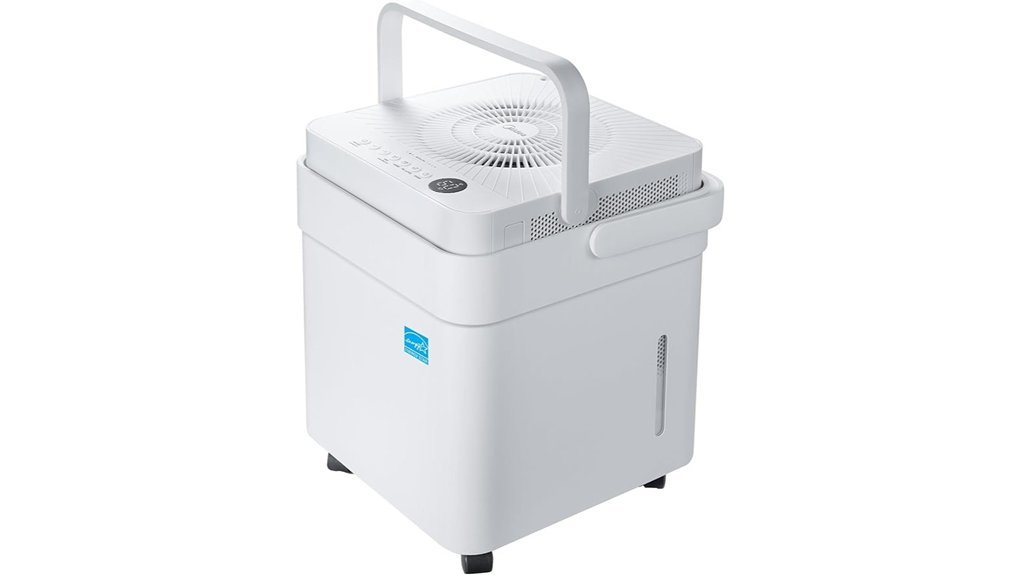
Best Overall and Best Smart Choice
The Midea Cube is the most versatile option in this roundup if you want smart basement humidity control and a bucket that does not need constant attention. It is rated to remove up to 35 pints of moisture per day, while Midea claims coverage for spaces up to 3,500 square feet.
Its main advantage is the removable 4.2-gallon water tank, which is considerably larger than a typical portable-dehumidifier bucket. You can also remove the bucket and position the upper unit for continuous gravity drainage with the included hose. The lift-and-twist design nests together when stored.
Wi-Fi support lets you monitor and adjust the unit through Midea’s SmartHome app. Alexa and Google Assistant compatibility add voice control, while the adjustable humidistat covers settings from 35% to 85% relative humidity.
Best For: Buyers who want app control, voice support, a large water bucket, and flexible gravity drainage.
Consider Another Option If: You want the lightest appliance, do not use smart-home features, or have limited room for a wide cube-shaped unit.
Pros:
- True 35-pint daily removal rating for medium-to-large moisture-control jobs.
- Large 4.2-gallon bucket can reduce how often you need to empty collected water.
- Supports app monitoring, Alexa, Google Assistant, and adjustable humidity control.
- Includes a drain hose and can operate without the bucket when positioned above a suitable drain.
- Nesting design reduces its height when stored.
Cons:
- At approximately 39.6 pounds, it is one of the heavier choices in this guide.
- The wide cube design may be less convenient in a narrow utility area.
- Smart features require Wi-Fi, an app account, and initial setup.
- Gravity drainage requires the hose to run continuously downhill to a drain.
GE Portable Dehumidifier 35 Pint for 3000 Sq Ft
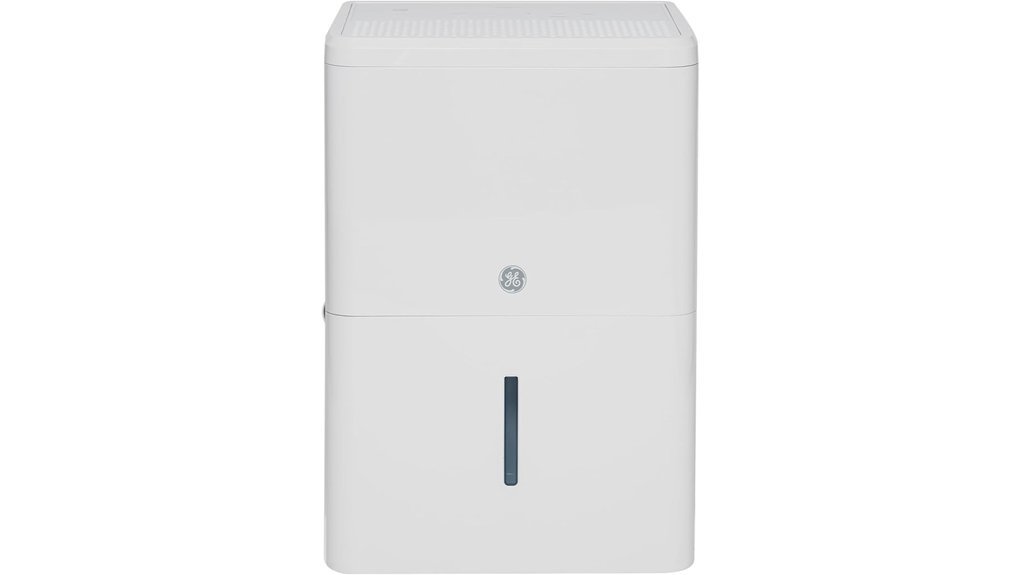
Best for Simple Controls
The GE 35-pint dehumidifier is a strong fit for buyers who prefer conventional controls over an app. GE claims coverage for areas up to 3,000 square feet, but its practical value comes from the adjustable humidistat, three fan speeds, maintenance reminders, and automatic operating features.
Smart Dry Technology adjusts the fan according to the detected humidity, while the humidistat lets you select a target between 30% and 70% relative humidity. Automatic restart restores operation after a power interruption, and automatic defrost helps protect performance when the coils become too cold.
The unit also provides a bucket-full alarm, clean-filter reminder, digital display, pocket handles, rolling wheels, and a connection for continuous gravity drainage.
Best For: Buyers who want a recognizable brand, straightforward digital controls, several fan speeds, and useful maintenance alerts.
Consider Another Option If: You need Wi-Fi control, a built-in condensate pump, or the largest available water bucket.
Pros:
- Removes up to 35 pints of moisture per day.
- Smart Dry can adjust fan operation as room humidity changes.
- Adjustable 30% to 70% humidistat provides useful control for different basement conditions.
- Includes automatic restart, automatic defrost, bucket alarm, and filter reminder.
- Supports bucket collection or continuous gravity drainage.
Cons:
- No app or voice-assistant control.
- Continuous drainage depends on a nearby drain below the hose outlet.
- The 3,000-square-foot figure is a manufacturer coverage claim and does not account for severe seepage or standing water.
- A separate condensate pump may be needed if water must travel upward.
Amazon Basics 35-Pint Dehumidifier for Home
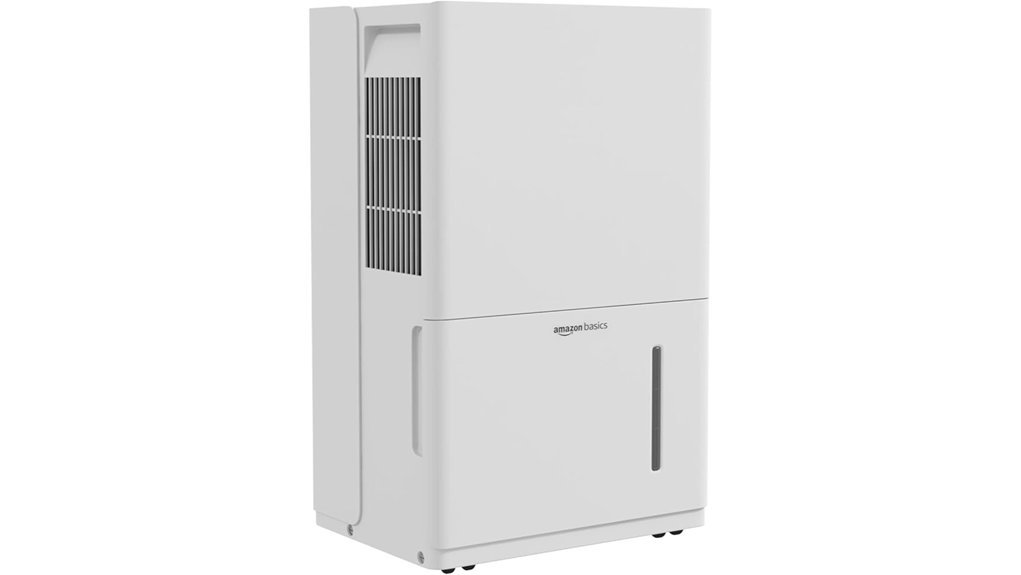
Best Straightforward Value
The Amazon Basics 35-Pint Large Dehumidifier is a practical option if you want automatic humidity control without paying for app features. It is an ENERGY STAR-certified dehumidifier rated to remove approximately 35 pints per day, and the manufacturer claims coverage for spaces up to 2,500 square feet.
Automatic restart restores the previous settings after an outage. Automatic defrost, overflow protection, a timer, and a reusable filter support routine basement use. The unit also has wheels, which are helpful because its approximately 39.2-pound weight makes frequent lifting inconvenient.
This model is better suited to utility-focused basement use than a quiet bedroom or home office. Compressor and fan noise can be noticeable, particularly at higher settings.
Best For: Buyers who want a verified 35-pint ENERGY STAR model with simple controls and no dependence on an app.
Consider Another Option If: Your basement is used as a quiet office, television room, or sleeping space.
Pros:
- Verified 35-pint daily removal capacity.
- ENERGY STAR certification supports more efficient operation than a comparable non-certified model.
- Automatic restart helps restore moisture control after a power failure.
- Automatic defrost, timer, overflow protection, and reusable filter simplify routine use.
- Rolling casters make floor-level repositioning easier.
Cons:
- At about 39.2 pounds, it is heavy to carry between floors.
- Fan and compressor noise may be distracting in an occupied basement.
- It does not provide app or voice control.
- The manufacturer’s square-foot claim should not be treated as guaranteed performance in a wet basement.
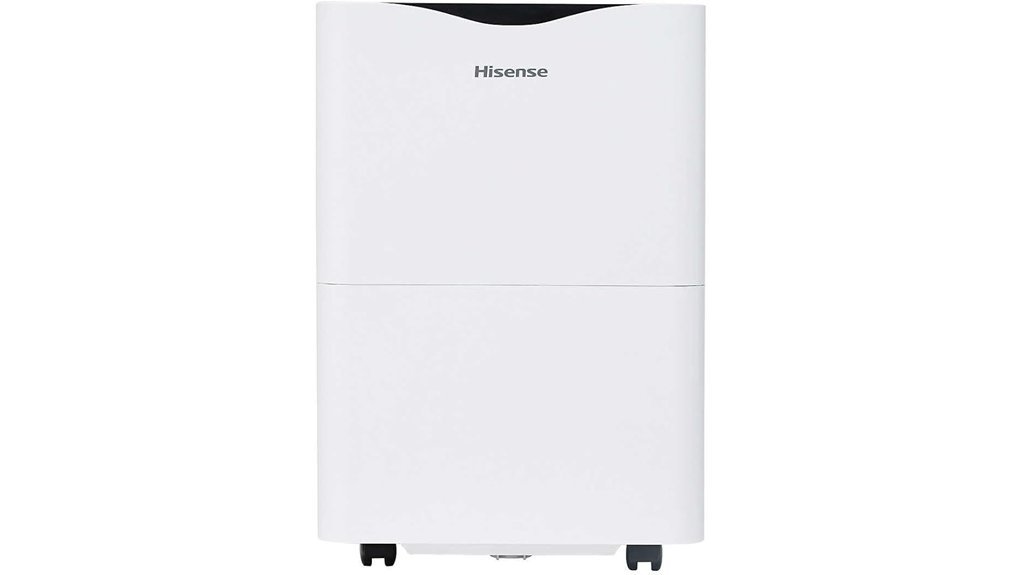
Hisense 35 Pint Portable Dehumidifier (HD3524, Renewed)
Best Renewed Option for Cooler Basements
The Hisense HD3524 is a renewed 35-pint portable dehumidifier marketed for areas up to 3,000 square feet. Its most useful distinction is its listed ability to operate in temperatures as low as 38°F, making it worth considering for a cooler basement where many compressor models may defrost frequently.
The unit weighs approximately 32 pounds and has an 8.9-pint removable bucket, an easy-carry handle, three operating speeds, and a washable filter. The bucket is much smaller than the Midea Cube’s, so it may require regular emptying when the basement is especially damp.
Renewed-product note: This is not presented as a new retail unit. The supplied listing identifies a 90-day limited warranty. Check the current seller, condition description, included accessories, return policy, and warranty before ordering.
Best For: Buyers who are comfortable purchasing a renewed appliance and need a 35-pint model for a relatively cool basement.
Consider Another Option If: You want a new-product warranty, guaranteed included drainage accessories, or smart controls.
Pros:
- 35-pint daily removal rating matches the article’s main capacity class.
- Listed for operation in temperatures down to 38°F.
- Three speed settings provide more control over airflow and noise.
- Washable filter and slide-out bucket simplify routine maintenance.
- At about 32 pounds, it is lighter than the Midea and Amazon Basics models.
Cons:
- Renewed condition may involve cosmetic wear or seller-specific refurbishment standards.
- The listed 90-day limited warranty is shorter than many new-product warranties.
- The 8.9-pint bucket may fill quickly during humid weather.
- Included drainage parts should be confirmed on the current Amazon listing.
Factors to Consider When Choosing a 35 Pint Dehumidifier for Basement
A 35-pint basement dehumidifier should be selected according to the basement’s moisture load, temperature, drainage access, noise requirements, and maintenance needs. Advertised square-foot coverage alone does not provide enough information to make a reliable choice.
Understand the Current Pint Rating
A dehumidifier’s pint rating describes how much water it can remove during 24 hours under specified test conditions. Current DOE testing for portable dehumidifiers uses cooler conditions intended to reflect basement operation more realistically.
Be careful when a product advertises a “maximum” capacity measured at 90°F or 95°F with 90% relative humidity. Hot air holds more moisture, so a high-temperature 34-pint claim is not automatically equivalent to a current DOE-rated 35-pint model.
Match Capacity to Moisture Severity
A 35-pint unit can be appropriate for a moderately damp large room or a very damp smaller basement. It may be undersized when walls or floors regularly sweat, groundwater enters the room, laundry adds a heavy moisture load, or the space remains above the target humidity despite continuous operation.
For a large or persistently wet basement, a 50-pint model or a unit with a built-in pump may provide more appropriate capacity. A dehumidifier should not be used as a substitute for repairing foundation leaks, plumbing leaks, blocked drains, or exterior grading problems.
Treat Coverage as an Estimate
Manufacturer coverage figures are useful for rough comparisons, but they are not guaranteed performance limits. An open finished basement at 60% humidity is easier to manage than a divided basement with wet masonry, poor airflow, and recurring seepage, even when both have the same floor area.
Choose capacity according to the actual starting humidity, temperature, water intrusion, and desired drying speed. An inexpensive separate hygrometer can help you compare the room’s humidity with the reading shown on the appliance.
Drainage Options
Most 35-pint dehumidifiers collect water in a removable bucket and shut off automatically when it becomes full. Bucket volume is separate from daily removal capacity. A machine can remove 35 pints per day while using a much smaller bucket that needs to be emptied several times.
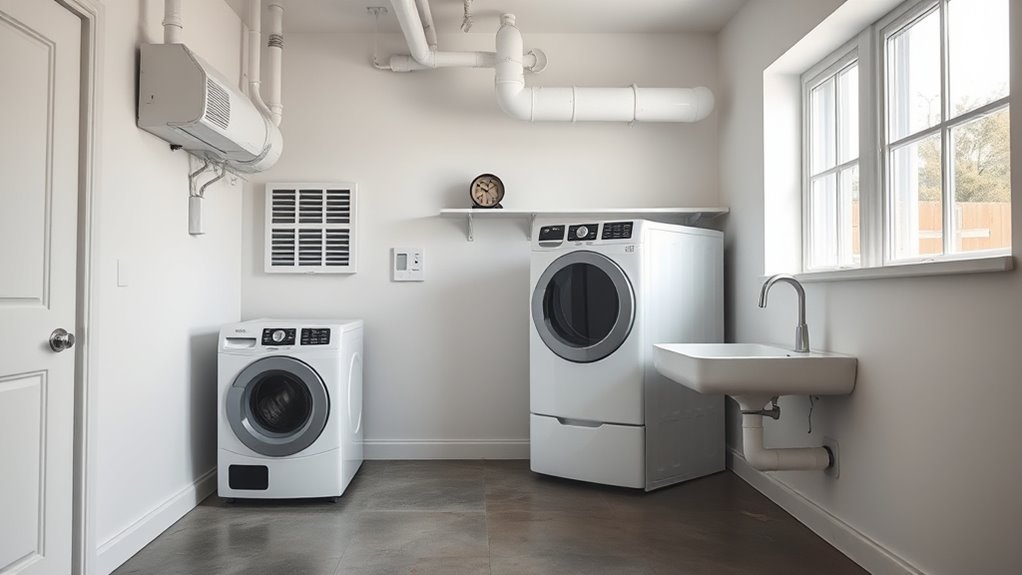
Continuous gravity drainage sends water through a hose to a lower floor drain or sump. The hose must remain below the dehumidifier outlet, slope downward, and avoid kinks. Gravity cannot move water uphill. Use a compatible condensate pump or choose a dehumidifier with a built-in pump when the drain is above the appliance.
Low-Temperature Operation
Basement temperature can affect both extraction speed and frost formation. When the air is cool, less moisture is available for the machine to collect, and ice may form on the coils.
Look for automatic defrost and check the manufacturer’s minimum operating temperature if your basement regularly falls below 65°F. Even a low-temperature model will generally remove less water in cool, moderately humid conditions than it does in hot, wet air.
Noise Levels
Compressor dehumidifiers produce fan noise, compressor vibration, and occasional changes in sound as they cycle or defrost. Advertised decibel figures may be measured at a particular fan speed or distance and may not reflect your room.
Noise matters most when the basement is used as an office, bedroom, media room, or family area. A lower fan setting can reduce sound, but it may also slow air circulation. Place the machine on a level, solid floor and keep it from touching furniture or walls that can amplify vibration.
Energy Efficiency
An ENERGY STAR-certified dehumidifier can use less electricity than a comparable non-certified unit. However, annual savings depend on local electricity rates, operating time, starting humidity, temperature, and the target setting.
A correctly sized unit with a working humidistat is generally a better choice than relying on exaggerated dollar-savings claims. Automatic cycling, clean filters, unrestricted airflow, closed exterior doors and windows, and corrected water leaks can also reduce unnecessary operating time.
Humidity Controls
A target of approximately 40% to 50% relative humidity works well for many basements. Going much lower can increase electricity use without providing a meaningful benefit, while sustained humidity above 60% can support mold and mildew growth.
A built-in humidistat allows the dehumidifier to cycle automatically after reaching the target. Because built-in sensors can vary, place a separate hygrometer several feet away from the machine rather than directly in its dry exhaust airflow.
Tank Size and Portability
A larger tank reduces emptying frequency but adds size and weight. The Midea Cube has the largest bucket in this roundup, while the Hisense uses a smaller 8.9-pint reservoir.
Casters are useful on a level basement floor, but they do not make a 30- to 40-pound appliance easy to carry upstairs. Check the weight, handle design, dimensions, and route to the basement before buying.
Maintenance Ease
Clean the reusable filter according to the manufacturer’s schedule and inspect it more often in a dusty basement. Keep the air inlet and outlet unobstructed, wash and dry the bucket periodically, and check the hose for algae, sediment, kinks, or poor slope.
Always operate the unit on a level surface with a properly grounded outlet. Avoid damaged extension cords, keep the power connection away from collected water, and follow the product manual for clearance and cleaning instructions.
Before You Buy Checklist
- Measure the basement and note whether it feels moderately damp, very damp, or wet.
- Check the normal basement temperature, especially during winter.
- Decide whether you will empty a bucket or use continuous drainage.
- Confirm that a gravity-drain hose can slope downward for its entire run.
- Check the appliance dimensions, weight, handle, and caster design.
- Compare warranty length, return policy, and renewed versus new condition.
- Plan to use a separate hygrometer to verify the room humidity.
Frequently Asked Questions
How Often Should I Empty a 35-Pint Dehumidifier in a Basement?
It depends on the bucket size and how much water the unit is actually collecting. Check the bucket at least daily during the first several days. A small bucket may need frequent emptying in humid weather, while the Midea Cube’s 4.2-gallon tank can run longer between trips. Continuous drainage removes this chore when a suitable drain is available.
Do Pint Ratings Change With Basement Temperature and Humidity?
The published rating does not change, but real-world water collection does. Cooler or less humid air contains less removable moisture, so the bucket may fill much more slowly than it would under the official test conditions. This is normal and does not necessarily indicate a fault.
Is a 35-Pint Dehumidifier Large Enough for a Basement?
It can be suitable for a moderately damp large basement or a very damp smaller area. A large basement with seepage, sweating walls, standing water, or humidity that remains very high may need a 50-pint unit, better airflow, a pump, or repairs to the moisture source.
Can a Dehumidifier Prevent Basement Mold Completely?
No. Keeping humidity around 40% to 50% can reduce the conditions that support mold, but a dehumidifier cannot remove existing mold or correct leaks and wet building materials. Repair the source of moisture and clean or replace contaminated materials as appropriate.
Is It Safe to Run a Basement Dehumidifier Nonstop?
A properly functioning unit can operate for extended periods when it has an automatic humidistat, adequate airflow, a clean filter, safe drainage, and a grounded electrical connection. Stop using it if the cord, plug, bucket, hose, fan, or compressor appears damaged or if it produces unusual heat, odors, leaking, or electrical noise.
What Size Hose Works Best for Continuous Drainage?
Use the hose diameter and connection type listed in the product manual. Some models accept a standard garden hose, while others use a smaller included tube or adapter. Do not assume that one hose size fits every dehumidifier.
Does Continuous Drainage Pump Water Uphill?
Not unless the dehumidifier has a built-in pump or you add a compatible external condensate pump. Standard continuous drainage relies on gravity, so the hose must slope downward from the appliance to the drain.
What Humidity Should I Set in My Basement?
Start around 45% to 50% relative humidity. Lower the setting slightly if condensation or musty odors remain, but first check for leaks or poor airflow. Avoid setting the target unnecessarily low because that can increase energy use and operating time.
Conclusion
The Midea Cube 35 Pint Dehumidifier is the best overall choice for most buyers in this comparison because it combines a true 35-pint rating, a very large bucket, continuous-drain flexibility, and remote smart controls. Choose the GE 35 Pint when simple controls, multiple fan speeds, and useful maintenance alerts matter more than an app.
The Amazon Basics 35 Pint is a practical ENERGY STAR option for buyers who can tolerate more noticeable operating noise. The Hisense HD3524 may provide renewed-product value in a cooler basement, but its condition, accessories, seller, return policy, and 90-day warranty deserve careful review.
Final Recommendation
Choose Midea for smart control and fewer bucket-emptying trips, GE for straightforward everyday operation, Amazon Basics for a conventional ENERGY STAR model, or Hisense only when a renewed unit and shorter warranty fit your budget. Whichever model you select, correct leaks first, provide safe drainage, and verify basement humidity with a separate hygrometer.