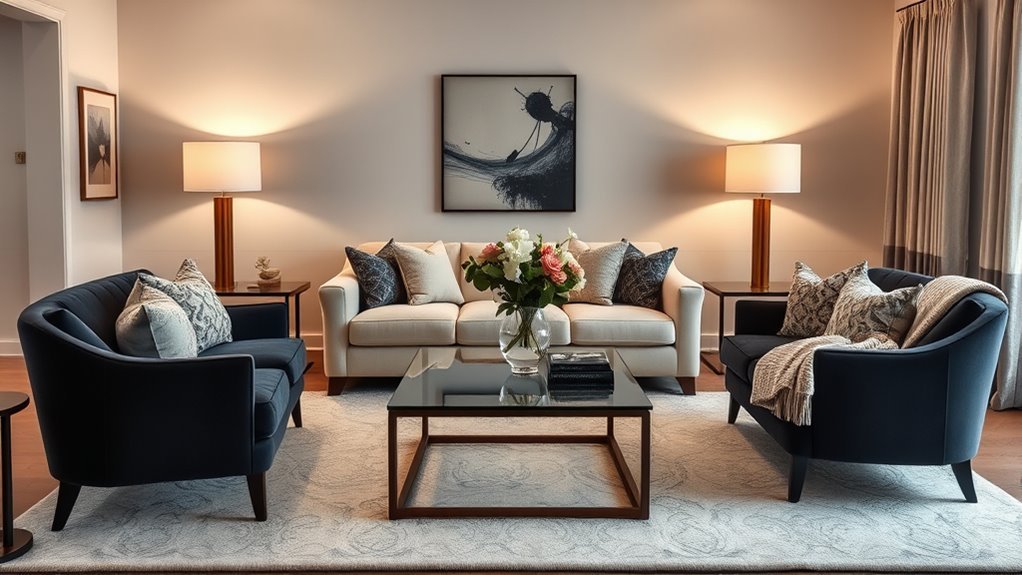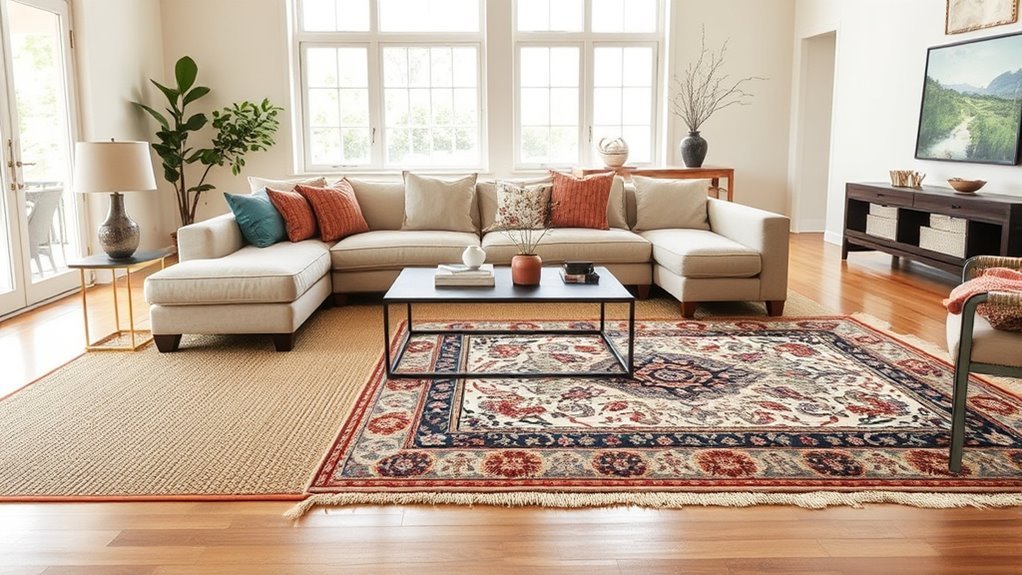
Layering rugs in your living room is one of the easiest ways to make the space feel warmer, more collected, and more intentional. The trick is not simply placing one rug on top of another. You need the right base size, a balanced accent rug, compatible textures, and a secure setup so the layers look designed instead of messy.
Quick Answer
To layer rugs in a living room, start with a large, low-profile base rug that fits under the main seating, then place a smaller accent rug on top. Keep the top rug about two-thirds the base rug’s size, repeat at least one color, vary texture, and secure edges to prevent slips.
Key Takeaways
- Use a larger, flatter base rug to anchor the seating area before adding a smaller accent rug.
- A good starting point is a top rug that is about two-thirds the size of the base rug.
- Mix one bold element at a time: pattern, color, shape, or texture.
- Secure the bottom rug and check curled edges, especially in walkways and homes with kids, pets, or older adults.
At a Glance
| Time Required | 30 to 60 minutes for measuring, testing layouts, placing rug pads, and styling |
| Difficulty | Easy |
| Tools Needed | Measuring tape, painter’s tape, rug pad, scissors for trimming rug pad, vacuum |
| Cost | $0 if using rugs you already own; higher if buying new rugs or pads |
Why Layering Rugs Can Transform Your Living Room
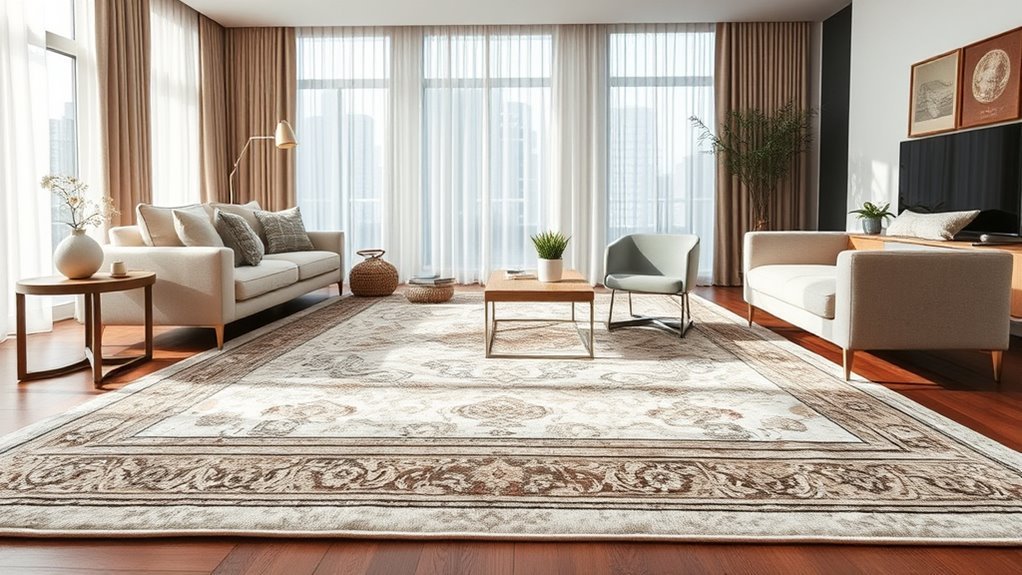
Layered rugs add depth, softness, and personality without requiring new furniture or a full room makeover. A large base rug grounds the seating area, while a smaller top rug can bring in color, vintage character, pattern, or extra comfort underfoot.
This works especially well in open-plan rooms, large living rooms, rentals, and spaces where one rug feels too plain. The base rug creates the “frame,” and the accent rug becomes the focal point.
Note: Layering should feel intentional. If the rugs are too similar in size, color, or texture, the result can look accidental instead of designed.
How to Layer Rugs Step by Step
- Measure the seating area. Measure the full zone you want the rugs to define, not just the coffee table.
- Tape the base rug size first. Use painter’s tape to test common sizes such as 6×9, 8×10, or 9×12 before moving furniture.
- Choose a low-profile base rug. Flatweave, jute, sisal, wool flatweave, or other low-pile rugs usually work best as the foundation.
- Add a smaller accent rug. Place it centered, slightly angled, or under the coffee table, depending on the room’s layout.
- Repeat one design element. Use at least one shared color, tone, material, or pattern style so the two rugs relate to each other.
- Secure the layers. Add the correct rug pad for the floor type and make sure no corners curl into walkways.
- Style the furniture last. Let the rug placement guide the coffee table, chairs, poufs, and sofa legs.
How to Choose the Right Base Rug for Layering
Your base rug should be the largest and quietest layer. It does not have to be boring, but it should be simple enough to support the accent rug rather than compete with it.
For many average living rooms, an 8×10 rug is a useful starting point. Smaller rooms may need a 6×9, while larger or floating furniture layouts often look better with a 9×12. Instead of treating one size as universal, choose a rug large enough to hold at least the front legs of your sofa and chairs.
Recommended Products

CLASSIC VINTAGE AESTHETIC BEIGE RUG: The area rug 8x10 features a harmonious blend of beige tones that evoke a timeless vintage charm, making it an ideal addition for any room in your home—from retro bohemian and rustic farmhouse to modern minimalism. Perfect rugs for living room, bedrooms, dining room rugs for under table, entryways, playrooms, or home offices, this 8x10 rug serves as the finishing touch to your interior flooring decor

Classic Vintage Aesthetic: Featuring timeless traditional persian medallion floral patterns with a sophisticated faded distressed finish, this neutral rug brings warm, vintage charm to your home. Perfectly blending with rustic farmhouse, boho, or modern vintage home decor, it instantly enhances any room — making it an ideal 8x10 area rug for living room, bedroom, dining room, or as an cozy focal point for nursery spaces.

Machine Washable Rugs: This washable rug is designed for easy cleaning. Small liquid stains can be wiped away with a damp cloth, and dust can be easily removed with a vacuum cleaner. For deeper cleaning, simply toss the rug into the washing machine to restore its fresh, clean appearance. The 8x10 washable rug is perfect for busy households
Best Base Rug Materials
- Jute or sisal: Great for natural texture, but best in dry spaces because some natural fibers can stain or discolor with moisture.
- Flatweave wool: Durable, lower profile, and softer than many plant-fiber rugs.
- Cotton flatweave: Casual and lightweight, but may need a strong rug pad to prevent shifting.
- Low-pile synthetic: Practical for pets, kids, and high-traffic living rooms.
Pro Tip: Choose the base rug first and the statement rug second. It is easier to pair a colorful or vintage accent rug with a calm foundation than to force two bold rugs to work together.
Guidelines for Sizing Your Rugs for Stability
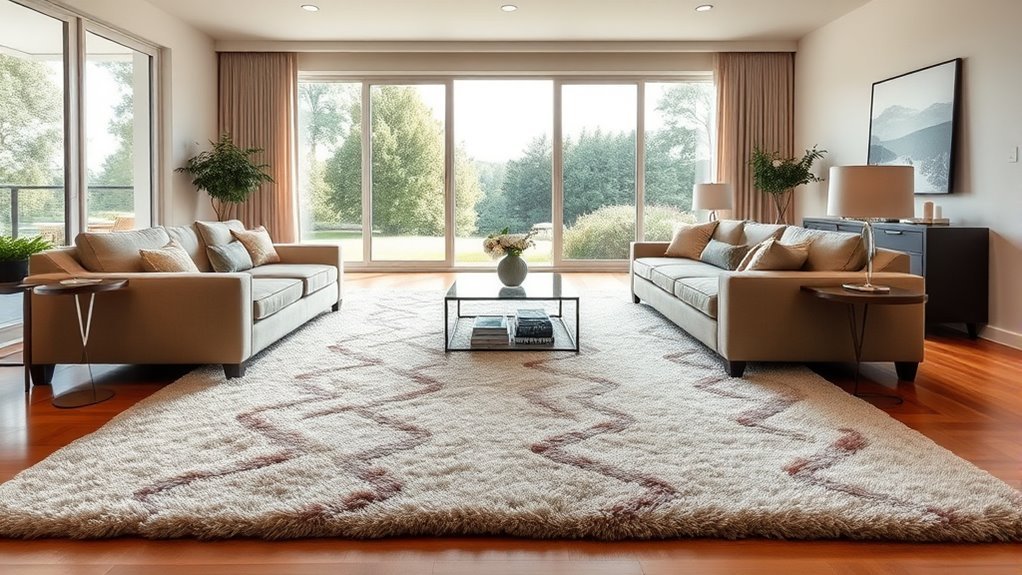
Rug layering looks best when the proportions are clear. A helpful rule of thumb is to make the top rug about two-thirds the size of the base rug. For example, pair a 9×12 base with a 6×9 top rug, or an 8×10 base with a 5×7 or 5×8 accent rug.
| Living Room Layout | Base Rug Goal | Accent Rug Goal |
|---|---|---|
| Sofa against the wall | Rug sits at least partly under the sofa and extends beyond the coffee table. | Centered under the coffee table or slightly in front of the sofa. |
| Floating seating area | Large enough for front legs, or all legs, of the main furniture. | Defines the conversation area without covering the entire base rug. |
| Sectional sofa | Usually needs a larger rug so the sectional does not overpower it. | Works best under the coffee table or chaise area. |
| Small living room | Use the largest rug that fits while leaving breathing room near walls. | Keep it subtle so the floor does not feel chopped up. |
Avoid placing a tiny rug in the middle of a much larger rug unless you are intentionally highlighting a small piece of furniture, such as an ottoman or reading chair. Too much empty base rug around a small accent rug can make the top layer look stranded.
Recommended Products

Classic Vintage Area Rug: The vintage medallion design of the living room rug adds a timeless appeal that complements various decor styles. Whether your home leans towards a modern aesthetic or a cozy, rustic vibe, this carpet seamlessly integrates into your existing decor while providing a touch of retro flair. The beige rug provides a neutral backdrop, allowing it to enhance the beauty of your space without overwhelming it.

Ultra-Soft Low Pile Rug: Gent drizz living room rugs 8x10 made of Upgraded durable low pile faux wool fibers, 0.25'' thick, featuring a soft fuzzy density surface, soft and pliable to the touch, providing great comfort for your bare feet. The low pile makes it easy for your Large area rug to clean and is perfect for homes with kids and pets

Ultra Fluffy Living Room Rug: 8x10 living room rugs is made of high-quality microfiber and memory foam. Soft and comfortable touch, you will feel like walking on the clouds whether you are standing, sitting or lying. While enjoying the warmth and comfort, this rug will not shed, making it an ideal choice for the bedroom, living room or nursery.
How to Choose Accent Rugs That Complement Your Base Rug
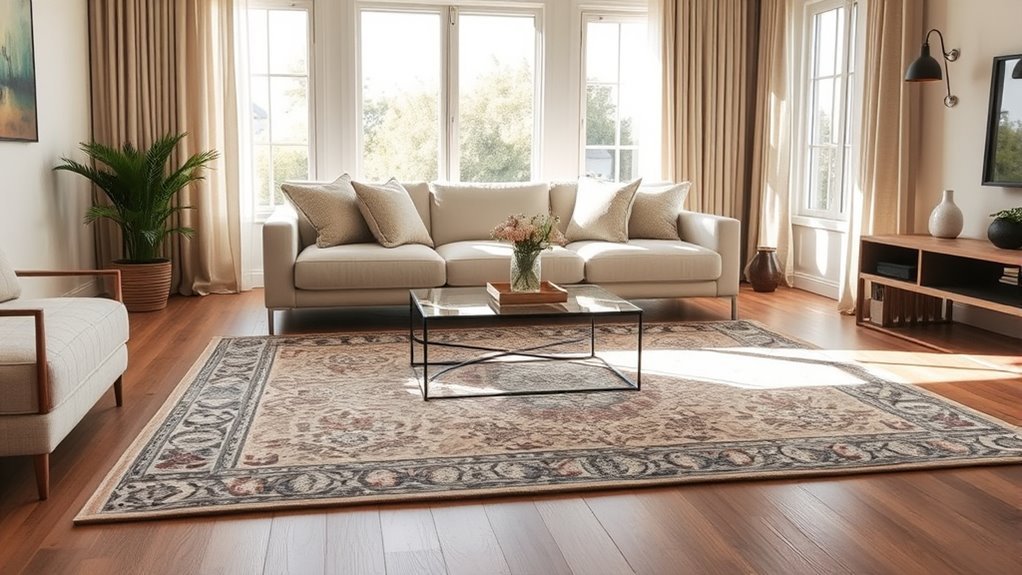
The accent rug is where you can have more fun. This is the layer that can introduce a vintage pattern, a bold color, a softer pile, or an unexpected shape.
- Repeat one color. Pull one shade from the base rug, sofa, pillows, curtains, or artwork.
- Vary the texture. Try a plush wool, hide, shag, or patterned flatweave over a calmer base.
- Change the pattern scale. Pair a small-scale pattern with a larger-scale weave or a solid base.
- Keep the shape intentional. Rectangular on rectangular feels classic; a hide or irregular rug feels more relaxed.
Recommended Products

Stain Resistant Rug Surface: The living room rug is made of anti stain material, conventional liquids such as water, coffee, milk, and pet urine will not permeate the carpet, you just need to wipe it clean easily.

Effortless Maintenance: Keep your space looking fresh effortlessly with our machine washable rug. No need for professional cleaning - simply toss it in the washing machine for a quick and easy clean.

[COLOR & DESIGN]: SAFAVIEH's Monaco area rug showcases a distressed traditional medallion pattern in grey tones with light blue accents; actual color may appear darker or lighter than shown, depending on lighting and screen settings.
Why Texture Matters in Rug Layering
Texture is what makes layered rugs feel cozy instead of flat. A braided jute base under a soft wool rug, a flatweave under a shag, or a sisal rug under a vintage-style runner can add depth without relying on loud color.
For daily living rooms, keep the thickest rug on top and the flattest rug underneath. This helps the layers sit more cleanly and reduces bulky edges. If the top rug is very thick, avoid placing it in a narrow walkway where people may catch their feet.
Warning: Loose rugs, curled corners, and thick layered edges can create tripping hazards. Secure the base rug with the right pad, flatten curled corners, and keep raised edges out of major walkways.
How to Create Visual Interest With Layered Rugs
The easiest way to create visual interest is to choose contrast in one category and harmony in another. For example, use contrasting textures but similar colors, or use contrasting patterns with a shared neutral tone.
Combine Textures Effectively
Try these pairings for a layered look that feels balanced:
- Jute base + faded vintage-style wool rug
- Sisal base + soft sheepskin accent
- Flatweave base + plush shag accent
- Neutral wool base + patterned kilim
If both rugs are thick, the edges can look bulky. If both rugs are thin and lightweight, they may shift. Aim for a stable base and a more expressive top layer.
Use Color Contrast Wisely
A neutral base rug lets a colorful accent rug stand out. A patterned base can still work, but the top rug should be quieter or share a strong color connection.
Good color combinations include warm beige with rust, ivory with blue, oatmeal with olive, charcoal with cream, or tan jute with faded red. Avoid pairing two unrelated bright patterns unless the rest of the room is intentionally eclectic.
Focus on Proportion Balance
Proportion matters more than perfect symmetry. The top rug can be centered for a formal look or angled for a relaxed look, but the size difference should be obvious. If the rugs are nearly the same size, the bottom layer may look like an accidental border.
How to Define Spaces With Rug Layering
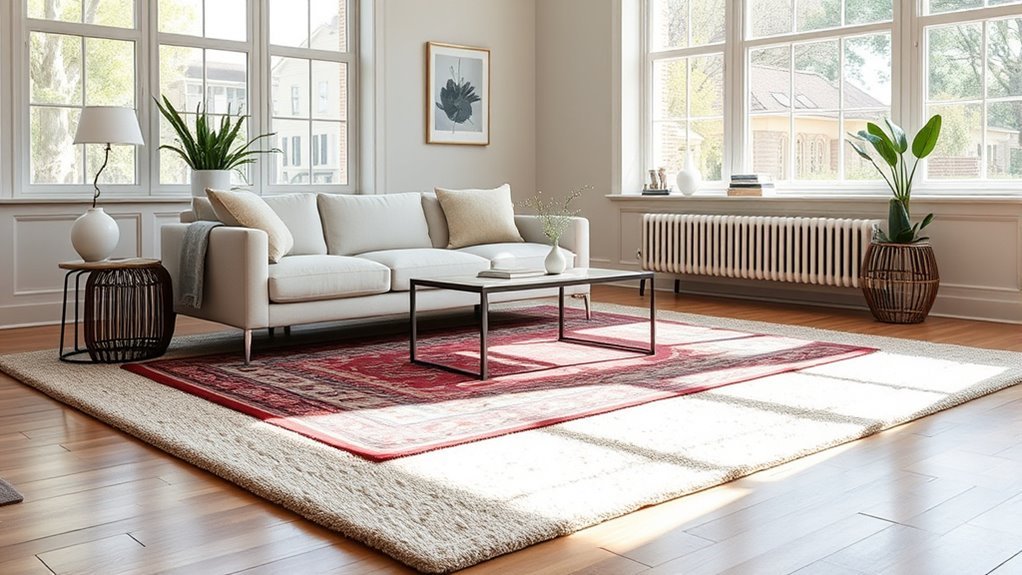
Layered rugs are useful when one room serves more than one purpose. A large base rug can define the full living area, while a smaller rug can highlight a conversation zone, reading corner, fireplace area, or coffee table.
Highlight Specific Areas
Place the accent rug where you want the eye to land. In most living rooms, that means under the coffee table. In a reading corner, it may mean under a chair and ottoman. In a large room, it can help pull one seating group away from the rest of the space.
Create Visual Zones
In open-plan rooms, a base rug helps separate the living area from the dining area, kitchen, or entry. The top rug adds a second layer of definition so the seating area feels finished, not floating.
Enhance Design Intent
Use the rug combination to support the room’s style. For a calm Scandinavian look, layer ivory, oatmeal, gray, or natural fibers. For a collected vintage look, pair a natural base with an antique-inspired pattern. For a modern space, try a simple base with a graphic top rug.
Tips for Layering Rugs Over Carpet
You can layer rugs over wall-to-wall carpet, but the setup needs more care because fabric-on-fabric can ripple, slide, or bunch. Choose a low-profile top rug, especially if the carpet underneath is plush.
- Use contrast. A patterned or textured area rug works best over plain carpet.
- Avoid too much pile. Thick shag over plush carpet can look bulky and feel unstable.
- Anchor with furniture. A sofa, chair, or coffee table can help keep the rug in place.
- Use a carpet-to-carpet pad. A standard hard-floor rug pad may not grip properly over broadloom carpet.
- Check edges weekly. Carpeted rooms can cause top rugs to creep or ripple over time.
Mixing Patterns: Finding the Right Balance
Mixing patterns works when there is a clear hierarchy. One rug should be the star; the other should support it.
- Start simple. A neutral base makes pattern mixing easier.
- Share one color. Repeating a color keeps two different patterns from clashing.
- Vary the scale. Pair a large geometric pattern with a smaller vintage motif, not two equally busy prints.
- Let the room breathe. If the sofa, pillows, curtains, and art are already bold, keep one rug quiet.
Common Rug Layering Mistakes to Avoid
- Using rugs that are too close in size. The base rug should clearly frame the accent rug.
- Choosing a base rug that is too small. If the furniture looks like it is floating around the rug, size up.
- Layering too many rugs. Two rugs are enough for most living rooms.
- Ignoring pile height. Thick-on-thick layers can create bulky edges.
- Skipping the rug pad. A pad helps with grip, comfort, floor protection, and safety.
- Forgetting traffic paths. Keep curled corners and raised edges away from the routes people walk most often.
What to Remember When Layering Rugs in Your Home
The best layered rug combinations look relaxed but planned. Before you commit, stand at the room’s entrance and check the full composition: sofa, chairs, coffee table, rug edges, and walkway clearance.
Choose Complementary Patterns Wisely
Use one strong pattern and one supporting layer. If both rugs have bold patterns, make sure they share a color palette and differ in scale.
Prioritize Size and Scale
The base rug should fit the furniture layout first. The accent rug should then add style without shrinking the room visually. When deciding between two base sizes, the larger rug often makes the seating area feel more grounded.
Focus on Texture Variations
Texture creates the cozy, designer feel people usually want from layered rugs. Mix rough with soft, flat with plush, or woven with faded wool. Keep the base stable and the top layer comfortable.
How to Keep Layered Rugs Clean and Secure
Layered rugs collect dust and crumbs between the layers, so maintenance matters. Vacuum the top rug regularly, lift it occasionally to clean the base rug, and rotate both rugs every few months if the room gets uneven sunlight or foot traffic.
- Blot spills quickly instead of rubbing them.
- Check the care label before using water or cleaners, especially on wool, jute, sisal, silk, viscose, or vintage rugs.
- Trim rug pads so they sit slightly inside the rug edge and do not show.
- Flatten curled corners before they become a tripping point.
- Reposition the top rug if it creeps out of alignment.
Frequently Asked Questions
What is the rule for layering rugs?
Start with a larger, low-profile base rug and add a smaller accent rug on top. A helpful rule is to make the top rug about two-thirds the size of the base rug. The base should anchor the furniture, while the top rug adds color, texture, or pattern.
Is layering rugs still in style in 2026?
Yes. Layering rugs still feels current when it is done with proportion, restraint, and practical placement. The most timeless approach is a natural or neutral base rug with a smaller patterned, vintage-inspired, wool, hide, or textured accent rug on top.
What are some rug layering mistakes to avoid?
Avoid using rugs that are almost the same size, layering too many bold patterns, placing thick edges in walkways, skipping rug pads, or choosing a base rug that is too small for the seating area. The layers should look intentional and feel secure underfoot.
What are the latest rug layering trends?
Current rug layering favors natural-fiber bases, vintage-style top rugs, tonal neutrals, soft wool textures, and relaxed off-center placement. Instead of chasing a trend, choose layers that match your furniture, traffic level, and the way your living room is used every day.
Can you layer a rug over carpet?
Yes, but choose a low-profile area rug and secure it properly. A thick rug over plush carpet can ripple or create raised edges. Use furniture anchors and a carpet-to-carpet rug pad when needed.
Do you need a rug pad when layering rugs?
In most living rooms, yes. A rug pad helps keep the base rug from sliding, protects the floor, adds comfort, and reduces bunching. Choose a pad made for your floor type, and use a carpet-to-carpet pad when placing an area rug over wall-to-wall carpet.
Conclusion
Layering rugs can make your living room feel warmer, softer, and more designed, but the best results come from balance. Start with a properly sized base rug, add a smaller accent rug with a clear purpose, mix textures thoughtfully, and secure the layers so they stay safe and comfortable. When the size, color, texture, and placement all work together, layered rugs can turn a simple seating area into a cozy, finished space.
Sources
- CDC — Facts About Falls — supports the safety note about throw rugs, clutter, and home fall hazards.
- Mayo Clinic — Fall Prevention: Simple Tips to Prevent Falls — supports securing loose rugs and keeping walkways clear.
- Architectural Digest — Rug Sizes: How to Figure Out the Best Area Rug for Your Space — supports rug sizing and furniture placement guidance.
- Better Homes & Gardens — How to Layer Rugs — supports proportion, texture, and color layering advice.
- The Spruce — Tips for Using an Area Rug Over Carpet — supports over-carpet layering and anchoring guidance.
- House Beautiful — Expert-Approved Guide to Buying a Rug — supports current rug sizing, placement, and styling context.