Choosing a dehumidifier for use in France requires more than comparing tank size and advertised coverage. You also need to confirm 230V/50Hz electrical compatibility, an appropriate plug, clear safety documentation, and realistic performance for the room you want to treat. After reviewing the original product list, only two compact options remain suitable enough to discuss: the AMEIFU PC-450 for small-room moisture control and the Eva-Dry E-333 for enclosed storage spaces.
Affiliate disclosure: This article contains Amazon affiliate links. We may earn a commission from qualifying purchases at no extra cost to you.
Quick Verdict
- Best powered compact option: AMEIFU PC-450 — better for a bathroom, bedroom corner, wardrobe area, or RV than for whole-home humidity problems.
- Best cordless option for enclosed spaces: Eva-Dry E-333 — a reusable desiccant unit for closets, cabinets, cars, safes, and similar small spaces.
Quick Comparison
| Product | Best Use | Technology | Main Limitation | Amazon |
|---|---|---|---|---|
| AMEIFU PC-450 | Small rooms and localized dampness | Thermoelectric/semiconductor | Not a substitute for a full-size compressor unit | Check Details |
| Eva-Dry E-333 | Closets, cabinets, cars, boats, and safes | Rechargeable desiccant | Too small for normal room dehumidification | Check Details |
Important for buyers in France: The links below open Amazon.com. Before ordering, confirm delivery to France, import charges, warranty coverage, the supplied plug, the input-voltage label, French-language safety information, and applicable CE documentation. A plug adapter alone does not convert voltage.
AMEIFU PC-450 Compact Dehumidifier
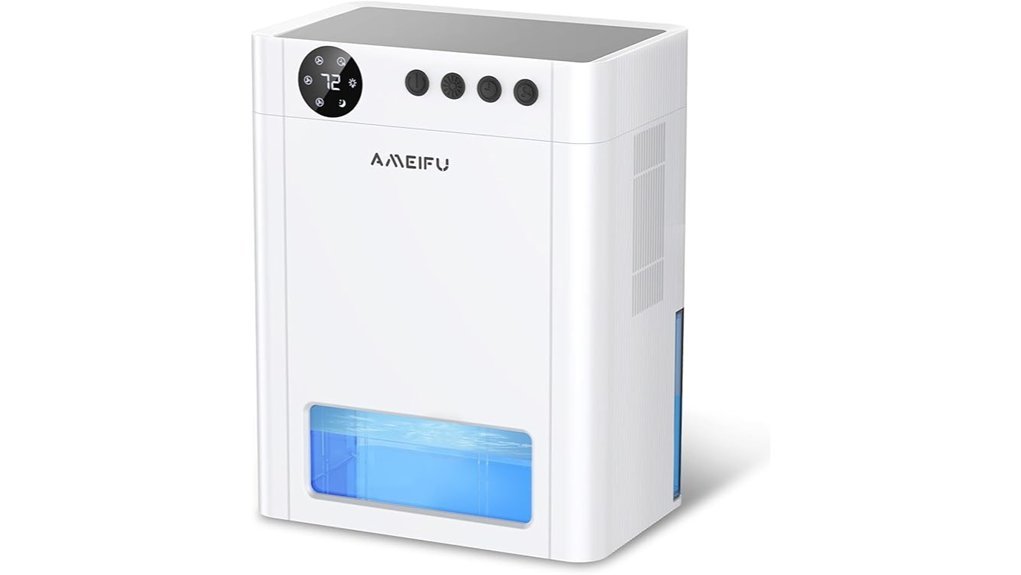
The AMEIFU PC-450 is the stronger choice of the two when you need active moisture collection in a small bathroom, bedroom, wardrobe area, office corner, or RV. Its thermoelectric design is compact and generally quieter than a compressor model, while the removable tank and automatic shutoff make everyday use easier.
However, this is not the right tool for a very damp basement, an entire apartment, or fast clothes drying. Advertised room-size and extraction figures for small semiconductor dehumidifiers are often measured under favorable conditions, so judge it by the problem you need to solve rather than by the largest coverage number in the listing.
Why You’ll Like It
- Compact enough for places where a full-size compressor dehumidifier would be awkward.
- Removable tank, timer settings, sleep-oriented controls, and automatic shutoff improve convenience.
- A practical option for mild, localized condensation or musty air.
Best For: Buyers who need a powered, compact moisture-control unit for a small occupied space.
Who Should Avoid It: Anyone dealing with flooding, persistent structural damp, a large basement, or humidity across several rooms.
Pros:
- Small footprint and easy room-to-room placement.
- Automatic shutoff helps prevent tank overflow.
- Timer and low-noise modes are useful in bedrooms and bathrooms.
Cons:
- Slower moisture removal than a compressor dehumidifier.
- Published tank and extraction specifications vary between versions, so the exact listing should be checked carefully.
- Manual tank emptying is required because there is no confirmed continuous-drain setup for this listing.
Eva-Dry Wireless Mini Dehumidifier, White (E-333)
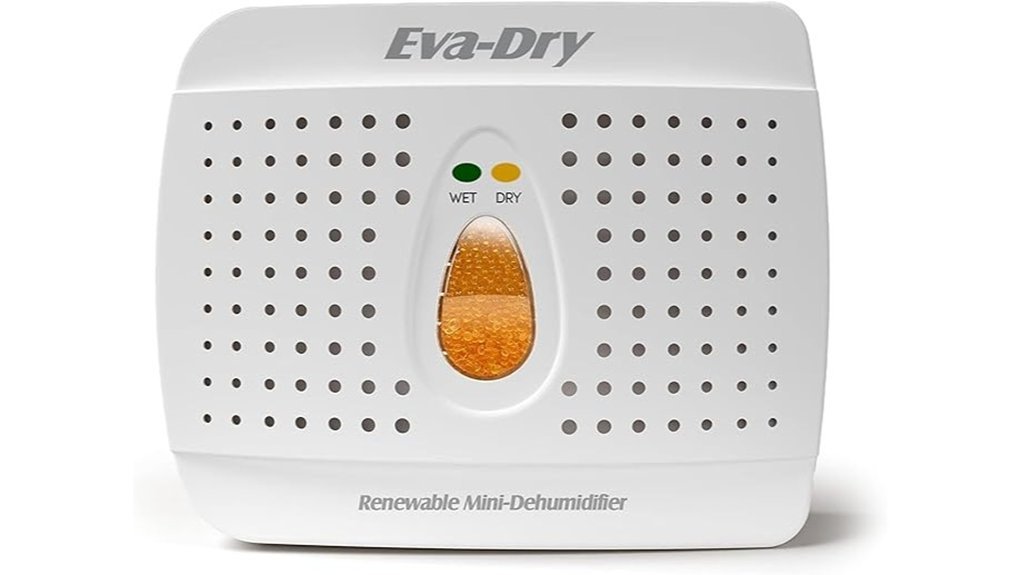
The Eva-Dry E-333 is a reusable desiccant moisture absorber, not a conventional room dehumidifier. It works without a cord while absorbing moisture, so it is useful in closets, cabinets, cars, boats, safes, storage boxes, and other small enclosed areas where condensation or a musty smell can build gradually.
Once the indicator shows that the unit is saturated, it must be plugged in to dry the desiccant before reuse. Its main advantage is simplicity: there is no water tank to spill, no fan noise, and no battery to replace. Its main limitation is equally important—it is not powerful enough to control humidity in a bedroom, bathroom, basement, or open living area.
Why You’ll Like It
- Cordless and silent during normal moisture absorption.
- Reusable design avoids disposable moisture-absorber tubs.
- Compact enough to hang or place inside enclosed storage spaces.
Best For: Small enclosed spaces where a powered dehumidifier would be impractical.
Who Should Avoid It: Buyers expecting fast moisture extraction or humidity control across a full room.
Pros:
- No batteries, drain hose, or water tank required.
- Silent while in use.
- Simple moisture indicator shows when regeneration is needed.
Cons:
- Very limited capacity compared with powered dehumidifiers.
- Needs periodic plug-in regeneration.
- Performance depends heavily on using it in a small, enclosed area.
How to Choose a Dehumidifier for Use in France
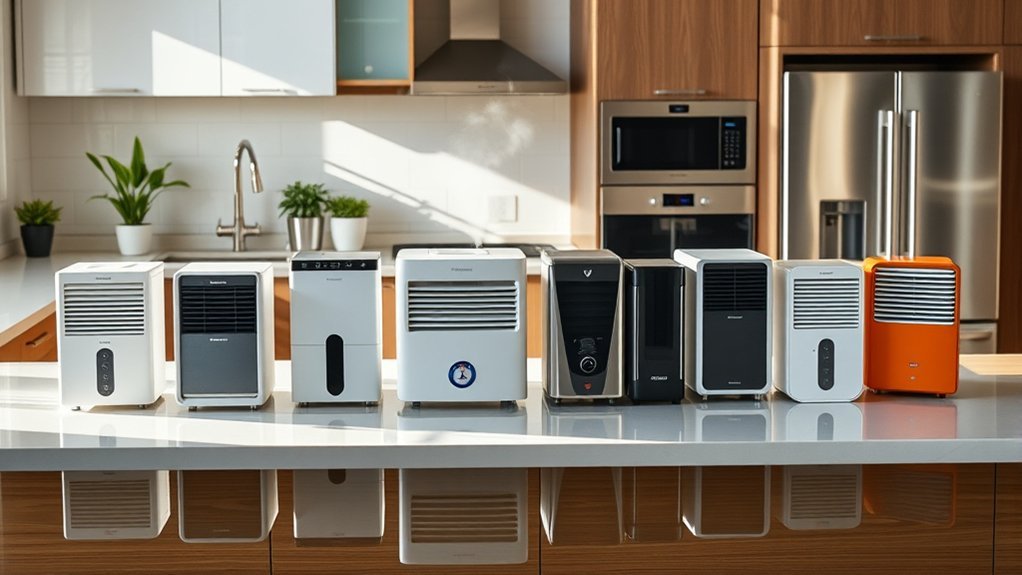
A dehumidifier should match the electrical system, room size, humidity problem, drainage plan, and operating temperature. For a France-focused purchase, compatibility and compliance should be checked before capacity or convenience features.
Electrical Compatibility and Compliance
Check the rating label on the exact product and power adapter. For direct use in France, it should state either 220–240V at 50Hz or a wide range such as 100–240V at 50/60Hz. A travel plug adapter changes the plug shape only; it does not make a 110–120V appliance safe on a higher-voltage supply.
Also confirm the correct plug, CE marking where applicable, an EU declaration of conformity, French-language instructions, warranty coverage in France, and access to replacement parts. Avoid relying only on a marketplace title or a reseller’s automatic compatibility message.
Choose the Right Technology
Compressor dehumidifiers are normally the best option for larger rooms and substantial moisture loads. Thermoelectric models are compact and quieter but remove moisture more slowly. Reusable desiccant units are best for enclosed storage spaces rather than occupied rooms.
Coverage Area and Moisture Load
Do not choose by floor-area claims alone. Consider whether the space is mildly humid, has frequent condensation, dries laundry indoors, contains a shower, or has persistent damp walls. A small unit may help with light moisture near the source but will not correct a building leak, poor ventilation, or rising damp.
Metric Capacity and Testing Conditions
For easier comparison in France, look for moisture removal in litres per day and room size in square metres. Capacity changes with temperature and relative humidity, so compare ratings measured under the same test conditions. Extremely high pint-per-day figures may reflect hot, very humid laboratory conditions rather than normal home use.
Drainage and Maintenance
For frequent use, continuous drainage can reduce maintenance, but the hose must slope downward to a suitable drain unless the unit has a pump. For tank-based models, check how easy the tank is to remove, carry, empty, and clean. Wash or vacuum the filter as directed by the manufacturer and keep air inlets clear.
Noise and Placement
Place the unit on a stable, level surface with enough clearance for airflow. Bedroom users should prioritize a genuine sleep mode and verified operating noise rather than vague “whisper quiet” claims. Keep electrical equipment away from direct water spray and follow the manufacturer’s bathroom-placement instructions.
Before You Buy: France Compatibility Checklist
- Exact input voltage and frequency are printed on the product or adapter.
- The plug is suitable for France or can be used with an appropriate plug adapter.
- CE and EU conformity documentation are available where required.
- The seller delivers to France and clearly explains VAT, customs, returns, and warranty service.
- Capacity is shown in litres per day under stated test conditions.
- The recommended room size matches your actual moisture problem.
- Drainage, filter cleaning, tank access, and replacement parts suit your routine.
Frequently Asked Questions
Can I Use a US Dehumidifier in France?
Only when the exact rating label confirms compatibility with the French electrical supply. A unit marked only for 110–120V should not be connected directly through a simple plug adapter. For a compressor appliance, buying a model designed for the EU market is usually safer and more practical than relying on a bulky transformer.
Is a Small Thermoelectric Dehumidifier Enough for a Bedroom?
It may help with mild, localized moisture in a small bedroom, but it is unlikely to solve heavy condensation or high humidity throughout the room. Use a hygrometer and move up to a properly sized compressor model when humidity stays high.
Can the Eva-Dry E-333 Dehumidify a Room?
No. It is intended for small enclosed spaces such as closets, cabinets, storage boxes, cars, and safes. It should not be compared directly with a powered room dehumidifier.
What Humidity Level Should I Aim For?
A moderate indoor level is generally more comfortable and less favorable to condensation and mold than persistently damp air. Use a separate hygrometer, avoid over-drying, and adjust the target to the room, season, and manufacturer guidance.
How Often Should I Clean My Dehumidifier?
Empty and rinse the tank regularly, check the air inlet for dust, and clean the filter according to the manual. During heavy use, inspect the unit at least weekly so restricted airflow or stagnant tank water does not reduce performance.
Conclusion
Final Recommendation
Choose the AMEIFU PC-450 only for light moisture in a small occupied space and after confirming the exact adapter, plug, and compliance details. Choose the Eva-Dry E-333 for closets, cabinets, cars, safes, and other enclosed storage areas. For a damp basement, large bedroom, laundry-drying area, or whole apartment in France, skip imported 110–120V models and buy a properly sized 230V EU-market compressor dehumidifier instead.