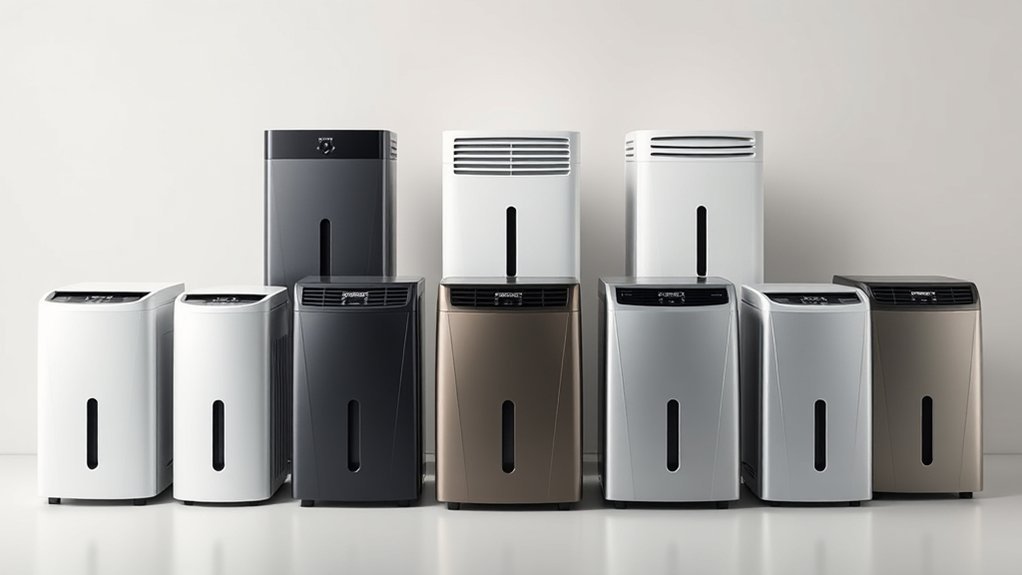
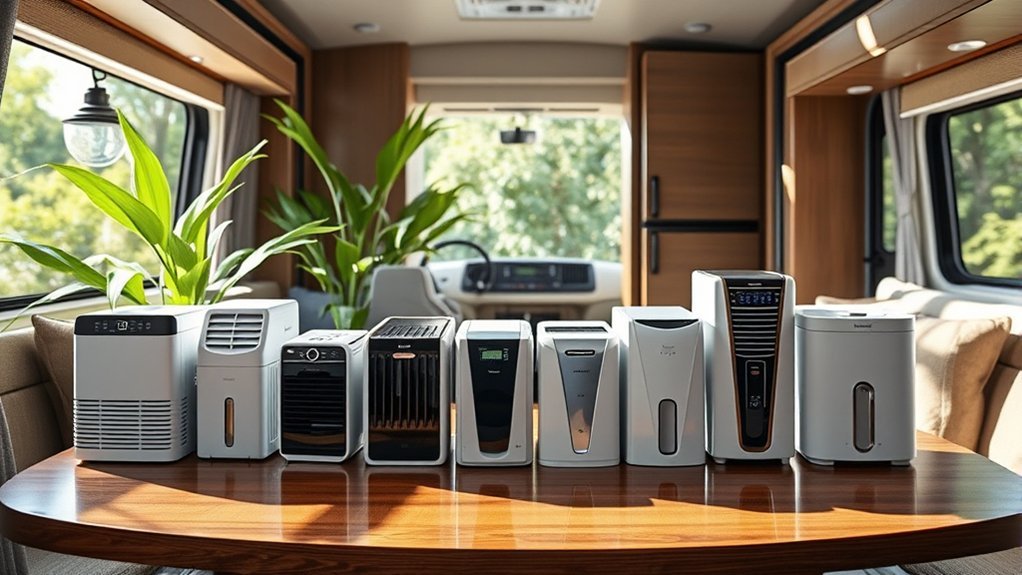
The best whole-house dehumidifiers are designed for continuous drainage, high airflow, automatic humidity control, and stand-alone or ducted installation. This guide compares three models intended for whole homes, HVAC-connected systems, basements, or sealed crawl spaces. We reviewed standardized moisture-removal capacity, manufacturer coverage guidance, ducting, drainage, controls, maintenance, and installation needs to help you choose the right system.
Quick Verdict
AprilAire E130 is the strongest all-around choice for a large home. MOISWELL Marshal WD160 stands out for HVAC integration, flexible ducting, and fresh-air capability. AprilAire E070 is the better fit for a smaller home, basement, or sealed crawl space where a 70-pint professional unit is appropriately sized.
Quick Comparison of the Best Whole-House Dehumidifiers
| Product | Best For | Rated Capacity | Coverage Guidance | Drainage and Installation | Amazon |
|---|---|---|---|---|---|
| AprilAire E130 | Best Overall | Up to 130 pints/day | Up to 7,200 sq. ft. | Continuous drain; stand-alone or ducted; professional installation recommended | Check Price |
| MOISWELL Marshal WD160 | Best for HVAC Integration | 65 pints/day standardized rating; up to 160 pints/day maximum rating | Up to 2,500 sq. ft. | Gravity drain; ducted or stand-alone; external pump may be needed | Check Price |
| AprilAire E070 | Best for Smaller Homes | Up to 70 pints/day | Up to 2,200 sq. ft. under current manufacturer guidance | Continuous drain; stand-alone or ducted; verify the linked bundle contents | Check Price |
Capacity Comparison Note
Do not compare a standardized pint-per-day rating directly with a larger maximum rating measured in hotter, more humid conditions. Standardized ratings are more useful when comparing models, while actual water removal varies with temperature, relative humidity, airflow, and the home’s moisture load.
How We Chose
We kept products that are presented by their manufacturers as whole-home dehumidifiers or as professional units suitable for whole-house use. We also looked for continuous drainage, standardized capacity information, useful controls, service access, and ducting flexibility. Portable bucket-style units and crawl-space-only models were excluded because they do not fully match the main whole-house buyer intent.
AprilAire E130 Pro Whole-House Dehumidifier with Model 76 Control
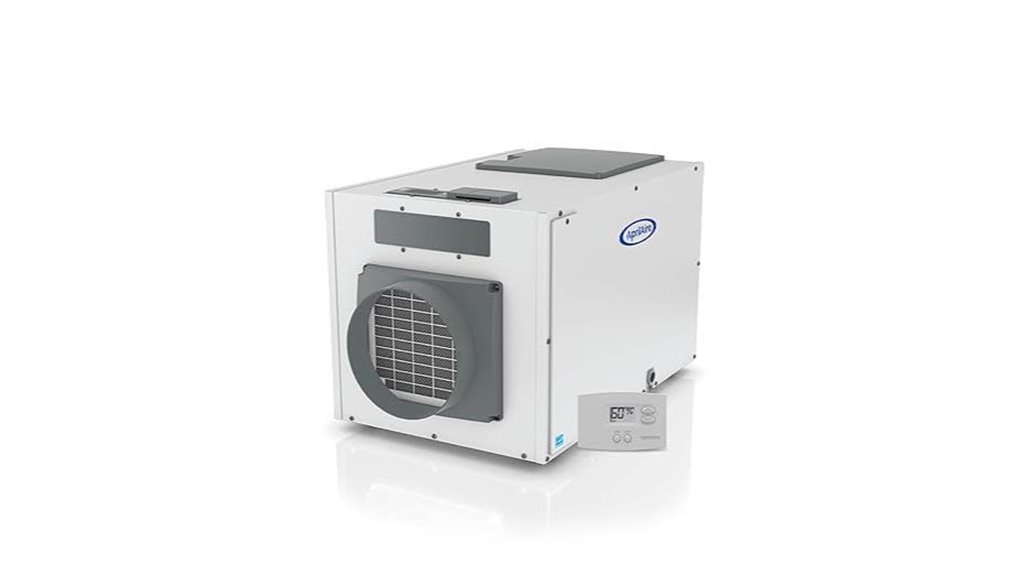
The AprilAire E130 is a strong choice for a large home that needs automatic, continuous humidity control. It removes up to 130 pints of moisture per day and is intended for crawl spaces, basements, or whole houses up to 7,200 square feet. It can operate as a stand-alone unit or connect to ductwork, making it more suitable for multi-room humidity control than a portable room dehumidifier.
The unit drains continuously, so there is no collection bucket to empty. Its built-in digital control can maintain a selected humidity level. The linked Amazon product is presented as a bundle with a Model 76 wall control, but seller bundle contents can change, so confirm the current listing before ordering. Professional installation is recommended for HVAC-connected setups and locations with limited service access.
Best For: Large homes that need a high-capacity, low-maintenance dehumidifier with whole-house ducting options.
Why You’ll Like It: It combines a verified whole-home design, high moisture-removal capacity, continuous drainage, automatic control, and flexible installation.
Who Should Buy This: Homeowners with a large floor plan, a damp basement or crawl space, or a ducted system that needs dedicated humidity control.
Who Should Avoid This: Buyers who only need occasional moisture control in one small room or who do not have a suitable drain and service location.
Pros:
- Designed for whole-house, basement, and crawl-space applications.
- Removes up to 130 pints per day and carries manufacturer guidance for homes up to 7,200 square feet.
- No collection bucket to empty during normal continuous-drain operation.
- Supports stand-alone and ducted installation with remote-control options.
Cons:
- Usually requires a larger budget than a portable dehumidifier.
- Ducted installation and control wiring may require an HVAC professional.
- Real coverage depends on climate, home layout, insulation, air leakage, and moisture load.
MOISWELL Marshal WD160 Whole-House Dehumidifier with Remote Controller
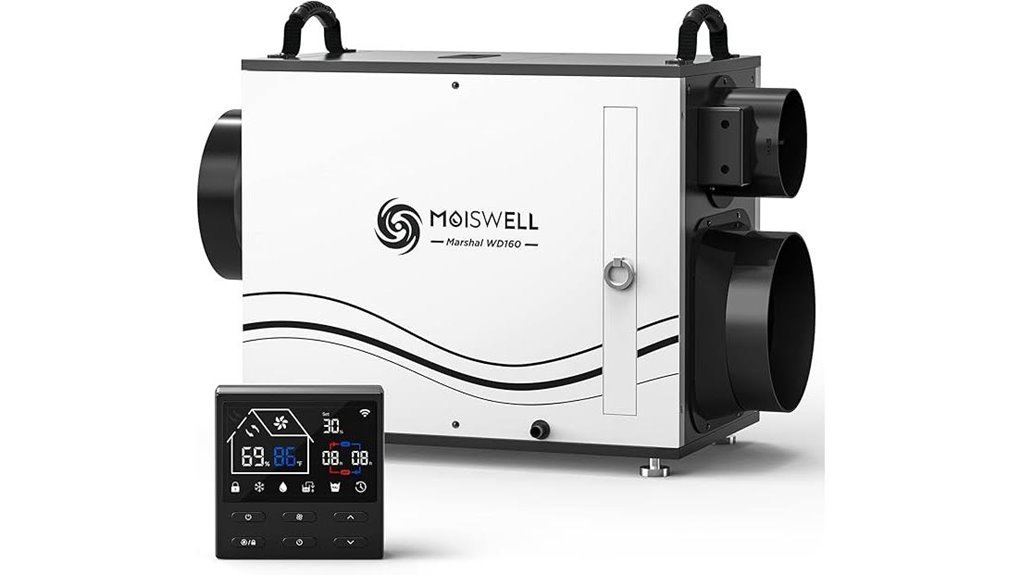
The MOISWELL Marshal WD160 is built for ducted whole-home humidity control in spaces up to about 2,500 square feet. Its main advantage is installation flexibility: it supports stand-alone operation, HVAC ducting, an adjustable air outlet, and a fresh-air intake. The manufacturer lists airflow at 330 CFM, which can support multi-room air movement when the duct layout is correctly designed.
Its capacity figures need context. The manufacturer lists a standardized rating of 65 pints per day and a maximum rating of up to 160 pints per day under hotter, more humid conditions. Use the 65-pint figure when making a closer comparison with other standardized ratings. The unit uses continuous gravity drainage, and an external condensate pump may be needed when water must travel upward.
Best For: Homeowners who want a ductable whole-house system with fresh-air capability and flexible outlet placement.
Why You’ll Like It: It offers strong airflow, HVAC-ready connections, remote control, automatic restart, and bucketless drainage.
Who Should Buy This: Buyers planning a dedicated-duct or HVAC-integrated installation where airflow routing and fresh-air intake are part of the design.
Who Should Avoid This: Buyers who want a simple plug-in room appliance or who cannot provide a gravity drain or external condensate pump.
Pros:
- Presented by the manufacturer as a whole-home dehumidifier.
- 330 CFM airflow supports properly designed multi-room ducting.
- Fresh-air intake adds ventilation flexibility when professionally planned.
- Automatic humidity control, restart, defrost, and error detection support low-attention operation.
Cons:
- The 160-pint maximum rating should not be compared directly with standardized pint ratings.
- Gravity drainage requires a properly sloped drain route or a separate pump.
- Fresh-air and HVAC integration require careful duct design to avoid unbalanced airflow or added humidity load.
AprilAire E070 Pro Dehumidifier Bundle (70 Pint)
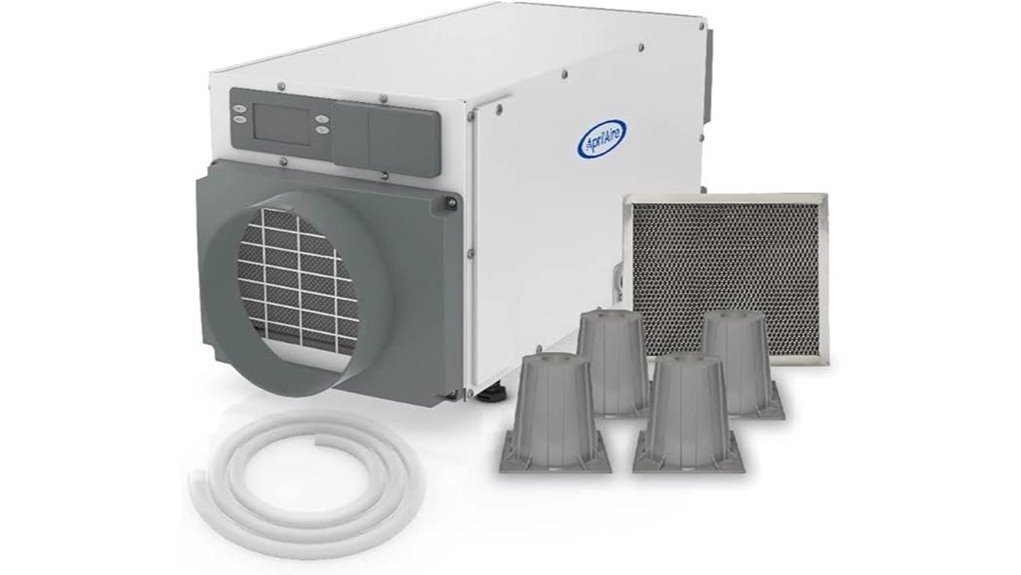
The AprilAire E070 is a professional-grade option for smaller homes, basements, and sealed crawl spaces. It removes up to 70 pints of moisture per day and can run as a stand-alone unit or connect to ductwork. Current manufacturer guidance lists whole-house use up to 2,200 square feet. Because older retailer pages may show a higher coverage figure, use the current manufacturer guidance and consider the home’s actual moisture load before sizing the unit.
The manufacturer supplies the E070 with duct collars, drain tubing, a washable MERV 8 filter, and other basic installation parts. The linked Amazon bundle may include additional accessories, but the exact seller package should be confirmed before purchase. Automatic humidity sensing, continuous drainage, auto-defrost, and a washable filter make it easier to maintain than a portable tank-style unit. Professional installation is recommended for ducted use.
Best For: Smaller homes or targeted basement and crawl-space humidity control where a 70-pint professional unit is appropriately sized.
Why You’ll Like It: It offers a verified whole-home design in a smaller-capacity package with stand-alone and ducted installation options.
Who Should Buy This: Homeowners with a smaller floor plan, a sealed crawl space, or a basement that needs continuous automatic dehumidification.
Who Should Avoid This: Owners of large, leaky, or extremely humid homes that may need more capacity and airflow.
Pros:
- Suitable for whole-house, basement, or crawl-space use in smaller properties.
- Continuous drainage removes the need for a collection bucket.
- Automatic humidity control and defrost support low-attention operation.
- Manufacturer-supplied duct collars and drain tubing support flexible installation.
Cons:
- May be undersized for a large, leaky, or very humid home.
- Ducted installation can add labor and material costs.
- Retailer coverage and accessory claims may differ from current manufacturer information.
Factors to Consider When Choosing a Whole-Home Dehumidifier
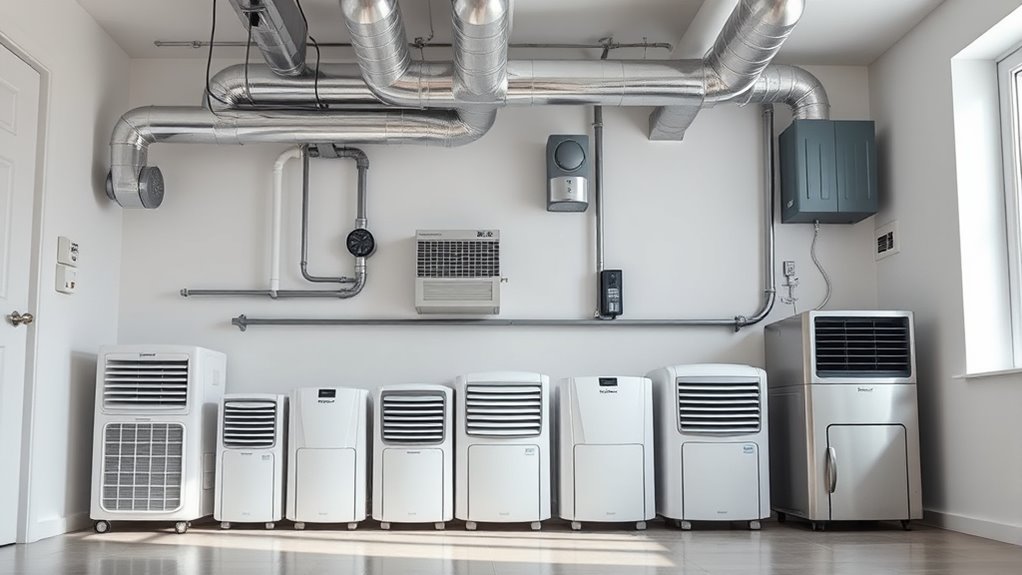
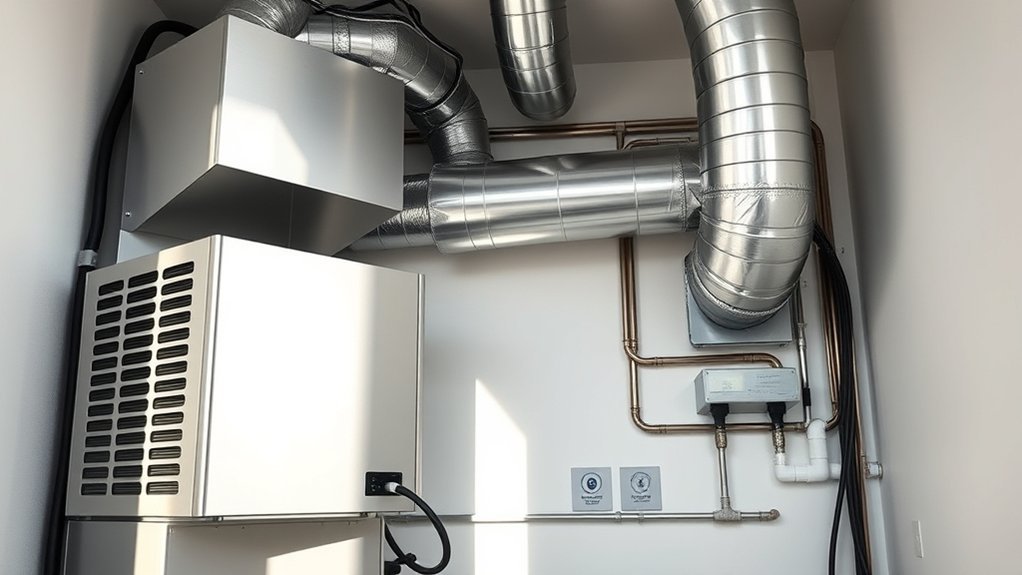
A true whole-home dehumidifier is more than a high-capacity portable appliance. It needs a practical continuous-drain system, enough airflow for the intended area, service access, and an installation plan that lets humid air reach the unit and dry air return to the home. Use the points below to compare models fairly.
Whole-House Design vs. Portable or Crawl-Space-Only Design
Check the manufacturer’s product type before comparing square-foot claims. A whole-house model is usually bucketless, supports continuous drainage, and can operate with dedicated ducts or an HVAC system. A crawl-space model may protect the home indirectly by controlling moisture below the living area, but it is not automatically a whole-house system. For multi-room control, verified whole-home support, ducting, and airflow paths matter more than a large marketing coverage number.
Moisture-Removal Capacity
Capacity is measured in pints per day, but not every headline number uses the same test conditions. Standardized DOE or AHAM-style ratings are more useful for direct comparisons. Some manufacturers also publish a larger maximum or saturation rating measured at high temperature and high relative humidity. Always compare like with like, and expect actual water removal to decrease as the air becomes cooler or drier.
Coverage Area and Airflow
Square-foot guidance is only a starting point. Home layout, ceiling height, climate, insulation, air leakage, basement moisture, and room separation all affect performance. Airflow, measured in CFM, matters because the system must move humid air to the unit and return dry air to the home. A professional load assessment is helpful for large homes, complex duct systems, or severe moisture problems.
Ducting and HVAC Compatibility
Decide whether the unit will run independently, connect to the HVAC return and supply, or use dedicated ducts. Check collar sizes, approved duct layouts, static-pressure limits, airflow direction, and control wiring before buying. Poor duct design can reduce airflow, create noise, interfere with HVAC operation, or leave some rooms more humid than others.
Drainage Options
Whole-home dehumidifiers normally need continuous drainage. Gravity drainage is simple and reliable when the hose can slope downward all the way to a floor drain. A condensate pump is needed when water must move upward or across a route that cannot maintain continuous slope. Check the installation manual for approved drain fittings, hose size, trap requirements, pump lift, and drain placement.
Controls and Monitoring
A built-in humidistat can start and stop the unit automatically. A wired wall control or remote sensor is useful when the dehumidifier sits in a crawl space, attic, basement, or mechanical room. A wired remote is not the same as Wi-Fi app control. For HVAC integration, confirm that the thermostat, control panel, and dehumidifier support the intended wiring method.
Energy Efficiency
Whole-home dehumidifiers may run for long periods, so efficiency matters. Compare standardized efficiency information, rated water removal, airflow, and power requirements when available. Correct sizing is also important. An undersized unit may run continuously without reaching the target, while an oversized or poorly controlled system may cycle more than necessary.
Noise and Placement
Large dehumidifiers use compressors and powerful fans, so they are not silent. Placement in a basement, crawl space, utility room, or insulated mechanical area can reduce the sound heard in living spaces. Duct size, vibration isolation, fan speed, and mounting method also affect noise. Do not rely on an unverified “whisper-quiet” claim when the manufacturer does not publish a sound rating.
Installation, Maintenance, and Warranty
Plan for filter access, coil cleaning, drain inspection, electrical requirements, and future repairs. Measure the installation area and leave the service clearances required by the manual. Ducted systems are usually best installed by an HVAC professional. Review the written warranty before purchase, including registration rules, labor coverage, compressor terms, approved installation requirements, and maintenance exclusions.
Before You Buy
- Measure the home and identify where humid air will enter the unit.
- Confirm that the manufacturer supports your intended whole-home or ducted use.
- Choose stand-alone, dedicated-duct, or HVAC-connected installation.
- Plan a gravity drain or condensate-pump route.
- Compare standardized capacity instead of maximum high-humidity capacity alone.
- Check voltage, circuit requirements, duct sizes, filter clearance, and service access.
- Confirm exactly which controls, hoses, collars, filters, and accessories are included.
Frequently Asked Questions
How Often Should a Whole-Home Dehumidifier Be Serviced?
Inspect the filter and drain regularly according to the manufacturer’s schedule. Many systems benefit from a professional check once a year, especially when connected to HVAC ductwork. Arrange service sooner if you notice leaks, ice buildup, unusual noise, odors, drainage problems, or declining performance.
Can a Whole-Home Dehumidifier Improve Indoor Air Quality?
It can improve comfort and reduce the damp conditions associated with condensation and musty odors. However, a dehumidifier is not an air purifier and does not replace leak repair, source control, ventilation, or proper HVAC filtration.
What Size Drain Line Does a Whole-Home Dehumidifier Need?
Drain connection sizes vary by model. Follow the installation manual rather than assuming one hose size works for every unit. Gravity lines need a continuous downward slope, while upward drainage requires an approved condensate pump and tubing that matches the pump instructions.
Are Whole-Home Dehumidifiers Compatible With Smart Thermostats?
Some are, but compatibility depends on the dehumidifier, thermostat, HVAC equipment, and wiring method. A wired remote humidistat does not automatically mean smart-home compatibility. Check both manufacturers’ wiring diagrams or ask an HVAC technician before connecting controls.
Do Whole-Home Dehumidifiers Need HVAC Ductwork?
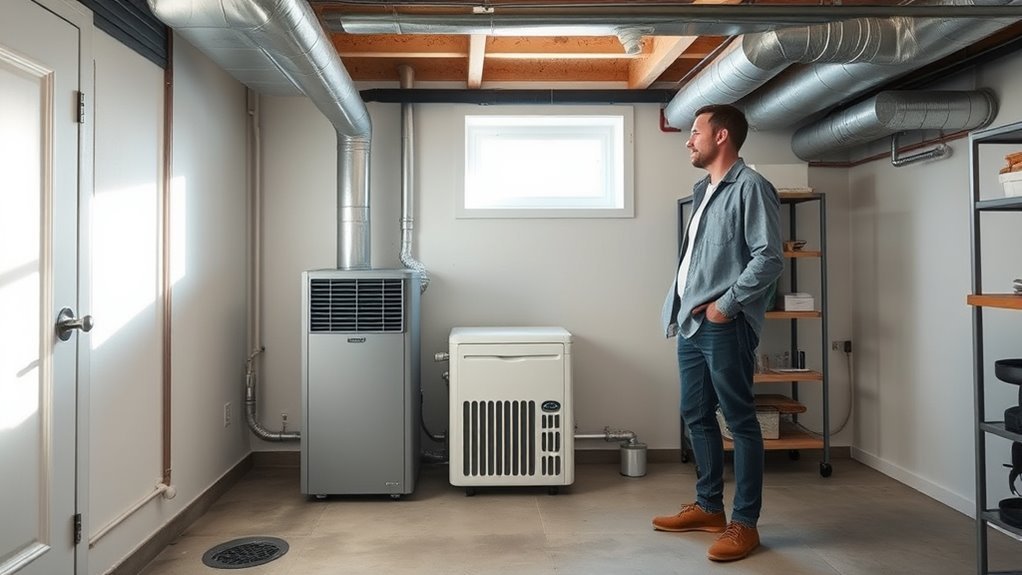
No. Many professional models can run as stand-alone units in a basement or sealed crawl space. Ductwork becomes useful when you need to pull humid air from several rooms or distribute dry air through the home. The right setup depends on the floor plan, air pathways, and moisture source.
Can a Crawl-Space Dehumidifier Control a Whole House?
Sometimes it can reduce moisture entering the home from a sealed crawl space, but that does not automatically make it a whole-house dehumidifier. A true multi-room system needs enough airflow, suitable duct connections, and a return-and-supply plan that reaches the living areas. Check the manufacturer’s approved applications before using a crawl-space model as a whole-home solution.
What Humidity Level Should I Set?
Many homeowners start near 45% to 50% relative humidity and adjust for comfort, climate, and condensation risk. Avoid setting the target lower than necessary because that can increase runtime and energy use. A local HVAC or moisture-control professional can help when the home has persistent dampness or structural moisture.
How Much Noise Do Whole-Home Dehumidifiers Make?
Noise varies by compressor, fan speed, duct design, mounting, and distance from living areas. A unit installed in a crawl space or mechanical room may be less noticeable than one placed beside a bedroom. Check for a published sound rating and use vibration isolation when the installation guide allows it.
Final Recommendation
Choose a model based on the installation plan and standardized capacity, not just the largest square-foot or maximum pint claim. The AprilAire E130 is the best all-around option here for a large home. The MOISWELL Marshal WD160 is a strong choice for ducted HVAC integration and fresh-air flexibility. The AprilAire E070 is better sized for a smaller home, basement, or sealed crawl space.
Best Buying Advice:
Confirm the current standardized capacity, manufacturer coverage guidance, included controls, duct sizes, drain requirements, electrical needs, service clearances, and warranty before ordering. For a ducted whole-house setup, professional sizing and installation can matter as much as the product itself.