Last updated: August 1, 2026
Florida homes face long periods of warm, humid weather, so the best dehumidifier is not simply the model with the largest number on the box. You need enough standardized moisture-removal capacity, dependable humidity control, and a drainage setup that works in your room. After comparing the three relevant models in this guide, the Frigidaire FHDD5034Y1 50 Pint Dehumidifier with Wi-Fi is the strongest all-around choice. The Yaufey JD025Q-80 and Waykar JD025CE-80 are compact alternatives for moderate room-level moisture loads, but their advertised 80-pint maximums should not be confused with their 24.93-pint standardized ratings.
How these picks were compared
The ranking is based on model-specific standardized capacity, maximum advertised capacity, tank size, drainage method, humidity controls, efficiency data, portability, and important limitations. Advertised square-foot coverage was treated as a general marketing estimate rather than proof that a unit can control every home of that size. No hands-on testing is claimed.
Quick Comparison
| Product | Best For | Standardized Capacity | Advertised Maximum | Tank | Drainage | Standout Feature |
|---|---|---|---|---|---|---|
| Frigidaire FHDD5034Y1 | Best overall and smart control | About 50 pints/day | 50 pints/day | 2.7 gallons | Bucket or gravity drain; hose may be separate | Wi-Fi app, Alexa, and Google Home support |
| Yaufey JD025Q-80 | Best compact alternative | 24.93 pints/day | 80 pints/day at 95°F and 90% RH | 1.06 gallons | Bucket or included 3.28-foot gravity-drain hose | Compact cabinet with three fan speeds |
| Waykar JD025CE-80 | Best simple continuous-drain alternative | 24.93 pints/day | 80 pints/day in hot, humid test conditions | About 1.14 gallons on the selected listing | Bucket or included gravity-drain hose | Straightforward humidistat and timer controls |
Important: Capacity figures measured under different temperature and humidity conditions are not directly comparable. Use the standardized pints-per-day rating first, then consider dampness, air leakage, ceiling height, room separation, HVAC operation, and drainage access. Confirm current specifications on the exact Amazon variation before ordering because listing fields can change.
Frigidaire 50 Pint Dehumidifier w/Wifi
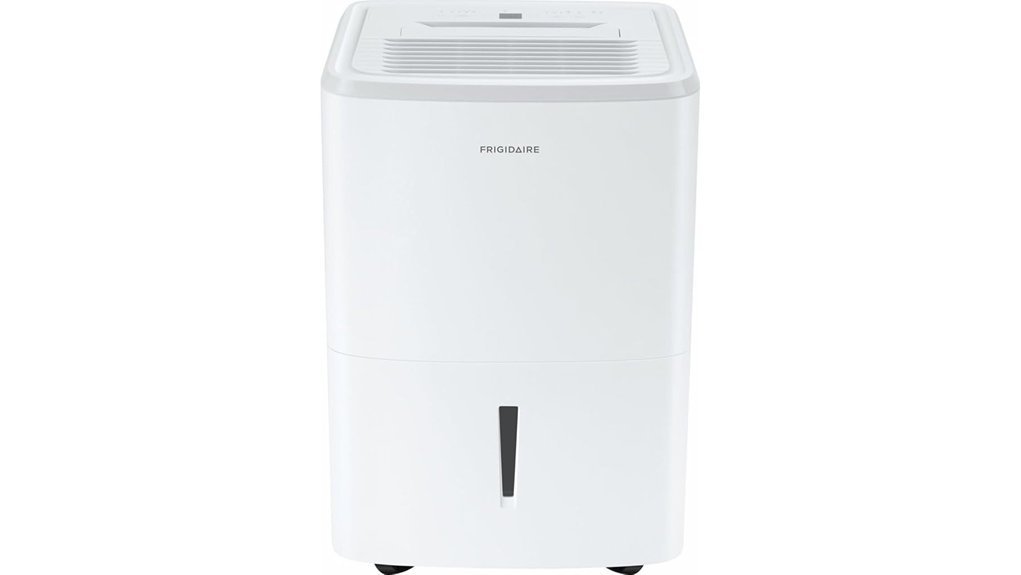
Best Overall: The Frigidaire FHDD5034Y1 is the most capable choice in this group for a damp Florida living area, laundry room, utility room, or other enclosed space. Its standardized removal capacity is approximately 50 pints per day, and its 2.7-gallon bucket is substantially larger than the tanks in the other two picks. It also supports continuous gravity drainage when a suitable hose can run downhill to a drain.
Why You’ll Like It: The Frigidaire app lets you turn the unit on or off, adjust humidity, change fan speed, and create schedules remotely. The model also supports Alexa and Google Home controls. Its electronic humidistat can be set from 35% to 85% RH, while three fan speeds let you balance moisture removal and sound.
Problem It Solves: This is the best fit of the three when a smaller 24.93-pint unit would be likely to run for long periods or struggle with a heavily damp enclosed area.
Best For: Buyers who want the strongest standardized capacity in this comparison, a large bucket, smart controls, and the option to use continuous drainage.
Who Should Avoid It: Buyers who need a built-in condensate pump or an especially quiet bedside unit. Its listed sound range is 47 to 51 dBA, and gravity drainage requires a continuously downward-sloping hose.
Pros:
- Higher standardized capacity: Removes approximately 50 pints per day under the applicable standardized test method.
- Large bucket: The 2.7-gallon tank reduces manual emptying compared with the smaller alternatives.
- Smart controls: Wi-Fi, app scheduling, Alexa, and Google Home support add useful convenience.
- Energy Star certified: Its listed integrated energy factor is 2.01 L/kWh.
- Flexible operation: Includes three fan speeds, automatic shutoff, auto restart, and continuous-drain capability.
Cons:
- Noticeable operating sound: The listed 47 to 51 dBA range may be distracting in a very quiet bedroom.
- No built-in pump: Water cannot be pushed upward to a sink or elevated drain.
- Drain hose may be separate: Confirm what is included with the selected Amazon offer.
- Limited standard warranty: The listed labor coverage is one year.
Yaufey 5000 Sq. Ft. Energy Star Dehumidifier
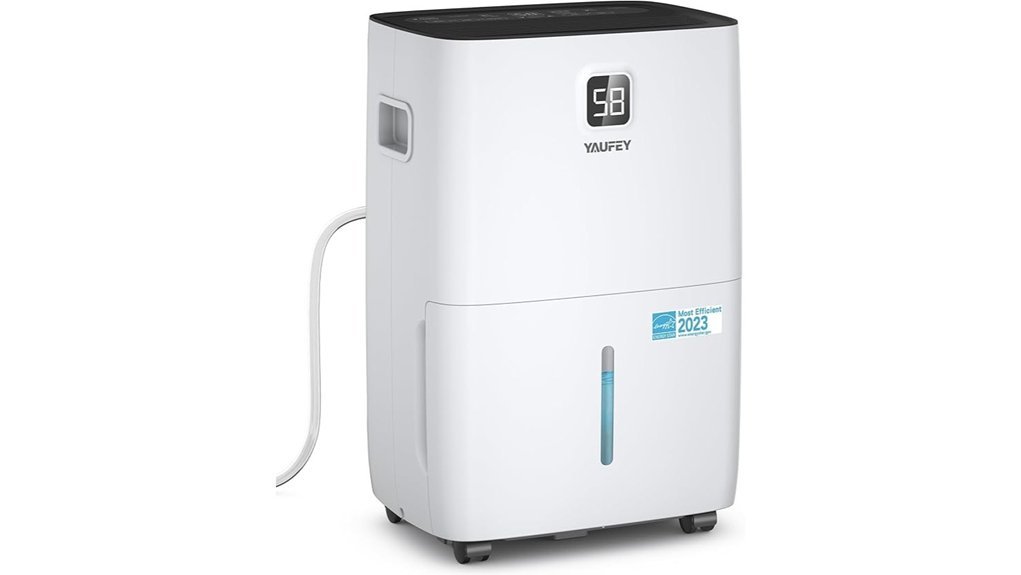
Best Compact Alternative: The Yaufey JD025Q-80 is an Energy Star certified portable dehumidifier with a 1.06-gallon tank, an included 3.28-foot drain hose, caster wheels, automatic shutoff, automatic defrost, and adjustable humidity control from 30% to 80% RH. Its “80-pint” label is a maximum measured at 95°F and 90% RH. Under the standardized test condition, its verified capacity is 24.93 pints per day.
Why You’ll Like It: The cabinet is more compact than many conventional 50-pint units, and three fan speeds provide more control than a basic one-speed design. Continuous gravity drainage can make it convenient for a laundry room, utility area, or conditioned garage with a nearby lower drain.
Problem It Solves: It provides automated humidity control without requiring the floor space, bucket size, or higher standardized capacity of the Frigidaire.
Best For: Moderate dampness in one enclosed room where compact dimensions and an included short drain hose are more important than maximum standardized capacity.
Who Should Avoid It: Buyers who need a true standardized 50-pint unit for persistent high humidity, active water intrusion, several connected rooms, or a large open-plan home.
Pros:
- Verified efficiency: Listed at 24.93 pints per day with an integrated energy factor of 1.7 L/kWh.
- Included drain hose: The selected listing includes a short hose for continuous gravity drainage.
- Useful controls: Includes a 24-hour timer, digital display, auto restart, auto shutoff, automatic defrost, and adjustable humidity control.
- Three fan speeds: Offers more airflow flexibility than a basic two-speed model.
- Portable design: Handles and caster wheels make movement between rooms easier.
Cons:
- Headline rating needs context: The advertised 80-pint figure is not its standardized daily capacity.
- Small bucket: The 1.06-gallon tank may require frequent emptying during humid weather.
- Short included hose: The supplied hose may not reach a distant drain.
- No built-in pump: The drain point must be lower than the outlet.
- Coverage claim is not a sizing guarantee: The advertised 5,000-square-foot figure should not replace sizing by standardized capacity and actual moisture load.
Waykar 80 Pints Energy Star Dehumidifier for Home
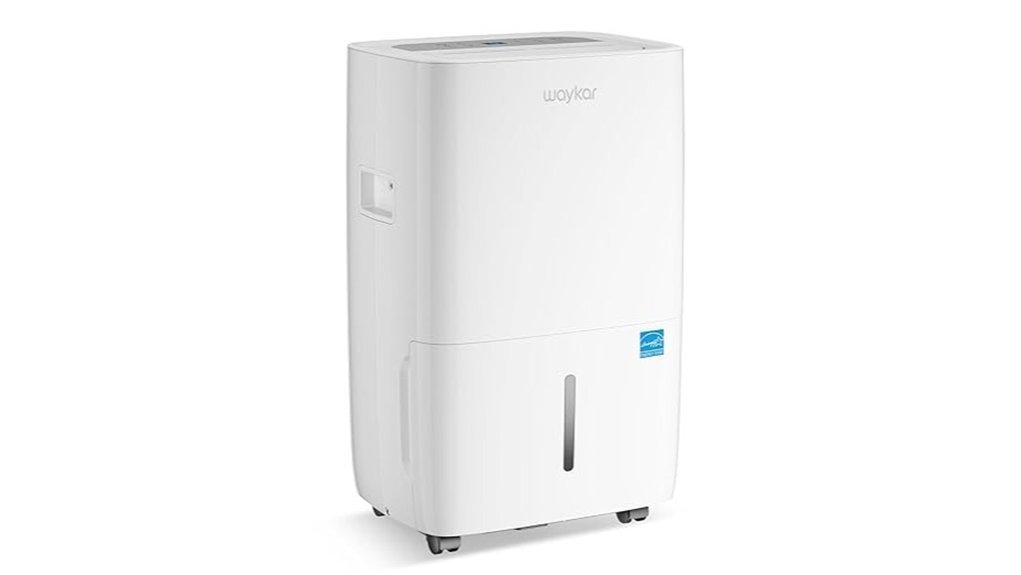
Best Simple Continuous-Drain Alternative: The Waykar JD025CE-80 is an Energy Star certified compressor model marketed for spaces up to 5,000 square feet. Its standardized capacity is 24.93 pints per day, while the advertised 80-pint maximum is based on hotter and more humid conditions. It is therefore better viewed as a room-level humidity-control unit than as a solution for an entire leaky or poorly conditioned Florida home.
Why You’ll Like It: The Waykar provides adjustable humidity control from 30% to 80% RH, a 24-hour timer, automatic defrost, a washable filter, automatic shutoff, and both bucket and continuous gravity drainage. A drain hose is included with the selected listing, which reduces the need to purchase a separate hose for a basic setup.
Problem It Solves: It provides straightforward automatic humidity control for an enclosed room where you can route collected water to a nearby lower drain.
Best For: Buyers who want simple controls, Energy Star certification, and continuous drainage for a moderately damp room.
Who Should Avoid It: Buyers who are choosing only by the 80-pint headline, who need verified 50-pint standardized performance, or who must pump water upward.
Pros:
- Verified standardized rating: Listed at 24.93 pints per day with a 1.7 L/kWh integrated energy factor.
- Automatic humidity control: The humidistat cycles operation around the selected target.
- Two drain methods: Use the tank or connect the included hose for gravity drainage.
- Convenient operation: Includes a timer, automatic shutoff, automatic defrost, and a washable filter.
- Portable layout: Casters and handles make it easier to reposition within the home.
Cons:
- Marketing versus standardized rating: The 80-pint maximum can make comparison with standardized models confusing.
- No built-in pump: The hose must run downhill to a suitable drain.
- Moderate standardized capacity: It has the same 24.93-pint standardized rating as the Yaufey, despite its large advertised coverage figure.
- Listing fields may conflict: Verify the selected variation’s tank and included accessories before purchase.
Factors to Consider When Choosing a Dehumidifier for a Florida Home
A Florida home can stay damp because of outdoor-air leakage, short air-conditioner cycles, shower and cooking moisture, an unvented clothes dryer, plumbing leaks, roof leaks, blocked HVAC drains, or storm damage. A portable dehumidifier can help control airborne moisture, but it cannot repair the source. Use the points below to choose the right capacity and drainage setup.
Compare Standardized Capacity First
Do not assume every “50-pint” or “80-pint” label uses the same test. Some manufacturers publish maximum moisture removal measured near 95°F and 90% RH, while standardized DOE and Energy Star ratings use cooler, controlled conditions. Compare exact model numbers and standardized pints per day before comparing advertised maximums.
The Frigidaire has approximately twice the standardized capacity of the Yaufey and Waykar models in this article. That difference is more meaningful than their advertised square-foot figures.
Size by Moisture Load, Not Floor Area Alone
Floor area is only one part of sizing. Ceiling height, open doorways, outdoor-air leakage, HVAC operation, occupancy, laundry, showers, and active water entry all affect the moisture load. A room that merely feels clammy needs less capacity than one with condensation, wet flooring, seepage, or repeatedly high humidity.
A modestly higher-capacity unit may reach the target faster in a damp room, but a portable machine should not be expected to correct leaks, flood damage, or a whole-home HVAC problem. If several rooms remain humid, have the home and air-conditioning system evaluated instead of adding multiple small units without finding the cause.
Decide Between Portable and Whole-Home Control
A portable dehumidifier works best in one enclosed area where air can circulate through the unit. It becomes less effective when doors remain open to several rooms or humid outdoor air continually enters the space.
Consider a ducted whole-home dehumidifier or an HVAC assessment when humidity remains high throughout the house, the air conditioner cools the home without removing enough moisture, or a portable unit runs almost continuously without reaching the target.
Choose a Realistic Humidity Target
A practical starting target is 45% to 50% RH. Keep indoor humidity below 60%, and ideally within the broader 30% to 50% range when conditions and comfort allow. Very low settings can increase runtime and energy use without solving the source of a moisture problem.
Use a separate hygrometer away from the dehumidifier’s outlet to compare readings. A sensor located inside the machine may not match humidity in the far side of the room.
Plan the Drainage Before Buying
Florida humidity can fill a small bucket quickly. Continuous gravity drainage is the easiest option when a floor drain, shower drain, or approved sink connection is lower than the dehumidifier outlet.
- Keep the hose continuously sloped downward.
- Avoid loops, raised sections, pinches, and sharp bends.
- Choose a short route that will not create a tripping hazard.
- Inspect and flush the hose periodically to prevent buildup or blockage.
- Keep drainage hoses away from electrical cords and connections.
- Choose a built-in-pump model when water must move upward to the drain.
Check Energy Star and IEF
Energy Star certification confirms that a model meets applicable efficiency requirements. The integrated energy factor, measured in liters of water removed per kilowatt-hour, provides a more useful efficiency comparison than a vague promise of a fixed percentage or dollar amount of savings.
Actual operating cost still depends on the humidity setting, room conditions, runtime, electricity rate, airflow, filter cleanliness, and how well the space is sealed.
Match Noise and Heat to the Room
Compressor dehumidifiers produce fan and compressor noise and normally release air that feels slightly warmer than the surrounding room. A listed sound level near 40 dBA may be easier to tolerate in a bedroom than one near 50 dBA, although brands may use different sound-test methods.
Place the unit on a level, solid surface and maintain the clearance required by its manual. Do not block the air inlet or outlet with furniture, curtains, storage boxes, or walls.
Check the Moisture Source
A portable dehumidifier should support moisture control, not hide a building problem. Inspect for plumbing leaks, roof leaks, wet drywall, clogged HVAC condensate drains, missing bathroom ventilation, dryer exhaust problems, and humid outdoor air entering through gaps or open doors.
Water-damaged materials and visible mold require appropriate cleanup and correction of the water source. Lowering humidity alone does not remove existing mold.
Before You Buy Checklist
- Confirm the exact model number and standardized pints-per-day rating.
- Judge whether the enclosed area is moderately damp, very damp, or actively wet.
- Do not rely on advertised square-foot coverage alone.
- Check the tank size and estimate how often it may need emptying.
- Confirm whether a drain hose is included and whether it reaches the drain.
- Make sure the drain point is lower than the outlet unless the unit has a pump.
- Confirm the operating-temperature range for garages or cooler rooms.
- Look for auto restart if brief power interruptions are common.
- Confirm the required airflow clearance and electrical instructions.
- Keep windows and exterior doors closed while the unit is operating.
- Fix leaks, blocked drains, and outdoor-air entry instead of relying on the dehumidifier alone.
Frequently Asked Questions
What Size Dehumidifier Do I Need for My Florida Home?
Use the standardized capacity, room layout, and actual moisture load rather than the advertised maximum or square-foot number alone. A 24.93-pint model can suit moderate dampness in one enclosed room, while a standardized 50-pint model provides more capacity for a wetter or larger enclosed space. Persistent whole-home humidity may require an HVAC evaluation or a ducted whole-home dehumidifier.
What Humidity Setting Is Best in Florida?
Start around 45% to 50% RH and adjust for comfort and runtime. Keep indoor humidity below 60%. A separate hygrometer can help confirm whether the dehumidifier’s sensor represents conditions across the room.
Can a Dehumidifier Remove Mold?
No. A dehumidifier can reduce the moisture that supports mold growth, but it does not remove existing mold or repair the water source. Clean or remediate affected materials appropriately and fix leaks, condensation, or drainage problems.
Can Dehumidifiers Reduce Allergens in the Air?
Lower humidity may make the room less favorable for mold and dust mites, but a dehumidifier is not a replacement for an air purifier or a properly maintained HVAC filter. The washable filter in a dehumidifier mainly protects the appliance from larger dust and debris.
How Often Should I Empty the Water Tank?
Check the tank at least daily during the first week. A small tank may fill several times per day in a humid room, while the unit should stop automatically when the bucket is full. Use continuous drainage when practical and inspect the hose regularly for poor slope, kinks, or buildup.
Should I Run a Dehumidifier With Windows Open?
No. Close windows and exterior doors while the unit is operating. Otherwise, humid outdoor air continually enters the room, increasing runtime and making it harder to reach the selected target.
Will a Dehumidifier Cool a Florida Room?
No. A compressor dehumidifier usually releases slightly warmer air after removing moisture. The room may feel more comfortable because it is less humid, but the appliance is not an air conditioner and does not provide net cooling.
Can I Use a Dehumidifier After a Leak or Flood?
A dehumidifier can support drying after the water source has been stopped and the area is electrically safe, but it is not a substitute for water extraction, removal of damaged materials, mold cleanup, or professional restoration. Large leaks, contaminated water, wet walls, and storm flooding may require qualified help.
When Should I Consider a Whole-Home Dehumidifier?
Consider a ducted system or HVAC evaluation when humidity remains above 60% throughout the home, several rooms are affected, a portable unit runs almost constantly, or the air conditioner reaches the temperature setting without controlling moisture. Recurring leaks, condensation, or blocked HVAC drainage should also be inspected.
Conclusion
The Frigidaire FHDD5034Y1 50 Pint Dehumidifier with Wi-Fi is the best overall choice in this comparison because it provides approximately 50 pints per day of standardized capacity, a 2.7-gallon bucket, continuous-drain capability, and useful app controls. It is the strongest option here for a wetter enclosed Florida living area, laundry room, or utility space.
The Yaufey JD025Q-80 and Waykar JD025CE-80 are valid compact alternatives for moderate room-level humidity control. Both have a standardized capacity of 24.93 pints per day, so their advertised 80-pint maximums and 5,000-square-foot claims should not be treated as equivalent to standardized 80-pint performance.