Last updated: August 2026
Choosing a dehumidifier in Australia requires more than comparing tank size, advertised room coverage, or extra features. The appliance must suit the temperature and moisture conditions in your room, while also being compatible with Australian household power and supplied through an appropriate local compliance pathway. Before buying, check the rating label, Australian plug, warranty support, responsible supplier, and Regulatory Compliance Mark (RCM).
Quick Verdict:
For a warm, humid laundry, bedroom, or living area, a refrigerant or compressor dehumidifier is usually the most practical starting point. For a cool or unheated room, a desiccant model may remove moisture more consistently. Thermoelectric models are better reserved for wardrobes, cupboards, and other small enclosed spaces. Whichever technology you choose, confirm Australian electrical suitability before comparing convenience features.
Australian Electrical Safety Check
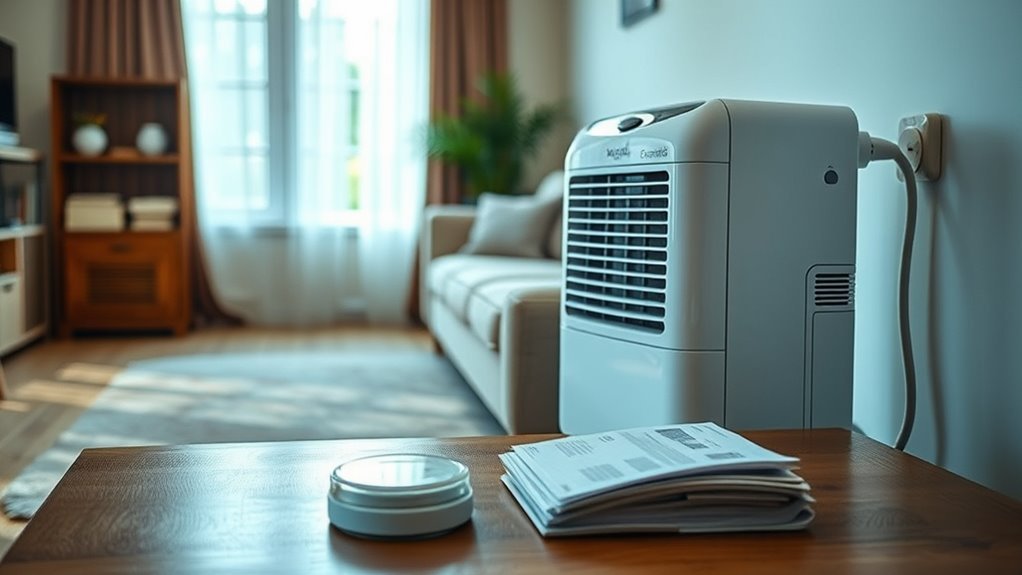
Check that the rating label is compatible with Australia’s nominal 230V, 50Hz household supply. Also look for an Australian plug, the RCM, and details of the Australian or New Zealand responsible supplier. A plug adaptor changes the physical connection only; it does not establish that an overseas appliance meets Australian electrical requirements.
Learn more from the Electrical Equipment Safety System’s RCM guidance and the ACCC guidance on parallel imports.
How to Choose a Dehumidifier in Australia
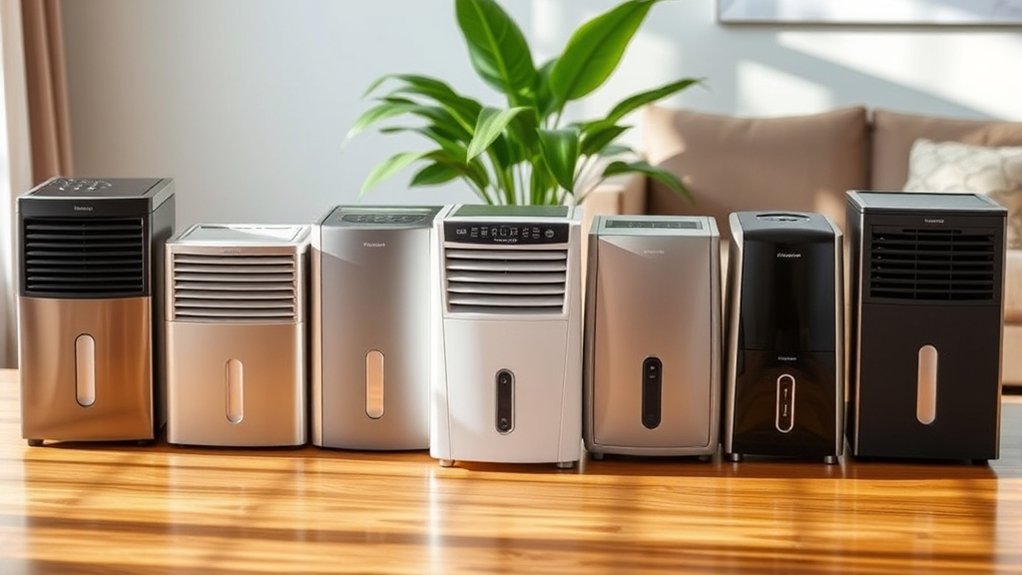
The right model depends on the room temperature, severity of the moisture problem, size and layout of the space, and how often the appliance will run. A compact unit may help with light moisture in a wardrobe, while persistent condensation in a laundry, bedroom, garage, or open living area usually calls for a stronger machine with a proper humidistat and drainage option.
1. Check Australian Electrical Approval
This should be the first check, not the last. Look for an Australian plug and the Regulatory Compliance Mark (RCM) on or near the appliance’s identification or rating information. Confirm that the voltage and frequency shown on the rating label are compatible with Australian household supply.
- Prefer a seller that clearly identifies the Australian or New Zealand responsible supplier or importer.
- Ask for a clear photo of the model number, rating label, plug, and RCM when the listing does not show them.
- Confirm that the warranty is valid in Australia and identify who will handle repairs, returns, and spare parts.
- Do not rely only on an overseas approval mark, plug adaptor, marketplace shipping option, or claim of “international compatibility.”
- Use the EESS public information as one compliance check, while remembering that registration of individual Level 1 equipment may be voluntary.
2. Choose the Right Dehumidifier Technology
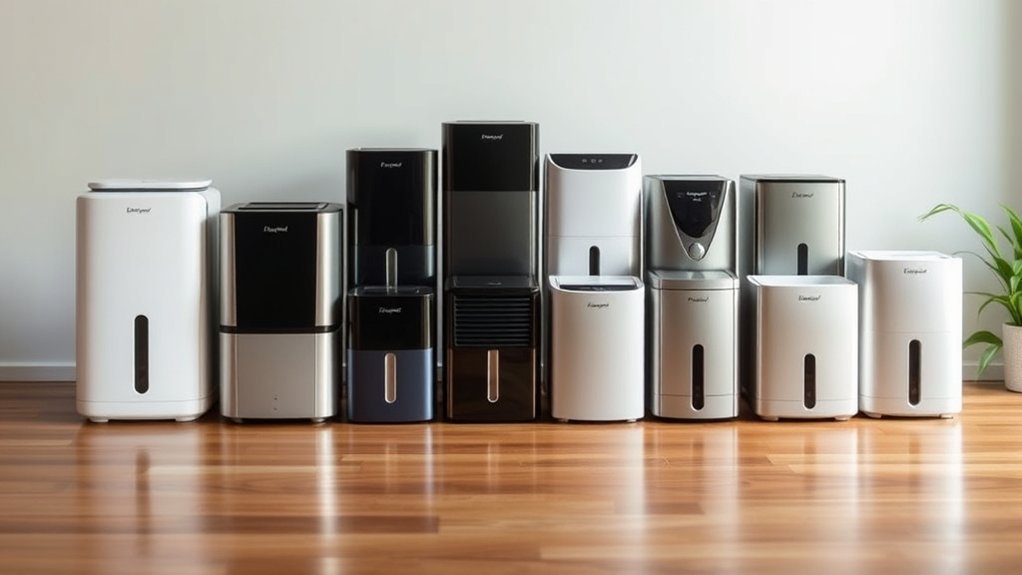
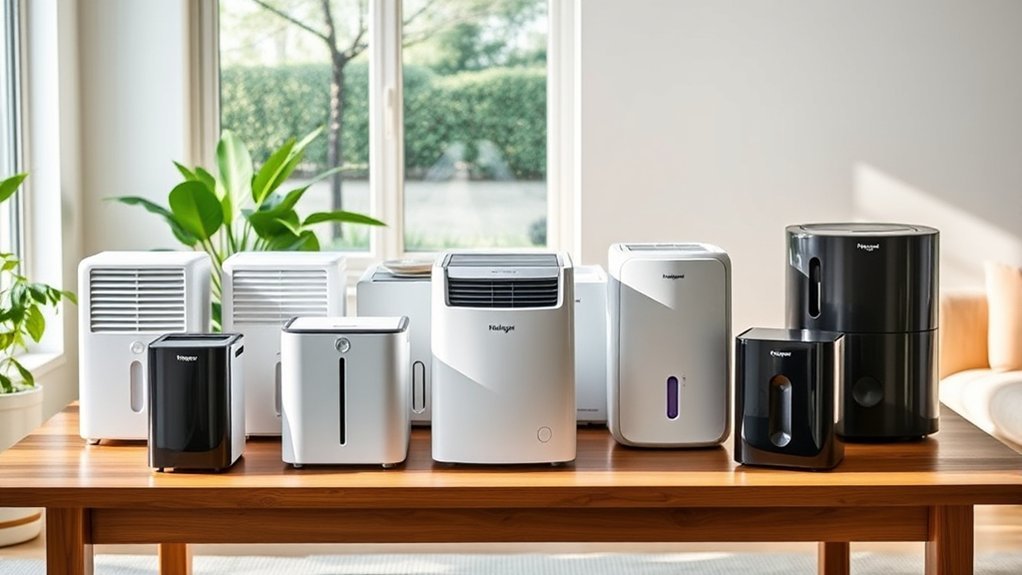
Refrigerant or compressor dehumidifiers are generally better suited to warm, humid rooms. They commonly offer stronger extraction than compact thermoelectric units and are a practical option for laundries, bedrooms, living areas, and other regularly occupied spaces.
Desiccant dehumidifiers can maintain more consistent moisture removal in cool rooms because their performance is less dependent on warm air. They may suit winter condensation, garages, storage rooms, or colder regions, although they can consume more power and release more warmth into the room.
Thermoelectric or Peltier dehumidifiers are compact and often quieter, but they usually remove much less moisture. Treat them as small-space appliances rather than substitutes for a full-size room dehumidifier.
| Technology | Best Suited To | Main Advantage | Main Limitation |
|---|---|---|---|
| Refrigerant or compressor | Warm, humid bedrooms, laundries, living areas, and larger rooms | Usually provides stronger extraction in warm conditions | Performance can fall in colder rooms, and the compressor adds noise |
| Desiccant | Cool or unheated rooms, winter condensation, garages, and storage areas | Can work more consistently at lower room temperatures | May use more electricity and release noticeable heat |
| Thermoelectric or Peltier | Wardrobes, cupboards, caravans, and very small enclosed spaces | Compact, lightweight, and often relatively quiet | Low extraction capacity makes it unsuitable for persistent room-wide dampness |
3. Compare Water Extraction, Not Just Marketing Coverage
Square-metre coverage claims can be difficult to compare because performance changes with room temperature, starting humidity, airflow, room layout, and the test conditions used by the manufacturer. A more useful starting figure is the rated water extraction in litres per day, together with the temperature and relative humidity used for that rating.
A machine rated under very warm and extremely humid laboratory conditions may collect substantially less water in a cool room during winter. When comparing models, look for the following information:
- Rated extraction in litres per day
- Temperature and relative humidity used for the extraction test
- Recommended operating-temperature range
- Tank capacity and full-tank shut-off
- Continuous-drain capability and hose requirements
- Power input in watts
- Noise level at each available fan speed
4. Look for an Adjustable Humidistat
A humidistat allows the appliance to cycle on and off around a selected relative-humidity target instead of running continuously. A practical monitoring band for many homes is approximately 40% to 60% relative humidity, but this should be treated as general guidance rather than a universal health threshold.
Use a separate hygrometer when possible and watch for real signs of excess moisture, including condensation on windows, damp cupboards, musty odours, or recurring surface mould. Start with a moderate setting and adjust gradually rather than forcing the room to become unnecessarily dry.
Choose a model with a clear digital display and selectable humidity targets. Basic “low, medium, and high” controls make it harder to understand what level the appliance is maintaining.
5. Check Tank Size and Continuous Drainage
A small tank keeps the appliance compact but may require frequent emptying during damp weather. A larger tank reduces interruptions, while continuous gravity drainage is useful in laundries, garages, storage rooms, and other locations where the unit may operate for extended periods.
- Check that the tank is easy to remove, carry, empty, and clean.
- Confirm whether a drain hose is included or must be purchased separately.
- Check the required hose diameter and maximum practical hose length.
- Make sure a gravity-drain hose can run continuously downhill without kinks or raised sections.
- Look for automatic shut-off when the tank is full, missing, or incorrectly fitted.
- Do not assume “continuous drainage” means the appliance has a built-in pump.
6. Consider Noise in Bedrooms and Living Areas
Full-size dehumidifiers use a fan and, in many cases, a compressor, so they are rarely silent. Check the stated noise level at both low and high fan speeds rather than relying only on a general “quiet” claim.
A sleep mode may reduce fan noise and display brightness, but it can also reduce airflow and moisture extraction. The character of the sound matters as much as the decibel number, especially when the appliance will sit beside a bed, desk, television, or home-office area.
Also check whether the machine restarts automatically after a power interruption. This can be useful for unattended drainage setups, but it may be undesirable in a bedroom unless the setting can be controlled.
7. Compare Energy Use and Running Costs
Do not judge efficiency by wattage alone. A low-power appliance that removes very little water may need to run much longer than a stronger model. Compare its power input with its rated extraction, operating conditions, humidistat control, and likely daily runtime.
Simple Running-Cost Formula
Power in kilowatts × hours used × your electricity tariff
To convert watts to kilowatts, divide the wattage by 1,000. Actual cost will vary as the humidistat cycles the compressor or heater on and off.
Be cautious with dramatic annual savings claims unless the calculation states the electricity tariff, operating hours, room conditions, humidity target, and comparison appliance. A timer or humidistat can reduce unnecessary operation, but the moisture problem must still be brought under control.
8. Review Maintenance, Portability, and Warranty
Dehumidifiers work best when air can move freely through the unit. Choose a model with an accessible filter, a tank that can be cleaned easily, and clear instructions for maintaining and storing the appliance.
- Castors and strong handles are useful because compressor models can be heavy.
- A filter reminder reduces the chance of restricted airflow.
- Auto defrost can be useful when the unit may operate in cooler rooms.
- A cable-storage feature can make moving and storing the unit easier.
- Local spare parts, service support, and a clear Australian warranty may be more valuable than decorative lighting or app control.
- Check whether filters are washable, replaceable, or intended only to be vacuumed.
Before You Buy: Quick Checklist
- Rating label compatible with Australia’s nominal 230V, 50Hz supply
- Australian plug and visible RCM or satisfactory supplier documentation
- Identifiable Australian or New Zealand responsible supplier or importer
- Australian warranty, return process, service support, and spare-parts availability
- Extraction rate stated in litres per day
- Temperature and humidity conditions shown for the extraction claim
- Operating-temperature range suitable for the intended room
- Adjustable humidistat and clear humidity display
- Tank size appropriate for the expected moisture load
- Continuous-drain option if long operation is expected
- Included hose or clearly stated hose requirements
- Noise rating suitable for a bedroom, office, or living area
- Washable or serviceable filter and accessible maintenance points
- Automatic full-tank shut-off and useful restart settings
- Dimensions, weight, handles, and castors suitable for the intended location
How to Use a Dehumidifier Effectively
Place the unit on a level surface and follow the manufacturer’s required clearance around the air inlet and outlet. Close doors and windows while actively drying a room unless the manufacturer directs otherwise. Use a hygrometer to track progress and set a humidity target instead of allowing the appliance to run continuously without a clear purpose.
Clean the filter and tank regularly, keep the air path unobstructed, and follow the manual after transporting or storing the appliance. If using continuous drainage, inspect the hose periodically for kinks, blockages, leaks, or movement away from the drain.
A dehumidifier can help control indoor moisture, but it cannot repair roof leaks, plumbing faults, rising damp, failed waterproofing, or inadequate ventilation. Address the moisture source first. Use bathroom and kitchen exhaust fans, vent clothes dryers outdoors where practical, wipe away condensation, and obtain professional advice for widespread mould or water damage.
Mould and Health Note
Reducing excess moisture may make conditions less favourable for mould and dust mites, but a dehumidifier does not treat asthma, allergies, or other medical conditions. It also does not safely remove established mould. Fix the source of dampness and follow appropriate cleaning or professional-remediation guidance. See the Victorian Department of Health mould guidance for further information.
Frequently Asked Questions
How Do I Check That a Dehumidifier Is Suitable for Australia?
Check for an Australian plug, a rating label compatible with 230V and 50Hz supply, the RCM, an identifiable responsible supplier or importer, and warranty support that applies in Australia. Ask the seller for label photographs or compliance information when these details are missing. The public EESS information can be useful, but remember that registration of individual Level 1 equipment may be voluntary.
How Many Litres per Day Do I Need?
There is no single capacity that suits every room. The required extraction depends on the room size, temperature, starting humidity, ventilation, moisture source, and whether doors to adjoining rooms remain open. Compare litres-per-day ratings only when the test temperature and relative humidity are also stated. Persistent dampness generally requires more capacity than light seasonal condensation.
What Humidity Level Should I Aim For?
A practical monitoring range is around 40% to 60% relative humidity, but the best setting depends on climate, room temperature, condensation, building materials, and personal comfort. Use a hygrometer and adjust gradually if windows, walls, clothing, or cupboards remain damp.
Which Type Is Best for Australian Summers?
A refrigerant or compressor dehumidifier is usually the stronger choice for a warm, humid room. Check the rated extraction in litres per day, the stated test conditions, continuous-drain support, noise level, and humidistat controls before deciding.
Which Type Is Best for Cold Rooms?
A desiccant model may maintain better moisture removal in a cool or unheated room. Compare its energy use, heat output, noise, operating-temperature range, and extraction performance with those of compressor models.
Can a Small Thermoelectric Dehumidifier Dry a Large Room?
Usually not effectively. These compact units are better for enclosed small spaces with light moisture. Persistent humidity in a bedroom, laundry, garage, or open-plan area generally requires a higher-capacity compressor or desiccant appliance.
Can a Dehumidifier Help With Mould?
It can reduce excess airborne moisture that supports mould growth, but it does not remove the underlying cause or safely remediate established mould. Fix leaks, reduce condensation, improve ventilation, and obtain professional assistance when contamination is extensive or keeps returning.
Can a Dehumidifier Help With Allergies or Asthma?
Managing excess humidity may make the room less favourable for mould and dust mites, but a dehumidifier is not a medical treatment. Avoid over-drying the air, keep the filter and tank clean, and seek medical advice for persistent or worsening respiratory symptoms.
Is an Air Conditioner’s Dry Mode Enough?
Dry mode may be sufficient for moderate humidity during warm weather, especially when the moisture problem is in the same room as the air conditioner. A separate dehumidifier can be more useful in other rooms, during cooler weather, for laundry drying, or when more targeted moisture removal is needed.
How Often Should I Clean the Filter and Tank?
Follow the manufacturer’s maintenance schedule and inspect both regularly. A dirty filter restricts airflow, while standing water and residue in the tank can create odours. Unplug the appliance before cleaning and allow washed parts to dry fully before refitting them.
Final Recommendation
Buy for Australian suitability first, room conditions second, and convenience features third.
Start by confirming the rating label, plug, RCM, responsible supplier, and Australian warranty. Then choose compressor, desiccant, or thermoelectric technology based on the room temperature and severity of the moisture problem. Finally, compare extraction test conditions, humidistat control, tank design, drainage, noise, energy use, portability, and maintenance. A properly supported appliance with realistic performance information is a better choice than an imported model promoted with larger but poorly explained marketing claims.