Affiliate disclosure: This article contains Amazon affiliate links. We may earn a commission from qualifying purchases at no additional cost to you. Product specifications, shipping, voltage, warranty coverage, and seller details can change, so confirm them before ordering.
Last updated: August 2026
Choosing the best dehumidifier starts with matching its daily moisture-removal capacity to the size, temperature, and dampness of your space. Full-size compressor models such as the AEOCKY, Midea, and KNKA are the stronger choices for persistent humidity in larger rooms. Compact semiconductor models such as the KeepGlad, ToLife, and Tenergy Sorbi are better for mild, localized moisture in smaller enclosed areas.
Key buying rule: Do not compare tank size with daily extraction capacity. A 95-ounce or 98-ounce tank tells you how much water the container can hold, not how quickly the machine can remove moisture from the air.
Quick Verdict
- Best for larger damp spaces: AEOCKY 4500 Sq.Ft Dehumidifier
- Best-documented 22-pint model: Midea EasyDry
- Best mid-range compressor option: KNKA 2500 Sq.Ft Dehumidifier
- Best compact model with continuous drainage: KeepGlad 98OZ
- Best compact bedroom option: ToLife 95 OZ
- Best two-in-one small-room option: Tenergy Sorbi
Important for international buyers: The linked listings may be intended for different electrical markets. Check the exact model number, appliance nameplate, power adapter, voltage, and frequency before importing. A plug adapter does not convert voltage. Do not connect a 110–120V appliance directly to a 220–240V outlet. Also confirm shipping, local warranty coverage, return costs, and access to replacement parts.
Quick Comparison of the Best Dehumidifiers
| Product | Best For | Type and Capacity | Drainage | Main Limitation | Check Details |
|---|---|---|---|---|---|
| AEOCKY 4500 Sq.Ft | Large rooms and persistently damp spaces | Compressor; listing advertises up to 80 pints per day under hot, high-humidity conditions | Tank or drain hose | Maximum claim is not directly comparable with every standardized rating | Check Details on Amazon |
| Midea 22 Pint EasyDry | Medium rooms and simple everyday operation | Compressor; 22 pints per day | Tank or gravity hose connection | No Wi-Fi or app control; linked model is rated for 115V | Check Details on Amazon |
| KNKA 2500 Sq.Ft | Bedrooms, laundry areas, and moderately damp rooms | Compressor; advertised maximum of 34 pints per day; 3-liter tank | Tank or included drain hose | Test conditions, local service, and warranty details need confirmation | Check Details on Amazon |
| KeepGlad 98OZ | Small rooms and localized moisture | Compact semiconductor unit with a 98-ounce tank; daily output is not stated here | Tank or continuous drain hose | Not a replacement for a high-capacity basement unit | Check Details on Amazon |
| ToLife 95 OZ | Bedrooms, offices, wardrobes, and similar enclosed areas | Compact semiconductor unit with a 95-ounce tank; daily output is not stated here | Manual tank | Limited extraction compared with compressor models | Check Details on Amazon |
| Tenergy Sorbi | Small rooms where basic particle filtration is also useful | Thermoelectric; up to 750 ml per day and recommended for approximately 200 square feet | Manual 1-liter tank only | No drain-hose connection and periodic HEPA filter replacement | Check Details on Amazon |
How We Compared These Dehumidifiers
We compared published product specifications, daily moisture-removal claims, tank size, drainage options, controls, portability, documented limitations, and intended room size. This is a specification-based comparison, not a claim of hands-on testing. We did not treat advertised square-foot coverage as the only measure of performance, because actual results also depend on temperature, starting humidity, airflow, room layout, and the source of the moisture.
We gave more weight to clearly documented pint-per-day or milliliter-per-day output than to large tank sizes or broad coverage claims. We also checked whether each product is a compressor or semiconductor model, whether it supports continuous drainage, and whether the linked model has enough documentation for a buyer to verify its main specifications.
AEOCKY 4500 Sq.Ft Compressor Dehumidifier
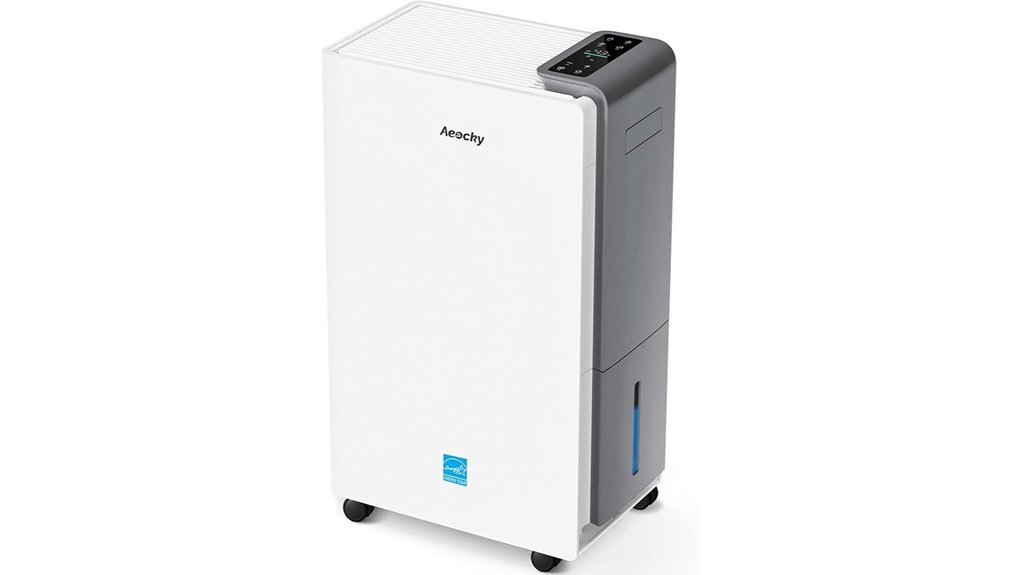
Best for Larger Damp Spaces
The AEOCKY is the strongest large-space option in this group. It uses a compressor, includes humidity controls, and supports continuous drainage, making it more practical than a compact thermoelectric unit when moisture is persistent.
The listing advertises a maximum removal rate of 80 pints per day under hot, high-humidity conditions. That figure should not be treated as the amount every home will collect or compared directly with every standardized pint rating. Everyday results will vary with temperature, humidity, airflow, and the exact model supplied.
Certification check: ENERGY STAR recognition is tied to an exact model number, not only a brand or product-family name. Match the model number shown on the current listing and appliance nameplate with the current ENERGY STAR directory before relying on a certification claim.
Who should buy this: Buyers dealing with a large damp room, basement, storage area, or open space who want a compressor model with a humidistat and drain-hose option.
Who should avoid this: Buyers who need a lightweight tabletop unit or cannot confirm voltage, warranty, and service compatibility in their country.
Pros:
- Higher moisture-removal potential than the compact models in this article.
- Continuous drainage reduces the need to empty the tank manually.
- Humidity controls can cycle the compressor as conditions change.
- Efficiency-focused positioning can be checked against the exact model number.
Cons:
- The advertised 80-pint maximum is based on hot, high-humidity conditions and is not a typical-room guarantee.
- Larger and heavier than thermoelectric models.
- International buyers must verify voltage, frequency, warranty, and return support.
Midea 22 Pint EasyDry Dehumidifier
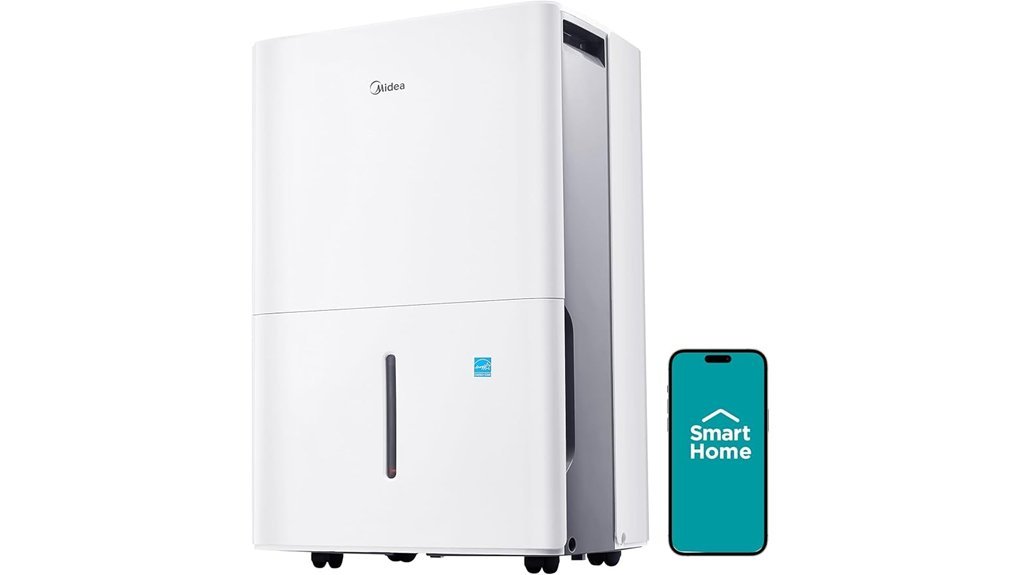
Best-Documented 22-Pint Pick
The Midea EasyDry is a practical compressor dehumidifier for buyers who prefer simple controls and clearer manufacturer documentation. The linked MAD22C1AWS model is rated to remove 22 pints of moisture per day and is marketed for spaces up to 1,500 square feet.
Its useful features include a timer, washable filter, removable tank, wheels, automatic restart, and a gravity-drain connection. Despite the claims in the original article, this specific model does not include Wi-Fi, app control, Alexa, or Google Assistant support.
Who should buy this: Buyers who want a recognizable compressor model for a medium room and are comfortable with manual controls.
Who should avoid this: Buyers who need smart-home integration, a built-in pump, or direct compatibility with 220–240V electricity.
Pros:
- Clearly documented 22-pint daily capacity and exact model number.
- Four wheels make room-to-room movement easier.
- Timer and automatic humidity operation simplify everyday use.
- Supports gravity drainage with a compatible hose.
- One-year manufacturer warranty for the intended market.
Cons:
- No Wi-Fi, mobile-app, or voice-assistant control.
- No built-in condensate pump.
- Continuous-drain hose may need to be purchased separately.
- The 115V electrical rating limits direct international use.
KNKA 2500 Sq.Ft Dehumidifier with Drain Hose
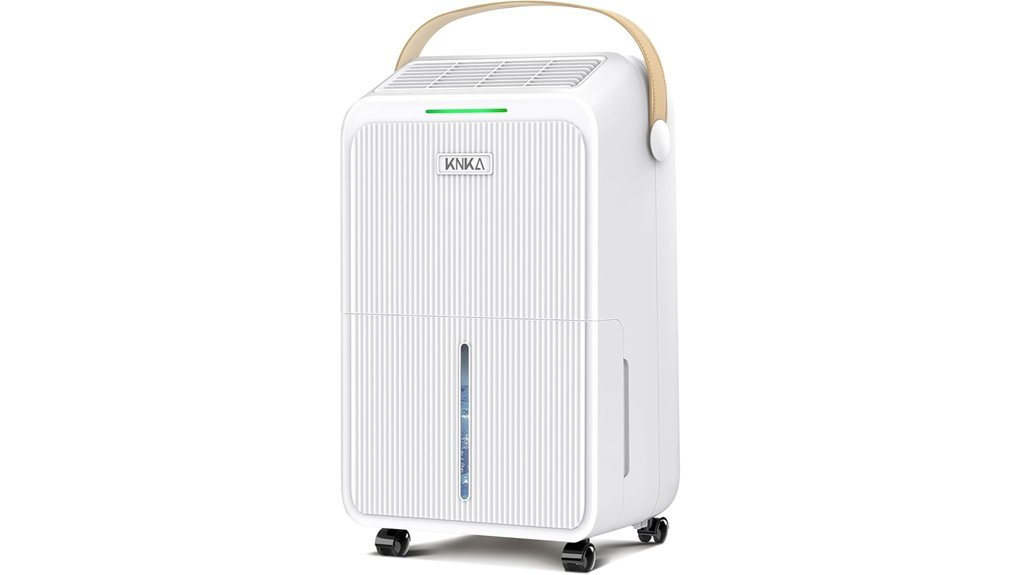
Best Mid-Range Compressor Option
The KNKA offers more moisture-removal potential than the tabletop models while remaining below the AEOCKY in advertised maximum capacity. The PD22SC-12 listing describes a maximum extraction rate of 34 pints per day, a 3-liter tank, three operating modes, a timer, adjustable humidity control, and an included drain hose.
The DEHU mode is intended for automatic humidity management, DRY mode can assist with indoor laundry drying, and CONT mode keeps the unit running continuously. Actual coverage will depend on room conditions, so the 2,500-square-foot marketing figure should not be treated as a guarantee in a severely damp space.
Who should buy this: Buyers looking for a reasonably capable compressor unit for a bedroom, laundry area, storage room, or moderately damp living space.
Who should avoid this: Buyers who require a widely established service network, clearly published standardized test conditions, or guaranteed local warranty support.
Pros:
- Advertised maximum removal rate of 34 pints per day.
- Includes automatic, laundry-drying, and continuous modes.
- Drain hose supports longer operation without repeatedly emptying the tank.
- Wheels make repositioning easier.
Cons:
- The advertised floor coverage may overstate performance in very wet spaces.
- Published test conditions and local service details are less clear than those of larger appliance brands.
- The tank may fill quickly when the drain hose is not used.
- Voltage and international warranty details must be confirmed before importing.
KeepGlad 98OZ Dehumidifier for Small Rooms
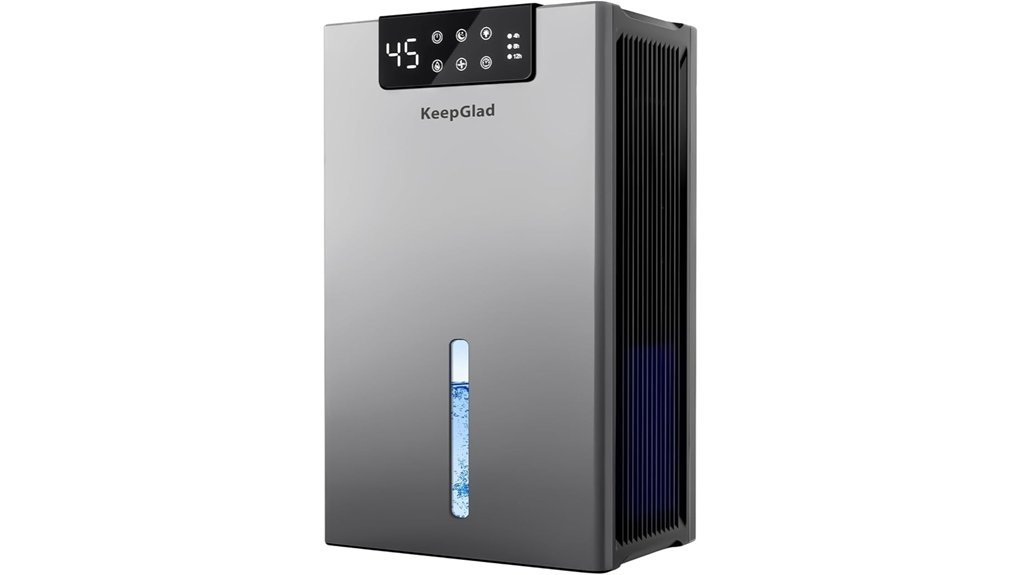
Best Compact Pick with Drain Hose
The KeepGlad combines a 98-ounce tank with a humidity display, timer, washable filter, automatic shutoff, ambient lighting, and a continuous-drain connection. Those features make it more convenient than many basic tabletop dehumidifiers.
However, this is still a compact semiconductor unit. Its large tank does not mean it has the extraction power of a 22-pint or 34-pint compressor dehumidifier. Because the linked material emphasizes tank size and broad coverage more than a standardized daily output, it is safer to treat this as a localized-moisture option for a small bedroom, office, wardrobe area, or similar enclosed space.
Who should buy this: Buyers who want quiet-focused operation, simple humidity information, and the option to connect a drain hose in a small space.
Who should avoid this: Buyers dealing with flooding, a plumbing leak, extensive condensation, or persistent humidity across a large open room.
Pros:
- Large water tank for a compact thermoelectric unit.
- Continuous-drain option can reduce manual emptying.
- Humidity display and timer provide more control than very basic models.
- Automatic shutoff helps prevent tank overflow.
Cons:
- Much lower extraction capacity than a compressor dehumidifier.
- The broad square-foot claim is less useful than a verified daily extraction figure.
- Not appropriate for structural dampness or active water intrusion.
- Exact voltage, frequency, warranty, and replacement support should be checked before ordering.
ToLife Dehumidifier for Home with 95 OZ Tank
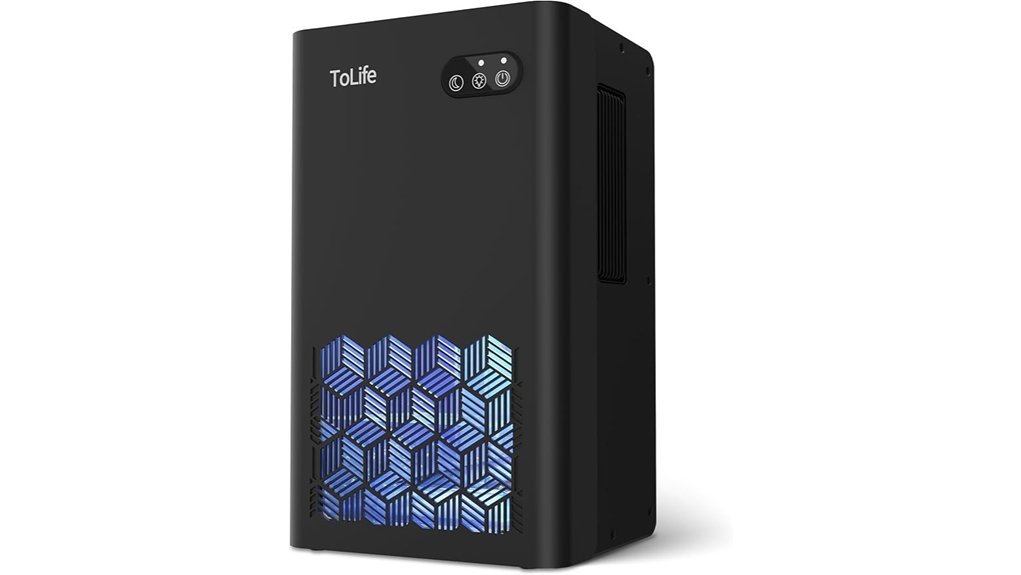
Best for Bedrooms and Enclosed Areas
The ToLife is another compact semiconductor option, using a 95-ounce collection tank rather than a compressor. Its main attractions are its portable size, sleep-focused operating mode, automatic shutoff, and seven-color ambient lighting.
This type of unit can be useful where the problem is mild and localized, such as a wardrobe, home office, small bedroom, or enclosed storage area. Do not choose it solely because the listing mentions coverage up to 1,000 square feet. A tabletop thermoelectric model is not comparable to a full-size compressor unit for a damp basement or open floor plan.
Who should buy this: Buyers who value portability and lower operating noise for mild moisture in a smaller enclosed area.
Who should avoid this: Buyers who need rapid moisture removal, precise whole-room humidity management, continuous drainage, or reliable performance in a very damp space.
Pros:
- Compact and easier to move than a compressor model.
- Automatic shutoff helps protect against overflow.
- Sleep mode is designed for less disruptive nighttime operation.
- Large tank relative to many tabletop dehumidifiers.
Cons:
- No continuous-drain connection is highlighted for this model.
- Limited extraction capacity compared with pint-rated compressor units.
- Not suitable for drying water-damaged materials or a large wet basement.
- The exact voltage, frequency, and power-adapter input should be verified on the current listing and nameplate.
Tenergy Sorbi 1000ml Air Dehumidifier with HEPA Filter
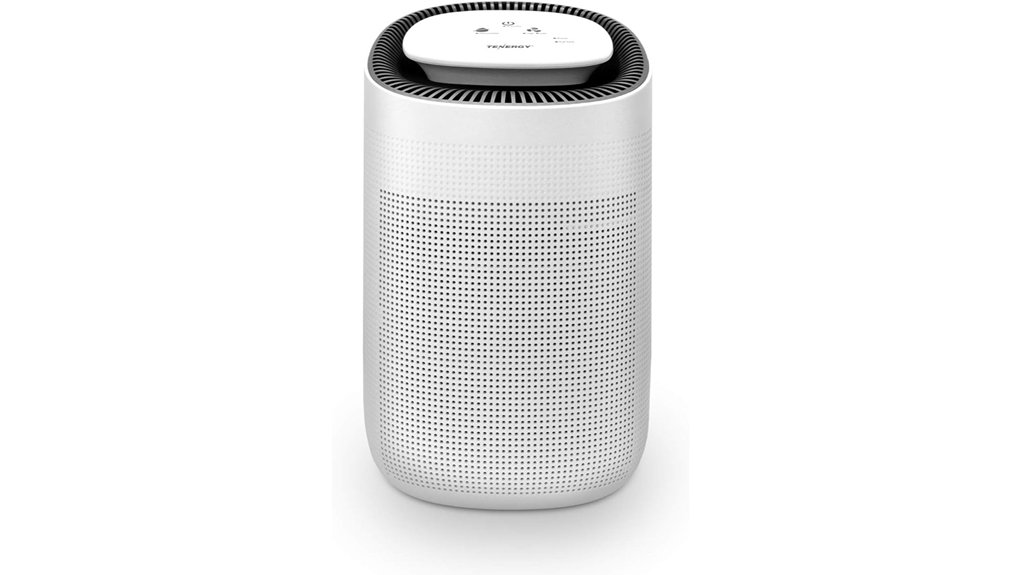
Best Two-in-One Small-Room Option
The Tenergy Sorbi combines a semiconductor dehumidifier with a replaceable HEPA filter. It can remove up to 750 ml of moisture per day under favorable conditions, uses a removable 1-liter tank, has a maximum rated power of 45 watts, and is recommended for spaces of approximately 200 square feet.
Its two fan speeds and stated 35–42 dB operating range make it suitable for a small office, bedroom, bathroom area, or wardrobe room where both moisture control and basic particle filtration are useful. Its 22 CFM clean-air delivery rate is modest, so it should not be treated as a high-capacity whole-room air purifier.
Who should buy this: Buyers who need modest moisture removal and basic HEPA filtration in a genuinely small space.
Who should avoid this: Buyers who need continuous drainage, high-volume air cleaning, or basement-level moisture removal.
Pros:
- Combines moisture collection and HEPA filtration.
- Officially recommended for small spaces up to approximately 200 square feet.
- Two fan speeds and touch controls.
- Automatic shutoff and water-level indicator.
- Lightweight design supports room-to-room movement.
Cons:
- No drain hose can be connected.
- The 1-liter tank may need frequent emptying in humid conditions.
- HEPA filters require periodic replacement.
- Far less moisture-removal capacity than a compressor unit.
Factors to Consider When Choosing a Dehumidifier
Daily Moisture-Removal Capacity
Compare how much water a unit can remove in 24 hours, not only the size of its collection tank. A large tank reduces emptying frequency, but it does not make a low-output thermoelectric unit as powerful as a compressor dehumidifier.
A compact unit may be enough for mild moisture in a wardrobe or small bedroom. Persistent humidity in a basement, laundry area, or large room usually requires a pint-rated compressor model.
Test Conditions and Capacity Labels
Capacity claims are not always measured under the same temperature and humidity conditions. A high “maximum” number measured in saturated heat can look much larger than a standardized rating measured under more typical conditions. Compare standardized pint-per-day ratings when they are available, and treat unusually high maximum claims as best-case figures rather than guaranteed household results.
Compressor vs. Semiconductor Technology
Compressor dehumidifiers generally remove much more moisture and are better for larger or wetter rooms. They are also heavier and usually create more fan and compressor noise.
Semiconductor or thermoelectric dehumidifiers are compact, lightweight, and often quieter. Their lower extraction capacity makes them better for localized moisture than for severe humidity.
Room Size and Dampness
Advertised floor coverage is only a starting point. A closed bedroom with moderate humidity is easier to manage than an open basement with wet walls, poor drainage, or an active leak. When conditions are severe, choose by daily extraction capacity and drainage setup rather than the largest square-foot number printed in the listing.
Drainage Options Available
A removable tank is convenient when no drain is nearby, but it requires regular emptying. Continuous gravity drainage is better for long-term use, provided the hose can slope downward without kinks. A gravity outlet cannot push water uphill; that requires a model with a condensate pump.
Humidistat and Controls
A built-in humidistat lets the unit cycle on and off around a selected relative-humidity level. A separate hygrometer can help you check whether the built-in reading is reasonably accurate and whether humidity differs between rooms.
Operating Temperature
Dehumidifier output falls when room conditions move outside the unit’s intended range. Compressor coils may frost in cool rooms, while semiconductor units usually collect less water in cooler or less humid air. Check the manual’s operating-temperature range before using a unit in a cold basement, garage, or storage area.
Noise Level Considerations
Thermoelectric models are often easier to tolerate near a bed or desk. Compressor models usually remove more water but produce fan and compressor noise. Manufacturer noise figures may be measured under different conditions, so use them as comparison guidance rather than a guarantee.
Portability and Design
Check the product weight, handle design, wheel quality, tank access, filter access, and available clearance around the air inlet and outlet. A model that is easy to clean and drain is more likely to be used consistently.
Electrical Compatibility and Warranty
Before importing an appliance, confirm the exact voltage, frequency, plug, wattage, and starting-power requirements shown on its nameplate. Also check whether the manufacturer will honor the warranty outside the original market. A plug adapter changes only the physical plug shape; it does not change voltage.
Before You Buy Checklist
- Measure the approximate room area and note whether the room is closed or open.
- Use a hygrometer to check the starting relative humidity.
- Look for leaks, seepage, blocked vents, and condensation sources.
- Compare daily extraction capacity and test conditions rather than tank size alone.
- Decide whether you need manual or continuous drainage.
- Confirm the exact model number, voltage, frequency, warranty, and replacement-filter availability.
- Allow adequate clearance around the air inlet and outlet.
Moisture-control tip: A dehumidifier can manage moisture in the air, but it cannot repair a plumbing leak, stop water entering through a wall, or remove established mold. Correct the moisture source first whenever possible.
Frequently Asked Questions
What Indoor Humidity Should I Target?
A practical target for many homes is approximately 40% to 50% relative humidity, although climate, season, and building conditions matter. Avoid automatically selecting the lowest setting, because unnecessary over-drying can waste energy and make the room uncomfortable. Use a hygrometer to monitor actual conditions.
Can I Compare an 80-Pint Maximum Claim Directly With a 22-Pint Rating?
Not unless both figures were measured under the same test conditions. Maximum claims measured in very hot, saturated air can be much higher than standardized ratings. Look for the exact test standard or a current ENERGY STAR capacity figure before comparing models.
Can a 95-Ounce or 98-Ounce Dehumidifier Dry a Basement?
It may help with a small localized area, but it should not be expected to control a large, persistently damp basement. For that use, choose a compressor model with a meaningful pint-per-day rating and continuous drainage.
Do Dehumidifiers Remove Mold?
No. A dehumidifier can make conditions less favorable for future moisture-related growth, but it does not remove existing mold or repair the source of dampness. Fix leaks, dry wet materials, improve ventilation, and obtain qualified remediation help when the affected area is extensive.
Can Dehumidifiers Help With Allergens?
Moisture control may help reduce conditions that support dust mites or mold, but a dehumidifier is not a medical treatment and does not remove every airborne allergen. A separate air cleaner, source control, cleaning, and medical guidance may still be needed.
How Do I Maintain My Dehumidifier for Optimal Performance?
Clean or replace the filter according to the manual, empty and wash the tank, keep the inlet and outlet clear, inspect the drain hose, and unplug the unit before maintenance. Allow the tank and hose to dry before long-term storage.
How Long Does a Dehumidifier Last?
Service life varies with build quality, operating hours, room conditions, cleaning, compressor cycling, and access to replacement parts. Regular filter cleaning and unrestricted airflow can reduce unnecessary strain, but no exact lifespan is guaranteed.
Can I Use a U.S. 115V Dehumidifier on 220–240V Power?
Not directly. Connecting a 115V appliance to 220–240V power can damage it and create a safety hazard. Do not rely on a plug adapter. Even when a transformer is considered, frequency, compressor starting load, grounding, warranty, and continuous-duty suitability still need professional review. The safer choice is a model designed and supported for the local electrical supply.
Does a Dehumidifier Replace Air Conditioning?
No. A dehumidifier removes moisture but releases some heat while operating. It may make humid air feel more comfortable, but it does not cool a room like an air conditioner.
Where Can I Buy a Dehumidifier?
You can compare models through major appliance retailers, authorized manufacturer dealers, local marketplaces, and the Amazon links in this article. Before importing, confirm the seller, electrical rating, shipping cost, customs charges, warranty coverage, and return process.
Conclusion
The right model depends on whether you need high-capacity room dehumidification or only localized moisture control. The AEOCKY offers the greatest advertised large-space potential in this comparison, while the Midea provides the clearest documentation and a straightforward 22-pint rating. The KNKA is worth considering when an included drain hose, laundry mode, and mid-range compressor capacity are priorities.
For smaller enclosed areas, the KeepGlad and ToLife offer compact designs, but neither should be mistaken for a full-size basement dehumidifier. The Tenergy Sorbi is the clearest small-room choice when you also want basic HEPA filtration.
Final Recommendation
Choose the AEOCKY for persistent humidity in a larger space when you can verify the exact model and capacity basis, the Midea for a clearly documented medium-room compressor option, or the Tenergy Sorbi for a genuinely small room where modest dehumidification and basic filtration are both useful.
Whichever model you choose, verify the electrical rating and warranty before ordering, use a hygrometer to monitor results, and correct any leaks or water intrusion rather than relying on the appliance alone.