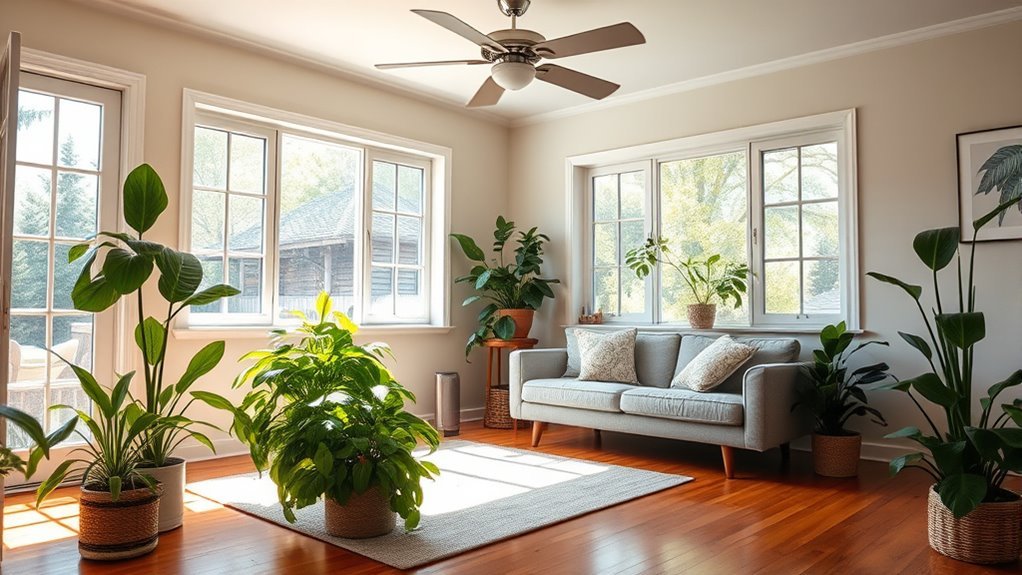
To improve air circulation in your living room, start by opening windows for fresh air and utilizing cross-ventilation. Position fans strategically to enhance airflow and guarantee your HVAC system is well-maintained with clean filters. Use air purifiers to boost air quality, and manage humidity levels between 30% and 50% for ideal comfort. Additionally, arrange furniture to avoid blocking vents. Keep exploring for more tips and tricks to create a rejuvenating living environment.
Open Windows for Fresh Air Exchange
Opening windows is one of the simplest ways to boost air circulation in your living room, as it lets fresh outdoor air replace stale indoor air. To maximize this effect, try opening windows on opposite sides of the room, creating cross-ventilation that enhances airflow. Aim to keep them fully open for at least 10-15 minutes several times a day. This practice effectively dilutes indoor pollutants, promoting a healthier living environment. Just make sure your window screens are intact, so you can enjoy fresh air without inviting pests inside. Regularly opening your windows not only improves air quality but also helps regulate temperature and humidity, making your space more comfortable and liberating.
Position Fans to Enhance Air Circulation
To enhance air circulation in your living room, strategically positioning fans can make a significant difference. Consider these tips for effective fan placement:
- Ceiling Fans: Rotate counterclockwise in summer for a cooling breeze and clockwise in winter to circulate warm air.
- Oscillating or Stand Fans: Position them in corners to maximize airflow and push air toward the center of the room.
- Floor Fans: Aim them toward seating areas, ensuring comfort without direct airflow.
- Window Fans: Place them near windows to draw in fresh air and expel stale air for better ventilation.
Remember to keep fans unobstructed by furniture or decor to enhance their effectiveness. With these fan types and placements, you’ll enjoy a more liberated living space!
Utilize Cross-Ventilation Techniques
To improve air circulation in your living room, start by strategically opening windows on opposite walls to create a revitalizing flow of air. Don’t forget to keep interior doors open; this helps connect spaces and enhances airflow throughout your home. With these simple adjustments, you’ll maximize cross-ventilation and enjoy a more comfortable environment.
Optimize Window Placement
When you position windows on opposite walls, you create an effective cross-ventilation system that allows fresh air to flow in while stale air exits. To optimize window placement and enhance air quality, consider these tips:
- Choose the Right Orientation: Align windows to catch prevailing winds, maximizing airflow.
- Use High-Set and Low Windows: Draw warm air up and invite cooler air in, creating a continuous flow.
- Clear Obstructions: Guarantee no furniture or decor blocks the airflow between windows.
- Maintain Screens: Regularly check window screens to keep pests out while allowing air in.
Enhance Airflow Paths
After optimizing window placement, the next step is enhancing airflow paths throughout your living room. To achieve effective airflow patterns, position windows on opposite walls, allowing fresh air to enter while stale air exits. Use ventilation strategies like ceiling fans set to rotate counterclockwise in warmer months, pushing cool air down for better circulation. Keep your interior doors open to create unobstructed pathways for air movement. Install window screens to guarantee safe ventilation without inviting pests. Finally, arrange furniture thoughtfully, avoiding blockages in air pathways. By implementing these techniques, you’ll promote a rejuvenating environment that liberates your living space from stagnant air, making it more comfortable and inviting.
Utilize Open Doors
Opening doors can considerably enhance air circulation in your living room. To make the most of this, consider these effective ventilation strategies:
- Optimize Door Placement: Position doors directly across from each other to create a clear pathway for airflow.
- Combine with Windows: Keep windows open alongside doors to boost air exchange and improve indoor air quality.
- Timing is Key: Open doors during peak ventilation times, like early mornings or late afternoons, to welcome cooler, fresher air.
- Clear Pathways: Confirm furniture and other obstacles don’t block the flow between open doors and windows.

Use Air Purifiers for Cleaner Air
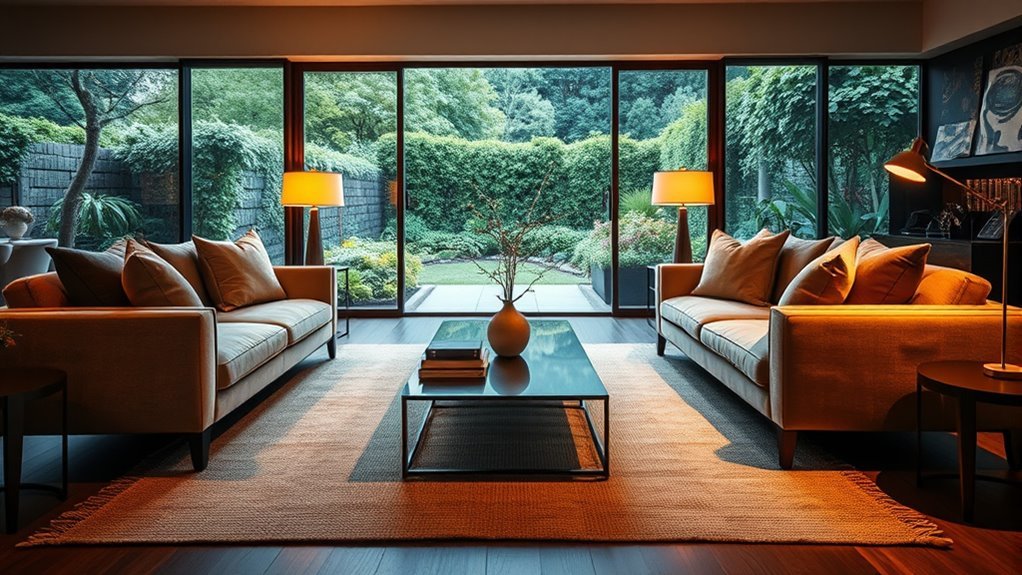
Air purifiers can make a noticeable difference in your living room by capturing up to 99.97% of airborne particles like dust and allergens. To get the best results, choose a model with a Clean Air Delivery Rate (CADR) that fits your room size. Regular maintenance, like changing filters every few months, guarantees your purifier works effectively and keeps the air clean.
Benefits of Air Purifiers
While you might not realize it, the air in your living room can harbor a variety of pollutants that affect your health and comfort. Air purifiers offer a path to cleaner air and enhanced well-being. Here are some key benefits:
- Improved Air Quality: HEPA filters capture 99.97% of airborne particles, ensuring you breathe easier.
- Odor Elimination: Activated carbon filters tackle unpleasant smells and harmful gases.
- Allergy Relief: Continuous use notably reduces indoor pollutants, helping allergy sufferers and those with respiratory issues.
- Filter Maintenance: Regularly changing filters as recommended prolongs your purifier’s lifespan and maintains its effectiveness.
Investing in an air purifier can transform your living space, promoting a healthier, more enjoyable environment.
Selecting the Right Model
Investing in an air purifier is just the start; selecting the right model can greatly enhance your living room’s air quality. Look for a purifier with a true HEPA filter, which captures 99.97% of particles like dust and pet dander. Check the Clean Air Delivery Rate (CADR) to guarantee it matches your room size—higher CADR means faster air cleaning. Consider additional features like activated carbon filters for odor removal and smart sensors that adjust fan speed based on air quality. It’s crucial to choose models with multiple fan speeds and manageable noise levels to maintain comfort. Don’t forget to replace filters every 3-6 months for peak performance and clean air circulation.
Manage Humidity for Better Airflow
To create a more comfortable living room, managing humidity is key to improving airflow. Keeping your indoor humidity between 30% and 50% can enhance air circulation and prevent mold growth. Here’s how to achieve effective humidity control:
Managing humidity is essential for a comfortable living room, enhancing airflow and preventing mold. Aim for 30% to 50% humidity for optimal results.
- Use a dehumidifier to reduce excess moisture, making the air feel cooler and fresher.
- Ventilate properly by opening windows or using exhaust fans, allowing moist air to escape and fresh air to flow in.
- Check for moisture sources, like leaks or damp furniture, and address them promptly to prevent stagnant air.
- Incorporate humidity-regulating plants, such as peace lilies or Boston ferns, to naturally maintain ideal moisture levels while improving air quality.
These steps will liberate your living space from unwanted humidity!
Arrange Furniture for Optimal Airflow
Arranging furniture for ideal airflow can make a significant difference in your living room’s comfort. Start by positioning furniture away from vents and windows to guarantee unobstructed air circulation. Opt for low-profile furniture to maintain sightlines and allow air to flow freely around and above. Consider arranging seating in a circular or semi-circular layout, which not only encourages conversation but also facilitates better airflow between individuals. Avoid placing bulky furniture directly against walls; leaving a few inches of space helps prevent stagnant pockets of air. Finally, use open shelving or decorative screens instead of solid walls to enhance airflow while still providing functional storage. These adjustments can transform your living space, promoting a revitalizing and liberating atmosphere.
Maintain HVAC Systems and Filters Regularly
Maintaining your HVAC system and filters is essential for ensuring ideal air circulation in your living room. Regular HVAC maintenance keeps your air fresh and your system running smoothly. Here’s how to keep it in top shape:
Regular HVAC maintenance is crucial for fresh air and smooth operation in your living room.
- Change or clean filters every 30 to 90 days; opt for high-efficiency pleated filters for better particle capture.
- Schedule annual inspections with a professional to catch any potential issues early.
- Set your HVAC fan to “on” during gatherings to promote continuous air circulation and enhance air quality.
- Keep supply vents clear of obstructions like furniture or drapes to maximize airflow.
Frequently Asked Questions
How to Fix Poor Air Circulation in a Room?
To fix poor air circulation in a room, use effective ventilation techniques like opening windows, rearranging furniture, and installing ceiling fans. This’ll enhance air quality and create a fresher, more comfortable living environment for you.
How to Make a Room Less Suffocating?
To make your room less suffocating, open windows for fresh air and adjust your ventilation systems. Introduce vibrant plants to uplift air quality, creating a space that breathes freely, inviting liberation and comfort into your life.
How to Improve Air Circulation in a Room Without Windows?
To improve air circulation in a room without windows, use fans for ventilation alternatives, install air purifiers to boost air quality, and keep doors open to encourage airflow. Fresh air can transform your space!
What Are the Symptoms of Poor Air Circulation in a Room?
You might think poor air circulation’s harmless, but it can lead to musty smells, fatigue, and allergens affecting your health. Check your ventilation systems; improving air quality can transform your living space into a rejuvenating haven.
Conclusion
By following these steps, you’ll transform your living room into a haven of fresh air and comfort. Remember, a well-ventilated space isn’t just a luxury; it’s essential for your well-being, much like the grandeur of a Victorian parlor. So, open those windows, position your fans wisely, and keep your HVAC system in check. With a little effort, you’ll enjoy a revitalizing breeze that’ll make your living room the envy of all.