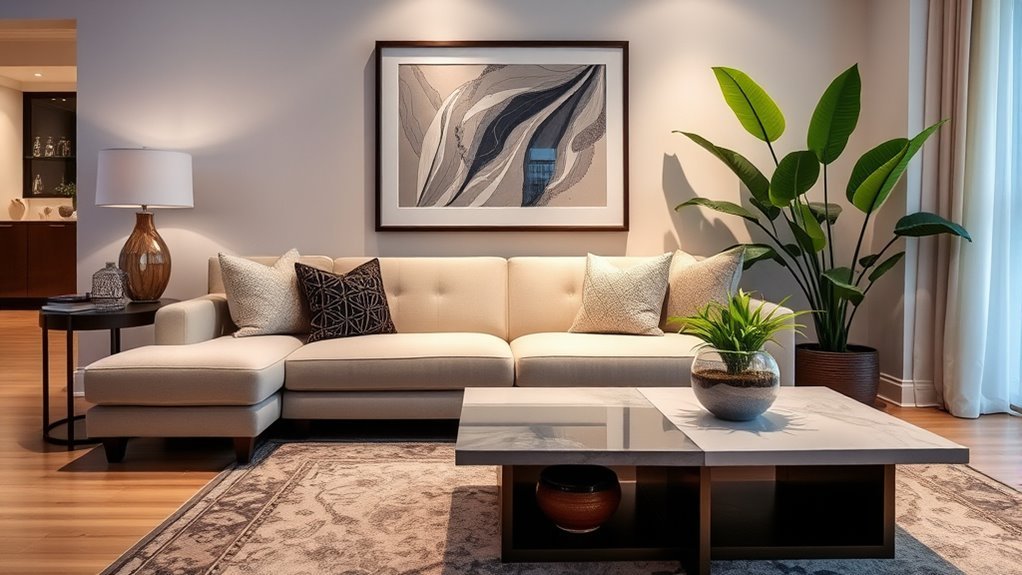
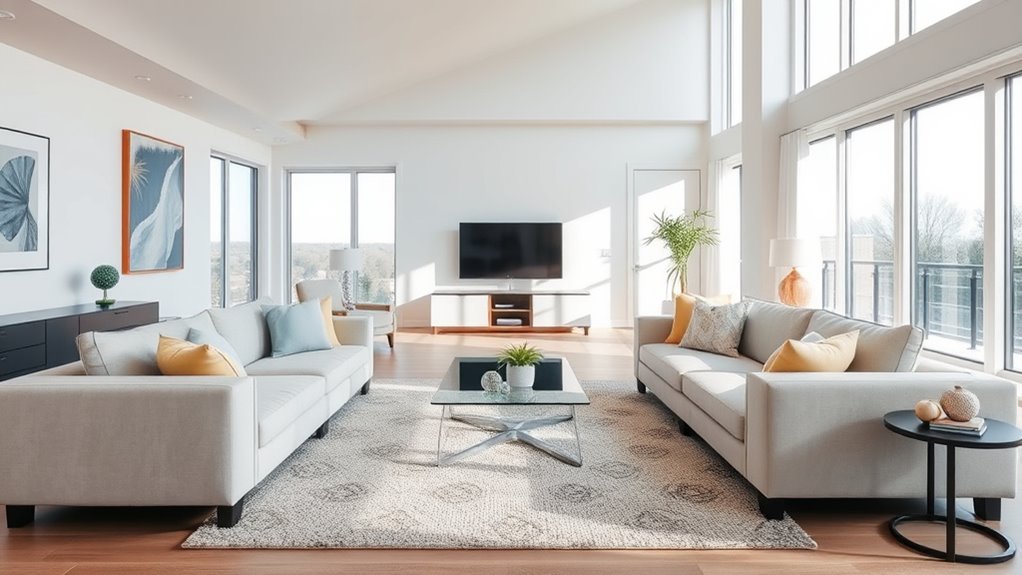
To make your living room more energy efficient, start by choosing window treatments like cellular shades, thermal curtains, or window films that enhance insulation. Layer your treatments for maximum performance and consider professional installation for a snug fit that reduces drafts. Regularly check seals and maintain your window coverings to sustain their efficiency. This way, you’ll enjoy a comfy space while cutting energy costs and your carbon footprint. Discover more tips to elevate your living room’s eco-friendliness.
Choosing Energy-Efficient Window Treatments for Maximum Insulation
When you want to enhance your living room’s energy efficiency, choosing the right window treatments is essential. Start with cellular shades, which feature a honeycomb structure that can cut heat loss by up to 40% in winter. For added insulation, consider thermal curtains to block drafts effectively. Window films are also a smart choice; they reduce solar heat gain and UV exposure, protecting your furnishings while lowering cooling costs. You might explore layered treatments, like combining drapes with cellular shades, creating a tight seal that minimizes air leaks. Finally, plantation shutters are versatile and provide a solid barrier against drafts while allowing adjustable light control. These options not only boost energy efficiency but also elevate your living space’s aesthetic.
Why Energy Efficiency Matters in Your Living Room
Maximizing energy efficiency in your living room goes beyond just selecting the right window treatments; it plays an essential role in your overall comfort and sustainability. By investing in energy-efficient window coverings, you can achieve significant energy savings, reducing heating and cooling costs that often stem from windows, which account for up to 30% of a home’s energy loss. Proper treatments minimize heat gain in summer and heat loss in winter, enhancing indoor comfort. Plus, they block harmful UV rays, protecting your furniture and flooring from fading. Ultimately, optimizing energy efficiency not only elevates your living space but also contributes to a sustainable home, allowing you to enjoy a liberated lifestyle while reducing your carbon footprint.
Measuring Your Windows: A Step-by-Step Guide
To improve your living room’s energy efficiency, start by gathering the right tools for measuring your windows. You’ll need to measure the dimensions carefully, taking readings at multiple points to guarantee accuracy. Finally, record your measurements clearly so you can choose the best energy-efficient treatments for your space.
Gather Necessary Tools
Measuring your windows accurately is crucial for enhancing energy efficiency in your living room. Start by gathering your tool essentials: a tape measure, a level, and a notepad. Use the measurement tools to capture the width from the outer edges of the frame, allowing a 1-2 inch overlap for ideal insulation. For height, measure from the top of the frame to your desired endpoint, extending below the sill to minimize drafts. Check if the frame is square with your level, as uneven frames can hinder your window treatments’ performance. Record your measurements in both inches and centimeters for accuracy. For older or larger windows, take multiple measurements to guarantee a snug fit, maximizing energy efficiency and aesthetic appeal.
Measure Window Dimensions
Accurately measuring your window dimensions is essential for creating an energy-efficient living room. Here’s how to get it right:
- Measure the width of your window at its widest point, noting any obstructions like handles or trim.
- Measure the height from the top of the window frame to the bottom, considering any desired overlap for better insulation.
- For inside mounts, subtract 1/4 inch from both dimensions for a snug fit.
- If you’re opting for outside mounts, add 2 to 3 inches to both the width and height to improve light blockage and aesthetic appeal.
Using these measurement techniques guarantees your window size will support energy-efficient treatments that enhance your living space sustainably.
Record Measurements Accurately
Taking precise measurements is essential for achieving an energy-efficient living room that looks great. Start by measuring the window frame’s width from edge to edge, noting the figures in both inches and centimeters for accurate measurements. Next, measure the height from the top inside edge to the bottom, factoring in any obstructions like handles. If you’re opting for outside mount treatments, add 2-3 inches to both dimensions for ideal coverage and insulation. Use a level to verify your measurements are straight—small discrepancies can impact the fit. Record these details in a notebook or digital device, and double-check them before ordering your window treatments. This careful approach not only enhances aesthetics but also promotes energy efficiency.
How to Layer Window Treatments for Optimal Energy Efficiency
Layering your window treatments is a smart way to boost energy efficiency while adding style to your living room. By choosing energy-efficient fabrics and employing superior layering techniques, you can create a barrier against heat loss and gain. This not only keeps your space comfortable year-round but also protects your furnishings and lowers energy costs.
Choosing Energy-Efficient Fabrics
When you choose energy-efficient fabrics for your window treatments, you’re not just enhancing your living space’s aesthetics; you’re also making a smart move for your home’s energy efficiency. Here are some key fabric types to take into account:
- Cellular Shades: Their honeycomb structure can cut heat loss by over 40% in winter.
- Thermal Curtains: Layer these over sheer drapes to block drafts while letting in light.
- R-Value Fabrics: Opt for materials with high insulation ratings, like thermal linings or heavy textiles.
- Window Films: Reflect solar heat and UV rays, further reducing cooling costs.
Optimal Layering Techniques
Combining multiple window treatments can dramatically boost your living room’s energy efficiency while enhancing its style. Explore layering styles like pairing cellular shades with thermal-lined drapes. This combination can reduce energy loss by up to 30%, creating a thicker barrier against drafts. For light control, consider sheer solar shades beneath heavier curtains, cutting solar heat gain by 65% while allowing natural light. Don’t forget exterior options like shades or awnings; they block direct sunlight, reducing your air conditioning reliance. Tailor your fabric combinations to your window orientations—use lighter, reflective materials on south-facing windows for peak thermal performance. With these techniques, you’ll create a beautiful, eco-conscious space that liberates you from high energy bills.
Why Professional Installation Boosts Energy Savings
While many homeowners might overlook the importance of professional installation, getting it right can greatly enhance your living room’s energy efficiency. Here’s why investing in expert insights pays off:
- Precision Fit: Professionals guarantee a snug fit, eliminating gaps that cause drafts—reducing energy waste by up to 30%.
- Maximized Insulation: Accurate measurements enhance the performance of operable coverings like shades and shutters, optimizing heat and light control.
- Thermal Performance: Properly installed insulated cellular shades can cut heat loss by 40% or more in winter.
- Strategic Positioning: Experts can position treatments to harness seasonal sunlight, maximizing year-round energy savings while keeping your space cozy.
Embrace these installation benefits to create a sustainable, beautiful living environment.
Maintaining Your Window Treatments for Long-Term Efficiency
To guarantee your window treatments continue to enhance energy efficiency, regular maintenance is key. Start by incorporating effective cleaning techniques, like vacuuming or using fabric-specific cleaners, to keep cellular shades and draperies free from dust. This allows unobstructed light and ideal heat regulation.
Set an inspection frequency, checking for wear and tear regularly. Damaged or poorly fitted treatments can allow heat loss, undermining their insulating properties. Don’t forget to examine for gaps or drafts—sealing these can greatly improve insulation. For complex window treatments, consider professional cleaning services to maintain their energy-saving capabilities. By caring for your window treatments, you’ll not only extend their lifespan but also create a more sustainable, energy-efficient living space.
Frequently Asked Questions
How to Make a Living Room More Energy-Efficient?
To make your living room more energy-efficient, embrace natural light while using thermal curtains or cellular shades. Layer treatments for insulation, ensuring comfort and style, all while reducing energy costs and liberating your space sustainably.
How to Improve Energy Efficiency of Windows?
Want to transform your windows into energy-saving champions? Install window films to block heat and glare, then layer thermal curtains for added insulation. You’ll enhance comfort while reducing your carbon footprint—what’s not to love?
How to Insulate a Room With Lots of Windows?
To insulate a room with lots of windows, use window films to reflect heat and add thermal curtains for extra coverage. This combo enhances comfort, reduces energy costs, and elevates your space’s aesthetic appeal.
Conclusion
By choosing the right window treatments, you’re not just dressing your living room; you’re also putting your money where your heart is. With the right insulation and layered designs, you’ll keep your space cozy and your energy bills low. Remember, maintaining these treatments is key to keeping them in tip-top shape. So, don’t let the opportunity pass you by—transform your living room into an energy-efficient haven that’s as stylish as it is sustainable!