Disclosure: As an Amazon Associate, we earn from qualifying purchases. If you click a link on this page and make a purchase, we may receive a small commission at no extra cost to you.
Litter-box odor and tracked litter often force you to manage two separate problems at once. The Neakasa AirStep combines a raised cat step, a litter-catching surface, and powered odor control in one compact accessory. Its strongest points are the 230 g activated-carbon filter, three fan speeds, and removable litter collection area, but it still needs filter replacements and works best when your cat actually uses the step. This review explains the verified specs, setup, maintenance, compatibility, and tradeoffs so you can decide if it fits your litter-box setup.
Quick Verdict
Rating: 8/10, recommended with caveats
Best For: Cat owners who want one accessory to reduce litter tracking while adding source-level odor control near the box.
Bottom Line: The AirStep combines a stable 6.5-inch step, litter collection, and a 230 g activated-carbon filter with three airflow levels. Its main tradeoffs are ongoing filter replacement and the fact that litter-catching performance depends on your cat stepping across the grid instead of jumping around it.
| Specification | Detail |
|---|---|
| Brand | Neakasa |
| Model | AirStep |
| Product type | Cat litter-box step with powered airflow, odor control, and litter collection |
| Dimensions | 17.4 × 12.6 × 6.5 in (441 × 321 × 165 mm) |
| Net weight | 2.7 kg (about 6.0 lb) |
| Odor filter | 230 g activated carbon, 800 mg/g iodine value |
| Fan speeds | 3 levels |
| CADR | 127, 160, and 216 m³/h across levels 1 to 3 |
| Noise | As low as 40 dB |
| Power cord | 1.8 m (5.9 ft) |
| Compatibility | Most automatic, covered, and open litter boxes |
| Included | 1 AirStep and 1 pre-installed 230 g activated-carbon pack |
| Filter interval | About 3 months for typical use, or around 2 months for multi-cat or heavier use |
Key Takeaways
- The Neakasa AirStep combines a 6.5-inch cat step, litter-catching grid, collection tray, and powered activated-carbon odor control.
- Its verified size is 17.4 × 12.6 × 6.5 inches, and it weighs about 6.0 pounds.
- The filter is activated carbon, not HEPA. Neakasa lists 230 g of carbon with an 800 mg/g iodine value.
- Three airflow levels provide CADR ratings of 127, 160, and 216 m³/h, with operation as low as 40 dB.
- You should plan for filter replacement every 2 to 3 months depending on use, plus regular cleaning of the litter collection area.
What Is the Neakasa AirStep?
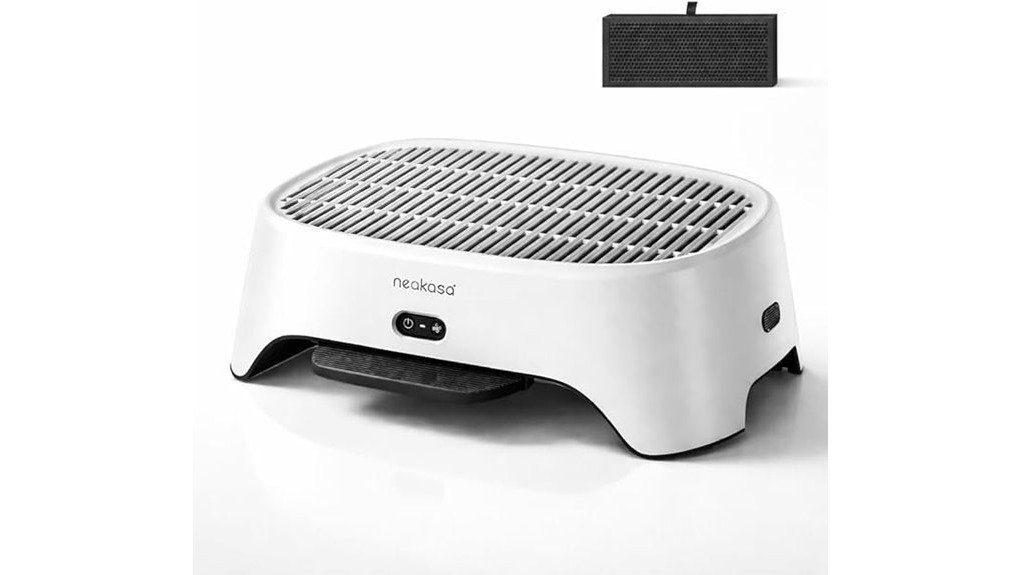
The Neakasa AirStep is a powered accessory that sits in front of a litter box. Your cat uses the 6.5-inch-high platform as a step, while the grid surface helps knock loose litter from the paws into a collection area below. At the same time, an internal fan moves nearby air through a 230 g activated-carbon filter to help reduce litter-box odors.
It is designed for source-level odor control rather than whole-home air cleaning. Neakasa lists compatibility with most automatic, covered, and open litter boxes, so you are not limited to one specific litter-box model. Its 17.4 × 12.6-inch footprint is compact enough for many laundry rooms, bathrooms, or apartment litter stations, but you still need enough floor space in front of the box for your cat to approach the step naturally.
Who Should Buy It?
Best For
- You want litter tracking and odor control in one compact accessory.
- Your litter box has a front entry path where a 6.5-inch step can sit naturally.
- You are comfortable cleaning a collection tray and replacing an activated-carbon filter every few months.
Skip If
- Your cat usually jumps into the litter box from the side and avoids front steps.
- You want a passive mat with no power cord, fan, or replacement filter.
- You need a whole-room purifier rather than an accessory focused on the litter-box area.
Before You Buy: Measure the clear floor space in front of your litter box and watch how your cat enters it. The litter-catching grid can only do its job when your cat actually walks across the step.
Odor Control and Airflow
The AirStep uses activated carbon, not a HEPA filter, as its odor-control medium. The filter contains 230 g of carbon with an iodine value of 800 mg/g. That design is aimed at adsorbing odor-causing compounds near the litter box while the fan keeps air moving through the filter.
You get three airflow levels. Neakasa lists CADR values of 127 m³/h on level 1, 160 m³/h on level 2, and 216 m³/h on level 3. The higher settings give you faster air movement when odor is stronger, while the lowest setting is better suited to continuous use when you want less noise.
This does not replace scooping, litter changes, or routine box cleaning. The AirStep is best treated as an add-on that reduces odor around a maintained litter box rather than a substitute for litter-box hygiene.
Litter Tracking, Step Design, and Cleanup
The top grid is designed to catch litter as your cat steps out. Loose granules can fall through the elongated openings into the collection area below instead of being carried farther across the floor. This makes the AirStep useful for homes where the same front-entry path is used consistently.
The step measures 17.4 inches long, 12.6 inches wide, and 6.5 inches high. At about 6.0 pounds, it has enough mass to feel more substantial than a thin litter mat. The collection area is removable for cleanup, and Neakasa states that the top cover and litter collection box can be washed. The activated-carbon filter itself should not be washed.
Pro Tip: Place the AirStep so your cat’s normal exit path crosses the center of the grid. If there is an easier route around the side, some cats may bypass the litter-catching surface.
Noise Level and Everyday Placement
Neakasa rates the AirStep as low as 40 dB on its quieter setting. That makes it more practical for a bathroom, bedroom-adjacent area, or apartment than a loud exhaust-style solution. You still hear some fan noise, especially at higher airflow levels, so noise-sensitive cats may need time to adjust.
The 5.9-foot power cord gives you some flexibility, but the unit still needs to be placed near a suitable outlet. Avoid stretching the cord across a walkway where people or pets can catch it. Because the AirStep is a powered device placed near litter, follow the manufacturer’s cleaning and power instructions rather than treating the entire unit like a washable mat.
Compatibility and Safety
Neakasa says the AirStep works with most automatic, covered, and open litter boxes. That broad compatibility is useful if you change litter-box brands later. The important fit question is not only whether the box is automatic or traditional, but also whether the 6.5-inch step height and 17.4 × 12.6-inch footprint suit your cat’s entry path.
The official instructions also warn against swapping the AirStep power adapter with the adapter from a powered litter box. Use the correct adapter for each device. If your cat chews cords, frequently urinates outside the box, or has mobility problems, supervise setup and position the unit so the cord and step do not create an avoidable hazard.
Cleaning and Maintenance
Filter care is the main ongoing cost. Neakasa recommends replacing the activated-carbon filter about every three months for typical use. In a multi-cat home or with heavier odor load, replacement around every two months may be more appropriate. If odor control drops sooner, inspect the filter and follow the manufacturer’s replacement guidance.
The litter collection area should be emptied before it gets full enough to block airflow or make cleanup messy. A simple weekly check works well for many homes, but the right interval depends on your litter type, how much your cat tracks, and how many cats use the box.
| Maintenance Task | Practical Schedule |
|---|---|
| Empty and inspect litter collection area | Check weekly or more often if litter builds up quickly |
| Wash removable top cover and collection box | As needed when dusty or soiled |
| Inspect airflow and odor control | Monthly |
| Replace activated-carbon filter | About every 3 months, or about every 2 months for heavier or multi-cat use |
Setup Tips Before First Use
The AirStep package includes the unit and one pre-installed 230 g activated-carbon pack. Neakasa notes that the carbon pack is sealed for shipping, so you need to remove the protective wrap and reinstall the carbon pack before first use. Skipping that step can prevent the filter from working as intended.
- Measure the available floor area before placing the unit.
- Remove the shipping wrap from the carbon pack and reinstall it correctly.
- Use the AirStep’s own power adapter rather than a litter-box adapter.
- Start with a lower fan speed if your cat is cautious around new sounds.
- Keep the approach path open so your cat is encouraged to step across the grid.
How It Performs in Real Use
For Daily Use
For a single front-entry litter box, the AirStep can combine three routine tasks: giving your cat a step, catching some tracked litter, and pulling nearby air through carbon. Its value is highest when you would otherwise buy a separate step or mat plus a small odor-control device.
For Multi-Cat Homes
The unit can work in a multi-cat setup, but you should expect faster filter loading and more litter in the collection area. Neakasa specifically recommends a shorter filter interval for heavier or multi-cat use, so you should factor replacement filters into the long-term cost.
For Small Spaces
The 17.4 × 12.6-inch footprint can be easier to place than a separate step and freestanding purifier. The tradeoff is that you still need a power outlet and enough clearance in front of the litter box. In a tight bathroom or closet, measure both the footprint and the walking path before buying.
For Long-Term Use
Long-term performance depends on maintenance. The fan can only move air effectively when the path is not blocked, and activated carbon loses effectiveness as it becomes saturated. Regular tray cleaning and timely filter replacement matter more than leaving the unit on a high setting all the time.
Pros and Cons
Pros
- Combines a cat step, litter catcher, powered airflow, and activated-carbon odor control.
- Uses a substantial 230 g activated-carbon pack instead of relying on fragrance alone.
- Three fan levels let you balance airflow and noise.
- Works with most automatic, covered, and open litter boxes.
- Removable washable parts make routine litter cleanup easier.
Cons
- Requires replacement filters every few months.
- Litter tracking control is weaker if your cat jumps around or avoids the step.
- Needs power and floor space, so it is less simple than a passive litter mat.
Is It Worth the Price?
The AirStep makes the most sense as a premium litter-box accessory for buyers who value space efficiency and want more than a basic litter mat. You are paying for the combination of a step, litter collection, powered airflow, and a replaceable carbon filter rather than for one single function.
It is worth considering if odor near the box and tracked litter are both recurring problems. It is less compelling if your main concern is only litter on the floor, because a simpler mat or non-powered step can address that problem without filter replacements or a power cord.
How It Compares to Alternatives
The Neakasa M1 Cat Litter Box Ramp Step is a simpler option if you mainly want easier access and litter tracking control without powered odor filtration. The Catit Airsift Pod takes the opposite approach: it adds odor filtration to a hooded litter box but does not give your cat a step or floor-level litter collection surface.
The AirStep makes the most sense when you want both functions in one front-of-box accessory. If your cat does not use a step, or your box layout cannot fit one, a separate odor filter or room purifier may be easier to place.
Frequently Asked Questions
Does the Neakasa AirStep use a HEPA filter?
No. The verified filter is a 230 g activated-carbon pack with an 800 mg/g iodine value. Its main job is odor adsorption near the litter box.
What litter boxes are compatible with the AirStep?
Neakasa says it works with most automatic, covered, and open litter boxes. You should still measure the floor area and confirm that your cat can comfortably use the 6.5-inch step.
How often should you replace the AirStep filter?
Neakasa recommends about every three months for typical use. In multi-cat homes or heavier use, replacing it around every two months may help maintain odor control.
Can you use the AirStep without the activated-carbon filter?
Neakasa says no. The carbon pack is required for the odor-control function, so install it before use and replace it when needed.
Which AirStep parts can be washed?
The top cover and litter collection box can be washed according to Neakasa. Do not wash the activated-carbon filter, and follow the product instructions when cleaning the powered base.
How loud is the Neakasa AirStep?
Neakasa lists operation as low as 40 dB. The three fan levels let you use a quieter setting for routine operation and a higher level when you want more airflow.
What should you do before using the AirStep for the first time?
Remove the protective shipping wrap from the pre-installed carbon pack, then reinstall the pack correctly. Also use the AirStep’s own power adapter rather than swapping adapters with a powered litter box.
Is the AirStep a good choice for multiple cats?
It can be useful in a multi-cat home, especially when several cats use the same litter area. Expect more frequent tray cleaning and a shorter filter replacement interval when odor and litter load are heavier.
The Bottom Line
The Neakasa AirStep is a strong fit if you want a front-of-box step that also catches litter and adds activated-carbon odor control. Its 230 g carbon filter, three airflow levels, compact footprint, and broad litter-box compatibility make it more capable than a basic step, but you still need filter replacements and your cat must actually walk across it for the litter-catching feature to work well. With those caveats, an 8/10 rating is reasonable for buyers who want both odor and tracking control in one powered accessory.