Affiliate disclosure: This article contains Amazon affiliate links. We may earn a commission from qualifying purchases at no additional cost to you.
Updated: August 2026
Choosing the right dehumidifier rod can help reduce condensation risk around firearms, documents, jewelry, tools, and other valuables stored in an enclosed safe or cabinet. Unlike a room dehumidifier, an electric rod does not collect water in a tank. It produces gentle heat that encourages passive air circulation and helps lower the relative humidity inside the enclosure.
The best size depends on the safe’s internal volume, available mounting space, electrical access, surrounding humidity, and the manufacturer’s installation requirements. This guide compares six relevant electric rods, from compact 12-inch options for smaller safes to 24-inch rods intended for larger enclosures.
How These Products Were Selected
The products were evaluated by rod type, published dimensions, power information, stated enclosure coverage, mounting requirements, cord-routing design, safety guidance, manufacturer documentation, and suitability for enclosed storage. Coverage figures are treated as sizing guidance rather than guaranteed performance.
Quick Verdict
- Best Overall for Medium Safes — SnapSafe 75904: A balanced 18-inch, 10-watt option with approximately 200 cubic feet of published coverage.
- Best for Large Safes — PEET 24-Inch Rod: A well-documented choice for enclosures up to the manufacturer’s stated 300 cubic feet.
- Best Compact Pick — Hornady 95903: A clearly documented 12-inch, 7-watt option for smaller safes and cabinets.
- Best Low-Profile Medium-Safe Option — LOCKDOWN GunSaver: An 18-inch rod with mounting hardware and a quick-plug cord arrangement.
- Best Compact Aluminum Option — MAXSafes 12-Inch Rod: A 7-watt model for buyers with limited interior mounting space.
- Best Size Selection — Briidea Safe Rod: Available in several seller-listed sizes, although the exact variation specifications should be checked carefully.
Before You Buy
- Measure the safe’s internal length, width, and height rather than relying only on its exterior dimensions.
- Confirm that the selected rod fits without touching stored items or blocking access to shelves.
- Check the required voltage and plug type on the exact product variation.
- Verify that the safe has a factory outlet or an approved cord-access opening.
- Do not drill or modify a fire-rated or security safe without checking the safe manufacturer’s instructions.
- Plan to use a separate hygrometer because most basic rods do not measure humidity.
- Address leaks or high room humidity separately; a heated rod cannot remove water from the surrounding room.
Quick Comparison of the Best Dehumidifier Rods
| Product | Rod Size | Power Information | Published Coverage | Best Use | Amazon |
|---|---|---|---|---|---|
| SnapSafe 75904 | 18 inches | 10 watts | Approx. 200 ft³ | Medium safes | Check on Amazon |
| PEET Safe Rod | 24 inches | Verify current listing | Up to 300 ft³ | Larger safes | Check on Amazon |
| Hornady 95903 | 12 inches | 7 watts | Approx. 100 ft³ | Small safes | Check on Amazon |
| LOCKDOWN GunSaver | 18 inches | 110/120V AC; verify variation | Seller-associated approx. 200 ft³ | Medium vaults | Check on Amazon |
| MAXSafes Rod | 12 inches | 7 watts | No clear official volume listed | Space-saving setup | Check on Amazon |
| Briidea Safe Rod | 12, 16, or 24 inches | Seller-listed; varies by size | Seller-stated 100–300 ft³ | Multiple safe sizes | Check on Amazon |
Coverage figures are approximate manufacturer or seller guidance, not guaranteed performance. Actual results depend on ambient humidity, enclosure construction, air leakage, placement, temperature, available airflow, and how frequently the door is opened. Confirm the exact size, voltage, wattage, and included components on the current product page before ordering.
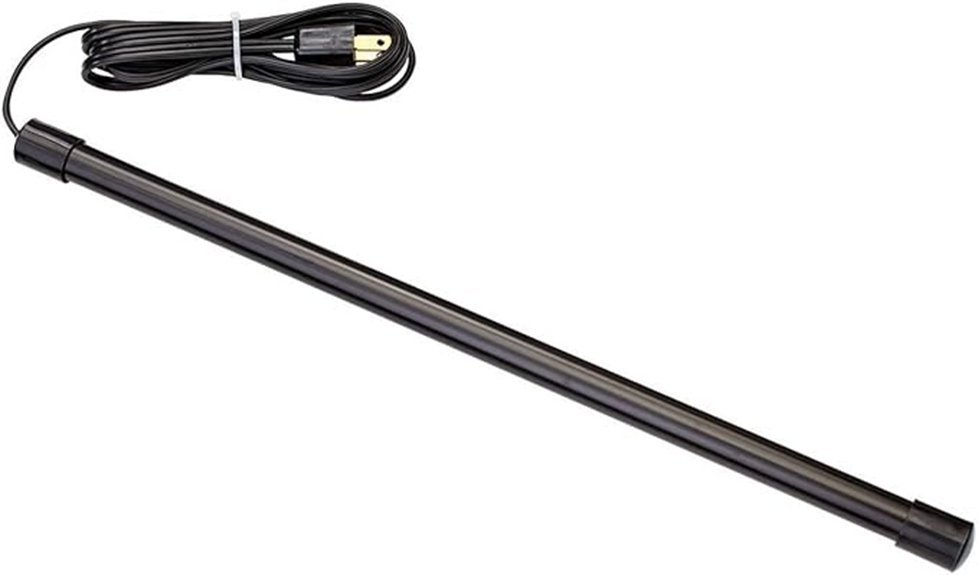
SnapSafe 75904 Gun Safe Dehumidifier Rod, 18-Inch
Best Overall for Medium Safes
Best for: Medium-size gun safes, cabinets, closets, and other enclosed storage spaces with suitable electrical access.
The SnapSafe 75904 is an 18-inch heated rod designed to provide continuous humidity management inside an enclosed safe. Published retailer specifications identify 10-watt operation and approximate coverage of 200 cubic feet, placing it between compact 12-inch rods and longer 24-inch options.
The rod produces gentle heat near the bottom of the enclosure. As the warmed air rises, it encourages passive circulation and helps reduce relative humidity and condensation risk around stored items. It does not collect liquid water, so a separate hygrometer is important when conditions are difficult or change seasonally.
Why You’ll Like It
- Useful middle size: The 18-inch format fits many medium-size safes without requiring as much mounting room as a 24-inch rod.
- Low-power continuous operation: Its listed 10-watt design is intended to remain connected for ongoing humidity management.
- Minimal routine maintenance: There is no water tank, filter, or rechargeable desiccant cartridge to service.
- Clear use case: It provides a practical middle ground between compact handgun-safe rods and large-enclosure models.
Who should buy this: Choose it when you have a medium enclosure, an approved cord path, and enough floor-level clearance for an 18-inch heated rod.
Who should avoid it: Buyers with a compact handgun safe, no internal power access, severe room-level dampness, or an enclosure exceeding the stated guidance should consider another size or moisture-control method.
Pros:
- 18-inch length suits many medium enclosures.
- Published coverage of approximately 200 cubic feet.
- Quiet operation without a fan or compressor.
- No tank emptying or desiccant recharging.
Cons:
- Requires continuous access to a compatible electrical outlet.
- Does not display or automatically control to a selected humidity level.
- May be too long for compact safes.
- Coverage remains dependent on the surrounding conditions.
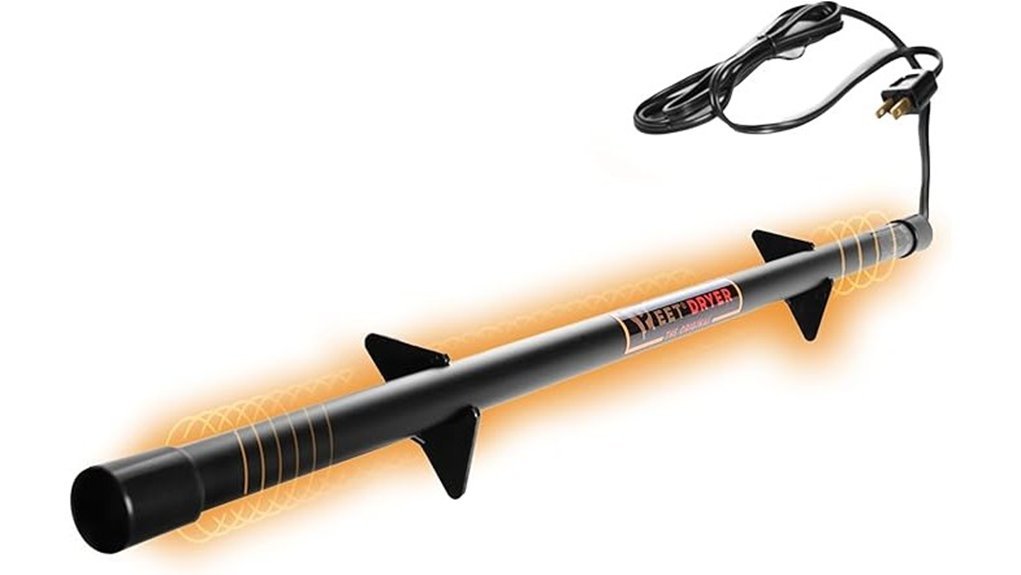
PEET 24-Inch Gun Safe Dehumidifier Rod
Best for Large Safes
Best for: Larger gun safes and enclosed storage spaces that fall within the manufacturer’s stated 300-cubic-foot limit.
The PEET 24-inch Safe Dehumidifier Rod is the longest option in this comparison. PEET states that this size is intended for enclosures up to 300 cubic feet. It works silently by warming the air and encouraging convection rather than using a fan, compressor, or water-collection tank.
The included plug comes detached so the cord can be routed through a suitable safe access opening before the plug is connected according to the supplied instructions. PEET also states that the rod meets ETL safety standards.
Why You’ll Like It
- Larger stated coverage: The 24-inch version is intended for buyers whose enclosures exceed the guidance for common 12- and 18-inch rods.
- Silent operation: There is no fan or compressor to create noticeable operating noise.
- Installation-friendly plug: The separate plug can simplify cord routing through an approved access hole.
- Documented warranty: PEET advertises a five-year warranty when the product is registered within 10 days, subject to the current warranty terms.
Who should buy this: It is best for a larger safe with enough uninterrupted mounting space for a 24-inch rod and an approved electrical connection.
Who should avoid it: It may be unnecessarily long for a compact cabinet. It is also unsuitable where stored items would touch the heated surface or block airflow around it.
Pros:
- Manufacturer-stated coverage of up to 300 cubic feet.
- No fan, filter, refill, recharge cycle, or water tank.
- Detachable plug supports easier cord routing.
- ETL compliance is stated by the manufacturer.
Cons:
- The 24-inch length requires more usable interior space.
- Performance can decrease in poorly sealed or extremely damp enclosures.
- The current electrical specifications should be confirmed before purchase.
- Warranty coverage depends on following PEET’s registration and warranty conditions.
Hornady 95903 Electronic Gun Safe Dehumidifier Rod, 12-Inch
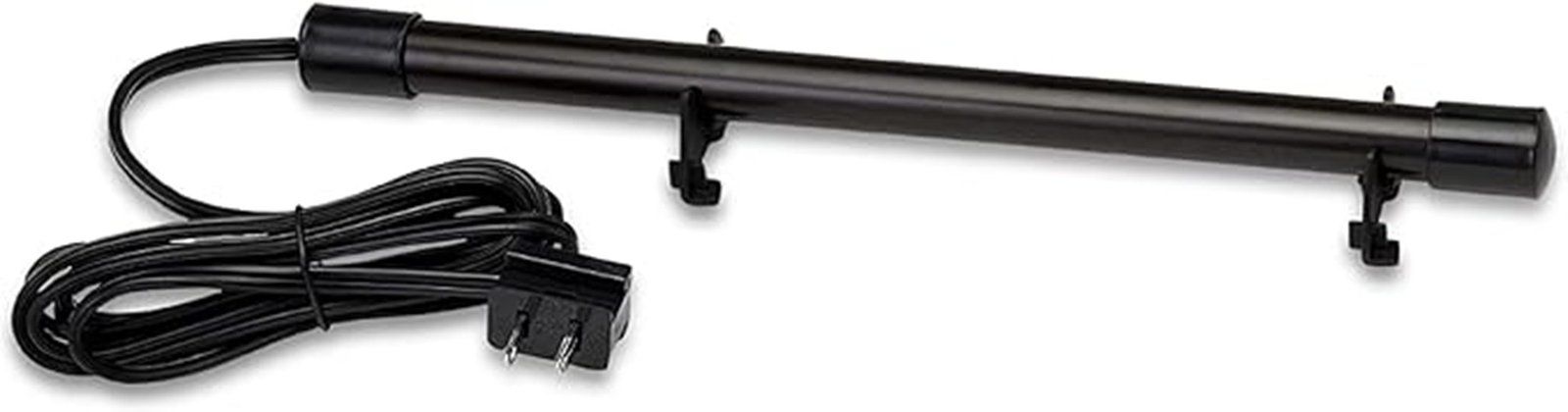
Best Compact Pick
Best for: Compact gun safes, cabinets, and small indoor enclosures within the manufacturer’s approximate 100-cubic-foot guidance.
The Hornady 95903 is a 12-inch, 7-watt rod designed for small enclosures. Hornady describes it as a low-maintenance humidity-control option that can be mounted horizontally or vertically with the included snap-on brackets.
Hornady identifies horizontal placement near the floor of the safe or closet as the optimal mounting position. Its removable plug can also help users route the cord through a narrow approved opening before reconnecting it according to the product instructions.
Why You’ll Like It
- Compact dimensions: The short rod leaves more room for stored equipment than longer models.
- Clear official specifications: Hornady identifies the wattage, approximate coverage, mounting methods, and indoor-use limitation.
- Flexible mounting: Horizontal and vertical installation are both permitted, although horizontal floor-level placement is preferred.
- Simple installation: The removable plug can help with narrow cord-access openings.
Who should buy this: It is a practical option for a small safe where interior space is limited but a permanent compatible power connection is available.
Who should avoid it: Buyers with medium or large safes should select a longer rod with greater published coverage rather than expecting this compact model to manage a much larger enclosure.
Pros:
- 7-watt operation.
- Approximate 100-cubic-foot coverage.
- Removable plug supports easier installation.
- Horizontal or vertical mounting is permitted.
Cons:
- Lower coverage than 18- and 24-inch options.
- No humidity display or automatic set point.
- The heated surface should not be touched while powered.
- For indoor use only.
LOCKDOWN GunSaver 18-Inch Dehumidifier Rod
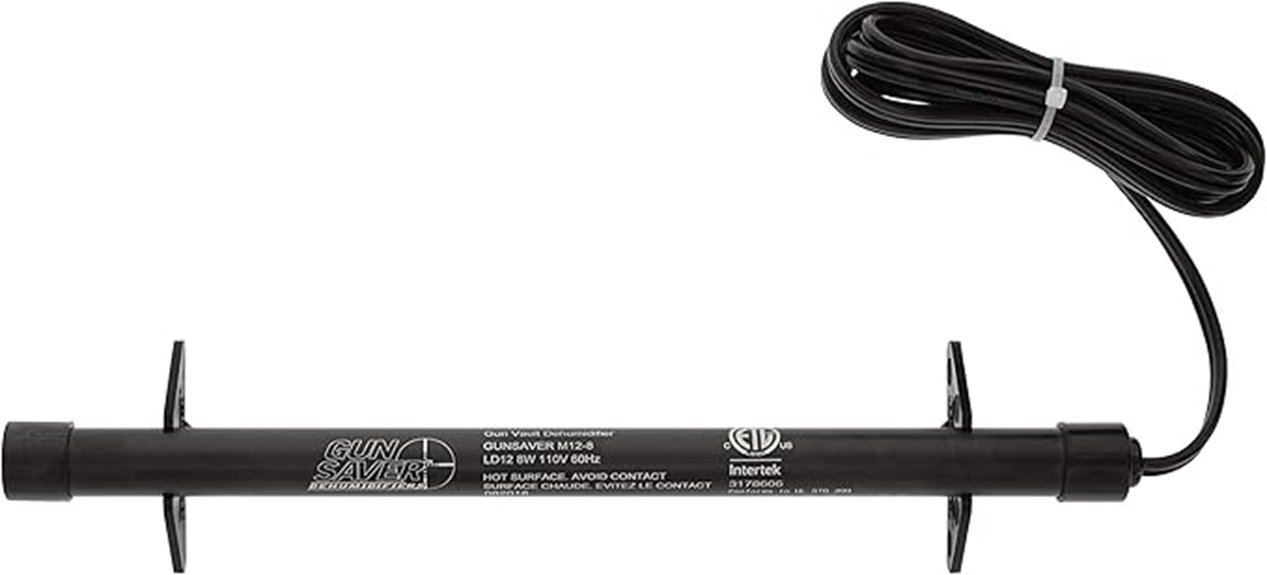
Best Low-Profile Medium-Safe Option
Best for: Medium-size gun safes and vault-style cabinets needing a continuously powered rod with mounting brackets and a quick-plug cord arrangement.
The LOCKDOWN GunSaver uses gentle heat and passive air movement to help reduce relative humidity and condensation risk inside an enclosure. The linked version is sold as an 18-inch model, and seller information commonly associates this size with approximately 200 cubic feet of coverage.
LOCKDOWN identifies the GunSaver as a 110/120V AC product with an easy-install quick-plug attachment and mounting brackets. Buyers should confirm the exact length, electrical specification, and coverage guidance shown for the selected Amazon variation.
Why You’ll Like It
- Low-position installation: Mounting the rod near the bottom allows warmed air to rise through the enclosure.
- Medium-size format: The 18-inch version bridges the gap between compact and large rods.
- No routine recharging: It remains connected rather than requiring periodic drying like a rechargeable desiccant canister.
- Installation components: The current manufacturer information lists mounting brackets and a quick-plug attachment.
Who should buy this: It suits buyers who want a straightforward, low-profile heated rod for a medium safe with compatible 110/120V power access.
Who should avoid it: It is not suitable for buyers who lack approved electrical access or require a device that switches automatically according to a selected humidity threshold.
Pros:
- 18-inch format is suitable for many medium enclosures.
- Mounting brackets and quick-plug design support installation.
- Quiet operation without a fan or compressor.
- No tank or replaceable filter.
Cons:
- Must remain plugged in for continuous operation.
- No integrated hygrometer or humidistat.
- Coverage information should be confirmed for the exact variation.
- Not intended to control humidity in an entire room or open basement.
MAXSafes Gun Safe Dehumidifier Rod, 12-Inch
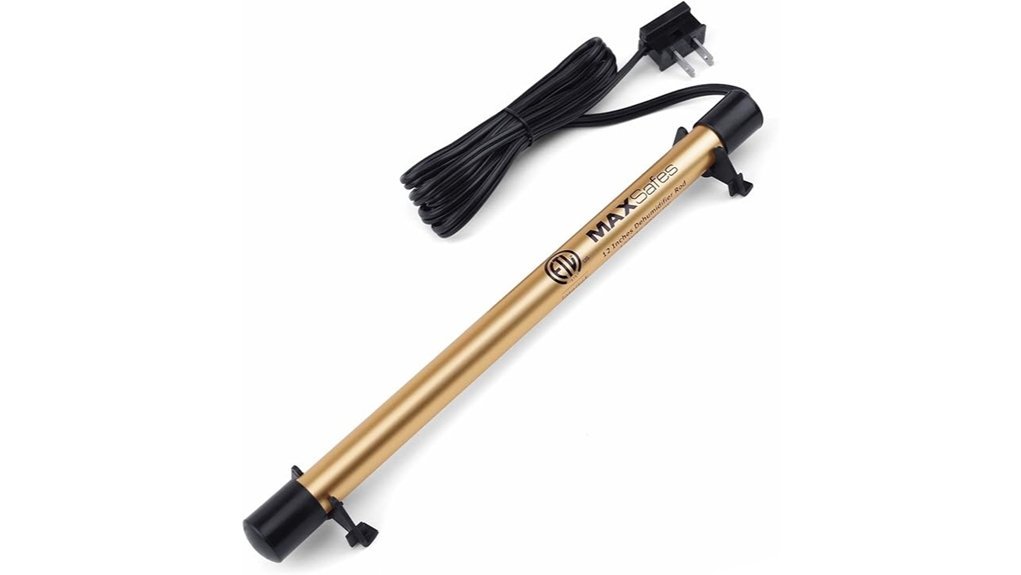
Best Compact Aluminum Option
Best for: Small safes and cabinets where a compact aluminum rod, low power draw, and ETL-listed construction are priorities.
The MAXSafes 12-inch rod operates at 7 watts and is designed for continuous use in small indoor enclosures. Its aluminum housing and short length make it easier to fit into a crowded safe than a longer 18- or 24-inch model.
MAXSafes lists snap-on mounting brackets, a removable plug, and support for horizontal or vertical installation. The manufacturer’s current page does not provide a clear cubic-foot coverage figure for this exact 12-inch version, so the rod should be selected according to its dimensions, instructions, and the actual results shown by a separate hygrometer.
Why You’ll Like It
- Space-saving dimensions: The 12-inch body is easier to position in small layouts.
- Low power use: Its listed 7-watt operation is intended for ongoing humidity management.
- ETL certification: MAXSafes identifies the current model as ETL certified.
- Mounting flexibility: The supplied hardware supports horizontal or vertical positioning when installed according to the instructions.
Who should buy this: Choose it for a small safe where compact dimensions and documented wattage matter more than having a manufacturer-published cubic-foot rating.
Who should avoid it: Buyers needing clearly documented medium- or large-safe coverage should choose a model with a published enclosure-volume rating.
Pros:
- Compact 12-inch aluminum construction.
- Low-wattage, continuously powered design.
- ETL certification is stated by MAXSafes.
- Detachable plug can assist with cord routing.
Cons:
- No clear official cubic-foot coverage figure is presented for this exact model.
- Requires open airflow around the heated rod.
- No built-in humidity sensor or display.
- Small dimensions may not provide enough heat for a large enclosure.
Briidea Safe Dehumidifier Rod, 12, 16, or 24 Inches
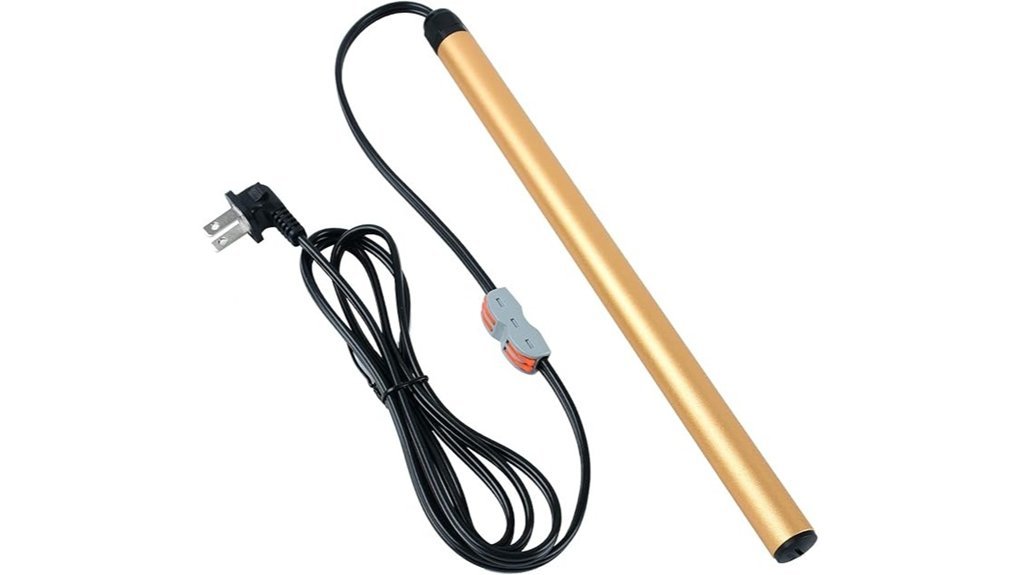
Best Size Selection
Best for: Buyers who want to choose from several seller-listed rod lengths for a safe, wardrobe, or enclosed cabinet.
The Briidea Safe Dehumidifier Rod is associated with 12-, 16-, and 24-inch versions. Marketplace information lists approximate coverage of 100, 150, and 300 cubic feet, respectively. These figures are seller-provided sizing guidance and should not be treated as guaranteed performance.
The product is intended to create gentle heat and convection inside an enclosure. Its connector arrangement is designed to let the cord pass through a smaller approved access opening before the plug connection is completed according to the supplied instructions.
Why You’ll Like It
- Multiple sizes: Buyers can select a shorter or longer rod instead of using one size for every enclosure.
- Low mounting position: Horizontal placement near the bottom can encourage warmed air to rise through the safe.
- Installation accessories: Seller information describes mounting and cord-connection components.
- Flexible use cases: The different sizes may suit small cabinets through larger enclosed storage spaces.
Who should buy this: It may suit buyers who value having several length options and are comfortable verifying the exact variation, voltage, coverage, and included accessories before ordering.
Who should avoid it: Buyers who prioritize specifications documented directly on an established manufacturer website may be more comfortable with PEET, Hornady, LOCKDOWN, or MAXSafes.
Pros:
- Choice of 12-, 16-, and 24-inch versions.
- Seller-stated sizing options for small through larger enclosures.
- Designed for continuous, fan-free operation.
- Cord arrangement may assist with narrow access openings.
Cons:
- Coverage and electrical figures require verification on the selected listing.
- Authoritative manufacturer documentation is less accessible than for several competing products.
- Correct mounting position and open airflow are important.
- Requires an approved outlet and safe cord path.
Factors to Consider When Choosing a Dehumidifier Rod
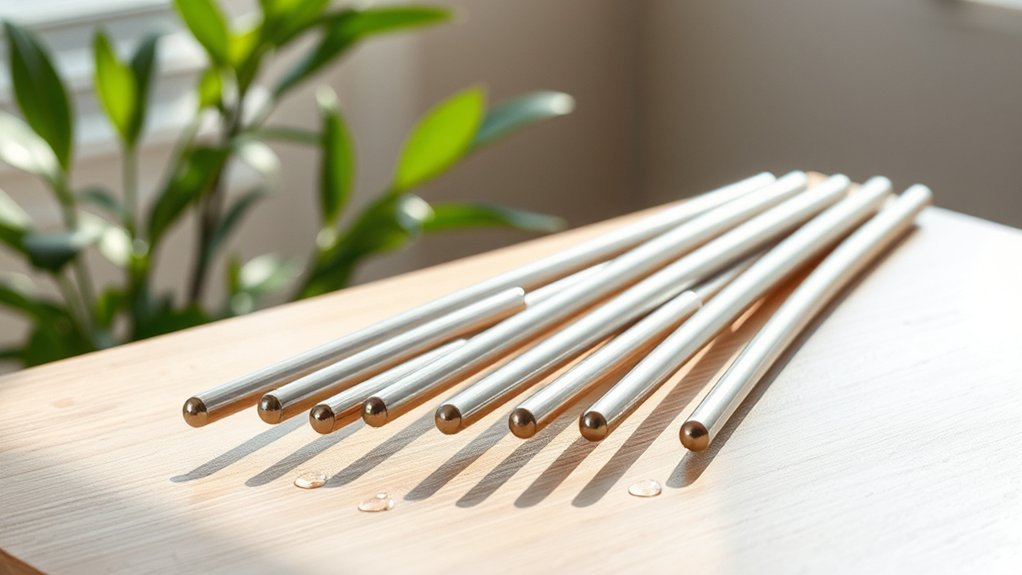
The right rod should fit your enclosure, match its approximate internal volume, install safely, and provide enough gentle heat to reduce condensation risk without obstructing stored items. Consider the following points before buying.
Rod Size and Enclosure Volume
Dehumidifier rods commonly range from about 12 to 24 inches. A compact rod may be adequate for a handgun safe or small cabinet, while a longer rod may be more suitable for a tall gun safe or larger vault-style enclosure.
To estimate internal volume, measure the usable interior dimensions in inches and use this formula:
Internal length × internal width × internal height ÷ 1,728 = cubic feet
Measure the usable interior rather than the exterior shell. Shelves, drawers, door organizers, stored cases, and other obstructions can reduce airflow even when the calculated volume is below the manufacturer’s stated limit.
Do not confuse square-foot or square-centimeter marketplace metadata with cubic-foot enclosure capacity. Published coverage is approximate and may be reduced by frequent door openings, poor sealing, air leakage, or unusually high ambient humidity.
Power Consumption and Voltage
Many basic rods operate at relatively low wattage because they are intended to remain powered continuously. Lower wattage is not automatically better or worse. The rod must still be appropriately sized and positioned for the enclosure.
Check the voltage, plug type, wattage, and indoor-use requirements on the exact product variation before purchase. This is especially important when ordering from another country or using a listing that offers more than one electrical version.
A plug-shape adapter does not convert voltage. Never use an incompatible power source, damaged extension cord, or improvised electrical connection.
Material, Durability, and Safety
Look for durable construction, secure mounting brackets, a protected power cord, and clearly written safety instructions. Any ETL, UL, flame-resistance, or other safety claim should be verified on the current manufacturer page, product label, or packaging.
Because the rod intentionally becomes warm, it needs open space around its surface. Do not cover it with fabric, paper, foam, ammunition packaging, plastic accessories, desiccant bags, or other stored items.
Use the supplied brackets or feet rather than allowing the heated housing to rest directly against an unsuitable surface. Keep the cord away from sharp metal edges and discontinue use if the cord, plug, housing, or mounting hardware becomes damaged.
Continuous Operation
Most basic rods do not include an automatic humidity set point. They remain warm whenever connected to power. This simplicity eliminates tanks, filters, and recharge cycles, but it also means the user should monitor the enclosure with a separate hygrometer.
A rod may lower relative humidity enough to reduce condensation risk, but it does not physically collect or drain water. In extremely damp locations, use it as part of a broader moisture-control plan rather than expecting it to replace a room dehumidifier.
Installation and Safe Compatibility
Check whether your safe has a factory power outlet or an approved cord-access hole. Some rods include a detachable plug so the cable can pass through a narrow opening. Follow the supplied plug-removal, wiring, and reconnection instructions exactly.
Do not drill a new hole through a safe, fire-resistant barrier, electrical component, or locking mechanism without written guidance from the safe manufacturer. An unauthorized modification may damage the safe, reduce fire protection, affect security, or void warranty coverage.
Horizontal placement near the bottom is commonly recommended because warm air rises. However, some manufacturers permit vertical mounting. Follow the instructions for the specific model rather than assuming that every rod installs the same way.
Maintenance
Electric rods generally require little routine maintenance. Keep the surface clean and dry, maintain open airflow, inspect the cord periodically, and confirm that the rod is still warming normally.
Do not assume that a rod must be replaced every two to five years. Replace it when it stops operating correctly, develops visible damage, overheats, or reaches a service-life limit specified by its manufacturer.
Disconnect the rod and allow it to cool before cleaning, moving, or inspecting it. Never immerse it in water or apply liquid cleaner while it is connected to power.
Humidity Monitoring
A separate digital hygrometer can show whether the rod is producing the desired result. Place the sensor away from the rod and out of its direct heat path because an unusually warm sensor position may produce a misleading reading.
Check conditions after installation and during seasonal weather changes. If humidity remains high, confirm the rod size and placement, inspect the enclosure for moisture entry, and consider adding a rechargeable desiccant unit or controlling humidity in the surrounding room.
Safety Note
- Use the rod only in indoor applications approved by its manufacturer.
- Treat the surface as hot while powered and during the initial cooling period.
- Do not cover the rod or block airflow around it.
- Use the included brackets or feet as directed.
- Keep the unit and cord away from water, flammable materials, and sharp edges.
- Disconnect power before moving, cleaning, or inspecting the rod.
- Do not use a damaged rod, plug, cord, or mounting component.
- Follow the manufacturer’s instructions for plug removal, reconnection, voltage, and mounting.
Frequently Asked Questions
How Do Dehumidifier Rods Work?
Electric dehumidifier rods produce gentle heat. This warms the surrounding air, encourages passive convection, and lowers relative humidity inside an enclosed space. The reduced relative humidity can help limit condensation on cooler metal and other stored surfaces. A standard heated rod does not collect, absorb, or drain water.
Can I Use a Dehumidifier Rod Outside a Gun Safe?
Some models can also be used in indoor cabinets, closets, wardrobes, camper cabinets, or other small enclosed storage spaces when the manufacturer permits it. They are not designed to dehumidify an open room, full basement, garage, or similarly large area.
How Often Should I Replace a Dehumidifier Rod?
There is no universal replacement interval. A functioning rod may remain usable for years. Inspect it periodically and replace it if the cord or housing is damaged, it no longer warms normally, it overheats, or the manufacturer specifies a service-life limit.
Are Dehumidifier Rods Energy-Efficient?
Many rods use relatively low wattage compared with full-size room dehumidifiers. However, they are often powered continuously, so actual electricity use depends on wattage and operating time. Check the exact model’s current electrical specifications before purchase.
Do Dehumidifier Rods Make Noise?
Basic heated rods generally operate without a compressor or fan, so they should be effectively silent. A product with an active fan, controller, alarm, or other electronic component may behave differently.
Should I Use a Hygrometer With the Rod?
Yes. A hygrometer helps confirm whether humidity is staying within an appropriate range for the items being stored. It can also reveal when the rod is undersized, poorly positioned, disconnected, or unable to overcome moisture entering from the surrounding environment.
Will a Dehumidifier Rod Make My Safe Hot?
A rod is intended to raise the internal air temperature slightly, so some warmth is normal. It should not be covered, pressed against stored items, or installed without its approved brackets. Follow the manufacturer’s instructions and discontinue use if the unit appears damaged or unusually hot.
What If My Safe Does Not Have an Electrical Outlet?
Check whether the safe includes a manufacturer-approved cord-access opening. Do not drill or modify the safe without confirming that the change is safe and will not affect its locking system, fire resistance, or warranty. A rechargeable desiccant dehumidifier may be a better option when no approved power path is available.
Can a Rod Replace a Room Dehumidifier?
No. A rod is intended for a small enclosed space. It does not have the water-removal capacity of a compressor, desiccant, or thermoelectric room dehumidifier. Control moisture in the surrounding room separately when the broader environment is damp.
Final Recommendation
Best overall for many medium-size safes: The SnapSafe 75904 combines an 18-inch length, 10-watt operation, and approximately 200 cubic feet of published coverage.
Best for a large enclosure: The PEET 24-inch rod offers the highest clearly documented coverage in this comparison, with manufacturer guidance of up to 300 cubic feet.
Best for a compact safe: The Hornady 95903 provides well-documented 7-watt operation and approximate 100-cubic-foot coverage in a 12-inch format.
Other useful options: The LOCKDOWN GunSaver is a practical low-profile choice for many medium enclosures, while the MAXSafes 12-inch rod suits buyers who prioritize compact aluminum construction. The Briidea rod provides several seller-listed lengths, but the exact variation specifications require closer verification.
Whichever model you select, match it to the safe’s usable internal volume, confirm the voltage and cord path, maintain clear airflow around the heated surface, and monitor the results with a separate hygrometer. That combination provides more dependable moisture management than relying on a coverage number alone.