Affiliate disclosure: As an Amazon Associate, we may earn from qualifying purchases at no additional cost to you. Product specifications and listing details can change, so confirm the current Amazon page and manufacturer documentation before ordering.
Choosing a crawl space dehumidifier with a pump requires more than comparing the largest pint or square-foot number. The most important differences are moisture-removal capacity under realistic test conditions, pump drainage, operating temperature, physical access, and the actual moisture load in your space.
This two-product guide compares the HBN 125 Pint Crawl Space Dehumidifier for higher moisture loads and larger areas with the compact BaseAire AirWerx 35P for smaller, low-clearance crawl spaces. Capacity figures below separate the manufacturers’ higher saturation ratings from their lower ratings under AHAM conditions so you can make a more useful comparison.
Quick verdict
- Best for higher moisture loads: Choose the HBN for its manufacturer-listed 60-PPD capacity under AHAM conditions and pump lift of up to 16.4 feet.
- Best compact option: Choose the BaseAire AirWerx 35P when low-clearance installation, smaller dimensions, and pump or gravity drainage matter more than maximum capacity.
How we compared these models
The comparison prioritizes capacity under AHAM conditions, pump and gravity drainage, physical installation needs, operating range, maintenance access, warranty information, and honest limitations. Manufacturer square-foot claims are treated only as starting estimates—not guaranteed sizing recommendations.
Quick Comparison
| Product | Best For | Capacity Under AHAM Conditions | Saturation Capacity | Manufacturer Coverage Estimate | Drainage | Important Fit Note | Amazon |
|---|---|---|---|---|---|---|---|
| HBN 125 Pint | Larger crawl spaces, basements, and higher moisture loads | 60 PPD, manufacturer or retailer listed | 125 PPD at 95°F and 90% RH | Up to 5,900 sq. ft. | Built-in pump with up to 16.4-ft lift or gravity drainage | Confirm current dimensions, access clearance, electrical requirements, and warranty before ordering | View on Amazon |
| BaseAire AirWerx 35P | Smaller or low-clearance crawl spaces | 35 PPD at 80°F and 60% RH | 70 PPD at saturation | Up to 1,000 sq. ft. | Built-in pump or gravity drainage | 15.35 × 11.2 × 11.4 in.; current manufacturer chart lists it as not ENERGY STAR certified | View on Amazon |
Important: Coverage figures are manufacturer estimates. Actual performance depends on temperature, relative humidity, air leakage, exposed soil, drainage conditions, water intrusion, and whether the crawl space is sealed or encapsulated.
HBN 125 Pint Crawl Space Dehumidifier with Pump
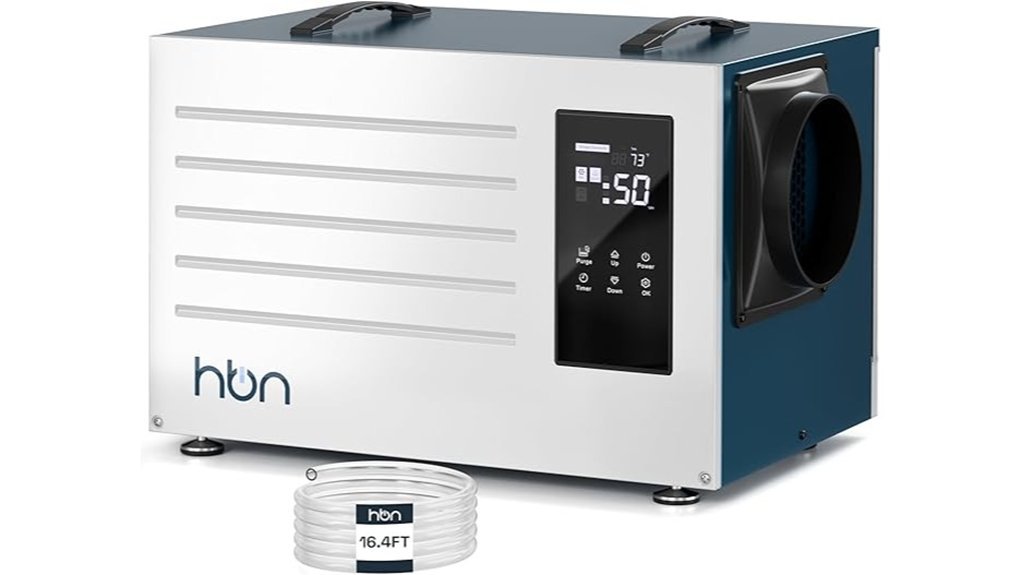
Main benefit: The HBN provides more moisture-removal headroom than the BaseAire model and can pump condensate upward when a lower floor drain is unavailable. This makes it the stronger option for larger crawl spaces, basements, workshops, and other areas with a heavier humidity load.
The model is listed to remove up to 125 pints per day at 95°F and 90% relative humidity, while its lower rating under AHAM conditions is 60 pints per day. The 60-PPD figure is the more useful number when comparing it with another compressor dehumidifier because the 125-PPD headline reflects much hotter and wetter test conditions.
The manufacturer or retailer estimates coverage up to 5,900 square feet and lists airflow of approximately 300 CFM. Treat that coverage figure as a starting point rather than a guarantee, especially if the crawl space has exposed soil, significant air leakage, standing water, or an unresolved drainage problem.
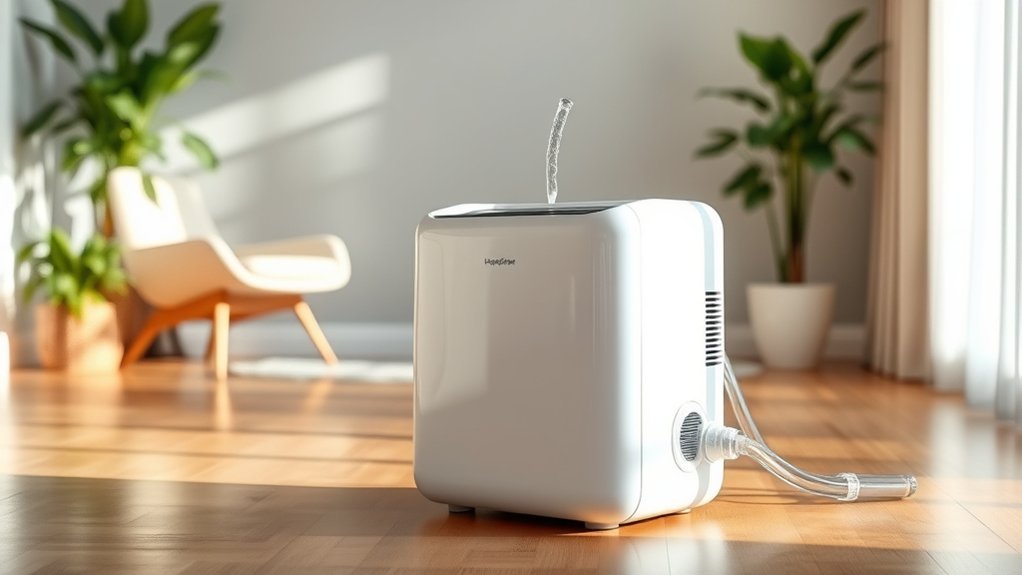
For drainage, the HBN supports a gravity hose when water can flow continuously downhill. Its built-in condensate pump is listed to move water upward by as much as 16.4 feet, offering more installation flexibility when the discharge point is above the appliance. Listed convenience features include touchscreen controls, automatic humidity management, a 24-hour timer, automatic defrost, and restart memory after a power interruption.
Why You’ll Like It
- Higher practical capacity: Its listed 60-PPD capacity under AHAM conditions provides more moisture-removal headroom than the BaseAire AirWerx 35P.
- Strong pump specification: The listed 16.4-foot pump lift is useful when condensate must travel upward to a sink, drain, or safe exterior discharge point.
- High airflow: Approximately 300 CFM can help circulate damp air across a larger enclosed area.
- Unattended-operation features: Automatic humidity control, defrost, timer settings, and restart memory can reduce routine intervention.
Who should buy this: Homeowners with a larger or wetter crawl space who need higher capacity, continuous drainage, and a clearly specified pump lift.
Who should avoid this: Buyers with a small, mildly damp space or a narrow crawl-space opening who do not need commercial-style capacity. Confirm that the unit can pass through the access hatch and that the electrical circuit meets the current manual’s requirements.
Pros:
- Higher capacity under AHAM conditions than the BaseAire model.
- Built-in pump plus gravity-drain option.
- Pump lift listed up to 16.4 feet.
- Automatic defrost and restart memory support lower-attention operation.
- Higher listed airflow for larger spaces.
Cons:
- The 125-PPD headline is measured under unusually hot and humid saturation conditions.
- Likely requires more installation room than a compact crawl-space unit.
- Current dimensions, sound level, operating-temperature range, energy factor, and warranty terms should be confirmed before purchase.
- The 5,900-square-foot estimate should not replace moisture-load sizing.
BaseAire AirWerx 35P Crawl Space Dehumidifier with Pump
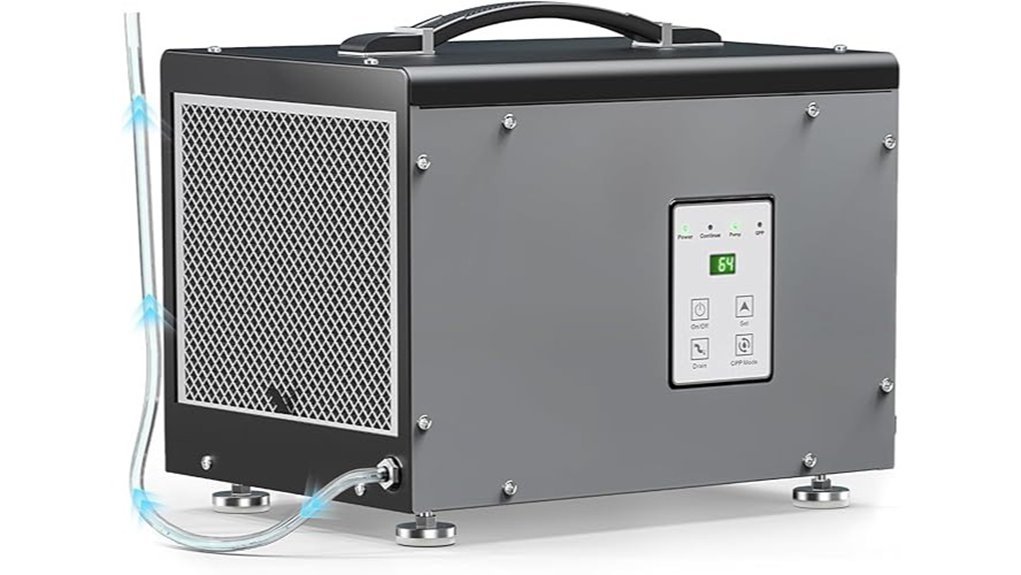
Main benefit: The BaseAire AirWerx 35P combines a small housing with automatic humidity control and two continuous-drainage methods. It is easier to consider for a low-clearance crawl space where installation access matters more than maximum moisture-removal capacity.
The manufacturer lists the AirWerx 35P at 70 pints per day under saturation conditions and 35 pints per day at 80°F and 60% relative humidity. Its suggested coverage is up to 1,000 square feet, although the actual suitable area will depend on the severity and source of the moisture.
The housing measures approximately 15.35 × 11.2 × 11.4 inches and weighs about 39.7 pounds. It is also listed with 115-CFM airflow, an operating-temperature range of approximately 33–105°F, and a sound-pressure level below 50 dBA under the manufacturer’s stated conditions.
A built-in humidity sensor and digital controls manage automatic start-and-stop operation. The unit supports both pump and gravity drainage, while automatic defrost helps manage frost formation in cooler environments. BaseAire lists a five-year limited warranty and lifetime technical support, but buyers should read the current warranty terms for parts, labor, shipping, registration, and other conditions.
Certification note: BaseAire’s current manufacturer comparison chart lists the AirWerx 35P as not ENERGY STAR certified. Do not rely on older or conflicting marketplace-title wording if certification is important to your purchase.
Why You’ll Like It
- Compact footprint: Its low height and short body can make positioning easier where vertical clearance and service access are limited.
- Two drainage methods: Use the pump where gravity drainage is impractical or use a downward gravity hose when a suitable lower drain is nearby.
- Useful operating specifications: The manufacturer publishes its temperature range, airflow, dimensions, weight, and sound claim.
- Clear test-condition disclosure: Both its 70-PPD saturation rating and 35-PPD rating at 80°F and 60% RH are disclosed.
Who should buy this: Homeowners with a smaller, sealed, or encapsulated crawl space who want a compact unit with automatic humidity control and continuous pump or gravity drainage.
Who should avoid this: Buyers with a large, very wet, unsealed, or highly air-leaky crawl space that requires more than 35 PPD under AHAM conditions. It is also unsuitable for anyone who specifically requires a currently ENERGY STAR-certified model.
Pros:
- Small dimensions suit many low-clearance installations.
- Built-in pump and gravity-drain options.
- Published 33–105°F operating range.
- Listed sound-pressure level below 50 dBA.
- Manufacturer-listed five-year limited warranty and technical support.
Cons:
- Its 35-PPD rating at 80°F and 60% RH is significantly lower than the 70-PPD saturation headline.
- Lower capacity and airflow than the HBN model.
- The current manufacturer chart lists it as not ENERGY STAR certified.
- The pump’s maximum vertical lift was not clearly confirmed in the current manufacturer specifications reviewed.
Factors to Consider When Choosing a Crawl Space Dehumidifier
The right unit is not always the model with the largest headline rating. Compare test conditions, moisture load, pump lift, drainage path, operating temperature, installation clearance, electrical requirements, and the source of the water before choosing.
1. Compare AHAM-Condition and Saturation Capacity
Dehumidifier capacity is stated in pints removed per 24 hours, but not every rating uses the same temperature and relative humidity. A saturation rating is measured in hotter, wetter air and is usually much higher. A rating under AHAM conditions uses less extreme air and is generally more useful when comparing two compressor dehumidifiers.
In this comparison, the HBN is listed at 60 PPD under AHAM conditions, while the BaseAire is rated at 35 PPD at 80°F and 60% relative humidity. Those lower ratings provide a more useful starting point than the 125-PPD and 70-PPD saturation headlines.
2. Consider Moisture Load, Not Just Square Footage
Square-foot coverage is only a starting estimate. A sealed crawl space with minor seasonal humidity may require less capacity than an equally sized space with bare soil, open vents, plumbing leaks, poor grading, foundation seepage, or frequent standing water.
A dehumidifier manages moisture in the air. It does not replace foundation drainage, plumbing repairs, gutter maintenance, grading corrections, a ground vapor barrier, sump-pump work, or crawl-space encapsulation.
3. Plan the Entire Drainage Route
Gravity drainage is simple and reliable, but the hose must run continuously downhill without loops or low spots that trap water. A built-in pump is useful when condensate must travel upward or across a longer route.
Before installation, confirm the pump’s maximum vertical lift, included hose length, drain-outlet location, safe discharge point, freeze exposure, and whether local rules permit the planned discharge location. Do not route water where it can flow back toward the foundation.
4. Check Verified Energy Efficiency
Do not judge efficiency from pint capacity alone. Look for a published integrated energy factor or coefficient of performance, and verify any ENERGY STAR claim in the current official certified-product database.
Automatic humidity control can reduce unnecessary runtime after the set point is reached, but actual electricity use still depends on humidity load, temperature, air leakage, airflow restriction, and daily operating hours.
5. Check Temperature Range and Defrost
Crawl spaces can be cooler than living areas. Choose a model rated for the lowest temperatures you expect and look for automatic defrost so frost on the evaporator coil does not repeatedly interrupt moisture removal.
Automatic defrost does not mean the unit will remove moisture equally well at every temperature. Compressor dehumidifiers generally remove less moisture as the surrounding air becomes cooler.
6. Measure the Opening and Service Area
Measure the crawl-space hatch, route to the installation location, and final operating area. Leave enough room to clean or replace the filter, connect both drain hoses, reach the controls, remove side panels if service is required, and maintain the airflow clearances stated in the manual.
A product can fit inside the crawl space while still being impossible to move through a narrow access opening.
7. Confirm Electrical Requirements
Check the current manual for voltage, amperage, grounding, outlet, and circuit requirements. Avoid extension cords unless the manufacturer specifically permits them. The outlet and drain route should remain accessible for inspection, and installation must comply with applicable electrical and building rules.
8. Plan for Filter, Hose, and Pump Maintenance
Inspect the filter, air intake, exhaust, gravity hose, pump line, and discharge point regularly. A clogged filter, blocked outlet, dirty pump reservoir, or kinked hose can reduce performance or cause drainage problems.
During the first few weeks, compare the built-in humidity reading with a separate hygrometer placed away from the dehumidifier’s direct airflow. This can help confirm whether the selected set point is controlling the wider crawl space.
9. Read the Full Warranty Terms
Check what the warranty covers, whether registration is required, how long parts and labor are included, whether the compressor has separate coverage, and who pays shipping for service. Save the receipt, model number, serial number, installation photos, and copies of the listing and warranty terms.
Before you buy
- Measure the crawl-space opening and the complete path to the installation area.
- Compare the lower AHAM-condition capacity, not only the saturation headline.
- Confirm the expected temperature and humidity range.
- Check the available grounded outlet and circuit requirements.
- Confirm the pump lift, hose length, and safe discharge location.
- Identify and repair leaks, seepage, poor grading, or standing-water sources first.
- Leave enough clearance for airflow, filter cleaning, drainage, and service.
- Verify current warranty, certification, specifications, and Amazon listing details.
Frequently Asked Questions
What Does PPD Mean on a Dehumidifier?
PPD means pints per day. It describes how much moisture a dehumidifier can remove in 24 hours under specified temperature and relative-humidity conditions. Always check the test conditions instead of comparing the pint numbers alone.
Why Is the AHAM-Condition Rating Lower Than the Saturation Rating?
Saturation tests use hotter air and much higher relative humidity, allowing the dehumidifier to condense more water. AHAM conditions are less extreme and usually provide a more practical basis for comparing compressor-based models.
Do I Need a Crawl Space Dehumidifier With a Built-In Pump?
A pump is useful when the drain point is above the unit or when a continuously downward gravity hose is not practical. If a suitable drain is below the dehumidifier and the hose can maintain a continuous downward slope, gravity drainage may be simpler and require less pump maintenance.
Will a Dehumidifier Fix Standing Water or Foundation Leaks?
No. A dehumidifier can reduce moisture in the air, but standing water, plumbing leaks, blocked gutters, poor grading, foundation seepage, and failed drainage systems require separate repairs. Correct the water source before relying on a dehumidifier for long-term humidity control.
Can a Crawl Space Dehumidifier Run Unattended?
Models with automatic humidity control, continuous drainage, automatic defrost, and restart memory are designed to reduce daily intervention. However, the filter, drain line, pump, outlet, discharge point, and surrounding area still require regular inspection. Check the system more frequently during the first few weeks.
Which Model Should I Choose?
Choose the HBN when you need more capacity under AHAM conditions, higher airflow, larger manufacturer-estimated coverage, and a pump lift listed up to 16.4 feet. Choose the BaseAire AirWerx 35P when its compact dimensions, lower-clearance design, published operating range, and smaller-space capacity are a better match.
Conclusion
For a larger crawl space or heavier moisture load, the HBN 125 Pint Crawl Space Dehumidifier is the stronger choice in this comparison. Its manufacturer-listed 60-PPD capacity under AHAM conditions, approximately 300-CFM airflow, and pump lift of up to 16.4 feet provide more capacity and drainage flexibility.
For a smaller, low-clearance installation, the BaseAire AirWerx 35P is the more compact option. It provides 35 PPD at 80°F and 60% relative humidity, pump or gravity drainage, automatic defrost, and clearly published dimensions and operating specifications.
Whichever model you choose, compare realistic capacity, verify the drainage route, measure access carefully, and correct leaks or standing water first. Those checks matter more than selecting a unit solely by its largest advertised pint or square-foot number.
Final recommendation
Pick the HBN for higher-capacity moisture control and a clearly specified pump lift. Pick the BaseAire AirWerx 35P for a compact crawl-space installation with a lower moisture load.