Can a dehumidifier spread mold? Not when it is clean. A working dehumidifier lowers indoor humidity, which helps prevent mold. But if mold or slime builds up in the bucket, filter, drain hose or pump reservoir, the airflow may push musty air and particles back into the room.
Stop using a visibly moldy or strongly musty unit and clean it first. Then aim for 30% to 50% relative humidity and fix the moisture source behind the problem.
Can a Dehumidifier Spread Mold? Short Answer
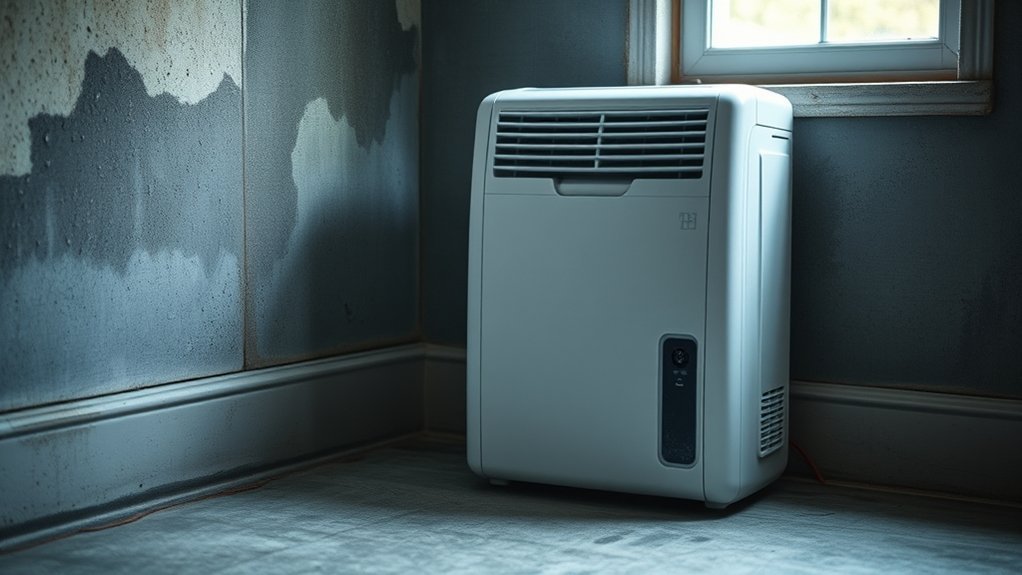
A dehumidifier does not create mold by itself. It spreads mold only when the unit is the contaminated part. Its main job is to lower indoor moisture. The EPA recommends keeping indoor relative humidity below 60%, ideally between 30% and 50%. The CDC says to keep home humidity no higher than 50% all day.
Trouble starts when the unit itself stays damp and dirty. A full bucket, clogged filter, dirty intake grille, wet pump reservoir or blocked drain hose can hold water, dust and organic debris. If mold develops where air passes, running the machine may carry musty air and particles into the room.
Is the Dehumidifier the Mold Source?
| What you find | What it usually means | What to do |
|---|---|---|
| Unit is clean, room has visible mold | The room has a moisture and mold problem the unit cannot remove | Fix the water source, remove the mold safely, then use the unit to control humidity |
| Bucket, filter area or hose smells musty or has visible growth | Accessible parts are contaminated | Unplug it and clean only the parts your manual allows you to remove |
| Odor gone after cleaning and full drying | The problem was limited to accessible parts | Resume use and monitor odor, drainage and humidity |
| Strong musty odor returns right away | Contamination may remain in coils, fan housing, pump parts or elsewhere inside | Stop using it and contact the manufacturer or a qualified technician |
Warning: If the unit smells strongly musty, has visible mold inside, leaks, sparks, overheats or is covered by a recall, turn it off and unplug it before inspecting or cleaning it.
Should You Keep Running a Moldy Dehumidifier?
No. If you see mold in the bucket, filter area, hose or around the intake, stop using the unit until accessible parts are cleaned and fully dry. A contaminated unit may still remove moisture, but airflow over moldy or dirty surfaces can move musty air and particles into the room.
If mold is only on removable plastic parts, manufacturer-approved cleaning may be enough. If it seems deep in the coils, fan housing or pump assembly, do not take the appliance apart beyond what the manual allows. Contact the manufacturer or a technician, or replace the unit if it cannot be cleaned safely.
Why Mold Grows in Dehumidifiers
A dehumidifier collects water, so standing water, dust and poor drainage can create the right conditions if the unit is neglected. Places to inspect:
- Water bucket: standing water, slime and mineral buildup cause odor.
- Filter or pre-filter: dust and lint trap moisture and restrict airflow.
- Drain hose: clogs, low spots and standing water lead to slime and odor.
- Pump reservoir: pump models can hold hidden water.
- Intake grille and coils: dust plus condensation leaves damp surfaces.
- Storage: putting the unit away wet invites odor before the next season.
Frigidaire’s clean and care guidance says to unplug the unit before cleaning, wash the bucket with mild soap and water to limit algae odor, keep moisture away from controls and vents, and let parts dry for one to two days before storage. It also advises against bleach or ammonia on the cabinet. Always follow your own model’s manual first.
Signs Your Dehumidifier Has Mold
Inspect the unit instead of assuming the room is to blame if you notice:
- Musty air when the fan starts
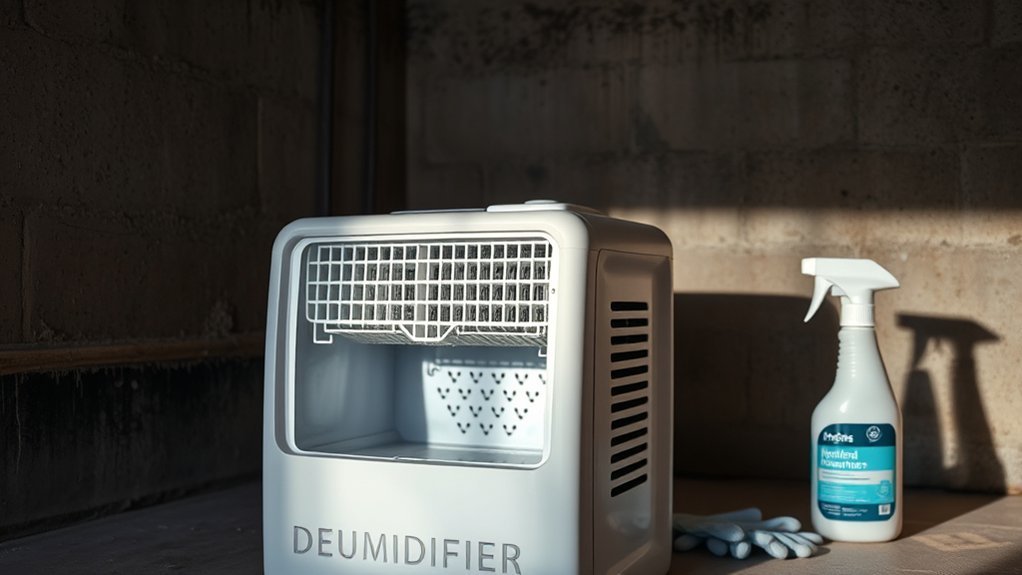
- Visible spots in the bucket, lid, filter, drain outlet or hose
- Slimy buildup in the tank or drain path
- A gray, dusty, clogged or damp filter
- Water sitting in the bucket for long periods
- Humidity staying high while the unit runs
The CDC says mold can look like spots of many different colors and can smell musty. Color alone cannot identify a species, and you do not need to know the type before acting. If you see or smell mold, remove it safely and fix the moisture problem.
How to Clean a Moldy Dehumidifier
Start with the parts the manufacturer expects you to remove. Do not spray water or cleaner into controls, wiring, motors or sealed parts.
- Turn it off and unplug it.
- Move it carefully. Avoid shaking it or disturbing contaminated surfaces.
- Wear protection. The CDC recommends protective gloves, goggles and at least a NIOSH-approved N95 respirator for visible mold.
- Empty and wash the bucket with warm water and mild soap if your manual permits.
- Scrub seams and corners with a soft brush where slime collects.
- Clean the filter as the manual directs and let it dry. Replace it if it is damaged, disposable or still musty after cleaning.
- Flush the drain hose using the manufacturer-approved method and reinstall it with the required slope.
- Wipe the intake and exterior with a damp, soapy cloth if allowed, keeping water away from vents and controls.
- Dry everything fully before reassembly.
- Test before returning it to service. Stop using it if strong odor returns, drainage fails, it leaks or it shows heat or electrical symptoms.
For a step-by-step version, see how to clean mold from a dehumidifier safely. The EPA says mold on hard surfaces can generally be scrubbed with detergent and water and dried completely, while moldy porous materials may be difficult or impossible to clean fully.
Recommended Products
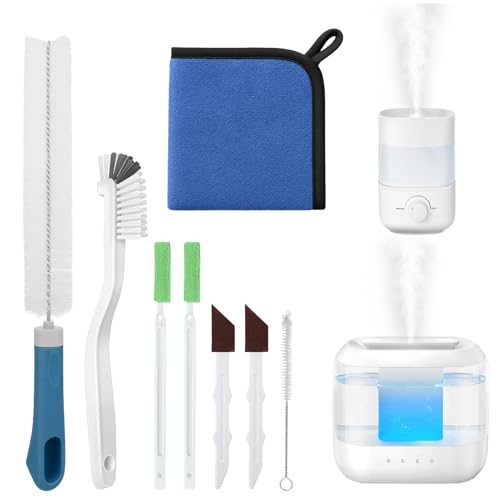
Humidifier Cleaning Solution:Still looking for a cleaning tool that can thoroughly clean your humidifier? Come and try our humidifier cleaning brush set!The nylon brush cleans the stains on the base, the sandpaper brush powerfully removes the severe scale at the bottom, and the long brush can easily reach the air outlet and the interior of the water storage tank, thoroughly cleaning every corner of the humidifier in all aspects, making your humidifier look brand new and more reassuring to use.

Home Essentials: Fireplace chimney brushes includes two high quality synthetic brush head and flexible rods that extend up to 30 feet

✔️ Deep Cleans AC & Fridge Coils in Minutes Easily blast away built-up dust, grease, and debris from condenser/evaporator coils—restores cooling power and airflow without disassembly!
What Not to Do
- Do not mix cleaning products. The CDC says never to mix bleach with ammonia or any other cleanser.
- Do not soak the unit. Water near controls, wiring or the motor is an electrical hazard.
- Do not reinstall wet parts. A damp filter or bucket brings odor back.
- Do not ignore recurring mold. Check standing water, drainage, room humidity, leaks and hidden internal contamination.
- Do not run a recalled unit. Check older or secondhand units against the CPSC dehumidifier recall page.
How to Keep Mold Out of a Dehumidifier
Treat water management and cleaning as part of normal use. A unit running heavily in a basement or laundry room needs more attention than one used occasionally, and your manual sets the final schedule.
- Empty the bucket regularly, and do not let water sit. During heavy use, daily is a practical habit without continuous drainage.
- Wash the bucket weekly during heavy use unless the manual says otherwise, and sooner if odor or slime appears.
- Clean or replace the filter on the schedule in the manual.
- Use a hygrometer to confirm the room reaches roughly 30% to 50% RH.
- Keep airflow clear around the intake and outlet.
- Install continuous drainage correctly and avoid low spots in the hose.
- Dry the unit before storage.
Recommended Products

2-in-1 Thermometer & Hygrometer Meter: Equipped with a high-precision sensor, this temperature and humidity meter provides accurate readings, making it ideal for monitoring indoor environments like homes, offices, or greenhouses

Face Icon Comfort Indicator: Humidity temperature gauge features face icons to indicate DRY/COMFORT/WET air conditions, quickly informs you how to adjust your humidifier or dehumidifier to achieve optimal comfort.

Wellness Indicator: This humidity meter with humidity level icon indicates air conditions - DRY/COMFORT/WET, allowing this humidity sensor to ensure you’re always aware of changes to your home/household with just a quick glance
Can a Dehumidifier Kill Existing Mold?
No. It lowers moisture so conditions are less favorable for new growth, but mold already on surfaces must be cleaned, removed or professionally remediated. The EPA says the key to mold control is moisture control. See does a dehumidifier kill mold and does a dehumidifier help with mold for details.
After cleanup, a dehumidifier helps keep a room drier, which is useful in basements, laundry rooms and other damp areas. It does not replace leak repair. After flooding, the CDC says to clean up and dry out your home fully and quickly, within 24 to 48 hours.
Which Dehumidifier Features Help Prevent Mold?
Accurate humidity control, easy cleaning, reliable drainage and enough capacity for the space matter more than a long feature list. Our guide to the best dehumidifiers for mold covers more.
- Adjustable humidistat: a setting around 45% to 50% sits inside the EPA’s 30% to 50% range with a buffer below 60%. Verify with a separate hygrometer.
- HEPA filtration: many dehumidifiers only have a washable dust filter, which is not a HEPA purifier. The EPA says a HEPA filter can theoretically remove at least 99.97% of dust, pollen, mold, bacteria and other airborne particles at 0.3 microns, but it does not remove surface mold or lower humidity.
- Continuous drainage: keeps water from sitting in the bucket, but only if the hose is the right type, sloped as the manual requires, and checked regularly for clogs, kinks and slime.
Recommended Products

【The Undisputed Champion — Industry-Leading Dehumidifier Brand】Choose AEOCKY, getting double market validation. According to data independently verified by Stackline, a leading third-party data analytics company, AEOCKY was an industry‑leading dehumidifier brand on Amazon U.S. in 2025. Meanwhile, it stands as a technology-leading rotary desiccant dehumidifier brand on Amazon. This isn’t just an appliance—it’s a complete humidity-control solution for small spaces. Skip low-performance alternatives and trust a brand recognized by the market.
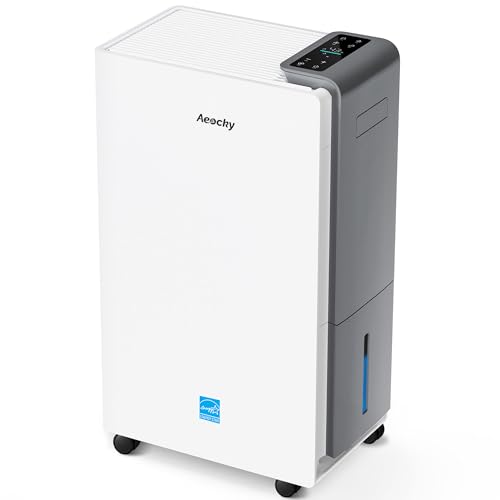
【ENERGY STAR 25 ≠ ENERGY STAR Most Efficient 2025】Don't fall for competitors' word games. With only 2.6% of ENERGY STAR models earning "Most Efficient 2025" title, these options are exceptionally rare on the market. RHEA-001 is one of the few to truly hold this top-tier certification. Many brands use misleading phrases like "Energy Star Efficient 25" or "Energy Star 25" to imply a standard they haven't met. Choosing them is a risk.With AEOCKY, you get verified performance and the peace of mind of authentic, top-tier efficiency.

34 Pint Powerful Moisture Removal for Spaces up to 2,500 Sq. Ft: Designed for large rooms and damp spaces, the TEANEWS compressor dehumidifier removes up to 34 pints of moisture per day at 95°F, 90% RH. It helps control excess humidity in areas up to 2500 sq. ft, making it a great choice for basements, bedrooms, bathrooms, laundry rooms, garages, offices, kitchens, storage areas, crawl spaces and RVs. Simply set your desired humidity level between 30% and 70%, and enjoy a drier, fresher and more comfortable home environment
When to Call for Mold Remediation
A dehumidifier cannot remediate serious contamination. Consider professional help if:
- The moldy area is larger than about 10 square feet.
- Mold may be inside HVAC equipment or ducts.
- The water came from sewage or another contaminated source.
- Mold keeps returning after cleaning and moisture control.
- You smell mold but cannot find the source.
- A lot of carpet, insulation, ceiling tile or drywall is moldy.
- The person who would clean has asthma, COPD, allergies, immune suppression or lung disease.
The EPA says moldy areas smaller than about 10 square feet can usually be handled by homeowners. The CDC advises people with allergies, immune suppression, underlying lung disease, asthma or COPD not to take part in mold cleanup. For personal medical advice, ask a healthcare professional.
Related guides
- How to clean mold from a dehumidifier safely
- Does a dehumidifier kill mold?
- Does a dehumidifier prevent mold?
- How effective are dehumidifiers at preventing mold?
Frequently Asked Questions
Will a dehumidifier stop mold from spreading?
It can make conditions less favorable for new growth by keeping humidity low, but it will not remove existing mold. You still need to clean or remove contaminated material and fix leaks, condensation or other moisture sources.
Should you use a dehumidifier if you have COPD?
It may help control excess humidity, but it is not a medical treatment. The CDC says people with COPD should not take part in mold cleanup or stay in a moldy home during cleanup. Ask a healthcare professional for advice specific to you.
What are the first signs of black mold?
You cannot reliably identify so-called black mold by color alone. The CDC describes Stachybotrys chartarum as greenish-black, but many molds look dark. It says you do not need to identify the species before removing mold and fixing the moisture problem.
Can a moldy dehumidifier make you sick?
A contaminated unit may increase exposure to musty air and mold particles. Mold affects people differently, and those with allergies, asthma, COPD or immune suppression may face greater risk. Stop using a visibly moldy or strongly musty unit until it is cleaned, serviced or replaced.
How often should you clean a dehumidifier?
Follow your owner’s manual. During heavy use, checking the bucket daily and washing it regularly is a practical routine, with filters and drain parts cleaned on the manufacturer’s schedule. Clean sooner if you notice odor, slime, debris or restricted drainage.
Does a HEPA dehumidifier remove mold spores?
Only a unit with real HEPA-level filtration and enough airflow can do HEPA filtering, and many dehumidifiers use simple washable dust filters. Even true HEPA filtration does not remove mold growing on surfaces, repair water damage or replace humidity control.
Sources
- EPA: Mold Course, Chapter 2
- EPA: A Brief Guide to Mold, Moisture and Your Home
- EPA: Mold Cleanup in Your Home
- EPA: What is a HEPA Filter?
- CDC: About Mold
- CDC: Mold clean-up
- CDC: Facts about Stachybotrys chartarum
- Frigidaire: Dehumidifier Clean and Care
- CPSC: Dehumidifier recalls