
One dehumidifier may control humidity in a small, open home, but a portable unit usually cannot dry an entire divided or multi-story house evenly. The result depends on the home’s layout, the moisture load, airflow between rooms, and the unit’s tested capacity. Measure relative humidity in several areas before deciding whether one unit is enough.
Quick Answer
One portable dehumidifier can sometimes serve a small, open, single-level home with mild and evenly spread humidity. It is less likely to work across closed rooms, separate floors, or areas with active leaks. Aim for about 30% to 50% relative humidity and measure each zone before adding units.
Key Takeaways
- Portable dehumidifiers are mainly designed for a room or connected space, while ducted whole-home units distribute treatment through a larger area.
- Use hygrometers on each floor and in known damp rooms. A normal target is about 30% to 50% relative humidity.
- Choose capacity by both square footage and dampness. There is no valid “one pint per square foot” sizing rule.
- Fix leaks, drainage problems, and poor bathroom or kitchen ventilation instead of relying on a dehumidifier alone.
- Several small units may work better than one portable unit when the home has closed doors, separate wings, or different moisture sources.
Can One Dehumidifier Handle Your House?
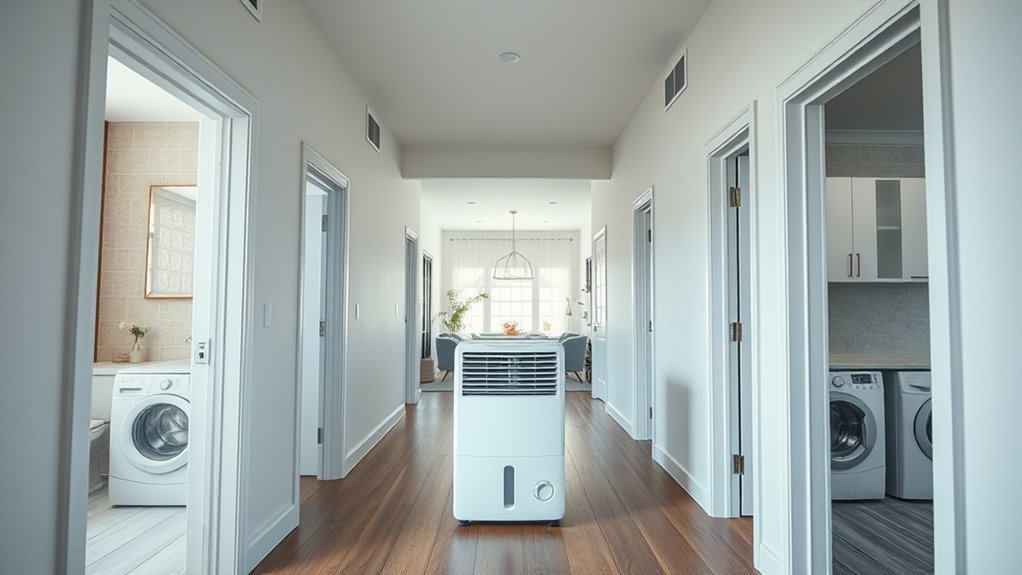
Whether one dehumidifier can handle your house depends on the layout, total area, indoor temperature, moisture sources, and how freely air moves. A single portable unit has the best chance in a small, open, single-level home where rooms connect directly and humidity is similar throughout the space.
One unit is less likely to work in a large or multi-story house. Walls, closed doors, long hallways, and separate HVAC zones limit air exchange. A basement may also have a much higher moisture load than the bedrooms above it. In those cases, use separate units in the damp zones or consider a ducted whole-home dehumidifier.
Do not judge coverage from floor area alone. Place digital hygrometers on each floor and in the dampest rooms. Compare the readings after the dehumidifier has run under normal living conditions for at least a day. If distant rooms remain above the target range, one unit is not providing even control.
Note: The U.S. Environmental Protection Agency recommends keeping indoor humidity below 60%, ideally between 30% and 50%. ENERGY STAR also treats 30% to 50% as the normal target range.
When a Single Dehumidifier Is Enough
One portable dehumidifier may be enough when the treated area is compact, airflow is open, and the moisture problem is mild. The unit must also have enough tested capacity for the space and must be able to drain or collect water without frequent shutdowns.
Open Layouts
Open layouts give a portable dehumidifier a better chance because fewer barriers separate the moist air from the unit. A loft, studio apartment, open basement, or small home with wide doorways may respond well to one properly sized machine.
Keep exterior doors and windows closed while the unit runs so humid outdoor air does not replace the moisture being removed. Interior doors between areas you want the same unit to serve may need to stay open, but only when the unit’s capacity is adequate for the combined space. Follow the manufacturer’s clearance instructions and keep the intake and exhaust clear.
Mild Moisture Issues
One unit is more likely to succeed when humidity is only slightly high and there is no active leak, flooding, or persistent seepage. Examples include seasonal dampness, occasional window condensation, or a musty smell that improves when the dehumidifier runs.
| Space or condition | Can one unit work? | Best approach |
|---|---|---|
| Small studio or open apartment | Often | Use one correctly sized unit and check humidity at the far end of the space. |
| Open basement | Often | Choose capacity for the area and dampness, and use continuous drainage when possible. |
| Several connected rooms | Sometimes | Keep interior airflow paths open and measure each room. |
| Closed bedrooms or separate floors | Usually not | Use zone-specific units or a professionally sized whole-home system. |
| Active leak, seepage, or flooding | No, not by itself | Stop the water source and dry or remediate affected materials. |
How Layout Affects Dehumidifier Performance
A home’s layout can matter as much as square footage. A dehumidifier removes moisture only from air that reaches its intake. Walls, doors, furniture, stair landings, and long hallways slow that movement, so one area may reach 45% RH while another remains at 60%.
Different rooms can also have different moisture loads. Bathrooms, laundry areas, kitchens, crawl spaces, and basements often add more water vapor than bedrooms or living rooms. A unit placed in a dry hallway may cycle off before the damp room reaches the target.
Map the home as separate humidity zones. Use one hygrometer in the main area and another in each known problem space. This gives you a better picture than moving one meter from room to room at different times.
Pro Tip: Place two or more inexpensive hygrometers around the home for 24 to 48 hours before buying another unit. Compare readings at the same time of day because relative humidity changes with temperature and daily activities.
Whole-House or Portable?
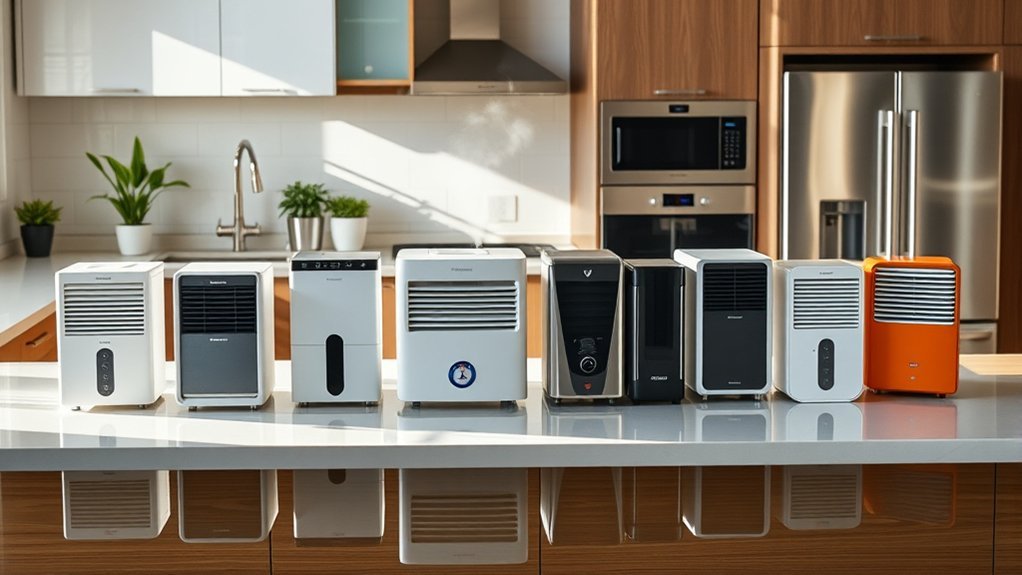
A whole-house dehumidifier and a portable unit solve different problems. Portable models are usually used for one room or connected space. Whole-home models are commonly installed with ductwork so they can treat air from a larger part of the house and drain automatically.
Recommended Products

【The Undisputed Champion — Industry-Leading Dehumidifier Brand】When you choose AEOCKY, you get double market validation. According to data independently verified by Stackline, a leading third-party data analytics company, AEOCKY was an industry‑leading dehumidifier brand on Amazon U.S. in 2025. This means you’re not just choosing a flagship product from a market leader, but a top-performing brand backed by independent market data and trusted by millions of real users, delivering the ultimate combination of performance, quality and trust.

2500 Sq. Ft Dehumidifier - SEMKAP dehumidifier for basement features a quiet, high-performance compressor that removes up to 32 pints of moisture per day (at 95°F, 90% RH). Ideal for basements, offices, bathrooms, bedrooms, kitchens, stockrooms, living rooms, laundry rooms, garages, crawlspaces, or RVs. It helps maintain optimal humidity between 40%–60%RH for healthier, more comfortable living

POWERFUL 2,500 SQ. FT. COVERAGE - Stop letting sticky, heavy air dictate your comfort. The BANABIE dehumidifier utilizes a high-efficiency rotary compressor to deliver heavy-duty moisture removal, extracting 32 pints daily (at 95°F, 90%RH). Engineered with a smart integrated airflow system, this unit effectively covers up to 2,500 Sq. Ft., ensuring that your basement, crawl space, or large open floor plans stay bone-dry
Whole-House Coverage
A ducted whole-home dehumidifier is a better fit when humidity stays high across several rooms, the home is relatively well sealed, and central air ducts can distribute treated air. It can maintain a set humidity level without moving a machine or emptying a bucket.
Whole-home equipment must be sized for the building’s moisture load and installed with the correct return, supply, drainage, and controls. ENERGY STAR recommends contractor sizing and installation. Home sealing and duct sealing can also reduce the amount of humid outdoor air the system must handle.
Portable Unit Limits
Portable dehumidifiers are flexible and cost less upfront, but their effective coverage is limited by airflow and moisture load. A label that lists a large area does not guarantee even control through closed doors or between floors.
Portable units may also need frequent bucket emptying unless they support gravity drainage or a pump. A full bucket can stop the machine even when the house is still humid. Filters and air grilles need regular cleaning, and cool spaces may require a model designed to resist frost at lower temperatures.
Best Fit By Layout
| Home layout | Likely best fit | Why |
|---|---|---|
| Small, open, single-level home | One portable unit may work | Air can reach the unit with fewer barriers. |
| Finished basement with a separate upstairs | Basement unit plus monitoring upstairs | The basement often has a separate moisture load. |
| Large home with closed rooms | Several portable units or ducted system | Walls and doors create separate humidity zones. |
| Humidity above about 55% throughout a well-sealed home | Evaluate a whole-home unit | A ducted system can provide broader automatic control. |
Can One Unit Handle Multiple Floors?
One portable dehumidifier rarely controls several floors evenly because stairwells do not guarantee enough air exchange. Humidity may differ by floor due to foundation moisture, bathrooms, cooking, laundry, air-conditioning run time, and outdoor air leaks.
A central location near an open stairwell may improve air movement, but it is not a substitute for measurement. Put a hygrometer on each floor. If one floor remains above 50% to 55% RH while another reaches the set point, use a separate unit in the wetter zone or ask an HVAC contractor about a ducted solution.
Do not assume the basement unit will automatically dry upstairs rooms or that an upstairs unit will solve basement dampness. Treat each level according to its actual readings and moisture sources.
When You Need More Than One Dehumidifier
You may need more than one dehumidifier when the home contains separate humidity zones that do not exchange air well. Common examples include:
- A large home with separate floors, wings, or closed bedroom doors.
- A basement or crawl space that stays damp while the main floor is comfortable.
- A bathroom, laundry room, or workshop with a strong local moisture source.
- Rooms served by separate HVAC systems or additions with limited return airflow.
- A temporary drying job that requires targeted equipment in more than one area.
Add capacity based on measurements, not guesswork. Two smaller units can provide better zone control than one large portable model, but they also add noise, filter maintenance, drainage needs, and electricity use.
Recommended Products

Semiconductor dehumidifiers use thermoelectric cooling to remove moisture from the air. They create a drier, more comfortable environment by reducing humidity and improving air quality.

3 Smart Modes for Every Space — Whether you need everyday moisture control, faster clothes drying, or continuous protection in damp areas, this dehumidifier has you covered. DEHU mode maintains your ideal living room humidity. DRY mode speeds up drying delicate clothes indoors. CONT mode runs nonstop for basements, crawl spaces, and any area that never seems to dry out. All adjusted with a single tap on the LED touchscreen.

【Ideal for Large Homes & Basements (Up to 5,000 Sq. Ft)】The Waykar 80 pint dehumidifier efficiently removes up to 80 pints of moisture per day in high-humidity conditions (95°F, 90% RH). In warmer, damp spaces like basements (86°F, 80% RH), it removes 62 pints/day. This dehumidifier for basement is perfect for large areas such as basements, bathrooms, bedrooms, and living rooms. Customize your space by adjusting the humidity level from 30% to 80%, creating a drier and healthier environment
Where to Place a Dehumidifier for Best Results
Place a portable dehumidifier where the moisture is highest and air can enter and leave the machine without obstruction. Follow the clearance distances in the product manual because intake and discharge designs vary.
- Keep exterior windows and doors closed while dehumidifying.
- Keep the unit away from curtains, upholstered furniture, dust-producing tools, and blocked corners.
- Use a properly grounded outlet and keep cords and drain hoses away from standing water.
- For gravity drainage, place the hose on a continuous downward slope to a suitable drain.
- Do not create a trip hazard with a long drain hose.
- Clean the filter and grilles on the schedule in the manual.
If one unit is intended to serve connected rooms, keep the interior airflow path open and use fans only when they safely improve circulation. If the dampness is localized, place the unit in that room and close it off from the rest of the home for more efficient drying.
How to Match Dehumidifier Capacity to House Size
Dehumidifier capacity is measured in pints of water removed in 24 hours under a standard test. Choose capacity from both the treated area and how damp the space is. Do not use a “one pint per square foot” formula.
ENERGY STAR’s current portable-dehumidifier guidance uses these minimum ranges:
| Condition before dehumidification | Under 2,000 sq. ft. | Over 2,000 sq. ft. |
|---|---|---|
| Slightly to moderately damp | 20 to 30 pints per day | 30+ pints per day |
| Very damp | 25 to 40 pints per day | 40+ pints per day |
| Wet, sweating surfaces, or seepage | 30 to 50 pints per day | 50+ pints per day |
These ranges estimate minimum portable capacity, not guaranteed whole-house coverage. A divided home may need several units even when their combined capacity is high enough. For a ducted whole-home system, have an HVAC professional calculate the load and design the airflow and drainage.
Also compare ratings under the current U.S. Department of Energy test method. Newer models may show lower pint ratings than older units because the test conditions changed in 2020. A new 30-pint model may replace an older model that carried a higher number under the previous test.
Capacity tells you how much water a unit can remove under test conditions. It does not tell you whether dry air can reach every closed room or floor in your home.
Recommended Products
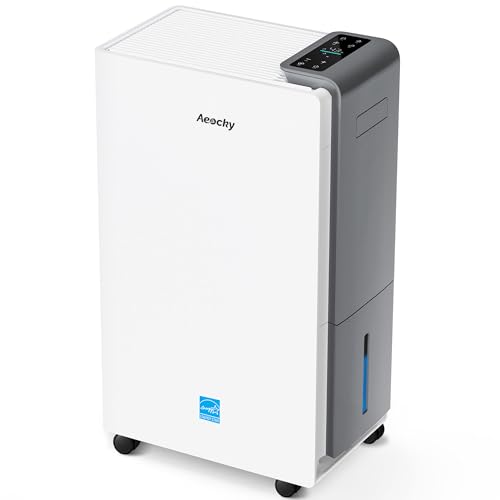
【ENERGY STAR 25 ≠ ENERGY STAR Most Efficient 2025】Don't fall for competitors' word games. With only 2.6% of ENERGY STAR models earning "Most Efficient 2025" title, these options are exceptionally rare on the market. RHEA-001 is one of the few to truly hold this top-tier certification. Many brands use misleading phrases like "Energy Star Efficient 25" or "Energy Star 25" to imply a standard they haven't met. Choosing them is a risk.With AEOCKY, you get verified performance and the peace of mind of authentic, top-tier efficiency.

Energy Efficient Whole House Dehumidifier: 90 pints per day at AHAM condition, 70 Pint at DOE, up to 2300 sq. ft, widely used in short buildings, crawlspace, Basement, multi-bedroom, commercial ,storage area, home, garage, large room, large-area housing, etc. quickly and effectively removes moisture with less energy than conventional dehumidifiers without racking up the energy bill, saving money, It will be the best crawl space dehumidifiers you will ever use

【Reduce humidity - Enhance comfort】:Massive Capacity + Wide Coverage. This dehumidifier has dehumidification capacity ranging 45- 80 pints—outperforming standard units while covering 4,500 sq. ft. of living space. Great dehumidifier for basements, large house, garages, bedroom, bathroom and gyms where excess humidity triggers cause unpleasant odors and discomfort. The result? A noticeably drier, fresher, and more comfortable environment for your entire family.
How to Test Whether One Unit Is Enough
- Measure the starting humidity. Put hygrometers in the room with the unit, the farthest room, and each floor.
- Remove obvious moisture sources. Repair leaks, run exhaust fans, vent the dryer outdoors, and correct drainage problems.
- Set a realistic target. Start near 45% to 50% RH. In cold weather, a lower setting may be needed to prevent window condensation.
- Run the unit under normal conditions. Keep exterior doors and windows closed and let the home follow its usual showering, cooking, and laundry routine.
- Compare readings after 24 to 48 hours. The space near the unit may dry first. Distant readings show whether one unit is actually serving the whole area.
- Check runtime and drainage. A unit that runs almost constantly without reaching the target may be undersized, poorly placed, operating in a cold space, or fighting an unresolved water source.
Fix Moisture Sources Before Adding Capacity
A dehumidifier manages water vapor in the air, but it does not repair the source of moisture. Before buying more equipment, check for:
- Plumbing, roof, window, or foundation leaks.
- Clothes dryers that do not vent outdoors.
- Bathrooms and kitchens without working exhaust fans.
- Blocked gutters, short downspouts, or soil that slopes toward the foundation.
- Standing water, sump problems, or groundwater seepage.
- Air leaks that bring humid outdoor air into the home.
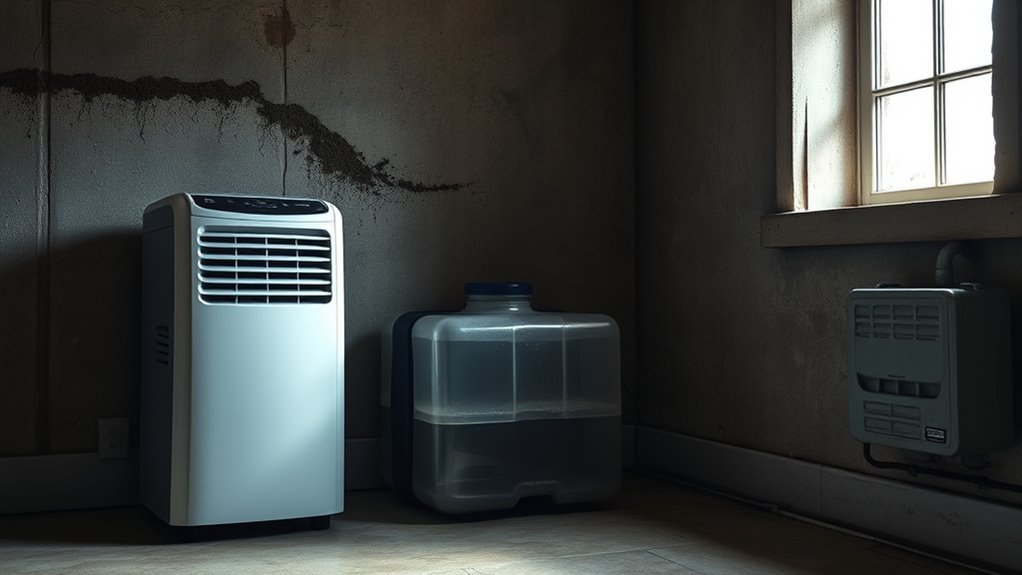
Warning: A dehumidifier does not remove an active mold colony or make water-damaged materials safe. Fix the water source first. EPA advises professional help for extensive water damage, contaminated water, suspected HVAC contamination, or mold covering more than about 10 square feet.
Signs Your Dehumidifier Isn’t Enough
One dehumidifier may be undersized, poorly placed, or unable to reach all zones when you notice these signs:
- Humidity remains above about 50% to 55% in distant rooms even though the area near the unit reaches the set point.
- The unit runs almost continuously but does not lower the measured humidity.
- Condensation, musty odors, damp corners, or visible mold return.
- Closed rooms or another floor stay humid while the main space becomes dry.
- The coils frost repeatedly or the unit cycles without collecting much water in a cool space.
- The bucket fills often and shuts the unit off before the humidity target is reached.
Frequent bucket filling alone does not prove the compressor is too small. It may simply mean the tank is small or the moisture load is high. Continuous drainage can solve the shutdown problem, but it will not fix poor airflow, inadequate capacity, or a water leak.
Frequently Asked Questions
Is one dehumidifier enough for a whole house?
Sometimes, but mainly in a small, open, single-level home with mild humidity and good airflow. Portable units are normally intended for a room or connected area. Measure humidity in several rooms and on every floor before assuming one unit provides whole-house control.
Should you use a dehumidifier if you have COPD?
A dehumidifier may help when high humidity, mold, or dust mites worsen breathing symptoms, but it is not automatically right for everyone with COPD. Keep humidity in a comfortable range, avoid making the air overly dry, and ask your healthcare professional about symptoms or a personal indoor-air plan.
Will a dehumidifier help dry out plaster?
It can lower room humidity and support drying, but fresh plaster should not be forced dry too quickly. Rapid surface drying can cause crazing or other finish problems. Follow the plaster manufacturer’s temperature, ventilation, and drying instructions before using strong heat or aggressive dehumidification.
Can a dehumidifier help with dust mites?
Yes. Keeping indoor humidity below 50% can make the environment less favorable for dust mites. Humidity control works best with allergen covers, regular cleaning, and washing bedding as recommended for people with dust-mite allergy or asthma.
What humidity should I set my dehumidifier to?
A setting near 45% to 50% RH is a practical starting point for many homes. EPA guidance says to keep humidity below 60%, ideally from 30% to 50%. During cold weather, you may need about 30% to 40% to reduce window condensation.
Is it better to buy one large unit or two smaller units?
One large unit can be simpler in an open area. Two smaller units often provide better control in separate floors or closed rooms because each unit treats its own zone. Compare total capacity, drainage, noise, maintenance, and measured humidity before choosing.
Conclusion
One dehumidifier can work for a small, open home with mild and evenly spread humidity, but one portable model usually struggles across multiple floors or closed rooms. Keep indoor relative humidity near 30% to 50%, measure each zone, and size the unit by both area and dampness. If distant rooms remain humid, add targeted units or evaluate a professionally sized whole-home system. Most importantly, repair leaks and improve ventilation so the dehumidifier is not fighting a continuing water source.
Sources
- ENERGY STAR: Dehumidifiers — portable and whole-home use, capacity ranges, placement, drainage, efficiency, and target humidity.
- U.S. EPA: A Brief Guide to Mold, Moisture and Your Home — humidity targets, condensation, moisture-source control, and mold-remediation cautions.
- American Lung Association: Prevent a COPD Exacerbation or Flare Up — high humidity as a possible COPD trigger.
- American Lung Association: Dust Mites — keeping humidity below 50% as part of dust-mite control.
- British Gypsum: Plastering in Excessive Heat — rapid drying and the risk of crazing.


[…] Will one dehumidifier work for the whole house? […]