Affiliate disclosure: As an Amazon Associate, we may earn from qualifying purchases made through links in this article, at no extra cost to you.
Updated: August 2026
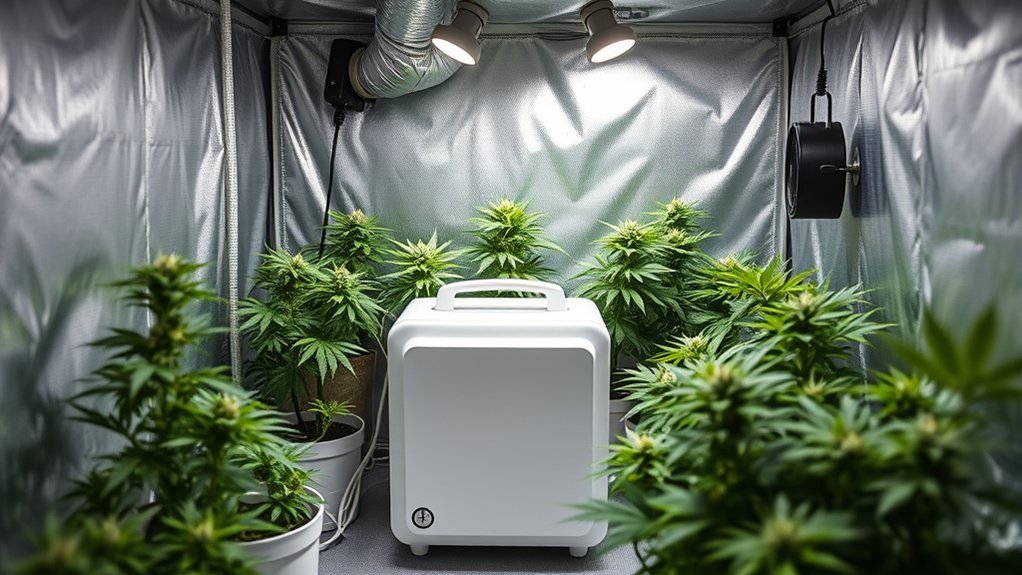
A renewable desiccant dehumidifier for a van can help reduce condensation without running a compressor or drawing power continuously. These reusable moisture absorbers are most effective in parked vans, seasonal RV storage, cabinets, bins, camera cases, tool compartments, and other enclosed areas with limited air exchange.
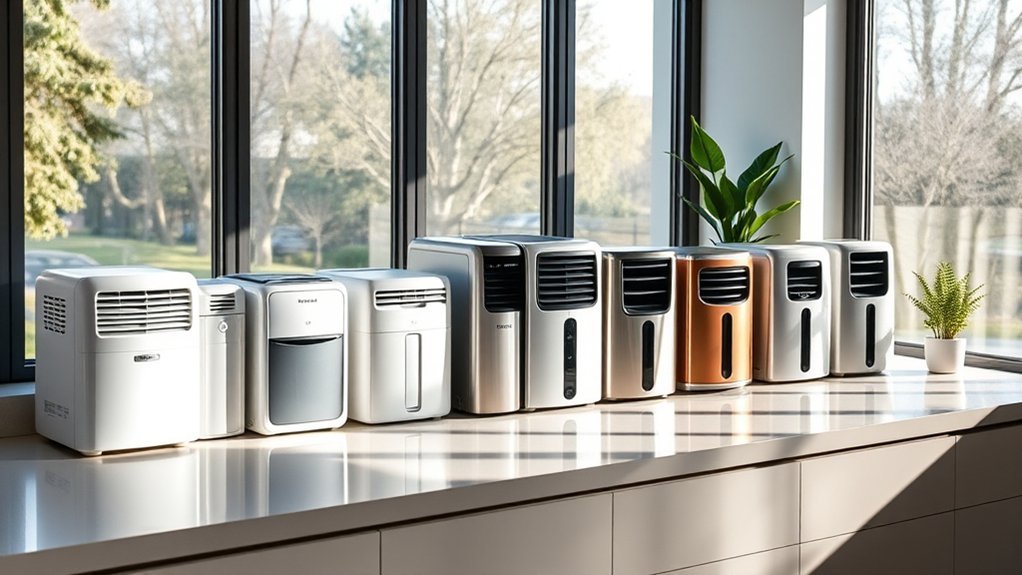
For broader moisture control in a parked or lightly used van, the Eva-Dry E-500 2-Pack is the strongest all-around option in this guide. The Wisedry 500g packets provide flexible high-capacity absorption, while the Hornady and FULLBOW units work best in smaller enclosed areas. DryTote packs are especially practical when you want to distribute moisture protection across several storage bins or equipment cases.
Quick Verdict
- Best Overall for Parked Vans: Eva-Dry E-500 Renewable Dehumidifier 2-Pack
- Best High-Capacity Packet Set: Wisedry Rechargeable Silica Gel Packets, 4 x 500g
- Best Two-Zone Starter Set: Wisedry 500g Silica Gel Packets, 2-Pack
- Best Compact Plug-Renewable Unit: Hornady Rechargeable Dehumidifier 95900
- Best for Van Cabinets: FULLBOW 200g Silica Gel Canisters, 3-Pack
- Best for Storage Bins and Cases: DryTote 100g Rechargeable Desiccant Packs
Important: Passive desiccants work best in enclosed, parked, stored, or lightly used vans. They cannot repair roof leaks, wet insulation, plumbing problems, damaged door seals, or the heavy moisture created by occupants, cooking, showers, and drying clothes. Use a hygrometer, ventilate the van when practical, and address visible water sources promptly.
How These Products Were Compared
The products were evaluated by their listed absorption capacity or enclosed-space coverage, renewal method, saturation indicator, portability, placement flexibility, and suitability for an open van cabin versus a sealed cabinet, tote, or equipment case. Manufacturer coverage figures are treated as estimates rather than guaranteed real-world van performance.
Quick Comparison of Renewable Van Dehumidifiers
| Product | Best Use | Listed Capacity or Coverage | Renewal Method | Details |
|---|---|---|---|---|
| Eva-Dry E-500 2-Pack | Broader coverage in a parked van or two separate moisture zones | Up to 500 cubic feet and 20 oz per unit, according to Eva-Dry | 110–120V plug-in renewal | Check on Amazon |
| Wisedry 4 x 500g | Multiple condensation zones or higher total packet capacity | Up to 180g absorption and about 35 cubic feet per packet | Microwave or oven according to the supplied instructions | Check on Amazon |
| Wisedry 2 x 500g | Starter setup or two moisture-prone areas | Up to 180g absorption and about 35 cubic feet per packet | Microwave or oven according to the supplied instructions | Check on Amazon |
| Hornady 95900 | Small parked van, closet, pantry, or protected cabinet | Up to 333 cubic feet, according to Hornady | 110V plug-in renewal | Check on Amazon |
| FULLBOW 200g, 3-Pack | Cabinets, toolboxes, and small compartments | About 15 cubic feet per canister, according to the listing | Oven renewal | Check on Amazon |
| DryTote 100g, 10-Pack | Storage totes, cases, lockers, and distributed gear protection | Up to about 200 gallons, or roughly 27 cubic feet, of enclosed storage per pack | Microwave or low oven according to the supplied instructions | Check on Amazon |
Coverage and absorption figures are manufacturer or listing estimates for enclosed spaces. Actual renewal frequency depends on humidity, temperature, air leakage, wet materials, product placement, and how often the van doors are opened. Do not add advertised ratings together and assume the result guarantees equivalent whole-van coverage.
Eva-Dry E-500 Renewable Dehumidifier 2-Pack
Best Overall for Parked Vans
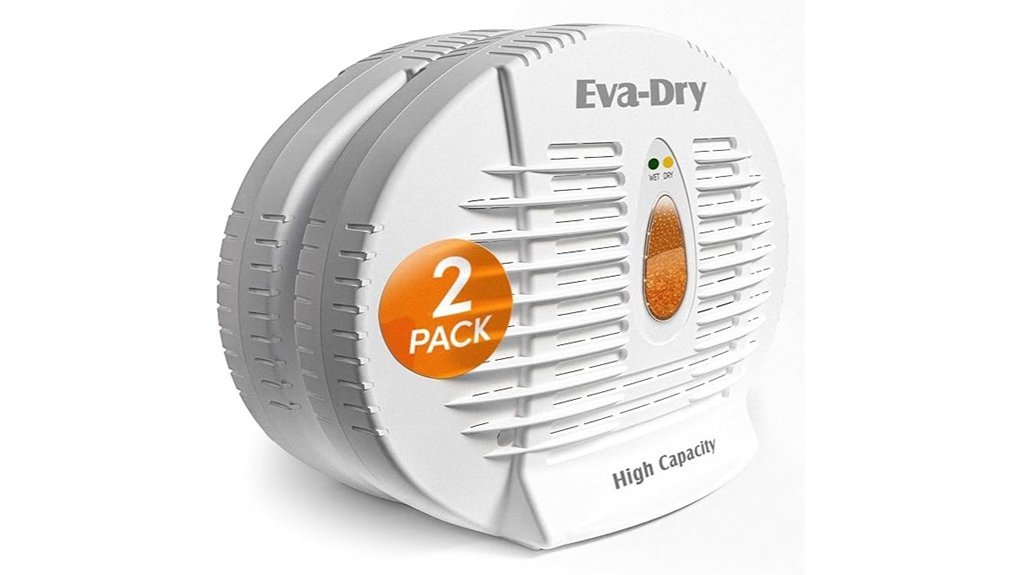
The Eva-Dry E-500 2-Pack is the most practical choice here when you want cordless moisture control across a broader parked-van area. Each unit absorbs moisture without a cord or battery while it is in use. When the color-changing beads show that renewal is needed, the unit plugs into a suitable 110–120V household-style outlet.
Eva-Dry lists each E-500 for spaces up to 500 cubic feet, with moisture capacity up to 20 ounces and an approximate 10–12-hour renewal cycle. These are maximum manufacturer figures for enclosed spaces, not a promise that one unit will manage the continuous moisture produced inside an occupied camper van.
Best For: Parked camper vans, cargo-van storage, RV compartments, seasonal storage, and owners who want two renewable units for separate moisture zones.
Why You’ll Like It: You can place one unit near the sleeping area and the second near storage, rear doors, or another condensation-prone location. There is no liquid reservoir to empty and no continuous electrical draw while the units are absorbing moisture.
Who Should Avoid It: Skip it if you lack access to a suitable 110–120V outlet for renewal or if your van has active leaks, soaked materials, or heavy daily moisture that requires ventilation or active dehumidification.
Pros:
- Two cordless units can protect separate moisture zones.
- High listed absorption capacity compared with smaller desiccant packets.
- Silent operation with no fan or moving parts.
- Color-changing beads indicate when renewal is needed.
Cons:
- Each unit needs access to household-style power for renewal.
- Renewal takes approximately 10–12 hours rather than a few minutes.
- Maximum coverage may not reflect a frequently opened or occupied van.
Wisedry Rechargeable Silica Gel Dehumidifier Packets (4 x 500g)
Best High-Capacity Packet Set
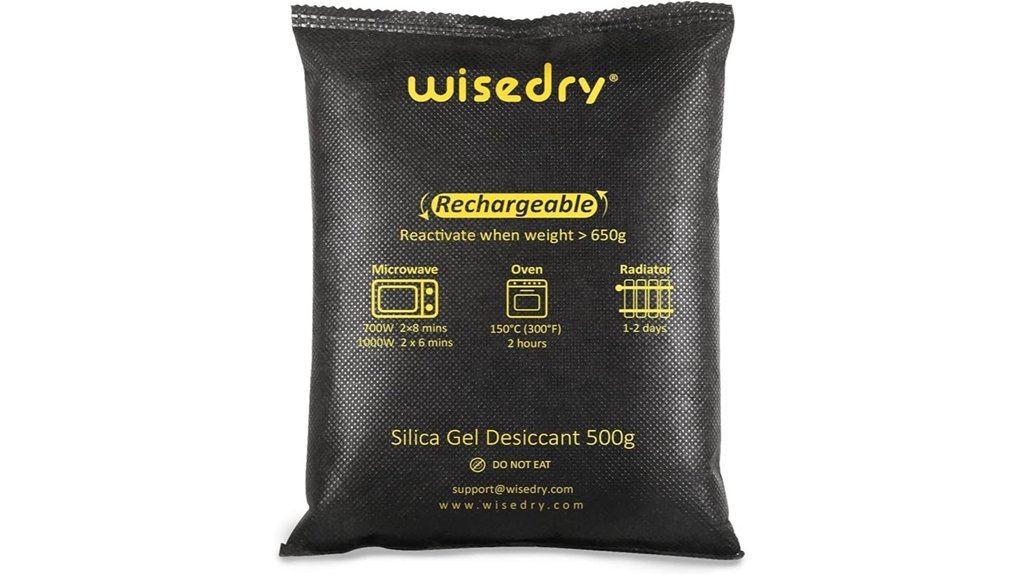
This four-pack is a strong choice when one moisture absorber would leave parts of your van unprotected. You can distribute the four 500g silica-gel packets near the windshield, sleeping area, rear doors, and storage zone instead of relying on one central absorber.
Wisedry states that each 500g packet can absorb up to approximately 180g of moisture and is recommended for an enclosed space of roughly 35 cubic feet. The packets use non-indicating silica gel, so saturation should be checked by weight rather than by waiting for a bead-color change.
Best For: Larger parked vans, damp climates, winter condensation, and owners who want several high-capacity packets for different zones.
Why You’ll Like It: Four separate packets make placement flexible. They remain dry while absorbing moisture and avoid the free-liquid collection reservoir used by some disposable moisture absorbers.
Who Should Avoid It: Choose a plug-renewable unit instead if weighing packets and using a microwave or oven is inconvenient. These packets may also require frequent renewal in an occupied van with substantial daily moisture.
Pros:
- Four large packets can cover several moisture-prone zones.
- Each packet has a listed absorption capacity up to approximately 180g.
- Reusable through the manufacturer-approved microwave or oven method.
- No batteries, fan, collection tank, or continuous power required.
Cons:
- The packets do not provide a color-changing saturation indicator.
- A suitable scale is needed for the recommended weight-based check.
- Renewing several large packets can require more time and appliance space.
Wisedry 500 Gram Silica Gel Desiccant Packets

Best Two-Zone Starter Set
The Wisedry two-pack uses the same reusable 500g packet format as the larger set but provides a lower-quantity starting point. It is a sensible option if you want one packet near the front windows and another in the sleeping, cargo, or rear-door area.
Each packet contains non-indicating silica gel. Wisedry recommends weighing the packet and renewing it after it gains more than approximately 30% over its original weight. A 500g packet therefore reaches the listed renewal point at roughly 650g. Follow the supplied instructions carefully because heating time varies by appliance method and microwave output.
Best For: Smaller parked vans, occasional trips, seasonal storage, or buyers who want to try two high-capacity packets before purchasing a larger set.
Why You’ll Like It: The packets are quiet, compact, reusable, and easy to reposition when condensation patterns change.
Who Should Avoid It: Two packets may be insufficient for a large van with persistent condensation, wet equipment, poor seals, or several separated storage zones.
Pros:
- Two 500g packets provide flexible two-zone placement.
- Each packet can absorb up to approximately 180g of moisture.
- No electricity is required while the packets are in the van.
- Dry absorption avoids a free-liquid collection tank.
Cons:
- No color-changing saturation indicator.
- Requires weighing for the most reliable saturation check.
- Microwave or oven access is necessary for renewal.
Hornady Rechargeable Dehumidifier 95900 for Gun Safes
Best Compact Plug-Renewable Unit
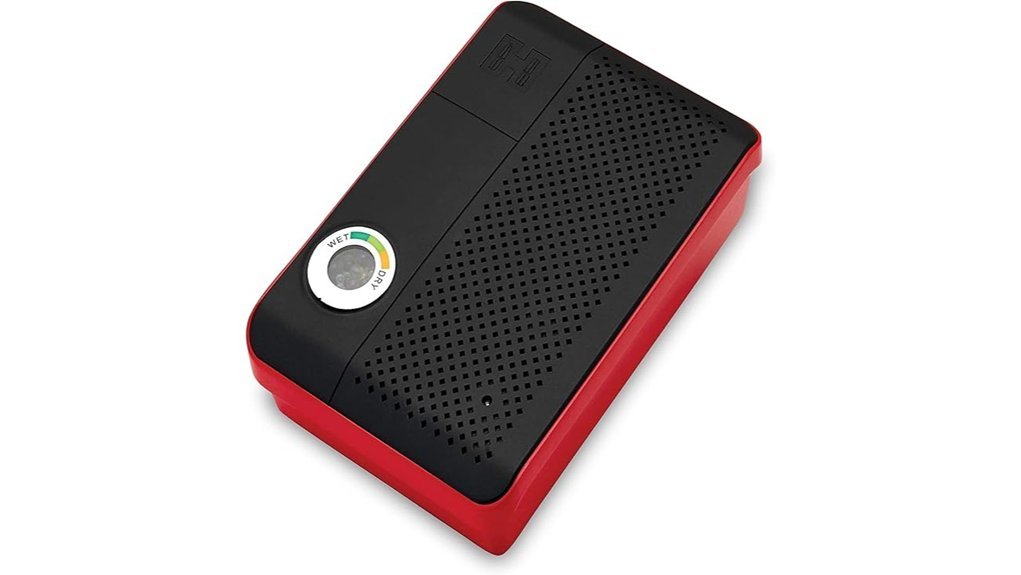
The Hornady 95900 was designed for safes and other enclosed areas, but its compact shape can also suit a small parked van, pantry cabinet, equipment closet, or protected storage zone. It absorbs moisture without electrical power during normal use and plugs into a 110V outlet when the crystals need to be renewed.
Hornady lists coverage up to 333 cubic feet and dimensions of 1.5 x 4 x 6 inches. Its color-changing crystals provide a visual renewal signal, while the quick-connect bracket can help keep the unit in place when it is mounted correctly.
Best For: Small parked vans, cabinets, closets, pantries, or owners who prefer a self-contained unit instead of soft packets.
Why You’ll Like It: The visual indicator removes the need to weigh the unit, and the mounting bracket can provide a more stable installation than a loose canister.
Who Should Avoid It: It is less convenient for travelers without 110V access and may be undersized for a large occupied van producing heavy daily moisture.
Pros:
- Color-changing crystals show when renewal is needed.
- Compact self-contained housing with mounting bracket.
- No batteries or power required during moisture absorption.
- Manufacturer-rated for enclosed spaces up to 333 cubic feet.
Cons:
- Requires a 110V outlet for renewal.
- Not intended to replace active ventilation or leak repair.
- Actual performance may be lower in a frequently opened or occupied van.
FULLBOW Gun Safe Dehumidifier (3 Units)
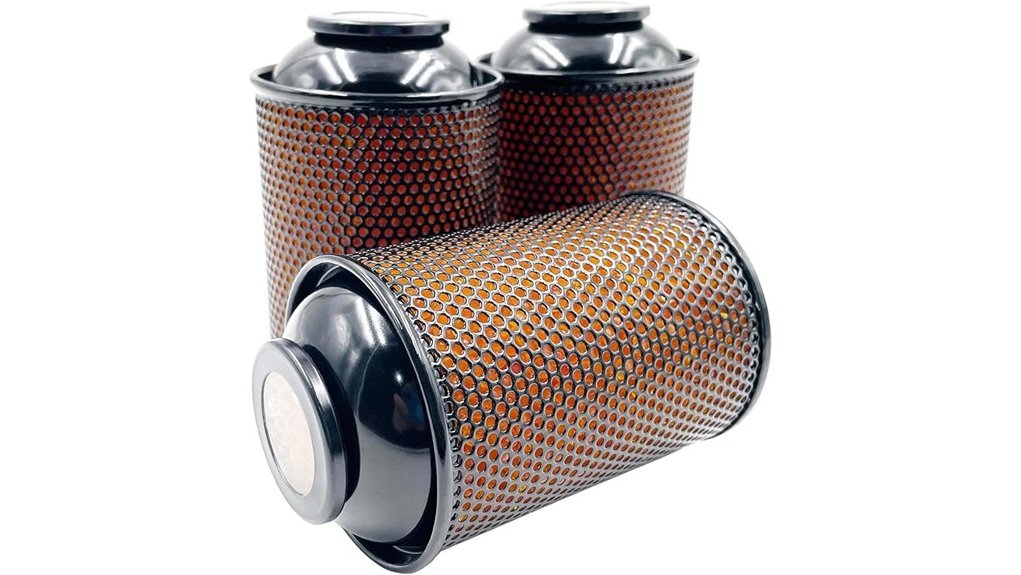
Best for Van Cabinets
The FULLBOW set includes three reusable 200g silica-gel canisters intended for small enclosed storage areas. In a van, they make the most sense inside tool cabinets, under-seat compartments, electrical-storage cabinets, or other spaces where a large soft packet would be awkward.
The current product listing rates each canister for approximately 15 cubic feet. An indicator changes from orange toward dark green as the silica becomes saturated. The listing commonly specifies oven renewal near 300°F for about three hours, but you should follow the instructions supplied with the exact product because directions can change.
Best For: Van cabinets, toolboxes, small closets, and owners who want several rigid moisture absorbers.
Why You’ll Like It: The rigid canisters are easy to stand upright in cabinets, and three units let you protect separate compartments without buying one oversized absorber.
Who Should Avoid It: These small canisters are not the best choice for controlling humidity across an entire open van interior.
Pros:
- Three separate canisters suit multiple small compartments.
- Color indicator helps identify when renewal is needed.
- No batteries or electrical connection required during use.
- Rigid housings can be easier to position than soft packets.
Cons:
- Coverage is limited to approximately 15 cubic feet per canister.
- Oven renewal takes several hours.
- Specifications and renewal directions should be confirmed on the current listing and packaging.
DryTote Rechargeable Desiccant Pack (10 Pack)
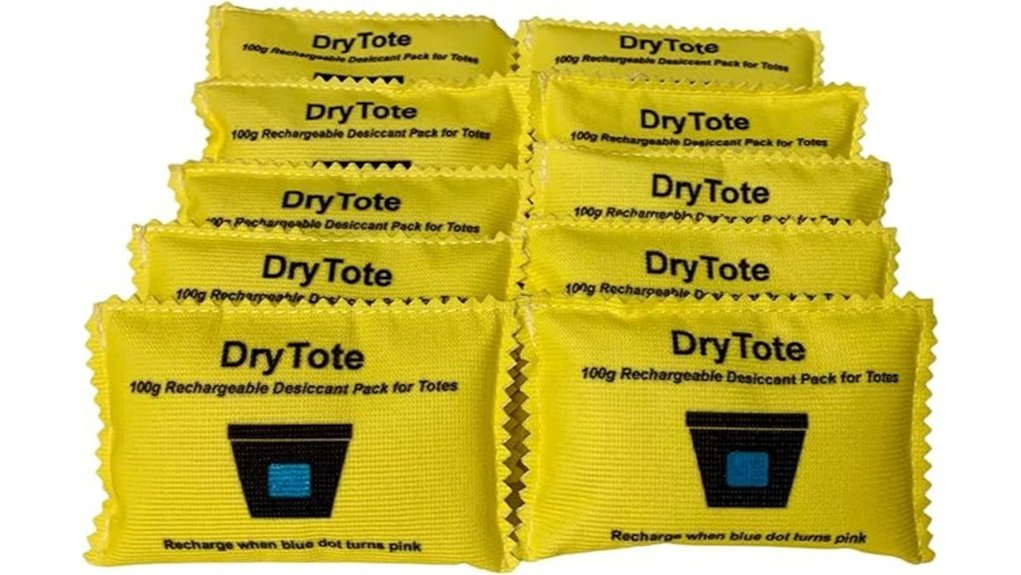
Best for Storage Bins and Cases
DryTote’s 10-pack is designed for distributed moisture control rather than relying on one large unit. Each 100g pack can be placed in a separate storage tote, camera case, document box, electronics bin, clothing container, or other enclosed van compartment.
DryTote lists coverage up to approximately 200 gallons of enclosed storage per pack, equivalent to roughly 27 cubic feet. A built-in indicator changes from blue to pink when renewal is needed. The manufacturer lists a microwave method of about three minutes at power level eight, although you should follow the supplied directions and confirm that your appliance is suitable.
Best For: Van owners with many storage bins, cases, lockers, or separate equipment compartments.
Why You’ll Like It: Ten small packs allow targeted placement, so you do not need to use a large absorber inside a small camera case, document box, or electronics tote.
Who Should Avoid It: Choose a larger unit or several higher-capacity packets if your main goal is reducing humidity throughout the open van cabin.
Pros:
- Ten packs can protect multiple storage containers at the same time.
- Color-changing dot provides a clear renewal signal.
- Compact 100g size fits cases, bins, trunks, and lockers.
- Smaller packs may be easier to renew and rotate than large 500g packets.
Cons:
- Designed mainly for enclosed storage rather than open cabin air.
- Ten separate indicators require regular checking.
- Frequent renewal may be necessary in persistently humid conditions.
Factors to Consider When Choosing a Renewable Desiccant Dehumidifier for Your Van
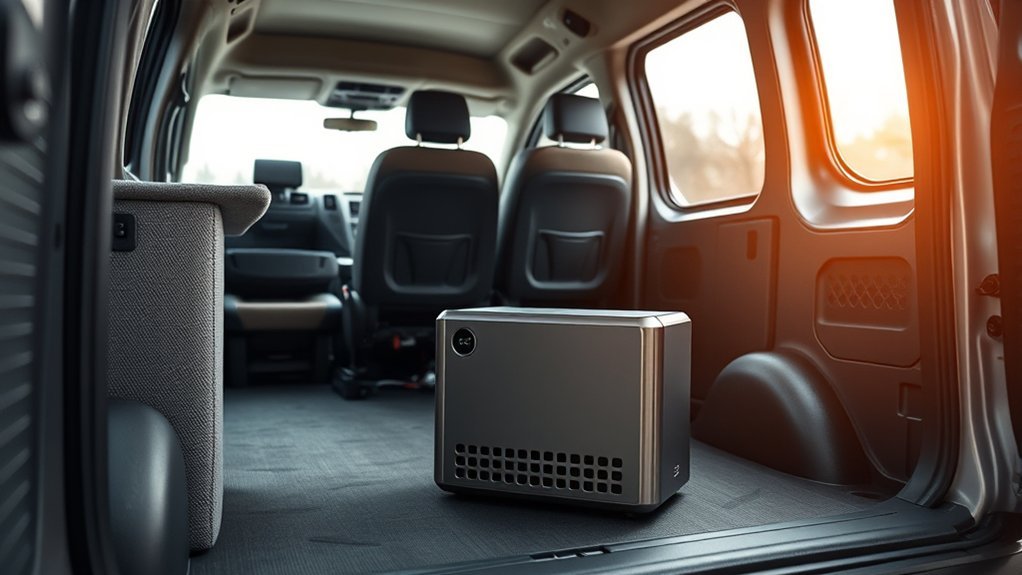
A good reusable van moisture absorber must match the space you want to protect, the amount of moisture entering the van, and the renewal equipment available during travel. A small canister may work well in a sealed cabinet while doing little for an open camper-van interior.
Open Cabin or Storage Compartment
Decide where the moisture problem occurs before comparing capacity. A larger Eva-Dry unit or several 500g Wisedry packets are more appropriate for broader parked-van coverage. FULLBOW and DryTote products are better suited to cabinets, toolboxes, totes, lockers, and cases.
Do not add together advertised coverage figures and assume the result will equal real-world van coverage. Air leaks, open doors, wet clothing, cooking, showers, and occupants continuously introduce additional moisture.
Moisture Absorption Capacity
Absorption capacity indicates how much water a desiccant can hold before renewal. Wisedry lists up to approximately 180g of moisture for each 500g packet. Eva-Dry lists up to 20 ounces for each E-500 unit. Smaller 100g or 200g products are easier to distribute but normally require more units for broad coverage.
Compare both the absorber’s capacity and the volume of the enclosed space. A high-capacity packet placed inside a tightly sealed bin may last much longer than the same packet exposed to the entire van.
Renewal Method
Choose a renewal method that works with your travel routine:
- Microwave renewal: Can be faster, but power settings, heating cycles, placement, and microwave wattage vary by product.
- Oven renewal: Provides more controlled heating for many approved packets and canisters but may require several hours.
- Plug-in renewal: Convenient for Eva-Dry and Hornady units when a suitable 110–120V outlet is available.
Never assume that one product’s heating instructions apply to another. Use only the renewal method, temperature, power level, and timing specified for the exact unit. Do not heat a packet unless its instructions permit it and indicate that renewal is needed.
Saturation Indicator
A color-changing indicator makes maintenance easier, but not every product has one. Hornady, Eva-Dry, FULLBOW, and DryTote use visual indicators. The Wisedry 500g packets covered here use non-indicating silica gel, so Wisedry recommends checking saturation by weight.
Whichever system you choose, inspect it regularly. A saturated desiccant cannot continue absorbing moisture effectively.
Renewal and Heat Safety
Only heat a desiccant if its instructions specifically permit microwave or oven renewal. Check the packaging for maximum temperature, heating time, appliance settings, positioning, and whether the packet must reach a stated saturated weight before heating.
Use heat-resistant gloves, place hot units on a suitable heat-safe surface, and allow them to cool completely before returning them to the van. Stop using any packet or housing that is torn, melted, scorched, cracked, swollen, or leaking beads.
Keep desiccant products away from children and pets and never allow the contents to be eaten or inhaled.
Compact Van Fit and Secure Placement
Place each absorber where air can circulate around it without blocking heater vents, electrical equipment, drawers, doors, pedals, driving controls, or emergency exits. Secure rigid units so they cannot become projectiles during braking. Keep soft packets away from sharp tools and surfaces that could puncture them.
Do not place a moisture absorber directly against sensitive electronics or where condensation can drip onto electrical connections.
Coverage Area
Manufacturer coverage ratings generally assume an enclosed space under controlled conditions. A van with poor door seals, regular ventilation, open windows, wet materials, or frequent entry may need more capacity than the listed cubic-foot figure suggests.
A basic digital hygrometer is more useful than guessing. Check humidity in several areas of the van, especially near windows, bedding, rear doors, external walls, and hidden storage compartments.
Reusability and Maintenance
A renewable product can reduce ongoing waste, but only when it is checked and renewed correctly. Record the date of each renewal during the first few cycles. This will show how quickly the product saturates in your climate and whether you need additional capacity.
Replace the unit if its packaging, indicator, electrical plug, bracket, or housing becomes damaged. Renewal cannot correct physical damage, overheating, or contamination.
Before You Buy: Van Moisture-Control Checklist
- Measure or estimate the enclosed volume you need to protect.
- Decide whether you need open-cabin, parked-van, or compartment-only moisture control.
- Check whether the product requires a microwave, oven, or 110–120V outlet.
- Confirm that its renewal method is practical during your travel routine.
- Look for a color indicator or plan to weigh non-indicating packets.
- Use a hygrometer to track actual relative humidity.
- Repair water leaks and dry wet materials before relying on a desiccant.
- Plan how rigid units and soft packets will be secured while driving.
- Confirm the current product instructions, bundle quantity, and specifications before purchasing.
How to Use a Desiccant Dehumidifier in a Van
- Find the moisture source. Check roof vents, windows, door seals, plumbing, wet gear, bedding, and hidden insulation.
- Measure humidity. Place a hygrometer near the sleeping area and check storage compartments separately.
- Dry wet materials. Remove wet clothing, towels, bedding, or equipment instead of expecting the desiccant to dry a major moisture load.
- Distribute the absorbers. Position units near condensation-prone areas without obstructing airflow, controls, or exits.
- Secure each product. Prevent rigid units and packets from sliding into pedals, wiring, heaters, or walkways.
- Inspect regularly. Check indicators or packet weight more often during wet and cold weather.
- Renew safely. Follow the exact microwave, oven, or electrical instructions supplied by the manufacturer.
- Ventilate when practical. Desiccants support moisture control but do not replace fresh-air exchange.
Frequently Asked Questions
How Often Should I Renew a Van Desiccant Dehumidifier?
Renew it when its indicator changes, when a non-indicating packet reaches the manufacturer’s specified saturated weight, or when humidity begins rising despite correct placement. Timing may range from days to weeks depending on weather, van size, air leakage, occupants, wet materials, and how often doors are opened.
Can Desiccant Dehumidifiers Prevent Mold in Parked Vans?
They can reduce the moisture that supports mold growth, but they cannot guarantee mold prevention. A practical goal is to keep relative humidity below 60%, with approximately 30% to 50% preferred when conditions allow. Repair leaks, dry damp materials, clean existing mold correctly, and ventilate the van as needed.
Are Rechargeable Dehumidifiers Safe Near Van Electronics?
Intact silica-gel units are commonly used in enclosed electronics storage because they absorb moisture without creating a liquid reservoir. Keep them away from exposed electrical terminals, cooling vents, sharp edges, and locations where the unit could be crushed or punctured. Do not return a hot, newly renewed product to an electronics compartment until it has cooled completely.
Do Desiccant Packs Work in Freezing Winter Temperatures?
Silica-gel packs can still absorb moisture in cold conditions, although the rate may vary with temperature, humidity, and airflow. Winter condensation may be severe because warm moist air contacts cold windows and metal surfaces, so use a hygrometer and inspect the packets frequently.
How Do I Know When a Desiccant Unit Is Fully Saturated?
Follow the product’s indicator system. Some units change bead or indicator color. Non-indicating Wisedry 500g packets should be checked by weight according to the manufacturer’s instructions. A persistent rise in humidity can also indicate that the absorber needs renewal, has been placed poorly, or lacks enough capacity for the space.
Can One Renewable Dehumidifier Dry an Entire Van?
It may help in a small, sealed, parked van with a limited moisture load, but one passive absorber should not be expected to control every van. An occupied camper can receive substantial moisture from breathing, cooking, showers, damp clothing, and open doors. Several distributed absorbers may work better, but ventilation and moisture-source control remain essential.
Should I Use a Hygrometer in My Van?
Yes. A hygrometer shows whether the desiccant is keeping up and helps you compare different locations. Check near windows, bedding, external walls, cabinets, rear doors, and storage bins because humidity can vary throughout the van.
Can I Renew Desiccant Packs Inside My Van?
Only use a van microwave, oven, inverter, extension setup, or electrical outlet when the appliance, wiring, power system, ventilation, and product instructions all support the required load and heating method. Keep hot desiccants away from fuel, aerosols, fabrics, batteries, and other flammable materials. When uncertain, renew the product with a suitable household appliance outside the van.
Are Renewable Desiccants Better Than Disposable Moisture Absorbers?
Renewable silica-gel products avoid repeated refills and usually do not create an open container of collected liquid. Disposable calcium-chloride absorbers may collect more water in some storage situations, but they require replacement and can create spill concerns. The better choice depends on moisture load, maintenance access, storage duration, and whether you can renew the reusable product safely.
Conclusion
The Eva-Dry E-500 2-Pack is the best overall choice in this guide for broader renewable moisture control in a parked or stored van. Its two cordless units can cover separate zones, and the visual indicators simplify routine maintenance.
Choose the Wisedry 4 x 500g set when you want more total silica gel and flexible placement across several condensation zones. The two-pack is a better starting point for a smaller van or two specific problem areas. Hornady offers a compact self-contained alternative, FULLBOW suits cabinets and tool storage, and DryTote is the most practical option for protecting multiple bins and cases.
Final Recommendation
Start by measuring humidity with a hygrometer and fixing any source of water entry. Then choose enough renewable desiccant capacity for the actual area you need to protect and confirm that its renewal method fits your travel routine. A properly placed absorber can reduce condensation and protect stored gear, but reliable van moisture control still depends on ventilation, leak repair, drying wet materials, secure placement, and regular renewal.