Affiliate disclosure: As an Amazon Associate I earn from qualifying purchases. This article contains affiliate links, which may earn us a commission at no extra cost to you.
This guide compares six domestic dehumidifiers for home use in 2026, from a compact low-capacity unit for closets and small bedrooms to compressor models for basements and larger living areas. The right choice depends on moisture load, room conditions, drainage access, noise tolerance, operating temperature, and whether you want app control. Manufacturer coverage figures are useful for comparison, but extraction capacity and real room conditions matter more than square footage alone.
Quick verdict: The Midea 22-Pint is the most balanced choice for medium rooms, the Yaufey 80-Pint is the stronger option for large damp spaces, and the Frigidaire 50-Pint is the best fit when Wi-Fi control matters. Choose the ZAFRO for quieter moderate-capacity use. Treat the Lonxfy B06 as a compact moisture-control unit for mild humidity, not as a replacement for a full-size compressor dehumidifier.
Before ordering: These links point to Amazon.com listings. Confirm the exact model, voltage, plug type, local certification, warranty coverage, and return terms for your country. A plug adaptor changes the plug shape only; it does not change the appliance voltage.
How these dehumidifiers were compared
The comparison focuses on listed moisture removal, appliance type, drainage options, noise-related features, controls, portability, brand support, and the type of room each unit is suited to. Maximum extraction and coverage claims are treated as manufacturer figures rather than guaranteed real-world results.
Quick Comparison
| Product | Type | Best For | Listed Moisture Removal | Drainage | Check Details |
|---|---|---|---|---|---|
| Midea 22-Pint | Compressor | Balanced medium-room use | 22 pints/day; up to 1,500 sq. ft. | Tank or gravity hose | Check Product Details |
| Yaufey 80-Pint | Compressor | Large damp rooms and basements | Up to 80 pints/day at 95°F and 90% RH; up to 5,000 sq. ft. | Tank or included hose | Check Current Availability |
| Frigidaire 50-Pint Wi-Fi | Compressor | Remote monitoring in large spaces | 50 pints/day; listing states up to 4,500 sq. ft. | Bucket or continuous drain | See Today’s Price |
| ZAFRO 21-Pint | Compressor | Quieter moderate moisture control | Up to 21 pints/day; up to 1,600 sq. ft. | 1.7L tank or included hose | Check Price on Amazon |
| Lonxfy B06 | Compact low-output unit | Closets and very small rooms with mild humidity | Up to 350ml/day; listing states 30–350 sq. ft. | 1,000ml tank only | Check Product Details |
| FreAire 54-Pint | Compressor | Large rooms needing flexible drainage | Up to 54 pints/day; listing states up to 4,500 sq. ft. | 1.13-gallon tank or included hose | Check Current Availability |
Midea Energy Star Dehumidifier, 22 Pint, 1,500 Sq. Ft
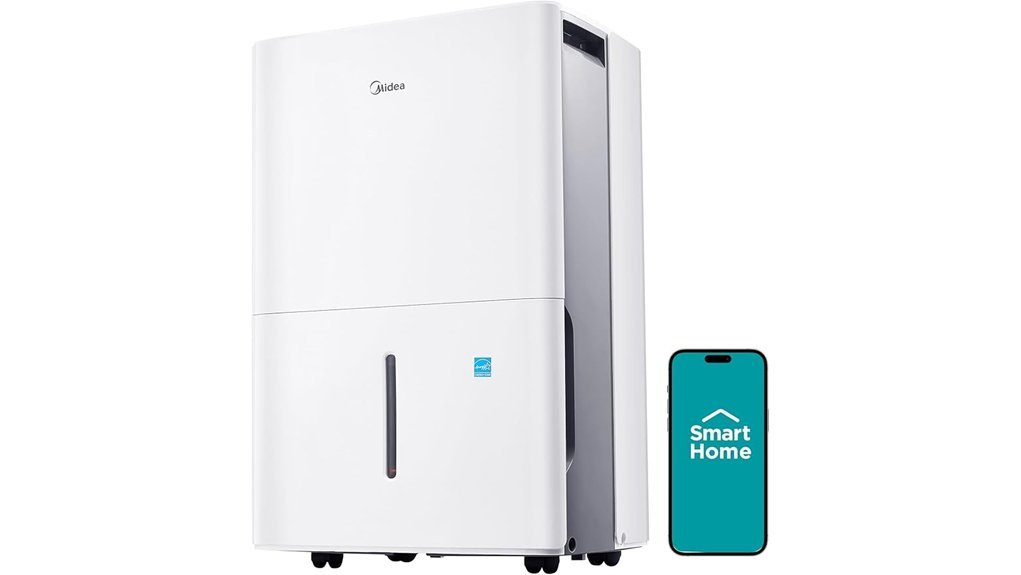
The Midea 22-Pint is the most balanced option here for bedrooms, offices, and medium-size basement areas. The manufacturer lists the MAD22C1AWS model for moisture removal of up to 22 pints per day and rooms up to 1,500 sq. ft. Its practical controls include adjustable humidity, auto restart, auto defrost, turbo mode, a timer, a washable filter, and caster wheels.
Why you’ll like it: It offers the core features most households need without stepping up to a larger 50-pint-class appliance. You can empty the 0.8-gallon bucket manually or connect a standard hose for gravity drainage.
Best For: Buyers who want a straightforward compressor dehumidifier for a medium room and do not need app control or a built-in pump.
Who Should Avoid It: Anyone dealing with a severely damp large basement or needing water to be pumped upward to a sink.
Pros:
- Useful 22-pint daily capacity for medium residential spaces.
- Auto restart, auto defrost, timer, turbo mode, and washable filter improve convenience.
- Tank and gravity-hose drainage support short-term or continuous operation.
Cons:
- The drain hose is not listed as included.
- The 0.8-gallon tank can fill quickly in damp conditions.
- This model does not include smart control or a built-in pump.
Yaufey 5000 Sq. Ft. Energy Star Dehumidifier
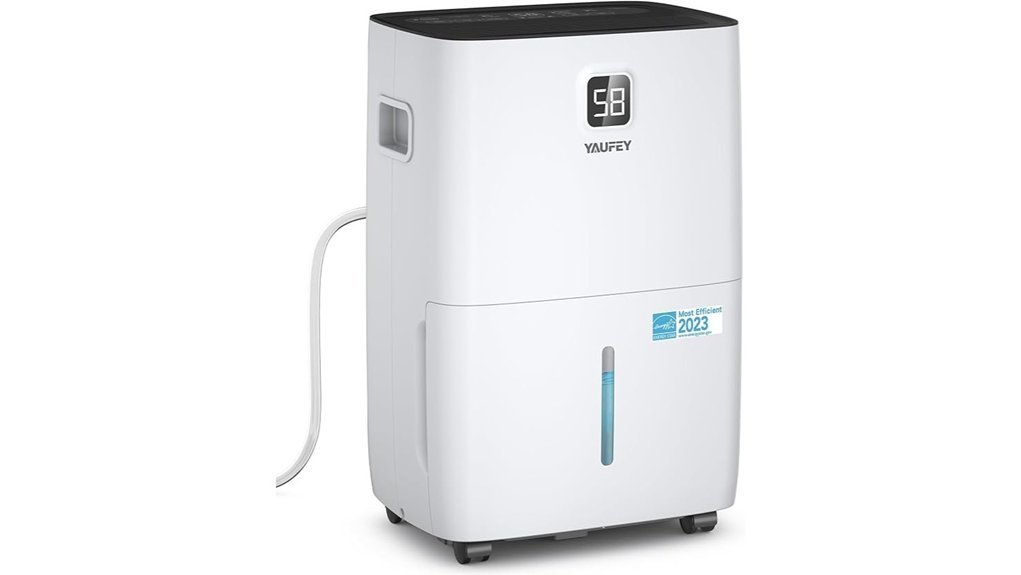
The Yaufey JD025Q-80 is the strongest large-space option in this guide by its advertised maximum extraction. The manufacturer lists removal of up to 80 pints per day at 95°F and 90% relative humidity, with suggested coverage up to 5,000 sq. ft. Actual output will be lower when the room is cooler or less humid, so the 80-pint figure should not be compared with other ratings unless the test conditions are also compared.
Why you’ll like it: The unit offers manual or continuous drainage, adjustable humidity from 30% to 80%, several operating modes, a timer, child lock, digital controls, auto defrost, and caster wheels. The included drain hose is useful when the unit will run for long periods.
Best For: Large rooms, garages, and basements with persistent moisture where a compact or low-capacity unit would be underpowered.
Who Should Avoid It: Small-room users who do not need high capacity, have limited floor space, or cannot provide suitable drainage.
Pros:
- High manufacturer-listed extraction for demanding spaces.
- Automatic humidity control, defrost, timer, and restart features reduce day-to-day attention.
- A 1.06-gallon tank and included hose provide flexible drainage.
Cons:
- The 80-pint figure is based on hot, very humid conditions rather than typical room conditions.
- The tank may need frequent emptying without continuous drainage.
- The large coverage claim should not replace sizing based on the room’s actual moisture load.
Frigidaire 50 Pint Dehumidifier with Wi-Fi
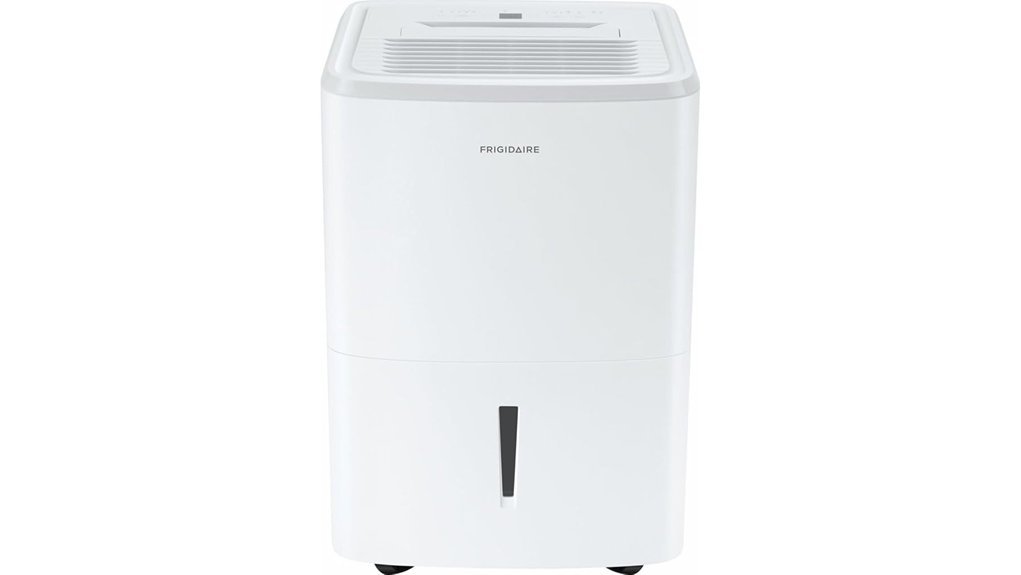
The Frigidaire FHDD5034Y1 is a 50-pint dehumidifier with Wi-Fi for larger residential areas where remote monitoring is useful. The listing states coverage up to 4,500 sq. ft. App control lets you check or change settings without visiting the room, which can be helpful in a basement, garage, attic, cabin, or seasonal property.
Why you’ll like it: Custom humidity control, three fan speeds, automatic operation, continuous-drain capability, and a washable filter make day-to-day use straightforward. The front-loading bucket is easier to access than tanks that pull out from the rear.
Best For: Buyers who value remote access and want a well-established appliance brand for a large room or basement.
Who Should Avoid It: Anyone who wants a lightweight compact unit, does not need Wi-Fi, or prefers controls that do not depend on an app or home network.
Pros:
- Wi-Fi control is useful for remote rooms and properties.
- Its 50-pint listed capacity suits substantial residential moisture control.
- Washable filtration, adjustable humidity, and multiple fan speeds improve usability.
Cons:
- It is larger and heavier than compact or mid-capacity models.
- Remote features depend on the app, network connection, and continued software support.
- Confirm the exact voltage, drainage accessories, warranty, and app requirements on the current listing before ordering.
ZAFRO 21-Pint Dehumidifier for Home and Basement
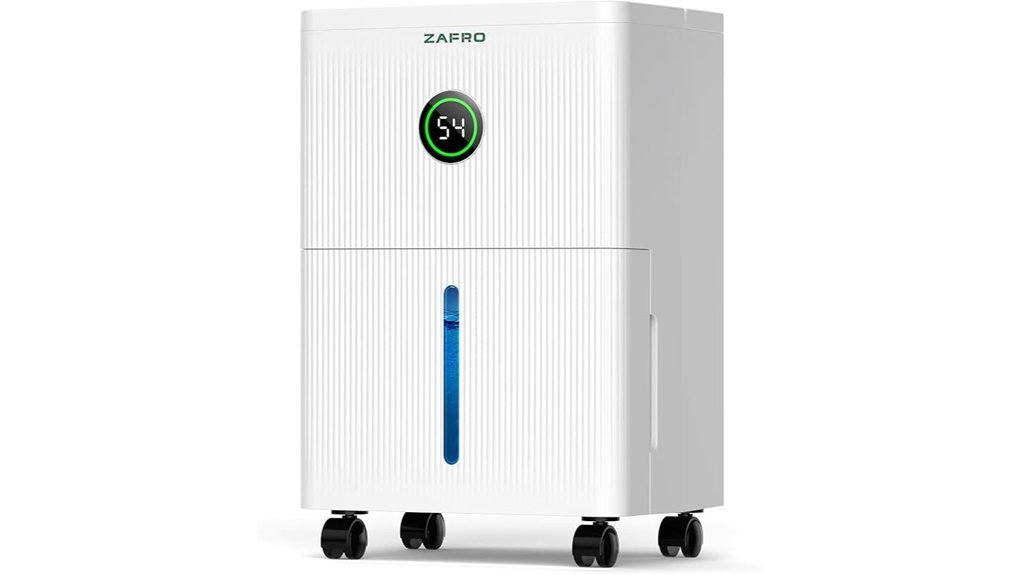
The ZAFRO 21-Pint Dehumidifier is aimed at moderate household moisture in areas up to a listed 1,600 sq. ft. Its low setting is advertised at 41 dB, and it includes sleep mode, a timer, front humidity indicator, adjustable target range, auto defrost, auto restart, and a washable filter.
Why you’ll like it: You can use the 1.7L tank for portable operation or attach the included 3.3-foot drain hose for continuous use. Four caster wheels make it easier to move between rooms.
Best For: Bedrooms, home offices, laundry areas, and moderately damp basements where quieter operation is a priority.
Who Should Avoid It: Buyers dealing with flooding, active leaks, or very large spaces that need higher extraction.
Pros:
- Listed 41 dB low operation and sleep mode suit quieter rooms.
- Dual displays and a colour humidity indicator improve at-a-glance monitoring.
- Tank and included-hose drainage provide useful flexibility.
Cons:
- The 21-pint maximum may be too low for severe moisture.
- The 1.7L tank is relatively small for continuous high-humidity use.
- International buyers should verify voltage, plug type, certification, and warranty support.
Lonxfy B06 Small Quiet Dehumidifier for Bedroom and Closet
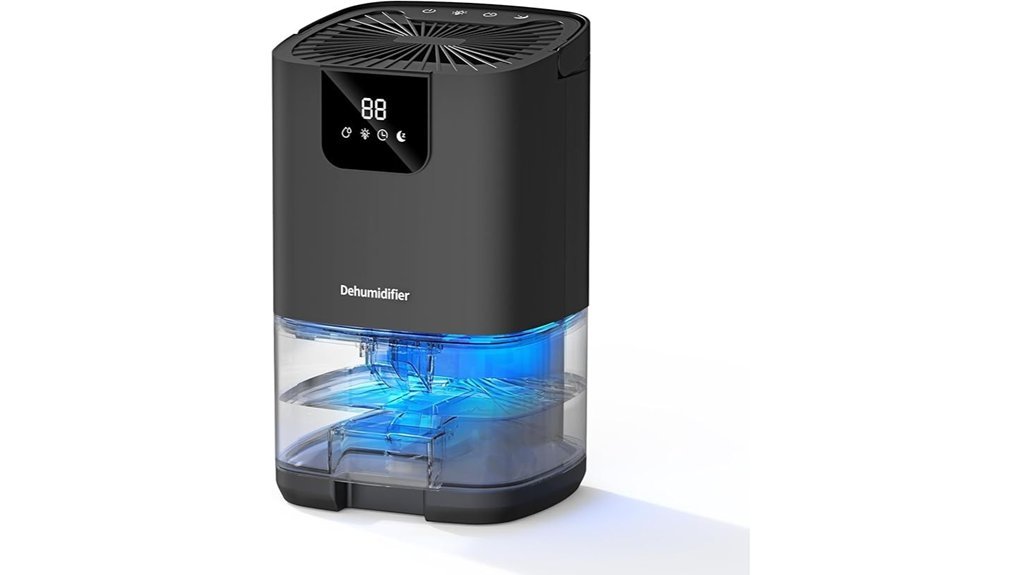
The Lonxfy B06 is a compact, low-capacity dehumidifier for closets, RVs, and very small bedrooms. Its listing states a 1,000ml tank, a 6.1 x 6.1 x 9.2-inch body, suggested coverage from 30 to 350 sq. ft., and moisture collection of up to 350ml per day. The listed sleep setting is 32 dB, and the display, timer, and automatic full-tank shutoff add convenience.
Why you’ll like it: The small footprint makes it easier to place on a stable, dry surface where a full-size compressor appliance would be excessive.
Best For: Light condensation or mild humidity in a small enclosed area.
Who Should Avoid It: Anyone trying to dry a large room, manage serious damp, control a persistently wet basement, or remove moisture after a leak.
Pros:
- Compact dimensions and low listed noise suit closets and small bedrooms.
- The 1,000ml tank, timer, display, and full-tank shutoff are convenient.
- Its low output may be adequate for a small enclosed space with mild humidity.
Cons:
- Up to 350ml per day is far below the output of the compressor models in this guide.
- The advertised square-foot range may be optimistic in a humid or open room.
- It has no continuous drain hose, so the tank must be emptied manually.
FreAire 54-Pint Dehumidifier for Home and Basement
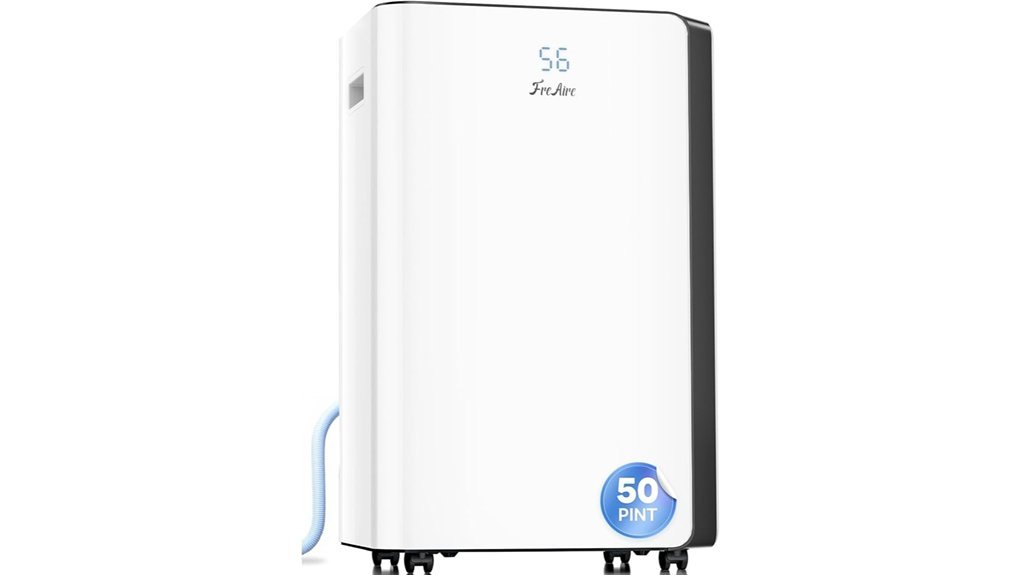
The FreAire 54-Pint Dehumidifier is a less-established high-capacity option for large rooms and basements. Its listing advertises removal of up to 54 pints per day, suggested coverage up to 4,500 sq. ft., a front humidity display, sleep mode, five operating modes, two fan speeds, a washable filter, wheels, and a hidden handle.
Why you’ll like it: The included drain hose and 1.13-gallon tank let you choose between manual and continuous drainage. The front display is also easier to read from across a room than a top-only control panel.
Best For: Buyers who want high listed capacity and flexible drainage for a large damp area and are comfortable considering a less-established brand.
Who Should Avoid It: Shoppers who prioritise extensive independent testing, long brand history, or clearly documented long-term service support.
Pros:
- High 54-pint listed capacity for larger rooms.
- Front humidity display, sleep mode, included drainage hose, and wheels add convenience.
- Five modes and two fan speeds allow more control over operation.
Cons:
- Exact noise performance should be confirmed on the current listing and manual.
- The tank can still require regular emptying without hose drainage.
- Manufacturer documentation, brand history, and long-term support are less established than for major appliance brands.
Factors to Consider When Choosing a Domestic Dehumidifier
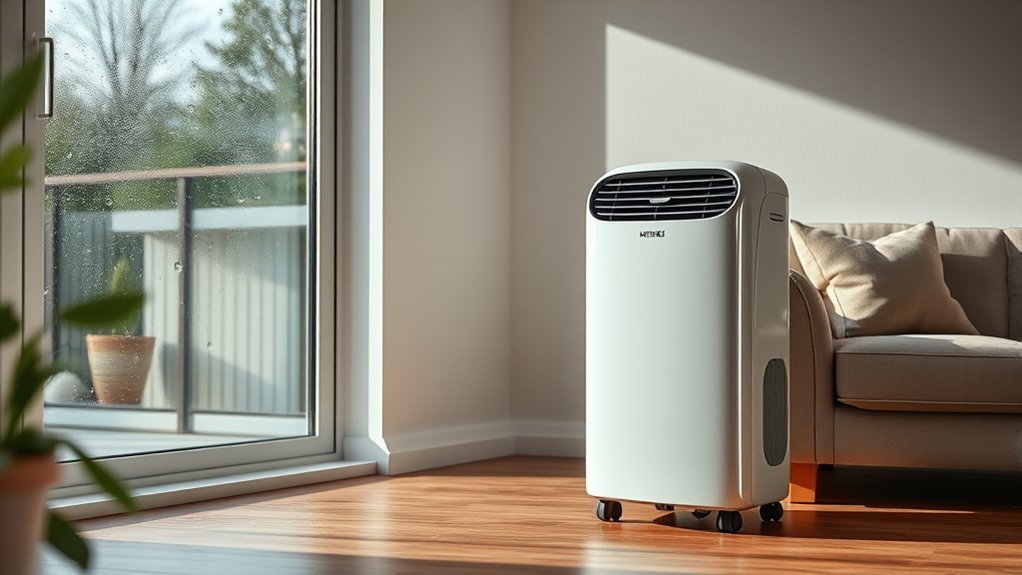
Choose a dehumidifier by matching its appliance type, extraction capacity, drainage setup, operating temperature, noise, and controls to the room. Treat advertised coverage as a rough comparison figure, not a guarantee. A large open basement with an active moisture source can need far more capacity than a closed bedroom of the same floor area.
Full-Size Compressor vs. Compact Low-Output Models
The full-size models in this guide use compressors and can remove much more water than the compact Lonxfy. Compressor models are generally the better fit for basements, laundry areas, garages, and persistent damp. Compact low-output units are easier to place and may be quieter, but they are best reserved for mild humidity in small enclosed spaces.
Room Size and Moisture Load
Measure the room, but also identify why it is damp. Condensation, indoor clothes drying, poor ventilation, seepage, and plumbing leaks create different moisture loads. A compact unit can help a closet or small bedroom, while a compressor model is more appropriate for a basement, garage, or large living area. Fix leaks and drainage problems first because a dehumidifier should not be used as a substitute for water repairs.
Moisture Removal Capacity and Test Conditions
Daily extraction is usually the most useful comparison point, but only when the ratings use similar test conditions. The listings in this guide range from up to 350ml per day for the compact Lonxfy to an advertised maximum of 80 pints per day for the Yaufey at 95°F and 90% relative humidity. Real output will normally be lower in cooler or drier rooms. Choose extra capacity for persistent damp, but avoid paying for a large machine when a smaller compressor model can maintain the target humidity.
Noise Level
Check the listed decibel rating and whether it applies to low, sleep, or maximum fan speed. A quiet setting matters in bedrooms and home offices, but stronger fan modes may be noticeably louder. Manufacturer noise figures can be measured under different conditions, so use them as a comparison guide rather than a promise of silence.
Energy Efficiency
Look for recognised efficiency certification for your market, an adjustable humidistat, timer, auto mode, and an appropriate extraction rate. A correctly sized unit can cycle off after reaching the target humidity instead of running continuously. Compare energy use together with water removal because a low-wattage compact unit may still be the wrong choice for a large damp room if it cannot control the moisture.
Drainage Options
A tank is flexible but requires manual emptying. Continuous gravity drainage is more convenient when you have a nearby floor drain or sink below the outlet level. Check whether a hose is included and whether the unit has a built-in pump; a basic gravity hose cannot push water uphill. Clean the tank, filter, and hose regularly to reduce odour, mould, and blockages.
Portability and Size
Measure the available floor space and allow the ventilation clearance required by the manual. Handles and caster wheels help with room-to-room use, but large compressor units can still be awkward on stairs. A compact unit is easier to place, while a larger tank and compressor usually add weight and floor space.
Controls and Smart Features
A clear humidistat, timer, auto restart, defrost mode, and memory function are more important than novelty features for most buyers. Wi-Fi is useful for basements, garages, cabins, and other remote rooms, but it depends on the app, network connection, and ongoing software support. Confirm that the exact model, not just a related product in the same range, includes the smart feature you need.
Safety and Electrical Compatibility
Look for full-tank shutoff, auto defrost, overheat or overload protection, a grounded plug where required, and certification recognised in your country. Check the appliance rating label before use. A plug adaptor changes the plug shape only; it does not make a single-voltage appliance compatible with a different mains supply. Keep the unit on a stable, dry surface and away from splash zones, standing water, blocked vents, and damaged extension leads.
Before You Buy Checklist
- Identify whether you need a full-size compressor model or a compact low-output unit.
- Confirm voltage, frequency, plug type, and local certification.
- Compare extraction capacity and test conditions, not coverage area alone.
- Check the minimum operating temperature for cold rooms.
- Decide whether you need a tank, gravity hose, or built-in pump.
- Measure the unit and required airflow clearance.
- Review filter cleaning, warranty, return, app, and support terms.
Frequently Asked Questions
How Often Should I Empty a Domestic Dehumidifier Tank?
Empty it whenever the full-tank indicator appears or before the tank reaches its limit. A small tank may fill daily or even more often in a damp room. Continuous drainage removes most manual emptying, but you should still inspect and clean the hose and tank regularly.
Can Dehumidifiers Help Reduce Mould Growth?
A dehumidifier can make indoor conditions less favourable for mould by reducing excess moisture. It does not remove established mould or repair the leak, condensation, or ventilation problem causing it. Clean or remediate existing mould safely and correct the moisture source.
What Humidity Level Is Best for a Home?
A practical starting target is around 40% to 50% relative humidity. U.S. EPA guidance generally recommends keeping indoor humidity between 30% and 50% where possible and below 60% to help limit moisture problems. Use a separate hygrometer to compare the room reading with the dehumidifier’s sensor, and place it away from the machine’s direct airflow.
Can a Small Dehumidifier Replace a Compressor Model?
Usually not in a damp basement, laundry room, or large bedroom. A compact unit that collects a few hundred millilitres per day serves a different purpose from a compressor appliance rated in pints per day. Choose the compact type for mild moisture in a small enclosed space and a compressor model for persistent or widespread humidity.
Are Domestic Dehumidifiers Expensive to Run Daily?
Running cost depends on wattage, electricity price, fan speed, room conditions, and how long the compressor operates. Use an adjustable humidistat, timer, clean filter, closed windows, and the correct unit size to avoid unnecessary runtime. Do not describe any model as costing only “pennies a day” without a calculation based on its wattage and local tariff.
Do Dehumidifiers Work in Cold Temperatures?
Performance can drop in cold rooms, especially with compressor models. Check the minimum operating temperature and auto-defrost specification. For an unheated garage, cellar, or outbuilding, choose a model specifically rated for the expected temperature rather than relying on room-size claims alone.
Can I Use a Dehumidifier in a Bathroom?
Only use one where the manufacturer permits it and where local electrical rules allow safe placement. Keep it outside wet and splash zones, never operate it near standing water, and do not handle the plug or controls with wet hands. An extractor fan and source ventilation should remain the first line of moisture control.
Conclusion
The Midea 22-Pint is the strongest all-round choice for medium residential rooms, while the Yaufey offers the highest advertised output for a large damp basement or garage. Choose the Frigidaire when remote Wi-Fi control matters, the ZAFRO for quieter moderate-capacity use, and the Lonxfy only for small enclosed spaces with mild moisture. The FreAire is a high-capacity alternative, but buyers should check its current specifications, warranty, and support terms carefully.
Before buying, verify the exact model, extraction test conditions, drainage method, minimum operating temperature, voltage, plug, certification, app requirements, and warranty. The right dehumidifier can control excess moisture more effectively, but it should be paired with leak repairs, ventilation, and regular maintenance.