Disclosure: This article contains Amazon affiliate links. We may earn a commission from qualifying purchases at no extra cost to you.
A dehumidifier can help protect guitars when a guitar room, instrument room, or guitar storage area stays above the recommended humidity range. The goal is not to make the air as dry as possible. Start with a digital hygrometer and aim to keep the room near 45%–55% relative humidity. If readings regularly exceed 55%, choose a dehumidifier that matches the room size, temperature, and actual moisture level.
Quick Answer
The Aiusevo 21-Pint Dehumidifier is the most capable overall option in this lineup for persistent room humidity because it provides an adjustable humidity setting and continuous drainage. The NeedDuck 44-Ounce Dehumidifier is better suited to a small guitar room with light dampness, while the CLEVAST 30-Ounce Mini Dehumidifier is the best quiet compact pick, with a manufacturer-rated 24 dB Quiet Mode. Use a separate hygrometer with every model and stop dehumidifying if the room approaches 45% RH.
Guitar Humidity Safety Note
Taylor Guitars recommends keeping a guitar near 45%–55% relative humidity. A dehumidifier can help when the air is too wet, but excessive drying can cause shrinking, fret problems, cracking, or changes in action.
How We Compared These Models
These recommendations are based on the products’ listed moisture-removal capability, humidity controls, tank and drainage options, room suitability, operating modes, noise information, temperature limitations, and how easily each model can be used without pushing a guitar room below the recommended humidity range. This comparison does not claim hands-on testing.
Quick Comparison
| Product | Best For | Moisture Control | Tank and Drainage | Main Limitation | Amazon |
|---|---|---|---|---|---|
| Aiusevo 21-Pint Best Overall |
Medium or larger guitar rooms with persistent humidity | Adjustable 30%–80% setting with automatic humidity control | 2-liter tank and included continuous-drain hose | Larger and more noticeable than a mini unit | Check Product Details |
| NeedDuck 44-Ounce Best for Small Rooms |
Small enclosed guitar rooms with light moisture | Sleep, Auto, and Performance modes; no verified user-set RH target | 44-ounce removable tank | Daily extraction rate is not clearly stated | Check Product Details |
| CLEVAST 30-Ounce Best Quiet Compact Pick |
Small, warm rooms where low noise matters | Efficient and Quiet modes; up to 10 ounces per day at 86°F and 85% RH | 30-ounce tank with automatic shutoff | No adjustable humidity target or continuous drain | Check Product Details |
Aiusevo 1500 Sq. Ft 21-Pint Dehumidifier
Best Overall for Persistent Humidity
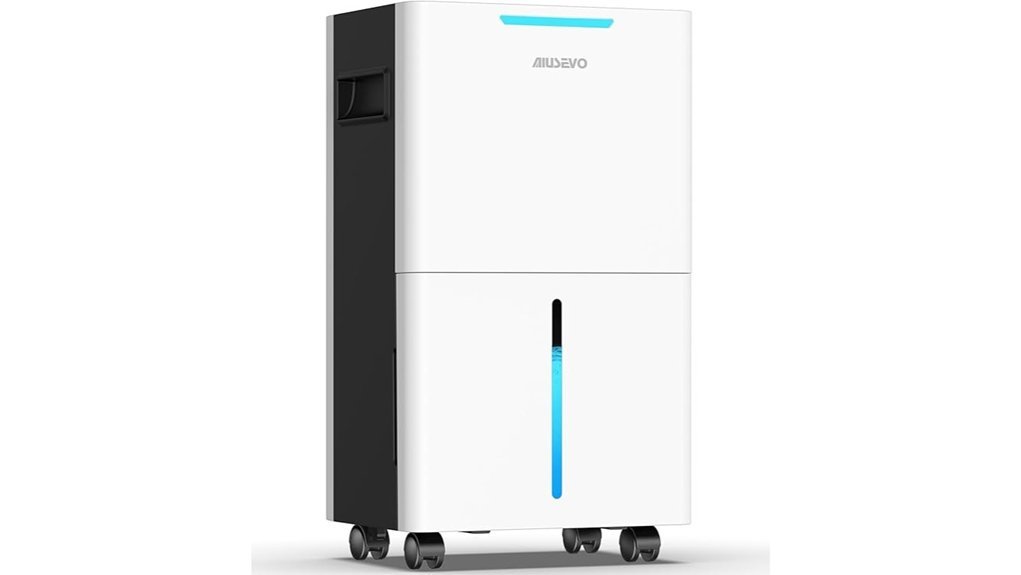
The Aiusevo is the most suitable option in this lineup for a guitar room that remains humid for long periods. Its compressor system is rated to remove up to 21 pints of moisture per day at 95°F and 90% RH. Actual extraction will normally be lower in a cooler or less humid guitar room, but it has a major advantage over the compact models: you can select a target humidity level between 30% and 80%.
For guitar storage, set the unit near 50% RH rather than choosing the lowest possible setting. DEHU mode provides automatic humidity control around the selected setting, while CONT mode runs continuously and should be used cautiously. Its 2-liter tank shuts the unit off when full, and the included drain hose supports continuous drainage when a suitable gravity drain is available.
Why You’ll Like It: It offers the most useful humidity control in this lineup for maintaining a guitar-safe room rather than simply collecting small amounts of water.
Best For: Medium or larger guitar rooms, multiple-instrument collections, basements, and rooms that regularly remain above 55% RH.
Who Should Avoid It: Buyers with a tiny room, very light seasonal humidity, limited floor space, or a strong preference for a very small tabletop unit.
Pros:
- Adjustable humidity setting makes it easier to target approximately 45%–55% RH.
- Automatic humidity control can cycle operation around the selected setting.
- Compressor design is better suited to persistent room-level moisture than the light-duty mini models in this lineup.
- Offers tank collection and continuous drainage.
- Includes DEHU, DRY, and CONT operating modes.
- Wheels and handles make it easier to reposition.
Cons:
- The 21-pint rating is measured under very hot and humid test conditions.
- Larger and potentially more noticeable during operation than a compact thermoelectric unit.
- The 2-liter tank may require frequent emptying when the room is very damp.
- Continuous mode can over-dry a guitar room if humidity is not monitored.
Best setup: Use DEHU mode at about 50% RH, keep the room closed while operating, and confirm the actual reading with a separate digital hygrometer placed near the guitars.
NeedDuck Dehumidifier with 44-Ounce Water Tank
Best for a Small Guitar Room
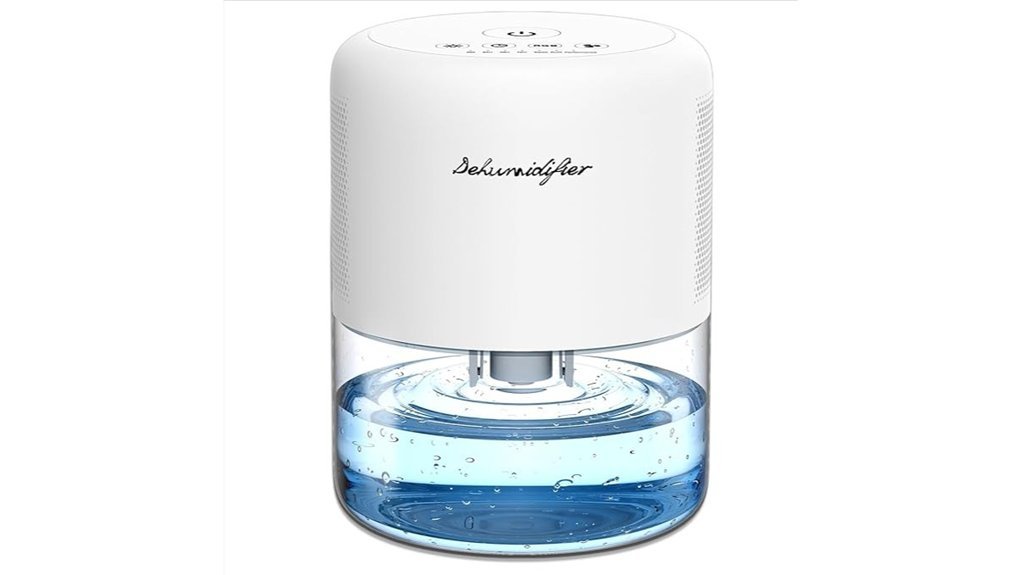
The NeedDuck is a compact option for a small enclosed guitar room with mild humidity rather than a serious moisture problem. Its listing identifies a suggested area of up to 215 square feet, a 44-ounce removable tank, Sleep, Auto, and Performance modes, automatic shutoff, and automatic defrost.
Because the listing does not provide a dependable daily moisture-removal rating or a clearly verified user-adjustable humidity percentage, this model should not be expected to hold a large room at an exact RH target. Pair it with a digital hygrometer, check the reading daily at first, and turn the unit off if the room approaches 45% RH.
Why You’ll Like It: It is compact, easy to move, and gives you several operating modes for light-duty humidity control in a smaller space.
Best For: Small music rooms, home offices used for guitar storage, closets or enclosed instrument areas, and light summer dampness.
Who Should Avoid It: Buyers dealing with water intrusion, a damp basement, a large open room, or humidity that remains far above 60%.
Pros:
- Compact footprint works well where floor or shelf space is limited.
- 44-ounce tank requires less frequent emptying than many smaller tabletop reservoirs.
- Sleep, Auto, and Performance modes provide several operating choices.
- Automatic shutoff helps prevent tank overflow.
- Includes automatic defrost.
- Four timer choices can help limit unnecessary runtime.
Cons:
- No clearly verified user-adjustable RH target for maintaining a precise guitar-room percentage.
- Daily extraction capacity is not clearly stated.
- Not appropriate for a seriously damp or large room.
- Decorative lighting may not be useful to every buyer.
Before you buy: Measure the room and record its humidity for several days. Choose a higher-capacity compressor model instead if the reading stays well above 55% or rises quickly after the mini unit is turned off.
CLEVAST 30-Ounce Mini Quiet Dehumidifier
Best Quiet Compact Pick
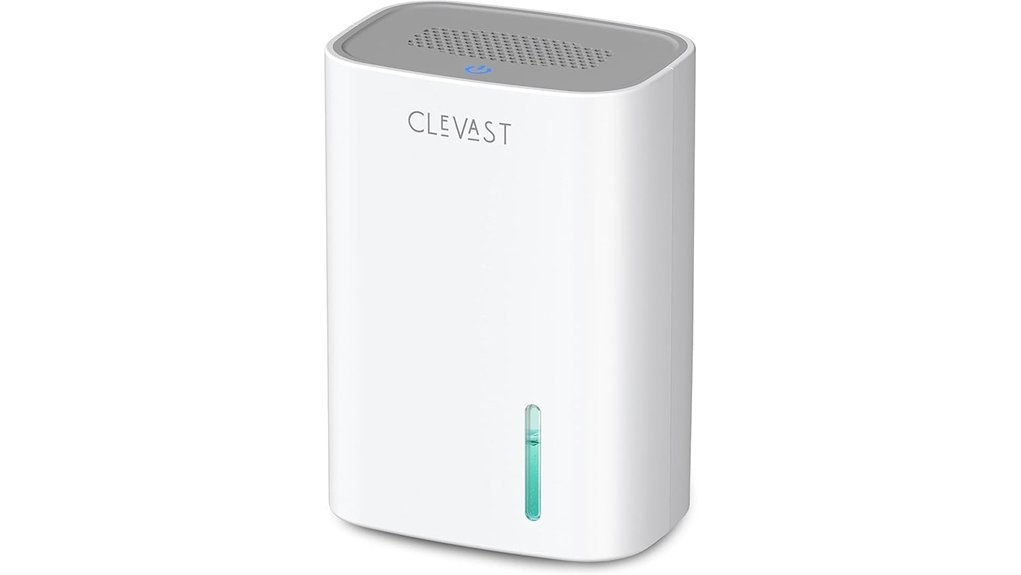
The CLEVAST is a light-duty thermoelectric dehumidifier for a small, enclosed guitar room where low noise is a priority. The manufacturer states that it can collect up to 10 ounces of water in 24 hours at 86°F and 85% RH. It has a 30-ounce tank, measures approximately 4.5 × 6.5 × 9.2 inches, includes a carry handle, and automatically shuts off when the tank is full.
Its Quiet Mode is rated at 24 dB, which can make it less distracting during practice, recording, or sleep. However, output will be lower in cooler or less humid conditions, and the recommended working range is 68°F–86°F. Because it does not provide a user-adjustable humidity percentage, use a separate hygrometer and operate it only as needed.
Why You’ll Like It: It provides quiet, simple moisture collection without taking up much space.
Best For: Small warm rooms, occasional seasonal humidity, and musicians who value a compact unit with a low-noise operating mode.
Who Should Avoid It: Buyers who need automatic 50% RH control, continuous drainage, cold-room performance, or high-volume moisture removal.
Pros:
- Quiet Mode is rated at 24 dB.
- Compact 4.5 × 6.5 × 9.2-inch size and carry handle support easy placement.
- 30-ounce tank is practical for a tabletop unit.
- Automatic shutoff helps prevent overflow.
- Efficient and Quiet modes provide simple operating choices.
Cons:
- Maximum output is based on hot, very humid test conditions.
- No adjustable humidistat or continuous drain.
- Performance will be reduced outside its preferred temperature and humidity conditions.
- Not powerful enough for a large or persistently damp guitar room.
Placement tip: Keep the intake and exhaust clear, close the room’s doors and windows during use, and place the hygrometer near the guitars rather than directly beside the dehumidifier.
Factors to Consider When Choosing a Dehumidifier for a Guitar Room
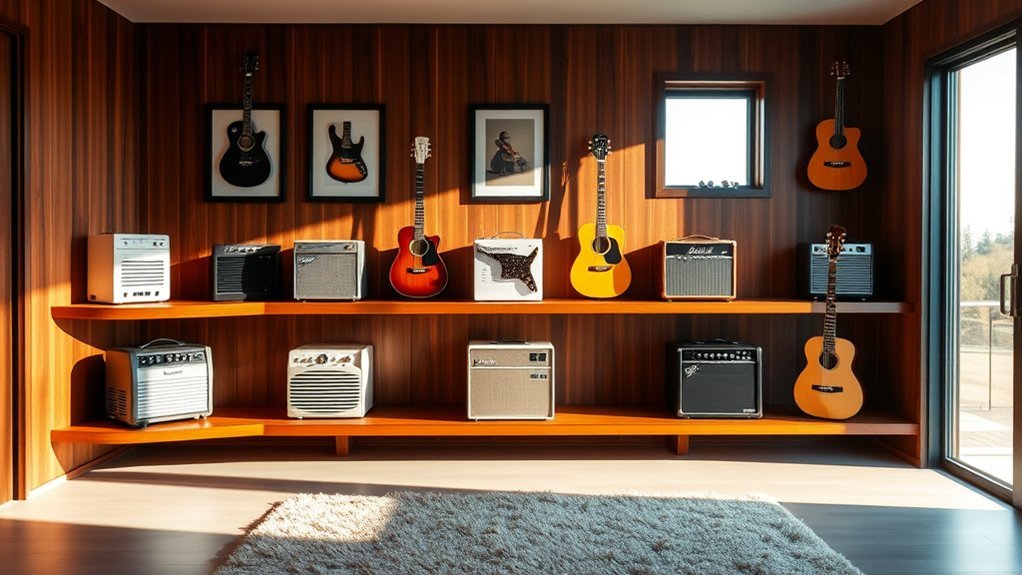
The best dehumidifier for a guitar room is not necessarily the model with the largest tank or highest advertised coverage. Choose one based on the room’s measured relative humidity, size, temperature, air leakage, and moisture load. The following points can help you avoid both excess moisture and excessive dryness around acoustic and wooden instruments.
Measure Humidity Before Buying
Place a digital hygrometer in the room for several days before choosing a dehumidifier. Record readings at different times of day. If humidity is already between 45% and 55%, you may not need to run a dehumidifier. If it falls below 45% during dry winter conditions, the room may need humidification instead.
Target 45%–55% Relative Humidity
Aim to keep guitars near 45%–55% RH. Extended high humidity can cause wood to swell and may affect action, glue joints, finish, or playability. Excessively dry air can shrink wood and contribute to cracking, fret sprout, sinking tops, or changes in setup.
Avoid setting a compressor dehumidifier to 30% simply because the control allows it. For guitar storage, a target near 50% is more appropriate.
Humidistat Versus Basic Operation
A model with an adjustable humidistat can cycle operation around a selected room-humidity target. This is particularly useful for a room containing several valuable instruments because it reduces the need to turn the dehumidifier on and off manually.
Many small thermoelectric models do not provide a user-adjustable RH percentage. They can reduce light moisture, but they require closer monitoring because they may continue operating even after the guitar-safe target has been reached.
Room Size and Moisture Load
Advertised square-foot coverage is only a starting point. A sealed 150-square-foot room with mild humidity is easier to manage than a similarly sized basement room with damp walls, frequent door opening, or outside-air leakage.
Choose a higher-capacity compressor model when the room is large, humidity stays above 60%, moisture returns quickly, or several guitars are stored in an open space. A mini thermoelectric unit is better suited to light dampness in a small, closed room.
Daily Extraction Versus Tank Size
Do not confuse water-tank capacity with dehumidification performance. A 44-ounce tank does not mean that a unit removes 44 ounces every day. The more useful performance figure is the amount of moisture removed per 24 hours under stated temperature and humidity conditions.
Remember that maximum extraction ratings are normally measured in warm, very humid air. Real-world performance may be significantly lower in an air-conditioned guitar room.
Room Temperature
Thermoelectric dehumidifiers generally perform best in warmer conditions and become less effective as the room gets cooler. Higher-capacity compressor models can handle more moisture, but their low-temperature operating behavior still depends on the specific model.
Check the manufacturer’s operating-temperature range and defrost information if the guitar room is in a basement, garage conversion, or seasonally cold space.
Noise Level
A low-noise mini dehumidifier may be attractive for recording and practice rooms. However, choosing primarily by noise level should not come at the expense of adequate moisture removal. A higher-capacity compressor unit may be more appropriate if a small unit cannot keep the room near the target RH.
Place the unit away from microphones and critical listening positions while maintaining the clearance required by its manual.
Tank and Drainage Options
A larger tank reduces how often you must empty collected water. Automatic shutoff is important for preventing overflow, but once the tank is full the unit will stop removing moisture until it is emptied.
Continuous drainage is useful for persistent humidity. When a model uses gravity drainage, the drain must be lower than the outlet and the hose should remain free of kinks or blockages.
Placement and Airflow
Do not place the dehumidifier directly against a guitar case, wall, curtain, or furniture. Leave the clearance specified in the manual and allow air to circulate through the room.
Keep guitars away from direct discharge airflow. The hygrometer should be near the instrument-storage area but not directly in the dehumidifier’s discharge path, where the reading may not represent the rest of the room.
Energy Use
Mini thermoelectric units generally use less electricity but also remove less moisture. Compressor units normally consume more power while running, yet they can be more practical for persistent room humidity because they remove moisture faster and adjustable models can cycle around a selected setting.
Compare energy use together with extraction capacity and humidity control rather than choosing solely by wattage.
Before You Buy Checklist
- Measure the current room humidity with a digital hygrometer.
- Confirm whether the room actually needs drying or humidification.
- Measure the room and note whether doors or windows remain open.
- Check the daily extraction rating, not only the tank size.
- Choose an adjustable humidity setting for persistent room-level humidity when possible.
- Check operating-temperature limits for basements or cold rooms.
- Decide whether you need tank collection or continuous drainage.
- Confirm available noise information if you record or practice in the room.
- Check how often the tank and air intake or filter require cleaning.
- Review the manual’s clearance, drainage, maintenance, and electrical instructions.
Frequently Asked Questions
What Humidity Level Is Ideal for Guitars?
Aim for approximately 45%–55% relative humidity. Use a digital hygrometer to confirm the conditions near the guitar rather than relying on how humid or dry the room feels.
Can a Dehumidifier Damage a Guitar?
It can contribute to damage if it lowers humidity too far. Excessively dry wood may shrink, crack, develop sharp fret ends, or experience changes in action. Do not run a dehumidifier based only on how the room feels. Monitor the actual RH and stop unnecessary drying as the room approaches 45%.
Do I Need a Dehumidifier or a Humidifier?
Use a dehumidifier when the guitar-storage environment remains above the recommended range. Use a humidifier when it falls below the range, which can happen during dry weather or indoor heating. Some climates require different humidity-control equipment at different times of year.
How Often Should I Empty the Water Tank?
Empty it whenever the full-tank indicator appears or the unit shuts off. During very humid weather, this could be frequent. A continuous-drain setup can reduce maintenance, but the hose must be installed according to the manufacturer’s instructions and remain unobstructed.
Is a Mini Dehumidifier Enough for a Guitar Room?
A mini unit may be enough for a small, enclosed room with mild humidity. It is unlikely to manage a large room, damp basement, water intrusion, or humidity that stays far above 60%. Watch the hygrometer for several days to confirm whether the unit can actually keep the guitar-storage area near 50% RH.
Can I Leave a Dehumidifier Running Overnight?
Follow the specific product manual for unattended operation. Automatic shutoff is important for tank-based models, while an adjustable humidity setting is useful because the unit can cycle around the selected target. Even with automatic features, maintain the required airflow clearance and regularly check the room with a hygrometer.
Where Should I Place the Hygrometer?
Place it near the guitars at a similar height, away from direct sunlight, heating or cooling vents, exterior doors, humidifiers, and the dehumidifier’s exhaust. This provides a more useful reading of the conditions surrounding the instruments.
Final Recommendation
The right choice depends on how much moisture your guitar room actually has. For persistent high humidity or a room containing several guitars, the Aiusevo 21-Pint Dehumidifier is the most capable option in this lineup because it offers a user-adjustable humidity setting, automatic humidity control, and continuous drainage.
For a small guitar room with light seasonal dampness, the NeedDuck 44-Ounce Dehumidifier provides a compact design, three operating modes, automatic shutoff, and automatic defrost. The CLEVAST 30-Ounce Mini Dehumidifier is the stronger compact choice when low operating noise matters, thanks to its manufacturer-rated 24 dB Quiet Mode.
Final Buying Advice
Buy a dehumidifier only after measuring the room. Whichever model you choose, pair it with a digital hygrometer, aim for 45%–55% RH, and avoid leaving a unit in continuous operation without monitoring the conditions around your guitars.