The best energy-saving dehumidifier is not automatically the model with the largest square-foot claim. The better choice is a properly sized unit with a verified efficiency designation, an accurate humidistat, realistic moisture-removal capacity, and a drainage setup that lets it run without unnecessary stops.
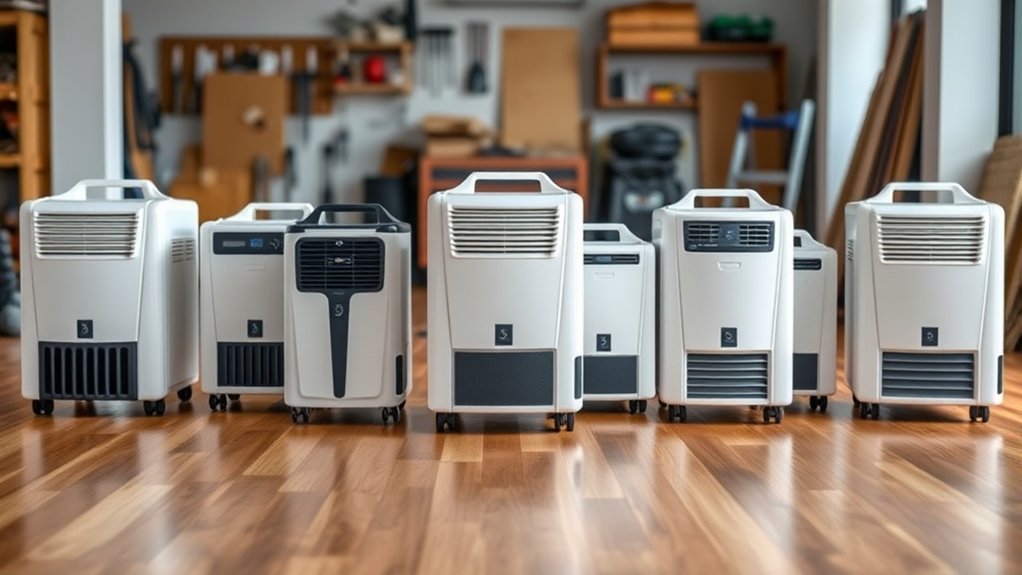
This guide compares six compressor dehumidifiers for medium rooms, basements, garages, laundry areas, and other damp spaces. Capacity figures are not directly comparable unless they were measured under the same temperature and humidity conditions, so the table below separates headline ratings from practical buying considerations.
Quick Verdict
Best overall for medium spaces: The Waykar 30 Pint combines a compact cabinet, automatic or manual drainage, and a listed 2025 ENERGY STAR Most Efficient designation.
Best for a large basement: The Gasbye DryPrime provides capacity figures at several temperature and humidity levels, a 1.72-gallon tank, and multiple drainage choices.
Best flexible-drainage option: The DECIUU 100 Pint includes a large tank, a drain hose, and a garden-hose adapter for long-term gravity drainage.
Best high-capacity option: The Waykar 120 Pint is intended for very large, persistently humid areas where continuous drainage is available.
The comparison focuses on current listing identity, moisture-removal capacity and test conditions, advertised coverage, drainage, tank size, controls, operating-temperature features, mobility, and the strength of the ENERGY STAR claim. No hands-on testing is claimed.
Quick Comparison of Energy-Saving Dehumidifiers
| Product | Best For | Listed Maximum Capacity | Advertised Coverage | Efficiency Note | Drainage | Details |
|---|---|---|---|---|---|---|
| Waykar 30 Pint | Medium rooms and balanced daily use | Up to 30 pints/day under the listing’s high-humidity conditions | Up to 1,500 sq. ft. | Listed as 2025 ENERGY STAR Most Efficient | 0.62-gallon tank or gravity hose | Check Product Details |
| Gasbye DryPrime | Large basements and garages | 115 pints/day at 86°F and 80% RH | Up to 4,500 sq. ft. | Amazon displays an ENERGY STAR 2026 claim | 1.72-gallon tank, included hose, or garden-hose adapter | Check Product Details |
| DECIUU Max | Large basements and flexible gravity drainage | 100 pints/day at 95°F and 90% RH; 70 pints at 86°F and 80% RH | Up to 5,000 sq. ft. | Listed as ENERGY STAR Most Efficient 2024 | 1.45-gallon tank, drain hose, or garden-hose adapter | Check Product Details |
| Waykar 120 Pint | Very large, persistently humid spaces | 120 pints/day at 95°F and 90% RH | Up to 6,000 sq. ft. | Amazon displays ENERGY STAR certification | 1.14-gallon tank or continuous drain hose | Check Product Details |
| Waykar 80 Pint | Large rooms and value-focused buyers | 80 pints at 95°F and 90% RH; 62 pints at 86°F and 80% RH | Up to 5,000 sq. ft. | Listed as a 2025 ENERGY STAR model | 0.92-gallon tank or gravity hose | Check Product Details |
| Ludatido 80 Pint | Large tank and fewer manual emptying trips | Up to 80 pints/day, according to the listing | Up to 5,000 sq. ft. | Listing describes it as a 2026 ENERGY STAR model; verify exact model | 1.72-gallon tank or continuous hose | Check Product Details |
Waykar 30 Pint ENERGY STAR Dehumidifier for Home and Basement
Best Overall for Medium Spaces
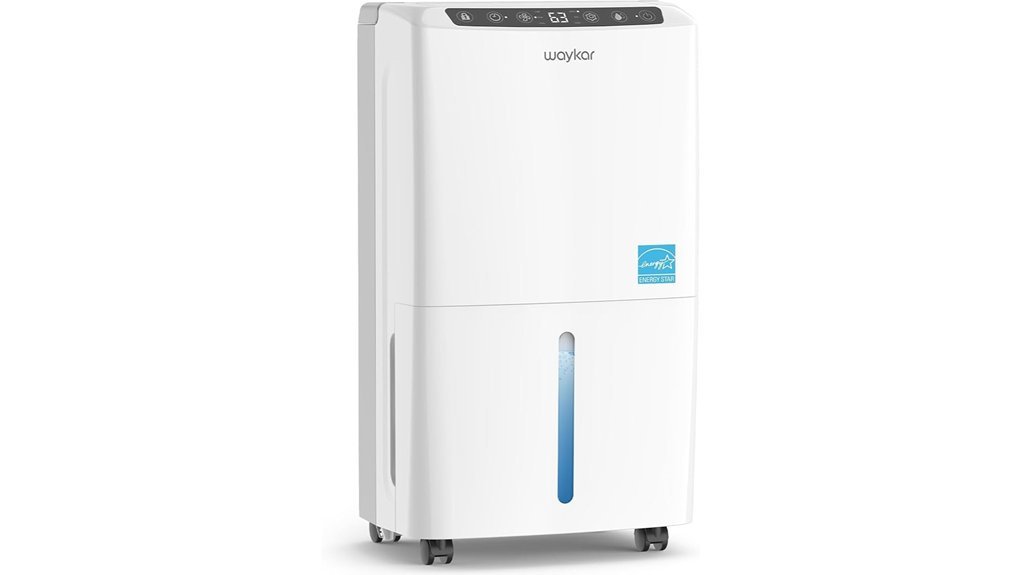
The current Waykar PD160B-PRO listing identifies this model as a 30-pint dehumidifier for spaces up to 1,500 sq. ft. That is an important correction from older copy that described the same ASIN as a 34-pint, 2,000-square-foot model. Its smaller cabinet and adjustable humidistat make it a practical choice when an 80- or 120-pint machine would be excessive.
The listing describes automatic or manual drainage and a 0.62-gallon tank. It is also presented as a 2025 ENERGY STAR Most Efficient model. Remember that headline pint ratings may use warmer, more humid conditions than standardized efficiency testing, so use the rating as a comparison aid rather than a promise of daily collection in every room.
Why You’ll Like It: It offers a useful middle ground between low-output mini units and oversized basement machines.
Who Should Buy This: Buyers treating a bedroom, office, living room, or moderately damp basement area with access to a gravity drain.
Who Should Avoid This: Anyone dealing with active seepage, standing water, or a very large open basement that needs faster extraction.
Pros:
- Current listing identifies a 30-pint capacity and coverage up to 1,500 sq. ft.
- Listed as a 2025 ENERGY STAR Most Efficient model.
- Supports tank collection and gravity drainage.
Cons:
- The 0.62-gallon tank may fill frequently in a damp room.
- Headline capacity will be lower in cooler or less humid conditions.
- It is not intended for the same moisture load as an 80- or 120-pint model.
Gasbye 4500 Sq.Ft. ENERGY STAR Dehumidifier with Hose
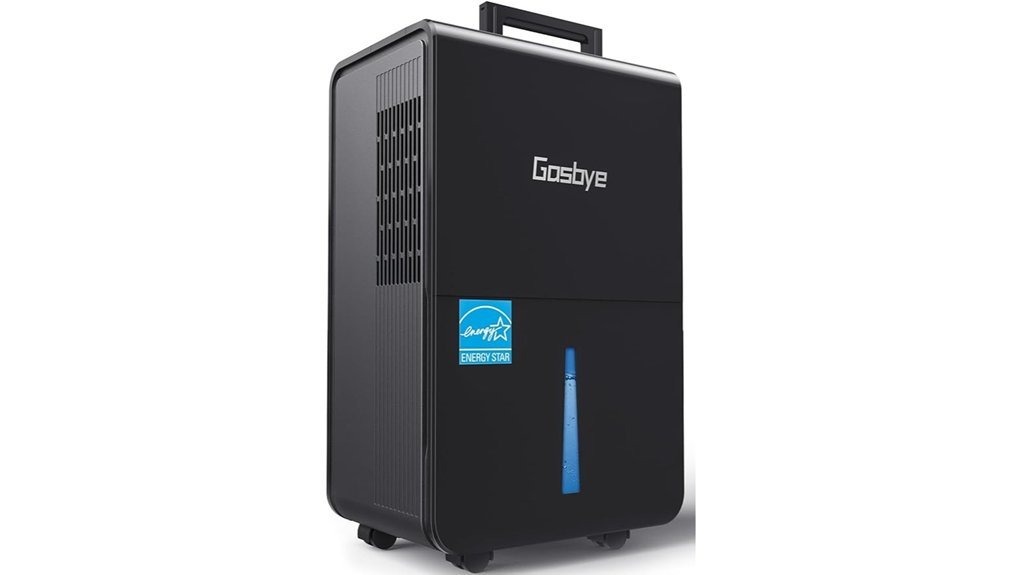
Best for Large Basements
The Gasbye DryPrime is one of the easier models to compare because its listing gives output at several conditions: up to 115 pints per day at 86°F and 80% RH, about 73 pints at 80°F and 60% RH, and about 50 pints at 65°F and 60% RH. Those figures illustrate how sharply performance can fall in a cooler basement.
It is advertised for areas up to 4,500 sq. ft. and the Amazon page displays an ENERGY STAR 2026 claim. The 1.72-gallon tank is larger than many competing buckets, and the included drain hose or garden-hose adapter can support longer-term gravity drainage. The listed 45 dB sound figure should still be treated as a manufacturer claim because room acoustics and fan speed affect perceived noise.
Why You’ll Like It: Its realistic multi-condition capacity data makes sizing easier than a single maximum-pint headline.
Who Should Buy This: Buyers with a large basement, garage, or open living area who want a large tank and continuous-drain flexibility.
Who Should Avoid This: Buyers who need a compact unit for stairs, tight closets, or frequent room-to-room movement.
Pros:
- Provides capacity figures at several temperature and humidity levels.
- Large 1.72-gallon tank reduces manual emptying frequency.
- Includes a drain hose and garden-hose adapter.
Cons:
- At roughly 43 pounds, it is not easy to carry on stairs.
- The 115-pint figure should not be expected in an ordinary cool basement.
- Gravity drainage requires a suitable outlet below the drain port.
DECIUU 100 Pint ENERGY STAR Dehumidifier for Basement
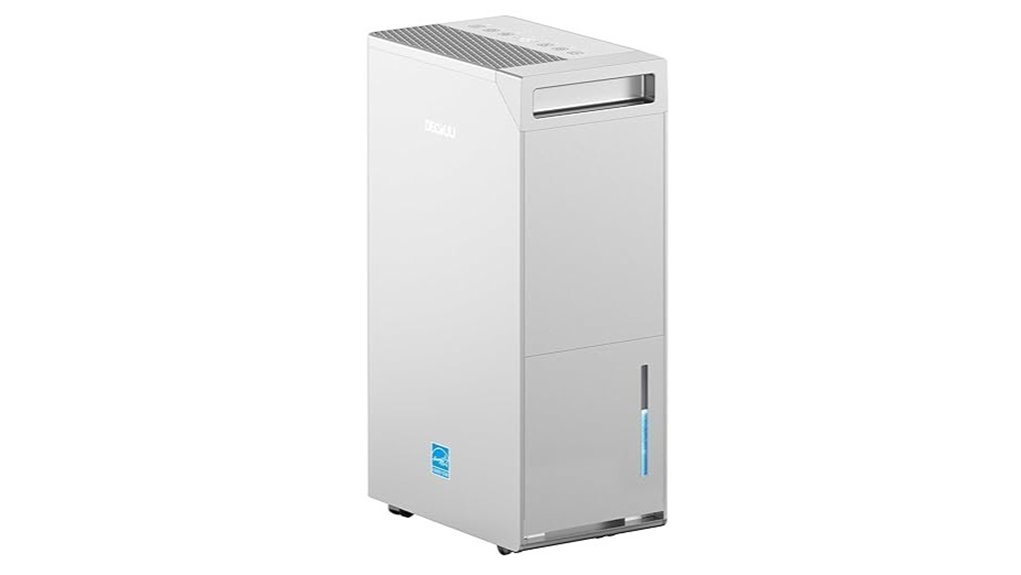
Best Flexible-Drainage Pick
The DECIUU Max is designed for large, persistently damp areas. Its current listing describes up to 100 pints per day at 95°F and 90% RH and up to 70 pints at 86°F and 80% RH. It is advertised for spaces up to 5,000 sq. ft. and listed as ENERGY STAR Most Efficient 2024.
The current ASIN includes a 1.45-gallon tank, a 6.56-foot drain hose, and a garden-hose adapter. Earlier copy described a pump-assisted option, but a built-in pump is not identified among the current included components. Plan on gravity drainage unless the exact version you select explicitly states otherwise.
Why You’ll Like It: The large tank and two hose-connection choices reduce the need for frequent bucket emptying.
Who Should Buy This: Homeowners or property managers treating a large basement, garage, storage room, or laundry area with a floor-level drain.
Who Should Avoid This: Buyers who need to push water uphill to a sink without using a separate condensate pump.
Pros:
- Lists output at both extreme and moderately demanding conditions.
- Includes a large tank, drain hose, and garden-hose adapter.
- Offers adjustable humidity control, automatic defrost, automatic restart, and a washable filter.
Cons:
- No built-in pump is identified for the current ASIN.
- The larger cabinet may be inconvenient in narrow rooms.
- The year-specific Most Efficient designation should be checked against the exact model before purchase.
Waykar 120 Pint ENERGY STAR Dehumidifier
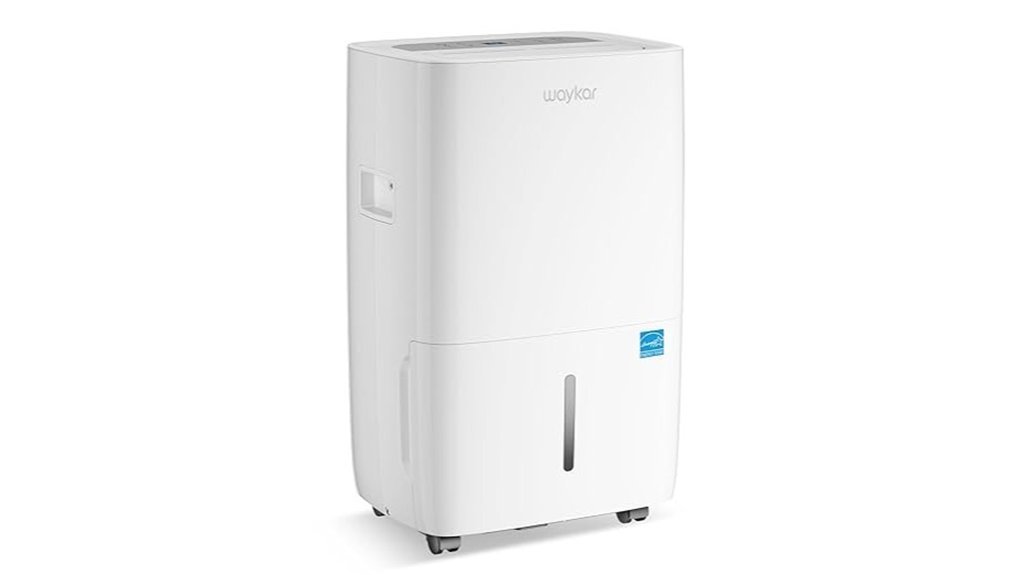
Best High-Capacity Pick
Waykar’s 120-pint model is intended for very large, damp spaces that need sustained moisture removal. Its 120-pint headline is measured at 95°F and 90% RH, and the listing advertises coverage up to 6,000 sq. ft. Actual collection will be lower in cooler or less humid rooms.
The Amazon page displays ENERGY STAR certification and lists a 1.14-gallon tank, automatic air swing, auto-defrost, timer, washable filter, casters, and continuous drainage. Because the tank is small relative to the maximum extraction rate, a drain hose is the practical setup for a persistently wet room.
Why You’ll Like It: It combines the highest listed capacity in this comparison with automatic controls and continuous drainage.
Who Should Buy This: Buyers with a very large basement, workshop, garage, storage area, or open commercial space.
Who Should Avoid This: Buyers treating a small room where the cabinet size and maximum capacity would be unnecessary.
Pros:
- Listed for up to 120 pints per day at 95°F and 90% RH.
- Advertised coverage reaches 6,000 sq. ft.
- Includes humidity control, air swing, auto-defrost, timer, casters, and continuous drainage.
Cons:
- The headline output reflects very warm and humid test conditions.
- The 1.14-gallon tank can fill quickly without a drain hose.
- Its roughly 34-pound weight makes stair transport inconvenient.
Waykar Max 80 Pint ENERGY STAR Dehumidifier
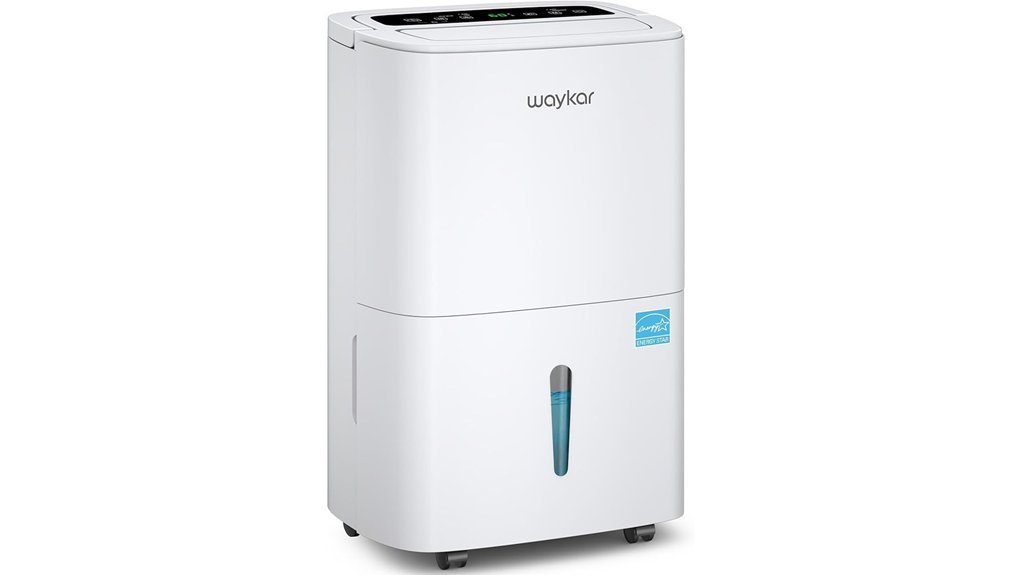
Best Value for Large Rooms
The Waykar 80 Pint offers a more moderate alternative to the 120-pint model. Its listing describes up to 80 pints per day at 95°F and 90% RH and about 62 pints at 86°F and 80% RH. It is designed for spaces up to 5,000 sq. ft. and listed as a 2025 ENERGY STAR model.
You can adjust the target humidity from 30% to 80%. Automatic defrost supports operation in cooler rooms, while the self-drying cycle helps reduce moisture left inside after shutdown. The current listing describes a 0.92-gallon tank, a drain hose, a 24-hour timer, air swing, casters, and a washable filter.
Why You’ll Like It: It offers substantial compressor capacity without moving up to the largest model in the comparison.
Who Should Buy This: Buyers with a large basement, laundry area, living space, or garage that has moderate to heavy humidity.
Who Should Avoid This: Anyone who expects the 80-pint maximum in a cool room or cannot use a hose and does not want frequent tank emptying.
Pros:
- Lists capacity at two useful temperature and humidity conditions.
- Advertised for areas up to 5,000 sq. ft.
- Includes auto-defrost, self-drying, timer, air swing, casters, and continuous drainage.
Cons:
- Maximum output depends on unusually warm and humid conditions.
- The 0.92-gallon tank may fill quickly at high output.
- The selected ASIN may redirect within a product variation family, so confirm the 80-pint option before checkout.
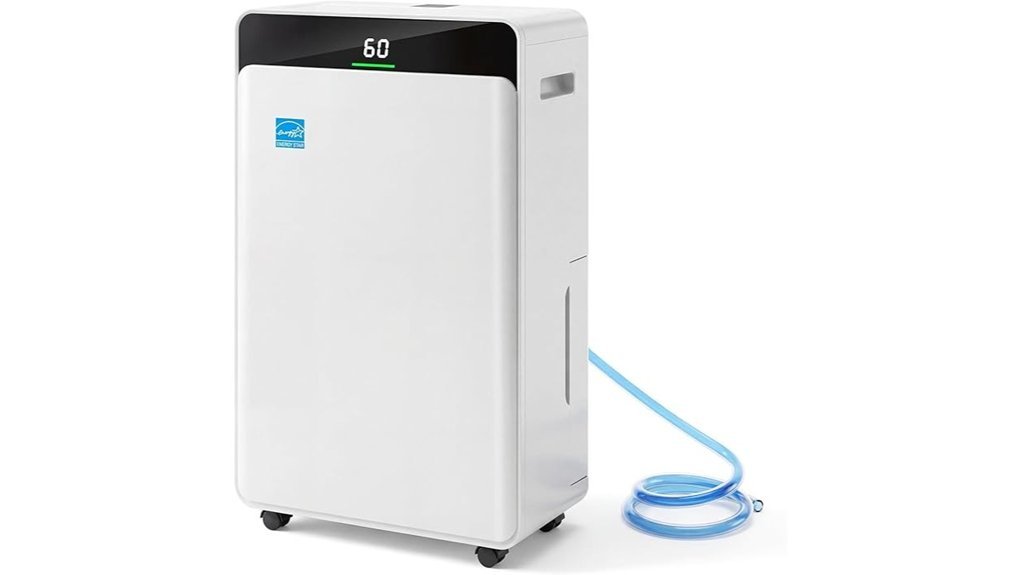
Ludatido 80 Pint Dehumidifier for Large Spaces
Best Large Tank
The current Ludatido listing describes an 80-pint dehumidifier for spaces up to 5,000 sq. ft. Its strongest practical feature is the 1.72-gallon tank, which can reduce emptying frequency when a floor drain is unavailable. Continuous gravity drainage is also listed for hands-off operation.
The Amazon title describes this ASIN as a 2026 ENERGY STAR model, but shoppers should verify the exact model number in the current ENERGY STAR database because listing titles and variation families can change. The product line also promotes adjustable humidity control, automatic shutoff, child lock, defrost, timer settings, washable filtration, wheels, and several operating modes.
Why You’ll Like It: The large bucket provides more useful collection volume than many high-capacity competitors.
Who Should Buy This: Buyers who prioritize tank size and standard automatic controls in a large room or basement.
Who Should Avoid This: Buyers who cannot verify the exact certification and model details shown at checkout.
Pros:
- Listed with an 80-pint maximum capacity and coverage up to 5,000 sq. ft.
- Large 1.72-gallon tank reduces manual emptying.
- Supports continuous drainage and standard automatic controls.
Cons:
- The exact ENERGY STAR model identification should be verified.
- Listing generations and newer versions may change the included features.
- Advertised square-foot coverage does not guarantee equal performance through closed doors or divided rooms.
Factors to Consider When Choosing an Energy-Saving Dehumidifier
Choose a dehumidifier by comparing verified efficiency information, standardized capacity, room conditions, drainage, and operating temperature. A properly sized model with an accurate humidistat can use less electricity than a small unit that never catches up or an oversized unit that cycles unnecessarily.
ENERGY STAR Efficiency
ENERGY STAR evaluates portable dehumidifiers using Integrated Energy Factor, measured in liters of water removed per kilowatt-hour. A higher IEF means the unit removes more moisture for the electricity it consumes under the program’s test method.
Do not rely only on phrases such as “energy saver,” “low energy,” or “high-efficiency compressor.” Search the current ENERGY STAR database using the exact brand and model number. Also distinguish standard certification from a year-specific ENERGY STAR Most Efficient designation.
Moisture-Removal Capacity and Test Conditions
Moisture-removal capacity is expressed in pints per 24 hours, but listing headlines may use hot, very humid conditions such as 95°F and 90% RH. Standardized efficiency databases may show a much lower capacity for the same machine because they use different test conditions.
Compare products at the same temperature and relative humidity whenever possible. For a wet basement, prioritize standardized compressor capacity, low-temperature operation, and continuous drainage. For a moderately damp room, a smaller certified model may be more economical and easier to place.
Room Coverage Area
Square-foot ratings are marketing guidelines, not a complete sizing method. Ceiling height, groundwater, air leakage, laundry activity, room divisions, and starting humidity all affect the moisture load.
Use advertised coverage as a starting point, then compare pint capacity and measure your actual relative humidity with a separate hygrometer. Closed doors can prevent one portable unit from treating several rooms evenly.
Noise Level
Check whether the listed decibel figure applies to low or high fan speed. Real sound changes with compressor cycling, floor vibration, room acoustics, and distance from the listener.
For bedrooms or offices, choose a model with a lower fan setting and dimmable controls. Place it on a level, solid surface and leave the clearance recommended in the manual.
Drainage Options
A continuous drain hose is usually the most convenient setup for a wet basement. Gravity drainage requires the hose to slope downward continuously toward a suitable outlet. Kinks, raised sections, and blocked hoses can stop the flow.
If the drain is above the dehumidifier, choose a model with a clearly identified built-in pump or use a suitable external condensate pump. Do not assume that a garden-hose adapter means the unit can pump water uphill.
Humidity Control Features
A built-in humidistat lets the compressor stop after reaching the selected target. For many homes, roughly 40%–50% RH is a practical starting point, while indoor humidity should generally remain below 60%.
Automatic restart, timer controls, fan-speed choices, and a reliable sensor can reduce unnecessary runtime. Avoid setting the target lower than needed because over-drying wastes energy and may make the room uncomfortable.
Operating Temperature and Auto-Defrost
Compressor dehumidifiers normally remove less water as the room gets colder. Frost can form on the coils in a cool basement, interrupting moisture removal. Check the minimum operating temperature and look for automatic defrost when the room regularly falls below about 65°F.
Auto-defrost helps manage temporary frost, but it does not make cold-air capacity equal to warm-condition performance.
Tank Size and Maintenance
A high-output model with a small bucket may stop several times per day. Continuous drainage solves this when installation allows it. Otherwise, compare tank volume, handle design, full-bucket indication, and how easily the bucket slides back into place.
Clean the washable filter according to the manual, keep the air inlet and outlet clear, and rinse the bucket regularly. Restricted airflow reduces efficiency and moisture removal.
Warranty and Support
Check the warranty attached to the exact ASIN and model variation. Confirm the standard warranty period, registration requirements, compressor coverage, return terms, and who pays shipping for replacement service.
Keep the receipt, model number, and serial number. “Lifetime support” may mean technical assistance rather than free parts or replacement coverage.
Before You Buy
- Measure the room and note whether doors normally stay open or closed.
- Check current humidity with a separate hygrometer.
- Compare capacity figures measured under similar conditions.
- Verify the exact ENERGY STAR brand and model number.
- Decide whether you can use gravity drainage or need a pump.
- Check the minimum operating temperature for a cool basement or crawl space.
- Confirm the selected capacity variation before checkout.
- Leave the manufacturer-recommended clearance around the air inlet and outlet.
A dehumidifier does not repair a plumbing leak, foundation seepage, roof damage, or an existing mold problem. Correct the water source first. Large or recurring mold growth may require professional assessment and remediation.
Frequently Asked Questions
How Much Electricity Does a Dehumidifier Use Monthly?
Use this formula:
Watts × hours used per day × 30 ÷ 1,000 = monthly kWh
For example, a 300-watt unit running eight hours per day would use about 72 kWh in a 30-day month. Multiply monthly kWh by your electricity rate to estimate cost. Actual runtime often falls after the room reaches the target humidity.
Why Does the ENERGY STAR Capacity Look Lower Than the Amazon Rating?
The figures may use different test conditions. Amazon listings often highlight maximum output in very warm, humid air, while standardized databases use specified laboratory conditions intended for consistent comparison. Compare like with like rather than assuming one number is wrong.
Can One Dehumidifier Cover Both a Basement and Upstairs Rooms?
Usually not evenly. A portable unit mainly treats air that reaches its intake. Floors, closed doors, stairways, and weak air circulation restrict moisture movement. Separate units or a properly designed whole-home system may work better.
What Humidity Level Should I Set?
A target around 40%–50% RH works for many homes. Keep indoor humidity below 60% and avoid drying the air more than needed. In cold weather, window condensation may require a lower setting, but comfort and building conditions should guide the final target.
How Often Should the Filter Be Cleaned?
Follow the manual. Checking the filter every two to four weeks is reasonable during frequent use, while dusty homes, renovation areas, and pet environments may require more frequent cleaning. Reinstall a washable filter only after it is fully dry.
Do Dehumidifiers Work Well in Cold Temperatures?
Performance normally drops as temperature falls. Standard compressor models can frost in a cold basement. Choose a model with automatic defrost and verify its minimum operating temperature, but still expect less water collection than the warm-condition headline.
Is a Continuous Drain Hose Better Than Emptying a Tank?
A hose is better for hands-off operation when a suitable lower drain is available. A tank is more portable and works where no drain is nearby, but the unit stops when the bucket fills.
Does ENERGY STAR Certification Matter?
Certification provides a standardized efficiency benchmark, but it does not replace correct sizing. An efficient unit that is too small may run nearly continuously. Match certification with realistic capacity, room temperature, humidity, and drainage needs.
Conclusion
The right energy-saving dehumidifier is the model that reaches your humidity target without running harder than necessary. For a medium room, the Waykar 30 Pint offers the most balanced mix of verified efficiency, manageable size, and drainage flexibility. The Gasbye DryPrime is a stronger choice for a large basement, while the DECIUU Max offers a large tank and flexible gravity-drain connections. The Waykar 120 Pint is reserved for the largest moisture loads.
Before buying, compare capacity under similar test conditions, verify the exact ENERGY STAR model number, and plan where the water will drain. Correct sizing, a realistic humidity target, a clean filter, and continuous drainage can improve both convenience and operating efficiency.
Final Recommendation
Choose the Waykar 30 Pint for balanced everyday use in a medium room. Select the Gasbye DryPrime for stronger basement performance and a larger tank. Choose the DECIUU Max when flexible gravity drainage is especially important. Move up to the Waykar 120 Pint only for a very large, consistently humid area with a reliable continuous-drain location.
For every model, confirm the current capacity variation, certification, included accessories, warranty, and drainage requirements before ordering.