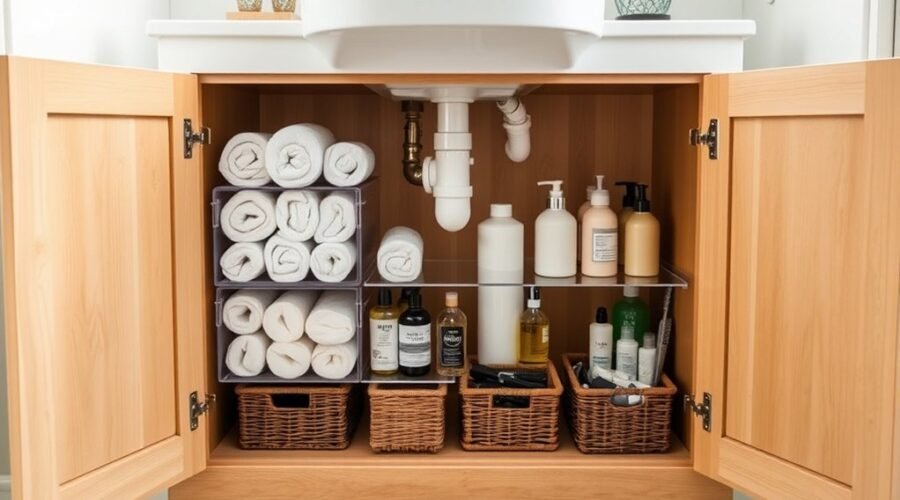
Organizing under the bathroom sink is easier when you start with what you already own, not with new storage products. Pipes, limited space, and forgotten toiletries can make even a large cabinet feel crowded. A simple layout with clear containers, accessible plumbing, and separate storage zones can make everyday routines easier.
Quick Answer
To organize under the bathroom sink, empty the cabinet and remove expired or unused products. Measure around the plumbing, then group toiletries by use. Place daily essentials in clear pull-out drawers and backups in labeled bins. Keep cleaning products separate, leave pipes accessible, and review the cabinet regularly to prevent clutter.
At a Glance
| Difficulty | Beginner-friendly |
| Tools Needed | Tape measure, cleaning cloth, storage containers, and labels |
Start by Emptying the Under-Sink Cabinet
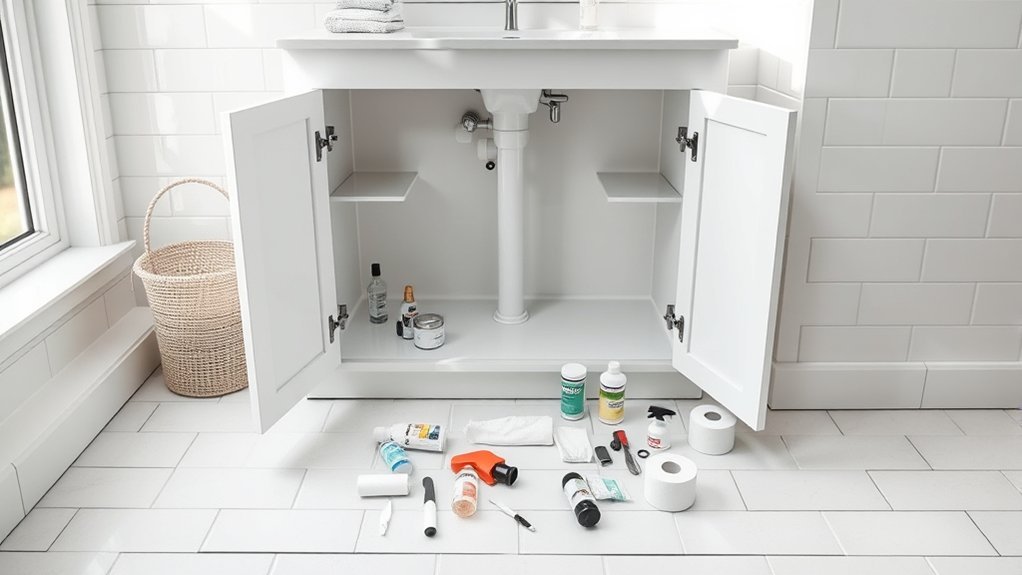
Begin by removing everything from the cabinet and placing it where you can see each item. A completely empty cabinet makes it easier to spot duplicates, check product condition, and plan a useful storage layout.
Follow these steps before adding any organizers:
- Empty the cabinet. Remove every bottle, container, cleaning product, and loose item.
- Check what you own. Look for expired products, empty bottles, duplicates, and supplies you no longer use.
- Sort what stays. Set aside useful products, relocate items that belong elsewhere, and identify unopened products suitable for donation.
- Clean the cabinet. Wipe the floor, sides, and corners, then let the surfaces dry before replacing anything.
- Make a visual inventory. Note the products you already have so you can avoid unnecessary duplicate purchases.
Keep only what you use, give every item a clear place, and leave enough room to reach the plumbing.
While the cabinet is empty, inspect the floor and pipes for drips, stains, dampness, or a musty smell. These can point to a moisture problem that should be addressed before storage is added.
The EPA recommends fixing leaks and drying damp surfaces within 24–48 hours to help prevent mold growth. If a leak continues, arrange a plumbing repair instead of covering the area with an organizer.
Sort Bathroom Items by Category
Group bathroom supplies according to how often you use them and what they are for. This makes it easier to find daily essentials without digging through backup products.
Start with separate groups for skincare, hair care, dental supplies, first-aid items, cleaning products, and extras. Then decide which items need the easiest access.
Group by Daily Use
Place frequently used products near the front of the cabinet. These might include facial cleanser, moisturizer, toothpaste, floss, and everyday hair products.
Keep items used during the same routine together. For example, a morning skincare bin can hold cleanser and lotion, while a separate dental container can hold spare toothpaste and floss.
If several people share the bathroom, consider assigning each person a small bin. This helps prevent products from becoming mixed together and makes it easier to return items after use.
Less frequently used products can sit behind the daily essentials, provided they remain easy to retrieve.
Separate by Product Type
Sorting by product type gives every category a defined storage area. Clear containers work especially well because you can see what is inside without opening every bin.
Use separate containers for:
- Skincare, including cleansers, lotions, and creams.
- Hair care, including brushes, sprays, and styling products.
- Dental supplies, including toothpaste, floss, and replacement toothbrushes.
- First-aid basics, such as bandages and other suitable supplies.
- Cleaning products and cleaning cloths.
Medicines need additional care. According to MedlinePlus medicine storage guidance, bathroom heat and moisture can damage medicines. A cool, dry, secure storage location elsewhere is generally a better choice.
Warning: Do not store medicines or hazardous cleaning products in an unlocked cabinet that children can access. Keep hazardous products in their original labeled containers, secure them away from children and pets, and never mix different cleaning chemicals.
Keep cleaning supplies separate from personal care products. This reduces confusion and makes it easier to spot a leaking bottle.
Keep Backup Items Aside
Backup products need their own space so they do not crowd everyday essentials. Group spare toothpaste, skincare refills, hair products, and other extras in clear bins.
Set a practical limit for each category based on how much your household uses and the space available. Keeping every spare bottle under the sink is unnecessary if it makes daily items difficult to reach.
Check expiration dates when adding new products. Use older suitable supplies first, and remove anything that has expired or become unusable.
For unused or expired medicines, the FDA recommends medicine take-back options as the preferred disposal method for most medications. Do not automatically flush medicines or place them in ordinary recycling.
Keep backup bins toward the rear or in another convenient storage location. Daily products should remain the easiest to reach.
Measure Around Pipes and Clearance
Measure the cabinet before buying storage products. The usable space is often smaller than the cabinet’s outside dimensions because pipes, valves, hinges, and the sink basin take up room.
Use a tape measure to record the following:
- Cabinet opening: Measure the width and height of the opening, not just the inside of the cabinet.
- Available depth: Measure from the front opening to the rear wall, accounting for plumbing.
- Pipe placement: Note where the drainpipe, supply lines, and shutoff valves sit.
- Vertical clearance: Measure the free space above and beside the pipes.
- Drawer movement: Check whether a pull-out organizer can extend without hitting the door or plumbing.
Keep shutoff valves and plumbing connections accessible. You should be able to inspect the pipes and reach the valves without dismantling a complicated storage system.
For cabinets with central plumbing, consider placing two narrow organizers on either side rather than forcing one large unit into the space.
Adjustable shelves and modular containers can make better use of irregular areas. Before purchasing, compare the organizer’s full dimensions with your measurements, including any space needed for handles and sliding drawers.
Choose Clear Pull-Out Drawers and Bins
Clear pull-out drawers and bins help you use the cabinet’s height while keeping supplies visible. They are especially useful when plumbing prevents a standard shelf from fitting.
Choose the organizer based on the space available and the items it needs to hold.
| Option | Best Use | Benefit |
|---|---|---|
| Clear drawer | Daily toiletries | Quick access to small items |
| Stackable bin | Backup supplies | Better use of vertical space |
| Modular unit | Cabinets with obstructive plumbing | Flexible arrangement around pipes |
Lightweight plastic drawers are easy to clean and move. More substantial organizers can support heavier supplies, but their full size and weight capacity should match the intended use.
Look for smooth-glide tracks and easy-grip edges. Avoid drawers that tip, jam, or require you to remove another container every time you need something.
For small toiletries, drawer dividers help separate items within a larger container. Shelf risers can create an extra level where the cabinet has enough height.
A removable, easy-to-clean tray can help contain minor product spills.
If cleaning products remain under the sink, follow the EPA’s household hazardous waste guidance. Keep potentially hazardous products in their original containers, follow label instructions, and use appropriate local disposal options.
Stackable storage should remain stable when loaded. Avoid building a tall arrangement that blocks the plumbing or prevents you from removing containers easily.
Label Under-Sink Storage
Labels make it clear where each product belongs, especially when several people share the bathroom. A consistent system also helps prevent toiletries and backups from becoming mixed together.
Use short, readable category names rather than labeling every individual product.
Label Bins Clearly
Labels should be easy to see when the cabinet doors are open. Place them on the outward-facing side of each bin and choose moisture-resistant materials for bathroom use.
- Use short names such as Skincare, Dental, Hair, Cleaning, and Extras.
- Consider color-coded labels to distinguish categories quickly.
- Keep label placement consistent across containers.
- Update labels whenever the contents change.
Waterproof labels are useful in humid bathrooms because ordinary paper labels can peel or become difficult to read.
Choose a label size that remains readable without covering too much of a clear container.
Mark Drawer Contents
Drawer labels work best when they describe the products stored inside. This helps household members return items to the correct place instead of leaving them loose in the cabinet.
| Drawer | Contents |
|---|---|
| Skincare | Cleanser, lotion |
| Hair | Brush, spray |
| Dental | Toothpaste, floss |
| Cleaning | Gloves, wipes |
| Extras | Backup items |
Keep the same naming style on bins and drawers. If you change a drawer’s purpose, replace its label immediately so the system stays accurate.
Maintain Your Under-Sink System
An organized cabinet stays useful only when products return to their assigned places. A quick monthly review helps you spot clutter before it builds up.
Clear containers make this easier because you can see when supplies are running low or when duplicate products are accumulating.
Use this simple maintenance routine:
- Return misplaced items to their labeled containers.
- Remove empty packaging, expired products, and supplies you no longer need.
- Check the cabinet floor and visible plumbing for leaks or dampness.
- Restock only the products your household actually uses.
Every few months, remove the organizers and clean beneath them. This also gives you an opportunity to inspect areas that are normally hidden.
If a drawer becomes difficult to open or a category outgrows its container, adjust the layout rather than forcing more items into the same space.
Keep frequently used products near the front and backups farther back. Make sure every household member understands the labeling system so daily upkeep remains straightforward.
Frequently Asked Questions
What Is the Best Way to Organize Everything Under the Sink?
The best way is to empty the cabinet, remove expired products, and measure the space around the pipes. Put daily items in clear pull-out drawers, backups in labeled bins, and cleaners in a separate secure container. Leave valves reachable and reset the layout when supplies change.
What Should I Put Under My Bathroom Sink?
Store sealed toiletries, spare toothpaste, skincare, hair products, dental supplies, bandages, and small backup items that fit the space. Keep cleaners separate and inaccessible to children. A cool, dry, secure cabinet elsewhere is usually a better choice for medicines because bathroom heat and humidity can damage them.
What Are Some Common Mistakes to Avoid When Organizing Under Sink Storage?
Common mistakes are buying organizers before measuring, blocking shutoff valves, stacking bins that cannot be removed, and packing in too many backups. About 60% of under-sink clutter comes from poor planning. Leave space for drawer movement and check regularly for drips so the system stays usable.
What Are Some Good Storage Ideas for Under the Sink?
Useful options include clear pull-out drawers, stackable bins, adjustable shelves, shelf risers, and drawer dividers. An adhesive or over-door hook can hold a light item if it clears the frame and plumbing. Choose removable units so you can reach the back and inspect pipes without taking the cabinet apart.
Conclusion
The space under the bathroom sink is often underused, yet nearly 70% of people say clutter makes daily routines harder. Emptying the cabinet, sorting supplies, measuring around pipes, and adding clear labeled containers can make it far more useful.
Start with the products you already own, choose storage that fits your plumbing, and keep the layout simple enough to maintain.
When shopping for storage products online, read the retailer’s terms of service and any commission disclosure. The FTC explains how affiliate relationships should be disclosed so readers can recognize when a recommendation may earn a commission.
Sources
- US Environmental Protection Agency — Moisture Control: Guidance on leaks, drying damp surfaces, and mold prevention.
- MedlinePlus — Storing Your Medicines: Medicine storage conditions and child safety.
- US Food and Drug Administration — Medicine Disposal: Safe disposal of unused and expired medicines.
- US Environmental Protection Agency — Household Hazardous Waste: Safe handling, storage, and disposal of potentially hazardous household products.
- Federal Trade Commission — Endorsement Guides: Affiliate relationship and commission disclosure guidance.