
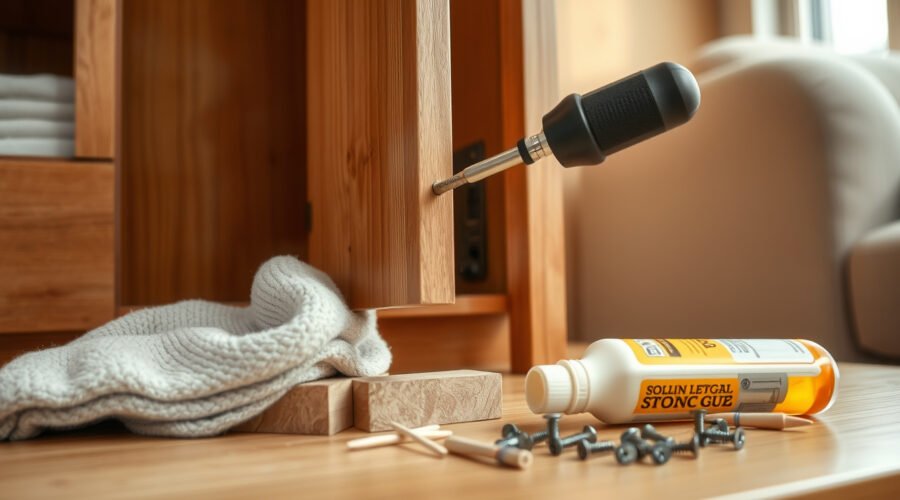
Loose cabinet doors on a living room built-in are usually caused by loose hinge screws, stripped screw holes, a shifted hinge plate, or a door that has sagged out of alignment. Start with the simplest fix first: support the door, tighten the hinge screws by hand, then adjust the hinge position until the gaps look even and the door closes smoothly.
Quick Answer
To fix loose cabinet doors, tighten the hinge screws, repair stripped screw holes with glued toothpicks or a wood dowel, then adjust the hinge for height, side gap, and depth. If the door still sags, the hinge, mounting plate, cabinet frame, or built-in structure may need professional repair.
Key Takeaways
- Tighten hinge screws first, but stop as soon as they feel snug so you do not strip the hole.
- Use glued toothpicks for a small stripped screw hole; use a wood dowel or plug for a badly damaged hole.
- Concealed hinges usually adjust in three directions: side-to-side, up-and-down, and in-and-out.
- Support the cabinet door while you work so the door weight does not pull harder on the hinge screws.
- Call a carpenter or cabinetmaker if the built-in is pulling from the wall, the frame is cracked, or the door keeps sagging after repair.
At a Glance
| Time Required | 10–20 minutes for tightening and adjustment; 30–60 minutes plus glue cure time for stripped-hole repair |
| Difficulty | Easy for loose screws; moderate if you need to drill and glue a dowel |
| Tools Needed | Phillips or flathead screwdriver, drill, drill bit, level, measuring tape, clamp or helper, wood glue, toothpicks or wood dowel, utility knife, replacement screws if needed |
| Cost | Usually under $10 if you already own basic tools; more if you need new hinges or professional repair |
Warning: Unload the shelf or cabinet before working. If the built-in moves, pulls away from the wall, cracks, or feels unstable, stop and call a carpenter. For freestanding furniture with drawers, doors, or shelves, follow anti-tip anchoring guidance from the U.S. Consumer Product Safety Commission’s Anchor It campaign.
What Causes Loose Cabinet Doors?
Before tightening anything, look at the door while it is open and closed. Most loose cabinet doors come from one of these problems:
- Loose hinge screws: The screw still grips, but it has backed out over time.
- Stripped screw holes: The screw spins without tightening because the wood fibers no longer hold it.
- Shifted hinge plate: The hinge or mounting plate has moved, causing uneven gaps.
- Bent or worn hinge hardware: The hinge is damaged, rusty, cracked, or no longer holds tension.
- Door or cabinet movement: A heavy door, warped wood, overloaded shelf, or loose built-in frame can pull the door out of alignment.
Note: If only one screw is loose, the fix may take a few minutes. If several screws spin freely or the cabinet frame is cracked, treat it as a structural repair, not just a hinge adjustment.
Essential Tools for Cabinet Door Repairs
You do not need a large tool collection for most loose cabinet door repairs. Gather the basics before you start so you can support the door and make small adjustments without rushing.
Recommended Products

1.【Combination List】6 pcs cabinet hinge repair plate set includes: 4 pcs large hinge repair plates (3.54*3.54 inches), 2 pcs small hinge repair plates (3.54*2 inches), 36 pcs self-tapping fixing screws.

1.【Combination List】8 pcs cabinet hinge repair plate set includes: 4 pcs large hinge repair plates (3.54*3.54 inches), 4 pcs small hinge repair plates (3.54*2 inches), 48 pcs self-tapping fixing screws. If you have any questions with product, please contact us freely.

Premium Material: These cabinet hinge repair plates are made of excellent stainless steel material with smooth surfaces and edges, which are corrosion and rust resistant, not easy to break, no burrs, sturdy and durable for long-term use.
Basic Tool List
- Screwdriver: Match the screw head. Most cabinet hinges use Phillips screws, but some use flathead, Pozidriv, Torx, or hex screws.
- Cordless drill: Helpful for pilot holes or dowel repairs, but use a screwdriver for final tightening so you can feel the screw bite.
- Level or straightedge: Helps check whether the door is sitting square.
- Measuring tape: Useful for checking even gaps between double doors.
- Clamp, wedge, or helper: Supports the door while you loosen or tighten hinge hardware.
- Wood glue: Used with toothpicks, wood plugs, or dowels to rebuild stripped holes.
- Toothpicks, wood matchsticks, or dowel: Adds fresh material for the screw to grip.
- Utility knife or flush-cut saw: Trims excess toothpick or dowel material after the glue sets.
- Replacement screws or hinges: Needed if the original screw is bent, rusty, too short, or no longer holds.
Safety Gear
Wear safety glasses if you drill, trim dowels, or work overhead. If sanding or drilling creates dust, keep the area ventilated and clean up dust with a vacuum or damp cloth. Wood dust can irritate the eyes, skin, and breathing passages, so avoid blowing dust into the room. For more detail on wood dust risks, see the Canadian Centre for Occupational Health and Safety’s wood dust guidance.
Step 1: Support the Door and Find the Loose Point
Open the cabinet door and place one hand under the outer edge. Gently lift and lower the door. Watch the hinge area closely:
- If the whole hinge moves, the hinge screws are loose.
- If one screw turns but does not tighten, the screw hole is stripped.
- If the hinge stays still but the door gap is uneven, the hinge needs adjustment.
- If the hinge is bent, cracked, or separating from the cup, replace the hinge.
For a heavy built-in door, support the bottom edge with a stack of books, a folded towel on a block, or a helper. The goal is to remove stress from the hinge screws while you work.
Step 2: Tighten Loose Screws the Right Way
Start with the screws that attach the hinge to the cabinet frame or mounting plate, then tighten the screws attached to the door. Use a hand screwdriver for the final turns.
- Hold the door in its correct position.
- Turn each loose screw clockwise until it feels snug.
- Stop as soon as the screw resists firm hand pressure.
- Close the door and check the gap.
- Open and close the door several times to test movement.
Pro Tip: Do not use a drill on full power to tighten hinge screws. A drill can strip the hole in seconds. Use the drill only for removing screws or making pilot holes, then finish by hand.
Step 3: Adjust the Hinge Alignment
If the screws are tight but the door still looks crooked, adjust the hinge. The correct method depends on the hinge style.
For Concealed or European-Style Hinges
Many modern built-ins use concealed hinges. These hinges often allow side, height, and depth adjustment. Blum’s official CLIP top BLUMOTION resources include adjustment guidance for side, height, and depth, which is a useful reference point for this hinge style: Blum hinge adjustment resources.
- Side adjustment: Moves the door left or right to even the vertical gap between double doors or between the door and frame.
- Height adjustment: Moves the door up or down so the top and bottom edges line up.
- Depth adjustment: Moves the door closer to or farther from the cabinet box so it sits flush when closed.
Make small turns, then close the door and check the result. A quarter-turn can make a visible difference. Adjust the top and bottom hinges together so the door does not twist.
For Exposed Butt or Surface Hinges
Older built-ins may use visible hinges. These do not usually have fine adjustment screws. To correct alignment:
- Loosen the hinge screws slightly while supporting the door.
- Shift the door into position by hand.
- Tighten the top hinge first, then the lower hinge.
- If the door still sags, remove one screw at a time and repair the hole before tightening again.
If an exposed hinge is bent, replacement is usually better than trying to bend it back. A distorted hinge can keep pulling the door out of alignment.
Step 4: Fix Stripped Screw Holes With Toothpicks
The toothpick method works well for a small stripped screw hole where the surrounding wood is still solid. It gives the screw fresh wood fibers to bite into.
- Remove the loose screw.
- Dip two or three wooden toothpicks in wood glue.
- Push the toothpicks firmly into the stripped hole.
- Snap or trim the toothpicks flush with the surface.
- Let the glue cure according to the glue label.
- Reinstall the screw by hand and stop when it is snug.
This is a quick fix, but it is not the strongest option for a heavy door or a hole that has failed more than once.
Step 5: Use a Dowel for a Stronger Stripped-Hole Repair
If the screw hole is oversized, crumbly, or in particleboard, use a glued wood dowel or plug instead of toothpicks.
- Remove the hinge screw and move the hinge aside.
- Choose a drill bit that matches the dowel diameter.
- Drill the damaged hole clean and straight, being careful not to drill through the door or cabinet side.
- Coat a wood dowel with wood glue and tap it into the hole.
- Trim it flush once the glue cures.
- Drill a small pilot hole in the center of the dowel.
- Reattach the hinge screw by hand.
A dowel repair is better when the hinge carries a heavy door or when a screw has already failed after a toothpick repair.
Recommended Products
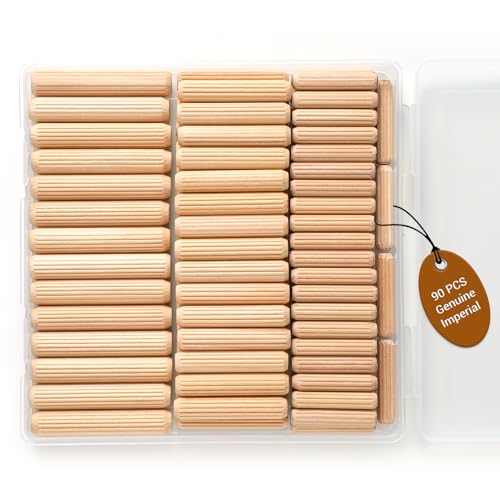
Imperial Diameters: These wood dowels feature true imperial sizes, working perfectly with self-centering dowel jigs and 1/4", 5/16", and 3/8" imperial drill bits, with no approximate metric equivalents. These are common standard sizes for furniture dowels, each with a distinct length: 3/8" × 1 31/32", 5/16" × 1 9/16", and 1/4" × 1 3/16"

COMPLETE KIT WITH MATCHED DRILL BIT – NO MORE LOOSE FITTINGS: Unlike bare dowel pins sold elsewhere, our kit includes a precision-matched drill bit custom-calibrated to the exact dowel size. Standard drill bits create oversized holes that cause wobbling and looseness—a top complaint about competitors. Our bit delivers a snug press-fit every time, with zero guesswork. Just drill, insert, and enjoy a rock-solid hold that stays tight for good.

ALLECIN Fluted Wooden Dowel Set - Includes 1/4 x 1-3/16Inch & 1/4 x 1-1/2Inch & 1/4 x 2Inch & 5/16 x 1-3/16Inch & 5/16 x 1-1/2Inch & 5/16 x 2Inch & 3/8 x 1-1/2Inch & 3/8 x 2Inch.
Propping Up Your Shelf During Repairs
If the loose door is on a living room built-in with shelves above or beside it, remove heavy items before you work. Use a stable block, stack of books, or adjustable support to hold the door at the correct height while you tighten or adjust the hinge.
Make sure the prop is level and does not press against glass, trim, or a finished surface that could dent. Keep the support in place until all screws are snug and the door opens and closes smoothly.
Recommended Products
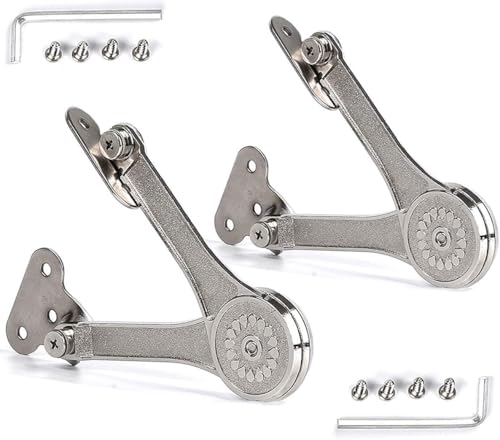
●These support hinges are well made and designed to support the lids of box, such as mini toy box, cabinet,closet,wardrobe lids, the enhanced version has the advantages of strong bearing capacity.
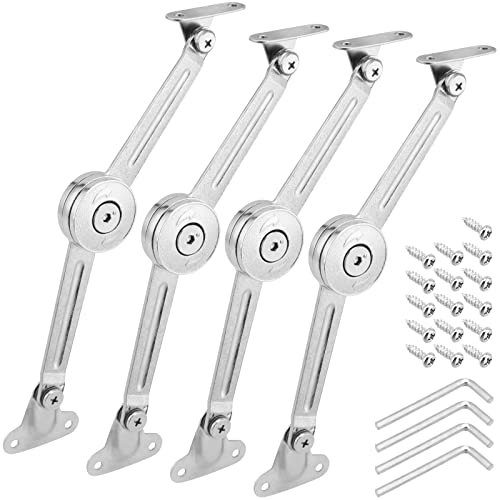
ALL-METAL MATERIAL - Made of premium quality zinc alloy, the lift and up hinges are heavy-duty, durable and have a matte silver finish against rust. When used in one pair, they can hold up to 44lbs. Strong to hold the lids of toy boxes, cabinets, closets, wardrobes, etc.

✨ 2-In-1 Full-Length Mirror & Hidden Jewelry Storage: This sleek jewelry cabinet doubles as a crystal-clear full-length mirror and a secret storage organizer. Check your outfit from head to toe while keeping all your accessories neatly tucked away—no more cluttered dressers or lost jewelry! The minimalist design adds a modern touch to any bedroom, dressing room, or entryway, saving you valuable floor space.
Troubleshooting Loose Cabinet Doors
| Problem | Likely Cause | Best Fix |
| Door sags at the handle side | Loose top hinge or stripped top screw | Support the door, tighten the top hinge, and repair stripped holes if needed |
| Door rubs the frame | Side or height alignment is off | Adjust concealed hinge screws or reposition exposed hinges |
| Screw spins but will not tighten | Stripped screw hole | Use glued toothpicks for a small hole or a dowel for a stronger repair |
| Door will not sit flush | Depth adjustment is off or hinge is bent | Adjust hinge depth or replace damaged hinge hardware |
| Door keeps loosening after repair | Heavy door, damaged frame, wrong screws, or failing hinge | Use a dowel repair, replace hardware, or call a cabinetmaker |
Keep an Eye on Stability After Adjustments
After the repair, open and close the cabinet door several times. The door should swing smoothly, close evenly, and stay aligned with nearby doors or trim.
Check the screws again after a few days of normal use. If one screw loosens again, repair the hole instead of simply tightening it harder. Repeated over-tightening can make the hole worse.
- Keep heavy items evenly distributed on shelves.
- Avoid letting children hang or climb on cabinet doors.
- Wipe hinges clean if dust or debris builds up.
- Replace rusty, bent, or cracked hinges promptly.
- Use the correct screw length so the screw grips firmly without poking through the door or frame.
When to Call a Professional for Cabinet Repairs
Most loose cabinet doors are easy to fix, but some problems need a cabinetmaker, carpenter, or handyman. Call a professional if:
- The built-in is pulling away from the wall.
- The cabinet frame, stile, or hinge area is cracked.
- The door is warped or too heavy for the existing hinges.
- Several hinge screws have stripped in particleboard or MDF.
- The hinge cup is loose, broken, or drilled out.
- The door still sags after tightening, adjustment, and hole repair.
- The cabinet has custom, concealed, or specialty hardware you cannot identify.
A professional can reinforce the frame, replace the correct hinge type, redrill damaged mounting points, or rebuild the hinge area without causing more visible damage to the built-in.
Frequently Asked Questions
How do you fix saggy cabinet doors?
Support the door, tighten the top hinge screws first, then adjust the hinge until the top and side gaps are even. If a screw spins without tightening, repair the stripped hole with glued toothpicks or a dowel before reinstalling the screw.
Can I use longer screws to fix a loose cabinet door?
Sometimes, but only if the longer screw will not poke through the cabinet side, door, or face frame. A longer screw is not a good fix for weak, crumbling, or oversized holes. In those cases, rebuild the hole with a dowel or wood plug.
Why does my cabinet door keep coming loose?
The screw hole may be stripped, the hinge may be worn, the door may be too heavy, or the cabinet frame may be damaged. If the same screw loosens repeatedly, repair the hole instead of tightening it again and again.
Should I replace the hinge or repair the screw hole?
Repair the screw hole if the hinge is straight and works smoothly. Replace the hinge if it is bent, cracked, rusty, loose at the pin, or no longer closes correctly after adjustment.
Conclusion
Fixing loose cabinet doors usually starts with a simple screwdriver check. Tighten the hinge screws, repair any stripped holes, and adjust the hinge so the door sits square with even gaps. For a small stripped hole, glued toothpicks can work well. For a heavy built-in door or a badly damaged hole, a glued dowel is the stronger repair.
If the door keeps sagging, the hinge area is cracked, or the built-in itself feels unstable, do not force the repair. A carpenter or cabinetmaker can reinforce the structure, replace damaged hardware, and protect the finished look of your built-in.
Sources
- Blum CLIP top BLUMOTION Downloads & Videos — supports concealed hinge side, height, and depth adjustment guidance.
- U.S. CPSC Anchor It Campaign — supports safety guidance for furniture with drawers, doors, and shelves.
- Canadian Centre for Occupational Health and Safety: Wood Dust — supports dust-safety guidance when drilling, sanding, or trimming wood.






[…] How to Fix Loose Cabinet Doors on a Living Room Built-In: Step-by-Step Guide […]