Best Small Efficient Dehumidifiers for Compact Spaces in 2026
Updated for 2026: This guide compares compact dehumidifiers for bedrooms, bathrooms, closets, RVs, cars, basements, and other small spaces where damp air, musty odors, or condensation can become annoying fast.
You can pick a small efficient dehumidifier in 2026 by matching the unit to your space, moisture level, noise needs, and tank size. For tiny areas, the Eva-Dry E-333 makes sense because it is cordless, compact, and easy to place in closets, cars, cabinets, or bathrooms. If you want plug-in moisture control for a bedroom, office, RV, or small basement, NovaLivin, Deyagoo, BEDRED, NeedDuck, and the 98 OZ compact models give you more tank capacity, quiet modes, and auto shut-off protection.
The best choice depends on how much moisture you need to remove. A silica-gel mini model is useful for enclosed storage spaces, but it will not dry a wet basement. A plug-in semiconductor dehumidifier can handle more daily moisture, but it still works best in smaller areas rather than whole-home humidity problems. Use the guide below to compare coverage, tank size, quiet operation, portability, and the best use case before you choose.
Quick Verdict
If you want the safest buying path, choose a plug-in model for rooms where you can smell dampness or see condensation. Choose a cordless silica-gel model only for small enclosed spaces, such as closets, cars, cabinets, and storage bins. For most small rooms, the best value comes from a quiet plug-in unit with auto shut-off, a visible tank, and a realistic daily moisture-removal rating.
Quick Picks
- Best cordless option: Eva-Dry E-333 Wireless Mini Dehumidifier for closets, cars, cabinets, boats, and gym bags.
- Best auto humidity control: NovaLivin DH-CS02 for buyers who want a digital display, auto mode, and timer settings.
- Best larger-tank compact option: BEDRED 95OZ Home Dehumidifier for bedrooms, RVs, basements, and small to medium rooms.
- Best low-energy small-room option: Deyagoo DY501 for quiet daily moisture control in bedrooms, closets, bathrooms, and RVs.
Small Efficient Dehumidifier Comparison Table
Use this table to compare the main differences before reading the full product notes. Capacity and coverage claims are based on the product details provided in the article.
| Product | Best For | Key Feature | CTA |
|---|---|---|---|
| NovaLivin DH-CS02 Home Dehumidifier | Small rooms, bathrooms, RVs, closets | Auto humidity mode and digital display | Check Price on Amazon |
| BEDRED 95OZ Home Dehumidifier CT11 | Bedrooms, RVs, basements | 95 oz tank, sleep mode, and auto shut-off | Check Price on Amazon |
| Deyagoo DY501 Small Dehumidifier | Bedrooms, closets, bathrooms, RVs | Low-energy 1500ml tank with 30 dB operation | Check Price on Amazon |
| 98 OZ Small Dehumidifier for Home | Bedrooms, bathrooms, closets, RVs | 2.5L tank, continuous drainage, and sleep mode | Check Price on Amazon |
| Eva-Dry Wireless Mini Dehumidifier E-333 | Closets, cars, cabinets, boats, gym bags | Cordless silica gel design with 5-year warranty | Check Price on Amazon |
| NeedDuck B-2 Quiet Portable Home Dehumidifier | Small rooms, bedrooms, basements | 44 oz tank with sleep, auto, and performance modes | Check Price on Amazon |
How We Chose These Small Efficient Dehumidifiers
For this roundup, the main focus is compact moisture control. That means each product had to fit the broad use case of small-space dehumidifying, such as a bedroom, bathroom, closet, RV, car, cabinet, basement corner, or storage area. We also looked for practical buyer features like auto shut-off, quiet or sleep modes, visible water tanks, rechargeable moisture beads, timer settings, handles, and easy placement.
Because small dehumidifiers vary widely in power, this guide separates tiny cordless moisture absorbers from plug-in units with water tanks. A cordless silica-gel model is better for enclosed spaces, while a plug-in model is better when you need daily water collection from the air.
Before You Buy Checklist
- Measure the space: A compact unit works best in enclosed or semi-enclosed areas, not large open rooms.
- Check the daily removal rate: Tank size alone does not tell you how quickly a unit can dry the air.
- Match the model to the problem: Use cordless silica gel for light storage moisture and plug-in models for active room moisture.
- Think about placement: Leave space around the air intake and place the unit on a stable, level surface.
- Plan maintenance: Empty and clean the tank often so the unit stays fresh and safe to use.
Home Dehumidifier with Auto Humidity Control, Digital Display
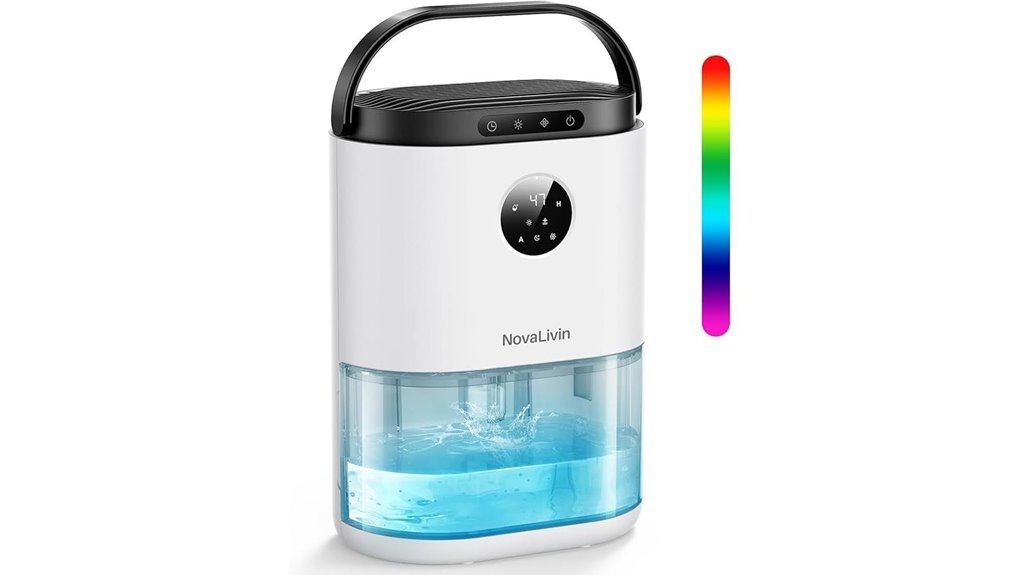
Best Auto-Control Pick
If you want hands-off humidity control in a small space, NovaLivin’s DH-CS02 fits well. You get auto mode that keeps humidity under 50% RH, plus a digital display that makes settings easy to read. The compact 5.75 x 8.86 x 12.13-inch body fits bathrooms, RVs, and other tight spots, while the 68-ounce tank covers up to 320 square feet. You can choose strong, sleep, or timed operation for 8, 12, 24, or 48 hours. It removes up to 34 ounces a day and shuts off when full.
Why You’ll Like It: This model is a better fit if you do not want to guess whether the air feels dry enough. The display, auto mode, and timer options make it easier to manage a small bathroom, RV, closet, or compact bedroom without constant checking.
Best For: People who need a compact, easy-to-use dehumidifier for small spaces like bathrooms, RVs, or closets, with automatic humidity control and quiet nighttime operation.
Why it works: The auto mode and display make it easier to manage humidity without guessing. The timer settings also help if you only want the unit running during certain parts of the day.
Who should skip it: Skip it if you want a heavy-duty basement dehumidifier or a whole-home humidity solution.
Pros:
- Auto mode helps maintain humidity below 50% RH with minimal effort.
- Compact size and 68-ounce tank make it suitable for tight spaces and up to 320 square feet.
- Offers flexible operation with strong, sleep, and timed modes plus auto shutoff when full.
Cons:
- The 68-ounce tank may need frequent emptying in more humid conditions.
- Best suited for small areas, so it may not be enough for larger rooms.
- Dehumidification capacity is modest compared with larger-capacity units.
Bottom Line: Choose the NovaLivin DH-CS02 if you want more control than a basic one-button unit gives you, especially for a bathroom, RV, closet, or small room.
95OZ Home Dehumidifier with Auto Shut Off
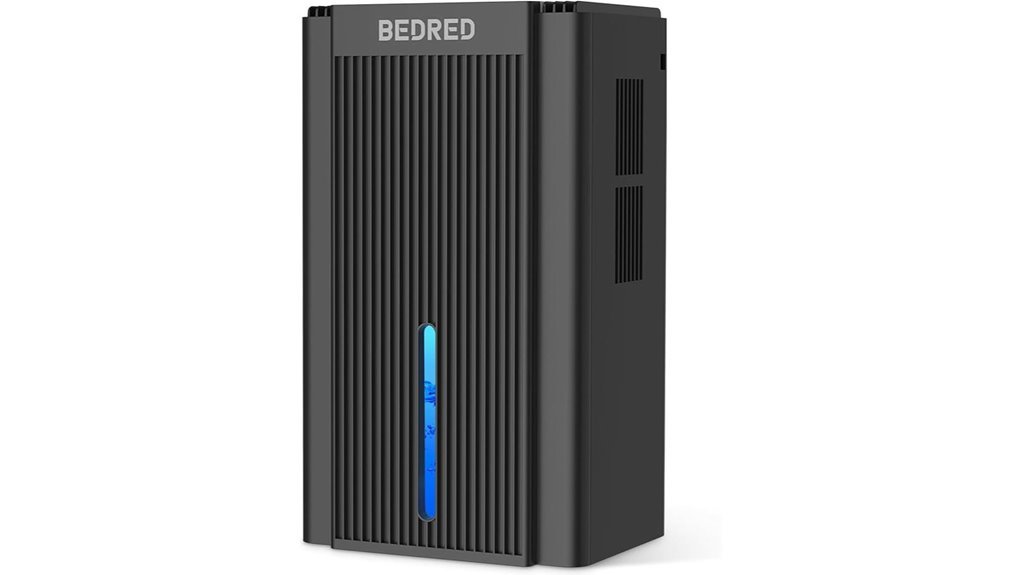
Best Larger-Tank Compact Pick
Need a small dehumidifier for a bedroom, RV, or basement? The 95OZ Home Dehumidifier with Auto Shut Off gives you compact moisture control with thermoelectric cooling and a 95-fluid-ounce tank. You can use it in spaces up to 1,000 square feet, and its sleek polypropylene body fits neatly into your room. When the tank fills, it powers down automatically, so you don’t have to worry about overflow. You also get a 7-color ambient light, sleep mode, and quieter operation for nighttime comfort. BEDRED includes the tank and supports model CT11.
Why You’ll Like It: The larger tank helps reduce how often you need to empty the unit compared with many smaller tabletop options. It is a practical choice if you want a compact model that still feels convenient for everyday room use.
Best For: People who want a compact, easy-to-use dehumidifier for bedrooms, RVs, basements, or other small to medium spaces up to 1,000 square feet.
Why it works: The larger 95 oz tank is helpful if you do not want to empty a compact dehumidifier as often. Sleep mode and auto shut-off also make it easier to run overnight.
Who should skip it: Skip it if your basement has major water intrusion, visible leaks, or humidity problems that need a full-size compressor dehumidifier.
Pros:
- Automatic shutoff helps prevent overflow when the tank is full.
- Compact thermoelectric design fits well in bedrooms, RVs, and other tight spaces.
- Sleep mode and 7-color ambient lighting add convenience and customizable comfort.
Cons:
- Best suited for smaller areas rather than large, heavy-duty moisture problems.
- Intermittent operation may not be ideal for users wanting constant dehumidification.
- The 95-ounce tank may still require regular emptying in humid environments.
Bottom Line: The BEDRED 95OZ model is best for buyers who want a compact dehumidifier with a larger tank, simple overflow protection, and bedroom-friendly features.
Small Dehumidifier for Home, Bedroom, RV, Closet
Best Low-Energy Pick
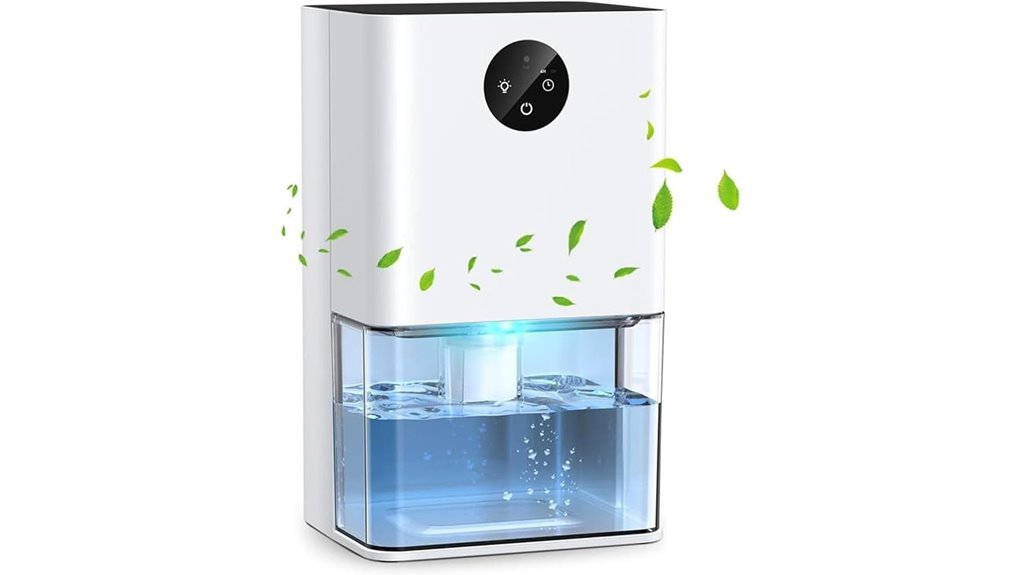
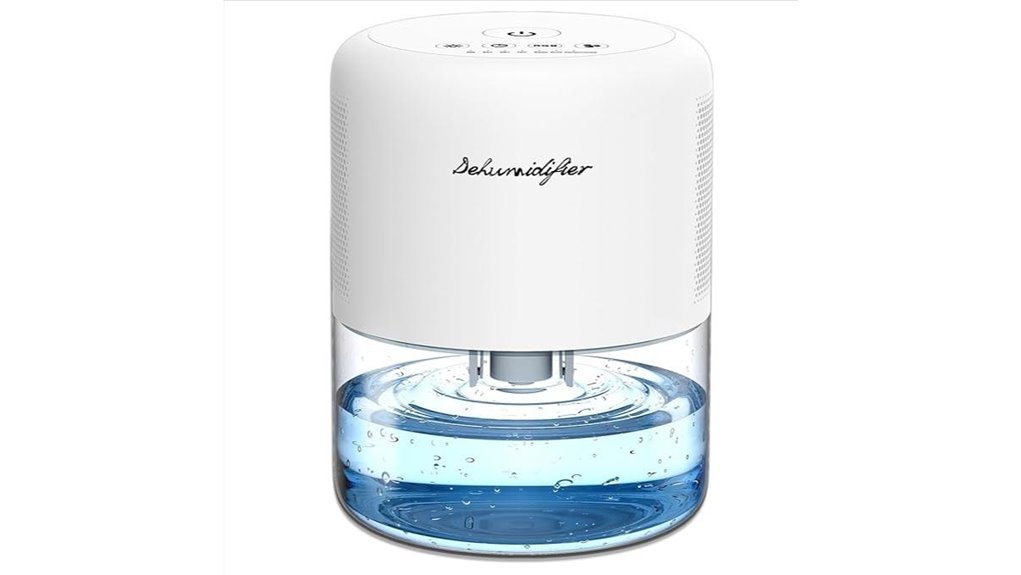
The Deyagoo DY501 suits you best if you want quiet, low-energy moisture control in small spaces. You can use its 1500ml tank in a bedroom, closet, bathroom, or RV without much hassle. It covers up to 300 sq. ft. and removes as much as 300ml of moisture in 24 hours while using no more than 1 kWh daily. At 30 dB, it won’t disturb sleep. The transparent tank helps you track water level, and auto shutoff protects against overflow. Its compact 5.91 x 4.72 x 9.84-inch body makes placement easy.
Why You’ll Like It: This model is for buyers who want a simple daily-use dehumidifier that will not take over the room. The visible tank makes maintenance easier, and the quiet operation helps it fit into bedrooms, offices, closets, and RV spaces.
Best For: People who want a quiet, energy-efficient dehumidifier for small spaces like bedrooms, closets, bathrooms, or RVs.
Why it works: This model is useful when you care about energy use, simple water-level monitoring, and quiet daily operation. The transparent tank is especially practical because you can see when it needs emptying.
Who should skip it: Skip it if you need faster drying performance or a model designed for a large, wet room.
Pros:
- Ultra-quiet 30 dB operation is ideal for sleeping or working.
- 1500ml transparent tank with auto shutoff helps prevent overflow and makes water monitoring easy.
- Compact design and low daily energy use make it practical for small rooms.
Cons:
- Only covers up to 300 sq. ft., so it’s not suitable for larger areas.
- Dehumidification capacity is limited to 300ml per day, which may be modest in very damp spaces.
- Not compatible with smart home systems.
Bottom Line: The Deyagoo DY501 is a good fit if you want a compact, quiet, low-energy dehumidifier for routine moisture control in smaller rooms.
98 OZ Small Dehumidifier for Home, Quiet
Best Continuous Drain Option
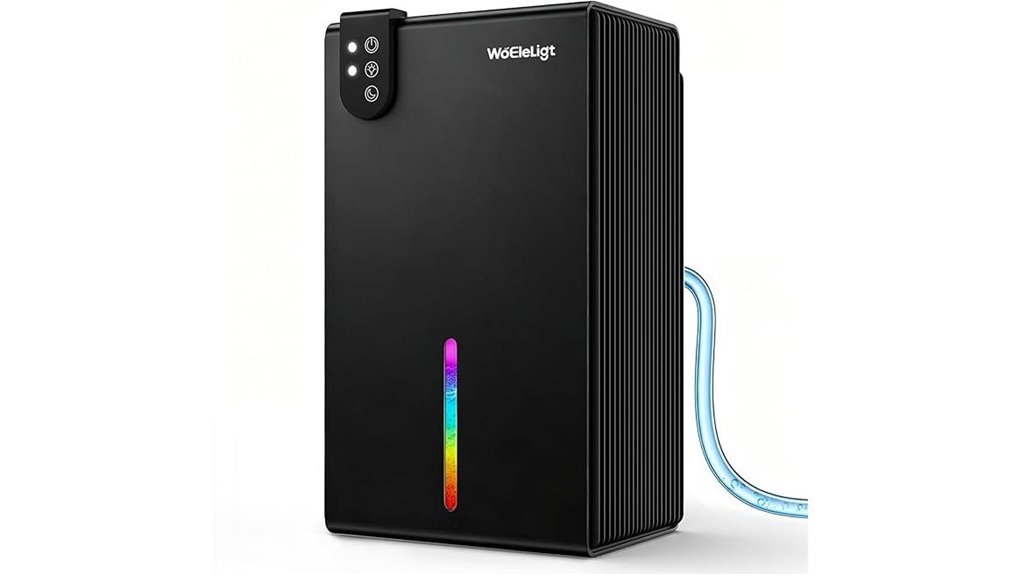
Quiet bedrooms and compact spaces get a strong match with the 98 OZ Small Dehumidifier, which covers up to 1,000 sq. ft. You can use its dual-core semiconductor system to pull up to 1 liter of moisture a day, and switch to high-power mode when dampness builds fast. In sleep mode, it runs under 30 dB, so it won’t disturb you. The 2.5L tank shuts off automatically with a red light when full, and you can drain it continuously with the hose. Its 7-color LED night light adds a calm glow, and its 5.5-pound frame moves easily.
Why You’ll Like It: The drain hose option is the key advantage here. If you can place the unit near a safe drain point, you may not need to empty the tank as often, which makes it more convenient for regular use.
Best For: People who want a quiet, compact dehumidifier for bedrooms, bathrooms, closets, RVs, or other small indoor spaces up to 1,000 sq. ft.
Why it works: The continuous drainage option is helpful if you do not want to rely only on the tank. The dual-core semiconductor design and high-power mode also make it a stronger option than many tiny tabletop units.
Who should skip it: Skip it if you need verified heavy-duty performance for a wet basement, crawl space, or large open floor plan.
Pros:
- Covers up to 1,000 sq. ft. while staying compact and lightweight.
- Operates under 30 dB in sleep mode for quieter use at night.
- Includes auto shut-off, continuous drainage, and a 7-color LED night light.
Cons:
- 1 liter per day capacity may be limited for very damp or large spaces.
- The 2.5L tank still requires manual emptying if not using the drain hose.
- Best suited for small indoor areas rather than heavy-duty moisture removal.
Bottom Line: This 98 OZ model is worth considering if you want a larger tank, quiet sleep mode, and continuous drainage in a still-compact package.
Eva-Dry Wireless Mini Dehumidifier, White (E-333)
Best Cordless Closet Pick
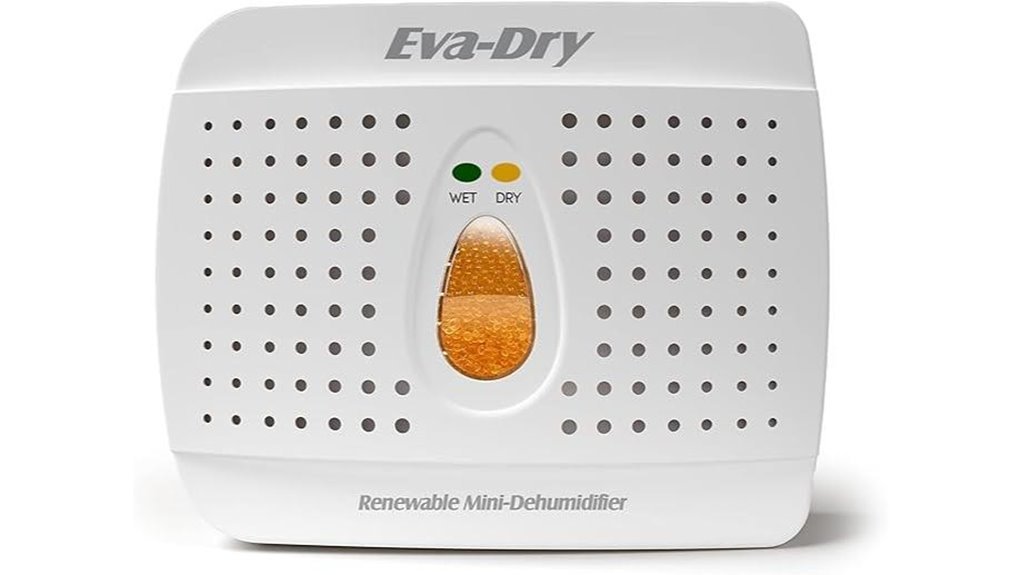
If you need a cordless dehumidifier for tight spaces, the Eva-Dry E-333 fits well. You can tuck it in a closet, car, cabinet, boat, or gym bag thanks to its slim 6.25 x 1.25 x 4.75-inch design. It covers up to 333 cubic feet and uses non-toxic silica gel to absorb moisture without spills or mess. The color-changing beads tell you when to recharge it, usually after 20 to 30 days. You’ll also like that it’s child- and pet-safe, works continuously, and comes with a 5-year warranty.
Why You’ll Like It: This is one of the easiest options to use because it has no tank to spill, no cord to place, and no fan noise. It is best for small enclosed spaces where you want slow, steady moisture absorption.
Best For: People who need a compact, cordless dehumidifier for small enclosed spaces like closets, cars, cabinets, boats, or gym bags.
Why it works: This is one of the easiest options to place because it does not need a power cord while absorbing moisture. The recharge indicator also helps you know when it is time to refresh the beads.
Who should skip it: Skip it if you need a dehumidifier with a water tank, fan, digital controls, or active daily moisture removal.
Pros:
- Cordless and portable, making it easy to place in tight spaces without outlets or batteries.
- Uses non-toxic silica gel and is child- and pet-safe.
- Recharge indicator beads and a long 5-year warranty add convenience and peace of mind.
Cons:
- Best only for small areas, with coverage limited to up to 333 cubic feet.
- Low dehumidification capacity may not be enough for heavier moisture problems.
- Requires periodic recharging rather than offering continuous plug-in operation.
Bottom Line: The Eva-Dry E-333 is best for enclosed storage areas, cars, cabinets, and closets where you want a no-spill, cordless moisture absorber.
Quiet Portable Home Dehumidifier with 44oz Tank
Best Mode Selection Pick
NeedDuck’s B-2 suits you best when you want quiet, steady moisture control in a small room. You get a 44 oz tank, 215-square-foot coverage, and a compact 5.91 x 8.46-inch body that fits easily on a shelf or floor. Its 28-watt design helps you save energy while reducing start-stop noise. Choose Sleep, Auto, or Performance mode to match your space. Use the 4 timer settings to cut waste, and let auto shut-off and auto defrost protect the unit. The color lights add a little style, too.
Why You’ll Like It: The three modes make it easier to match the unit to your day. Use performance mode when moisture feels worse, auto mode for daily control, and sleep mode when you want quieter operation overnight.
Best For: People who want a quiet, compact dehumidifier for a small room, basement, or bedroom with easy controls and low energy use.
Why it works: The three modes make it easier to balance drying power, noise, and runtime. Auto defrost is also useful if your small space runs cooler than a typical bedroom.
Who should skip it: Skip it if you want a larger tank, continuous drain hose, or enough power for a large damp basement.
Pros:
- Quiet, steady moisture control with 3 smart modes for different room needs.
- Compact and lightweight with 215-square-foot coverage and a 44 oz tank.
- Helpful extras like auto shut-off, auto defrost, timer settings, and color lights.
Cons:
- Best suited for small spaces, so it may be too limited for larger rooms.
- The 44 oz tank may need frequent emptying in more humid conditions.
- Plastic build and basic feature set may feel less premium than higher-end units.
Bottom Line: The NeedDuck B-2 is a good match for small rooms where you want simple modes, low energy use, and quiet everyday operation.
Factors to Consider When Choosing a Small Efficient Dehumidifier
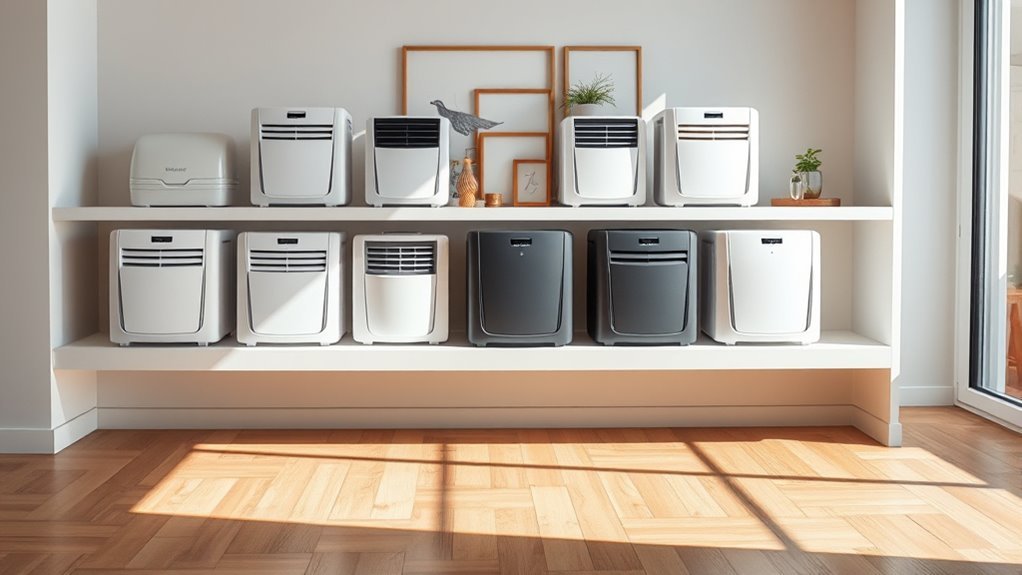
When you choose a small efficient dehumidifier, check its moisture removal capacity and make sure it matches the room coverage area you need. You should also look at energy consumption and noise level so it works well without raising your bills or disturbing you. Don’t forget tank capacity, since a larger tank means you’ll empty it less often.
Buyer tip: Do not rely on room coverage alone. A small unit that claims a wide coverage area may still remove water slowly if the room is cold, open, or very damp. Match the daily moisture removal rate to your actual problem.
Safety note: A dehumidifier can help reduce moisture, but it should not be used as the only fix for leaks, standing water, damaged walls, or visible mold. Fix the source of moisture first, keep the unit on a stable surface, and clean the tank regularly.
Moisture Removal Capacity
Moisture removal capacity tells you how much water a dehumidifier can pull from the air each day, so you can match the unit to your space and humidity level. You’ll usually see this rated in pints, ounces, milliliters, or liters per day. A tiny unit that removes about 0.18 pints daily can handle closets, cars, or other very small spots. If you’re dealing with heavier dampness, look for models that remove up to 34 ounces a day or more. These work better in bathrooms, bedrooms, RVs, or basement corners. Performance also depends on temperature and relative humidity, so you’ll get the best results in warm, humid conditions. Check tank size too, since a 68-fluid-ounce tank lets you run longer before emptying.
Room Coverage Area
After you’ve matched moisture removal capacity to your needs, the next thing to check is room coverage area. Small plug-in dehumidifiers in this guide cover about 215 to 1,000 square feet, so you need to match the unit to your space. For bathrooms, closets, cars, cabinets, and other tight spots, a compact model can work well. For living rooms or basements, pick a larger unit built for open areas. Check that daily capacity fits the room, whether that’s 0.3 liters per day for a small area or up to 34 ounces for a bigger one. Also consider the dehumidifier’s size and weight, since they affect where you can place it. Higher airflow can help it dry larger rooms faster too.
Energy Consumption
Energy consumption is another key factor to check, since small dehumidifiers typically use about 0.55 to 1.3 kWh per day depending on the model and conditions. You should compare this figure with your room size and humidity level, because a unit that works harder will draw more power. Efficient models use features like semiconductor condensation to remove moisture while limiting waste. If you want lower operating costs, look for sleep, quiet, timer, or auto modes that scale back performance when full power isn’t needed. Bigger coverage areas usually mean higher energy use, so choose only the capacity you actually need. By matching output to your space, you can keep humidity under control without paying more than necessary for electricity.
Noise Level
Noise matters just as much as power use when you’re choosing a small efficient dehumidifier. You’ll want to check decibel ratings before you buy, because small models can range from quiet under-30 dB units to louder ones that may become distracting in tight spaces. If you plan to run the unit in a bedroom, nursery, or office, aim for a model around or below 30 dB so it won’t intrude on sleep or concentration. Many compact dehumidifiers include Sleep Mode, which trims fan noise even further for overnight use. Quieter designs often reflect more careful engineering for steady moisture removal, so you don’t have to trade comfort for performance. Always compare the listed noise specs, then choose the quietest option that still fits your needs and your space.
Tank Capacity
Tank capacity can make a big difference in how convenient a small dehumidifier feels day to day, since these units typically hold anywhere from 6 to 95 fluid ounces. If you choose a larger tank, around 68 ounces or more, you’ll collect more moisture before emptying it, which helps in bigger rooms or damp areas. A smaller tank, near 30 ounces, keeps the unit lighter and easier to move, but you’ll need to check it more often. Match the tank size to your space: larger tanks work better in areas over 300 square feet, while compact models suit smaller rooms. You should also compare capacity with the moisture removal rate so the unit can handle humidity efficiently without filling too quickly.
Auto Shut-Off
Auto shut-off is a useful safety feature because it stops the dehumidifier when the tank reaches capacity, preventing overflow and keeping operation worry-free. You’ll appreciate this feature when you don’t want to check the tank constantly. Many models also add a full-tank indicator light, so you get a clear alert before the unit stops. That makes routine maintenance simpler and helps you empty the tank on time. Auto shut-off also saves energy because the unit won’t keep running after it’s no longer needed. By preventing overfilling and misoperation, it helps protect internal components and extend the device’s life. With this safeguard in place, you can run your dehumidifier with more confidence and less worry.
Portability Features
Portability matters a lot when you’re choosing a small efficient dehumidifier, especially if you plan to move it between rooms or use it in tight spots. Look for a lightweight unit that you can lift easily without strain. Compact dimensions help you fit it in closets, bathrooms, or other tight spaces. A built-in handle or lightweight body makes carrying simpler, while a detachable tank lets you empty and clean it fast. If you need extra flexibility, choose a model with hanging hooks or mounting options. Those features save floor space and let you place the dehumidifier where moisture builds up most.
Operating Modes
When you choose a small efficient dehumidifier, its operating modes can make a big difference in how well it fits your routine. You can use High Power Mode when you need fast moisture removal, then switch to Sleep Mode at night to keep noise low. Auto Mode helps you hold humidity near 50% relative humidity, so you don’t have to keep adjusting settings. If your space needs flexibility, look for Efficient Mode and Quiet Mode; the latter can run below 30 dB for less disruption. Timers of 8, 12, 24, or 48 hours let you control runtime and save energy. In cooler rooms, Auto Defrost helps prevent frost buildup and keeps performance steady.
Cordless vs. Plug-In Small Dehumidifiers
A cordless mini dehumidifier is best for closets, cars, cabinets, gun safes, boats, and storage bins where you only need slow moisture absorption. These models usually use silica gel beads and must be recharged once the indicator changes color. A plug-in small dehumidifier is better for bedrooms, bathrooms, RVs, offices, and basement corners because it actively pulls moisture into a water tank. If the space has a musty smell or visible condensation, a plug-in unit usually makes more sense.
Where Small Dehumidifiers Work Best
Small dehumidifiers work best in enclosed or semi-enclosed spaces. Good use cases include bathrooms after showers, closets with musty odors, RV sleeping areas, small bedrooms, cabinets, laundry corners, and cars parked in humid climates. They are less useful in open floor plans, crawl spaces, or basements with water intrusion. If you can see standing water, peeling paint, or active leaks, fix the moisture source first before relying on any dehumidifier.
Frequently Asked Questions
How Do I Know if I Need a Dehumidifier Year-Round?
If you notice persistent dampness, musty odors, mold, condensation, or allergy flare-ups, you’ll likely need one year-round. Check indoor humidity with a meter; if it stays above 50%, you should run a dehumidifier regularly.
Can Small Dehumidifiers Help Prevent Mold Growth?
Yes, a small dehumidifier can help prevent mold by lowering humidity in compact spaces. You still need to fix leaks, improve airflow, and keep surfaces dry because moisture problems usually come from more than one source.
How Often Should I Clean a Dehumidifier Tank?
You should clean your dehumidifier tank weekly, and sooner if you notice slime, odor, or visible buildup. Empty it after each use, wash it with mild soap, and dry it completely to help prevent mold and bacteria.
Do Small Dehumidifiers Increase Electricity Bills Much?
Small dehumidifiers usually add only a modest amount to your electricity bill, especially compared with larger compressor units. Constant use costs more, so choose the right size and use sleep, timer, or auto modes when available.
What Humidity Level Is Best for Indoor Comfort?
You’ll feel most comfortable when you keep indoor humidity around 30% to 50%, with many homes feeling best near 40% to 45%. This range helps reduce stuffiness, mold risk, and dry-air discomfort.
Are Small Dehumidifiers Good for Basements?
A small dehumidifier can help with a basement corner, storage shelf, or lightly damp room, but it is not the best answer for a wet basement. If your basement has standing water, leaks, or heavy humidity, you’ll usually need a larger compressor dehumidifier and moisture repairs.
Can I Run a Small Dehumidifier Overnight?
You can run many small dehumidifiers overnight if they include auto shut-off and are placed on a stable surface. For bedrooms, choose a model with sleep mode or a noise rating under 30 dB so it does not disturb rest.
What Size Small Dehumidifier Do I Need?
For closets, cars, and cabinets, a rechargeable silica-gel unit may be enough. For bedrooms, bathrooms, RVs, or small basements, choose a plug-in model with a water tank and daily moisture removal rating that fits your room size and humidity level.
Final Recommendation
For more control, the NovaLivin DH-CS02 gives you auto humidity settings and a display. For fewer tank checks, the BEDRED 95OZ and 98 OZ compact models are stronger choices. For closets, cars, cabinets, and storage areas, the Eva-Dry E-333 is easier to place because it is cordless.
Conclusion
Choosing the right small dehumidifier is easier when you match the unit to the space instead of buying only by tank size or coverage claims. For closets, cars, and cabinets, a cordless moisture absorber such as the Eva-Dry E-333 is simple and low-maintenance. For bedrooms, bathrooms, RVs, offices, and small basement areas, a plug-in model with auto shut-off, quiet mode, and enough tank capacity will usually be the better choice.
If you want the simplest buying path, choose the NovaLivin DH-CS02 for auto humidity control, the BEDRED 95OZ model for a larger tank, or the Deyagoo DY501 for low-energy daily use. The right small efficient dehumidifier should make your space feel fresher, reduce damp odors, and help you keep moisture under control without taking up much room.