5 Best Small Electric Dehumidifiers for Compact Spaces in 2026
Affiliate disclosure: This article contains Amazon affiliate links. If you buy through these links, we may earn a commission at no extra cost to you.
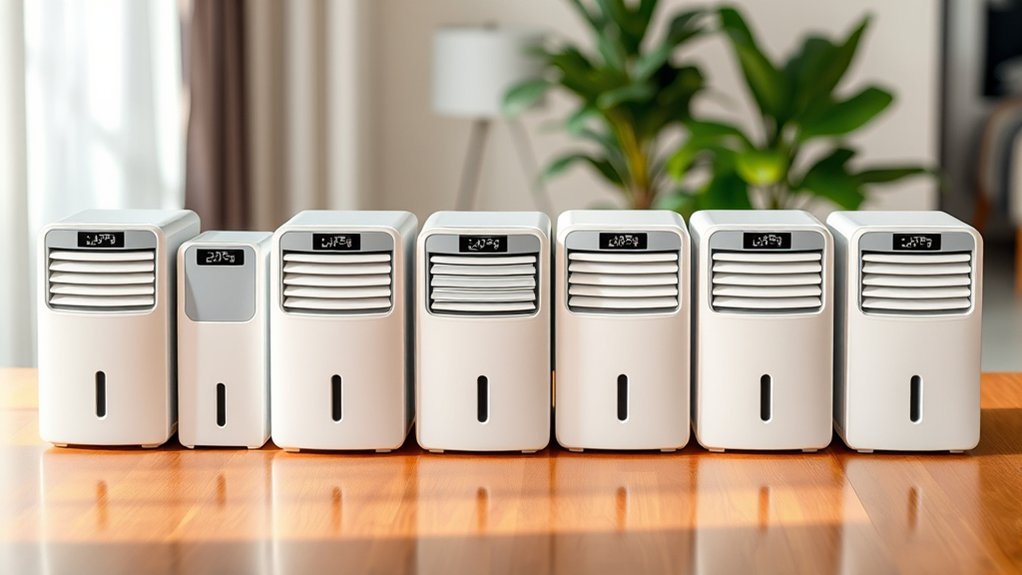
If damp air, musty smells, condensation, or rust are becoming a problem in a small space, a small electric dehumidifier can help you control moisture without buying a large basement unit. For 2026, you’ve got five strong compact options to compare: the Gun Safe Electric Dehumidifier with Built-In Fan, a color-light home unit with timers, a quiet 44oz model, the Eva-Dry Wireless Mini E-333, and the Pro Breeze Mini Dehumidifier. Each one is built for a different use case, from safes and closets to bedrooms, bathrooms, RVs, and small home offices.
The best choice depends on where you plan to use it. A gun safe needs low-power, steady moisture protection. A bedroom needs quiet operation. A closet or gym bag may need a cordless moisture absorber. A bathroom, RV, or office may need a tanked mini dehumidifier with auto shutoff. Use the quick comparison below to match the right model to your space, noise needs, and maintenance preference.
Quick Verdict
Choose the Gun Safe Electric Dehumidifier for firearm safes, the Small Dehumidifier for Home with Color Lights and Timers for bedrooms and bathrooms, the Small Quiet Home Dehumidifier with 44oz Tank for low-noise comfort, the Eva-Dry E-333 for cordless enclosed spaces, and the Pro Breeze Mini Dehumidifier if you want a compact tanked unit with stronger room-style moisture removal.
Quick Picks
- Best for gun safes: Gun Safe Electric Dehumidifier with Built-In Fan
- Best for bedrooms and bathrooms: Small Dehumidifier for Home with Color Lights and Timers
- Best quiet option: Small Quiet Home Dehumidifier with 44oz Tank
- Best cordless option: Eva-Dry Wireless Mini Dehumidifier, White (E-333)
- Best for rooms up to 250 sq ft: Pro Breeze Mini Dehumidifier for 250 sq ft
Small Electric Dehumidifier Comparison
| Product | Best For | Key Specs Mentioned | Maintenance Style | CTA |
|---|---|---|---|---|
| Gun Safe Electric Dehumidifier with Built-In Fan | Small-to-medium gun safes | 3.34 x 3.34 x 4.13 inches, 16 watts, safes from 3.5 to 11 cubic feet | Plug-in, no refills | Check Price on Amazon |
| Small Dehumidifier for Home with Color Lights and Timers | Bedrooms, bathrooms, and cozy rooms | 1657ml tank, 0.3L daily removal, up to 230 sq ft, below 40dB in sleep mode | Tank emptying with auto shutoff | Check Price on Amazon |
| Small Quiet Home Dehumidifier with 44oz Tank | Quiet rooms, closets, RVs, and small bathrooms | 44oz tank, 2.56 pounds, up to 215 sq ft, sleep, auto, and performance modes | Tank emptying with timers and auto shutoff | Check Price on Amazon |
| Eva-Dry Wireless Mini Dehumidifier, White (E-333) | Closets, cars, boats, gym bags, and tiny enclosed areas | Absorbs up to 6 ounces, up to 333 cubic feet, 6.25 x 1.25 x 4.75 inches, 1 pound | Cordless recharge cycle every 20 to 30 days | Check Price on Amazon |
| Pro Breeze Mini Dehumidifier for 250 sq ft | Bedrooms, offices, RVs, kitchens, garages, and small basements | Up to 250 sq ft, removes up to 18 oz daily, 52 oz tank, best between 59 and 95°F | Tank emptying with auto shutoff and LED indicator | Check Price on Amazon |
How to Choose Fast
Choose by space first, then by maintenance style. A plug-in unit makes sense when the area has an outlet and you want steady operation. A cordless moisture absorber makes more sense when you need something for a closet, car, bag, boat, or safe with no outlet nearby. For bedrooms, check the noise rating, sleep mode, tank size, and auto shutoff. For cold rooms, look for the listed operating temperature range and defrost support before you buy.
Before You Buy Checklist
- Measure the room, safe, closet, RV, or storage area before choosing a coverage rating.
- Check whether you need a corded unit, a cordless absorber, or a tanked plug-in model.
- Look at tank size and daily moisture removal together, not separately.
- For bedrooms, prioritize sleep mode, low noise, auto shutoff, and easy tank emptying.
- For garages, basements, or cold storage, confirm the listed operating temperature range.
Gun Safe Electric Dehumidifier with Built-In Fan
Best for Gun Safes
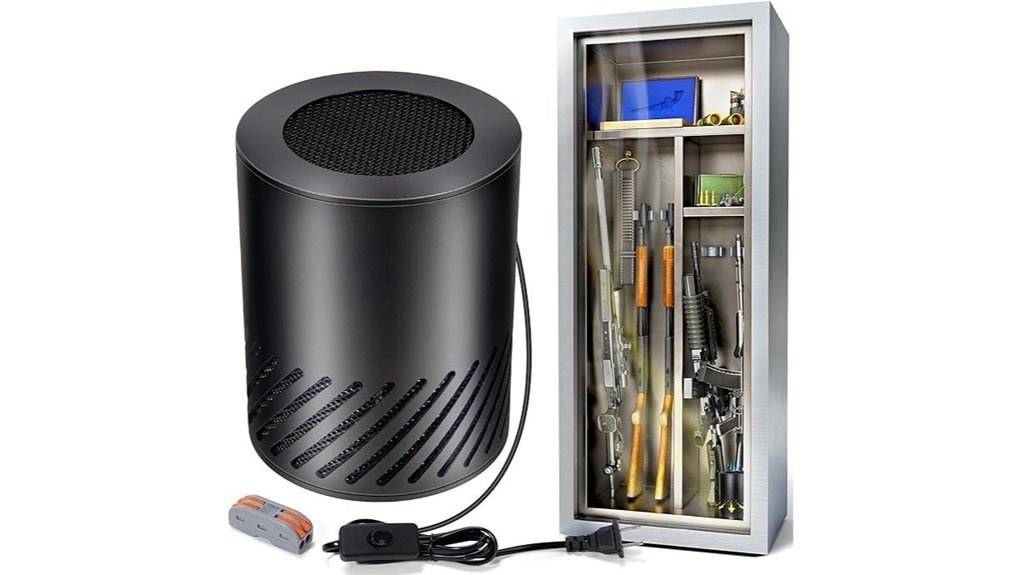
If you need a compact way to protect firearms from moisture, this gun safe electric dehumidifier with a built-in fan is a practical fit for safes from 3.5 to 11 cubic feet. You get dual-action protection because it uses heat and air circulation to reduce the damp conditions that can lead to rust, odors, and long-term storage problems. Its 3.34 x 3.34 x 4.13-inch body is small enough to sit on a shelf or safe floor without crowding your gear.
Setup is simple if your safe has access for the cord. Plug it into a standard outlet, route the cord through a pre-drilled hole, and let it run quietly in the background. It uses just 16 watts, needs no water tank emptying, and comes with a one-year warranty. This is not a room dehumidifier, though. It is best for enclosed safes where slow, steady moisture control matters more than high daily water removal.
Why you’ll like it: It solves a very specific problem: keeping a small enclosed safe drier without adding a messy water tank, disposable packets, or frequent refills. If your safe already has cord access, this can be one of the lowest-maintenance options in the list.
Best For: Gun owners looking for a compact, low-maintenance dehumidifier to protect firearms in small-to-medium safes from moisture and rust.
Pros:
- Dual-action design uses heat and a built-in fan to improve moisture control.
- Compact size fits neatly in safes without taking up much space.
- Low-power, maintenance-free operation with no refills needed.
Cons:
- Requires a standard outlet and cord routing, so installation depends on safe setup.
- Only suitable for smaller safes, roughly 3.5 to 11 cubic feet.
- Needs constant power to keep working, which may limit placement options.
Who should skip it: Skip this model if you need to dry a bedroom, bathroom, basement, or open living area. It is a safe-focused moisture control tool, not a high-capacity room unit.
Small Dehumidifier for Home with Color Lights and Timers
Best for Bedrooms and Bathrooms
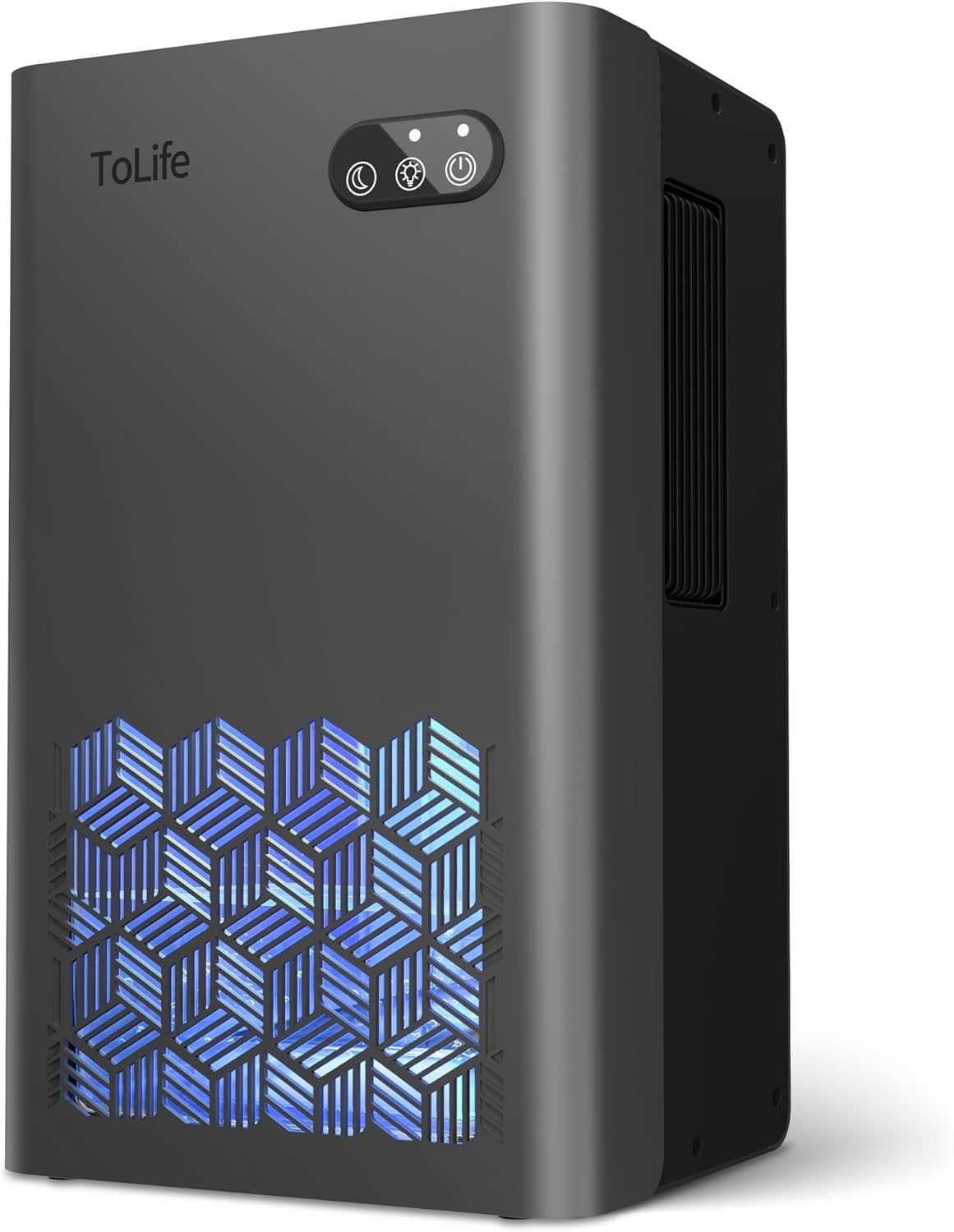
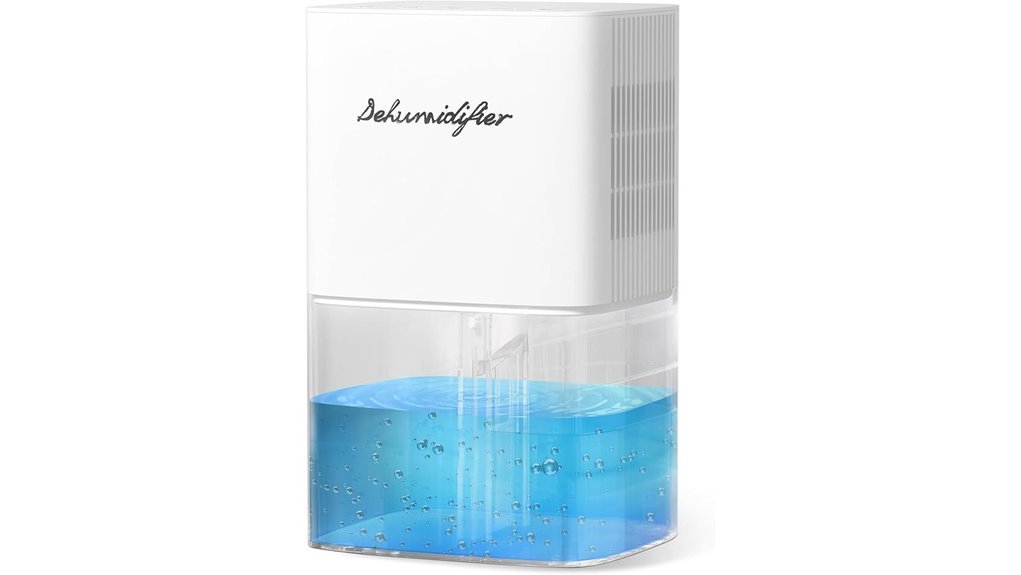
For bedrooms, bathrooms, or cozy rooms, this compact dehumidifier gives you quiet moisture control with more convenience settings than a basic mini unit. You get a 1657ml tank, 0.3L daily removal, and coverage for up to 230 square feet, so it fits small enclosed spaces well. Choose sleep, normal, or performance mode, then set the timer for 24, 48, 72, 96 hours, or nonstop use.
In sleep mode, it runs below 40dB, which makes it a better match for nighttime use than many louder moisture-control options. Auto shutoff helps protect you when the tank fills or the unit tips. Ten color lights add ambiance, while defrost tech and FCC, CE, and RoHS approvals add useful safety confidence. The dehumidification capacity is modest, so it is better for light to moderate dampness than severe moisture problems.
Why you’ll like it: This is a good pick when you want a room-friendly mini dehumidifier that feels easier to live with. The timer settings, sleep mode, and auto shutoff make it more convenient for overnight use, small bathrooms, and compact rooms where you do not want a bulky appliance.
Best For: People looking for a compact, quiet dehumidifier for small bedrooms, bathrooms, or other enclosed spaces with helpful timer, light, and safety features.
Pros:
- Compact size and lightweight design make it easy to place in small rooms.
- Quiet sleep mode and multiple timer options add convenience for overnight or scheduled use.
- Auto shutoff, defrost tech, and safety certifications provide added peace of mind.
Cons:
- Best suited only for small spaces, with coverage limited to 230 square feet.
- Dehumidification capacity is modest at 0.3 liters per day.
- Color lights and extra modes may be unnecessary for users who want a very basic unit.
Who should skip it: Skip this option if you have a very wet basement, a large room, or visible water intrusion. A compact unit can help with humidity, but it cannot fix leaks or heavy moisture loads.
Small Quiet Home Dehumidifier with 44oz Tank
Best Quiet Option
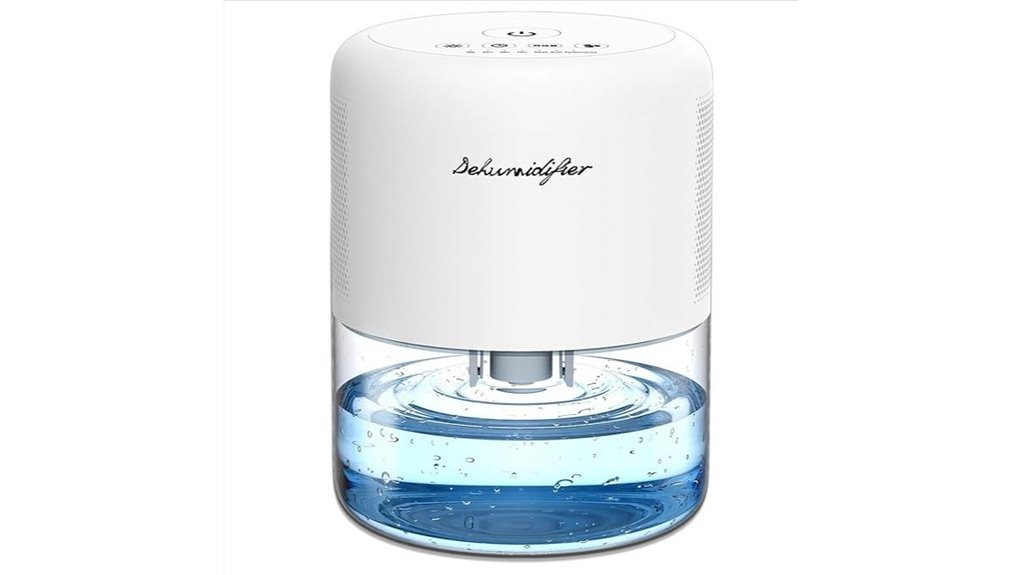
NeedDuck’s B-2 suits you when you want quiet humidity control in a small space without dealing with a bulky appliance. You get a compact 2.56-pound unit that fits easily in bedrooms, bathrooms, closets, or RVs, and it handles up to 215 square feet. Its 44-ounce tank helps it run longer between emptying sessions than smaller tank designs.
This model is built for gentle dehumidification rather than aggressive water removal, so it may feel more comfortable in a bedroom, closet, or RV where sudden air changes are not ideal. You can choose Sleep, Auto, or Performance mode, plus Continuous, 24H, 48H, or 72H timers. Auto shut-off and auto defrost add safety and reliability. Ten light colors and three brightness levels let you match your room, or use the lighting as a soft night-light effect.
Why you’ll like it: It is designed for people who care about quiet comfort as much as moisture control. If your main problem is mild humidity in a bedroom, small bathroom, closet, or RV, the sleep mode, larger tank, and compact weight make it easy to fit into daily life.
Best For: People who want a quiet, compact dehumidifier for small spaces like bedrooms, bathrooms, closets, or RVs.
Pros:
- Quiet operation makes it suitable for sleeping or daily use in small rooms.
- Compact, lightweight design is easy to place and move around.
- Multiple modes, timer settings, and lighting options add convenience and customization.
Cons:
- Best suited for smaller spaces, since it only covers up to 215 square feet.
- The 44-ounce tank may still need regular emptying with frequent use.
- It is designed for gentle humidity control, so it may not be ideal for heavy dampness.
Who should skip it: Skip it if your room has heavy condensation, standing water, or a damp basement smell that returns quickly. You may need a larger compressor dehumidifier or to solve the moisture source first.
Eva-Dry Wireless Mini Dehumidifier, White (E-333)
Best Cordless Option
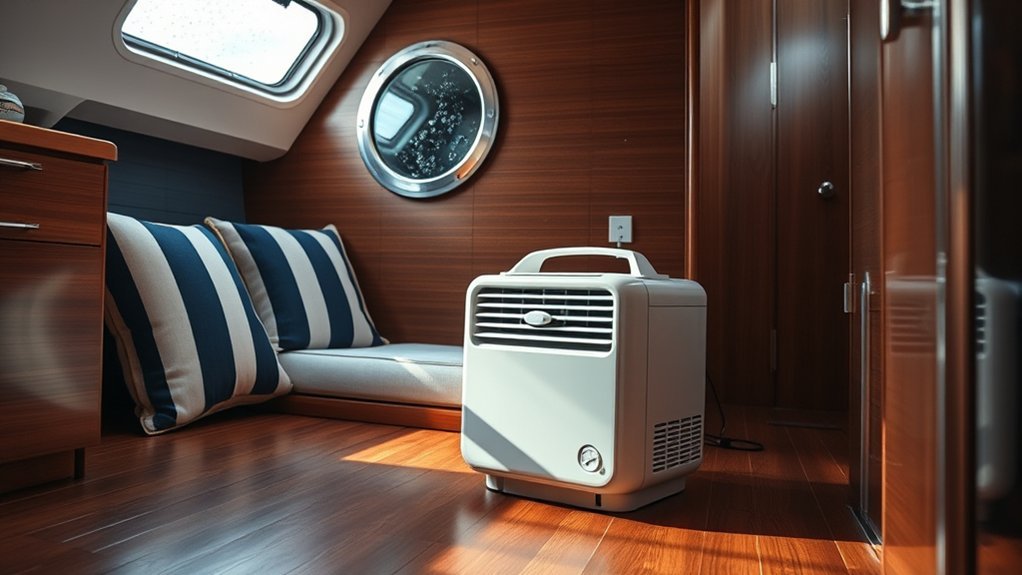
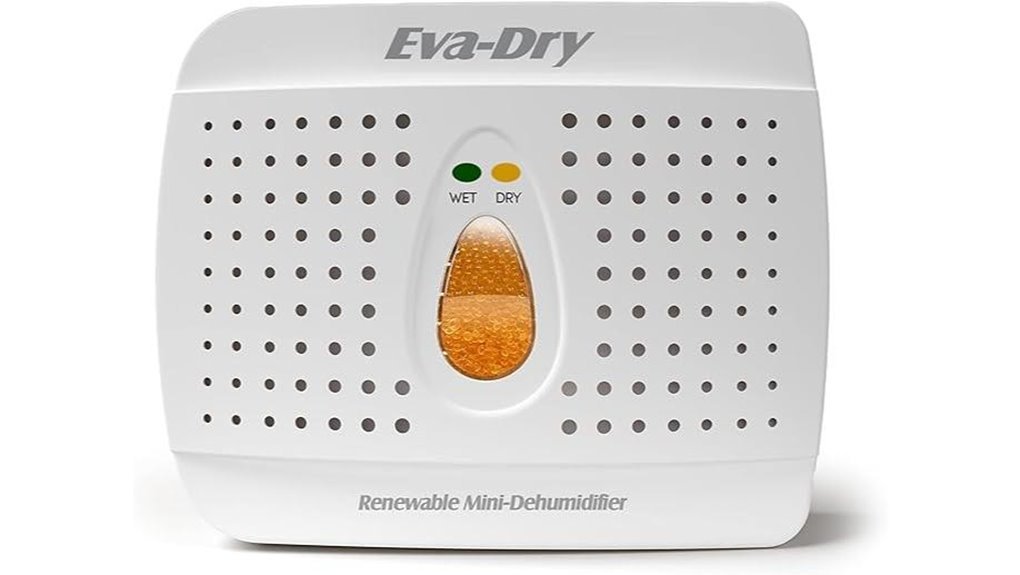
Eva-Dry’s E-333 is ideal when you need a cordless dehumidifier for tiny enclosed spaces. You can tuck it into closets, bathrooms, cars, boats, gym bags, or gun safes without worrying about cords or batteries. It absorbs up to 6 ounces of moisture and handles areas up to 333 cubic feet, which makes it a better fit for small storage spaces than open rooms.
Its compact 6.25 x 1.25 x 4.75-inch body weighs just 1 pound, so you can hang or place it almost anywhere. The indicator beads shift from orange to green when it’s time to recharge, and each cycle lasts 20 to 30 days. This is a low-maintenance choice, but not a set-and-forget electric tank unit. You still need to recharge it when the beads change color.
Why you’ll like it: This option removes the biggest problem with many mini dehumidifiers: finding an outlet. It is a strong match for tiny enclosed spaces where a corded unit would be too bulky, awkward, or unnecessary.
Best For: People who need a compact, cordless solution for controlling moisture in very small spaces like closets, bathrooms, cars, boats, gym bags, or gun safes.
Pros:
- Cordless and rechargeable, so it’s easy to use anywhere without needing outlets or batteries.
- Compact and lightweight design makes it simple to place, hang, and move around.
- Moisture indicator beads clearly show when it’s time to recharge.
Cons:
- Best suited only for tiny spaces and won’t handle larger rooms effectively.
- Must be recharged every 20 to 30 days, so it’s not fully maintenance-free.
- Absorbs a limited amount of moisture compared with larger dehumidifiers.
Who should skip it: Skip it if you want continuous powered dehumidification for a bedroom, office, bathroom, or RV. It is best for small enclosed storage zones where a corded unit would be awkward.
Pro Breeze Mini Dehumidifier for 250 sq ft
Best for Rooms up to 250 sq ft
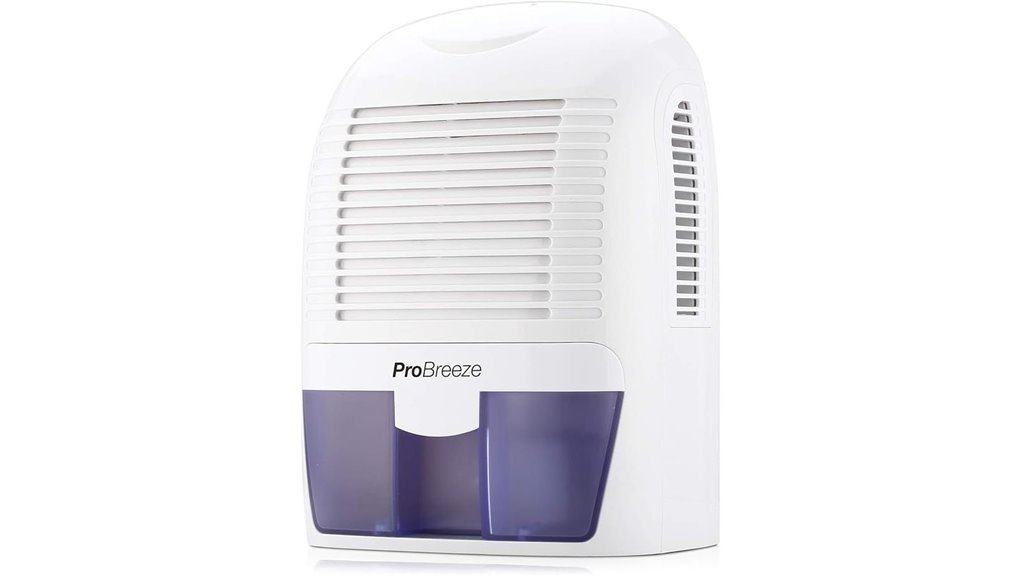
The Pro Breeze Mini Dehumidifier suits rooms up to 250 sq ft with quiet, low-maintenance moisture control. You can use it in your bedroom, kitchen, office, basement, caravan, garage, or RV. It removes up to 18 oz of moisture daily and holds 52 oz before you empty it, giving it one of the stronger tank-and-removal combinations in this compact group.
The auto shut-off stops operation when the tank fills, and the LED light tells you when to drain it. Its Peltier cooling system keeps noise low, so it won’t disrupt sleep or work the way a louder appliance might. For best results, use it between 59 and 95°F. It is ineffective below 41°F, so it is not the right pick for very cold garages, storage sheds, or unheated winter spaces.
Why you’ll like it: This is the most room-style pick in the lineup. It gives you a familiar tanked design, auto shutoff, a clear drain indicator, and useful coverage for small bedrooms, offices, RVs, kitchens, closets, and similar spaces.
Best For: People needing a compact, whisper-quiet dehumidifier for small spaces like bedrooms, offices, RVs, closets, or basements up to 250 sq ft.
Pros:
- Quiet Peltier cooling makes it suitable for sleep and work areas.
- Auto shut-off and LED indicator make it easy and safe to use.
- Lightweight, portable design fits a variety of small spaces.
Cons:
- Only effective in spaces up to about 250 sq ft.
- Works best between 59–95°F and is ineffective below 41°F.
- 18 oz/day capacity may be too low for very damp or larger areas.
Who should skip it: Skip this model if the room is colder than the listed operating range or if you need a dehumidifier for a large basement. It works best as a compact helper for small, mild-to-moderately damp spaces.
Factors to Consider When Choosing a Small Electric Dehumidifier
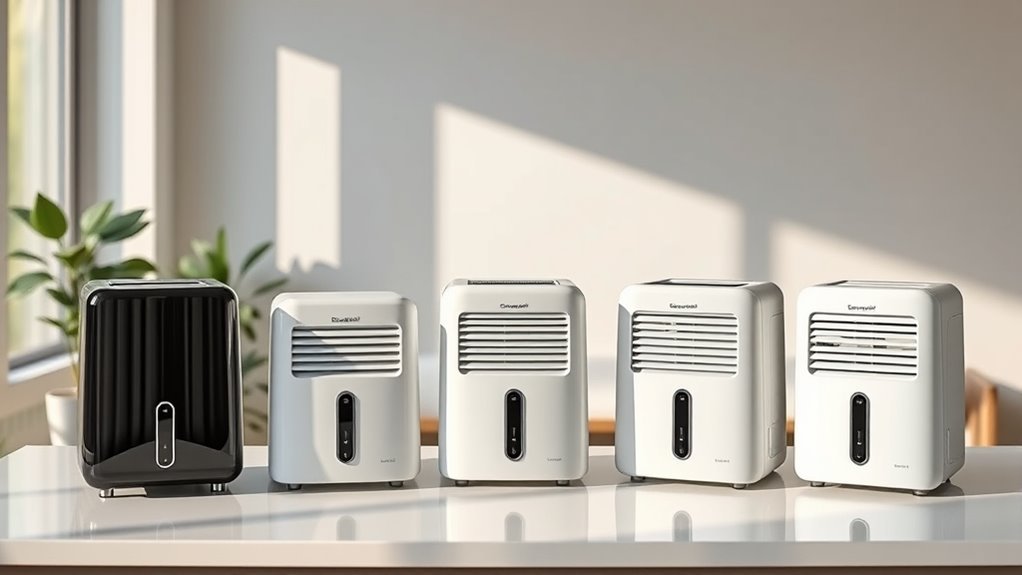
When you choose a small electric dehumidifier, start by matching its coverage area to the room size so it can work effectively. You’ll also want to check the water tank capacity, noise level, power efficiency, safety features, and operating temperature. These factors help you find a unit that’s quiet, reliable, and easy to use without expecting a mini model to do the work of a full-size dehumidifier.
Coverage Area
Coverage area tells you the maximum space a dehumidifier can handle effectively, so it’s one of the first specs you should check before buying. You’ll usually see it listed in square feet or cubic feet, and it should match the room you want to dry. For bathrooms, closets, safes, and other tight spots, compact models can make sense because the air volume is limited. If you’re shopping for a basement or living room, choose a model rated for that larger space instead.
An undersized unit won’t pull enough moisture, leaving humidity high and comfort low. Also, think about your space’s actual dampness, because heavier moisture loads can demand more capacity than the room size alone suggests. If you can smell mildew, see condensation, or notice moisture returning quickly, the room may need more than a mini unit.
Water Tank Capacity
Once you’ve matched a dehumidifier to the right room size, look at the water tank capacity, since it affects how often you’ll need to empty it. Most small electric models hold around the 44 to 52 ounce range, though some use milliliter tank ratings instead. That difference can change how hands-on you need to be, especially in a damp bathroom, closet, RV, or laundry area.
If you choose a larger tank, you can run the unit longer between emptying sessions, which helps in busier spaces. Smaller tanks work fine, but they’ll need attention more often, so they’re less convenient if the tank is hard to reach. Also, check the daily dehumidification rate, since tank size and moisture removal work together. Match capacity to your space so the unit handles humidity efficiently.
Noise Level
Noise level matters a lot if you plan to run a small electric dehumidifier in a bedroom, office, nursery, dorm, or shared space. You’ll want a model that won’t interrupt sleep, work, calls, or conversation. Some compact units run at around 40 dB in sleep mode, which can feel quiet enough for nighttime use.
Many small dehumidifiers use Thermo-Electric Cooling Technology, also called Peltier cooling, and that design often keeps sound low. Check the manufacturer’s noise rating before you buy, because quieter models are built differently than traditional compressor units. If you’re choosing between options, remember that higher performance modes can sometimes bring more sound. Pick the quietest unit that fits your room and daily routine so you can stay comfortable without constant background hum.
Power Efficiency
Power efficiency is worth paying attention to because a small electric dehumidifier should help control moisture without driving up your energy bill. You’ll usually see power use listed in watts, and many compact models draw far less power than full-size dehumidifiers. That low draw can translate into noticeably lower operating costs, especially if the unit runs in a closet, safe, bathroom, or RV for long stretches.
Look for units that balance moisture removal with modest consumption, so you’re not wasting power for weak results. Technologies like Peltier cooling can improve efficiency for small spaces, while maintenance-free designs can keep performance steady without extra effort. Still, a tiny dehumidifier can only remove so much moisture. If the room stays damp after several days, the issue may be ventilation, leaks, or the wrong unit size.
Safety Features
Safety features matter because you want a small electric dehumidifier that protects your space as well as it dries it. You should choose a model with auto shut-off so it stops before the tank overflows and spills water. Check for listed certifications such as FCC, CE, and RoHS certifications when they are shown by the product, since they can provide added confidence about electrical and material standards.
If you’ll use it in cooler rooms, pick one with auto defrost to keep frost from hurting performance. You can also benefit from clear maintenance alerts, like moisture indicator beads that change color, because they tell you when it needs attention. A design that’s easy to carry, empty, and clean helps you avoid messes, which matters even more if you’ve got children or pets nearby.
Extra Functions
Beyond protection and reliability, extra functions can make a small electric dehumidifier much easier to live with. You can choose modes like sleep, normal, or performance so the unit matches current humidity and noise needs. A timer helps you control run time, whether you want nonstop operation or a 24, 48, 72, or 96 hour schedule.
Auto shut-off adds peace of mind because the dehumidifier stops when the tank fills, so you don’t risk overflow. Some models also include ambient lighting with adjustable colors and brightness, which can double as a gentle night light. If you use the unit in cooler rooms, defrost technology matters because it keeps frost from building up and helps the dehumidifier work consistently.
Pro Tips for Better Results
- Keep doors and windows closed while the unit runs so it can treat the same air repeatedly.
- Leave space around the air intake and outlet so airflow is not blocked by walls, towels, boxes, or clothing.
- Empty and clean the tank regularly to avoid odors and keep the unit working properly.
- Use a small hygrometer if you want to track humidity instead of guessing by smell or comfort.
- Do not expect a mini dehumidifier to fix leaks, flooding, poor ventilation, or a wet basement by itself.
Safety Note
Always follow the manufacturer’s setup, cleaning, and electrical instructions. Place tanked dehumidifiers on a flat surface, keep cords away from water, do not block vents, and stop using any unit that smells hot, leaks, sparks, or makes unusual sounds. For safes, closets, RVs, and bathrooms, check the unit often during the first few days to make sure it fits the space safely.
Small Electric Dehumidifier Buying Mistakes to Avoid
- Buying only by room size: A room may be small but still very damp. Moisture level matters as much as square footage.
- Ignoring tank size: A small tank can be fine, but it may need frequent emptying in bathrooms, RVs, or humid closets.
- Using a mini unit for a wet basement: Compact dehumidifiers are not built to solve major water intrusion or large-room humidity.
- Forgetting the operating temperature: Some compact units work poorly in cold rooms, garages, or winter storage areas.
- Choosing corded vs cordless too late: Decide first whether your space has an outlet. That one detail can narrow your choices fast.
Frequently Asked Questions
How Often Should I Replace the Filter in a Small Electric Dehumidifier?
You should replace or clean your dehumidifier filter according to the manufacturer’s instructions. For many small units, checking the filter or intake area monthly is a smart habit, especially in dusty rooms, bathrooms, closets, RVs, or pet areas. If airflow feels weaker, the intake looks dirty, or the unit smells stale, clean it sooner.
Can a Mini Dehumidifier Run Continuously Overnight Safely?
Yes, many mini dehumidifiers can run overnight when used correctly. Keep the unit on a flat, stable surface, make sure the tank is seated correctly, use auto shutoff when available, and follow the manufacturer’s safety instructions. It is also smart to test the unit during the day before relying on it overnight.
What Size Room Needs a Small Electric Dehumidifier?
Small electric dehumidifiers usually work best in compact enclosed spaces such as bathrooms, closets, small bedrooms, RVs, safes, and offices. You’ll get better results if you match the listed coverage area, daily moisture removal rate, airflow, and tank size to your actual humidity problem.
Do Small Dehumidifiers Help Prevent Mold in Closets?
Yes, a small dehumidifier can help reduce dampness in closets, which may lower the conditions that encourage mold growth. You should still improve airflow, avoid storing wet items, clean surfaces regularly, and fix leaks or wall moisture. A dehumidifier helps with moisture control, but it is not a full mold-removal solution.
How Much Electricity Does a Compact Dehumidifier Use?
Many compact electric dehumidifiers use modest power compared with large compressor models, but exact electricity use depends on wattage, run time, room humidity, and operating mode. Check the product wattage before buying, especially if you plan to run it daily in a safe, closet, bathroom, RV, or bedroom.
Should I Buy a Corded or Cordless Mini Dehumidifier?
Choose a corded mini dehumidifier when you want continuous powered operation in a bedroom, bathroom, office, RV, or safe with outlet access. Choose a cordless moisture absorber when you need something for a tiny enclosed space, bag, closet, car, boat, or cabinet where a power cord would be awkward.
Can a Small Electric Dehumidifier Dry a Basement?
A small electric dehumidifier can help in a small, mildly damp basement corner, but it is not the best choice for a large or wet basement. If you have standing water, strong mildew smells, condensation that returns quickly, or a large open basement, you may need a larger compressor dehumidifier and moisture-source repairs.
Final Recommendation
For most small rooms, the easiest choices are the Small Dehumidifier for Home with Color Lights and Timers, the Small Quiet Home Dehumidifier with 44oz Tank, and the Pro Breeze Mini Dehumidifier. They give you tanked moisture control, auto shutoff, and room-friendly features.
For specialty spaces, the decision is even simpler. Choose the Gun Safe Electric Dehumidifier with Built-In Fan for powered safe protection, and choose the Eva-Dry Wireless Mini E-333 when you need a cordless option for closets, cars, gym bags, boats, cabinets, or other tight enclosed spaces.
Conclusion
The best small electric dehumidifier is the one that fits your exact space. Choose the Gun Safe Electric Dehumidifier with Built-In Fan if you need steady moisture control inside a safe. Choose the color-light home model or the quiet 44oz model for small bedrooms, bathrooms, closets, or RVs where noise and convenience matter. Choose the Eva-Dry E-333 if you need cordless moisture absorption in a tiny enclosed space. Choose the Pro Breeze Mini Dehumidifier if you want a compact tanked unit for rooms up to 250 sq ft.
Before you buy, check the coverage area, tank size, operating temperature, cord access, and auto shutoff features. Match the unit to your real moisture problem, and you’ll get a fresher, drier, more comfortable space without overbuying.