Affiliate disclosure: As an Amazon Associate, we may earn from qualifying purchases made through links on this page, at no extra cost to you.
Selection note: This guide compares only the suitable products from the supplied list. We considered moisture-removal technology, published capacity, drainage, controls, portability, maintenance, Canadian electrical suitability, and honest use-case limitations.
Choosing one of the best dehumidifiers in Canada requires more than comparing an advertised square-foot number. You need to consider the amount of moisture in the room, its temperature, the unit’s standardized extraction capacity, drainage access, energy use, and whether the appliance is approved for use in Canada.
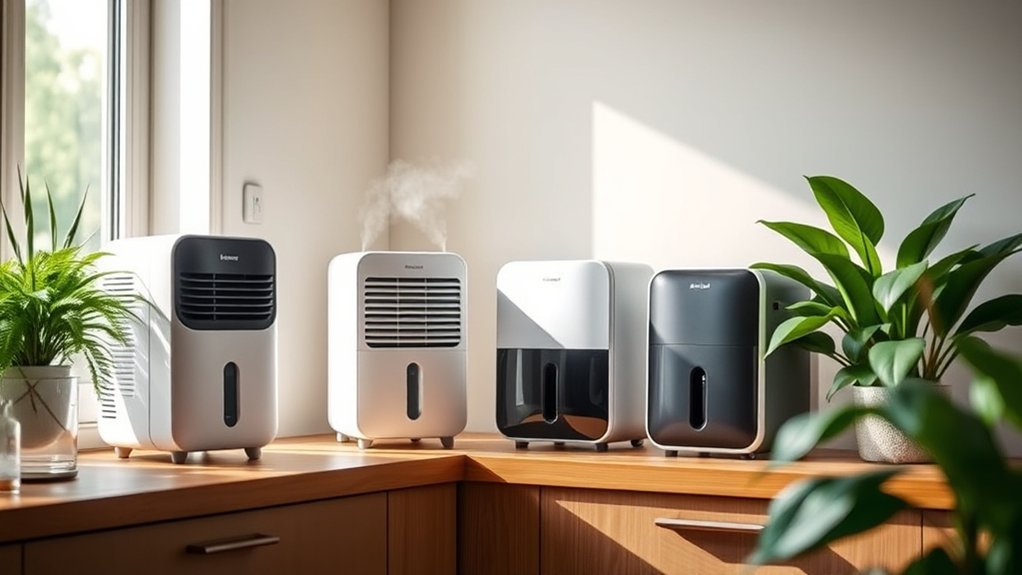
The four retained products serve two very different needs. The AEOCKY BOREAS-001 and Waykar PD160B are compressor-style choices for meaningful moisture control. The KeepGlad RX02-B and ToLife TZ-C2 are compact semiconductor models intended for lighter humidity in smaller, warm, enclosed spaces. Compact models should not be treated as substitutes for full-size compressor dehumidifiers in wet or persistently damp basements.
Important Canadian electrical check
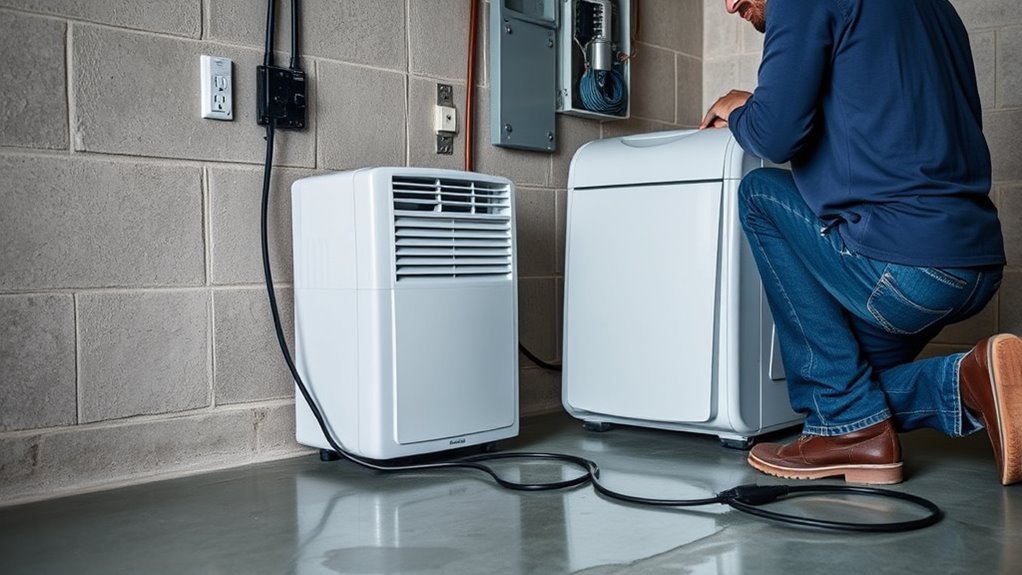
Before ordering, confirm that the rating label states 120V, 60Hz, the complete appliance bears an electrical approval mark recognized in your province, and the seller provides shipping, returns, and warranty service for Canada. A U.S. plug or Amazon.com listing alone does not confirm Canadian approval. You can review recognized certification marks through the Electrical Safety Authority.
Quick Verdict
- Best Overall for Larger Damp Spaces: AEOCKY BOREAS-001
- Best Verified Canada-Market ENERGY STAR Pick: Waykar PD160B
- Best Compact Model With a Drain Hose: KeepGlad RX02-B
- Best Simple Compact Pick: ToLife TZ-C2
Quick Comparison
| Product | Technology | Published Capacity | Best Use | Drainage | Important Limitation | Amazon |
|---|---|---|---|---|---|---|
| AEOCKY BOREAS-001 Best Overall |
Compressor | Seller-listed maximum of 50 pints per day; test conditions should be checked | Larger rooms, basements, laundry areas, and persistent humidity | Tank or continuous hose drainage | Canadian approval, shipping, and warranty must be confirmed | Check Details |
| Waykar PD160B Canada-Market ENERGY STAR Pick |
Compressor | Official ENERGY STAR record: 9.81 pints per day under standardized conditions | Moderate dampness, bedrooms, finished basements, and utility rooms | 0.66-gallon tank or drain hose | The “34-pint” marketing title is not its current standardized rating | Check Details |
| KeepGlad RX02-B Best Compact With Drain Hose |
Dual-semiconductor | Seller-listed maximum of 40 ounces per day; 98-ounce tank | Small bedrooms, bathrooms, closets, and laundry nooks with light moisture | Tank or supplied drain hose | Not appropriate for a wet, cold, or full-size basement | Check Details |
| ToLife TZ-C2 Best Simple Compact Pick |
Semiconductor | Seller-listed extraction of approximately 1 litre per day; 95-ounce tank | Light condensation in a small bedroom, bathroom, RV, or closet | Removable collection tank | Performance is limited in cold rooms and severe humidity | Check Details |
Capacity note: A tank’s ounce or gallon measurement tells you how much collected water it can hold. It does not tell you how quickly the machine can remove moisture. Compare standardized pints or litres removed per day whenever that information is available.
KeepGlad 98OZ Dehumidifier for Home
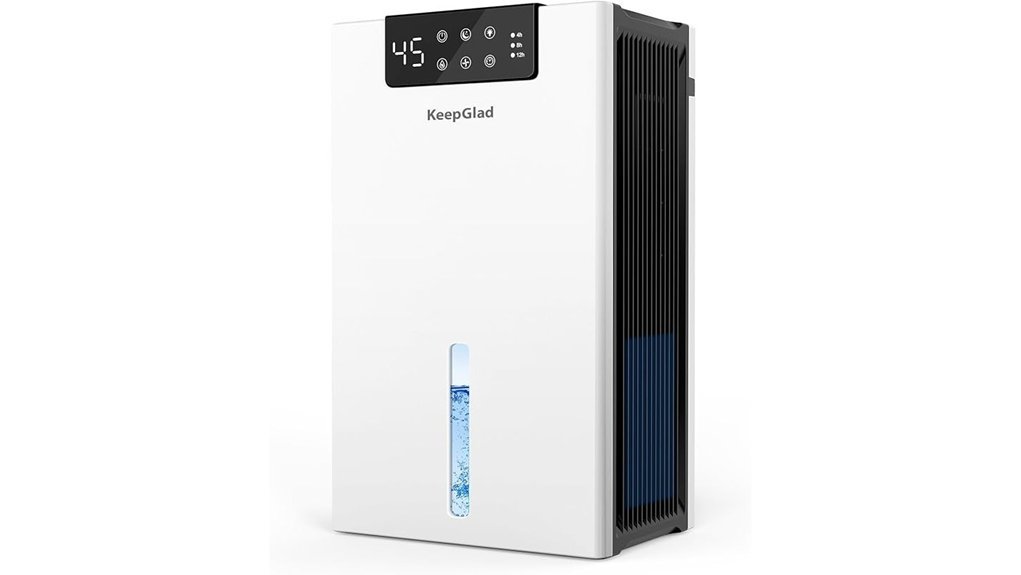
The KeepGlad RX02-B combines a 98-ounce collection tank with dual-semiconductor moisture removal, a humidity display, timer settings, three fan speeds, a washable filter, automatic shutoff, and a continuous-drain option. Those features make it more convenient than many basic tabletop dehumidifiers.
Its main limitation is capacity. The seller lists a maximum of approximately 40 ounces of water removal per day under favourable conditions. That is useful for mild condensation and everyday humidity in a small, warm room, but it is far below the performance expected from a full-size compressor dehumidifier. The advertised 1,000-square-foot coverage should not be used as proof that it can dry a large basement.
Why You’ll Like It
- Less frequent emptying: The 98-ounce tank is relatively large for a compact semiconductor model.
- Flexible drainage: You can use the removable tank or connect the included hose where a suitable downward drain is available.
- Helpful controls: The display, timer, fan settings, and automatic shutoff make daily operation easier.
- Bedroom-friendly mode: A lower-speed setting is available when quieter operation matters more than maximum extraction.
Who Should Buy It?
Consider the KeepGlad for a small bedroom, bathroom, closet, RV, laundry nook, or similar enclosed area with light moisture. It is best when the room is warm and the problem is mild condensation rather than water intrusion.
Who Should Avoid It?
Choose a compressor model instead if you have a cold Canadian basement, damp flooring, visible seepage, persistent musty odours throughout a large area, or a need to dry full loads of indoor laundry regularly.
Pros:
- Large collection tank for its compact product class.
- Continuous-drain connection reduces manual emptying.
- Humidity display, timer, multiple speeds, and automatic shutoff.
- Compact body is easier to move between small rooms.
Cons:
- Thermoelectric extraction is limited compared with a compressor unit.
- The advertised square-foot figure may create unrealistic expectations.
- Performance can drop noticeably in cooler rooms.
- Canadian electrical approval and warranty coverage must be checked before ordering.
Waykar PD160B ENERGY STAR Dehumidifier
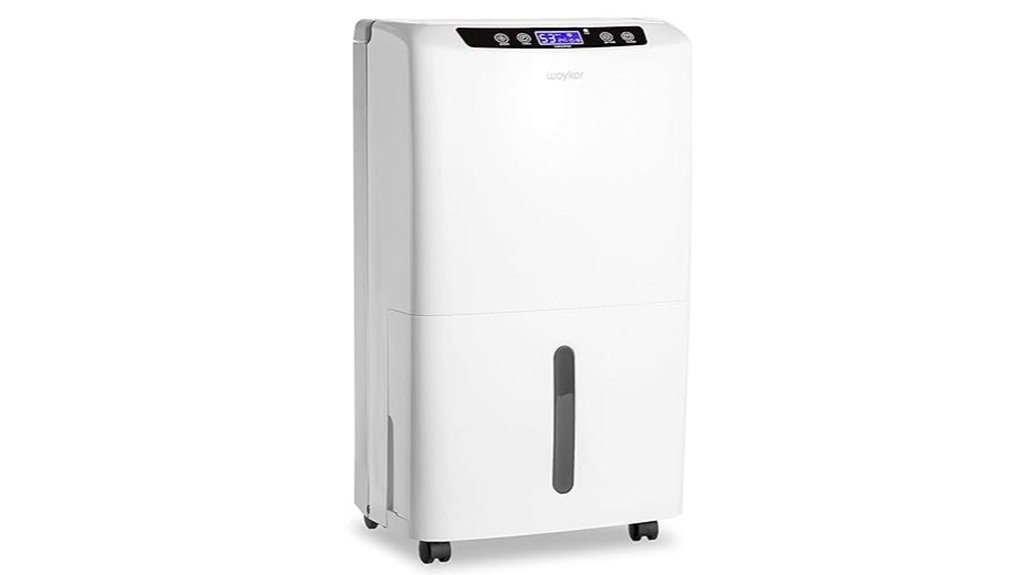
The Waykar PD160B is the strongest choice here for readers who want a model with an official ENERGY STAR record identifying both Canada and the United States as intended markets. It includes an adjustable humidistat, removable 0.66-gallon tank, washable filter, automatic shutoff, automatic restart, defrost protection, and a drain hose for continuous gravity drainage.
Capacity clarification: The Amazon-facing product name may use a “34-pint” figure, but the current official ENERGY STAR record for model PD160B lists a standardized capacity of 9.81 pints per day. Use the standardized figure when comparing it with other currently certified dehumidifiers. You can review the official ENERGY STAR product record.
Why You’ll Like It
- Verified ENERGY STAR listing: Its current product record includes the Canadian market.
- Automatic humidity control: The humidistat can cycle the unit as room conditions change.
- Two drainage choices: Use the removable tank or route the supplied hose to a suitable lower drain.
- Cold-room assistance: Automatic defrost helps protect compressor operation when frost begins forming on the coils.
Who Should Buy It?
The Waykar is a practical match for moderate dampness in a bedroom, utility room, office, finished basement, or similar residential area. It is also the clearest option in this list for buyers who want an ENERGY STAR model documented for the Canadian market.
Who Should Avoid It?
It may be undersized for a very wet basement, heavy indoor-laundry load, major foundation seepage, or a space that consistently remains near saturation. Those conditions normally require greater standardized extraction capacity and correction of the underlying moisture source.
Pros:
- Official ENERGY STAR record covering the Canadian market.
- Humidistat, automatic restart, automatic shutoff, and defrost protection.
- Tank and continuous gravity-drain options.
- Washable filter and portable residential design.
Cons:
- The standardized 9.81-pint capacity is substantially lower than the marketing title suggests.
- The 0.66-gallon tank may fill quickly when humidity is high.
- No built-in pump or app control is listed.
- The drain hose must slope downward unless an external condensate pump is used.
AEOCKY BOREAS-001 50-Pint Dehumidifier
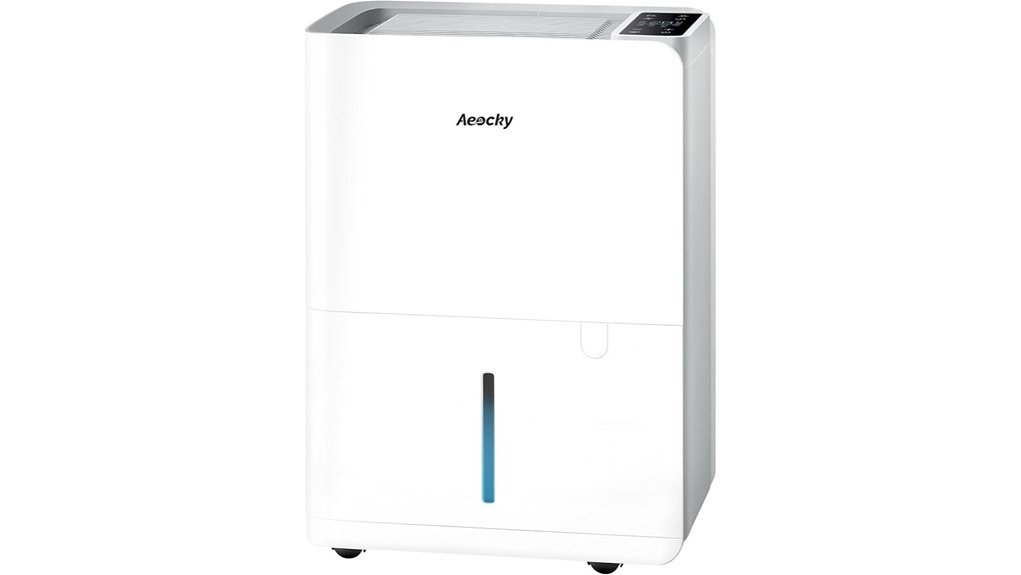
The AEOCKY BOREAS-001 is the most capable option in this retained group for a larger or more persistently humid room. Its listing describes a compressor dehumidifier with a maximum extraction figure of 50 pints per day, suggested coverage up to 3,500 square feet, a 0.8-gallon tank, continuous-drain hose, garden-hose adapter, adjustable humidity control, timer, fan control, and child lock.
The 50-pint and 3,500-square-foot figures should be treated as seller-listed maximums because the test conditions for this exact ASIN were not independently confirmed. Real performance will change with temperature, starting relative humidity, ceiling height, air movement, and the amount of water entering the space.
Why You’ll Like It
- Higher moisture-removal class: It is better suited than the compact units to basements, laundry rooms, and larger living areas.
- Continuous drainage: The included hose and adapter can reduce the need to empty the bucket manually.
- Useful controls: Adjustable humidity, fan control, timer, and child lock improve everyday convenience.
- Published warranty: The indexed product information lists a three-year machine warranty, although Canadian coverage should be confirmed with the seller.
Who Should Buy It?
Choose the AEOCKY when you need a full-size compressor unit for a basement, garage, laundry area, large bedroom, or other space with persistent humidity. It is the strongest overall option from the supplied list when moisture removal matters more than compact size.
Who Should Avoid It?
It may be unnecessary for a small closet or lightly humid bathroom. Canadian buyers should also avoid importing it until the seller confirms the voltage, recognized electrical approval mark, warranty service, return process, and delivery eligibility for their province.
Pros:
- Higher seller-listed extraction capacity than the other retained products.
- Tank, drain hose, and garden-hose adapter provide flexible water removal.
- Humidistat, timer, fan control, and child lock.
- Better suited to meaningful residential moisture loads.
Cons:
- The exact standardized capacity was not independently verified.
- Advertised square-foot coverage should not replace proper sizing.
- The 0.8-gallon bucket may require frequent emptying without a drain connection.
- Canadian electrical approval and warranty coverage require confirmation.
ToLife TZ-C2 Dehumidifier With 95 OZ Tank
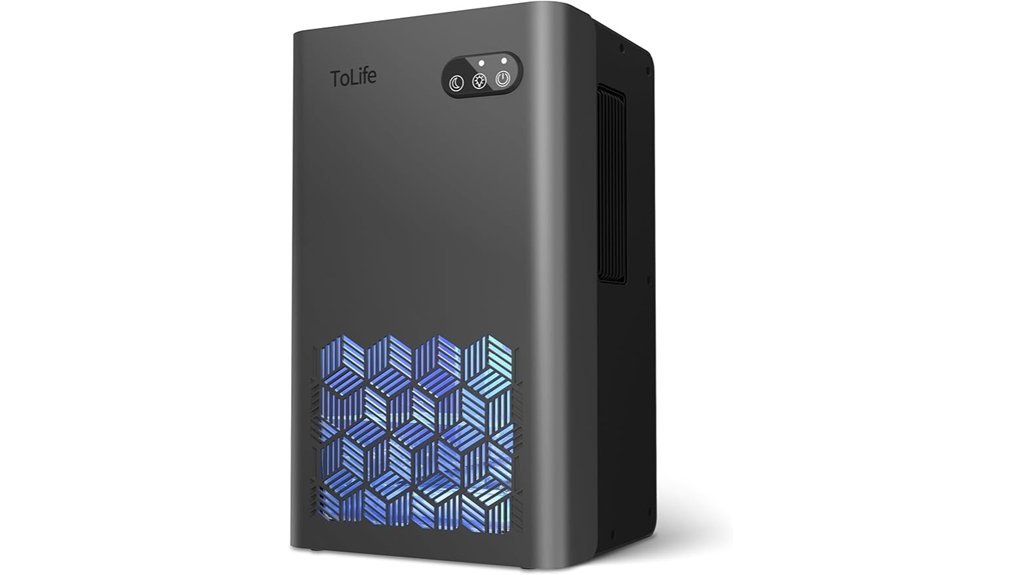
The ToLife TZ-C2 is a compact semiconductor dehumidifier with a 95-ounce collection tank, two operating speeds, sleep mode, automatic shutoff, a removable tank, and seven-colour ambient lighting. At approximately 2.64 kilograms, it is easier to move between rooms than a compressor model.
The seller advertises coverage up to 1,000 square feet, but buyers should focus on its thermoelectric technology and modest extraction capability instead of that number. It is best used in one small, enclosed, warm space with light humidity. It should not be selected as the primary moisture-control system for an entire basement.
Why You’ll Like It
- Simple controls: Choose the stronger mode for maximum extraction or the lower-speed mode when quieter operation is preferred.
- Portable design: Its compact body and moderate weight make room-to-room movement easier.
- Automatic shutoff: The unit stops when the tank is full or incorrectly positioned.
- Large compact-class tank: The 95-ounce reservoir can reduce emptying compared with very small tabletop units.
Who Should Buy It?
The ToLife is suitable for light condensation in a small bedroom, bathroom, closet, RV, home office, or storage area. It can also be useful where portability and simple operation matter more than rapid moisture extraction.
Who Should Avoid It?
Avoid relying on it for a wet basement, large open floor, cold garage, serious laundry-drying load, plumbing leak, or visible water intrusion. A properly sized compressor dehumidifier is a better match for those conditions.
Pros:
- Compact and easy to move.
- 95-ounce tank with automatic shutoff.
- Two operating modes and a sleep setting.
- Simple option for mild humidity in one enclosed room.
Cons:
- Thermoelectric technology cannot match a full-size compressor unit.
- The advertised 1,000-square-foot figure may overstate its practical use.
- No built-in smart-home controls or pump are listed.
- Canadian voltage, approval, warranty, and return eligibility must be confirmed from the seller and product label.
Factors to Consider When Choosing a Dehumidifier in Canada
Canadian homes can experience summer humidity, winter window condensation, damp basements, indoor laundry moisture, and seasonal temperature changes. The following checks will help you choose a unit that matches the actual problem instead of relying on a large advertised coverage number.
Match Capacity to the Moisture Load
Choose capacity according to both the room size and how damp the space is. A mildly humid bedroom needs less extraction than a basement with wet walls, seepage, or regular indoor laundry. Natural Resources Canada recommends increasing capacity as room area and moisture severity rise and generally advises oversizing rather than undersizing a dehumidifier.
When possible, compare water removal measured in pints or litres per 24 hours under standardized conditions. Do not use bucket capacity or square-foot marketing alone to predict performance. Review the official Natural Resources Canada dehumidifier guidance when sizing a compressor unit.
Compressor vs. Thermoelectric Technology
Compressor dehumidifiers circulate more air and remove substantially more moisture. They are usually the better choice for basements, laundry rooms, large bedrooms, and persistent dampness.
Thermoelectric or semiconductor dehumidifiers are compact and simple, but their extraction rate is much lower. They work best in small, warm, enclosed areas with mild humidity. Large tank size does not turn a thermoelectric unit into a high-capacity machine.
Cold-Basement Performance
Temperature has a major effect on moisture removal. Natural Resources Canada advises considering a dehumidifier intended for lower-temperature operation when the room is below approximately 18°C. Compressor coils can frost in cool conditions, while compact semiconductor models may collect very little water.
For an unfinished Canadian basement, look for automatic defrost, a published minimum operating temperature, and sufficient standardized extraction capacity. A cold-room rating is more useful than decorative lights or an oversized square-foot claim.
Canadian Electrical Approval
Confirm the voltage and frequency on the actual rating label. The complete appliance should also display an approval or certification mark accepted in your province. Do not assume that a product is approved because it has a North American-style plug, is sold through Amazon.com, or can be delivered across the border.
Also verify Canadian warranty service, replacement-part support, return shipping, bilingual documentation where applicable, and whether the seller is authorized to distribute the model in Canada.
Choose a Practical Humidity Target
A general indoor target of approximately 30% to 50% relative humidity works for many homes. During a cold Canadian winter, a setting closer to 30% to 40% may be necessary if condensation forms on windows or exterior walls. Use a separate hygrometer to confirm room conditions instead of relying entirely on a dehumidifier’s display.
Do not set the humidity unnecessarily low. Excessive drying wastes electricity and may make the room uncomfortable without solving the source of the moisture.
Compare Drainage Options
A removable bucket works when you can check the machine regularly. For a basement or laundry area, continuous drainage is more convenient. A gravity hose must run downward without kinks to a floor drain or sump. It cannot move water upward.
If the available drain is above the dehumidifier, choose a model with a genuine built-in pump or use a separate condensate pump approved for that purpose. Secure every connection and keep hoses away from electrical cords and outlets.
Check Energy Efficiency
ENERGY STAR certified compressor dehumidifiers use more efficient coils, compressors, and fans than comparable standard models. Natural Resources Canada reports that certified models use less energy on average and recommends comparing the integrated energy factor, expressed in litres of water removed per kilowatt-hour.
Compact thermoelectric products may draw fewer watts, but low power does not automatically mean better efficiency. A machine that runs continuously while removing very little moisture may be a poor choice for a serious humidity problem.
Noise and Placement
Compressor models normally produce fan and compressor noise. Compact semiconductor models are often quieter, although unverified decibel claims should be treated cautiously.
Follow the manufacturer’s clearance instructions so air can enter and leave the unit freely. Close windows and exterior doors while it runs, keep it away from dust, and avoid placing it where curtains, furniture, or stored boxes block airflow.
Maintenance and Cleaning
Empty and rinse the tank regularly, clean washable filters according to the manual, inspect the air intake for dust, and check continuous-drain hoses for algae, kinks, loose fittings, or blockages. Never reinstall a filter while it is wet unless the manufacturer specifically permits it.
If ice repeatedly forms on the coils, stop the machine and review its operating-temperature requirements. Persistent frost may indicate that the room is too cold, airflow is blocked, or the unit needs service.
Fix the Moisture Source
A dehumidifier manages water vapour in the air. It cannot repair foundation seepage, a roof leak, plumbing failure, blocked gutter, missing bathroom ventilation, or an improperly vented clothes dryer. Correct active water entry before expecting a dehumidifier to maintain the room.
Before You Buy Checklist
- Measure the room and check its temperature.
- Use a hygrometer to identify the starting relative humidity.
- Determine whether the space is mildly damp, very damp, or wet.
- Compare standardized pints or litres per day rather than tank size.
- Confirm 120V/60Hz and a Canadian-recognized electrical approval mark.
- Check whether you need a bucket, gravity drain, or pump.
- Confirm Canadian shipping, warranty, returns, and replacement parts.
- Repair leaks and other active sources of water first.
Frequently Asked Questions
What Size Dehumidifier Do I Need in Canada?
Base the decision on standardized moisture removal, room area, starting humidity, temperature, and the severity of the moisture problem. A moderately damp bedroom may need only a modest compressor unit, while a wet basement or laundry-drying room usually needs much higher daily extraction. Tank size and advertised square footage are not reliable substitutes for a standardized capacity rating.
Are Small Thermoelectric Dehumidifiers Good for Basements?
They can help with mild humidity in a small, warm, enclosed basement room, but they are usually unsuitable for a large, cold, or persistently wet basement. A compressor dehumidifier with automatic defrost and a verified daily extraction rating is normally a better choice.
What Indoor Humidity Level Should I Use?
A range of roughly 30% to 50% relative humidity is suitable for many homes. During cold Canadian weather, you may need to stay nearer 30% to 40% if condensation appears on windows or exterior walls. Use a hygrometer and adjust gradually according to actual conditions.
Can a Dehumidifier Remove Mold?
No. A dehumidifier can reduce excess airborne moisture and make conditions less favourable for new mold growth, but it does not remove established mold, repair damaged materials, or fix the source of water. Existing contamination and active leaks may require professional assessment and remediation.
Can I Run a Dehumidifier Continuously?
Continuous operation may be appropriate when the manufacturer permits it and the unit has adequate airflow, a secure drainage setup, and proper electrical approval. Check the tank, filter, cord, plug, hose, and surrounding area regularly. Stop using the appliance if it overheats, leaks, develops unusual noise, repeatedly freezes, or shows cord or plug damage.
How Do I Maintain a Dehumidifier?
Empty and clean the tank, wash or replace the filter as directed, remove dust from the intake and outlet, inspect the drain hose, and keep the unit upright on a stable surface. Follow the manual’s cleaning schedule and unplug the appliance before routine maintenance.
Will a Dehumidifier Work in a Cold Canadian Basement?
Performance decreases as temperature falls. Choose a model with a published low-temperature range and automatic defrost, especially below approximately 18°C. If the room is very cold, controlling water entry, adding appropriate heat, or using equipment designed for low-temperature operation may be necessary.
Is an Amazon.com Dehumidifier Automatically Approved for Canada?
No. Confirm the rating label, voltage, frequency, recognized Canadian electrical approval mark, warranty, returns, and shipping eligibility. A listing’s plug photo or North American description does not by itself prove that the complete appliance is approved for use in your province.
Final Recommendation
Best overall from the supplied list: Choose the AEOCKY BOREAS-001 when you need the strongest seller-listed moisture-removal capacity for a larger or persistently damp area, provided its Canadian electrical approval, warranty, and shipping eligibility are confirmed.
Best documented Canadian-market option: Choose the Waykar PD160B when you prefer an official ENERGY STAR record that includes Canada and your room fits its standardized 9.81-pint-per-day capacity.
For light moisture only: The KeepGlad RX02-B and ToLife TZ-C2 are convenient compact choices for a small, warm, enclosed room. Do not rely on either compact model for standing water, foundation seepage, a cold basement, or severe whole-room humidity.
The right dehumidifier is the one whose verified extraction capacity, operating-temperature range, drainage method, electrical approval, and warranty match your actual room. Correct the moisture source first, compare standardized capacity rather than marketing coverage, and use a hygrometer to confirm that the machine is producing a meaningful improvement.