The best dehumidifier for an encapsulated crawl space is not necessarily the model with the largest headline pint rating. Capacity labels may use DOE, AHAM, or hot-saturation test conditions, so two products with similar numbers can deliver very different moisture removal in a cool crawl space. This guide compares 14 crawl-space-ready models by standard-condition capacity, drainage method, airflow, cabinet size, and installation fit.
- Suitability for sealed or encapsulated crawl spaces
- DOE/AHAM capacity when available, not just saturation output
Important: A dehumidifier controls airborne moisture. It does not repair plumbing leaks, groundwater entry, standing water, failed encapsulation, or major outdoor-air leakage.
Quick Comparison
Use the standard-condition figure when available. A “max” or saturation rating is measured in hotter, wetter air and should not be compared directly with a DOE- or AHAM-rated capacity.
| Use-Case Label | Model | Capacity Basis | Drainage | Best Fit |
|---|---|---|---|---|
| Best Overall for Gravity Drainage | ALORAIR Crawl Space Dehumidifier 120 PPD | 55 AHAM / 120 max | Gravity | Medium spaces; balanced pick |
| Best for Very Large Crawl Spaces | Airzentti 155-Pint Commercial Dehumidifier with Pump and Hose | 70 AHAM / 155 max | Pump + gravity | Very large or high-load spaces |
| Best Compact Pump Model | MOISWELL 70-Pint Commercial Dehumidifier with Pump | ~24 DOE / 70 max | Pump | Compact pump installation |
| Best High-Capacity Gravity-Drain Pick | ARGENDON Commercial Crawl-Space Dehumidifier 145 PPD | 145 max | Gravity | High-output downhill drain |
| Best Detachable-Control Option | Airecoler Stellar S10 Commercial Dehumidifier | 70 max | Gravity | Accessible detachable controls |
| Best High-Airflow Gravity Model | Airecoler GT-X5 125-Pint Commercial Dehumidifier | 58–60 AHAM / 125 max | Gravity | High airflow |
| Best Proven Mid-Capacity Model | ALORAIR 113-Pint Commercial Dehumidifier with Drain Hose | 53 AHAM / 113 max | Gravity | Proven mid-capacity use |
| Best Large-Space Model Without a Pump | Waykar 125-Pint Crawl-Space Dehumidifier with Drain Hose | 125 max | Gravity | Large space without pump |
| Best Large-Space Pump Model | Waykar 125-Pint Crawl-Space Dehumidifier with Pump | 125 max | Pump + gravity | Large space with pump |
| Best Small-Crawl-Space Pump Pick | ALORAIR 70-Pint Crawl-Space Dehumidifier with Pump | 35 AHAM / 70 max | Pump + gravity | Small low-clearance space |
| Best Dual-Drainage Value | HBN 125-Pint Crawl-Space Dehumidifier with Pump | 60 AHAM / 125 max | Pump + gravity | Dual-drain flexibility |
| Best Premium Whole-Home Integration | AprilAire E070 Pro Dehumidifier Bundle (70 Pint) | 70 standard | Gravity / optional external pump | Permanent or ducted system |
| Best 145-Pint Pump Option | ARGENDON 145-Pint Commercial Dehumidifier with Pump | 145 max | Pump + gravity | Compact high-output pump |
| Best for Comparing Multiple Capacity Ratings | CADPXS Crawl-Space Dehumidifier with Pump | 36.68 DOE / 55 AHAM / 125 max | Pump + gravity | Transparent capacity comparison |
ALORAIR Crawl Space Dehumidifier 120 PPD
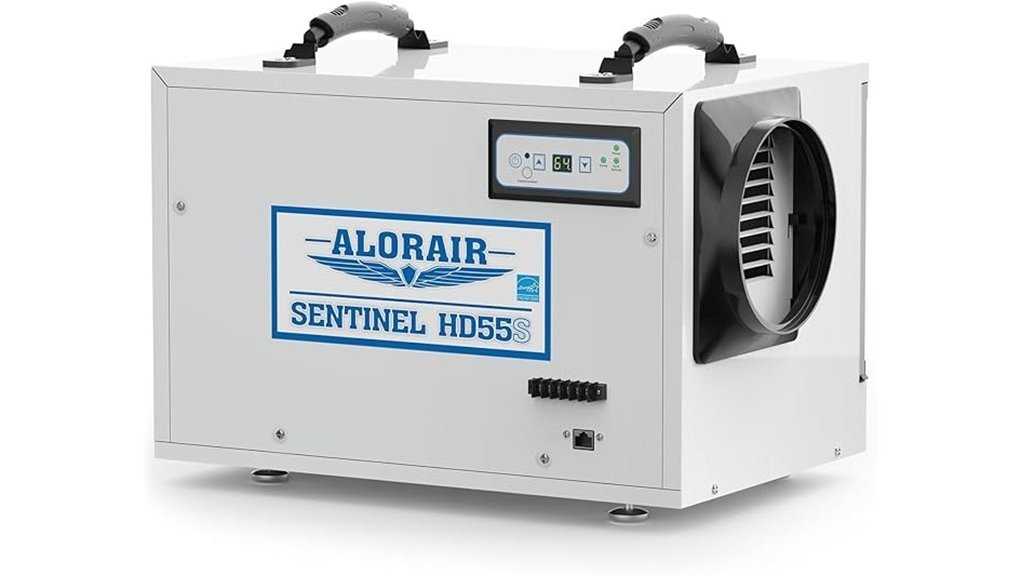
The ALORAIR Sentinel HD55-class unit is a strong fit for an encapsulated crawl space when you have a reliable gravity drain. Its headline 120-pint rating is a saturation-condition maximum; the more useful standard-condition figure is about 55 pints per day at AHAM conditions. The low-profile metal cabinet, automatic defrost, continuous hose drainage, and MERV-1 prefilter suit year-round crawl-space duty in manufacturer-rated areas up to 1,300 sq. ft.
Best For: Homeowners who want a proven low-profile unit and can route condensate downhill to a sump, floor drain, or approved discharge point.
Pros:
- Approximately 55 PPD at AHAM conditions and 120 PPD at saturation.
- Compact metal housing with automatic defrost for cooler spaces.
Cons:
- No built-in pump for uphill drainage.
- Manufacturer square-foot coverage assumes favorable conditions and should not replace moisture-load sizing.
Airzentti 155-Pint Commercial Dehumidifier with Pump and Hose
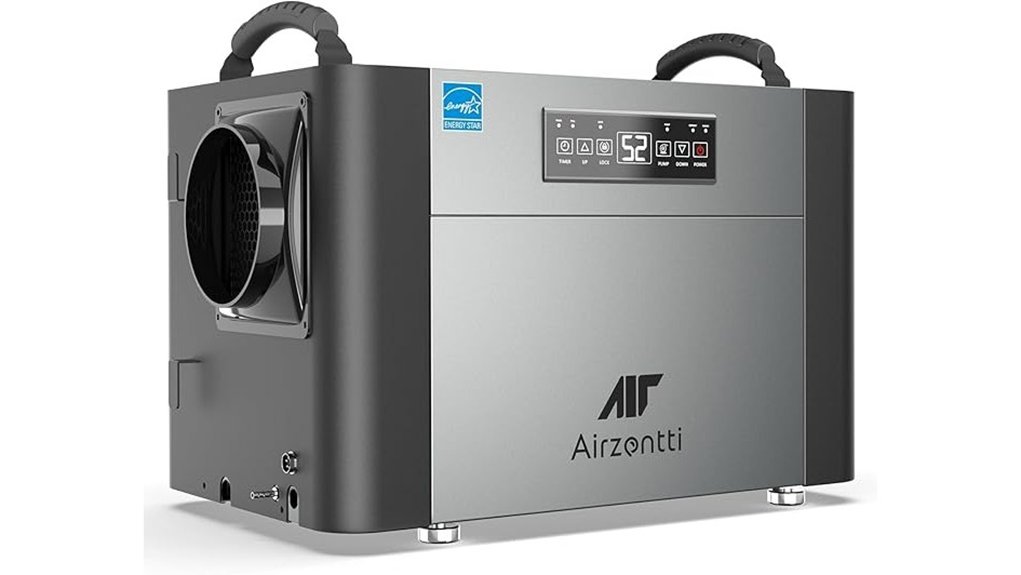
The Airzentti commercial dehumidifier targets large, wet crawl spaces and restoration-style applications. The listing separates its 155-pint saturation rating from an approximately 70-pint AHAM rating, which makes comparison easier than relying on the headline number alone. It also lists 220 CFM airflow, gravity drainage, and a built-in pump capable of lifting condensate up to 16.4 ft.
Best For: Large encapsulated crawl spaces with a high moisture load, long drain runs, or a drain point above the dehumidifier.
Pros:
- About 70 PPD at AHAM conditions and 155 PPD at saturation.
- Built-in pump plus gravity-drain capability.
Cons:
- Large and heavy compared with compact crawl-space models.
- The advertised 7,500-sq.-ft. figure is a manufacturer maximum, not a sizing guarantee.
MOISWELL 70-Pint Commercial Dehumidifier with Pump
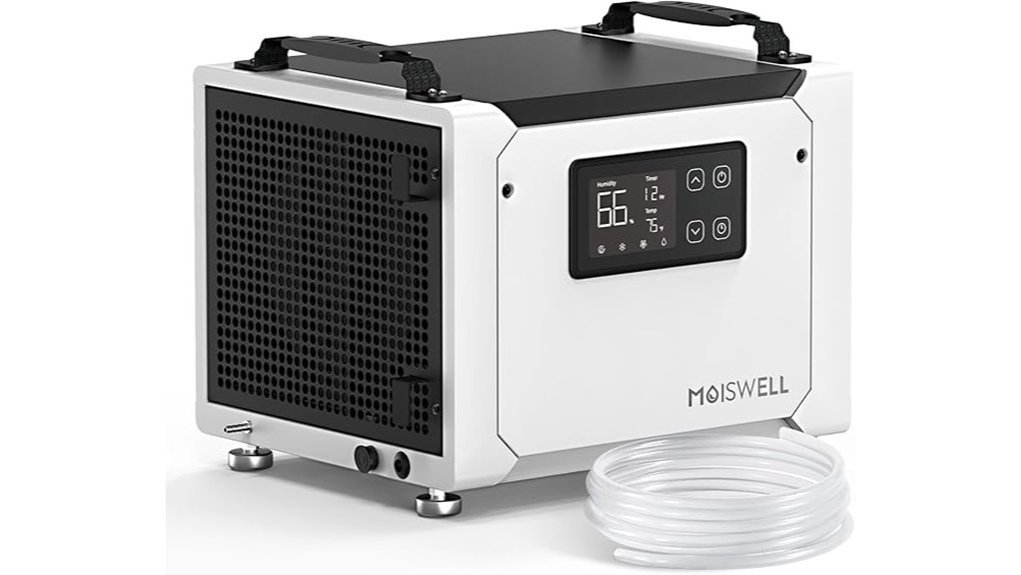
The MOISWELL Defender ME-7S is a compact option for crawl spaces where gravity drainage is impractical. Its 70-pint figure is a maximum-condition rating; current product data also lists roughly 24 pints per day under cooler DOE conditions. The built-in pump can move condensate vertically up to 16.4 ft, while automatic defrost and a metal cabinet support use in enclosed, damp areas up to the manufacturer-rated 1,000 sq. ft.
Best For: Small to medium encapsulated crawl spaces that need an integrated pump and easy-to-read controls.
Pros:
- Built-in condensate pump with up to 16.4 ft of lift.
- Compact 39.5-lb metal cabinet with automatic defrost.
Cons:
- The 70-pint headline is not the DOE-condition capacity.
- Limited reserve capacity for very wet or oversized crawl spaces.
ARGENDON Commercial Crawl-Space Dehumidifier 145 PPD
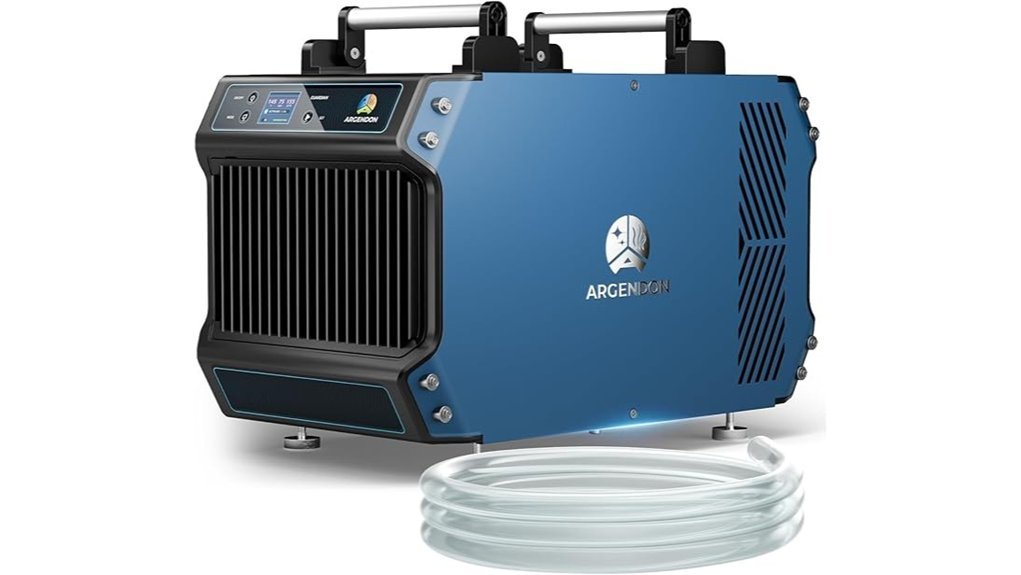
This ARGENDON Guardian 60 model is designed for high-output gravity-drain installations. It is advertised at 145 pints per day at 90°F and 90% RH, with 165 CFM airflow and a manufacturer-listed coverage range reaching roughly 1,500 to 1,800 sq. ft. Automatic defrost, memory restart, continuous drainage, and a MERV-1 prefilter make it more appropriate for a sealed crawl space than a bucket-style room dehumidifier.
Best For: Larger encapsulated crawl spaces with a floor drain or sump below the unit.
Pros:
- 145-PPD maximum-condition rating with 165 CFM airflow.
- Automatic defrost, memory restart, and continuous drainage.
Cons:
- No built-in pump.
- A directly comparable DOE or AHAM capacity is not consistently presented in current listing data.
Airecoler Stellar S10 Commercial Dehumidifier
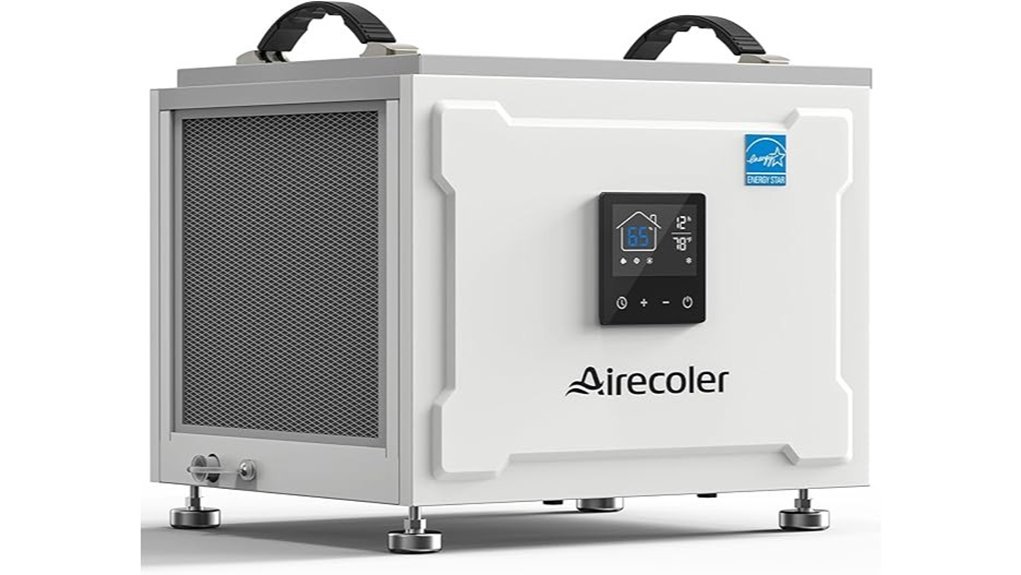
The Airecoler Stellar S10 is a compact gravity-drain model advertised at up to 70 pints per day under maximum conditions for spaces up to 1,000 sq. ft. Its standout feature is a detachable control panel, which can be easier to access than controls mounted on a unit deep inside a low-clearance crawl space. Automatic defrost and continuous hose drainage support set-point operation without a collection bucket.
Best For: Smaller encapsulated crawl spaces where accessible controls matter and a downhill drain route is available.
Pros:
- Compact horizontal form for low-clearance placement.
- Detachable control panel and continuous gravity drainage.
Cons:
- No integrated pump.
- Standard-condition capacity is not clearly stated in the source listing used for this audit.
Airecoler GT-X5 125-Pint Commercial Dehumidifier
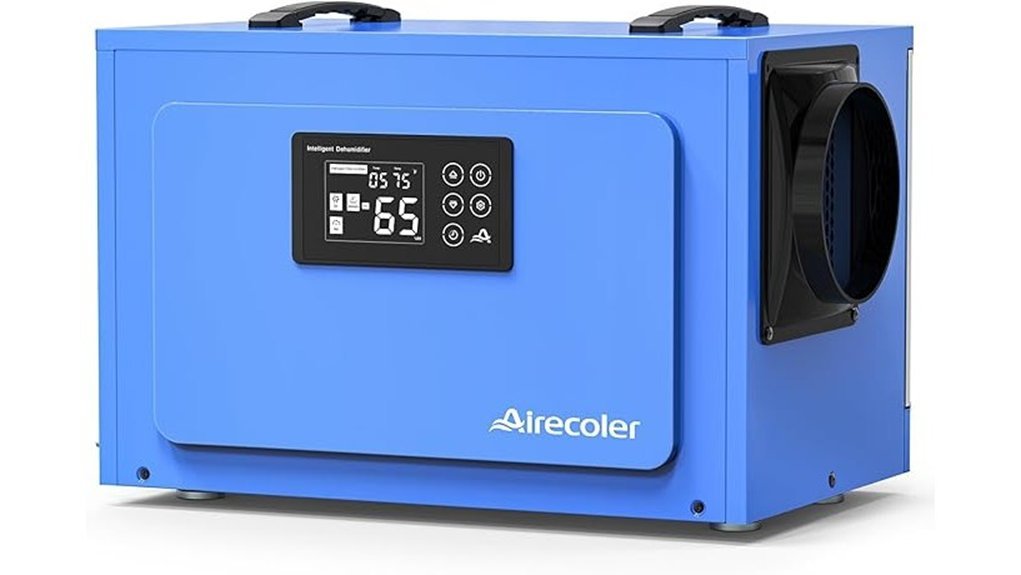
The Airecoler GT-X5 pairs a 125-pint maximum rating with an approximately 58- to 60-pint AHAM rating and 265 CFM airflow. The horizontal cabinet, automatic defrost, memory restart, washable filter, and continuous drain hose make it suitable for large encapsulated crawl spaces where gravity drainage is possible. The advertised 6,000-sq.-ft. coverage should be treated as a maximum marketing figure rather than a universal sizing rule.
Best For: Large crawl spaces that need strong air circulation but do not require an internal pump.
Pros:
- Approximately 58 to 60 PPD at AHAM conditions.
- High 265 CFM airflow for larger footprints.
Cons:
- No built-in condensate pump.
- Around 50 lb, so placement may require two people.
ALORAIR 113-Pint Commercial Dehumidifier with Drain Hose
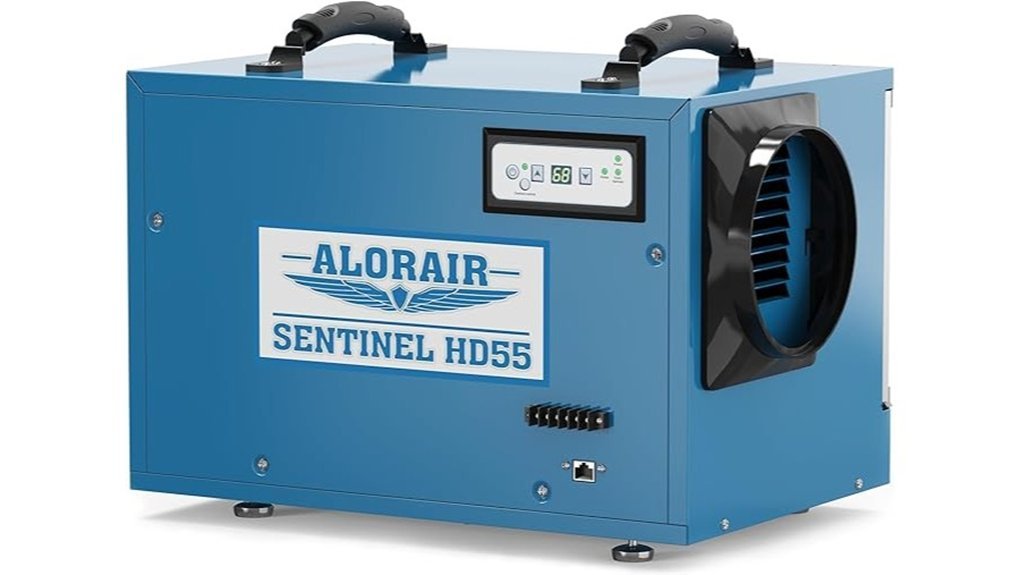
This ALORAIR Sentinel HD55 Blue is listed at 113 pints per day at saturation and about 53 pints per day at AHAM conditions. It uses 120 CFM airflow, a low-profile metal cabinet, automatic defrost, memory restart, and continuous gravity drainage. At roughly 41.7 lb, it is easier to position than many higher-capacity commercial models.
Best For: Encapsulated crawl spaces up to the manufacturer-rated 1,200 sq. ft. with a nearby downhill drain.
Pros:
- About 53 PPD at AHAM and 113 PPD at saturation.
- Compact 41.7-lb metal cabinet with 120 CFM airflow.
Cons:
- Gravity drainage only.
- MERV-1 filter mainly protects the machine from larger debris.
Waykar 125-Pint Crawl-Space Dehumidifier with Drain Hose
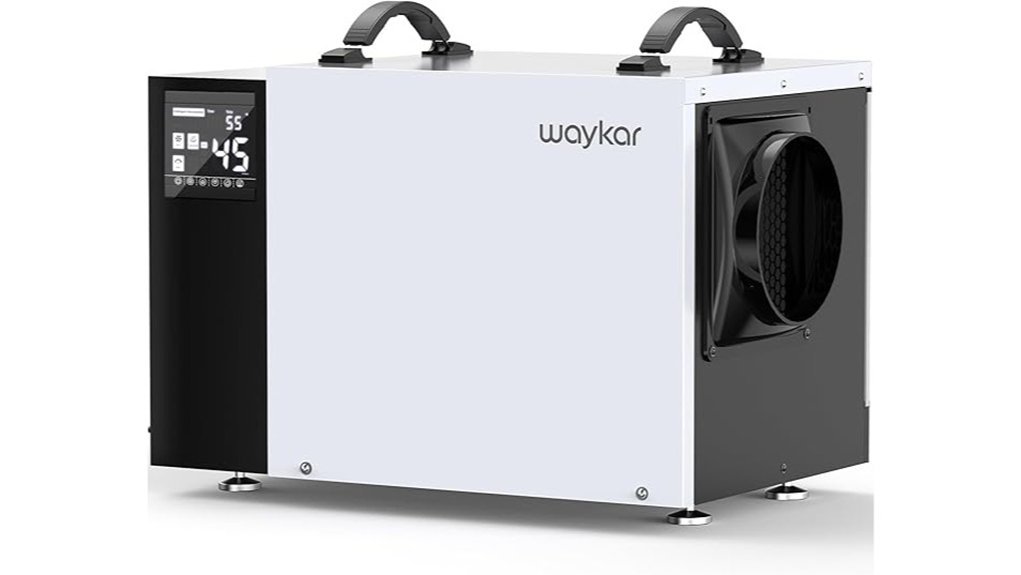
The pump-free Waykar AFW model is advertised at up to 125 pints per day under maximum conditions, with roughly 176 CFM airflow and manufacturer coverage up to 6,500 sq. ft. Its metal body, washable filter, automatic defrost, restart memory, timer, and continuous drainage are appropriate for crawl-space use. This version is the simpler choice when a reliable gravity drain is already available.
Best For: Large encapsulated crawl spaces where the drain hose can slope continuously to a sump or approved outlet.
Pros:
- High maximum-condition capacity with about 176 CFM airflow.
- Continuous gravity drainage and washable filter.
Cons:
- No built-in pump.
- The 6,500-sq.-ft. claim is a manufacturer maximum and may not reflect a wet crawl space.
Waykar 125-Pint Crawl-Space Dehumidifier with Pump
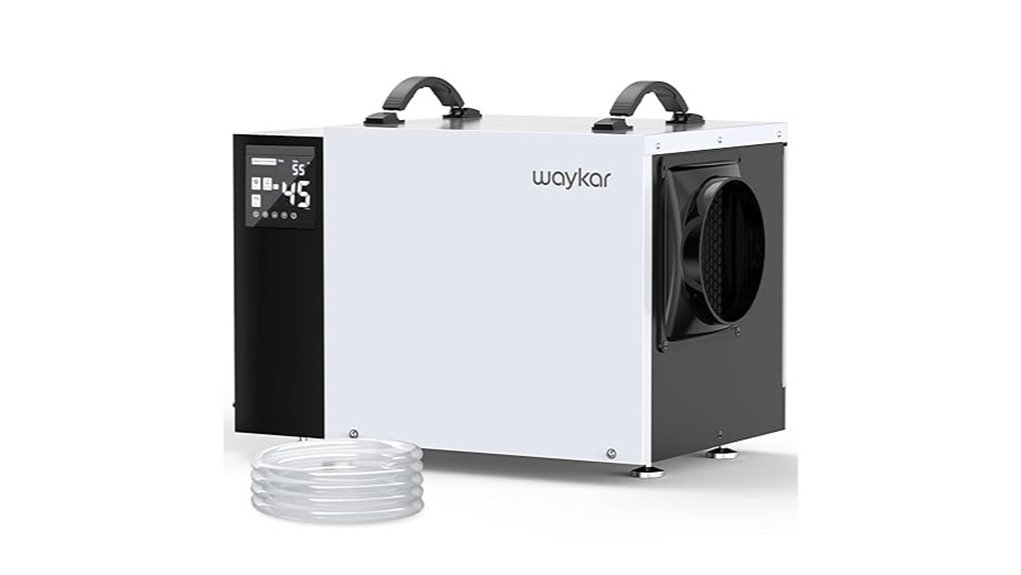
This Waykar variant adds an integrated condensate pump to the brand’s 125-pint maximum-condition platform. It is intended for large basements and crawl spaces up to the manufacturer-rated 6,500 sq. ft., and includes a pump hose for vertical or distant drainage. Adjustable humidity control, automatic defrost, restart memory, a washable filter, and a metal cabinet support unattended crawl-space operation.
Best For: Large crawl spaces where gravity drainage is impossible or the condensate must be lifted to a higher discharge point.
Pros:
- Built-in pump for uphill or longer condensate routing.
- High maximum-condition moisture-removal capacity.
Cons:
- The headline capacity is not a directly comparable DOE-condition figure.
- Pump operation and maintenance add complexity.
ALORAIR 70-Pint Crawl-Space Dehumidifier with Pump
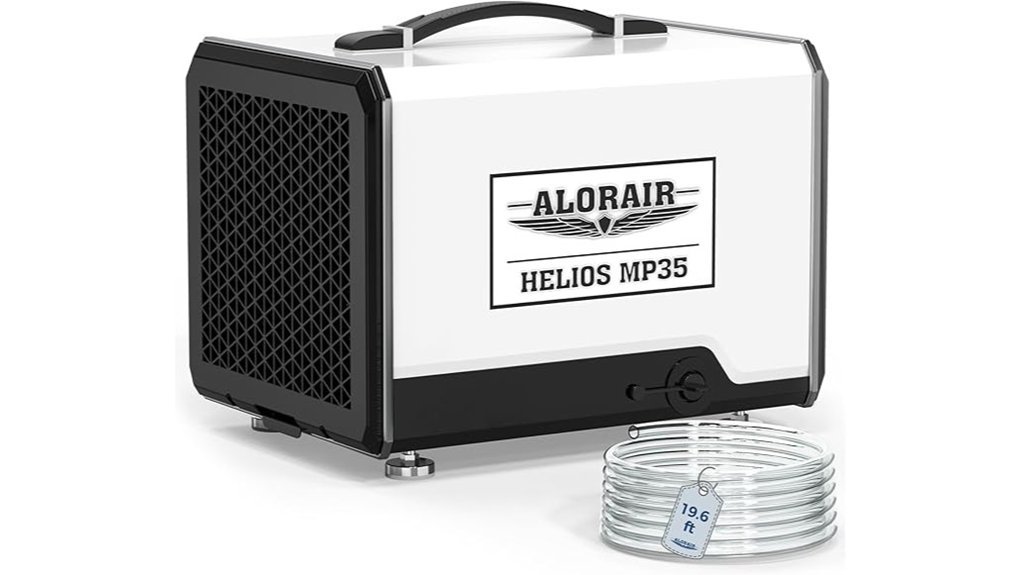
The ALORAIR Helios MP35 is rated at 70 pints per day under saturation conditions and about 35 pints per day at AHAM conditions. Its built-in pump can lift condensate up to 19.6 ft, while the compact corrosion-resistant cabinet, 126 CFM airflow, automatic operation, and 323-watt listed input make it a practical fit for smaller encapsulated crawl spaces.
Best For: Crawl spaces up to the manufacturer-rated 1,000 sq. ft. that need a compact cabinet and vertical pump drainage.
Pros:
- About 35 PPD at AHAM and 70 PPD at saturation.
- Built-in pump with up to 19.6 ft of vertical lift.
Cons:
- Lower reserve capacity than 55- to 70-AHAM-PPD models.
- Replacement-filter availability and warranty terms should be confirmed on the current listing.
HBN 125-Pint Crawl-Space Dehumidifier with Pump
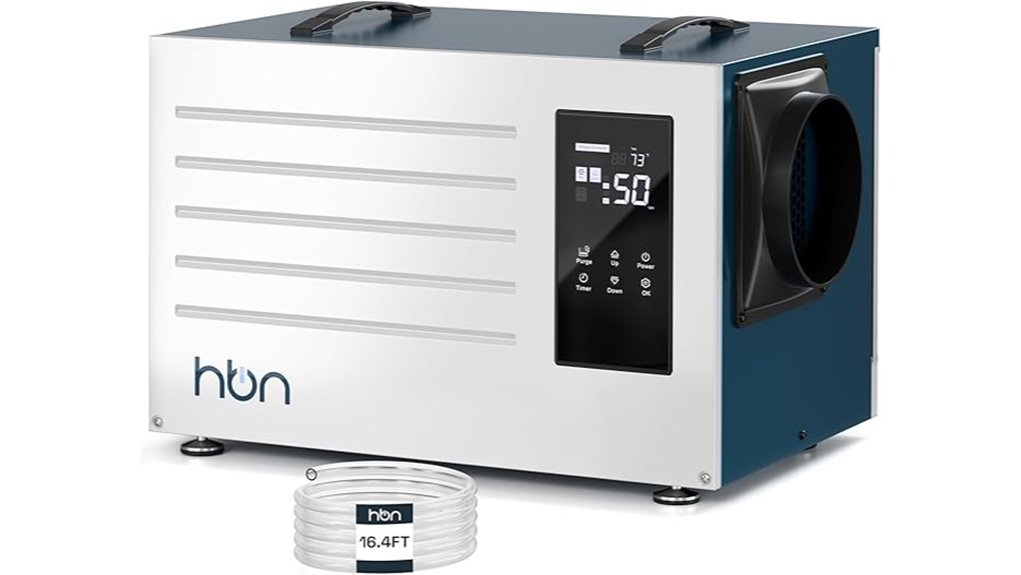
The HBN unit is advertised at 125 pints per day at 95°F and 90% RH and about 60 pints per day under AHAM conditions. It supports both gravity and pump drainage, and current listing data places it in spaces up to roughly 5,900 sq. ft. Automatic defrost, a 24-hour timer, adjustable humidity control, and a metal cabinet add useful crawl-space functionality.
Best For: Buyers who want a higher AHAM-rated unit and the flexibility to switch between gravity and pump drainage.
Pros:
- About 60 PPD at AHAM and 125 PPD at maximum conditions.
- Both gravity and automatic pump drainage.
Cons:
- Newer listing with a shorter public product history than established crawl-space models.
- Metal construction makes it heavier to position.
AprilAire E070 Pro Dehumidifier Bundle (70 Pint)
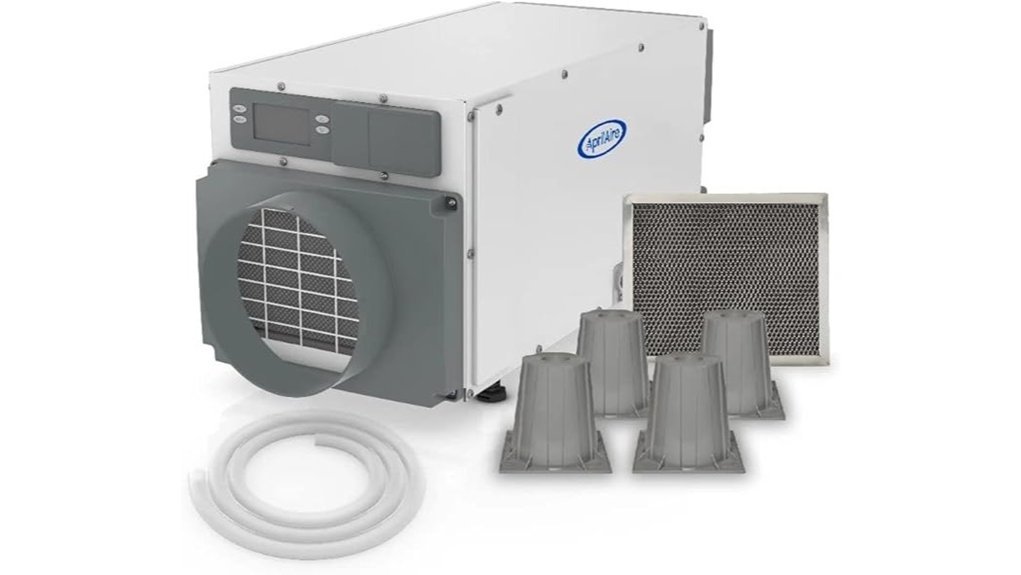
The AprilAire E070 Pro is a 70-pint whole-home dehumidifier with approximately 200 CFM airflow and a manufacturer-listed service area up to 2,800 sq. ft. Unlike many short commercial crawl-space units, it is built for permanent residential integration and can be used in a sealed crawl space, basement, or ducted whole-home installation. The bundle includes drainage and installation accessories, but the 33-in. cabinet requires careful clearance planning.
Best For: Homeowners who want a premium, permanent crawl-space or whole-home system and are comfortable with a more involved installation.
Pros:
- 70-PPD standard-condition capacity and about 200 CFM airflow.
- Suitable for sealed crawl-space, basement, or whole-home integration.
Cons:
- Long 33-in. cabinet may not fit every access opening or joist bay.
- No integral pump in the reviewed bundle; drainage still needs proper routing.
ARGENDON 145-Pint Commercial Dehumidifier with Pump
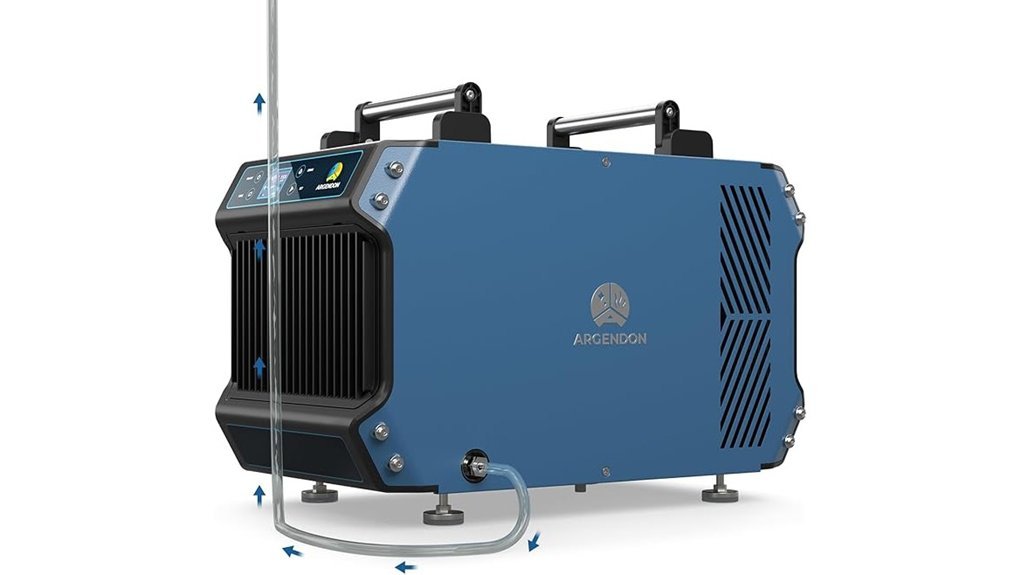
This ARGENDON Guardian 60 pump variant is advertised at up to 145 pints per day under hot, highly humid conditions for spaces up to 1,800 sq. ft. The built-in pump can lift condensate up to 19.6 ft, and the unit also provides gravity drainage. Automatic defrost, restart memory, adjustable humidity, GPP mode, and a compact 47.5-lb metal cabinet make it a flexible high-output option.
Best For: Medium to large encapsulated crawl spaces that need pump drainage and stronger maximum-condition capacity.
Pros:
- Built-in pump with up to 19.6 ft of lift plus gravity drainage.
- 145-PPD maximum-condition rating in a compact metal cabinet.
Cons:
- Standard DOE/AHAM capacity is not clearly presented in the current listing data reviewed.
- Listed 475-watt input may be more than smaller units.
CADPXS Crawl-Space Dehumidifier with Pump
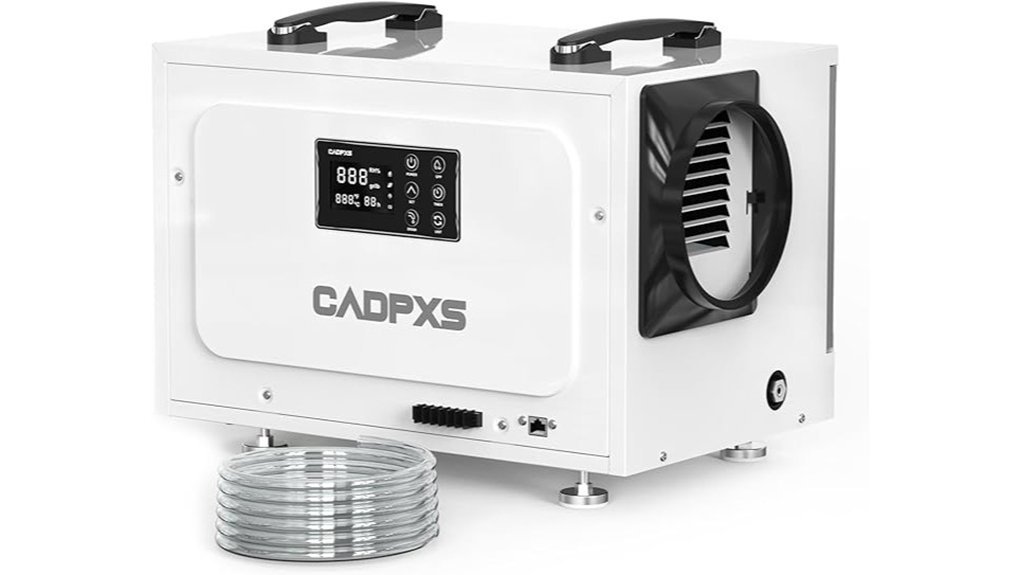
The CADPXS Remois XP125 listing is unusually helpful because it states several test conditions: 125 PPD at maximum conditions, about 55 PPD at AHAM conditions, and roughly 36.68 PPD under DOE conditions. The built-in pump supports up to 19.6 ft of vertical lift, and gravity drainage is also available. The low-profile cabinet is marketed for spaces up to 1,300 sq. ft.
Best For: Buyers who want pump flexibility and transparent capacity figures for more realistic comparison.
Pros:
- Clearly stated DOE, AHAM, and maximum-condition capacities.
- Built-in pump with up to 19.6 ft of lift plus gravity drainage.
Cons:
- Manufacturer coverage is limited to about 1,300 sq. ft. despite the high saturation rating.
- Newer brand with less long-term public history.
Factors to Consider When Choosing a Dehumidifier for an Encapsulated Crawl Space
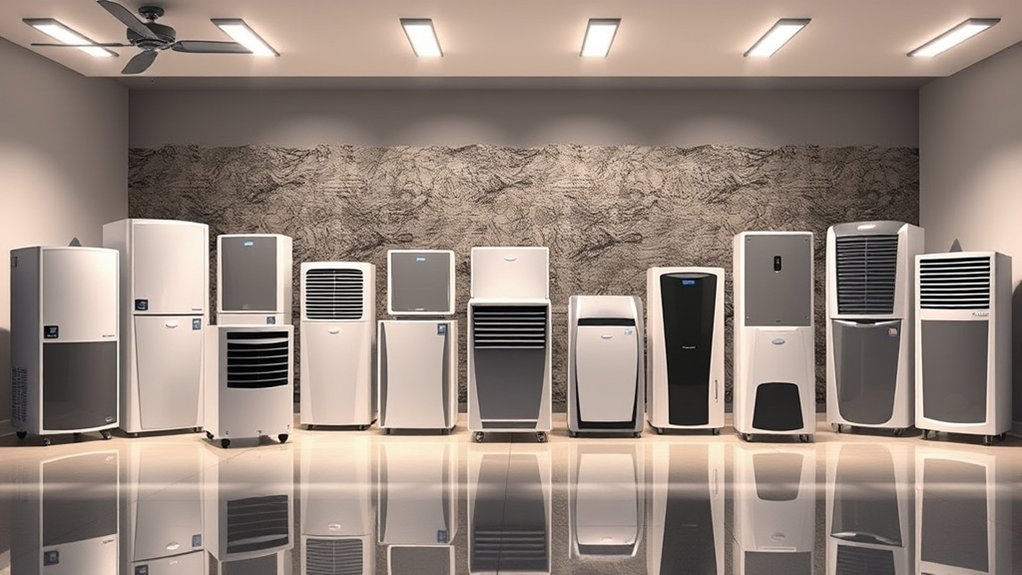
A crawl-space dehumidifier should be sized for the actual moisture load, not only the floor area. Encapsulation quality, ground vapor, wall leakage, temperature, ceiling height, standing water, and air circulation all affect performance.
Compare Capacity Ratings Correctly
DOE, AHAM, and saturation numbers are measured under different temperature and humidity conditions. Cooler air contains less removable moisture, so a unit advertised at 120 or 145 pints under hot saturation conditions may remove roughly half that amount under a standard AHAM test. For an apples-to-apples comparison, prioritize the DOE or AHAM figure when the seller provides it.
Coverage Area and Moisture Load
Measure the crawl-space footprint and height, then assess how wet the space is before dehumidification. A mildly damp, tightly sealed crawl space needs less capacity than the same floor area with seepage, open vents, disconnected ducts, or a damaged vapor barrier. Manufacturer square-foot figures are useful for screening, but they are not a substitute for a moisture-load calculation.
Choose Gravity or Pump Drainage First
A gravity drain is simpler and usually quieter, but the hose must slope continuously downward to an approved drain or sump. Choose a built-in pump when the discharge point is above the unit or the route cannot maintain slope. Check pump lift, hose length, freeze risk, local discharge rules, and service access before placing the unit.
Temperature and Auto Defrost
Crawl spaces often run cooler than living areas. Select a model with automatic defrost and verify its minimum operating temperature. Defrost protects the coil from prolonged ice buildup, but moisture-removal performance still drops as the air gets colder.
Airflow and Crawl-Space Layout
Higher CFM can help across a large open footprint, but partitions, foundation walls, closed doors, and tightly packed storage can create stagnant pockets. Leave the manufacturer-required intake and exhaust clearances. A remote humidistat, duct kit, or small circulation fan may help in complicated layouts, but only when the product supports that setup.
Energy Efficiency
Compare ENERGY STAR status and Integrated Energy Factor when those details are available for the exact model. A correctly sized efficient unit may run fewer hours than an undersized unit that never reaches its set point. Do not assume a low wattage alone means lower annual operating cost.
Noise and Vibration
Fan and compressor sound can travel through floor joists even when the unit is in a crawl space. Check the published sound rating if available, place the unit on a stable level base, maintain clearance around the cabinet, and use manufacturer-approved vibration isolation where appropriate.
Service Access and Maintenance
Leave enough room to remove the filter, inspect the drain, clean the coil area, and reach the controls. Check the filter monthly at first, then adjust the cleaning interval to dust conditions and the manufacturer’s instructions. Test pump drainage, inspect hoses for kinks or biofilm, and confirm the condensate outlet remains open.
Warranty and Support
Read the current warranty rather than relying on a headline year count. Coverage may differ for the complete machine, refrigeration system, parts, labor, shipping, and commercial use. Save the invoice, serial number, installation photos, and maintenance records in case service is needed.
- Confirm the crawl space is fully encapsulated and bulk water is controlled.
- Measure the access opening and the final service clearances.
- Compare DOE or AHAM capacity, not only saturation PPD.
- Map the complete drain route and required pump lift.
- Confirm outlet voltage, circuit capacity, and GFCI requirements.
- Plan filter, hose, coil, and pump access after installation.
Frequently Asked Questions
How Do I Determine the Right Size Dehumidifier for My Crawl Space?
Start with floor area, ceiling height, temperature, and the untreated humidity level. Then account for seepage, vapor-barrier condition, air leakage, duct leakage, and partitions. Compare DOE or AHAM capacity whenever possible. For a large, very wet, or complicated crawl space, a crawl-space contractor or HVAC professional can calculate the load more reliably than a simple square-foot rule.
What Humidity Setting Should I Use?
A practical starting point is about 50% to 55% RH, then monitor conditions in several locations. Keeping the space below 60% RH helps limit moisture problems, while excessively low settings can waste energy without adding meaningful protection.
What Maintenance Is Required?
Inspect the filter and drain monthly during the first season. Clean or replace the filter as directed, remove dust from the intake and exhaust, check the hose for blockage or poor slope, test the pump if fitted, and keep the coil area accessible. Follow the exact maintenance schedule in the current manual.
Can I Install a Dehumidifier Myself, or Should I Hire a Professional?
A straightforward plug-in unit with a short gravity drain may be a reasonable DIY project when the outlet, drainage, and clearances already meet the manual. Hire a professional for new electrical work, ducting, suspended installation, difficult condensate routing, unresolved water entry, or any setup that conflicts with local codes.
How Noisy Are Commercial Crawl-Space Dehumidifiers?
Noise varies by compressor, fan speed, airflow, pump use, and mounting surface. Do not rely on vague “quiet” claims. Check the exact sound specification when published and consider vibration transmission into rooms directly above the crawl space.
Will a Dehumidifier Fix Standing Water or Mold?
No. Repair leaks, drainage failures, groundwater entry, and damaged encapsulation first. Remove standing water and address existing mold with appropriate remediation. The dehumidifier is for controlling ongoing airborne moisture after bulk-water sources are corrected.
How Long Does a Crawl-Space Dehumidifier Last?
Service life varies with runtime, temperature, dust, corrosion exposure, drainage reliability, installation quality, and maintenance. A warranty period is not a lifespan promise. Good filter care, clear airflow, reliable drainage, and prompt repair of error codes can improve the chance of longer service.
Conclusion
For many medium encapsulated crawl spaces with a downhill drain, the ALORAIR 120 PPD offers a useful balance of roughly 55 PPD at AHAM conditions, low-profile construction, and straightforward continuous drainage. For smaller spaces that need vertical drainage, the ALORAIR 70 PPD with pump is easier to size realistically. The Waykar 125 PPD with pump and HBN 125 PPD suit larger footprints, while the AprilAire E070 is the premium choice for a permanent or ducted installation.
Whichever model you choose, compare the rating conditions, confirm the complete drain route, leave service access, and correct bulk-water problems before relying on dehumidification. That approach is more important than choosing the largest headline pint number.