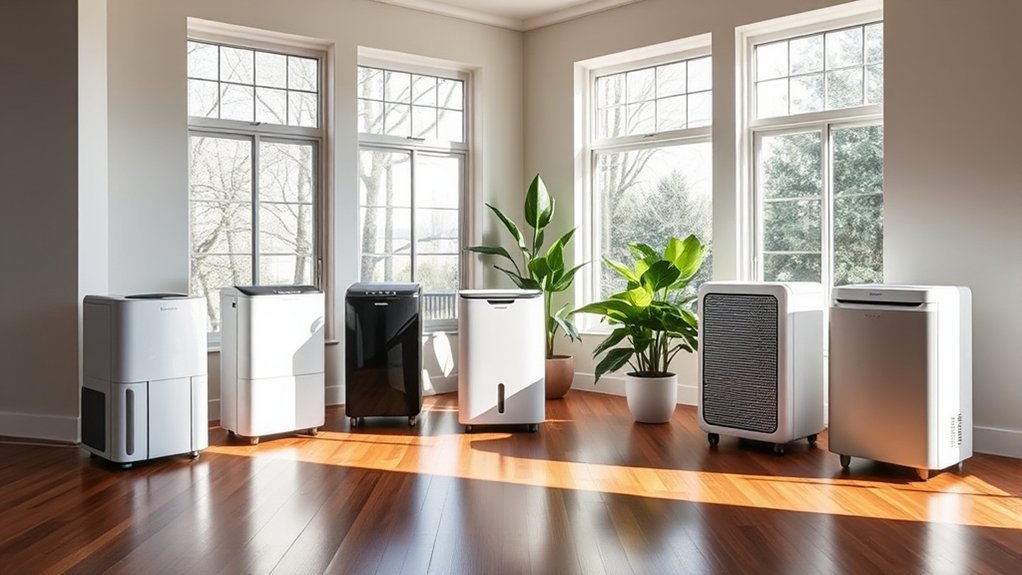
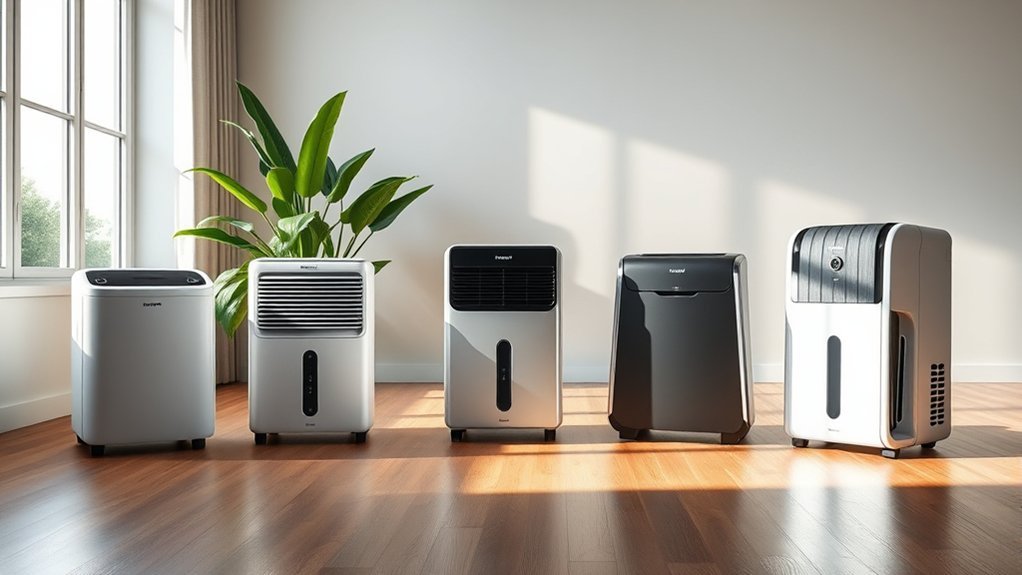
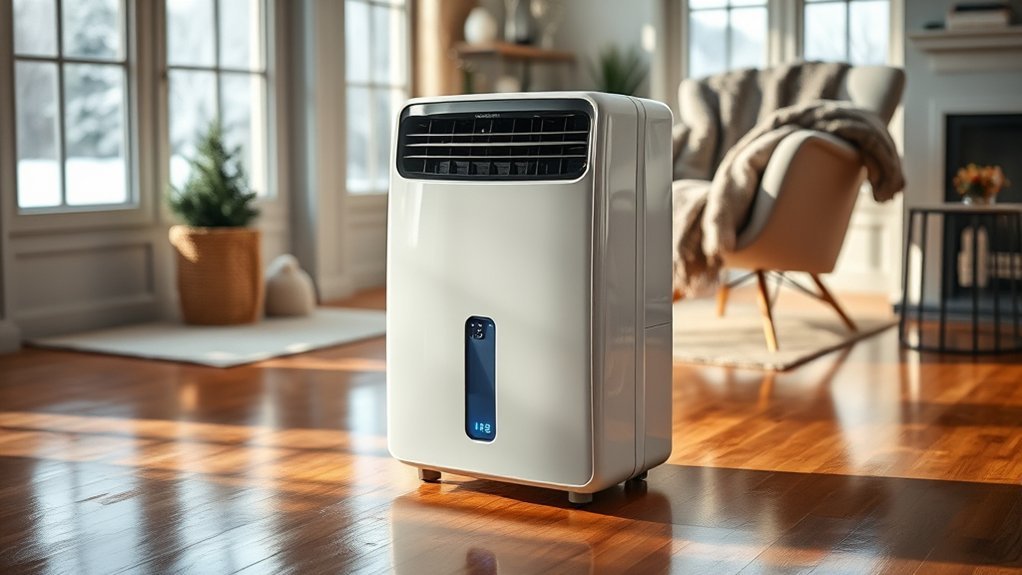
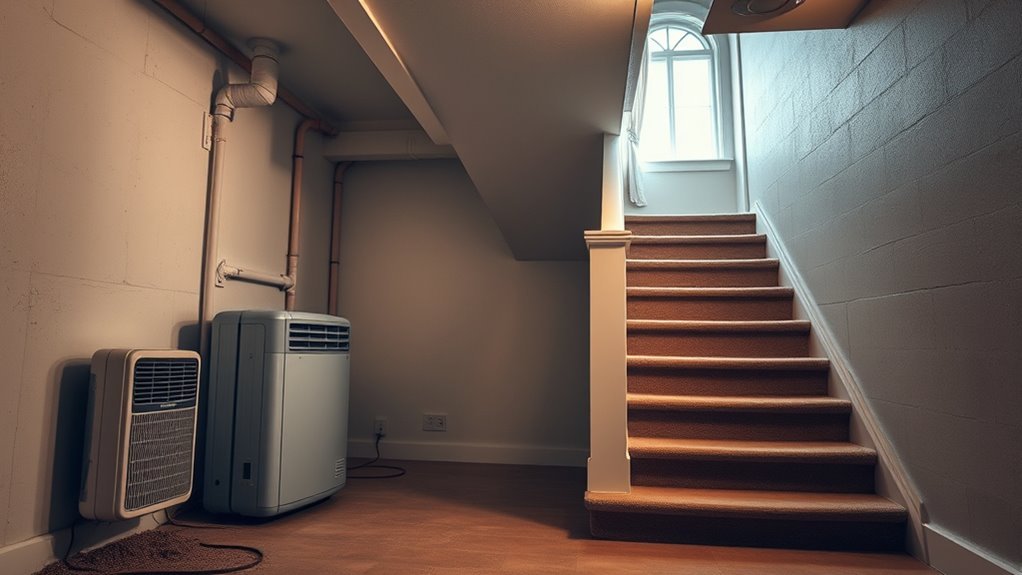
If you are comparing the 12 best desiccant dehumidifiers and moisture absorbers for 2026, first decide whether you need a powered desiccant unit for continuous air drying or a passive absorber for a closet, safe, vehicle, storage tote, cabinet, or parked RV. These product types solve different moisture problems and should not be compared by capacity alone. ECOR PRO EPD50-PRO is the strongest powered option here, Eva-Dry E-333 is the most convenient compact rechargeable pick, and DampRid Hi-Capacity is a practical no-power choice for larger enclosed storage areas. For safes and cases, TOAAOT and the larger Wisedry packs offer reusable silica-gel protection. Compare the enclosure size, recharge method, spill risk, noise, installation needs, and maintenance before choosing.
Quick verdict
- Best powered desiccant model: ECOR PRO EPD50-PRO
- Best compact rechargeable model: Eva-Dry E-333
- Best no-power option for large enclosed storage: DampRid Hi-Capacity Bucket
- Best reusable gun-safe set: TOAAOT 200g Canisters
- Best large rechargeable bags: Wisedry 2 x 500g Packets
Choose the right type first
- Open room, crawl space, boat compartment, or restoration work: Choose a powered desiccant dehumidifier with suitable airflow and a safe wet-air exhaust route.
- Closet, safe, case, cabinet, tote, or parked vehicle: Choose a reusable silica-gel unit or packet sized for the enclosed volume.
- No power and a stable storage area: Choose a calcium-chloride tub or hanging absorber, but protect it from tipping, punctures, and spills.
How these picks were evaluated: Product type, intended enclosure, moisture capacity, recharge or replacement method, spill risk, operating temperature, noise, installation requirements, and the clarity of the current product instructions. Manufacturer and seller coverage figures are treated as guidance, not a guarantee for every room or climate.
Quick Comparison of the Best Desiccant Dehumidifiers and Moisture Absorbers
| Product | Best For | Type | Key Consideration | Amazon |
|---|---|---|---|---|
| DampRid Hi-Capacity Bucket | Basements, garages, stored RVs and boats | Disposable calcium-chloride absorber | No power; confirm the current bucket size and keep it level | View on Amazon |
| Eva-Dry E-333 | Closets, cabinets, cars and small safes | Rechargeable silica-gel unit | Up to 333 cu. ft.; renew after the indicator changes | View on Amazon |
| TOAAOT 200g Canisters | Gun safes, toolboxes and cases | Oven-rechargeable silica gel | Three canisters; about 15 cu. ft. per canister | View on Amazon |
| ECOR PRO EPD50-PRO | Cold spaces, boats, restoration and continuous drying | Powered desiccant dehumidifier | No tank; requires a wet-air exhaust route | View on Amazon |
| DampRid Refillable Cups | Bathrooms, laundry rooms and under sinks | Refillable calcium-chloride absorber | Up to 250 sq. ft.; scented formula | View on Amazon |
| ECCEPOPU 200g Canister | Safes, cabinets and storage bins | Oven-rechargeable silica gel | Single 200g canister; seller lists up to 80 cu. ft. | View on Amazon |
| USB-C Rechargeable 2-Pack | Camera cases, electronics and 3D filament | USB-C heated silica-gel unit | Recharge separately from dehumidifying | View on Amazon |
| DryTote 100g Pack | Storage totes, cases and cabinets | Microwave-rechargeable silica gel | Indicator dot shows when recharging is needed | View on Amazon |
| FURWEY 6-Pack | Multiple small bins, drawers and closets | Microwave-rechargeable silica gel | Six 100g packs; follow the heating instructions closely | View on Amazon |
| Wisedry 2 x 500g | Cars, RV cabinets, larger safes and storage chests | Microwave- or oven-rechargeable silica gel | Recharge only after a 500g bag exceeds 650g | View on Amazon |
| DampRid Hanging 3-Pack | Closets, bathrooms and laundry areas | Disposable hanging absorber | Up to 60 days; scented formula | View on Amazon |
| Wisedry 4 x 500g Car Packets | Several vehicles or rotating recharge use | Microwave- or oven-rechargeable silica gel | Large four-pack; useful when one pair is recharging | View on Amazon |
DampRid Hi-Capacity Moisture Absorber Bucket (2 Pack)
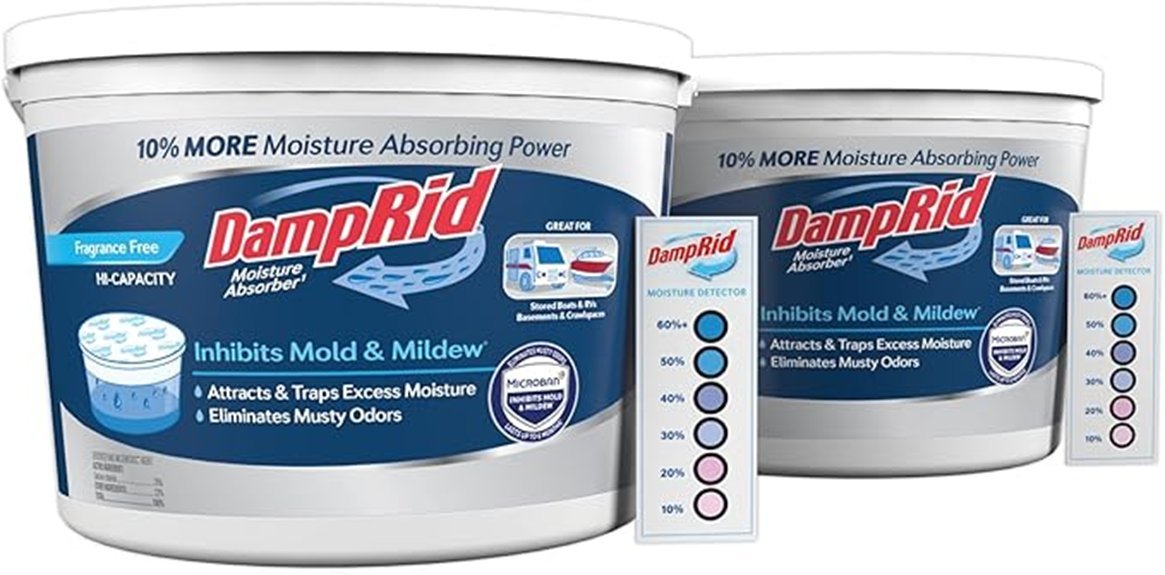
Best no-power pick for larger enclosed storage areas. DampRid Hi-Capacity uses calcium-chloride crystals to attract moisture and collect the resulting liquid in the bucket. The current Amazon listing is a two-pack of fragrance-free 2 lb. 15.5 oz. buckets. DampRid markets its Hi-Capacity line for larger spaces and service for up to six months, but actual coverage and life depend on the exact container size, temperature, humidity, airflow, and room leakage. It is most useful in garages, storage rooms, and parked boats or RVs where power is unavailable and the bucket can remain level.
Why you will like it: It is simple, silent, fragrance-free, and needs no charging or installation. Place it on a stable, level surface, leave the safety cover in place, and replace the bucket when the collection level reaches the marked line.
Who should avoid it: Choose another option for a moving vehicle, an area where the container may tip, or a room that needs controlled continuous humidity reduction.
Pros:
- No electricity, batteries, drain hose, or recharge cycle.
- Designed for larger enclosed areas than small packets or canisters.
- Helps reduce excess moisture and related musty odors.
Cons:
- Disposable rather than rechargeable.
- Collected liquid can damage some materials if spilled.
- Performance and lifespan vary with the conditions.
Eva-Dry Wireless Mini Dehumidifier, White (E-333)
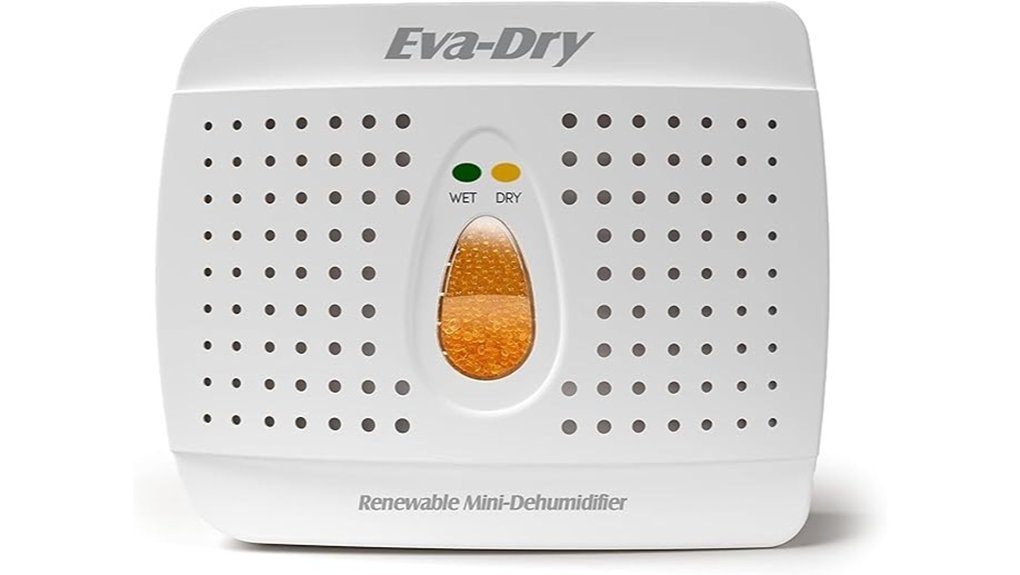
Best compact rechargeable pick. The Eva-Dry E-333 is a cordless silica-gel unit for closets, cabinets, cars, boat cabins, gym bags, and small safes. The manufacturer rates it for spaces up to 333 cubic feet and says it can absorb up to 6 ounces of moisture before renewal. A color indicator shows when the beads need to be dried by plugging the unit into an outlet.
Why you will like it: It is spill-free during normal use, easy to hang or stand, and does not need batteries. The manufacturer also lists a five-year warranty.
Who should avoid it: It is not a substitute for a powered room dehumidifier in a wet basement, bathroom, or other high-moisture open area.
Pros:
- Compact, cordless, reusable, and easy to move.
- Clear indicator reduces guesswork about recharging.
- Suitable for several small enclosed-space applications.
Cons:
- Limited to small spaces and moderate moisture loads.
- Needs access to an outlet during the renewal cycle.
- Cannot dehumidify while it is being recharged.
TOAAOT Gun Safe Dehumidifier Silica Gel Canister (3 Units)
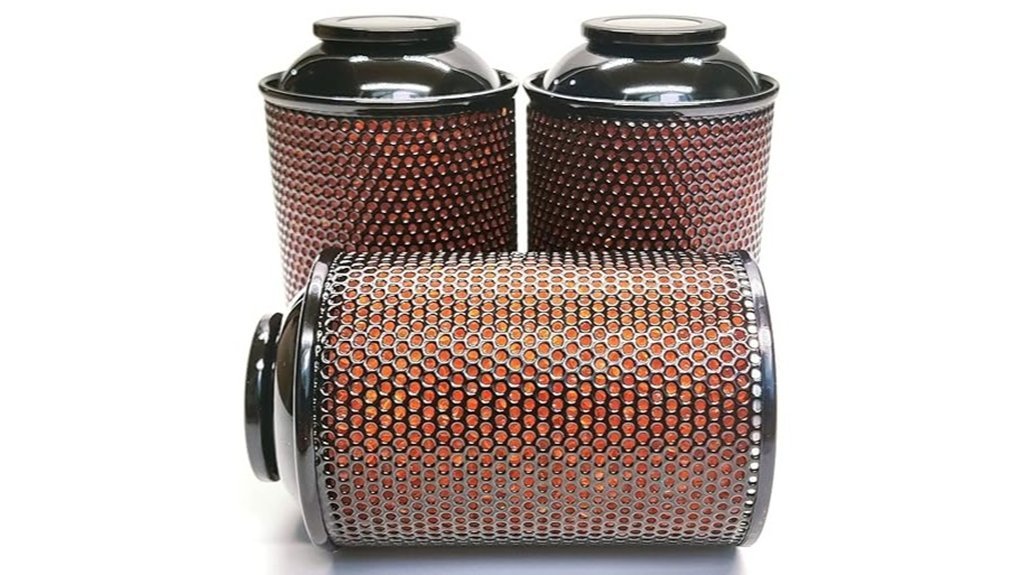
Best reusable canister set for gun safes. This TOAAOT pack includes three 200g silica-gel canisters for gun cases, safes, toolboxes, and other enclosed storage. Each canister is listed for about 15 cubic feet. The orange indicator beads turn dark green as they absorb moisture, making it easier to know when reactivation is due.
Why you will like it: It is silent, battery-free, reusable, and easy to split among several compartments. The black canisters are designed to resist rust, and the listing describes the indicator silica gel as cobalt-chloride-free.
Who should avoid it: It is not suitable for drying a room, fixing an active leak, or controlling severe humidity in a frequently opened safe.
Pros:
- Three canisters provide flexible placement.
- Color-changing beads give a visible recharge cue.
- No cords, batteries, tank, or liquid collection.
Cons:
- Small-space coverage only.
- Oven reactivation takes several hours.
- Hot canisters must cool fully before returning to storage.
ECOR PRO 50 Pint Desiccant Dehumidifier (EPD50-PRO)
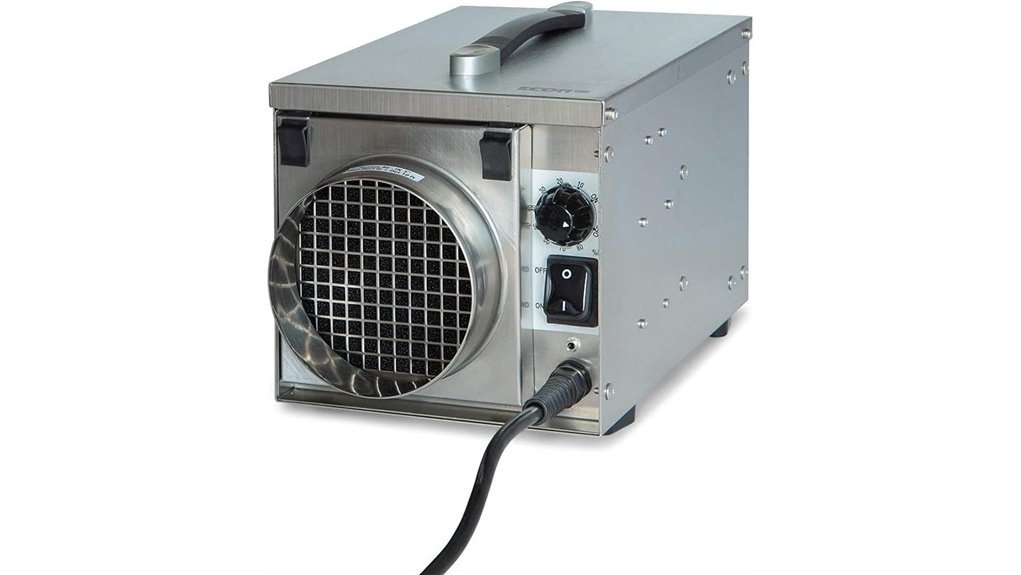
Best powered desiccant model for cold or demanding spaces. The ECOR PRO EPD50-PRO is the only true continuous-duty powered desiccant dehumidifier in this list. Its stainless-steel body, approximately 85 CFM airflow, built-in controls, and operating range of about -4°F to 104°F make it better suited than passive packets for boats, crawl spaces, restoration work, storage areas, and other locations with persistent moisture.
Unlike a compressor unit, it does not collect condensate in a tank. It sends humid regeneration air through a separate wet-air exhaust, so correct ducting and installation are essential. The product name uses a 50-pint comparison, while the manufacturer lists a maximum extraction figure of about 25.4 pints under its stated test conditions. Do not compare that number directly with current compressor-dehumidifier ratings without checking the test standard.
Why you will like it: It works across a wide temperature range, can be mounted or carried, and avoids tank emptying.
Who should avoid it: It is excessive for a closet or cabinet and unsuitable where you cannot route the wet-air exhaust safely.
Pros:
- Powered, continuous desiccant drying for persistent moisture.
- All-metal stainless-steel construction.
- Works in colder conditions than many compressor models.
Cons:
- Requires power, correct ducting, and more installation planning.
- No collection tank; wet air must be exhausted properly.
- About 52 dB, so it is not silent like passive absorbers.
DampRid Refillable Moisture Absorber, 6-Pack Fresh Scent
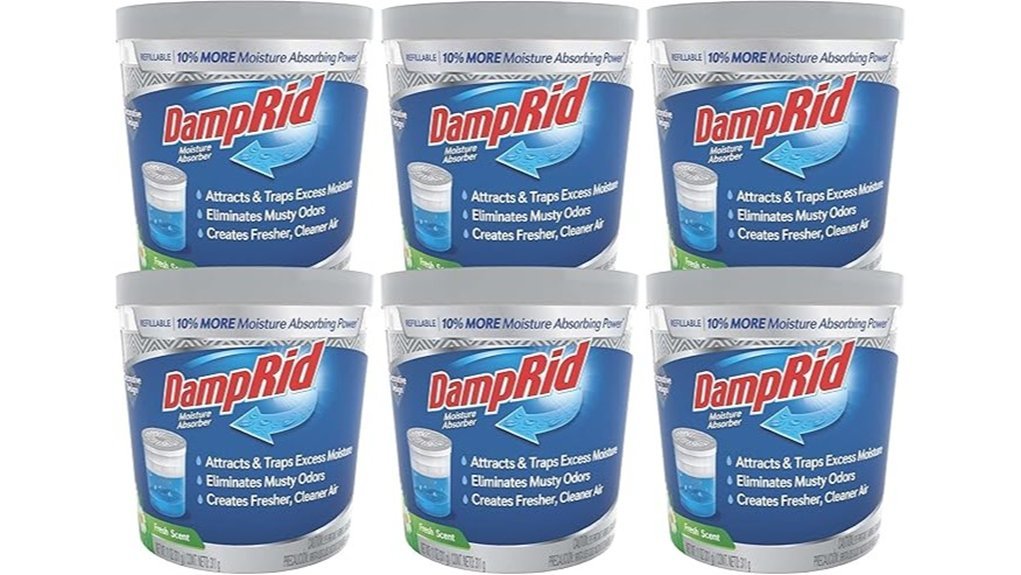
Best refillable home moisture absorber. These 11-ounce DampRid cups are made for bathrooms, laundry rooms, kitchens, closets, pantries, and under-sink cabinets. DampRid lists each cup for areas up to 250 square feet and up to 45 days of use, with actual life depending on heat and humidity. The crystals dissolve as they absorb moisture, and you refill the container after emptying the collected liquid according to the label.
Why you will like it: The cups are inexpensive to place around several problem spots, blend into home décor, and require no electricity.
Who should avoid it: Skip the scented version if you are fragrance-sensitive, and choose a powered unit for heavy or continuous dampness.
Pros:
- Refillable rather than fully disposable.
- Good for several small household moisture zones.
- Helps reduce musty odors while absorbing moisture.
Cons:
- Contains liquid after use and can spill if tipped.
- Fresh scent will not suit every buyer.
- Not designed for moving vehicles or large open rooms.
ECCEPOPU Gun Safe Dehumidifier 200g Silica Gel Canister
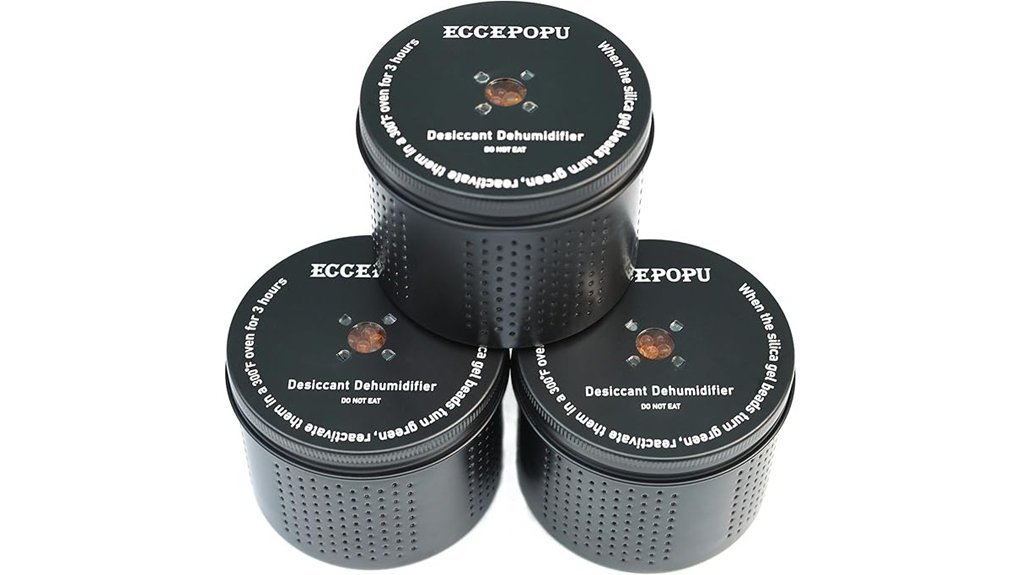
Best single high-capacity safe canister. The current listing is for one 200g aluminum-shell silica-gel canister, not a three-pack. It is intended for gun safes, cabinets, storage bins, toolboxes, ammo cans, and similar enclosed spaces. The seller lists protection for up to 80 cubic feet, while real performance will depend on how well the enclosure is sealed and how often it is opened.
Why you will like it: The reusable metal format is sturdier than a soft packet, does not create liquid runoff, and includes a viewing window for checking the indicator beads.
Who should avoid it: Do not use this canister as a room dehumidifier or rely on it to correct active water intrusion, condensation caused by an unsealed safe, or severe humidity.
Pros:
- Single reusable 200g canister for a larger enclosed safe or cabinet.
- Aluminum shell with a viewing window.
- Silent, passive operation with no batteries or collected liquid.
Cons:
- Only one canister is included in the current listing.
- Requires periodic oven reactivation.
- Coverage is a seller estimate and should be checked with a hygrometer.
2 Pack Rechargeable Desiccant Dehumidifier with USB-C Cable
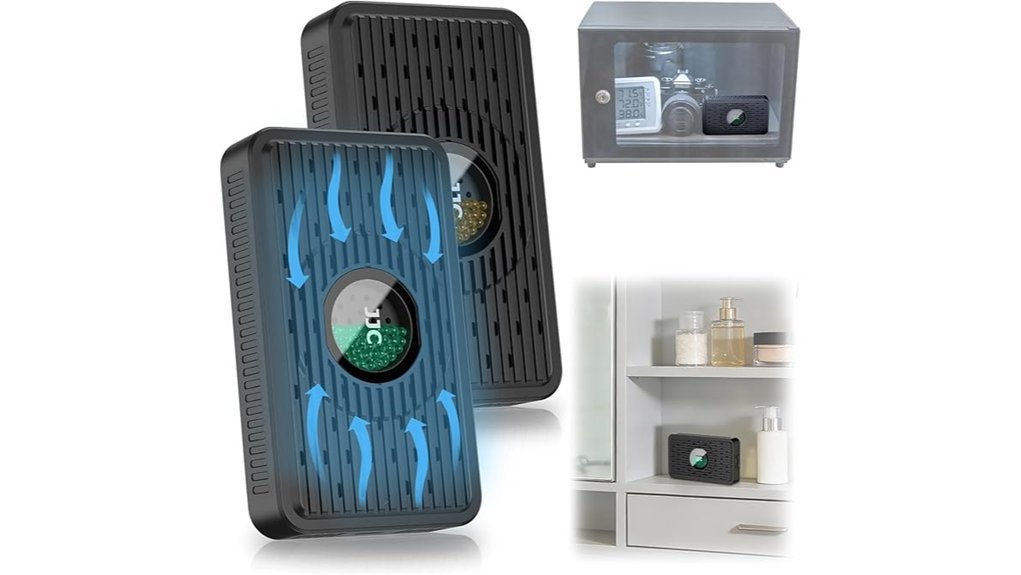
Best USB-C rechargeable option. This two-pack uses color-indicating silica gel inside compact ABS housings. It is intended for gun safes, camera cases, electronics cabinets, 3D-filament storage, and similar enclosed spaces. When the beads change from orange to green, the built-in heater can dry them through the included USB-C cable. The seller lists a recharge time of roughly two to six hours, depending on conditions.
Why you will like it: USB-C renewal avoids an oven or microwave, and the hard case is easy to place around delicate gear.
Who should avoid it: It is not designed for rooms or very damp spaces, and it cannot absorb moisture while it is being recharged.
Pros:
- Convenient USB-C reactivation.
- Color indicator shows when drying is needed.
- Compact two-pack for rotating between storage areas.
Cons:
- Longer recharge time than microwave-ready packets.
- Needs a power source and safe open-air placement while charging.
- Coverage depends heavily on how sealed the enclosure is.
DryTote Rechargeable Desiccant Pack, 100g Yellow
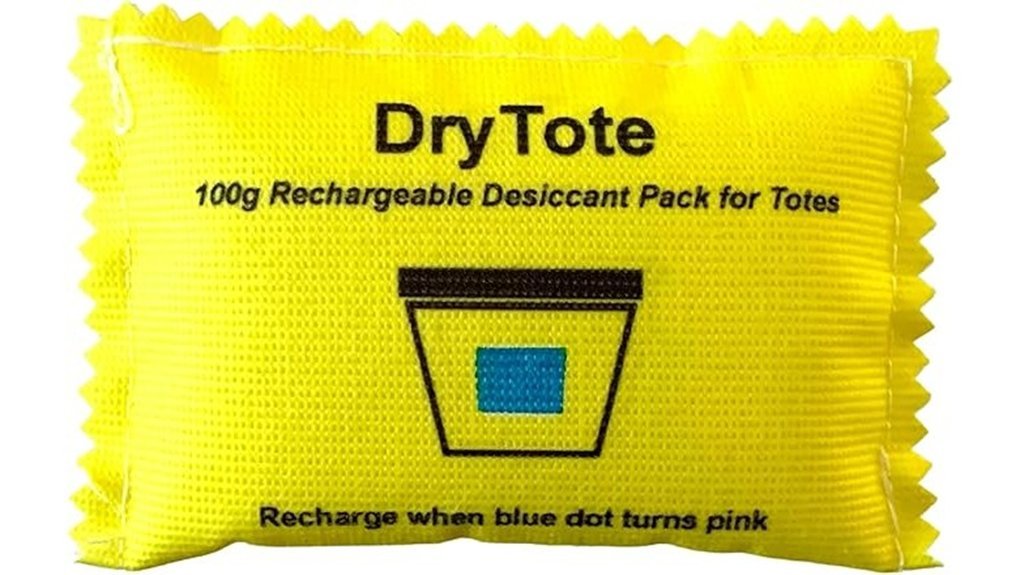
Best for storage totes and cases. DryTote is a 100g rechargeable silica-gel pack designed for enclosed bins, safes, cabinets, camera cases, instrument cases, and gear bags. The manufacturer states that one pack can protect an enclosure up to roughly 200 gallons. Its indicator dot is blue when dry and turns pink when the pack needs recharging.
Why you will like it: The fabric pack is compact, needs no power during use, and can be recharged in a microwave or low oven according to the manufacturer instructions.
Who should avoid it: A single pack will not control humidity in an open room, leaky shed, or frequently opened container.
Pros:
- Easy visual indicator with no weighing required.
- Reusable format reduces disposable packet waste.
- Well matched to totes, cases, safes, and cabinets.
Cons:
- Coverage assumes a reasonably enclosed space.
- Requires periodic heating and cooling.
- Does not provide active airflow or a humidity setting.
FURWEY Rechargeable Silica Gel Desiccant Packs for Storage
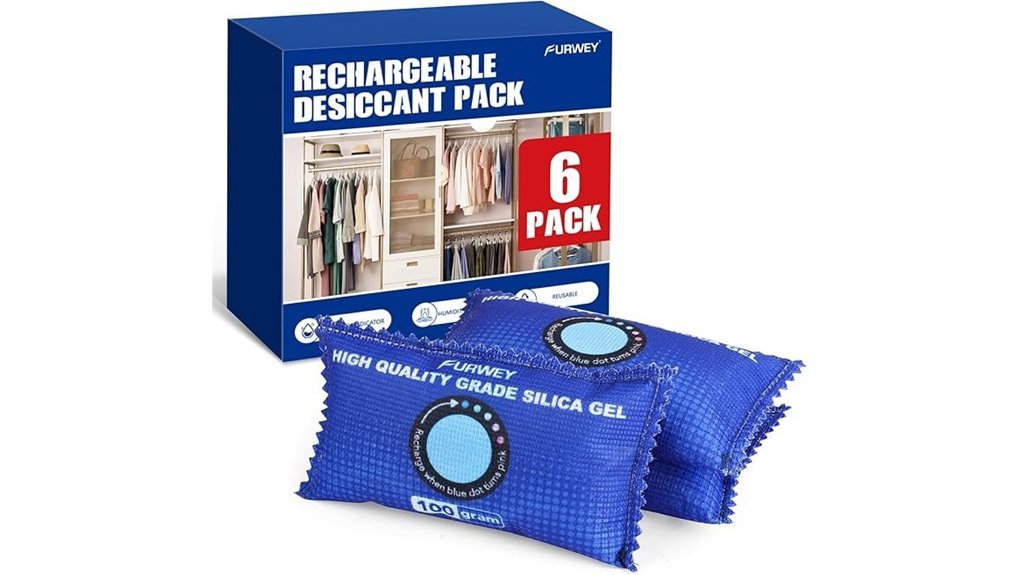
Best value multi-pack for small containers. FURWEY includes six individually sealed 100g silica-gel packs. They fit storage bins, drawers, closets, cases, small cabinets, and vehicle compartments. The blue indicator changes to light pink as the pack becomes saturated, and the seller lists an absorption range of about 25% to 35% of each pack’s dry weight.
Why you will like it: Six packs make it easy to protect several containers at once, and individual wrapping helps keep unused packs dry.
Who should avoid it: These are not room dehumidifiers, and the seller recommends replacement after about ten recharge cycles for best performance.
Pros:
- Six compact 100g packs.
- Color-changing windows simplify monitoring.
- Microwave-rechargeable according to the product instructions.
Cons:
- Finite recommended recharge life.
- Each small pack has limited capacity.
- Heating directions must be followed carefully to avoid damage.
Wisedry Rechargeable Silica Gel Dehumidifier Packets (2 x 500g)
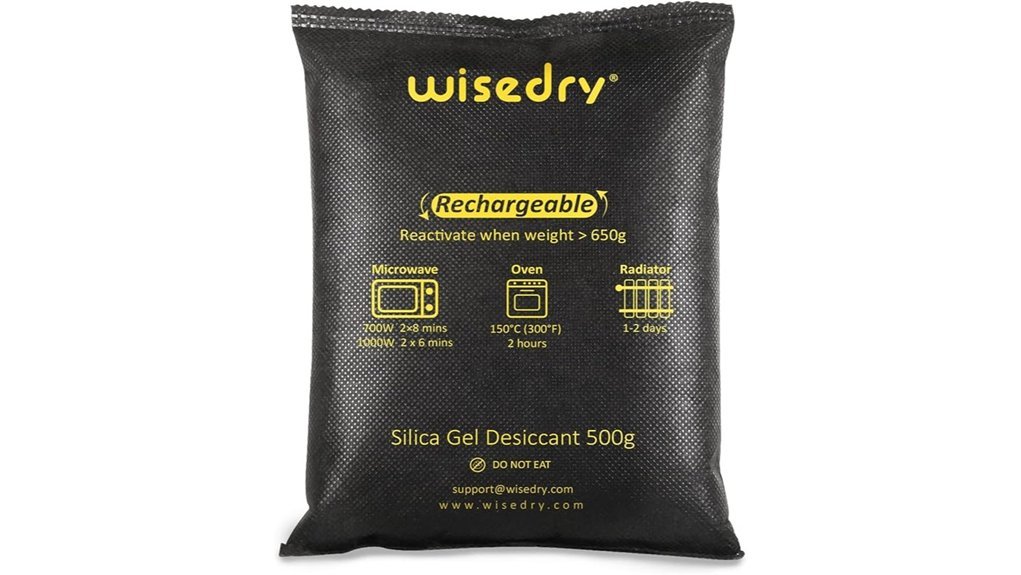
Best large rechargeable packets. Wisedry’s two 500g bags suit parked cars, RV cabinets, boat cabins, large safes, storage chests, and other enclosed spaces better than small 100g packs. Wisedry recommends one 500g packet for an enclosed space up to about 35 cubic feet, with extra packets for more humid conditions. The manufacturer says each bag absorbs at least about 150g of moisture, with a listed maximum around 180g, and can be reactivated in a microwave or oven.
Why you will like it: The large silica-gel load provides longer service in enclosed spaces, and the two-pack lets you rotate one bag into service while the other is cooling.
Who should avoid it: These bags are not an automatic humidity-control system and should not be heated before they are saturated.
Pros:
- Substantially more desiccant than small closet packets.
- Reusable in a microwave or oven.
- Useful for vehicles, RV storage, safes, and larger cabinets.
Cons:
- Must be weighed before microwave reactivation.
- Heating can take about 10 to 16 minutes, depending on microwave power.
- Large hot packs need a safe cooling area.
DampRid Lavender Vanilla Hanging Moisture Absorber 3 Pack
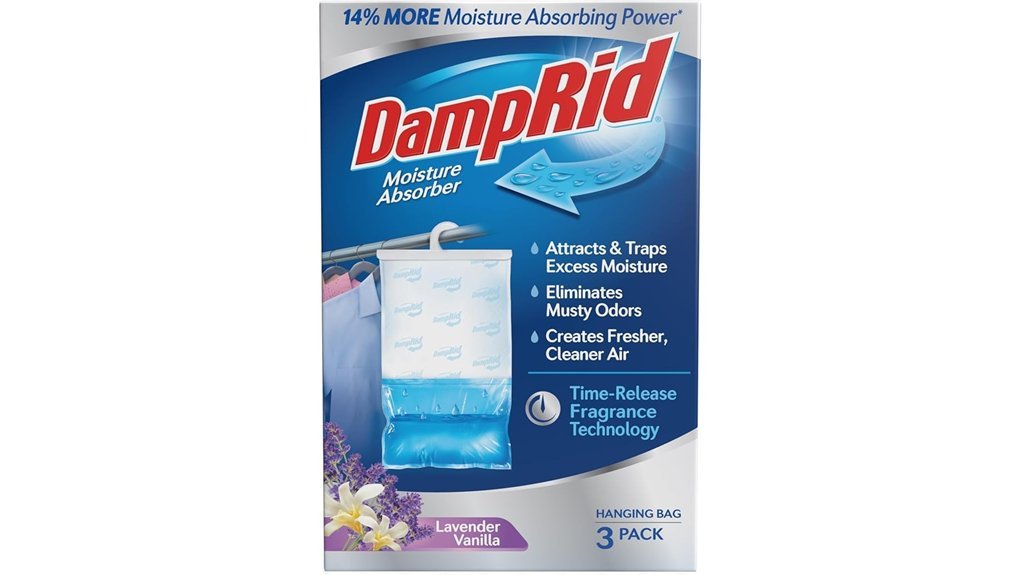
Best hanging option for closets. DampRid’s Lavender Vanilla hanging bags combine calcium-chloride moisture absorption with a time-release fragrance. They are convenient for closets, bathrooms, laundry rooms, dorms, mudrooms, and other small spaces where a cup would take up shelf or floor space. The manufacturer states that each bag can last up to 60 days, depending on temperature and humidity.
Why you will like it: Open, gently shake, and hang the bag without electricity or a refill container. A visible liquid chamber shows when replacement is due.
Who should avoid it: Avoid the scented version if fragrances bother you, and do not place it where the bag can be punctured or compressed.
Pros:
- Easy hanging format saves shelf space.
- No power, batteries, or recharge cycle.
- Helps reduce excess moisture and musty odors.
Cons:
- Disposable after the liquid reaches the fill line.
- Fragrance may be too strong for sensitive users.
- Only for smaller enclosed areas.
Wisedry Rechargeable Silica Gel Car Dehumidifier Packets
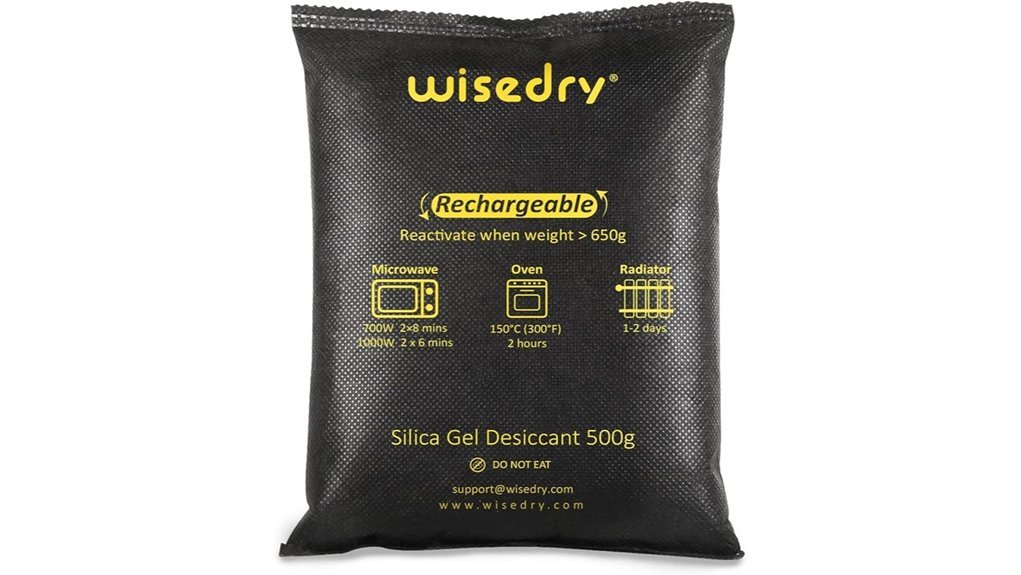
Best multi-vehicle or rotation pack. This Wisedry option includes four 500g silica-gel bags. It uses the same large-capacity format as the two-pack but gives you enough units for several vehicles, an RV, multiple storage areas, or a rotation in which some bags remain in service while others are being reactivated.
Why you will like it: The bags can help reduce moisture that contributes to interior condensation and fogging, especially when a vehicle sits closed between trips.
Who should avoid it: A desiccant bag will not fix a water leak, wet carpet, blocked drain, failed door seal, or ventilation problem. Correct the moisture source first.
Pros:
- Four large reusable bags for flexible placement.
- Microwave- or oven-reactivated.
- Useful for cars, RVs, boats, safes, and storage rooms.
Cons:
- Requires weighing and periodic reactivation.
- Takes more storage and cooling space than small packs.
- Passive drying is slower than powered ventilation or dehumidification.
Factors to Consider When Choosing Desiccant Dehumidifiers
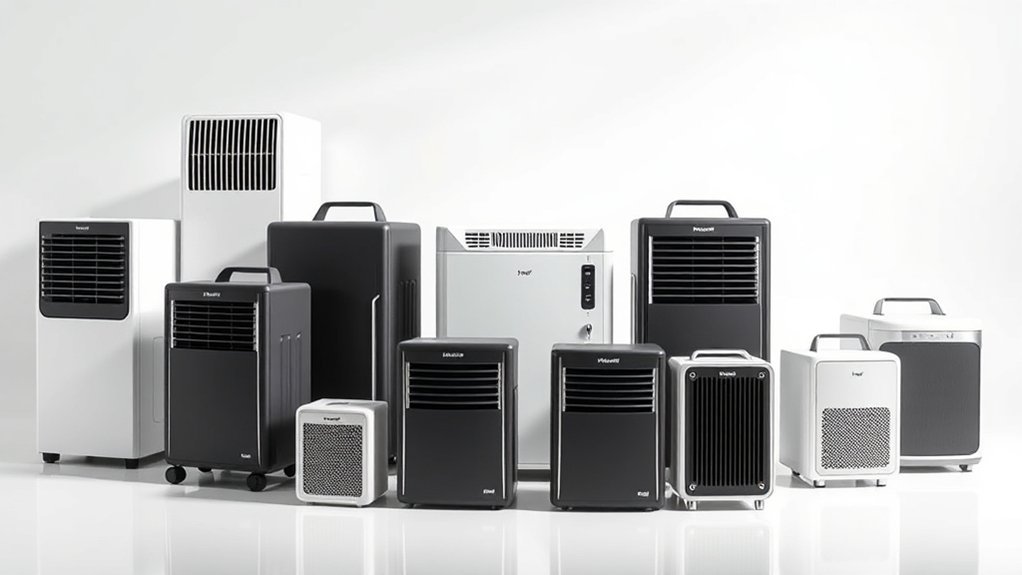
The products in this guide fall into two different groups: powered desiccant dehumidifiers that move and dry air continuously, and passive desiccant moisture absorbers that protect a limited enclosed space. Start with that distinction, then compare the capacity, recharge method, spill risk, noise, placement, and temperature range.
Powered vs. Passive Desiccant
Choose a powered model when you need continuous drying, airflow, and better performance in a room, boat compartment, crawl space, or restoration area. Choose a passive silica-gel or calcium-chloride product for a closet, safe, case, tote, cabinet, parked vehicle, or other enclosed space. Passive products are silent and inexpensive, but they cannot match the water-removal rate of a properly installed powered dehumidifier.
Moisture Removal Capacity
Do not compare every product by pints per day. Powered units may use pints or liters per day, silica-gel packs use grams or ounces of absorbed water, and calcium-chloride tubs use expected service life. Test conditions also matter. Compare products within the same type and choose extra capacity for frequently opened, leaky, or very humid spaces.
Coverage Area Needs
Square feet, cubic feet, and gallons describe different kinds of spaces and are not interchangeable. A 333-cubic-foot rating may suit a small closet, while a 200-gallon rating applies to a closed tote or case. Coverage also changes when doors are opened often or outside air leaks into the space. Treat manufacturer figures as starting points, then use a hygrometer to confirm the result. If humidity stays high, reduce air leakage, address the moisture source, add more desiccant, or use a powered system.
Reactivation Method
Rechargeable products may use an outlet, USB-C heater, oven, or microwave. Follow the exact instructions for the specific product. Never assume that one brand’s time and temperature apply to another. Let heated packs or canisters cool fully before returning them to a plastic enclosure, vehicle, safe, or case.
Noise Level
Passive tubs, packets, and canisters are silent. Powered desiccant dehumidifiers use fans and heaters, so noise matters in bedrooms, offices, and living areas. The ECOR PRO unit is listed at about 52 dB. Also consider the heat and airflow produced by a powered desiccant model, not just its sound rating.
Portability and Size
Small packs work best when they fit close to the items being protected without blocking vents or touching sensitive surfaces. For cars, boats, and RVs, choose a product that stays secure during storage and remove loose containers before driving. Powered units need room for airflow, a safe power connection, and any required ducting.
Drainage, Liquid Collection, and Wet-Air Exhaust
Silica-gel products hold moisture in the beads and need periodic heating. Calcium-chloride products create collected liquid that must remain upright and be emptied or discarded. Powered desiccant units such as the ECOR PRO can be condensate-free but still need a wet-air exhaust route. That exhaust should not return moisture to the same area.
Operating Temperature Range
Powered desiccant technology often performs better than compressor technology in cold conditions, but always check the specific model. The ECOR PRO EPD50-PRO is listed for approximately -4°F to 104°F. Passive silica gel can still absorb moisture in cooler environments, but the rate and recharge interval will vary with temperature, humidity, airflow, and enclosure leakage.
Safety and Maintenance
- Keep calcium-chloride liquid away from children, pets, leather, metal, and finished surfaces.
- Never microwave or oven-heat a product unless its instructions specifically allow that method.
- Use a hygrometer to confirm performance instead of assuming the absorber is enough.
- Fix leaks, wet insulation, standing water, and ventilation problems before relying on a desiccant.
- Check Amazon listing details and the manufacturer’s instructions because packaging and specifications can change.
Before you buy
- Measure the enclosed volume instead of relying only on floor area.
- Decide whether you can safely use an outlet, oven, microwave, or USB-C heater for reactivation.
- Choose silica gel around electronics, safes, cases, and valuables when liquid collection would create unacceptable spill risk.
- Choose a powered unit when you need continuous room-scale drying or controlled humidity.
- Plan to verify performance with a hygrometer and repair any leak or water intrusion first.
Frequently Asked Questions
How Often Should Desiccant Dehumidifier Desiccants Be Recharged or Replaced?
Use the product’s indicator, weight threshold, or fill line instead of a fixed calendar. Silica-gel products are usually recharged when the indicator changes color or the bag reaches its stated saturated weight. Calcium-chloride tubs and hanging bags are replaced or refilled when the crystals dissolve and the liquid reaches the marked level.
Can Desiccant Dehumidifiers Work Effectively in Freezing Temperatures?
Some powered desiccant units are designed for subfreezing air because they do not depend on a cold evaporator coil. The ECOR PRO model in this guide is listed down to about -4°F. Passive products may still absorb moisture in the cold, but they work slowly and are not equivalent to a powered low-temperature dehumidifier.
Which Desiccant Dehumidifier Is Best for Long-Term RV Storage?
For an unpowered, parked RV that you can inspect regularly, the DampRid Hi-Capacity bucket is the simplest choice, provided it stays level and secure. For continuous active drying, the ECOR PRO is more capable but needs electricity and a correctly routed wet-air exhaust. Reusable Wisedry bags are useful for targeted areas such as cabinets and the cab, but they still need periodic reactivation.
Do Desiccant Dehumidifiers Remove Odors as Well as Moisture?
They can reduce musty odors by lowering moisture, but they do not remove every odor source or filter gases and particles. Clean moldy or wet materials, improve ventilation, and address leaks. Scented DampRid products add fragrance, which is different from true odor removal.
Can Silica-Gel Packs Dehumidify a Room?
Small silica-gel packs are best for enclosed containers, safes, closets, cabinets, and vehicles. They do not move enough air or hold enough moisture to replace a powered dehumidifier in an open room or wet basement.
How Do I Safely Dispose of Spent Desiccant Material?
Follow the product label and local waste rules. Seal dusty or leaking material, avoid dumping it outdoors or down an unapproved drain, and keep it away from children and pets. Reusable silica gel should be reactivated only by the method stated by its manufacturer.
Conclusion
Final recommendation
Choose by moisture problem, not by the largest advertised number. Use the ECOR PRO EPD50-PRO for continuous powered desiccant drying where you can provide the required wet-air exhaust. Choose the Eva-Dry E-333 for small cordless spaces, DampRid Hi-Capacity for stable no-power storage areas, TOAAOT for several small safe compartments, the ECCEPOPU canister for one larger enclosed safe or cabinet, and Wisedry’s 500g packets for parked vehicles, RV cabinets, and storage chests.
The best choice depends on whether you need active room drying or passive protection for an enclosed space. Match the product to the enclosure, follow the exact recharge or replacement instructions, monitor humidity with a hygrometer, and correct leaks or standing water before expecting any desiccant product to solve the problem.