Affiliate disclosure: This article contains Amazon affiliate links. If you buy through a link, we may earn a commission at no extra cost to you.
Last updated: August 2026
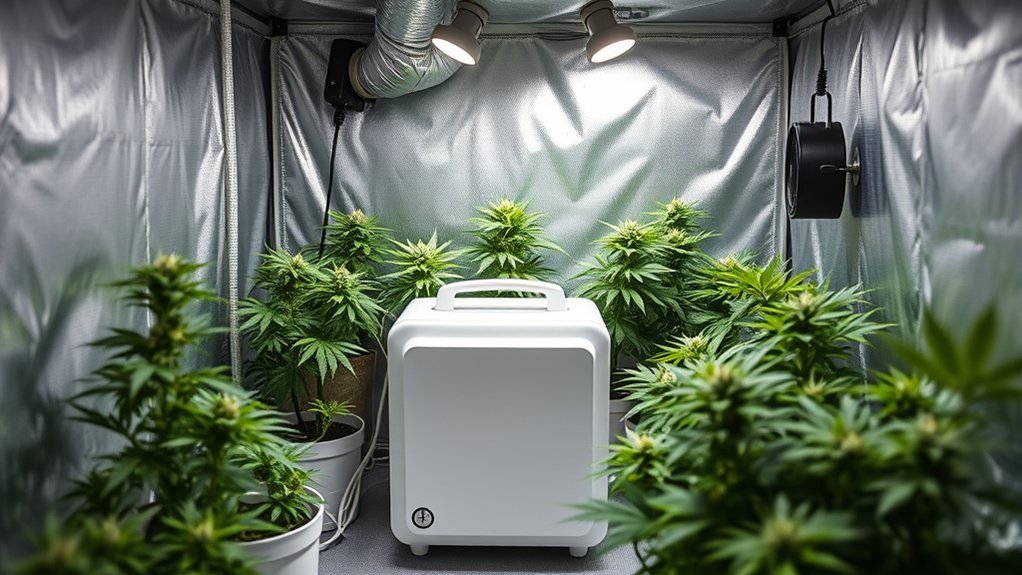
Choosing the best dehumidifier for a flat or apartment is less about the largest advertised coverage number and more about matching the appliance to the moisture problem. A compressor dehumidifier is normally the better choice for persistent damp, repeated window condensation, indoor laundry, and full-room humidity control. A compact thermoelectric or semiconductor model is quieter and easier to place, but it is best for light moisture in a small bedroom, bathroom, wardrobe, office, or other enclosed area.
Selection note: These recommendations are based on published product specifications and intended use rather than hands-on testing. Daily extraction figures are measured under specified temperature and humidity conditions, and real performance will normally be lower in a cool or only mildly humid room.
Electrical compatibility note:
The product links in this guide lead to Amazon.com. Confirm the exact voltage, frequency, plug type, certification, warranty, and delivery terms shown for your location. A plug adapter changes the plug shape but does not convert voltage.
How these products were evaluated
- Compressor or thermoelectric moisture-removal method
- Published daily extraction and water-tank capacity
- Humidistat, drainage, defrost, timer, and shutoff features
- Noise, portability, room placement, and intended use
- Honest limitations for cool rooms and persistent damp
Quick Comparison
| Product | Best for | Type | Tank | Published extraction | Check details |
|---|---|---|---|---|---|
| Midea 22-Pint | Persistent damp, laundry, and whole rooms | Compressor | 0.8 gallon | Up to 22 pints/day | Check on Amazon |
| ZAFRO 21-Pint | Continuous drainage and laundry areas | Compressor | 0.45 gallon | Up to 21 pints/day | Check on Amazon |
| TENKER 77oz | Light moisture with a larger mini-unit tank | Thermoelectric | 77 ounces | Up to 35 oz/day at 86°F and 80% RH | Check on Amazon |
| ToLife 95oz | Bedroom convenience and easy carrying | Thermoelectric | 95 ounces | Up to 1 L/day in favourable test conditions | Check on Amazon |
| TABYIK 35oz | Small bathroom, wardrobe, or bedroom | Thermoelectric | 35 ounces | Up to 16 oz/day at 86°F and 80% RH | Check on Amazon |
| NeedDuck 44oz | Timers and flexible compact controls | Thermoelectric | 44 ounces | Not consistently published; light-duty use | Check on Amazon |
| Natrogix 106oz | Large tank and scheduled localized use | Thermoelectric | 106 ounces | Up to 40 oz/day at 86°F and 80% RH | Check on Amazon |
Midea 22-Pint Dehumidifier: Best Overall for Persistent Damp
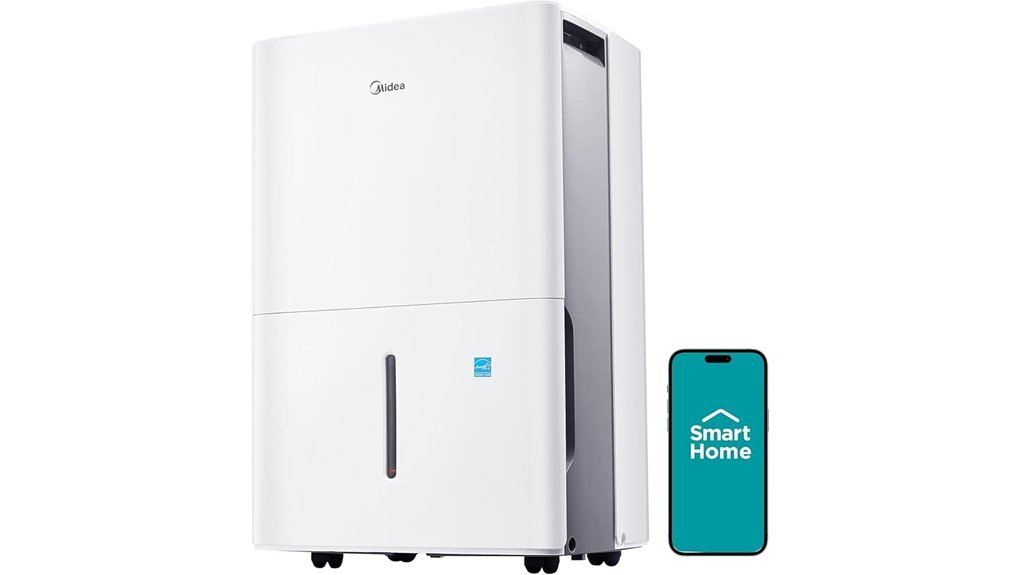
The Midea is the most practical option in this guide when a flat has persistent humidity, damp rooms, slow-drying laundry, or condensation in more than one area. Unlike the thermoelectric mini models, it uses a compressor and is rated to remove up to 22 pints of moisture per day under its standard test conditions.
Its adjustable humidity controls make it easier to maintain a target level rather than simply running continuously. It also includes a reusable filter, wheels, a timer, automatic defrost, automatic restart, continuous-drain compatibility, and app-based controls.
Why you’ll like it: It has enough published extraction capacity to make a meaningful difference to room humidity. The wheels and app controls also make it more convenient when the machine is moved between a living area, bedroom, and laundry-drying room.
Who should buy this: Renters or homeowners dealing with repeated window condensation, indoor laundry, musty rooms, or humidity that remains above the desired range.
Who should avoid this: Anyone who only needs gentle moisture collection in a wardrobe or wants an ultra-light bedside appliance.
Pros:
- Compressor extraction is better suited to persistent room humidity.
- Adjustable humidity controls help reduce unnecessary continuous operation.
- Reusable filter, timer, wheels, defrost, restart, and drainage features.
- App control can be useful when the unit operates in another room.
Cons:
- Larger, heavier, and more audible than a thermoelectric mini model.
- The 0.8-gallon tank may require frequent emptying during heavy use.
- A drain hose may need to be purchased or configured separately.
- The exact electrical version must be checked for the buyer’s location.
ZAFRO 21-Pint Dehumidifier: Best for Continuous Drainage
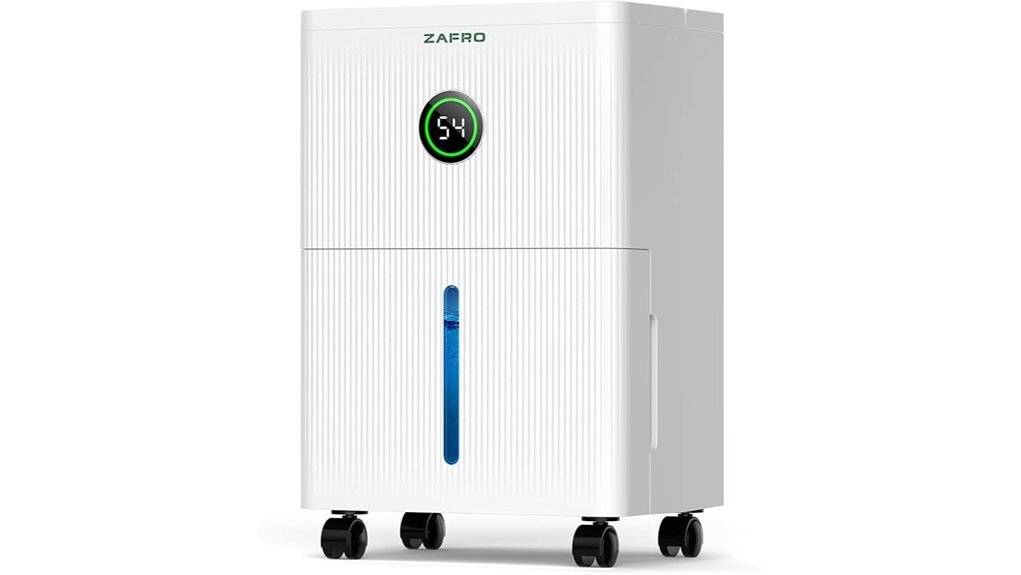
The ZAFRO is another compressor option for buyers who need more than light condensation control. Its published extraction capacity is up to 21 pints per day, and the included 3.3-foot drain hose makes longer operation more convenient when the machine can be positioned above a suitable drain.
It includes adjustable humidity settings, automatic and sleep modes, a laundry-drying mode, a 24-hour timer, auto defrost, auto restart, a washable filter, caster wheels, and a colour-coded humidity indicator.
Why you’ll like it: It combines meaningful moisture extraction with both manual and continuous drainage. This makes it useful near an indoor drying rack, utility area, or another room that regularly produces moisture.
Who should buy this: Buyers who want compressor performance, an included drain hose, and a compact upright design.
Who should avoid this: People who only need occasional moisture collection in a wardrobe or on a bedside table.
Pros:
- Compressor design for persistent damp and room-level humidity control.
- Included hose supports gravity-fed continuous drainage.
- Laundry mode can help manage moisture released by drying clothes.
- Auto defrost, restart, timer, child lock, and washable filter.
Cons:
- Heavier and less discreet than a mini dehumidifier.
- The 0.45-gallon tank can fill quickly during demanding use.
- Gravity drainage only works when the hose runs continuously downhill.
- Actual extraction decreases as room temperature and humidity fall.
TENKER 77oz Dehumidifier: Best Large-Tank Mini Pick
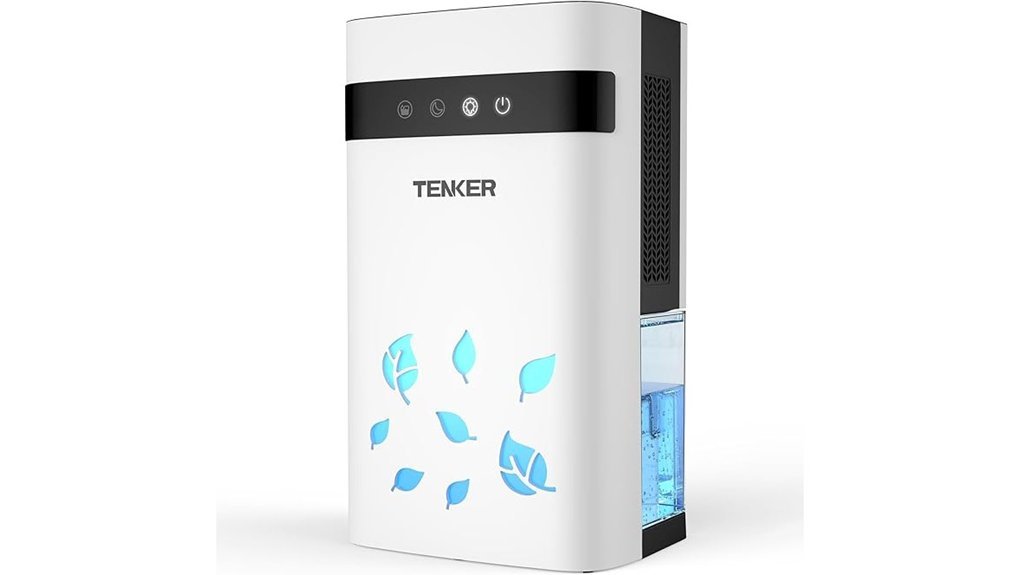
The TENKER uses dual thermoelectric condensation components and has a 77-ounce removable tank. Its published maximum extraction is up to 35 ounces per day at 86°F and 80% relative humidity. Those are warm and humid test conditions, so collection will normally be lower in an ordinary bedroom or bathroom.
This is best treated as a quiet, portable solution for localized moisture rather than as an alternative to a 20-pint compressor machine. It is most useful in a small bedroom, bathroom, wardrobe area, office, caravan, or another enclosed space with mild humidity.
Why you’ll like it: The larger reservoir reduces emptying compared with many mini units, while two operating speeds, sleep mode, automatic shutoff, and a recessed handle make it simple to use.
Who should buy this: Buyers who value quiet localized moisture collection and a larger tank more than fast humidity reduction.
Who should avoid this: Anyone with visible damp patches, recurring mould, leaking walls, or high humidity throughout a large room.
Pros:
- Large tank for a thermoelectric model.
- Two operating speeds and a quieter sleep setting.
- Automatic shutoff helps prevent tank overflow.
- Recessed handle supports room-to-room movement.
Cons:
- Not a substitute for a compressor dehumidifier in persistent damp.
- Maximum extraction depends on warm, highly humid conditions.
- No precise built-in humidistat or continuous drain connection.
- Decorative lighting may be unnecessary for some buyers.
ToLife 95oz Dehumidifier: Best for Bedroom Convenience
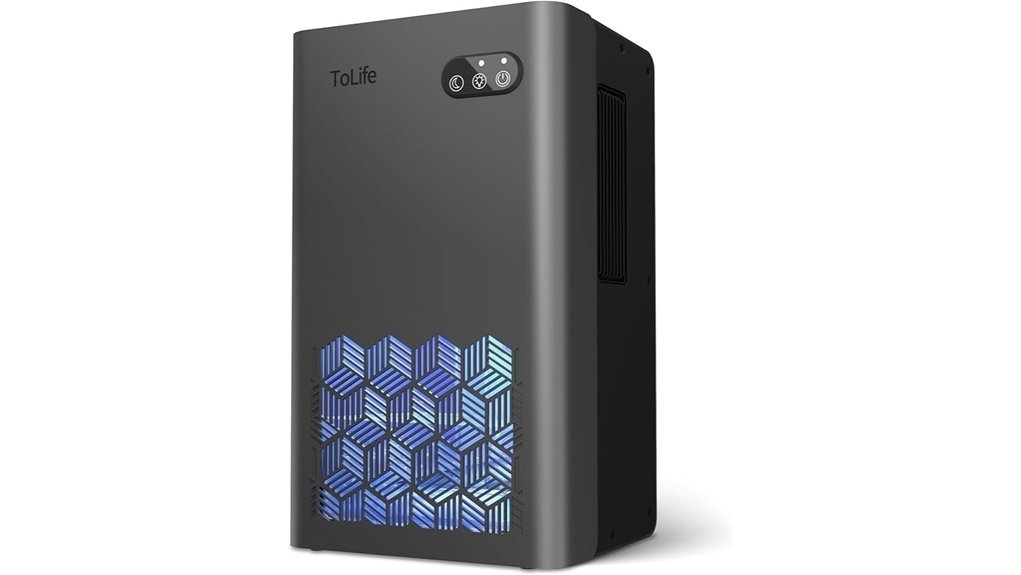
The ToLife combines a 95-ounce removable tank, two operating speeds, sleep mode, automatic shutoff, and optional seven-colour lighting. Its maximum published extraction is up to approximately one litre per day under favourable test conditions.
Although the listing may advertise broad coverage, this thermoelectric unit should be treated as a localized moisture collector. It is more appropriate for a small bedroom, bathroom, wardrobe area, office, or similar enclosed space than for full-flat humidity control.
Why you’ll like it: It is easy to carry between rooms and has a larger tank than many entry-level mini models. The lighting can also be reduced or switched off for overnight use.
Who should buy this: Light sleepers who want gradual moisture collection without the cycling sound of a compressor.
Who should avoid this: Buyers expecting fast laundry drying, precise humidity control, or meaningful extraction across an open-plan flat.
Pros:
- Large tank relative to its compact thermoelectric format.
- Two speeds, sleep mode, and automatic full-tank shutoff.
- Portable design for moving between smaller rooms.
Cons:
- Performance is limited in cool or only mildly humid rooms.
- No built-in humidistat for maintaining an exact target.
- No continuous drainage connection.
- Voltage and plug compatibility must be checked carefully.
TABYIK 35oz Dehumidifier: Best for a Small Bathroom
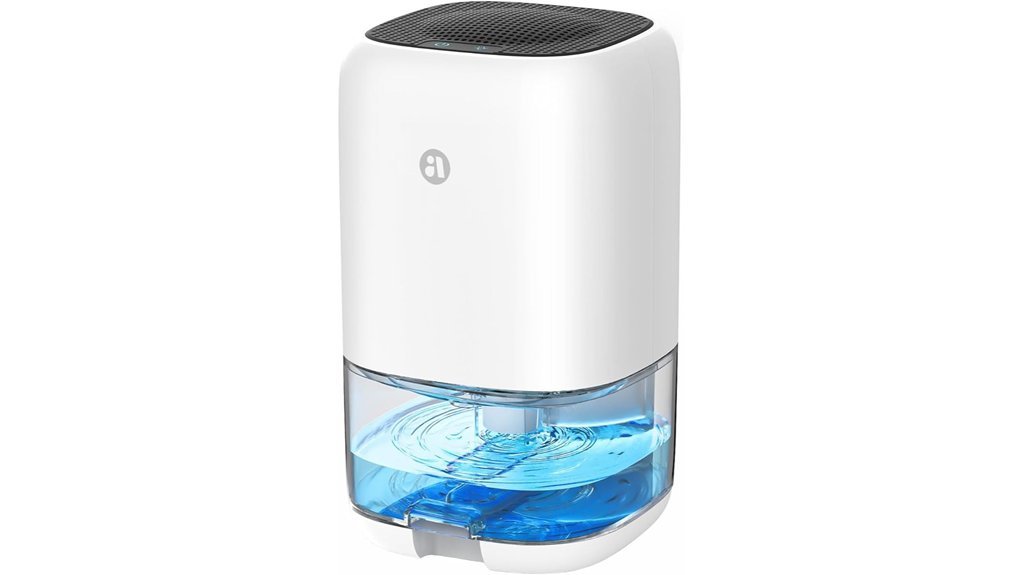
The TABYIK is a compact thermoelectric unit with a 35-ounce transparent tank. Its published maximum collection rate is 16 ounces per day at 86°F and 80% relative humidity, and its listed operating level is 28 dB.
Its small footprint makes it easier to position on a stable surface in a compact bedroom, bathroom, wardrobe area, or office. However, it should not be placed in a shower splash zone or anywhere that the plug, adapter, or appliance could become wet.
Why you’ll like it: It has simple controls, a visible water level, a built-in carrying handle, and automatic shutoff when the tank reaches its stopping level.
Who should buy this: People managing light post-shower moisture, wardrobe dampness, or occasional condensation in a small, warm, enclosed room.
Who should avoid this: Anyone who needs a humidistat, continuous drainage, laundry drying, or rapid extraction.
Pros:
- Compact footprint for rooms with limited floor or shelf space.
- Quiet published operating level.
- Transparent tank makes the water level easy to monitor.
- Automatic shutoff helps prevent overflow.
Cons:
- Low extraction compared with a compressor dehumidifier.
- Performance decreases in cool rooms.
- No target-humidity control or drain-hose connection.
- Decorative lighting may not appeal to every buyer.
NeedDuck 44oz Dehumidifier: Best Compact Controls
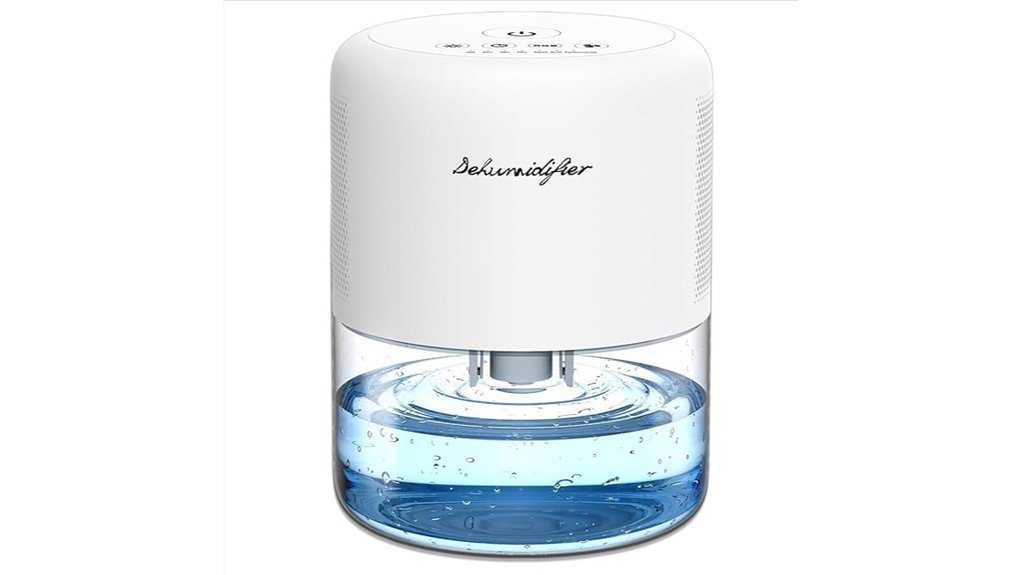
The NeedDuck B-2 is a compact model with a 44-ounce tank, three operating modes, automatic defrost, automatic shutoff, four timer choices, and adjustable ambient lighting. Its listed footprint and 28-watt input make it more suitable for light localized use than for correcting severe room humidity.
A consistent independently published daily extraction figure was not available, so buyers should not assume that its 215-square-foot marketing figure represents the same level of performance as a compressor machine.
Why you’ll like it: The mode and timer choices provide more day-to-day flexibility than a basic one-button mini dehumidifier.
Who should buy this: Buyers who want a compact machine with more control over run time, fan behaviour, and nighttime operation.
Who should avoid this: Anyone who needs continuous drainage, a precise humidistat, or rapid moisture extraction.
Pros:
- Three modes and four timer choices.
- Automatic shutoff and defrost protection.
- Compact footprint for small rooms, wardrobes, or RV areas.
- Low published wattage for localized use.
Cons:
- Daily extraction is not published consistently enough for direct comparison.
- Designed for gradual collection rather than persistent damp.
- No continuous drain connection or adjustable humidistat.
- The tank still requires manual emptying.
Natrogix 106oz Dehumidifier: Best Large-Tank Timer Pick
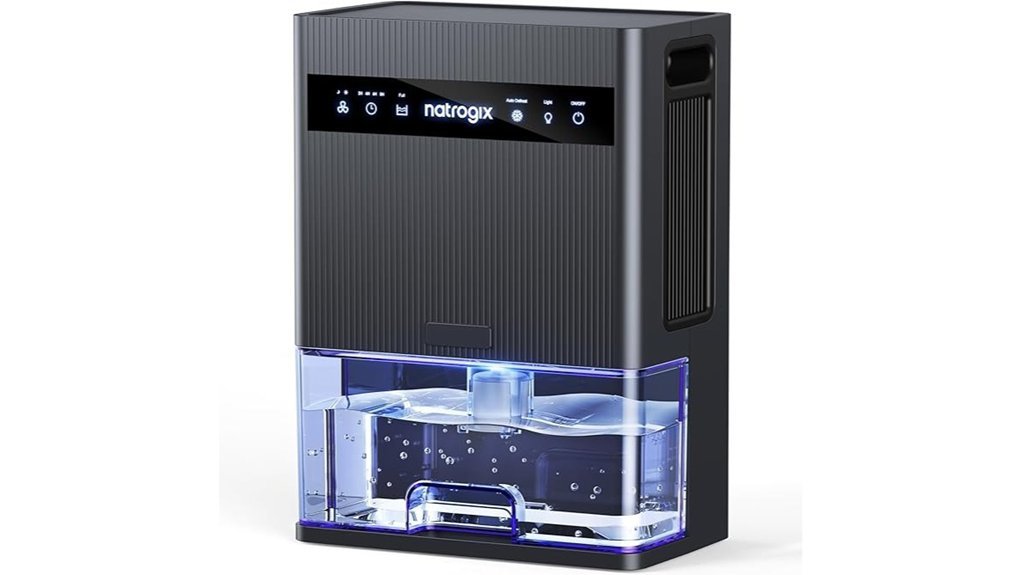
The Natrogix offers a 106-ounce tank, power and sleep modes, automatic shutoff, defrost protection, timer settings, and optional seven-colour lighting. Its maximum published extraction is up to approximately 40 ounces per day in a sealed environment at 86°F and 80% relative humidity.
Its large advertised coverage should not be interpreted as compressor-equivalent whole-room performance. The more realistic use is steady localized moisture collection in one small or moderately sized enclosed area.
Why you’ll like it: The large tank and timer controls can reduce daily attention when it is used for mild, steady moisture collection.
Who should buy this: Buyers who want a larger thermoelectric unit for a bedroom, bathroom, office, or caravan and do not need precise humidity regulation.
Who should avoid this: People trying to dry laundry quickly, treat several connected rooms, or correct a building-level damp problem.
Pros:
- Largest water tank among the remaining mini models.
- Power, sleep, timer, shutoff, and defrost functions.
- Hidden handle supports movement between rooms.
- Published extraction is higher than many smaller thermoelectric models under test conditions.
Cons:
- Large tank and coverage claims do not guarantee whole-room control.
- Extraction decreases as temperature and humidity fall.
- No continuous drain hose or precise humidistat.
- The unit is physically larger than basic tabletop models.
How to Choose a Dehumidifier for a Flat or Apartment
The right model depends on the severity of the moisture problem, room temperature, daily extraction capacity, noise tolerance, drainage access, and available space. Do not choose by the largest advertised square-foot figure or water tank alone.
Compressor vs Thermoelectric Dehumidifiers
A compressor model is usually the better choice for repeated window condensation, indoor laundry, persistent high humidity, and damp across a full room. It uses more power and produces more sound, but it can remove substantially more water.
A thermoelectric or Peltier mini model is quieter, lighter, and easier to place. It is mainly intended for mild moisture in a warm, enclosed bedroom, wardrobe, bathroom, office, caravan, or storage area.
Measure Humidity Before Buying
A basic digital hygrometer can show whether the problem is occasional or persistent. The U.S. Environmental Protection Agency recommends keeping indoor relative humidity below 60% and ideally between 30% and 50% where practical. The correct setting can still vary with climate, room temperature, comfort, and the amount of window condensation.
See the EPA moisture and mould guidance for additional humidity-control information.
Extraction Capacity vs Tank Size
Daily extraction describes how much water the machine is rated to remove under stated test conditions. Tank size only describes how much water it can hold before it must be emptied.
A 106-ounce tank does not make a thermoelectric unit more powerful than a 22-pint compressor dehumidifier. It only allows more collected water to remain in the reservoir.
Room Size and Layout
Open doors, hallways, tall ceilings, and open-plan layouts reduce effective moisture control. A mini unit advertised for a large area may still produce only a localized effect near the machine.
For a problem affecting more than one room, use an appropriately sized compressor model and move it strategically, or operate separate machines in the rooms where moisture is generated. Closing the room door during laundry drying can help a suitable compressor unit work more efficiently.
Temperature Matters
Thermoelectric models lose effectiveness in cool rooms. Compressor units also extract less water as temperature and humidity fall, although automatic defrost helps protect operation when frost starts to form.
Check the manufacturer’s minimum operating temperature before using any dehumidifier in an unheated utility room, storage room, or enclosed balcony.
Noise Level and Placement
Thermoelectric models can be suitable near a bed because they do not have a cycling compressor. Compressor machines are more effective but are usually better placed farther from a sleeping or working position.
Keep the machine upright on a firm, level surface. Leave the clearance required by the manual around the inlet and outlet, and do not allow curtains, clothes, furniture, or walls to block airflow.
Tank Size and Continuous Drainage
A large tank reduces emptying but does not increase extraction performance. For frequent or high-load use, continuous drainage is often more useful than an oversized tank.
Gravity drainage requires the hose to travel continuously downhill to an approved drain. Avoid upward sections, sharp bends, kinks, loose fittings, and routes that create a leak or trip hazard. A standard gravity outlet cannot push water upward into a sink.
Energy Use and Controls
For a compressor model, useful features include an adjustable humidistat, automatic mode, timer, automatic restart, washable filter, continuous drainage, and defrost protection. ENERGY STAR explains that dehumidifier capacity is measured in pints removed per 24 hours and should be selected according to both room size and dampness level.
See the ENERGY STAR dehumidifier buying guidance for sizing information.
For a mini model, automatic full-tank shutoff is essential. Compare wattage with extraction rather than assuming that the lowest-powered machine will solve the moisture problem most efficiently.
Flat and Rental Considerations
In a rented flat, report leaking pipes, failed window seals, damaged exterior walls, and recurring mould to the landlord or property manager promptly. Keep dated photographs and written records of recurring water entry or building damage.
A portable dehumidifier may control airborne moisture while the issue is investigated, but it should not be treated as a permanent repair for water entering the building.
Safety and Electrical Compatibility
Confirm the rated voltage, frequency, plug type, product certification, and warranty for the country where the appliance will be used. Never assume that a model linked through Amazon.com is electrically compatible with another market.
Do not use an appliance on an incompatible power supply. Keep the dehumidifier away from baths, showers, sinks, and other splash zones, and do not handle its plug or adapter with wet hands. Follow the product manual when using an extension lead, power strip, or smart plug.
When a Dehumidifier Is Not the Fix
A dehumidifier can manage water vapour in the air, but it cannot repair leaking pipes, failed seals, penetrating damp, rising damp, blocked vents, or an inadequate bathroom extractor.
Investigate water stains, peeling paint, damaged plaster, recurring mould, or musty odours that return quickly. The moisture source should be repaired rather than hidden by continuous appliance use.
Before You Buy Checklist
- Measure the room and check the current humidity with a hygrometer.
- Decide whether the problem is light condensation or persistent room damp.
- Choose compressor extraction for laundry and meaningful room control.
- Choose a thermoelectric mini model only for mild moisture in a small, warm space.
- Compare daily extraction separately from water-tank capacity.
- Check voltage, frequency, plug, certification, warranty, and operating temperature.
- Plan a safe downhill route before relying on gravity drainage.
- Confirm there is enough clearance around the inlet and outlet.
- Investigate leaks, failed seals, and recurring building damage.
Frequently Asked Questions
What Size Dehumidifier Do I Need for a Flat?
For persistent damp, repeated condensation, or laundry drying, begin with daily extraction capacity rather than tank size. A compressor model in approximately the 20-pint-per-day class is much more capable than a mini model with a large reservoir.
For a wardrobe, compact bathroom, or bedside area with only mild moisture, a smaller thermoelectric unit may be sufficient.
Are Mini Dehumidifiers Good for a Whole Room?
A mini dehumidifier can collect moisture in a small, warm, enclosed room, but it is normally not the best solution for a whole flat, open-plan room, serious condensation, or recurring damp. Compare its published ounces or millilitres per day with the pint-per-day rating of a compressor unit.
Can a Dehumidifier Help Dry Laundry Indoors?
Yes. A properly sized compressor dehumidifier can help by removing water released from wet clothing. Place the drying rack where air can circulate around it, close the room door, and use continuous drainage when a safe drain route is available.
A small thermoelectric model is unlikely to produce a major improvement in drying time.
What Humidity Level Should I Use?
A practical target for many homes is approximately 30% to 50% relative humidity. Avoid setting the target lower than necessary because this can increase operating time and energy use. Climate, room temperature, condensation, and personal comfort should guide the final setting.
Should I Close Doors When Running a Dehumidifier?
Closing the door can help when the goal is to dry laundry or control moisture in one room. If the machine is intended to serve several connected rooms, airflow between those rooms is necessary, but performance will be slower and less predictable.
How Often Should I Clean a Dehumidifier?
Check and empty the tank regularly, clean the filter according to the manual, wipe dust from the inlet and outlet, and inspect any drain hose for leaks, algae, or blockage. Let the tank dry before long-term storage to reduce odour and residue.
Can a Dehumidifier Remove Mould?
No. A dehumidifier can reduce the humid conditions that encourage mould growth, but it does not remove existing mould or repair the moisture source. Existing growth must be addressed safely, and leaks, ventilation problems, or building defects must also be corrected.
Are Dehumidifiers Noisy During Operation?
Compressor models are audible because they use both a compressor and fan. Thermoelectric models are generally quieter but remove much less water. Compare published sound levels carefully because testing methods and operating modes can differ.
Can I Use a Dehumidifier in a Bathroom?
Only use it in a dry position that complies with the product manual and local electrical-safety requirements. Never place the appliance, adapter, plug, or cable where it could be splashed, dropped into water, or handled with wet hands.
Final Recommendation
Choose the Midea 22-Pint when the main goal is controlling persistent room humidity, reducing repeated condensation, or helping indoor laundry dry. Its compressor, adjustable humidity controls, portability, and drainage support make it the strongest all-round option in this guide.
Choose the ZAFRO 21-Pint when an included drain hose, laundry mode, compact compressor format, and quieter operating option are more important.
Choose the TENKER, ToLife, TABYIK, NeedDuck, or Natrogix only when the moisture problem is mild and limited to a small, warm, enclosed area. Their compact bodies, lower noise, and larger tanks can be convenient, but they are not equal substitutes for a compressor dehumidifier.
Whichever model you choose, confirm its electrical compatibility, use it according to the manual, and repair any leak or ventilation problem responsible for the damp.