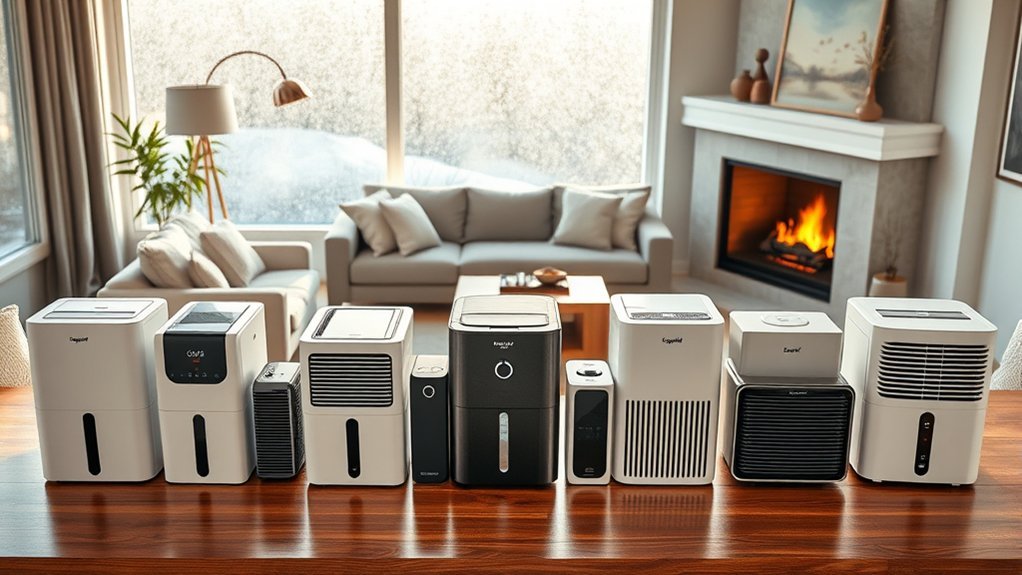
Looking for the best small dehumidifier for a kitchen in 2026? The right choice depends on your room size, cooking habits, noise tolerance, and how quickly moisture builds up. The six compact models below are best suited to light or moderate humidity in enclosed kitchens, pantries, RV kitchens, and other small spaces. For most typical small kitchens, the Pro Breeze Electric Mini Dehumidifier offers the clearest balance of tank size, moisture removal, and portability, while the KeepGlad and TENKER models provide larger tanks for longer run times.
Affiliate disclosure: As an Amazon Associate, we may earn from qualifying purchases. Product specifications and availability can change, so confirm the current listing before buying.
Quick Answer
Best overall for a typical small kitchen: Pro Breeze Electric Mini Dehumidifier.
Best for a larger tank and higher listed extraction: KeepGlad 98OZ or TENKER 77oz.
Best for a compact countertop or shelf: TABYIK 35 OZ or avylo 35 OZ.
Best for adjustable modes and timers: NeedDuck 44OZ.
Quick Comparison of Small Kitchen Dehumidifiers
| Product | Best For | Tank | Listed Moisture Removal | Key Limitation | Amazon |
|---|---|---|---|---|---|
| KeepGlad | Larger enclosed kitchens | 98 oz | Up to 40 oz/day under favorable conditions | Large coverage claims should be treated cautiously | Check Availability |
| TENKER | Longer run time between emptying | 77 oz | Up to 35 oz/day at 86°F and 80% RH | Best-case output may be lower in normal kitchens | Check Availability |
| TABYIK 35 OZ | Compact kitchens and pantries | 35 oz | Up to 16 oz/day | Requires more frequent emptying | Check Availability |
| avylo 35 OZ | Quiet operation and easy cleaning | 35 oz | Up to 16 oz/day at 75°F and 80% RH | Performance drops in cooler or less humid rooms | Check Availability |
| NeedDuck 44OZ | Timers, modes, and portability | 44 oz | Not clearly stated on the listing | Slower, gentle moisture control | Check Availability |
| Pro Breeze | Best all-around small-kitchen use | 52 oz | Up to 18 oz/day | Not designed for cold rooms or severe damp | Check Availability |
Important: Tank capacity is not the same as daily moisture-removal capacity. Manufacturer output figures are usually measured in warm, very humid test conditions, so real-world results may be lower.
KeepGlad Dehumidifier for Home (98OZ)
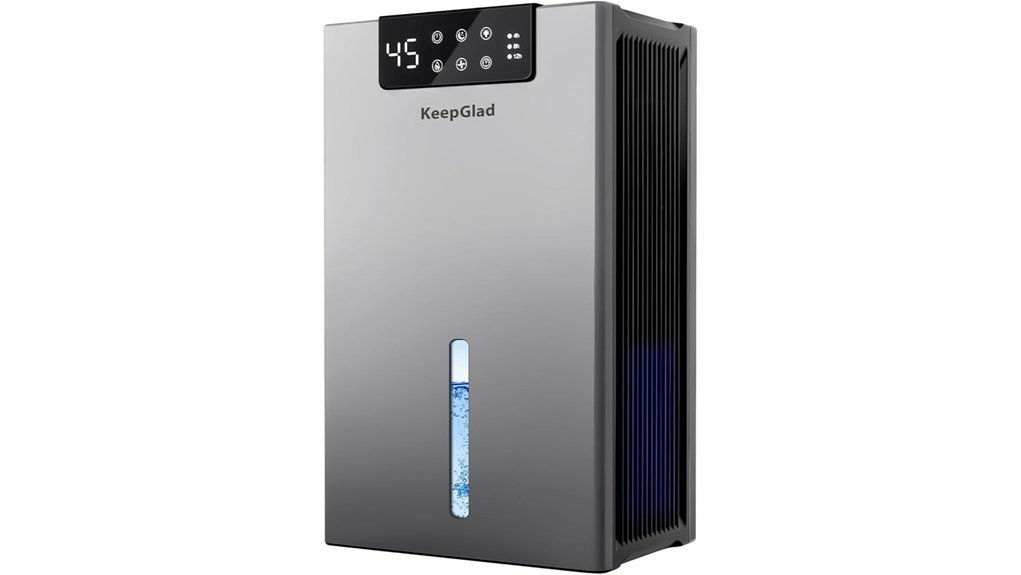
The KeepGlad Dehumidifier is a strong candidate for an enclosed kitchen that develops regular condensation and needs a larger collection tank. The listing describes a 98-ounce tank, digital humidity display, timer, multiple operating settings, a washable filter, a drain hose, and auto shut-off. Its manufacturer-listed extraction is up to 40 ounces per day, but actual performance depends heavily on room temperature and relative humidity.
Why you’ll like it: The large tank can reduce how often you empty the unit, and the drain-hose option may help during longer periods of use.
Who should buy this: Buyers with a small-to-medium enclosed kitchen or nearby dining space who want a larger tank and more controls than a basic mini unit.
Who should avoid this: Anyone expecting a compact thermoelectric unit to solve leaks, water damage, or severe humidity across a large open floor plan.
Pros:
- Large 98-ounce water tank.
- Manufacturer-listed extraction of up to 40 ounces per day.
- Humidity display, timer, auto shut-off, washable filter, and drain-hose option.
Cons:
- Best-case extraction may be lower in a cooler or less humid kitchen.
- Larger footprint than basic 35-ounce countertop models.
- The broad room-coverage claim should not replace checking actual moisture conditions.
TENKER Dehumidifier for Home with 77oz Tank
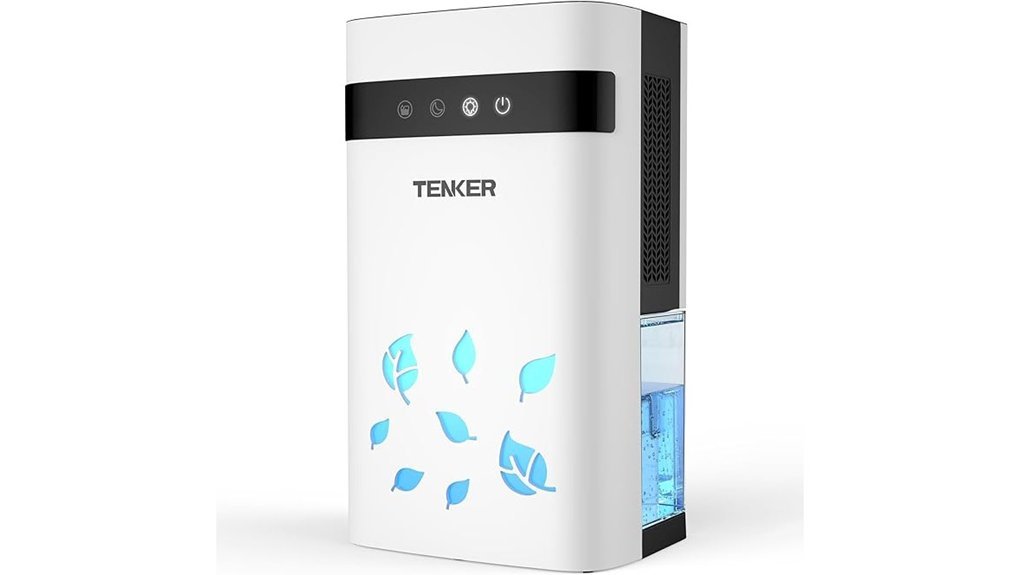
The TENKER Dehumidifier uses semiconductor condensation technology with dual fans and dual condensers. Its 77-ounce tank is a practical size for buyers who do not want to empty a compact unit every day. The listing states that it can collect up to 35 ounces in 24 hours in a closed room at 86°F and 80% relative humidity. Those are favorable test conditions, so everyday kitchen results will normally vary.
Why you’ll like it: It combines a large tank with auto shut-off, a full-tank warning light, high-speed mode, and a sleep mode listed below 30 dB.
Who should buy this: Buyers who want a portable kitchen dehumidifier with a larger tank and quieter low-speed operation.
Who should avoid this: Buyers with a cold kitchen, a very open layout, or serious building-level dampness.
Pros:
- Large 77-ounce tank.
- Auto shut-off and full-tank indicator.
- Two operating modes and portable handle.
Cons:
- The 35-ounce daily figure is based on warm, high-humidity test conditions.
- High-speed mode may be more noticeable than sleep mode.
- Large advertised coverage should be treated as a general marketing estimate.
TABYIK Dehumidifier for Bedroom and Home (35 OZ)
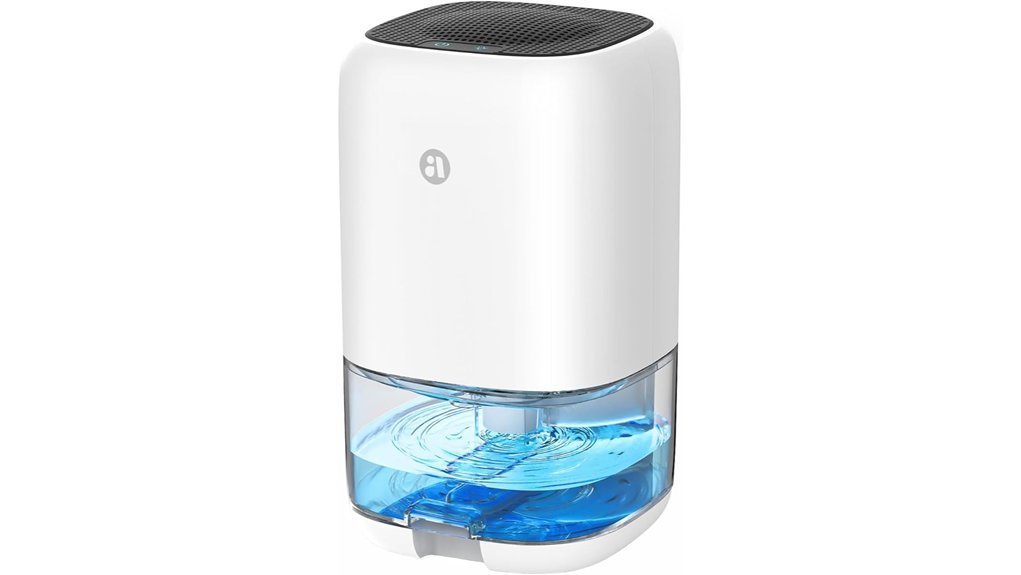
The TABYIK 35 OZ Dehumidifier is a compact choice for a small enclosed kitchen, pantry, RV kitchen, or nearby utility area. The listing gives a maximum extraction rate of 16 ounces per day, a 35-ounce tank, coverage up to 280 square feet, and a noise level of about 28 dB. Its small footprint makes it easier to place on a stable shelf or counter away from heat and splashing water.
Why you’ll like it: It is simple, lightweight, quiet, and includes auto shut-off plus a visible tank.
Who should buy this: Buyers who need basic moisture control in a compact room and prefer a smaller, less complicated unit.
Who should avoid this: Anyone who needs fast extraction, continuous drainage, or humidity control for a large open-plan kitchen.
Pros:
- Compact 35-ounce tank and small footprint.
- Listed extraction up to 16 ounces per day.
- Quiet operation, auto shut-off, and ambient lighting.
Cons:
- The tank may need frequent emptying in very humid conditions.
- Designed for smaller enclosed areas.
- Air inlets need clear space for proper airflow.
avylo Portable Small Dehumidifier with Auto Shut Off
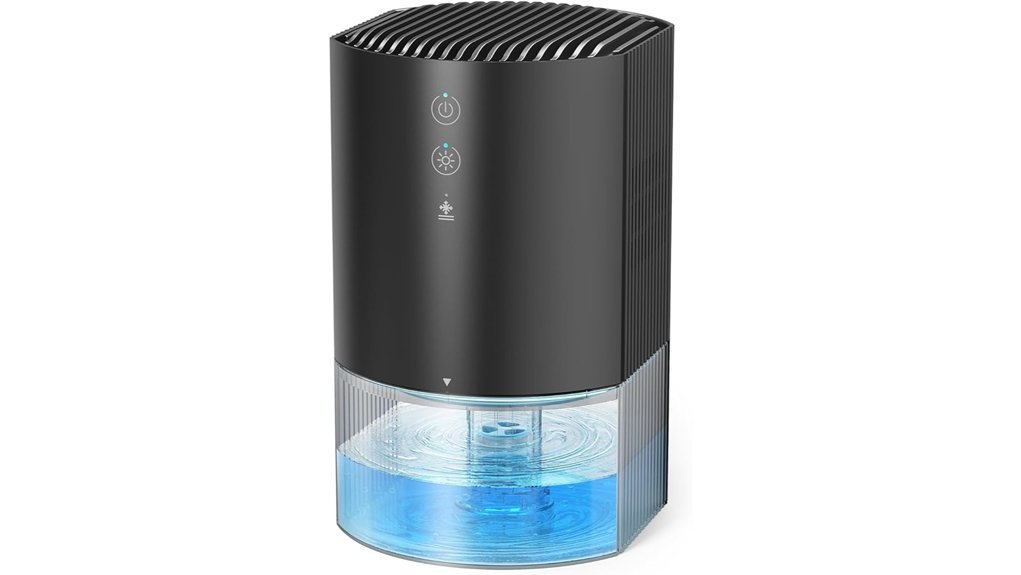
The avylo Portable Small Dehumidifier has a 35-ounce tank, a twist-lock design for easier cleaning, auto shut-off, and auto defrost. Its listing states extraction of up to 16 ounces per day in laboratory conditions of 75°F and 80% relative humidity. Product information lists coverage around 320 square feet, while the marketing copy refers to about 330 square feet; either figure should be treated as an estimate rather than a guarantee.
Why you’ll like it: The unit is listed below 25 dB and combines a compact shape with a secure, easy-to-remove tank.
Who should buy this: Buyers who value quiet operation and want a portable unit for a kitchen, pantry, bathroom, or RV.
Who should avoid this: Buyers who need strong performance in low temperatures or humidity below about 45% RH.
Pros:
- Listed noise level below 25 dB.
- Twist-lock tank supports easier cleaning.
- Auto shut-off and auto-defrost functions.
Cons:
- Best output depends on warm, humid conditions.
- Single-speed design offers less control than multi-mode units.
- Not a substitute for a range hood or repair of a moisture source.
NeedDuck Dehumidifier for Home with 44OZ Water Tank
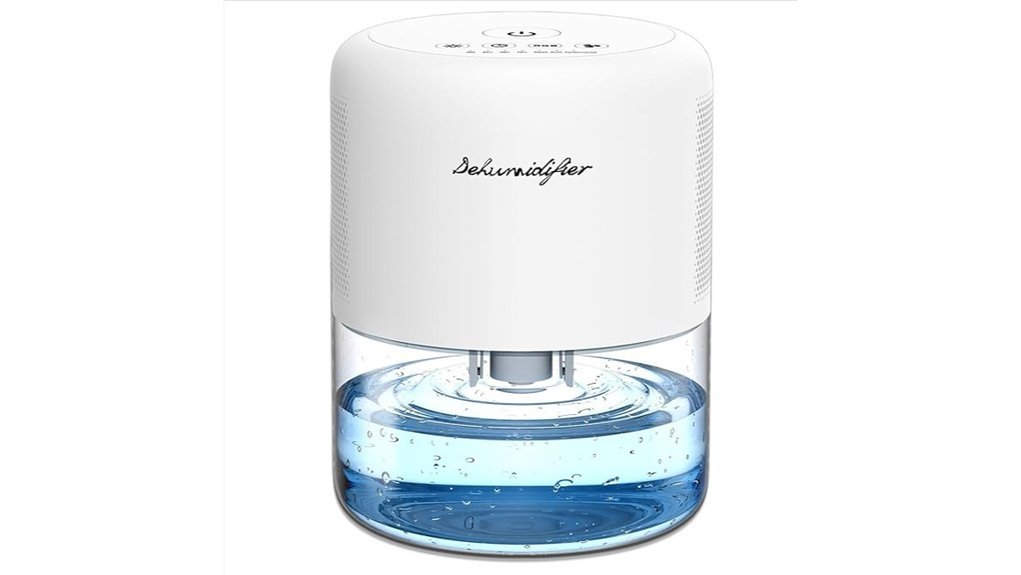
The NeedDuck 44OZ Dehumidifier is designed for gentle moisture control in small indoor spaces. Product information lists a 44-ounce tank, coverage around 215 square feet, three modes, four timer choices, auto defrost, auto shut-off, 28-watt operation, and a weight of about 2.56 pounds. The listing does not clearly provide a daily moisture-removal figure, so it is better to judge this model by its small-room features rather than an unsupported extraction claim.
Why you’ll like it: Multiple modes and timer settings make it easier to match operation to cooking hours, overnight use, or occasional dampness.
Who should buy this: Buyers who want a lightweight kitchen dehumidifier with more scheduling and mode controls.
Who should avoid this: Buyers who need a verified high daily extraction rate or coverage beyond a small room.
Pros:
- 44-ounce tank with quick-release design.
- Three modes and four timer settings.
- Auto shut-off, auto defrost, and portable 2.56-pound build.
Cons:
- Daily extraction capacity is not clearly stated.
- Best suited to light or moderate humidity in a small room.
- Ambient lights may be unnecessary for some kitchens.
Pro Breeze Electric Mini Dehumidifier (2200 Cubic Feet)
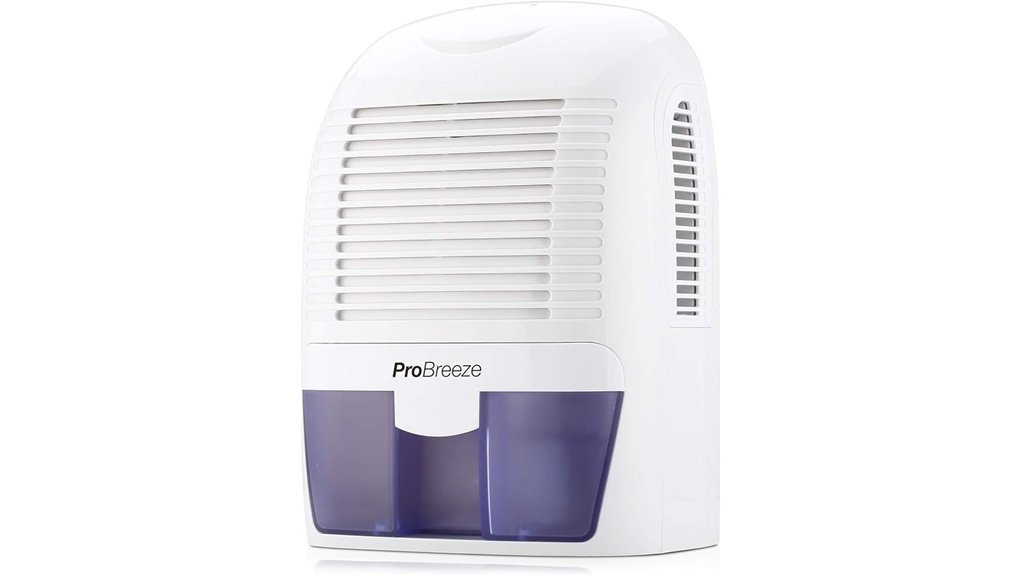
The Pro Breeze Electric Mini Dehumidifier is the most balanced option in this group for a typical small kitchen. Its listing states a 52-ounce tank, extraction up to 18 ounces per day, auto shut-off, an LED full-tank indicator, 40-watt operation, and a recommended room size of about 250 square feet. The product title references 2,200 cubic feet while some listing copy mentions 3,000 cubic feet, so the 250-square-foot figure is the clearer comparison point.
Why you’ll like it: It offers more tank capacity than many 35-ounce mini units without becoming difficult to move between rooms.
Who should buy this: Buyers who want a practical all-around model for a small kitchen, RV kitchen, pantry, office, or bathroom.
Who should avoid this: Buyers dealing with cold rooms, flooding, structural damp, or a large open-plan space.
Pros:
- 52-ounce tank with up to 18 ounces of listed daily extraction.
- Auto shut-off and full-tank indicator.
- Compact, portable, and designed for low-power operation.
Cons:
- Best performance is expected in warm indoor conditions.
- Manufacturer room-volume wording is inconsistent across the listing.
- May need frequent emptying during very humid weather.
Factors to Consider When Choosing a Small Dehumidifier for a Kitchen
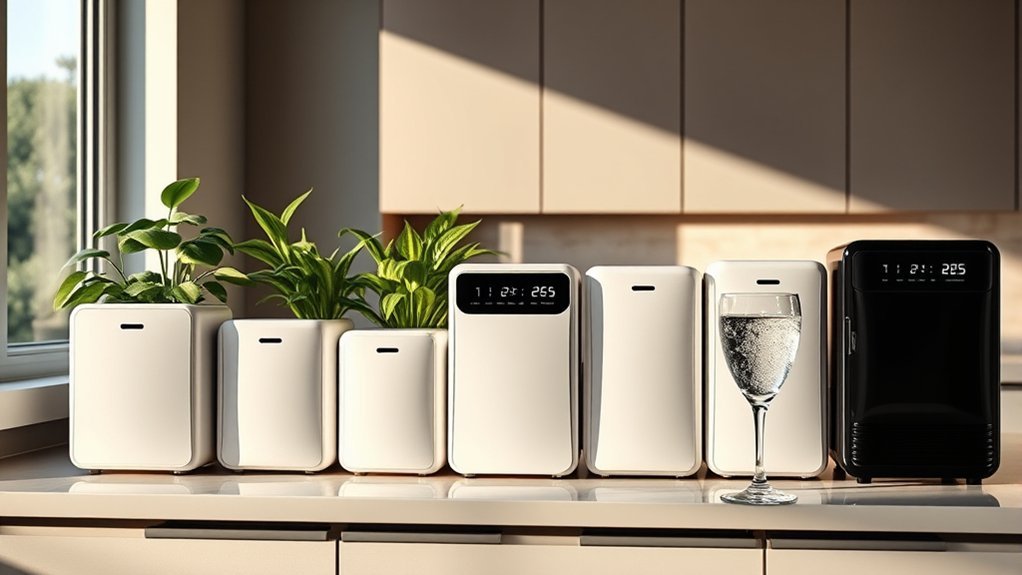
A kitchen creates short bursts of moisture from boiling, dishwashing, and drying wet cookware. A compact dehumidifier can help with lingering humidity, but it should support—not replace—an effective range hood, exhaust fan, leak repair, and normal ventilation.
Room Size and Layout
Match the unit to the enclosed room where it will actually operate. A small thermoelectric dehumidifier works best when doors and windows are mostly closed. Open-plan kitchens connected to a living room may require a larger compressor dehumidifier rather than a countertop model.
Daily Moisture-Removal Rate
Compare the listed ounces removed per day, not just tank size. A 98-ounce tank does not mean the unit removes 98 ounces every day. Also check the temperature and humidity used for the manufacturer’s test because warm, very humid conditions produce higher numbers than a typical home.
Tank Size and Drainage
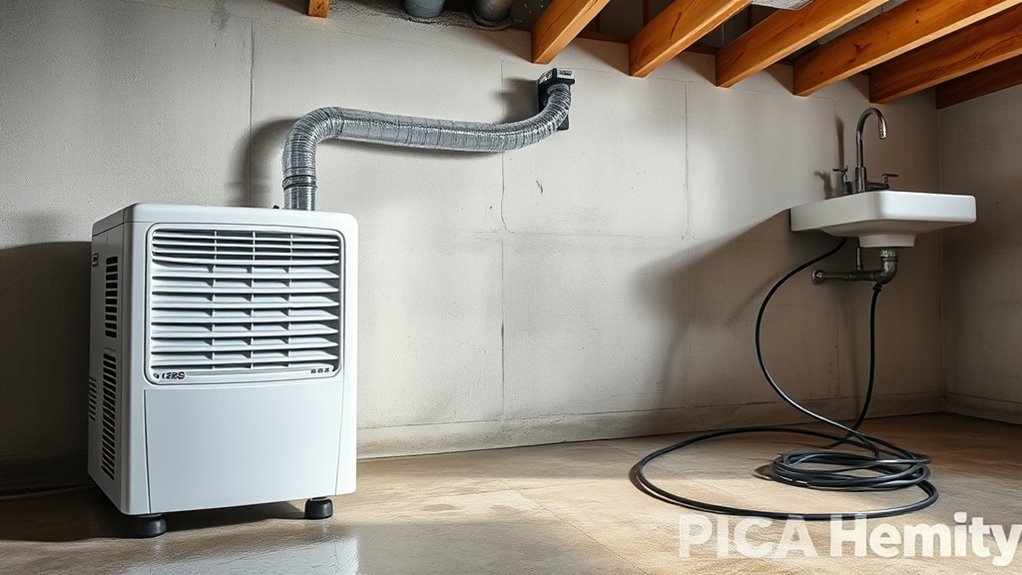
A larger tank means fewer trips to the sink, but it also increases the unit’s size. Auto shut-off is important for preventing overflow. A drain-hose option can be useful, but only when the hose can run downhill to a suitable drain without creating a trip or leak hazard.
Noise Level
For an eat-in or open kitchen, look for a quiet or sleep mode. Noise ratings below 30 dB are attractive, but treat them as manufacturer-listed values unless independently tested. High-speed settings may sound noticeably louder than sleep mode.
Placement and Safety
Place the dehumidifier on a stable, level surface with clear space around the air inlet and outlet. Keep it away from the stove, sink edge, direct grease, steam jets, and areas where the cord can be splashed. Follow the product manual for required clearance and operating temperature.
Cleaning and Maintenance
Choose a tank that is easy to remove, rinse, and dry. Empty standing water regularly, wipe the tank before slime or odor develops, and clean any washable filter according to the manufacturer’s instructions. Never block the air vents.
Energy Use and Operating Style
Compact thermoelectric units generally draw less power than full-size compressor models, but they also remove less moisture. Compare wattage, extraction rate, timer options, and whether you need continuous operation. The most efficient choice is the smallest unit that can control your actual humidity without running endlessly.
Before You Buy
- Measure the kitchen or enclosed area.
- Check the listed test conditions for daily extraction.
- Confirm tank size, auto shut-off, and cleaning access.
- Check the operating-temperature range.
- Use a hygrometer to confirm whether humidity remains high after cooking.
- Choose a larger compressor unit if dampness is severe or spreads across an open floor plan.
Frequently Asked Questions
How Do I Maintain My Small Dehumidifier?
Empty and rinse the tank regularly, wipe it dry, clean the filter when the manual recommends it, and keep the air inlet and outlet free of dust. Unplug the unit before cleaning and never immerse the electrical section in water.
Can I Use a Dehumidifier in a Pantry?
Yes, provided the unit is suitable for the pantry’s size and has enough airflow around it. Keep it on a stable surface away from loose food packaging, and do not place it where water could spill onto stored food or electrical connections.
What Is the Ideal Humidity Level for Kitchens?
A practical indoor target is generally around 30% to 50% relative humidity. Short spikes while boiling water are normal, but humidity that stays high for hours may indicate weak ventilation, a leak, or an undersized dehumidifier.
Can a Mini Dehumidifier Remove Cooking Steam?
It can help with moisture that remains after cooking, but it is too slow to capture steam at the source. Use a vented range hood or exhaust fan while cooking, cover boiling pots when practical, and let the dehumidifier manage the leftover humidity.
How Noisy Are Small Kitchen Dehumidifiers?
Many thermoelectric models are marketed at roughly 25 to 30 dB in their quietest mode. Real noise depends on the fan setting, placement, vibration, and room acoustics, so check the current product listing and return policy if sound is a major concern.
Where Should I Place a Kitchen Dehumidifier?
Use a dry, level counter, shelf, or floor location with unobstructed airflow. Keep it away from the sink, cooktop, oven heat, grease, and direct steam. Do not hide it inside a closed cabinet while it is operating unless the manufacturer specifically allows that use.
Conclusion
Final Recommendation: Choose the Pro Breeze Electric Mini Dehumidifier for the best all-around balance in a typical small kitchen. Pick the KeepGlad 98OZ or TENKER 77oz when a larger tank matters most. For a tight countertop, pantry, or RV kitchen, the TABYIK 35 OZ and avylo 35 OZ are easier to place, while the NeedDuck 44OZ is the better fit when timers and operating modes are your priority.
Whichever model you choose, confirm the current specifications, keep the air vents clear, and use proper kitchen ventilation during cooking. A mini dehumidifier is most effective for lingering moisture—not as a substitute for fixing leaks or controlling heavy steam at the source.