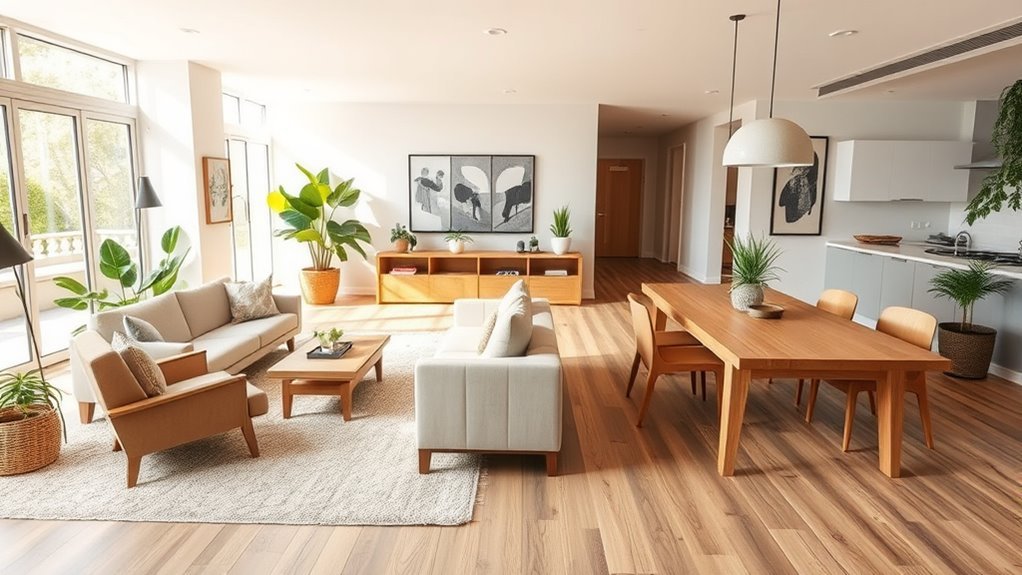
To design a wheelchair-accessible living room, start by confirming pathways are at least 32 inches wide and furniture is arranged to eliminate obstacles. Choose low-profile seating with sturdy armrests for easy transfers and select adjustable shelving for frequently used items. Confirm light switches and outlets are accessible from a seated position and install non-slip flooring to enhance safety. By making thoughtful choices, you can create a welcoming space that meets everyone’s needs, and there’s even more to explore!
Why Wheelchair Accessibility Matters in Living Rooms
When you design a living room with wheelchair accessibility in mind, you’re not just creating a space; you’re fostering independence and comfort for everyone who uses it. Inclusive design means ensuring pathways are at least 32 inches wide, allowing smooth navigation that empowers mobility independence. Thoughtful furniture arrangement eliminates obstacles, reducing accident risks and enhancing safety for wheelchair users. Features like adjustable shelves and fully-extendable drawers make essential items easier to reach, improving usability for all family members. By crafting an inviting, accessible living room, you’re not only catering to those who rely on wheelchairs but also creating a welcoming environment for all visitors, regardless of their mobility needs. Everyone deserves a space where they feel at home.
Assessing Your Living Room for Wheelchair Accessibility
To create a wheelchair-accessible living room, start by measuring your space to guarantee pathways are at least 32 inches wide for easy navigation. Next, think about how your furniture is arranged; positioning pieces against walls can help keep pathways clear and open. Don’t forget to check doorways and flooring, as these details play an essential role in mobility and comfort.
Space Measurements Evaluation
Evaluating your living room for wheelchair accessibility begins with careful measurements that guarantee a comfortable and navigable space. Start by measuring the width of doorways; they should be at least 32 inches clear to meet accessibility standards. Assess hallways, ensuring they maintain a minimum width of 32 inches for safe navigation. Pay attention to furniture placement, creating open pathways and a turning radius of at least 5 feet for easy maneuverability. Check the height of light switches and outlets, aiming for 48 inches and 18 inches from the floor, respectively, for easy access from a seated position. Finally, evaluate your flooring; it should be flat, smooth, and non-slip to facilitate seamless wheelchair movement through your living space.
Furniture Arrangement Strategies
Creating a welcoming living room that accommodates wheelchair users involves thoughtful furniture arrangement. Start by guaranteeing open pathways of at least 32 inches wide, facilitating smooth navigation. Position seating against walls to maximize space and enhance mobility. Choose low-profile furniture styles that are easy to transfer to and from, improving comfort and accessibility. Utilize sturdy, adjustable shelving to keep frequently used items within arm’s reach, promoting independence. Verify all furniture is securely anchored to prevent tipping, providing essential support when needed. By employing these layout techniques, you can create an inviting and functional space that empowers everyone to enjoy the living room comfortably and freely.
Essential Modifications for a Functional and Accessible Living Room
Creating a functional and accessible living room starts with clear pathways and thoughtful furniture choices. You’ll want to guarantee doorways are wide enough for easy access and arrange seating to allow smooth navigation. Choosing sturdy, well-placed furniture not only enhances safety but also makes everyday living more comfortable.
Clear Pathways Design
When designing a living room for wheelchair accessibility, guaranteeing clear pathways is essential for effortless navigation. Here are some key modifications to enhance mobility:
- Width: Guarantee pathways are at least 32 inches wide to accommodate wheelchair movement.
- Furniture Placement: Position furniture against walls and away from pathways to create an open layout.
- Clutter-Free Environment: Remove unnecessary items that can block access and hinder mobility.
- Flooring: Choose consistent, smooth flooring to facilitate seamless movement without tripping hazards.
Incorporate pathway lighting to illuminate these routes, and consider decorative elements that complement both style and function. With these thoughtful adjustments, you can create a space that fosters freedom and comfort for everyone.
Accessible Furniture Choices
Choosing the right furniture is essential for ensuring a living room is not only stylish but also accessible for everyone. Prioritize accessible seating that features ergonomic design, allowing for easy transfers from wheelchairs. Look for sofas and chairs with a seat height of 18-20 inches, sturdy construction, and rounded edges for safety. Consider motorized lift chairs for added comfort and flexibility. Modular or sectional sofas can adapt to your space needs without compromising access.
Here’s a quick visual representation of accessible furniture choices:
| Furniture Type | Features |
|---|---|
| Low Sofas | Seat height 18-20 inches |
| Lift Chairs | Power-assisted for ease of use |
| Rounded Edge Furniture | Prevents injuries during navigation |
| Modular Sectionals | Flexible arrangements and access |

Selecting Furniture for Wheelchair Accessibility
Selecting the right furniture for wheelchair accessibility is essential in creating a comfortable living space. Here are some practical tips to guide your choices:
- Choose sofas and chairs with a seat height of 18-20 inches for easy transfers.
- Opt for furniture with sturdy armrests for support when sitting or standing.
- Look for sectionals with attached chaise lounges, offering ample space for movement and comfort.
- Select pieces with a weight capacity of at least 300 pounds for durability and safety.
When considering furniture materials, prioritize options that are easy to clean and maintain. For color choices, lighter shades can make the space feel more open and inviting. Together, these elements empower you to craft a liberating and accessible living room.
How to Create Clear Pathways for Easy Navigation
To create a living room that’s truly accessible, you’ll want to maintain open spaces that allow for smooth navigation. Strategically placing furniture against walls and ensuring easy access to storage can make a big difference in mobility. By focusing on these elements, you’ll create an inviting environment that accommodates everyone.
Maintain Open Spaces
Creating a living room that’s both inviting and accessible means prioritizing open spaces for easy navigation. Here are some practical steps to maintain clear pathways:
- Guarantee pathways are at least 32 inches wide to comfortably accommodate wheelchair navigation.
- Position furniture against walls to create open pathways and minimize obstacles.
- Use decluttering techniques to remove unnecessary items, keeping access clear throughout the space.
- Aim for a seamless flow by avoiding area rugs and mats that can impede movement.
Furniture Placement Strategies
When designing a living room for wheelchair accessibility, thoughtful furniture placement plays an essential role in facilitating smooth navigation. Aim for pathways at least 32 inches wide, positioning larger pieces against walls to maximize open space. Use lightweight furniture styles that can be easily rearranged, allowing for flexibility as needs change. Incorporate multi-functional items like storage ottomans to reduce clutter, complementing your chosen color schemes and enhancing the room’s aesthetic. Guarantee all seating allows for easy transfer from a wheelchair, featuring stable armrests and appropriate heights.
| Furniture Type | Placement Strategy |
|---|---|
| Sofas | Against walls |
| Chairs | In corners, spaced apart |
| Coffee Tables | Low, centered with ample space |
| Ottomans | Multi-functional, near seating |
| Shelves | Mounted high, away from pathways |
Ensure Accessible Storage
Maintaining clear pathways in your living room isn’t just about furniture placement; it’s also about ensuring that storage solutions promote easy navigation. Here are some practical steps to create accessible storage:
- Use adjustable shelving to accommodate items at different heights, ensuring everything is reachable from a seated position.
- Incorporate quick access bins for essentials, keeping frequently used items within arm’s reach.
- Position furniture against walls and remove unnecessary items to maintain at least 32-inch wide corridors for smooth navigation.
- Opt for fully-extendable drawers to maximize usability, allowing you to access all items without obstruction.
Flooring Solutions for Wheelchair Movement
To guarantee smooth navigation in your living room, selecting the right flooring is essential for wheelchair accessibility. Opt for flat, smooth flooring types like hardwood, laminate, or vinyl. These choices facilitate easy movement and minimize tripping hazards. Avoid thick carpets and uneven tiles, as they can block pathways and create obstacles. Make sure a consistent flooring surface throughout the space for seamless changes. If you want a touch of comfort, consider using non-slip area rugs secured with pads, providing safety without sacrificing style. Finally, maintain clear pathways at least 32 inches wide to allow safe, comfortable navigation. With thoughtful flooring solutions, you empower freedom of movement and create a welcoming environment for everyone.
Installing Accessible Controls for Ease of Use
Creating a living room that’s truly accessible means ensuring that all controls are within easy reach, making daily life smoother for wheelchair users. Here are some practical steps to enhance usability:
- Lower light switches and thermostats to about 48 inches from the floor for easy access.
- Opt for lever-style handles on doors and faucets instead of traditional knobs, allowing effortless operation from a seated position.
- Install electrical outlets around 18 inches from the floor, so you don’t have to bend down to reach them.
- Position all controls for appliances within easy reach, ensuring everything is accessible from your wheelchair.
How to Enhance Comfort With Smart Design Choices
Ensuring that daily controls are within reach sets the stage for a comfortable living space. By thoughtfully arranging furniture to create clear pathways of at least 32 inches, you promote easy navigation, enhancing independence. Incorporate adjustable shelving and low-profile furniture to foster comfort innovations that support transfers and accessibility. Choose plush, ergonomic seating options that cater to both wheelchair users and guests, ensuring everyone feels welcome. Finally, installing LED lighting brightens the space while reinforcing design aesthetics.
| Feature | Benefit | Emotional Impact |
|---|---|---|
| Clear Pathways | Easy navigation | Freedom and ease |
| Adjustable Storage | Independence | Confidence in access |
| Ergonomic Seating | Comfort for all | Inclusivity and warmth |
| LED Lighting | Improved visibility | Safety and reassurance |
| Low-Profile Furniture | Facilitates transfers | Empowerment and support |
Safety Features to Consider in Your Living Room?
When designing a living room for wheelchair accessibility, safety features play a crucial role in fostering a secure environment. Implementing effective safety precautions is key to facilitating emergency access and guaranteeing peace of mind. Consider these essential features:
- Pathways: Confirm pathways are at least 32 inches wide for safe navigation.
- Furniture Arrangement: Position furniture against walls to create open spaces and reduce obstructions.
- Flooring: Use non-slip materials like hardwood or laminate to prevent falls.
- Light Switches: Install accessible switches at about 48 inches high for easy reach from a seated position.
Future-Proofing Your Living Room for Accessibility
As you think about designing your living room for wheelchair accessibility, it’s crucial to take into account future needs, ensuring the space remains adaptable as mobility requirements evolve. Start by creating adaptable layouts with a minimum pathway width of 32 inches, allowing for smooth navigation. Incorporate adjustable furniture, like height-modifiable tables and couches, to accommodate changing needs. Choose continuous flooring materials, such as hardwood or laminate, to prevent tripping hazards. Prioritize ample storage solutions accessible from a seated position, ensuring everything’s within reach. Finally, plan your layout for flexibility, enabling easy reorganization without major renovations. By considering these sensory considerations, you’re not just designing a space; you’re crafting a liberating environment that grows with you.
Frequently Asked Questions
How to Design a Wheelchair-Accessible Home?
To design a wheelchair-accessible home, prioritize open spaces and adaptive furniture. Create wide pathways, install lower countertops, and choose smooth flooring to guarantee freedom of movement and comfort for everyone traversing your space.
What Are the 4 Principles of Accessible Design?
Accessible design’s like a welcoming hug—it’s built on four principles: equity, flexibility, intuitive use, and perceptible information. Embracing universal design creates inclusive spaces, ensuring everyone feels liberated and safe, regardless of their abilities.
How to Design a Room for a Disabled Person?
To design a room for a disabled person, focus on universal design principles. Create inclusive spaces by ensuring wide pathways, accessible furniture, and adjustable features. This approach promotes freedom and comfort for everyone using the space.
What Is the Code for Wheelchair Space in Hall Way?
Did you know 1 in 4 adults in the U.S. lives with a disability? For wheelchair dimensions, guarantee a minimum hallway clearance of 36 inches, allowing smooth navigation and freedom throughout your space.
Conclusion
Creating a wheelchair-accessible living room isn’t just about functionality; it’s about fostering independence and comfort. Did you know that nearly 1 in 5 Americans live with a disability? By thoughtfully designing your space, you not only enhance mobility but also promote inclusivity for everyone. Remember, small adjustments can make a huge difference. Embrace these changes, and you’ll create a welcoming environment that empowers all who enter your home.