Organizing the space under a laundry room sink starts with clearing out clutter and measuring around the pipes, shelves, and cabinet height. Once the limits are known, the right bins, drawers, and containers can be chosen to fit tightly and use more vertical space. Clear labeling and regular upkeep help keep supplies easy to reach, but the best setup depends on what gets used most.
Declutter the Laundry Room Under-Sink Cabinet
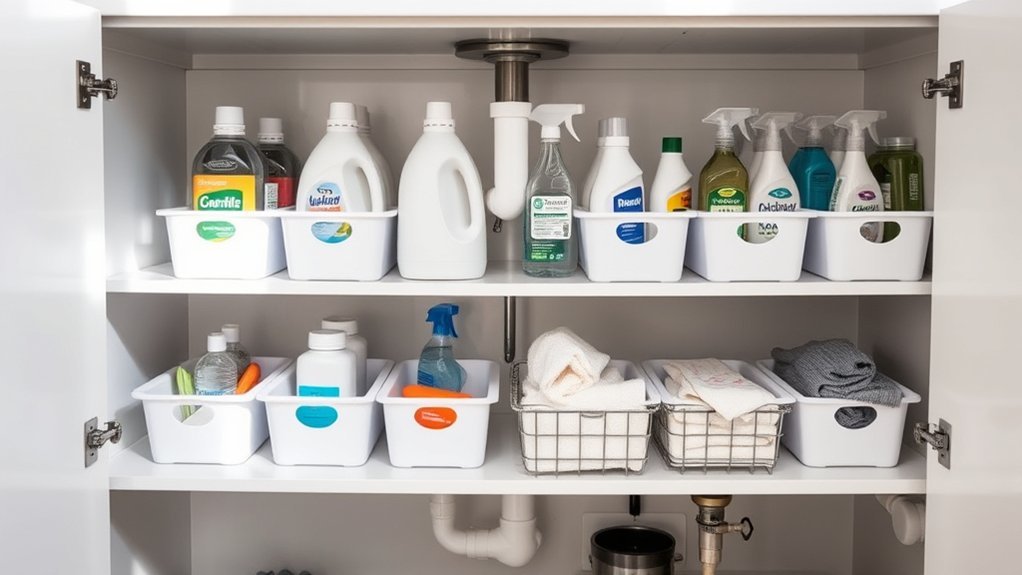
Begin by emptying the under-sink cabinet and sorting through each item to determine what is actually needed for laundry tasks. Expired cleaners, duplicate bottles, and unused products can be discarded, creating room for essentials and reducing visual noise.
Empty the under-sink cabinet, keep only laundry essentials, and discard expired, duplicate, or unused products.
This first step in sink organization supports a freer routine, because fewer objects mean less searching and less friction. After clearing the space, group supplies by type: detergents, fabric softeners, stain removers, and cleaning cloths.
Deep bins or stackable drawers provide practical storage solutions that keep each category contained and visible. Labels add speed and certainty when items must be found quickly.
Pull-out shelves or tiered organizers can then use vertical space, placing frequent-use items forward and backups farther back. A regular review keeps the cabinet from filling again and preserves a calm, functional system that supports self-directed household care.
Measure Around Pipes and Cabinet Height
With the cabinet cleared and categories sorted, the next step is to measure the space carefully before choosing storage. The cabinet height should be recorded first, since most laundry room under-sink cabinets run about 30 to 36 inches tall. That number sets the ceiling for any storage plan.
Next, the pipes must be measured around, not just across. Plumbing can extend 6 inches or more into the cabinet, reducing usable vertical room and shaping where bins or shelves can sit. A flexible measuring tape helps capture the depth and width accurately, especially in cabinets that are often 18 to 24 inches deep.
The drain and water supply lines should also be noted, because storage must leave them accessible. Clear, written measurements, including any uneven spots or obstructions, give the freedom to choose storage that fits the cabinet’s exact shape without wasted space or frustrating guesswork.
Pick Under-Sink Storage That Fits the Space
The under-sink area should be measured carefully so storage can fit around pipes and cabinet constraints without blocking access.
Compact, stackable, or modular bins work well because they use space efficiently while leaving room for plumbing.
Deep bins or pull-out drawers can then keep supplies visible and easy to reach.
Recommended Products

【2 Pack Value Set】Sized at 15” x 8” x 12.8” each, these organizers fit perfectly for bathroom organizers and storage, kitchen organizers and storage, under sink organizer and under cabinet storage.

Dustproof Storage Bins---The storage drawers help you to organize everywhere in your home. It is ideal for storing refrigerator food, snacks, medicines and office items. The storage bins has built-in removable dividers to achieve "one box for one thing" or "one box for one category".
Measure Around Pipes
Careful measuring around pipes is essential before choosing under-sink storage, since the height, depth, and placement of plumbing will determine what fits. A tape measure helps map the open width, vertical clearance, and usable depth with precision. This makes it easier to place storage bins and drawers without conflict.
| Measurement | Purpose |
|---|---|
| Width | Confirms side-to-side space |
| Height | Reveals clearance under pipes |
| Depth | Shows how far units can extend |
Modular or stackable units can adapt to fixtures while keeping order intact. Taller storage can use vertical space well, as long as daily items stay easy to reach. Clear labels support quick retrieval and keep the area functional, free, and uncluttered.
Choose Compact Bins
Compact bins should fit snugly around plumbing fixtures so the cabinet stays usable without blocking access to pipes.
Well-chosen compact bins create a storage system that makes the most of limited space while keeping cleaning supplies easy to reach.
Deep bins support vertical stacking, so detergent, fabric softener, and tools can stay organized without spreading across the cabinet floor.
Clear containers improve visibility, reducing time spent searching and helping maintain order with less effort.
Modular pieces add flexibility, allowing the layout to shift as needs change.
Careful measuring guarantees each bin slides in and out smoothly without catching on plumbing.
This simple selection process frees the under-sink area from clutter and turns it into a practical, adaptable zone.
Use Stackable Bins to Go Vertical
Stackable bins make it easier to use the full height under a laundry room sink, turning wasted space into organized storage.
With stackable bins, organization becomes a simple system instead of a daily burden. Clear, modular bins help separate detergent, fabric softener, stain remover, and spare cloths while keeping everything visible at a glance. Choosing bins about 4.4 inches tall can preserve easy access to frequent supplies without crowding the cabinet.
A modular layout also supports freedom, because the setup can change as needs change.
- Place the most used items in the top or front bin.
- Group backup products in lower stacks for steady order.
- Use clear sides to avoid searching and save time.
This vertical approach streamlines laundry tasks and reduces clutter, creating a calmer, more efficient space.
Recommended Products

✅Functional Storage for Any Space: You can use these pantry bins for various things throughout your home to organize and make your life easier. They are fit to pantry organization,ideal for cabinet, kitchen, fridge, bathroom,under sink, closet,laundry room and RV.The clear organizing bins to store drinks, snacks, cans, meat,body face wash, cleaning supplies and daily necessities.

[Stackable Design] Come with 5 storage drawers, included 12.1" W and 4.4''H&7.6‘’H storage containers. The storage containers are stackable, vertical storage will save a lot of space. Put your small objects in acrylic drawers to make your countertop space more tidy.
Add Pull-Out Drawers for Easy Access
Pull-out drawers give easy reach storage for cleaning supplies and laundry essentials, so items can be accessed without digging through clutter.
Slide-out cleaning caddies and shallow drawers work well around plumbing while still making use of the space below the sink.
Clear or labeled tiered drawer organization also helps separate detergents, fabric softeners, and stain removers for quicker use.
Recommended Products

【L-SHAPED DESIGN FITS AROUND PIPES AND GARBAGE DISPOSALS】 The narrow top basket mounts left or right to clear your plumbing. The wide lower tier reclaims full vertical space under the sink, turning a blocked corner into organized, easy-to-use cabinet storage
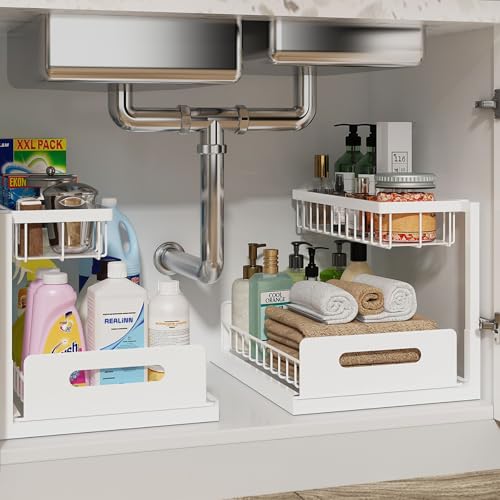
【L-SHAPED DESIGN FITS AROUND PIPES AND GARBAGE DISPOSALS】 The narrow top basket mounts left or right to clear your plumbing. The wide lower tier reclaims full vertical space under the sink, turning a blocked corner into organized, easy-to-use cabinet storage.

Larger Organizer for Maximum Efficiency: This under sink organizer, measuring 11.8"W x 15.9"D x (13.8"-16.9")H, providing more capacity for storing taller bottles, cleaning supplies and other essentials.Before purchasing, please double-check your cabinet dimensions to ensure this under cabinet organizer fits properly.
Easy Reach Storage
A set of pull-out drawers can make the space under the laundry sink far easier to use by bringing cleaning supplies and laundry essentials within immediate reach.
This approach turns sink storage into a calm, workable system, reducing strain and wasted time. Plastic drawers shaped around plumbing can protect every inch of vertical space, while clear fronts or labels reveal contents at a glance.
Modular units can be arranged for detergents, fabric softeners, and stain removers, giving each item a proper place.
- Fewer bent backs
- Less searching frustration
- More freedom in daily chores
Regularly review the layout and move used items forward. With simple order, the area under the sink supports an easier routine and a lighter mood.
Slide-Out Cleaning Caddies
Slide-out cleaning caddies bring order to the space under the laundry sink by keeping detergents, fabric softeners, and cleaning tools easy to reach. These slide-out cleaning caddies turn cramped storage into usable freedom, since items no longer hide behind clutter. Pull-out drawers also use vertical space well and fit around plumbing, so no inch is wasted. Clear bins support practical organization ideas by showing contents at a glance, which speeds laundry tasks and reduces frustration.
| Item | Benefit | Fit |
|---|---|---|
| Detergent | Fast access | Front drawer |
| Fabric softener | Easy sorting | Upper pull-out |
| Brushes | Visible storage | Side section |
| Sponges | Less clutter | Small bin |
| Spray bottles | Quick grab | Tall drawer |
Tiered Drawer Organization
Tiered drawer organization makes the space under a laundry sink far more efficient by using vertical storage to keep supplies easy to see and reach.
A well-planned tiered drawer organization system frees the lower cabinet from chaos and helps cleaning products stay sorted, visible, and ready.
Pull-out drawers can be built around plumbing, so nothing is hidden or trapped in back. Clear stackable drawers improve access and support quick decisions during busy laundry days.
- Place detergent and stain remover in the top tier.
- Store fabric softener and towels in the middle.
- Keep backup cleaning tools below.
This structure reduces clutter, prevents wasted motion, and gives the room a calmer, more independent rhythm.
Pour Laundry Supplies Into Clear Containers
Pouring laundry supplies into clear containers immediately improves visibility and helps keep the area under the sink organized. Clear containers let residents organize supplies with less effort, spot detergent levels at a glance, and avoid unnecessary store runs. The clean, transparent look also reduces visual clutter and supports a more open, easy-to-use space.
| Container Type | Best Use | Benefit |
|---|---|---|
| Stackable bins | Pods, powders | Uses vertical space |
| Airtight jars | Laundry powder | Preserves freshness |
| Labeled jugs | Liquid detergent | Prevents mix-ups |
Labels add another layer of order, making each item easy to identify without rummaging. Airtight seals protect powders from moisture and help prevent leaks from liquid products. When clear containers are grouped by type or purpose, the system stays simple, efficient, and easy to maintain. This approach gives the space structure while freeing it from the disorder of bulky packaging and mixed products.
Keep Rags and Cleaning Tools Handy
Keeping rags and cleaning tools within easy reach makes under-sink storage more functional for daily cleanup tasks.
In a laundry room sink cabinet, deep storage bins can hold microfiber cloths, sponges, and brushes without wasting space.
Pull-out baskets or drawers keep items at the front, so no one has to dig through clutter when a spill appears. Foam feet on containers also make them slide in and out with less effort, supporting a smoother routine.
- Grab a rag fast.
- Reach for the right cleaning tools.
- Restore order without frustration.
This simple setup gives the sink area a sense of freedom and control.
Regularly reviewing what stays below helps limit backstock and keeps only essential items on hand.
The result is a calm, efficient system where cleanup feels lighter and more deliberate, not buried under excess.
Label Every Bin and Container
Clear labels make under-sink storage easier to use at a glance. Labeling bins helps people organize supplies without wasteful searching, keeping each item in its rightful place. Use large, legible text for every container, and name contents by specific category or product. Color-coded tags can speed sorting and support quick decisions when hands are full and time is tight.
| Label | Purpose |
|---|---|
| Detergent | Fast access |
| Stain remover | Clear grouping |
| Rags | Easy return |
| Brushes | Better order |
| Spare supplies | Simple tracking |
This system protects freedom from clutter and confusion. When labeling bins is consistent, every person can return items with confidence, reducing drift and disorder. Updating labels whenever contents change keeps the system honest and useful. Under the sink then becomes a calm, efficient zone where essentials stay visible, reachable, and ready.
Maintain Your Laundry Under-Sink Setup
A maintained laundry under-sink setup begins with regular review of what is stored there, keeping only essentials such as detergent, fabric softener, and stain remover. This simple habit prevents clutter from quietly taking control and supports a lighter, freer routine.
To keep the area working well, storage solutions should fit the space, not fight it. Measure Your Space first, including pipes and clearance, so bins and drawers slide in cleanly.
- Remove expired or unused products.
- Keep frequently used items within reach.
- Recheck labels and placement after each reset.
Stackable bins and pull-out drawers use vertical space efficiently, while labeled containers make retrieval fast and calm. Regular decluttering protects the system from drift and restores order before frustration builds.
When the setup stays intentional, laundry tasks feel easier, and the sink area remains ready for use without excess or obstruction.
Frequently Asked Questions
What Is the Best Way to Organize Everything Under the Sink?
The best way is to sort items into labeled storage bins, add shelf dividers, and place daily supplies upfront. Measure around plumbing first, then use stackable drawers and deep bins to maximize access, order, and freedom.
What Are Some Common Mistakes to Avoid When Organizing Under Sink Storage?
Common mistakes include ignoring plumbing, overstuffing the space, and choosing poor storage solutions. They should verify the layout, label bins, remove unused items, and keep cleaning supplies in shallow, accessible containers for easier freedom.
How to Maximize Storage in a Small Laundry Room?
Vertical storage and multi functional furniture free a small laundry room from clutter. Shelves, stackable bins, and pull-out baskets use height and depth efficiently, while clear containers and only essentials keep access simple and space open.
How Big Should a Laundry Room Sink Be?
Like a well-cut key fitting a lock, a laundry room sink should measure about 24–30 inches wide, 15–20 inches deep, and 36 inches high, with 10–12-inch basin depth. Sink dimensions should suit practical considerations.
Conclusion
In the end, an organized laundry room under-sink cabinet saves time, reduces clutter, and makes every task easier. By measuring carefully, choosing fitting storage, and using clear, labeled containers, the space works harder without feeling crowded. Stackable bins and pull-out drawers keep supplies visible and accessible, while regular decluttering maintains order. A tidy setup lasts when it is refreshed often—after all, a place for everything and everything in its place.