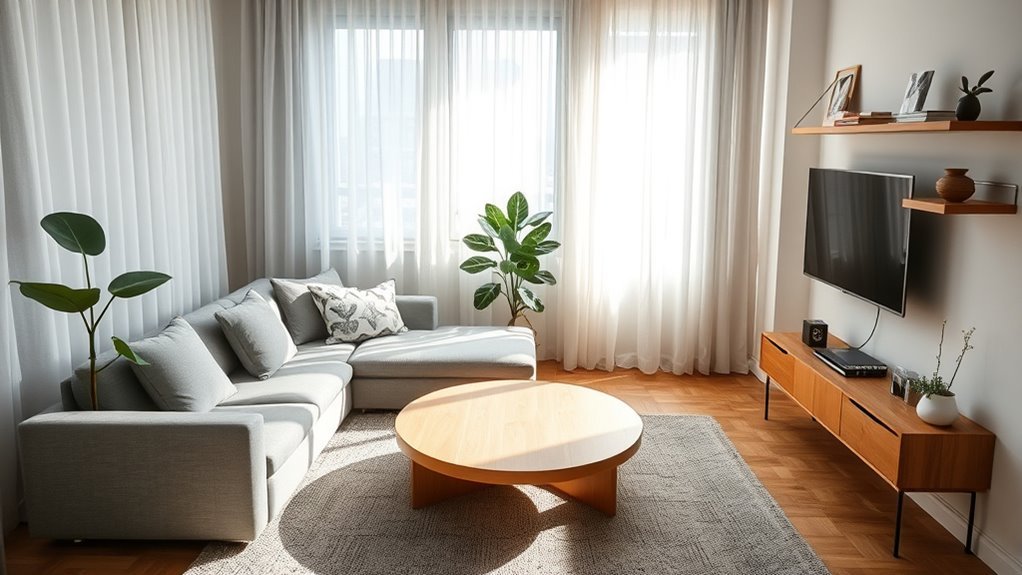
To plan your small living room layout, start by defining its primary function—whether it’s for lounging, entertaining, or working. Measure your space accurately and create a floor plan to map out your layout. Choose functional furniture that maximizes flow, like dual-purpose pieces and lightweight options. Use area rugs and lighting to carve out cozy zones, while adding personal touches for warmth. Keep your space organized with smart storage solutions—there’s plenty more to reflect on for a stunning transformation!
Define Your Small Living Room’s Primary Function
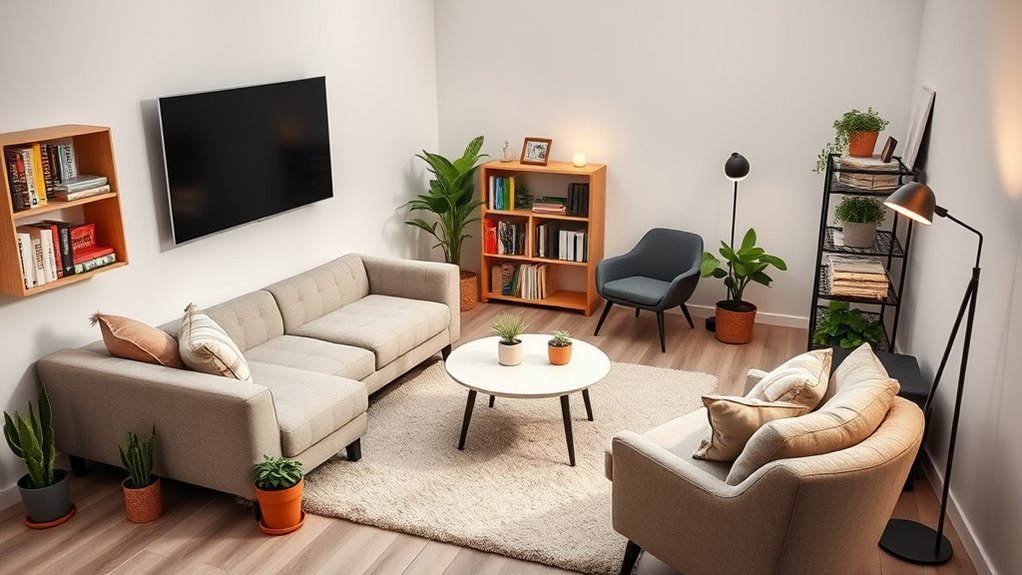
When planning your small living room, the first step is to define its primary function. Do you envision lounging, entertaining, or even working in this space? Evaluating your needs helps you define the space effectively. Embrace versatility; consider how your small living room can serve multiple purposes, like merging a cozy lounge with a functional workspace. Prioritize furniture that enhances your primary function without overcrowding the area. Create distinct zones using area rugs or lighting to enhance functionality and maintain a cohesive design. Keep flexibility in mind; as your lifestyle evolves, so should your furniture arrangement. With thoughtful planning, your small living room becomes a liberated haven, tailored to your unique needs and aspirations.
Measure Your Space and Map the Layout
With your small living room‘s primary function defined, it’s time to bring your vision to life by measuring your space and mapping the layout. Start by accurately measuring the length, width, and height, including the dimensions of doors and windows. Create a hand-drawn floor plan or utilize a space planning app to visualize your layout. Outline potential furniture dimensions with painter’s tape on the floor, helping you assess how they’ll fit and interact with your room’s features. Identify the focal point—like a TV or fireplace—and design your layout around it for enhanced aesthetics. Finally, guarantee a clear traffic flow by leaving 30 to 36 inches between main furniture pieces, allowing freedom of movement throughout your small living room.
Select Functional Furniture for Better Flow
Functional furniture acts as the backbone of a well-planned small living room, transforming your space while enhancing flow. To achieve a harmonious layout, prioritize pieces that boost accessibility and comfort. Here’s a guide to help you select the right items:
| Furniture Type | Key Features | Benefits |
|---|---|---|
| Dual-Purpose Pieces | Hidden storage, desks | Maximizes functionality |
| Lightweight Furniture | Easily rearranged | Greater flexibility |
| Open Bases | Legs for airiness | Prevents a cramped feel |
| Slim Profile | Compact sofas and chairs | Maintains an open atmosphere |
| Modular Furniture | Customizable arrangements | Adapts to your needs |
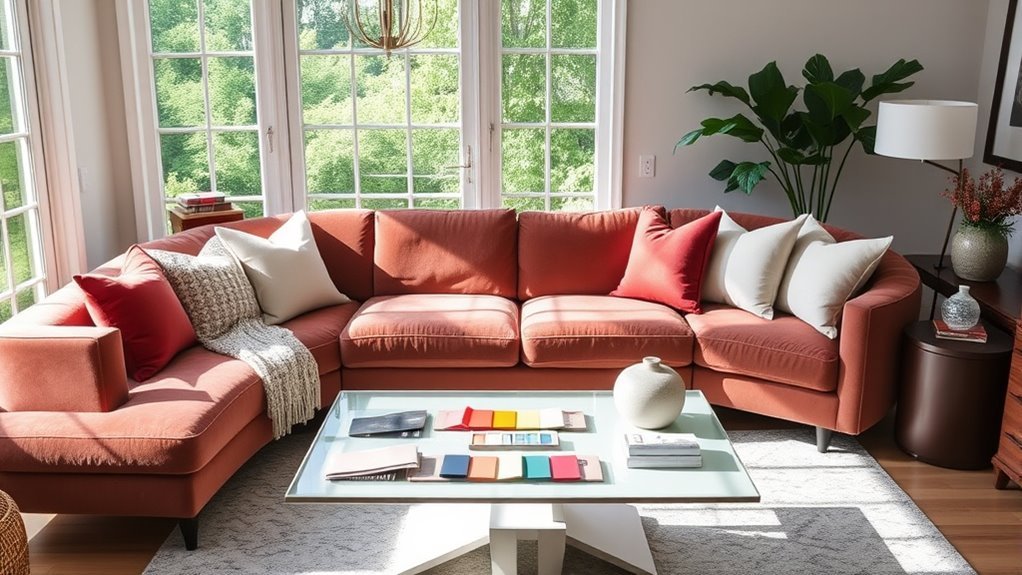
How to Create Cozy Zones With Rugs and Lighting?
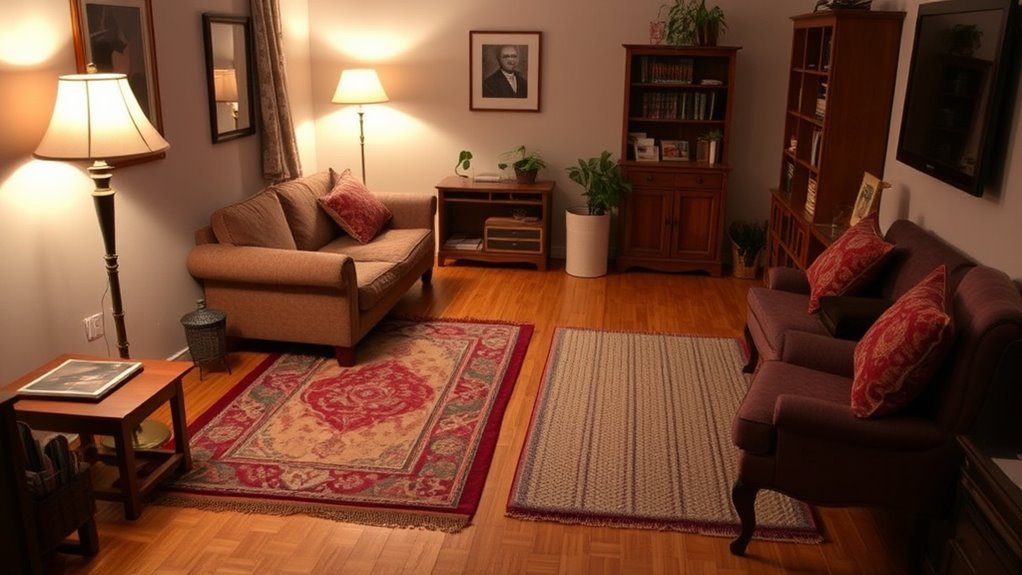
Creating cozy zones in your small living room transforms it into a warm and inviting retreat. Use area rugs to define different seating areas, establishing visual boundaries that enhance both coziness and functionality. Layering rugs adds texture and warmth, while light-hued rugs maintain an airy feel, complementing your décor beautifully.
Incorporate floor lamps or table lamps to provide focused lighting, creating an ideal ambiance for reading or conversation. Dimmable lighting options let you adjust the atmosphere based on the time of day or activity, fostering a tranquil environment. Position rugs under furniture to anchor the space and guarantee a cohesive look, allowing each seating area to feel inviting and perfectly placed for relaxation and connection.
Smart Storage Solutions to Eliminate Clutter in Small Living Rooms
A small living room can quickly feel cramped if clutter takes over, but smart storage solutions can work wonders in maintaining a tidy space. Here are three effective strategies to liberate your area:
- Embrace multifunctional furniture: Use ottomans with hidden storage or coffee tables with shelves to enhance space efficiency.
- Incorporate vertical storage: Floor-to-ceiling shelves or wall-mounted units draw the eye upward, maximizing often-overlooked wall space.
- Choose dual-purpose pieces: A sofa bed accommodates guests, while a console table can serve as both a desk and divider.
Finish off with decorative baskets that blend seamlessly into your decor, keeping everything organized and out of sight. Regularly reassess your needs, ensuring your living room remains functional and inviting without excess clutter.
Infusing Your Small Living Room With Personal Style and Comfort
Your small living room can truly shine with personal touches that tell your story, whether it’s a cherished family photo or a quirky travel souvenir. By selecting a color palette that resonates with you, you’ll not only create harmony but also evoke warmth and comfort through textures like plush cushions and cozy throws. Layering these elements together allows you to craft a space that feels uniquely yours while remaining functional and inviting.
Personal Touches Matter
There’s something special about transforming a small living room into a personal sanctuary. Infusing your space with personal touches elevates its comfort and style. Here are three essential ways to achieve that:
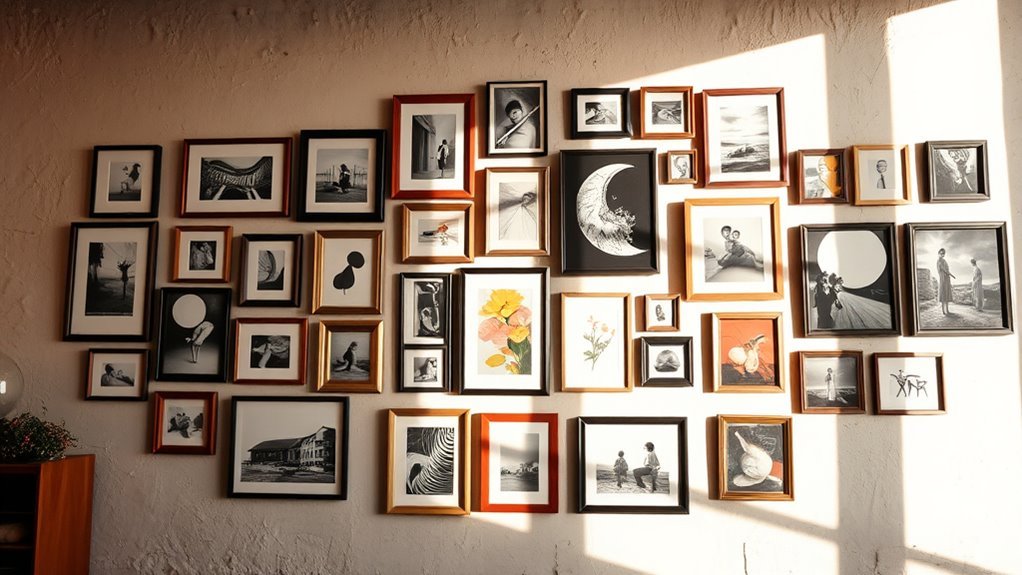
- Incorporate personal items: Display family photos or travel souvenirs to create warmth and a sense of belonging.
- Select decor items: Choose pieces that reflect your unique style, ensuring they enhance visual appeal without crowding the space.
- Utilize textiles: Layer cushions and throws to add comfort, color, and pattern that resonate with your aesthetic.
Consider multifunctional furniture that aligns with your style, keeping the area cozy and functional. By weaving in these elements, you’ll craft a living room that truly feels like home.
Color Palette Selection
When selecting a color palette for your small living room, consider how the right shades can breathe life and spaciousness into the space. Opt for lighter colors like soft pastels or neutrals to enhance brightness and create an illusion of airiness. Incorporate accent colors through cushions or artwork to add personality without overwhelming your oasis. A monochromatic color scheme promotes a cohesive look, unifying the room while allowing different textures to shine. Test paint samples under various lighting conditions to see how they react with natural light, helping you achieve the perfect ambiance. Finally, layer different shades of the same color for depth, transforming your small living room into an inviting retreat that radiates comfort and style.
Textures and Patterns
Building on the harmonious color palette you’ve chosen, integrating textures and patterns can elevate your small living room, making it feel inviting and personalized. Here’s how to achieve that cozy atmosphere:
- Layered Textures: Combine a chunky knit throw with a sleek leather sofa for depth and comfort.
- Decorative Elements: Use woven baskets and ceramic vases to introduce tactile diversity, enhancing the homey feel.
- Balanced Patterns: Limit yourself to two or three patterns for cushions and rugs, ensuring they complement your color scheme for a cohesive look.
These elements create visual interest while maintaining a balanced aesthetic. Embrace the tactile diversity that textures and patterns offer, and transform your small living room into a sanctuary of style and warmth.
Frequently Asked Questions
What Is the Best Layout for a Small Living Room?
The best layout for a small living room combines cozy seating with multifunctional furniture, vibrant color schemes, and ample natural light. Arrange pieces thoughtfully, use rug placement to define areas, and incorporate storage solutions and indoor plants for charm.
What Is the 2/3 Rule for Living Rooms?
Think of your living room as a dance floor; the 2/3 rule balances furniture placement and space optimization. It guarantees traffic flow, lighting design, and personal style blend seamlessly, creating visual harmony with multifunctional pieces and thoughtful decor.
Is There a Free App That Can Help Me Rearrange My Room?
Try Magicplan for room planning. Its user-friendly interface lets you visualize layouts, optimize space, and experiment with furniture arrangements, color selection, and accessory placement, offering design inspiration through virtual staging without any hassle.
What Is the 3-5-7 Rule of Decorating?
Like a painter’s palette, the 3-5-7 rule helps you achieve color harmony and visual balance. Incorporate three furniture scales, five textures, and seven colors to optimize space, enhance flow patterns, and express your personal style.
Conclusion
As you weave together each element of your small living room, think of it as crafting a cozy nest where comfort and style harmonize. With thoughtful planning and functional choices, you can transform your space into a welcoming retreat. Embrace the challenge of limited square footage, and let your personal flair shine through. Remember, every corner can tell a story, so fill it with warmth and character that reflects who you are. Your perfect small living room awaits!