Updated August 2026. Product specifications, seller offers, and package contents can change, so confirm the current Amazon listing before ordering.
Choosing a dehumidifier for a 600-square-foot room requires more than comparing advertised coverage numbers. The right capacity depends on how damp the room is, its temperature, ceiling height, air leakage, laundry load, and whether moisture is entering through walls, floors, windows, or plumbing.
The 30- to 34-pint compressor models in this guide are most appropriate as starting choices for a very damp 600-square-foot basement, laundry area, apartment, or living space. They may also suit some wet rooms, although severe or persistent moisture loads can require more capacity. A slightly or moderately damp bedroom may need only a 20- to 30-pint model, while active leaks, seepage, or flooding must be repaired instead of relying on a portable appliance alone.
Our top choice is the VEAGASO VG380 34-Pint Dehumidifier because it combines adjustable humidity control, automatic defrost, portable wheels, and two drainage methods. The KNKA is the stronger choice when a larger built-in water tank matters. NEWBULIG offers four operating modes, while the PLUSCENT PD10 provides a straightforward 32-pint alternative with a listed drain hose.
Quick Verdict
Best Overall: VEAGASO VG380 34-Pint Dehumidifier
Best Larger Tank: KNKA PD22SC-12 34-Pint Dehumidifier
Best Four-Mode Option: NEWBULIG 30-Pint Dehumidifier
Best Simple Alternative: PLUSCENT PD10 32-Pint Dehumidifier
How We Chose These Products
We compared manufacturer and current product-listing information for moisture-removal capacity, tank size, drainage, humidity controls, automatic defrost, operating modes, portability, and buyer limitations. We did not conduct controlled hands-on or laboratory testing, so performance and noise figures are identified as manufacturer or seller claims rather than independent measurements.
Important capacity note: The 34-pint maximum listed for VEAGASO and KNKA and the 32-pint maximum listed for PLUSCENT are advertised under warm, highly humid conditions of approximately 95°F and 90% relative humidity. These maximum figures should not be treated as the amount you will collect every day or automatically compared with a current DOE-rated capacity. Actual collection normally falls as the room dries and can be substantially lower in cooler conditions. The NEWBULIG 30-pint figure is also seller-listed, but its exact test condition could not be confirmed from the product information reviewed.
Quick Comparison of Dehumidifiers for 600 Square Feet
| Product | Seller-Listed Maximum | Tank | Continuous Drainage | Best For | Amazon |
|---|---|---|---|---|---|
| VEAGASO VG380 | Up to 34 pints/day at 95°F, 90% RH | 2 liters | 3.28-foot gravity hose listed as included | Best overall balance | Check Amazon Availability |
| KNKA PD22SC-12 | Up to 34 pints/day at 95°F, 90% RH | 3 liters | 3.28-foot gravity hose listed as included | Larger tank and clear controls | Check Amazon Availability |
| NEWBULIG 30-Pint | Up to 30 pints/day; test condition not confirmed | 2 liters | Drainage supported; confirm hose inclusion | Four operating modes | Check Amazon Availability |
| PLUSCENT PD10 | Up to 32 pints/day at 95°F, 90% RH | 2 liters | 39.4-inch gravity hose listed as included | Straightforward everyday operation | Check Amazon Availability |
VEAGASO VG380 34-Pint Dehumidifier with Drain Hose
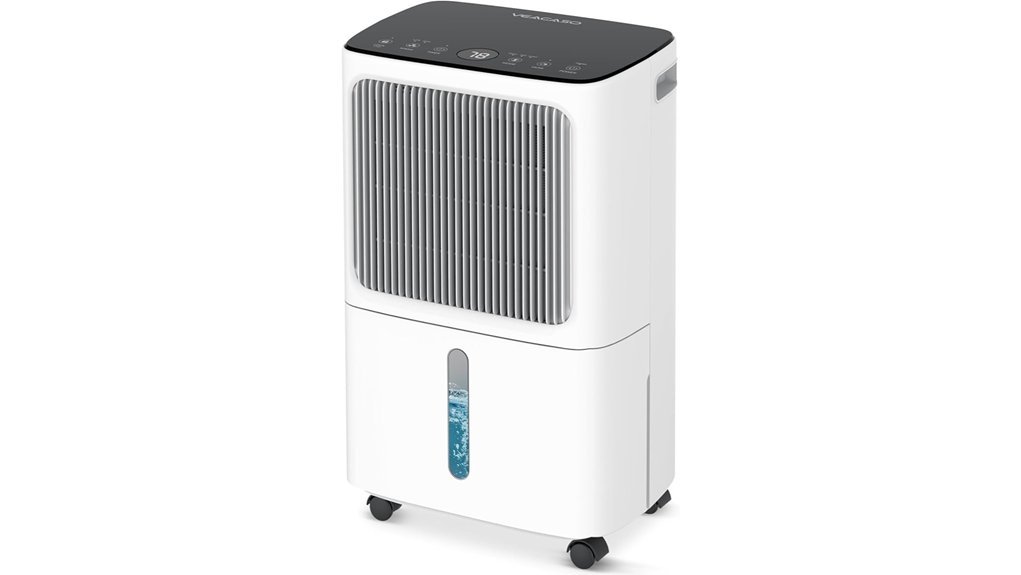
The VEAGASO VG380 is the most balanced choice in this comparison for a very damp 600-square-foot basement, laundry room, or living area. Its manufacturer-listed maximum is 34 pints per day at approximately 95°F and 90% relative humidity. That figure represents a demanding test condition rather than typical daily collection, but the unit provides useful moisture-removal headroom for persistent humidity.
You can select dehumidification, clothes-drying, or continuous operation from the digital panel. The listed 3.28-foot gravity drain hose is useful when the appliance can sit near a floor drain, sump opening, or another suitable low drainage point. Automatic defrost helps manage coil frost, although moisture-removal performance will still decline as room temperature falls.
Why You’ll Like It
- Balanced capacity: Its 34-pint seller-listed maximum provides useful headroom for many very damp 600-square-foot spaces.
- Two drainage methods: Use the removable 2-liter tank or connect the listed 3.28-foot hose for continuous gravity drainage.
- Adjustable humidity control: Select a preferred relative-humidity level instead of relying only on continuous operation.
- Portable design: Casters and a handle make the approximately 23-pound appliance easier to reposition on a level floor.
Best For: Very damp basements, laundry rooms, apartments, and other 600-square-foot areas where continuous drainage is available.
Who Should Avoid It: Buyers with only mild seasonal humidity or anyone who has no nearby drain and does not want to empty a relatively small 2-liter tank.
Pros:
- Manufacturer-listed maximum capacity of 34 pints per day at 95°F and 90% RH.
- Adjustable humidistat, automatic shutoff, automatic defrost, and timer.
- Listed 3.28-foot drain hose reduces the need for repeated tank emptying.
- Washable filter helps simplify routine maintenance.
Cons:
- The 2-liter tank may fill quickly during initial moisture removal in a very damp room.
- Gravity drainage requires the hose outlet to remain below the appliance’s drain connection.
- The 34-pint maximum should not be interpreted as normal everyday collection under cooler or less humid conditions.
KNKA PD22SC-12 34-Pint Dehumidifier with Drain Hose
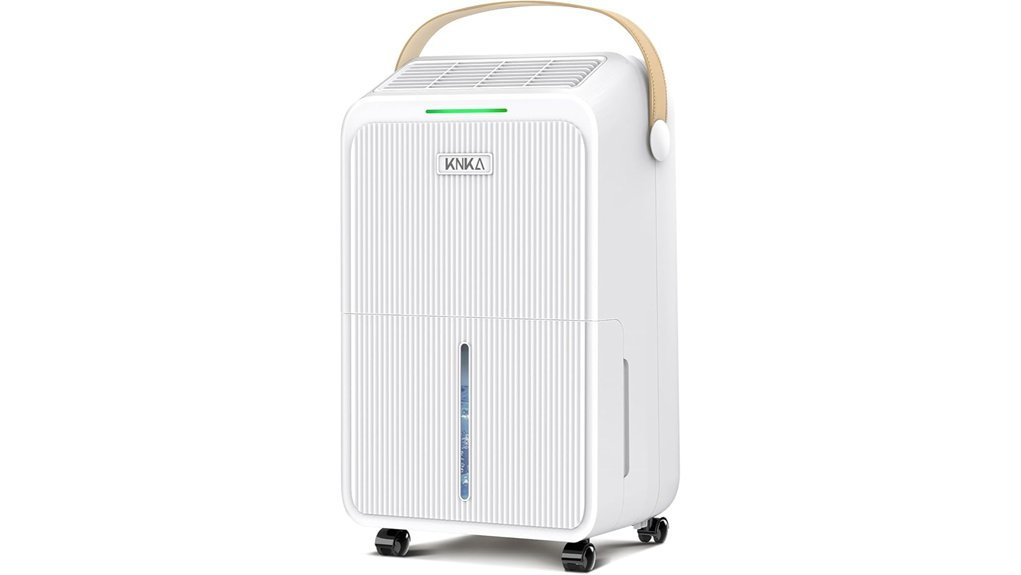
The KNKA PD22SC-12 is another relevant option for controlling persistent humidity in a 600-square-foot room. It has a seller-listed maximum output of 34 pints per day at approximately 95°F and 90% relative humidity, along with an approximately 3-liter built-in tank, digital humidity controls, and DEHU, DRY, and CONT operating modes.
Its larger built-in tank is the primary advantage over the retained 2-liter models when a floor drain is unavailable. A color humidity indicator provides quick visual feedback, while the child lock can help prevent accidental setting changes in a shared household.
Why You’ll Like It
- Larger removable tank: Its approximately 3-liter built-in capacity should reduce emptying frequency compared with the 2-liter alternatives under similar conditions.
- Clear controls: A digital display, humidity indicator, timer, and three operating modes provide flexible adjustment.
- Continuous drainage: The listed 3.28-foot hose supports hands-free gravity drainage when correctly routed.
- Household-friendly functions: Automatic shutoff and a child lock add convenience in family living areas.
Best For: Buyers who want a larger built-in bucket, clear digital controls, and flexible drainage for a very damp basement or main living area.
Who Should Avoid It: Anyone who needs a compact tabletop unit or an internal pump capable of pushing water upward to a sink. Its included hose is intended for gravity drainage.
Pros:
- Seller-listed maximum capacity of 34 pints per day at 95°F and 90% RH.
- Approximately 3-liter built-in tank is larger than those in the other retained products.
- Listing identifies automatic defrost, automatic shutoff, washable filter, timer, and child lock.
- Wheels and a handle support movement on level surfaces.
Cons:
- At approximately 23 pounds, it still requires care when moving over stairs or thresholds.
- The advertised 2,500-square-foot coverage should not be treated as a performance guarantee for every humidity condition.
- The seller-listed noise figure is not directly comparable with competing products unless testing methods are identical.
NEWBULIG 30-Pint Dehumidifier for Home and Basement
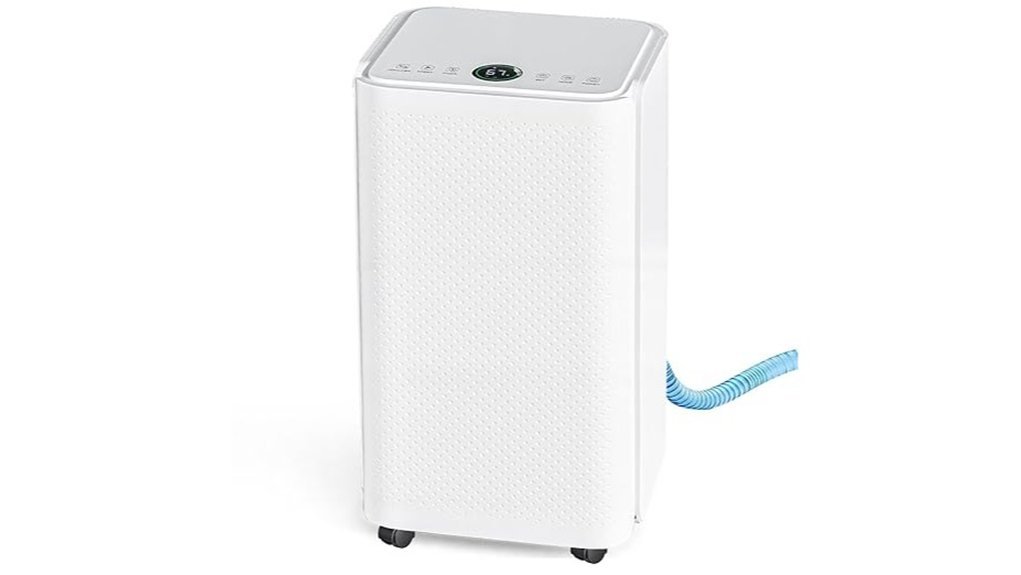
The NEWBULIG 30-Pint Dehumidifier is the most flexible option in this comparison for buyers who want four listed operating modes. Its controls cover automatic dehumidification, clothes drying, sleep operation, and fan-only circulation. The 30-pint figure is seller-listed; the exact test condition for that maximum could not be confirmed from the product information reviewed.
The product information advertises operation around 38 dB, but this remains a seller claim rather than a result from side-by-side independent testing. Perceived noise also depends on fan speed, flooring, room acoustics, vibration, and distance from the appliance.
Package-content note: The product title advertises a drain hose, while structured package-content information associated with this model has listed only the user manual. Confirm that the hose is included on the live Amazon product page before ordering, or plan to obtain a compatible gravity-drain hose separately.
Why You’ll Like It
- Four operating modes: Choose Auto, Drying, Sleep, or Fan-Only operation for different room conditions.
- Easy humidity checks: The color-coded humidity ring provides a quick visual indication of ambient conditions.
- Automatic functions: Product information identifies automatic defrost, automatic restart, child lock, and continuous-drain support.
- Two-liter tank: The tank provides manual operation when a correctly positioned drain is unavailable.
Best For: A very damp bedroom suite, office, apartment, or basement where sleep and fan-only settings are useful.
Who Should Avoid It: Buyers who need a larger bucket or who require guaranteed drain-hose inclusion without checking the current package details.
Pros:
- Seller-listed maximum capacity of 30 pints per day.
- Four modes provide more operating choices than the three-mode alternatives.
- Product information identifies automatic defrost, automatic restart, child lock, and continuous drainage.
- Color humidity indicator makes room conditions easier to interpret.
Cons:
- Available product information is inconsistent about whether a drain hose is included in the package.
- The 2-liter tank may require frequent emptying during initial moisture removal.
- The advertised noise figure cannot establish that it is quieter than the other models without identical testing.
PLUSCENT PD10 32-Pint Dehumidifier for Home
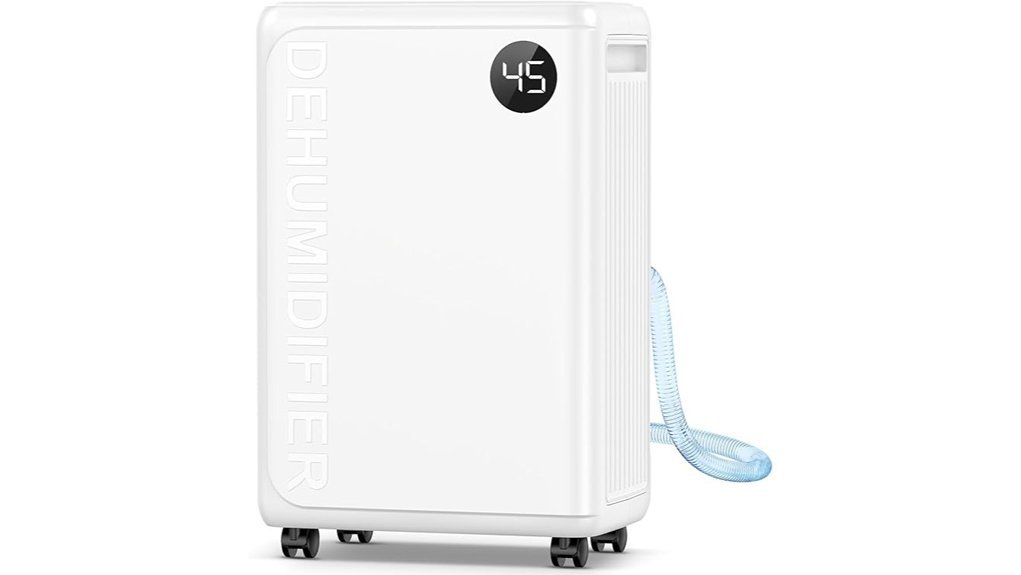
The PLUSCENT PD10 is a straightforward alternative for a very damp 600-square-foot room. Its current product information identifies a maximum moisture-removal rating of 32 pints per day at approximately 95°F and 90% relative humidity, a 2-liter removable tank, three modes, automatic defrost, a 24-hour timer, and continuous-drain support.
The listed package includes a 39.4-inch gravity drain hose, which makes this model convenient for a basement or laundry room with a nearby low drain. Adjustable humidity control allows the appliance to respond to the selected target instead of operating continuously at all times.
Why You’ll Like It
- Relevant capacity: Its 32-pint seller-listed maximum falls between the 30- and 34-pint alternatives.
- Three useful modes: The listed controls support normal dehumidification, continuous operation, and laundry drying.
- Drain hose listed as included: The 39.4-inch hose supports gravity drainage when the route slopes continuously downward.
- Automatic protection: Automatic shutoff is designed to stop operation when the tank becomes full.
Best For: Buyers who want a simple 32-pint option with an adjustable humidistat, three modes, and a listed drain hose.
Who Should Avoid It: Anyone who needs a built-in pump, a large water bucket, or third-party smart-home control.
Pros:
- Seller-listed maximum capacity of 32 pints per day at 95°F and 90% RH.
- Current product information identifies a 2-liter tank and 39.4-inch drain hose.
- Timer and three modes provide useful scheduling and operating flexibility.
- Automatic shutoff, automatic restart, and automatic defrost are listed.
Cons:
- The 2-liter tank may fill quickly without continuous drainage.
- The hose supports gravity drainage only and cannot push water upward.
- Advertised coverage and noise figures should not be treated as independently tested guarantees.
Factors to Consider When Choosing a Dehumidifier for 600 Square Feet
A room’s square footage is only one part of dehumidifier sizing. Before buying, consider how damp the space feels, its temperature, ceiling height, air leakage, laundry use, and whether water enters through walls, floors, windows, or plumbing.
Capacity and Moisture Level
ENERGY STAR’s portable dehumidifier guidance recommends approximately 20–30 pints per day for a slightly to moderately damp small-to-medium room under 2,000 square feet, 25–40 pints for a very damp room, and 30–50 pints for a wet room.
That makes a 30- to 34-pint compressor unit a sensible starting point for a very damp 600-square-foot basement, laundry room, apartment, or open living space. It also falls within the lower portion of ENERGY STAR’s range for a wet small-to-medium room. A severely wet space with continuing seepage or a heavy moisture load may need more capacity after the underlying moisture source has been corrected.
A mildly humid bedroom may need less capacity. Choosing a much larger advertised maximum does not automatically make a unit a better match if a smaller dehumidifier can reach and maintain the target humidity.
Visible seepage, standing water, plumbing leaks, or flooding should be corrected before relying on a portable dehumidifier. An appliance can remove airborne moisture, but it cannot repair the source of water entry.
Do Not Rely Only on Advertised Coverage
Manufacturer coverage figures can range from hundreds to several thousand square feet for products with similar pint ratings. These numbers are not directly comparable unless room conditions and test methods are identical.
Use the pint rating and its test condition, starting humidity, room temperature, ceiling height, humidistat range, drainage method, and expected runtime as the primary comparison points. Treat advertised square-foot coverage as general product positioning rather than a guarantee.
Check Which Capacity Standard Is Used
ENERGY STAR explains that dehumidifier capacity ratings changed when the Department of Energy adopted cooler, more realistic testing conditions. A newer appliance with a lower-looking standardized rating may therefore perform similarly to an older model carrying a larger historical rating.
Marketplace listings may also highlight a maximum output measured under unusually warm and humid conditions, such as 95°F and 90% RH. Check the manual, manufacturer documentation, or standardized capacity information before comparing products from different brands or years.
Humidity Control and Target Level
EPA indoor-air guidance recommends maintaining indoor relative humidity between approximately 30% and 50%. Many households select a setting around 40%–50% for everyday comfort, although seasonal climate and condensation conditions vary.
Choose a model with an adjustable humidistat so the compressor can cycle automatically. A separate hygrometer can help you compare actual room humidity with the reading displayed by the appliance.
Noise Level Considerations
Compressor dehumidifiers contain a fan and refrigeration system, so none will be silent. Advertised decibel figures should be treated cautiously because brands may use different fan speeds, distances, and testing environments.
Place the appliance on a solid, level surface and leave the clearance required by its manual. Uneven floors, blocked airflow, loose panels, and contact with furniture can increase vibration and perceived noise.
Drainage Options Available
Manual drainage uses the removable water tank. It requires no floor drain, but the appliance stops whenever the bucket fills. A 2- or 3-liter tank may need frequent attention during the first days in a very damp room.
Continuous gravity drainage sends water through a hose to a suitable low drain. The hose must slope downward without kinks, raised sections, or submerged ends. The retained models do not advertise internal condensate pumps, so they should not be expected to move water upward to an elevated sink or window.
A product may have a continuous-drain connection without reliably including the required hose in every package. Check the current package contents, hose diameter, hose length, and drainage instructions before ordering.
Cold-Room Performance
Compressor coils can develop frost in a cool basement. Automatic defrost temporarily pauses normal moisture removal so accumulated ice can melt. This helps maintain operation, but it does not eliminate the natural decline in compressor performance as air temperature falls.
ENERGY STAR notes that frost can become a concern when air temperature drops below about 65°F. Check the manufacturer’s actual operating-temperature range if the room stays cool for long periods. An unheated garage, crawl space, or seasonal property may require a unit specifically designed for low-temperature operation or a different moisture-control method.
Energy Use and Efficiency
Electricity cost depends on wattage, local utility rates, selected humidity, room conditions, and daily runtime. Avoid relying on broad annual savings promises that do not explain their assumptions.
Do not assume that a product is ENERGY STAR certified because its listing uses phrases such as “efficient,” “energy saving,” or similar marketing language. Verify the exact model in the official ENERGY STAR product finder when certification is important to your buying decision.
Sealing air leaks, venting laundry equipment correctly, improving ventilation where appropriate, and repairing moisture entry can reduce runtime more effectively than choosing an unnecessarily large appliance.
Portability and Maintenance
Check dimensions and weight before ordering, especially when the appliance must fit beside furniture or move between floors. Casters work best on level surfaces and do not remove the need to lift the unit over stairs or raised thresholds.
Clean the washable filter according to the manual, rinse the tank regularly, keep the intake and outlet clear, and inspect the drain hose for clogs or algae buildup. Unplug the appliance before cleaning or moving it.
Do not drink collected dehumidifier water or use it for cooking, food preparation, or watering edible plants.
Before You Buy
- Decide whether the room is slightly damp, very damp, or wet.
- Measure the floor area, ceiling height, and available appliance space.
- Check whether the advertised pint figure is a standardized capacity or a maximum measured under unusually warm and humid conditions.
- Confirm the required airflow clearance around the unit.
- Make sure a grounded outlet is nearby and avoid extension cords unless the manual specifically permits one.
- Choose between manual tank emptying and continuous gravity drainage.
- Check whether the drain hose is included, especially with the NEWBULIG listing.
- Measure the distance and continuous downward route to the drain.
- Confirm the minimum operating temperature for a cool basement.
- Verify the current dimensions, warranty, return terms, seller offers, and replacement support.
Frequently Asked Questions
What Size Dehumidifier Is Suitable for 600 Square Feet?
A 20- to 30-pint model may be sufficient for a slightly or moderately damp 600-square-foot room. A portable compressor model rated around 25–40 pints per day is a useful starting range for a very damp room, while ENERGY STAR suggests approximately 30–50 pints for a wet small-to-medium space. Compare ratings measured under similar test conditions whenever possible.
Is a 30- to 34-Pint Dehumidifier Too Large for 600 Square Feet?
Not necessarily. It can be a good fit for a very damp basement, indoor laundry area, or room with a high moisture load. It may provide more capacity than needed for a mildly humid bedroom, but an adjustable humidistat allows the compressor to cycle after reaching the selected humidity. Remember that some marketplace 30- to 34-pint figures are maximum ratings measured under warmer and more humid conditions than normal household operation.
How Do I Maintain My Dehumidifier?
Clean the filter according to the manual, empty and rinse the tank, inspect the drain hose for clogs or kinks, and keep the air intake and outlet unobstructed. Unplug the appliance before cleaning or moving it.
Can I Use a Dehumidifier in Winter?
Yes, provided the room remains within the manufacturer’s operating-temperature range. Compressor models become less effective in cold rooms and may enter defrost mode more frequently. Check the manual before using one in an unheated basement, garage, crawl space, or seasonal property.
What Is the Ideal Humidity Level for My Home?
The EPA generally recommends keeping indoor relative humidity between 30% and 50%. A setting around 40%–50% is practical for many homes, but climate and season matter. Persistent condensation, water staining, seepage, or visible mold should also prompt an inspection for leaks, insulation problems, or inadequate ventilation.
Are Dehumidifiers Noisy During Operation?
All compressor dehumidifiers produce fan and compressor noise. Advertised figures around the high-30-dB to low-40-dB range may sound appealing, but brands’ results are not necessarily measured under identical conditions. Placement, fan speed, flooring, vibration, and room acoustics affect the sound you actually hear.
Should I Use the Tank or Drain Hose?
Use the tank when no suitable drain is nearby or when you move the appliance frequently. Use continuous gravity drainage in a basement or laundry room where the hose can maintain a steady downward slope to an appropriate drain.
Can These Dehumidifiers Drain Upward to a Sink?
No retained model advertises an internal condensate pump. Their continuous-drain connections depend on gravity, so the hose should not be expected to carry water upward to a sink above the drainage port. A separate compatible condensate pump would be required when the only available drain is elevated.
Why Is My Dehumidifier Collecting Less Water Than Its Pint Rating?
The advertised rating may represent a maximum measured under specified temperature and humidity conditions. Collection decreases as the room dries, when temperatures fall, when doors or windows remain open, or when airflow through the filter is restricted. This is especially important when comparing marketplace maximum ratings measured around 95°F and 90% RH with standardized ratings measured under cooler conditions.
Conclusion
The VEAGASO VG380 34-Pint Dehumidifier offers the best overall combination of seller-listed moisture-removal capacity, adjustable controls, automatic defrost, portability, and confirmed continuous-drain accessories for a very damp 600-square-foot space. Its advertised 34-pint figure is a maximum measured under warm, highly humid conditions, so everyday collection should be expected to vary.
Choose the KNKA PD22SC-12 when its larger approximately 3-liter built-in tank and clear digital controls matter most. The NEWBULIG provides four operating modes, but buyers should confirm whether its drain hose is included. The PLUSCENT PD10 is a straightforward 32-pint alternative with a listed 2-liter tank and 39.4-inch gravity hose.
A 30- to 34-pint-class appliance may be unnecessary for a mildly humid bedroom and may sit near the lower end of the recommended range for a genuinely wet room. Match capacity to the room’s actual moisture level, compare pint ratings under equivalent test conditions, and address leaks, seepage, or ventilation problems before expecting a portable dehumidifier to solve the entire issue.
Final Recommendation
Start with the VEAGASO VG380 for most very damp 600-square-foot rooms. It offers the most balanced combination of capacity, humidity control, portability, and drainage accessories in this comparison.
Choose the KNKA when a larger built-in bucket is more important. Consider NEWBULIG for its four-mode control layout or PLUSCENT for a straightforward 32-pint alternative with a listed gravity-drain hose.
Before ordering, confirm the current Amazon listing, seller availability, model number, capacity test standard, operating-temperature range, dimensions, warranty, and included drain accessories.