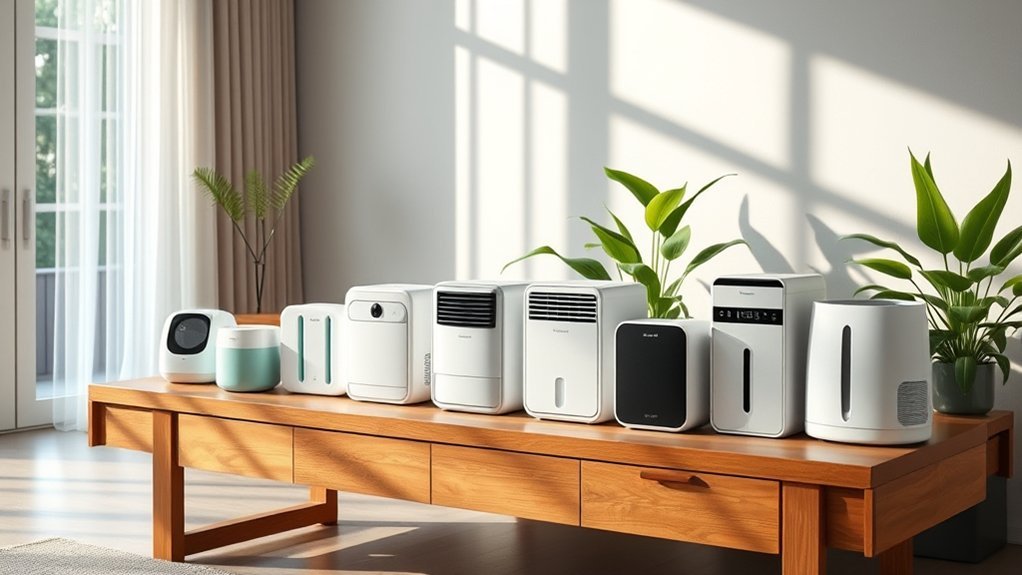
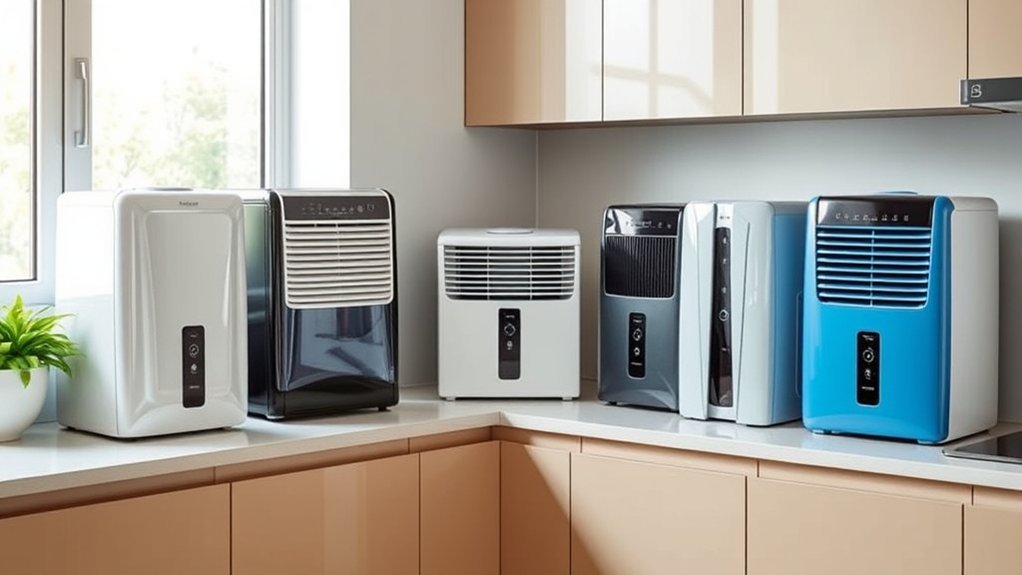
The best dehumidifier for mildew depends on where the moisture problem is. A compact thermoelectric model can help in a small bedroom or bathroom, a renewable desiccant unit is better for a closet or cabinet, and a compressor dehumidifier is the stronger choice for a damp basement or large room. This guide compares five relevant options, from the portable TABYIK 35 OZ to the higher-capacity KNKA 34-pint dehumidifier.
Quick answer: The KNKA is the best overall choice here for a persistently damp basement or large living area because it uses compressor technology, offers continuous drainage, and has a much higher advertised moisture-removal rate. For a small bedroom, bathroom, or RV, the TABYIK is easier to place and move. The Eva-Dry E-333 is best reserved for tiny enclosed spaces such as closets, cabinets, cars, and safes.
Important: A dehumidifier helps control the moisture that allows mildew and mold to grow. It does not remove existing growth or repair leaks. Clean affected surfaces safely, fix the moisture source, and dry wet materials promptly.
Key Takeaways
- Best overall for large damp spaces: KNKA 34-Pint Dehumidifier.
- Best for small bedrooms and bathrooms: TABYIK 35 OZ Dehumidifier.
- Best cordless option for tiny enclosed spaces: Eva-Dry E-333.
- Best medium-room options with large tanks: UBBO 95oz and ToLife 95 OZ.
- Do not compare coverage alone: Advertised square-foot ratings do not show how quickly a unit will lower humidity in your actual room.
Quick Comparison
| Product | Best For | Advertised Removal | Tank / Capacity | Drainage | Amazon |
|---|---|---|---|---|---|
| TABYIK 35 OZ | Small bedrooms, bathrooms, RVs | Up to 0.45 L/day at 86°F and 80% RH | 35 oz / 1,000 mL | Manual tank | Check Amazon |
| UBBO 95oz | Bedrooms and medium rooms needing a hose | Up to 1.2 L/day at 86°F and 80% RH | 95 oz | Tank or included hose | Check Amazon |
| Eva-Dry E-333 | Closets, cabinets, cars, safes | Up to 6 oz per renewal cycle | Renewable desiccant | No water tank | Check Amazon |
| ToLife 95 OZ | Bedrooms and general room use | Up to 1 L/day, according to the listing | 95 oz | Manual tank | Check Amazon |
| KNKA 34-Pint | Basements and larger damp rooms | Up to 34 pints/day at 95°F and 90% RH | 3 L tank | Tank or included hose | Check Amazon |
Capacity figures above are manufacturer or listing claims measured under different test conditions. Real-world extraction is usually lower in cooler rooms or when relative humidity is lower.
35 OZ Dehumidifier for Bedroom and Home
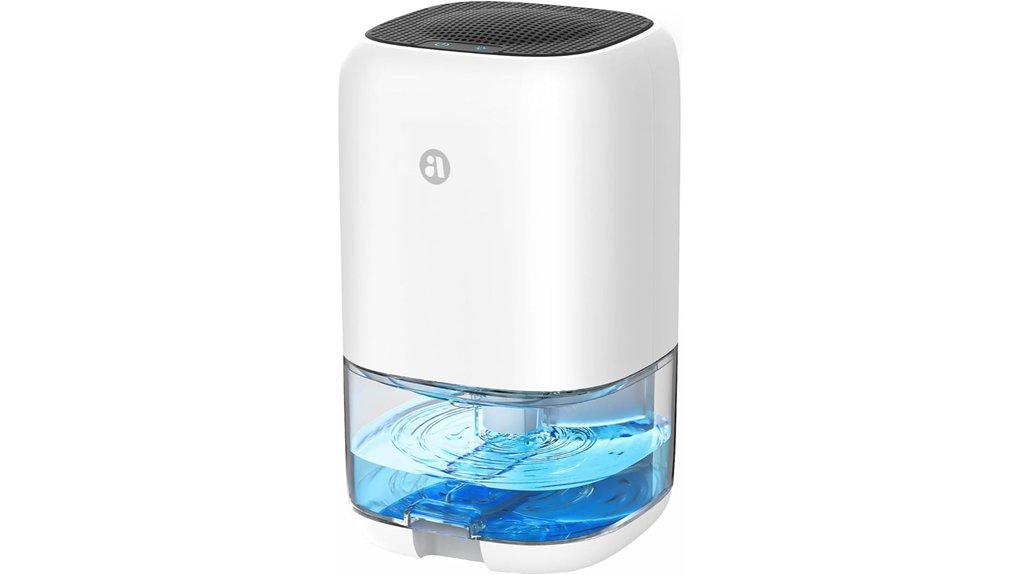
The TABYIK 35 OZ Dehumidifier is a compact thermoelectric model for small, enclosed rooms where a full-size compressor unit would be inconvenient. The listing states that it can collect up to 450 mL of water per day at 86°F and 80% relative humidity, with a 1,000 mL tank and coverage marketed up to 280 square feet. Its 2.19-pound body and built-in handle make it easy to move between a bedroom, bathroom, closet, or RV.
Its advertised 28 dB operating level and seven-color light make it more bedroom-friendly than many compressor models. However, this is still a small Peltier unit. It is best for mild moisture control, not an actively wet basement, a large open-plan room, or a space with a continuing leak.
Why You’ll Like It: It is easy to place, quiet, lightweight, and simple to empty.
Who Should Buy This: Renters, RV owners, and anyone managing mild humidity in a small room.
Who Should Avoid This: Buyers dealing with standing water, severe dampness, or a large basement.
Pros:
- Compact 35-ounce tank and lightweight design.
- Advertised 28 dB operation for quieter rooms.
- Auto shut-off helps prevent tank overflow.
Cons:
- Maximum extraction is based on hot, very humid test conditions.
- No continuous drain hose.
- Too small for serious basement moisture problems.
UBBO 95oz Dehumidifier for Home with Drain Hose
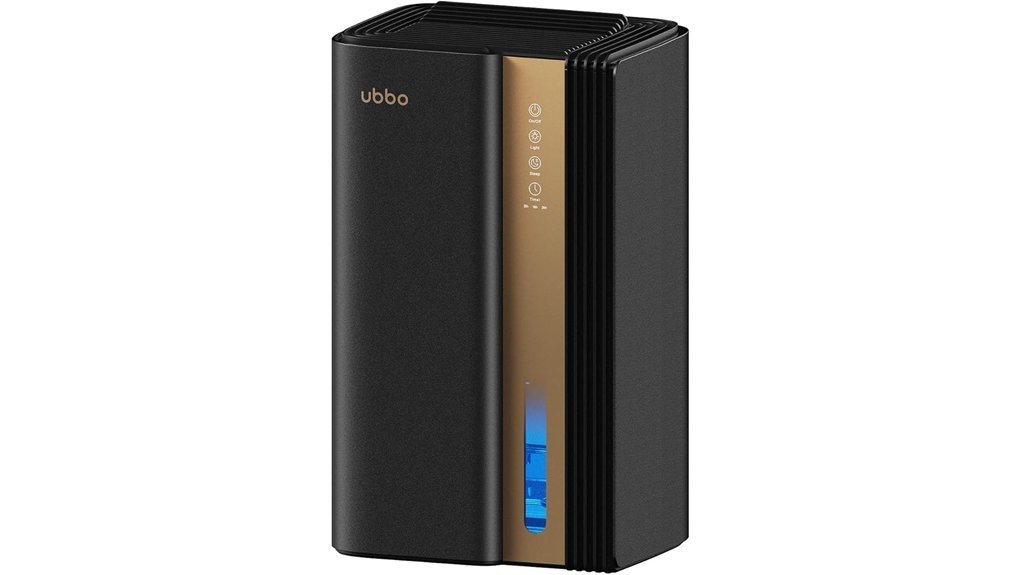
The UBBO 95oz Dehumidifier is a larger thermoelectric option for buyers who want more tank capacity and the convenience of continuous drainage. Its listing advertises dual semiconductor condensers, removal of up to 1.2 liters per day at 86°F and 80% relative humidity, and sleep-mode noise around 35 dB.
The included drain hose is its most useful advantage because it reduces the need to lift and empty a full tank. The timer, auto shut-off, full-tank alert, and ambient light controls add convenience. The claimed coverage of up to 1,000 square feet should be treated as a maximum marketing figure rather than a guarantee; a compressor dehumidifier is generally a safer choice for persistent moisture across a large area.
Why You’ll Like It: It combines a large tank, quiet-use features, and continuous drainage in a compact format.
Who Should Buy This: Buyers with a bedroom, bathroom, laundry area, or other moderately humid space near a suitable drain.
Who Should Avoid This: Anyone expecting compressor-level performance in a wet basement.
Pros:
- 95-ounce tank reduces emptying frequency.
- Continuous drain hose supports longer unattended operation.
- Sleep mode is designed for quieter use.
Cons:
- Advertised output depends on warm, high-humidity conditions.
- The large coverage claim may overstate practical performance in a damp home.
- Brand support and warranty details should be confirmed before purchase.
Eva-Dry Wireless Mini Dehumidifier, White (E-333)
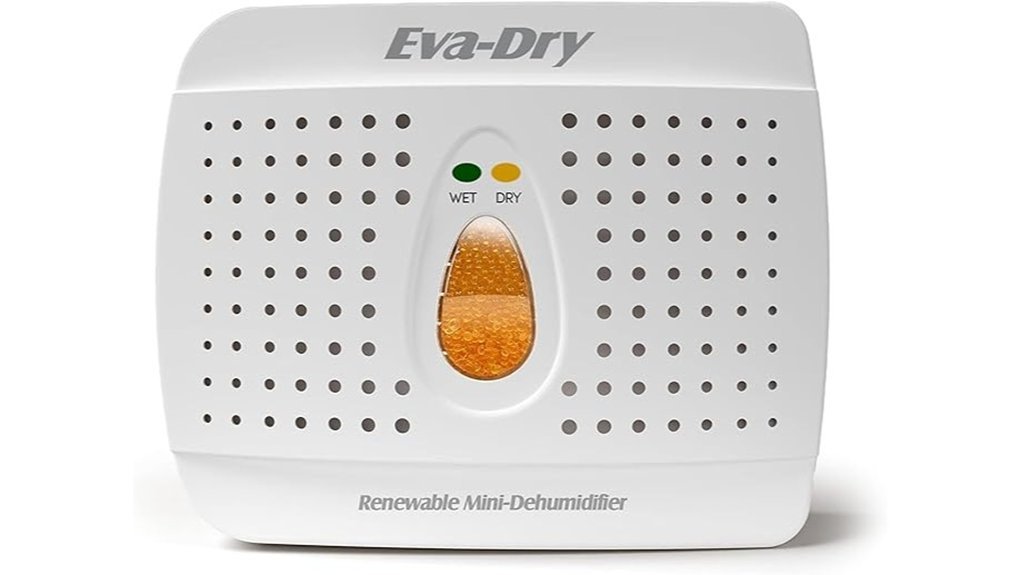
The Eva-Dry E-333 is a renewable desiccant dehumidifier for tiny enclosed spaces rather than whole rooms. Eva-Dry rates it for areas up to 333 cubic feet and states that it can absorb up to 6 ounces of moisture before the silica-gel beads need to be renewed. Depending on conditions, that renewal cycle may last about 20 to 30 days.
It needs no cord or batteries while absorbing moisture. When the indicator changes color, plug the unit into an outlet in a ventilated location to dry the beads for reuse. Its spill-free format is convenient in closets, cabinets, cars, boats, safes, and under-sink areas. It should not be expected to control humidity throughout a bedroom or bathroom.
Why You’ll Like It: It is silent, cordless during use, reusable, and has no water tank to spill.
Who Should Buy This: Anyone protecting a small enclosed storage area from damp air and musty odors.
Who Should Avoid This: Buyers who need measurable daily moisture removal from an occupied room.
Pros:
- No batteries, operating noise, or collection tank.
- Renewable silica-gel design reduces disposable waste.
- Backed by a five-year limited warranty for manufacturing defects.
Cons:
- Suitable only for very small enclosed spaces.
- Must be plugged in periodically to renew the desiccant.
- Much lower moisture capacity than an electric room dehumidifier.
ToLife Dehumidifier for Home with 95 OZ Tank
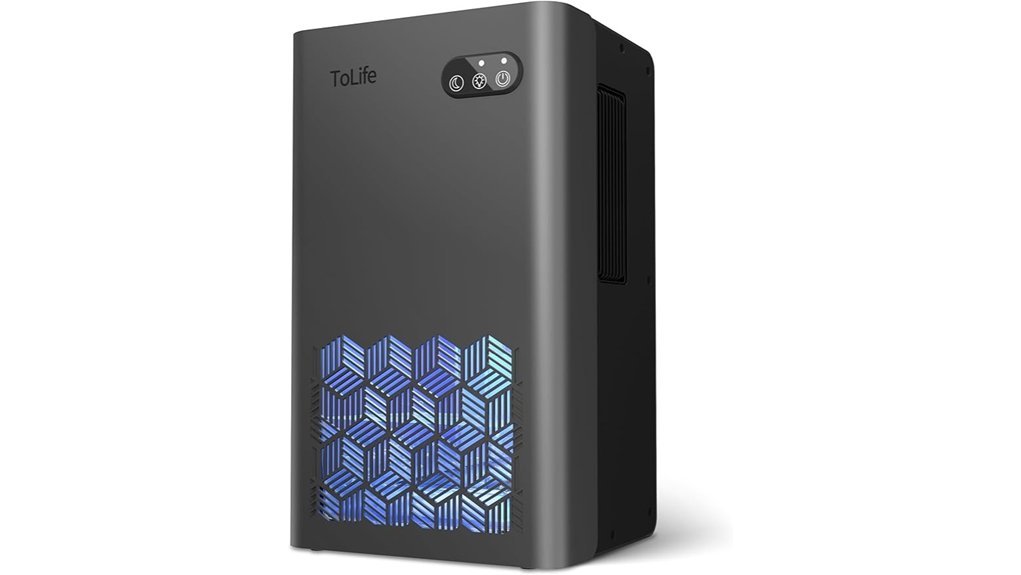
The ToLife Dehumidifier combines a 95-ounce tank with semiconductor condensation technology and two operating speeds. Its listing advertises removal of up to 1 liter of moisture per day and coverage up to 1,000 square feet. Because the exact test temperature and humidity are not clearly stated in the available product information, treat that extraction figure as a best-case listing claim.
The lower-speed sleep setting, auto shut-off, carrying handle, and seven-color light make it a practical bedroom or general-room option. Its tank is larger than the TABYIK’s, but it does not include the continuous drain convenience listed for the UBBO or the compressor-level capacity of the KNKA.
Why You’ll Like It: It offers a large tank and straightforward controls in a portable design.
Who Should Buy This: Buyers who want a quiet-use thermoelectric dehumidifier and do not need a drain hose.
Who Should Avoid This: Buyers with a very wet basement or anyone who cannot empty the tank regularly.
Pros:
- Large 95-ounce collection tank.
- Two operating modes, including a quieter sleep setting.
- Auto shut-off and portable handles improve everyday use.
Cons:
- No continuous drainage option is listed.
- Test conditions for the 1-liter-per-day claim are unclear.
- Coverage should not be confused with guaranteed moisture-removal performance.
KNKA 2500 Sq.Ft Dehumidifier with Drain Hose
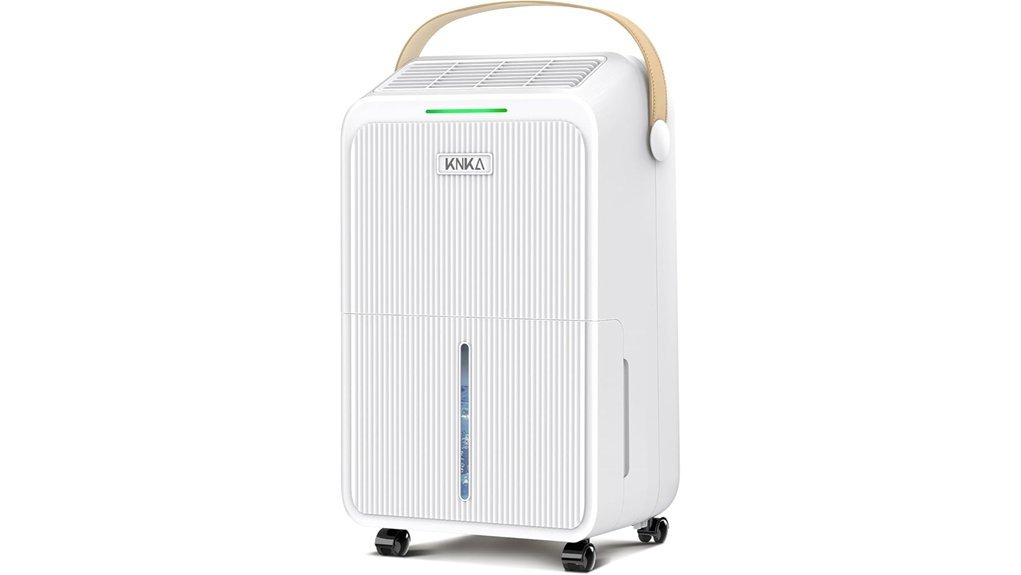
The KNKA 34-Pint Dehumidifier is the strongest mildew-prevention option in this group for basements, offices, laundry rooms, and larger living spaces. KNKA states that the compressor unit can remove up to 34 pints per day at 95°F and 90% relative humidity. It has a 3-liter tank, adjustable humidity control, two fan speeds, and dehumidify, laundry-dry, and continuous modes.
You can use the tank with automatic shut-off or connect the included hose for gravity drainage. The washable filter, 360-degree wheels, handle, auto-defrost feature, timer, and child lock make it better suited to regular home use than the compact thermoelectric models. Its 2,500-square-foot rating is still a manufacturer coverage claim, so size the unit according to actual dampness, temperature, layout, and drainage needs.
Why You’ll Like It: It offers the highest extraction claim in this comparison, automatic humidity control, and true continuous drainage.
Who Should Buy This: Homeowners managing recurring high humidity in a basement or larger enclosed area.
Who Should Avoid This: Buyers who only need a tiny, silent unit for a closet or bedside area.
Pros:
- Compressor design with up to 34 pints per day of advertised extraction.
- Adjustable humidistat and three operating modes.
- Tank drainage or continuous drainage with the included hose.
- Washable filter, wheels, child lock, and auto defrost.
Cons:
- Larger and heavier than thermoelectric models.
- The 34-pint claim uses very warm, very humid test conditions.
- The 3-liter tank may fill quickly in a damp basement unless the hose is connected.
Factors to Consider When Choosing a Dehumidifier for Mildew
The most useful dehumidifier is not always the one with the largest advertised coverage number. Match the technology and extraction rate to the room, the severity of the moisture problem, and how often you can empty or maintain the unit.
Dehumidifier Type
Renewable desiccant units are suitable for closets, cabinets, cars, and other tiny enclosed spaces. Thermoelectric or Peltier dehumidifiers are compact and quiet, but their water-removal rate is modest and strongly affected by temperature and humidity. Compressor dehumidifiers are usually the better fit for basements, laundry rooms, and persistent whole-room dampness.
Coverage Area Size
Use square-foot ratings only as a starting point. A warm, closed room with mild humidity is easier to manage than a cool basement with seepage, open doors, or poor drainage. For mildew prevention, prioritize the daily moisture-removal rate and an adjustable humidistat rather than choosing by coverage alone.
Dehumidification Capacity and Test Conditions
Capacity is commonly listed in liters or pints removed per day. Compare the stated test conditions as well as the number. A unit rated at 86°F and 80% relative humidity or 95°F and 90% relative humidity will normally collect less water in a cooler room with moderate humidity. Do not compare a renewable unit’s ounces per cycle directly with an electric unit’s pints per day.
Target Humidity and Hygrometer Use
A practical target for mildew and mold prevention is generally 30% to 50% relative humidity, consistent with EPA indoor air guidance. Use a separate hygrometer if the dehumidifier does not have a reliable humidity display. If the room remains above 50% despite continuous operation, investigate leaks, ventilation, drainage, or the need for a higher-capacity unit.
Noise Level During Operation
Thermoelectric models are often quieter than compressor models, making them easier to use beside a bed or desk. However, noise figures may be measured in different modes and at different distances. A sleep mode can reduce fan noise and turn off lights, but it may also reduce moisture removal.
Energy Consumption and Efficiency
Do not judge efficiency by wattage alone. A low-wattage unit may use less power each hour but also remove far less water. For compressor models, compare the integrated energy factor when available and look for current ENERGY STAR certification rather than assuming every modern dehumidifier is equally efficient.
Maintenance and Drainage Options
Clean the tank, air inlet, outlet, and washable filter according to the manufacturer’s instructions. A continuous drain hose is useful for basements and long operating periods, but gravity drainage requires the hose to slope downward without kinks. Check that the tank is seated correctly so the auto shut-off works.
Safety Features and Placement
Look for full-tank shut-off, a stable base, auto defrost for cooler rooms, and child-lock controls where useful. Keep air inlets and outlets clear, use a properly grounded outlet for compressor models, and do not place an electric unit where it can be splashed or submerged. After moving a compressor dehumidifier on its side, follow the manufacturer’s instructions before turning it on.
Before You Buy Checklist
- Measure the room and identify whether it is mildly humid, persistently damp, or actively wet.
- Check the advertised extraction rate and the temperature and humidity used for testing.
- Decide whether you need a manual tank, continuous gravity drain, or pump drainage.
- Confirm the lowest operating temperature if the unit will be used in a basement or garage.
- Check filter-cleaning instructions, warranty terms, replacement support, and return policy.
- Use a hygrometer to confirm that the selected unit can maintain your target humidity.
Frequently Asked Questions
How Do I Maintain My Dehumidifier for Optimal Performance?
Empty and rinse the tank regularly, clean the filter and air vents as directed, keep clearance around the inlet and outlet, and inspect the drain hose for kinks or buildup. Unplug the unit before cleaning it, and follow the model’s manual for any internal maintenance.
What Is the Ideal Humidity Level to Prevent Mildew?
Aim to keep indoor relative humidity between 30% and 50%. A setting around 45% is a practical starting point for many homes. If condensation or damp odors continue, check the room with a separate hygrometer and look for an underlying water source.
Will a Dehumidifier Remove Existing Mildew?
No. A dehumidifier reduces moisture and can make future growth less likely, but it does not clean existing mildew or mold. The affected surface still needs to be cleaned or removed as appropriate, and the leak, condensation, or ventilation problem must be fixed.
Can a Dehumidifier Help With Allergies?
Lower humidity can make a home less favorable for mold growth and dust mites, which may help reduce some indoor triggers. A dehumidifier is not a medical treatment, and people with asthma, allergies, or persistent symptoms should follow advice from a qualified healthcare professional.
How Energy-Efficient Are Modern Dehumidifiers?
Efficiency varies widely by technology and capacity. ENERGY STAR-certified compressor dehumidifiers are designed to remove the same amount of moisture using less energy than comparable conventional models. For compact thermoelectric units, compare both power use and the amount of water removed rather than wattage alone.
Is a Small Dehumidifier Enough for a Basement?
Usually not if the basement is consistently damp. Small thermoelectric models are better for mild humidity in small rooms. A compressor dehumidifier with an adjustable humidistat and continuous drainage is generally more suitable for a basement, especially when humidity stays above 50%.
Conclusion
Final recommendation: Choose the KNKA 34-Pint Dehumidifier for a basement or larger room with recurring humidity. Choose the TABYIK 35 OZ for a small bedroom, bathroom, or RV with mild dampness. Choose the Eva-Dry E-333 only for tiny enclosed spaces where silence, portability, and a spill-free design matter most.
Whichever model you choose, confirm performance with a hygrometer and address the source of moisture. The right dehumidifier can help prevent mildew from returning, but lasting control depends on keeping the area dry.