
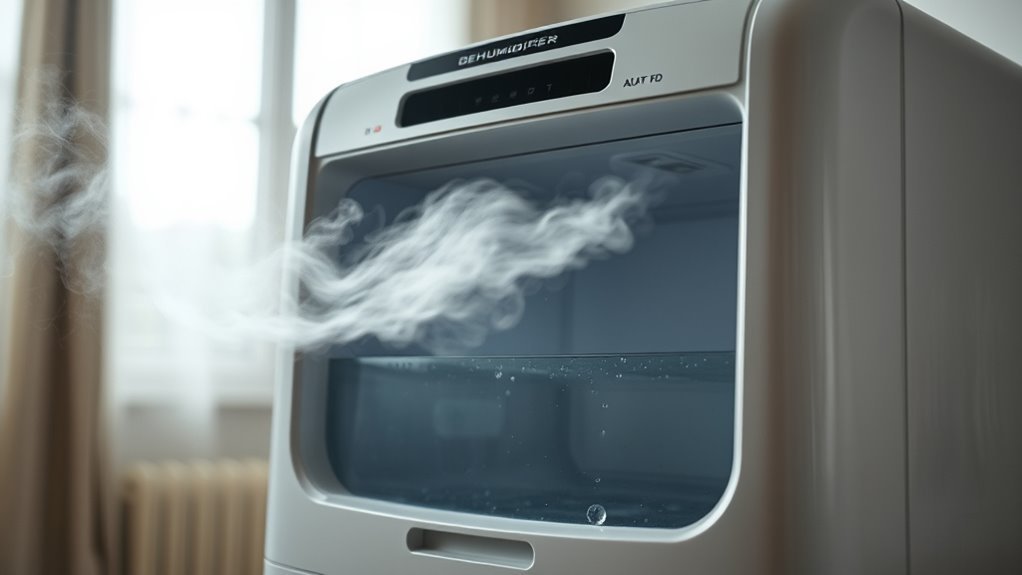
A dehumidifier removes excess water vapor from indoor air. Most home units do this with a refrigeration cycle that cools humid air until moisture condenses into liquid water. The water collects in a bucket or flows through a drain hose, while slightly warmer, drier air returns to the room.
Quick Answer
Most home dehumidifiers use a refrigeration cycle. A fan pulls humid air over a cold evaporator coil, where water condenses. The water falls into a bucket or drain, while the air passes over a warm condenser coil and returns to the room slightly warmer and drier. A humidistat controls when the unit runs.
Key Takeaways
- A fan moves humid room air across a cold evaporator coil, causing water vapor to condense.
- Condensed water collects in a bucket or leaves through a gravity drain or built-in pump.
- The condenser reheats the dried air, so a dehumidifier normally blows air that feels slightly warm.
- For many homes, a practical target is 30% to 50% relative humidity.
- A dehumidifier controls moisture, but it does not repair leaks, remove established mold, or replace an air purifier.
How Does a Dehumidifier Work?
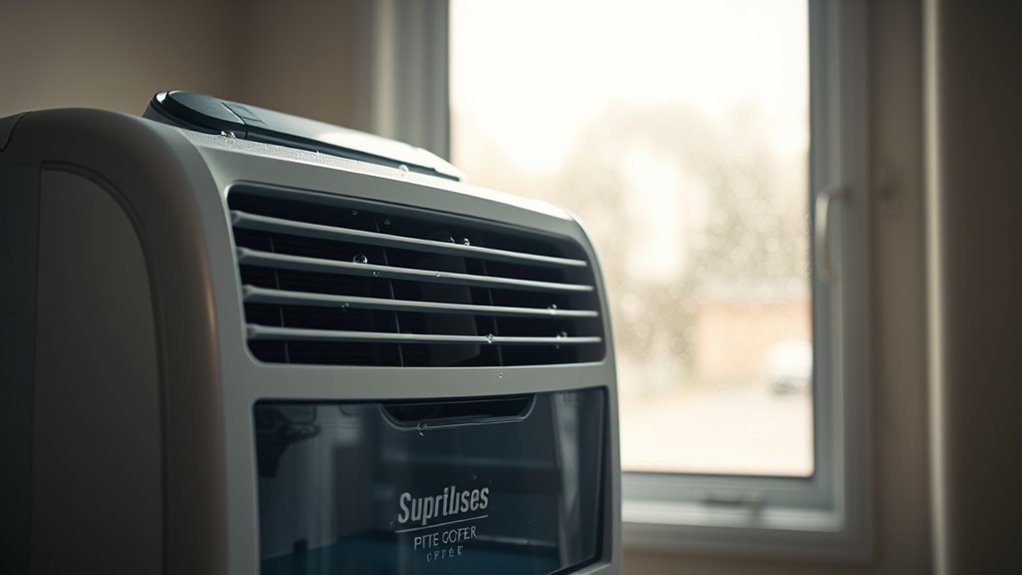
A typical portable refrigerant dehumidifier works much like a small air conditioner, except it releases both the cooled and reheated air into the same room. According to the ENERGY STAR definition of a dehumidifier, the main system includes a refrigerated evaporator surface, a refrigeration system, an air-circulating fan, and a way to collect or dispose of condensate.
The moisture-removal cycle happens in six basic steps:
- The fan pulls in humid air. Room air enters through a grille and usually passes through a washable dust filter.
- The air reaches the cold evaporator coil. Refrigerant moving through the coil absorbs heat from the incoming air.
- The air cools below its dew point. When the air becomes cool enough, it can no longer hold the same amount of water vapor.
- Water vapor condenses. Liquid droplets form on the cold coil, much like water forming on the outside of a cold glass.
- The water drains away. The droplets fall into a pan and then enter a removable bucket, gravity-drain hose, or pump system.
- The dried air is reheated. The air passes across the warm condenser coil and returns to the room slightly warmer and drier.
A dehumidifier does not destroy water vapor. It changes the vapor into liquid water, collects that water, and returns drier air to the room.
A built-in humidistat measures relative humidity and compares it with your selected setting. When humidity rises above the target, the compressor starts. When the target is reached, the compressor stops and the unit cycles as needed. Some fans continue running briefly so the sensor can obtain a more accurate room reading.
How Does a Dehumidifier Collect Moisture?
A dehumidifier collects moisture when water vapor condenses on its cold evaporator coil. The droplets move into a drain pan and then follow one of three paths:
- Removable bucket: Water collects in a tank that you empty by hand. Most bucket-style units stop automatically when the tank is full or incorrectly installed.
- Gravity drainage: A hose carries water to a lower floor drain, sink, or sump. The hose must slope downward without kinks or raised sections.
- Built-in pump: A pump pushes water upward or across a longer distance to a suitable drain. Maximum lift and hose length vary by model.
Capacity is normally stated in pints of water removed per 24 hours under specified test conditions. The rating is useful for comparing units, but it is not a promise that the appliance will collect that amount every day. Actual water removal changes with room temperature, relative humidity, airflow, infiltration, and the moisture entering the space.
Note: Do not compare an older “70-pint” portable dehumidifier directly with a current 70-pint rating. DOE changed the test procedure to cooler, more realistic conditions. ENERGY STAR explains that many older 70-pint portable ratings are roughly comparable to current ratings of about 40 to 45 pints per day.
Current portable residential units commonly carry ratings from about 20 to 50 pints per day. Whole-home and commercial dehumidifiers may remove more than 70 pints per day because they serve larger spaces and moisture loads. Check the current rating and test standard rather than relying only on a product’s marketing description.
What Parts Make a Dehumidifier Work?
Several components must work together for reliable moisture removal:
- Fan: Pulls damp room air into the cabinet and moves it across the coils.
- Air filter: Catches larger dust and debris before they reach the coils. It is not a substitute for a HEPA air purifier.
- Evaporator coil: Becomes cold as refrigerant absorbs heat, allowing water vapor to condense.
- Compressor: Circulates and compresses the refrigerant so it can move heat through the sealed system.
- Condenser coil: Releases heat and warms the dried air before it returns to the room.
- Drain pan and bucket: Receive the condensed water.
- Drain hose or pump: Moves water away for continuous drainage.
- Humidistat: Measures relative humidity and controls compressor operation.
- Bucket switch: Stops operation when the bucket is full, missing, or incorrectly seated.
- Defrost sensor: Detects frost on the evaporator and pauses the compressor while the coil warms.
A fan draws humid air across chilled coils, where condensation forms and collects in a bucket or drain. You may hear the fan, compressor, refrigerant movement, and water dripping into the tank. These sounds are normally part of the refrigeration cycle.
The cold evaporator coil may also look as though it is “sweating.” The droplets are condensed moisture from the air, not water leaking from the sealed refrigerant system. A properly connected bucket, gravity drain, or pump receives that water without constant intervention.
What Types of Dehumidifiers Work Differently?
Not every dehumidifier uses the same moisture-removal method. The best type depends on the room temperature, moisture load, coverage area, and drainage needs.
| Type | How It Works | Best Use |
|---|---|---|
| Refrigerant or compressor | Condenses water on a cold evaporator coil. | Bedrooms, basements, living areas, and most warm indoor spaces. |
| Desiccant | Uses a moisture-absorbing material that is regenerated with heat. | Cool rooms, garages, storage areas, and applications where coil icing is a concern. |
| Thermoelectric | Uses a Peltier plate to create a cold surface without a compressor. | Small closets, cabinets, and lightly damp enclosed spaces. |
| Whole-home | Usually uses refrigeration and connects to dedicated or central ductwork. | Humidity control across several rooms or an entire home. |
Small thermoelectric units are quiet and compact, but they cannot match the removal capacity of a full compressor model. Desiccant units can work well in cooler conditions, although they may use more heat. Whole-home systems require proper sizing, duct design, drainage, and professional installation.
Recommended Products

【The Undisputed Champion — Industry-Leading Dehumidifier Brand】Choose AEOCKY, getting double market validation. According to data independently verified by Stackline, a leading third-party data analytics company, AEOCKY was an industry‑leading dehumidifier brand on Amazon U.S. in 2025. Meanwhile, it stands as a technology-leading rotary desiccant dehumidifier brand on Amazon. This isn’t just an appliance—it’s a complete humidity-control solution for small spaces. Skip low-performance alternatives and trust a brand recognized by the market.

Convenient To Carry: One desiccant pack measures 5.5x3.1 inches in size and weighs 100 grams, making it very lightweight and compact, making it easy to carry.

✔ EASY TO USE: This mini dehumidifier is spill and mess free. Just hang and go! Non-toxic, child and pet safe! Your small rooms will be dry and odor free. Works for areas up to 333 cubic feet.
What Humidity Should You Set on a Dehumidifier?
The U.S. Environmental Protection Agency recommends controlling indoor moisture and generally keeping relative humidity between 30% and 50%. EPA also advises keeping it below 60% to reduce conditions that support mold and dust mites.
A setting around 45% to 50% is a practical starting point for many homes. You can adjust it based on comfort, condensation, climate, and the accuracy of the built-in sensor.
- Above 60%: Mold, dust mites, musty odors, and condensation become more likely.
- About 40% to 50%: A useful range for many occupied rooms and basements.
- Below 30%: Air may feel uncomfortably dry and may irritate the eyes, skin, nose, or throat.
Pro Tip: Place a separate hygrometer several feet from the dehumidifier. Built-in sensors can read the warmer, drier air near the machine instead of the average humidity across the room.
Why Does a Dehumidifier Blow Warm Air?
Warm exhaust air is normally a sign that a compressor dehumidifier is completing its refrigeration cycle. The evaporator first cools the incoming air. The condenser then returns the absorbed heat to that air, and the compressor adds a small amount of operating heat.
Because both heat-exchange stages take place inside the room, a dehumidifier does not provide the same cooling effect as an air conditioner. It may raise the temperature immediately around the appliance or slightly warm a closed room.
Warm air alone is not a fault. Investigate the unit when it produces a burning smell, repeatedly trips a circuit, displays an error code, becomes unusually hot, or stops collecting water despite high room humidity.
When Do You Need a Dehumidifier?
You may need a dehumidifier when a hygrometer consistently shows high relative humidity or when a room develops clear signs of excess moisture. Common signs include persistent condensation, a musty smell, damp surfaces, slow-drying laundry, peeling finishes, and recurring mold growth.
| Sign | What It May Mean | What to Check |
|---|---|---|
| Window condensation | High indoor humidity or a cold surface | Humidity reading, ventilation, insulation, and outdoor conditions |
| Musty odor | Possible hidden dampness or microbial growth | Leaks, wet materials, closets, carpets, and wall cavities |
| Allergy symptoms | Possible exposure to mold, dust mites, pollen, pets, or other triggers | Humidity and allergen sources; seek medical advice for persistent symptoms |
| Damp spots | Condensation, seepage, plumbing failure, or another moisture source | Roof, plumbing, foundation, drainage, and exterior water entry |
| Visible mold | An active or previous moisture problem | The moisture source and the extent of contaminated material |
Humidity control can make conditions less favorable for mold and dust mites, but a dehumidifier cannot correct a roof leak, plumbing leak, groundwater seepage, or failed ventilation system. Fix the source of liquid water first.
Warning: Do not rely on a dehumidifier to remove established mold or dry severely water-damaged building materials. Correct the moisture source and follow appropriate cleanup or professional remediation guidance.
Recommended Products

Semiconductor dehumidifiers use thermoelectric cooling to remove moisture from the air. They create a drier, more comfortable environment by reducing humidity and improving air quality.

Upgrade High Efficient Dehumidification: Dehumidifier utilize semi conductor condensation technology, ensuring quiet operation while effectively extracting moisture from the air. This advanced feature helps keep humidity levels below 45%

EFFICIENT MOISTURE REMOVAL: Ksend safe moisture absorbers effectively eliminate excess moisture in the air and maintain a comfortable room environment by utilizing large spherical calcium chloride particles. These particles expand the contact area with the air, expediting the dehumidification process.
How Do You Choose the Right Dehumidifier?
Choosing the right dehumidifier starts with the size and condition of the space. A portable model works well for a room, basement, or other defined area. A whole-home system is more suitable when humidity affects several connected rooms.
Consider these factors:
- Capacity: Match the pint-per-day rating to the room size and moisture level. A wet basement needs more capacity than a mildly damp bedroom of the same size.
- Current test standard: Compare units rated under the same DOE procedure. Older and newer pint ratings may not be directly comparable.
- Efficiency: Compare Integrated Energy Factor, or IEF. A higher IEF means the unit removes more water per unit of electricity under the specified test conditions.
- ENERGY STAR certification: The current Version 6.0 specification took effect October 1, 2025. Check the current ENERGY STAR dehumidifier guidance rather than relying on an old label or buying chart.
- Drainage: Choose a bucket, gravity-drain connection, or built-in pump based on the available drain location.
- Operating temperature: Confirm that the unit is designed for the lowest expected room temperature.
- Noise: Compare sound specifications when the appliance will operate near a bed, desk, television, or sitting area.
- Controls: Look for a readable humidistat, timer, filter reminder, bucket-full alert, and automatic restart if those features matter to you.
- Warranty and support: Check the compressor coverage, parts coverage, service process, and availability of replacement filters or drain accessories.
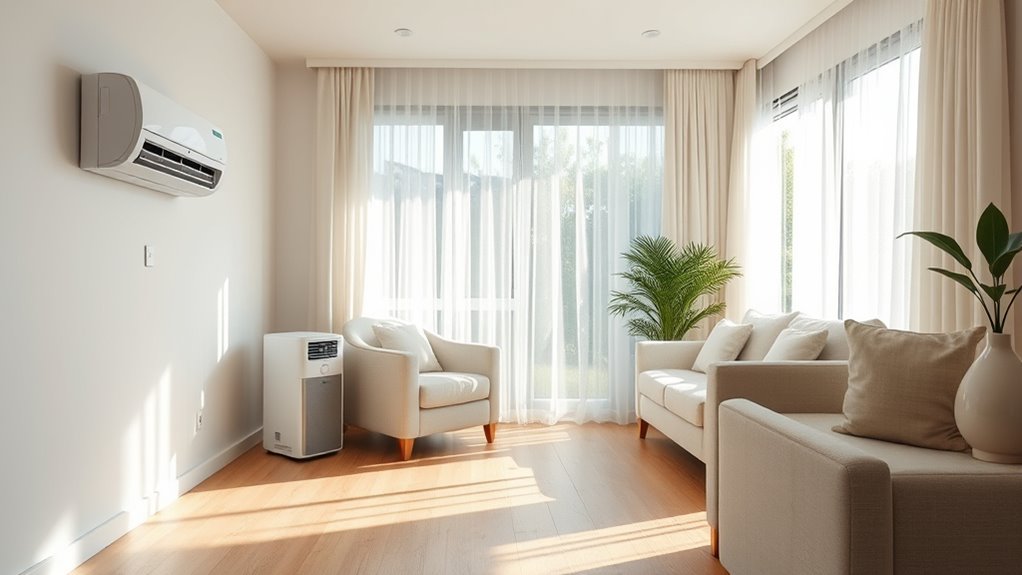
A compact portable unit can provide targeted moisture control beside a sofa, in a bedroom, or in a small basement area. A whole-home dehumidifier can connect to ductwork and control dampness across several rooms. In either case, the control panel should provide a clear humidity reading and allow precise adjustment.
Recommended Products

【The Undisputed Champion — Industry-Leading Dehumidifier Brand】When you choose AEOCKY, you get double market validation. According to data independently verified by Stackline, a leading third-party data analytics company, AEOCKY was an industry‑leading dehumidifier brand on Amazon U.S. in 2025. This means you’re not just choosing a flagship product from a market leader, but a top-performing brand backed by independent market data and trusted by millions of real users, delivering the ultimate combination of performance, quality and trust.

Most Efficient Energy Star 2025 Dehumidifier:This high-performance compressor dehumidifier can remove 45 pints of moisture in a day (95℉, 90% RH) with 30%-80% target humidity setting range, which efficiently maintains your home's ideal humidity level. Perfect for large spaces up to 4500 sq.ft, it ensures a comfortable environment whether in your basement, bedroom,bathroom or office, garage,RV.ASAHWo Energy Star certified Dehumidifier cut down your hassle on energy.
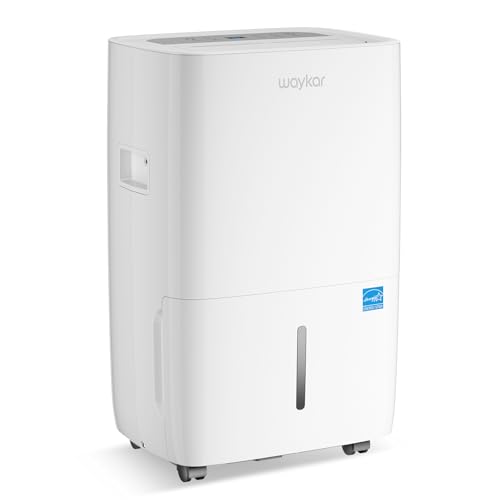
【80 Pint Capacity for Up to 5,000 Sq.Ft Spaces】Quickly removes excess moisture from basements, bathrooms, bedrooms, RVs, and other large living areas, delivering 80 pints per day (95°F, 90% RH).conditions. Designed as a powerful dehumidifier for basement, home, and large spaces, it helps eliminate damp air, condensation—and pet-related odors caused by excess humidity. Even during humid seasons, it works continuously to maintain a dry, comfortable, and healthier indoor environment.
Where Should You Place a Dehumidifier?
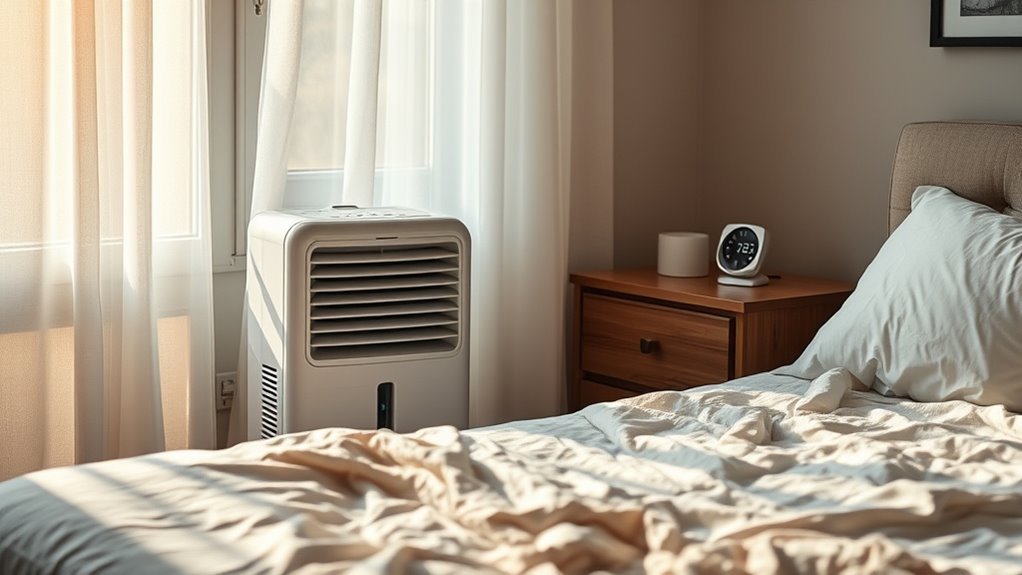
Place a portable dehumidifier on a level, stable surface in the room with the moisture problem. Follow the manufacturer’s required clearance around the intake and exhaust grilles. Models with top discharge may work closer to a wall, while rear- or side-discharge models usually need more open space.
- Close exterior doors and windows while the unit is operating.
- Keep curtains, furniture, boxes, and clothing away from the air grilles.
- Keep the unit away from heavy dust, sawdust, and other material that can clog the filter or coils.
- Use a properly grounded outlet that meets the appliance instructions.
- Keep drain hoses and collected water away from cords, outlets, power strips, and electrical equipment.
- Do not place a standard unit where it may be splashed or exposed to standing water.
- Route drainage so the hose does not create a trip hazard.
When using gravity drainage, the hose must travel continuously downhill. A loop, kink, blockage, or raised drain endpoint can send water back into the bucket or cause leakage.
How Long Should a Dehumidifier Run?
A dehumidifier may run for long periods when first placed in a damp room. It must remove moisture from the air and from damp furnishings, concrete, wood, carpet, and other materials. It may also be competing with outdoor air, leaks, laundry, showers, or groundwater moisture.
Once the room reaches the selected humidity, the humidistat should cycle the compressor on and off. The exact runtime depends on:
- Room size and layout
- Starting humidity
- Moisture entering the room
- Outdoor weather
- Unit capacity
- Temperature
- Airflow and filter condition
- How often doors or windows open
A unit may run continuously when it is set to continuous mode, when the target is unusually low, when it is undersized, or when moisture keeps entering the space. Check the room with a separate hygrometer before assuming the unit has failed.
Why Is My Dehumidifier Not Collecting Water?
A dehumidifier may run without collecting much water when the room is already near the selected humidity. It may also collect less water in cool air because cool air contains less water vapor than warm air.
Check these common causes:
- The humidity setting is too high. Set the target below the current room reading.
- The bucket is full or incorrectly seated. Empty it and reinstall it firmly.
- The filter is dirty. Clean it according to the manual.
- Airflow is blocked. Move objects away from the intake and exhaust grilles.
- The evaporator is frosting. Allow the automatic defrost cycle to finish and confirm that the room is within the model’s operating-temperature range.
- The drain hose is blocked or incorrectly routed. Remove kinks and maintain a continuous downward slope for gravity drainage.
- The room is too large or too wet. Reduce incoming moisture or use a higher-capacity unit.
- The compressor is not operating. Listen for compressor operation and check for an error code. Contact qualified service if the fan runs but the sealed system does not start.
If the unit never collects water in a warm, humid room despite a clean filter, correct settings, open airflow, and a properly installed bucket, it may need service.
How Do You Keep a Dehumidifier Running Well?
Keeping a dehumidifier running well comes down to airflow, drainage, and routine inspection.
- Clean the air filter: Follow the schedule in the owner’s manual. A clogged filter reduces airflow and can contribute to frost or long runtimes.
- Clean the bucket: Empty and wash it regularly so residue and microbial growth do not build up.
- Inspect the drain system: Check hoses for kinks, blockage, loose connections, and poor slope.
- Keep the grilles open: Vacuum dust from accessible intake and exhaust surfaces after unplugging the appliance.
- Watch for frost: Confirm that the filter is clean, airflow is open, and the room is warm enough for the unit.
- Check the humidistat: Compare the display with a separate hygrometer if the readings appear inaccurate.
- Inspect accessible coils carefully: Follow the manual and avoid bending the fins. Internal cleaning or sealed-system work should be handled by a qualified technician.
- Maintain whole-home systems: Have the drain, ductwork, controls, fan, filter, and refrigeration system inspected as recommended by the installer or manufacturer.
Keep the appliance in a stable location away from excessive dust and direct heat. Before seasonal storage, clean and dry the bucket, filter, drain connection, and cabinet. Store the unit upright in a dry location.
Frequently Asked Questions
Do air purifiers dry indoor air?
Standard air purifiers do not meaningfully lower humidity. They are designed to capture particles or, in some models, reduce certain gases and odors. The EPA treats air cleaning and moisture control as separate strategies. Use a dehumidifier when the main problem is excess water vapor.
Can a dehumidifier help with dust mites?
It can make the room less favorable for dust mites by lowering excessive humidity. The American Lung Association recommends keeping home humidity below 50% as one part of dust-mite control. Bedding covers, hot-water washing, dust removal, and reducing carpets or upholstered surfaces may also be needed.
What are the downsides of using a dehumidifier?
Possible downsides include electricity use, fan and compressor noise, warm exhaust air, filter cleaning, bucket emptying, and drain maintenance. An oversized or poorly placed unit may cycle awkwardly, while an extremely low setting can make the room uncomfortably dry. A dirty bucket or blocked drain can also create sanitation or leakage problems.
Would a dehumidifier help with COPD?
A dehumidifier is not a treatment for COPD. High humidity is a trigger for some people, so reducing excessive humidity may improve comfort in those situations. However, air that is too dry may also feel irritating. The American Lung Association advises people with COPD to identify and avoid their personal triggers. Ask your doctor or respiratory therapist what indoor humidity range is appropriate for you.
Does a dehumidifier cool a room?
No. A compressor dehumidifier cools the air temporarily at the evaporator, but it reheats that air at the condenser and adds heat from the compressor. The discharged air is normally slightly warmer than the air that entered the unit.
Can a dehumidifier remove mold?
A dehumidifier can reduce the humidity that supports future mold growth, but it does not remove established mold or correct the leak that caused it. Fix the moisture source and clean or remove contaminated material using appropriate EPA or professional guidance.
What setting should I use on a dehumidifier?
A setting between 45% and 50% relative humidity is a useful starting point for many homes. Adjust it according to comfort, condensation, climate, and a separate hygrometer reading. Avoid allowing humidity to remain above 60%, and avoid unnecessarily drying the room below 30%.
Should a dehumidifier run all the time?
It may run continuously at first or during very humid weather. After reaching the selected humidity, a correctly sized unit should normally cycle as needed. Continuous operation can also result from continuous mode, an unrealistically low setting, an undersized unit, open windows, or an unresolved moisture source.
Conclusion
A dehumidifier uses airflow, cooling, condensation, drainage, and reheating to lower indoor humidity. The fan moves damp air over a cold evaporator coil, liquid water enters a bucket or drain, and the condenser returns slightly warmer, drier air to the room.
For effective operation, choose the correct capacity, use the current IEF efficiency rating, maintain open airflow, clean the filter and bucket, and start with a humidity setting around 45% to 50%. Most importantly, correct leaks and other moisture sources rather than expecting the appliance to solve them by itself.
Sources
- ENERGY STAR: Dehumidifiers — capacity, placement, drainage, efficiency, and operating guidance.
- ENERGY STAR: Dehumidifier Testing and Capacity — current and older capacity ratings and DOE test-procedure changes.
- ENERGY STAR: Dehumidifier Efficiency Criteria — equipment definition, IEF ratings, and current efficiency thresholds.
- U.S. EPA: Improving Your Indoor Environment — recommended indoor humidity and moisture-control guidance.
- U.S. EPA: Air Cleaners and Air Filters in the Home — differences between air filtration and moisture control.
- American Lung Association: Dust Mites — humidity control and broader dust-mite exposure reduction.


[…] guide for your model before publishing.] A dehumidifier in a cold basement can frost up and fail to remove moisture properly. If the room is below the listed range, turn the unit off, let it thaw, and do not restart […]
[…] ionizer dehumidifier removes moisture from the air and adds an ionizing feature that releases electrically charged particles, usually negative ions or […]
[…] with enough clearance around the unit and a level floor for safe drainage. The goal is simple: remove moisture before it spreads into walls, floors, closets, and the crawl […]
[…] warm side does not remove moisture directly. Its job is to get rid of the heat pulled from the cold side, plus heat created by the […]
[…] A standard dehumidifier does not clean the air the way an air purifier does. Its main job is to remove water vapor and lower indoor humidity. That can reduce dampness, condensation, musty conditions, and the […]
[…] gutters, foundation problems, plumbing leaks, or ventilation issues first. A dehumidifier can remove moisture from the air, but it cannot stop active water […]