Affiliate disclosure: As an Amazon Associate, we may earn from qualifying purchases at no extra cost to you.
Last updated: August 2026
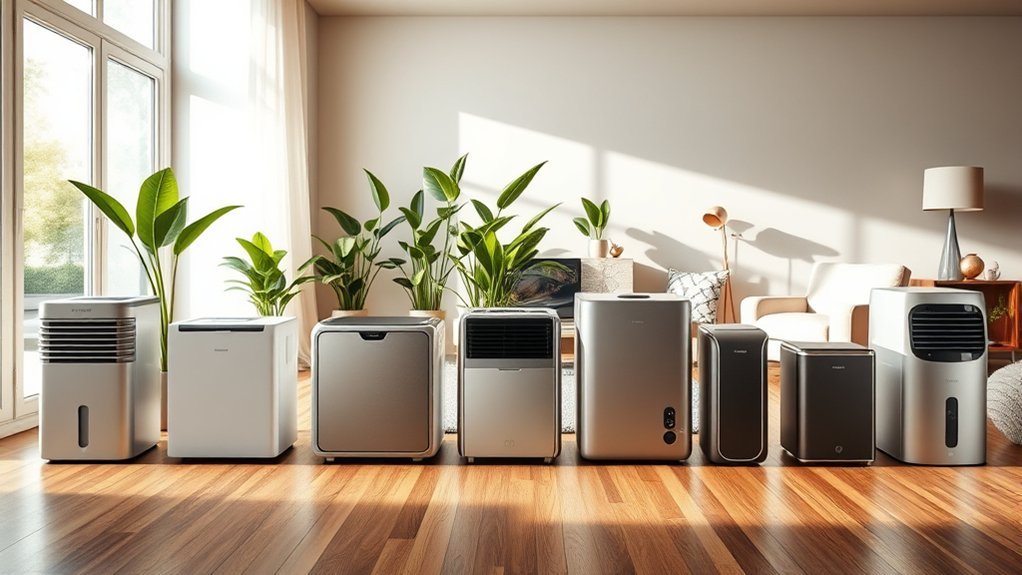
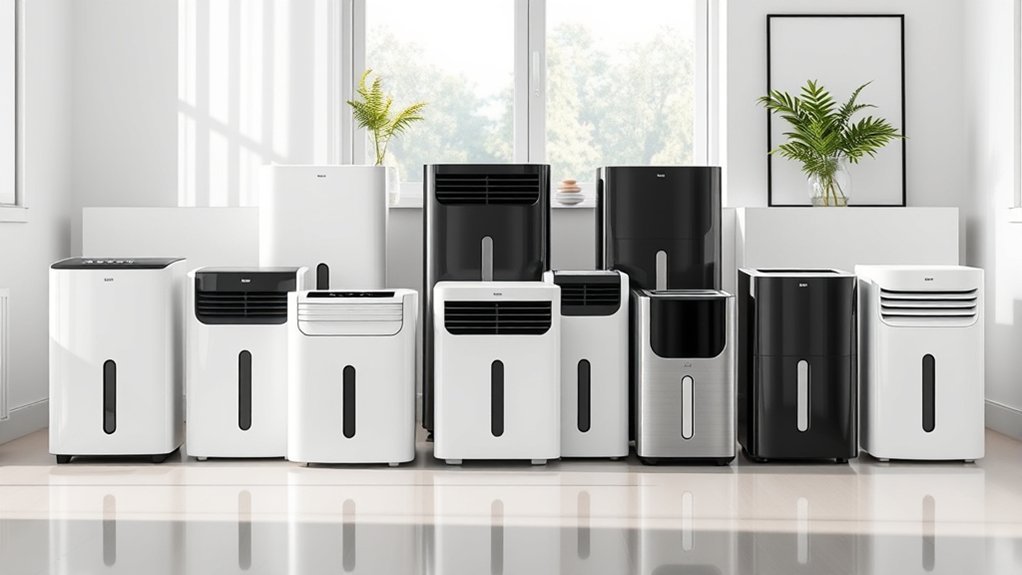
The best dehumidifier for a motorhome depends on how much moisture you need to manage, how much power is available, and whether you want a tank or continuous drainage. For most parked RVs and motorhomes, a compact thermoelectric model can help with localized condensation in a bedroom, bathroom, wardrobe, or storage area. These small units are not substitutes for repairing leaks, using roof vents, or running a higher-capacity compressor dehumidifier when the entire motorhome stays damp.
Quick verdict
- Best overall: BREEZOME 60 OZ Dehumidifier for its large tank, timer, and strong listed extraction rate for a mini unit.
- Best with a drain hose: Litever Portable Dehumidifier for hands-off drainage in a small parked motorhome.
- Best compact pick: Windangel 44oz Dehumidifier for its small footprint, multiple modes, and timer settings.
- Best cordless storage option: Eva-Dry E-333 for wardrobes, cabinets, and other enclosed spaces.
Motorhome buying note: Coverage numbers on mini dehumidifier listings are marketing estimates, not a guarantee that one small thermoelectric unit will control humidity throughout an entire RV. Compare the daily water-removal claim, tank size, temperature limits, drainage method, and power requirements.
Quick Comparison of Motorhome Dehumidifiers
| Product | Best Use | Tank / Capacity | Key Advantage | Amazon |
|---|---|---|---|---|
| Windangel 44oz | Compact living or sleeping area | 44 oz tank; up to 11.8 oz/day under stated test conditions | Three modes, timers, auto shut-off | Check Price |
| BREEZOME 60 OZ | Longer run time in a small RV zone | 60 oz tank; up to 700 ml/day under stated test conditions | Large tank, sleep mode, timer | Check Price |
| COYCYQI 17oz | Very small bathroom, closet, or cabinet area | 17 oz tank | Small footprint and low listed power draw | Check Price |
| TABYIK 35 OZ | Quiet overnight use | 35 oz / 1000 ml tank; up to 16 oz/day under stated test conditions | Listed 28 dB operation and auto shut-off | Check Availability |
| 35 oz Sleep-Mode Model | Bedroom or office-style RV area | 35 oz tank; up to 300 ml/day under stated test conditions | Sleep mode, handles, seven-color light | Check Price |
| Deyagoo DY501 | Buyers wanting a larger transparent tank | 1500 ml / 50 oz tank; up to 300 ml/day | Easy tank monitoring and quiet operation | Check Price |
| Eva-Dry E-333 | Cordless wardrobe or cabinet moisture control | Absorbs up to 6 oz per recharge cycle | Cordless and renewable | Check Price |
| NeedDuck 44 OZ | Cooler small spaces needing auto defrost | 44 oz tank | Auto defrost, timers, three modes | Check Availability |
| Litever with Drain Hose | Continuous drainage while parked | Up to 360 ml/day under stated test conditions | Included 4-foot drain hose | Check Price |
| ToLife 95 OZ | Large-tank convenience | 95 oz tank | Large reservoir, low-speed mode, auto shut-off | Check Price |
Windangel 44oz Portable Dehumidifier — Best Compact Pick
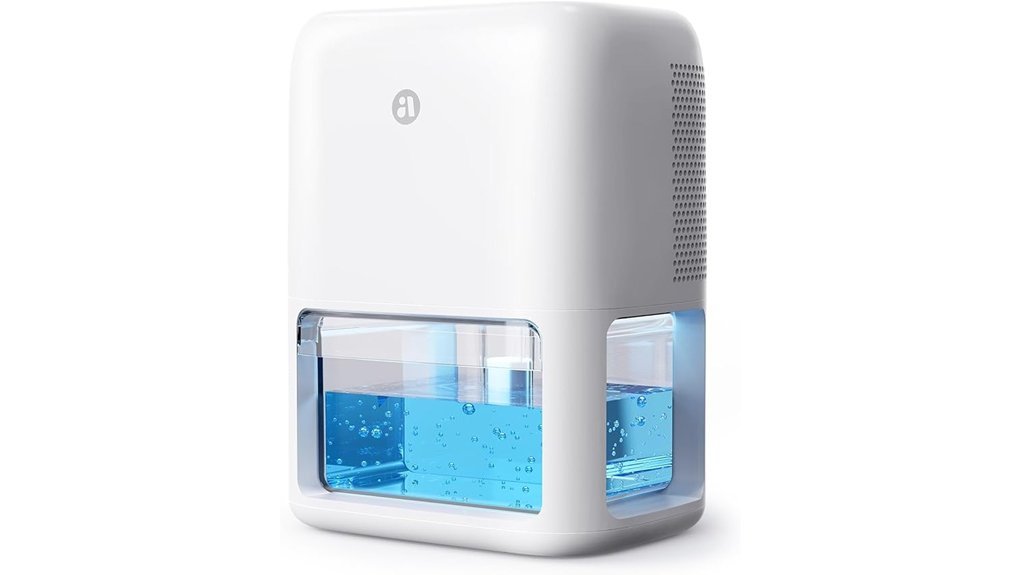
The Windangel 44oz Portable Dehumidifier is a practical choice when counter space and storage space are limited. Its listing states a maximum removal rate of 11.8 ounces per day at 86°F and 80% relative humidity, so real-world collection will normally be lower in cooler or less humid conditions. The 44-ounce tank, auto shut-off, three operating modes, timer settings, and built-in handle make it easy to use in a motorhome bedroom, washroom, or wardrobe area.
Why you’ll like it: It balances a small footprint with more controls than many basic mini dehumidifiers.
Best For: Motorhome owners who want a compact powered unit for one small enclosed zone.
Who Should Avoid It: Anyone trying to dry an entire large motorhome after a leak or during severe humidity.
Pros:
- Compact 44-ounce design with a carrying handle.
- Three modes, four timer settings, and auto shut-off.
- Suitable for localized condensation control in small RV spaces.
Cons:
- Listed extraction figures depend on warm, very humid test conditions.
- Sleep-mode noise is listed at up to 44 dB, so it may still be noticeable to sensitive sleepers.
- No continuous drain hose.
BREEZOME 60 OZ Quiet Dehumidifier — Best Overall
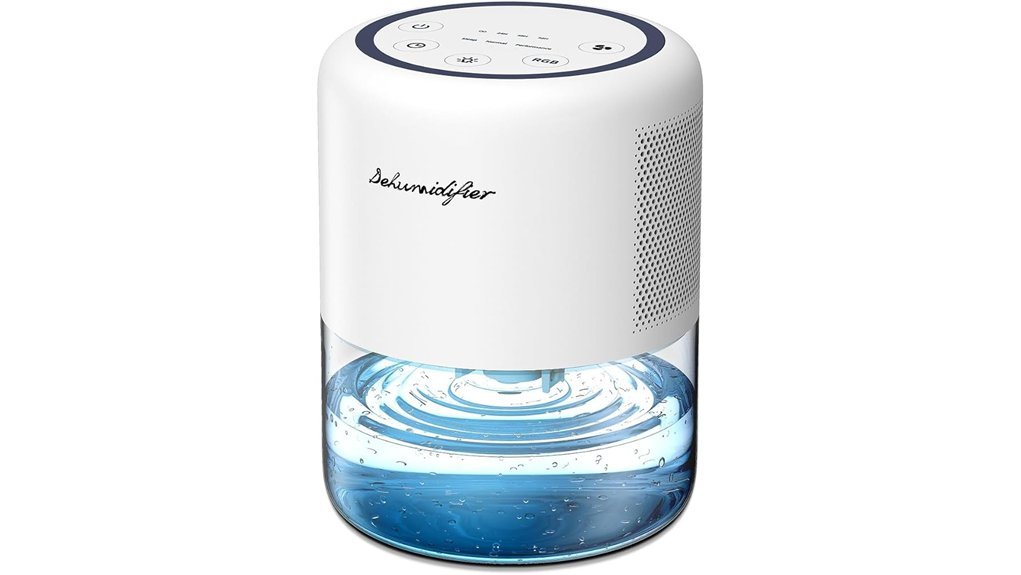
The BREEZOME 60 OZ Dehumidifier is the strongest all-around option in this list for buyers who want a large tank without moving to a full compressor model. Its dual-semiconductor design is listed to collect up to 700 ml per day at 86°F and 80% relative humidity. The 1.8-liter tank reduces emptying frequency, while sleep mode, auto shut-off, a timer, and a switchable color light make it convenient in a parked motorhome.
Why you’ll like it: The larger tank and timer are useful when you want longer unattended run periods.
Best For: A motorhome bedroom, bathroom, or central living zone with access to steady power.
Who Should Avoid It: Off-grid travelers with very limited battery capacity or owners needing compressor-level moisture removal.
Pros:
- Large 60-ounce tank for a mini thermoelectric unit.
- Listed extraction rate up to 700 ml per day under optimal test conditions.
- Sleep mode, timer, auto shut-off, and optional night light.
Cons:
- Performance will fall in cool weather or moderate humidity.
- It still requires a suitable power source and safe placement.
- No included continuous-drain hose is stated for this version.
COYCYQI Small Dehumidifier — Best for Very Tight Spaces
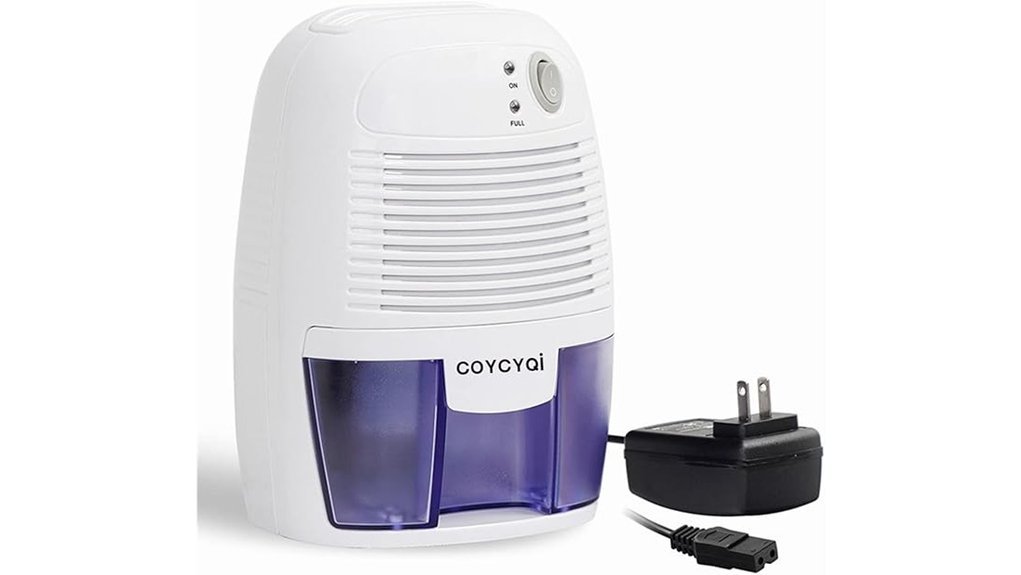
The COYCYQI Small Dehumidifier is designed for localized use in compact spaces. Its listing identifies a 17-ounce tank, approximately 36-watt power draw, auto shut-off, and thermoelectric operation. That makes it better suited to a small bathroom, wardrobe, or storage corner than to whole-motorhome humidity control. It uses a 12V/3A adapter, so confirm that your power setup can safely support it before buying.
Why you’ll like it: It takes up little room and has straightforward controls.
Best For: Small enclosed areas where a larger unit will not fit.
Who Should Avoid It: Buyers who do not want frequent tank checks or who need high extraction capacity.
Pros:
- Compact 17-ounce tank design.
- Auto shut-off helps prevent tank overflow.
- Listed 30 dB operating noise is suitable for many quiet spaces.
Cons:
- Small tank may need frequent emptying.
- Thermoelectric performance drops in cooler conditions.
- Requires the supplied power adapter; it is not cordless.
TABYIK 35 OZ Dehumidifier — Best for Quiet Overnight Use
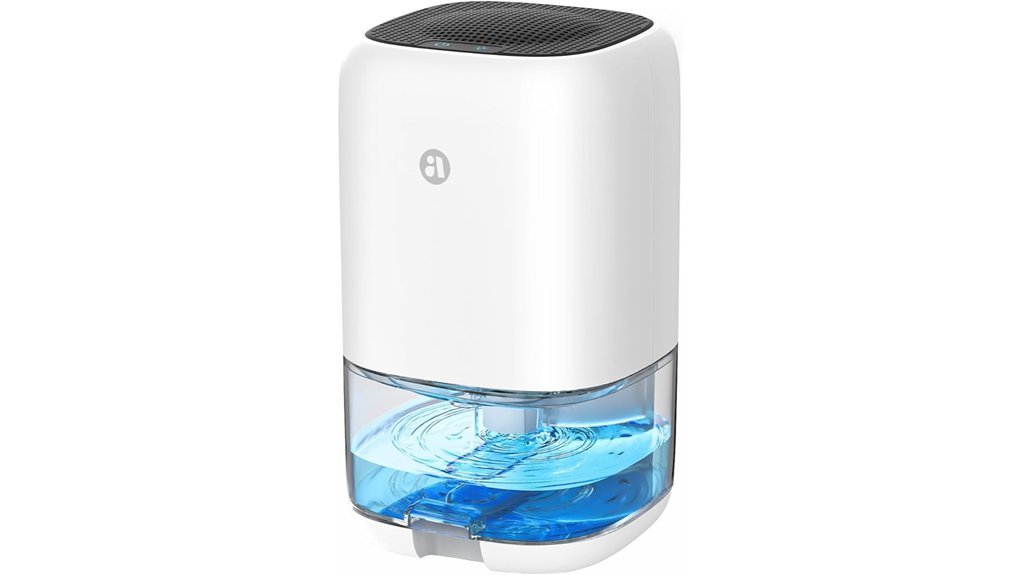
The TABYIK 35 OZ Dehumidifier combines a 1000 ml tank with a listed maximum collection rate of 16 ounces per day at warm, humid test conditions. Its compact body, 28 dB listed noise level, auto shut-off, and soft lighting make it appealing for a motorhome sleeping area. Check the current Amazon offer carefully because seller and condition options can change.
Why you’ll like it: It is simple, quiet, and easy to place on a stable counter or shelf.
Best For: Light overnight moisture control in a bedroom, bathroom, or RV closet.
Who Should Avoid It: Buyers who need a drain hose, humidity display, or automatic humidistat control.
Pros:
- 35-ounce tank with automatic shut-off.
- Listed 28 dB noise level.
- Transparent tank makes the water level easy to monitor.
Cons:
- Tank must be emptied manually.
- No continuous drainage option.
- Maximum extraction is based on optimal test conditions.
35 oz Dehumidifier with Sleep Mode — Best Simple Night-Light Model
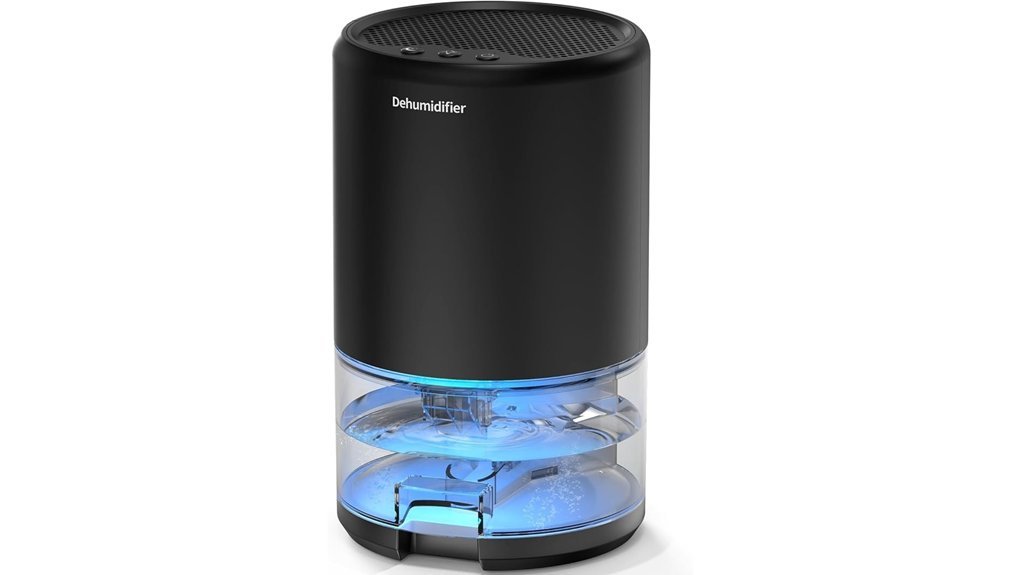
This 35-ounce mini dehumidifier is a straightforward option for a motorhome bedroom, bathroom, or wardrobe. The listing states a maximum collection rate of 300 ml per day at 86°F and 80% relative humidity, plus sleep mode, auto shut-off, built-in handles, and seven color-light choices. Treat its advertised coverage as a general placement guide rather than a promise of whole-RV humidity control.
Why you’ll like it: It combines basic moisture collection with simple night-use features.
Best For: Buyers who want a portable mini unit with sleep mode and lighting controls.
Who Should Avoid It: People who prefer a known major brand, drain hose, or digital humidity readout.
Pros:
- Compact 35-ounce tank with auto shut-off.
- Sleep mode and seven-color lighting.
- Built-in handles make moving it easier.
Cons:
- Generic branding makes long-term support harder to assess.
- No continuous drainage.
- Actual daily collection depends strongly on temperature and humidity.
Deyagoo DY501 1500ML Dehumidifier — Best Transparent Tank
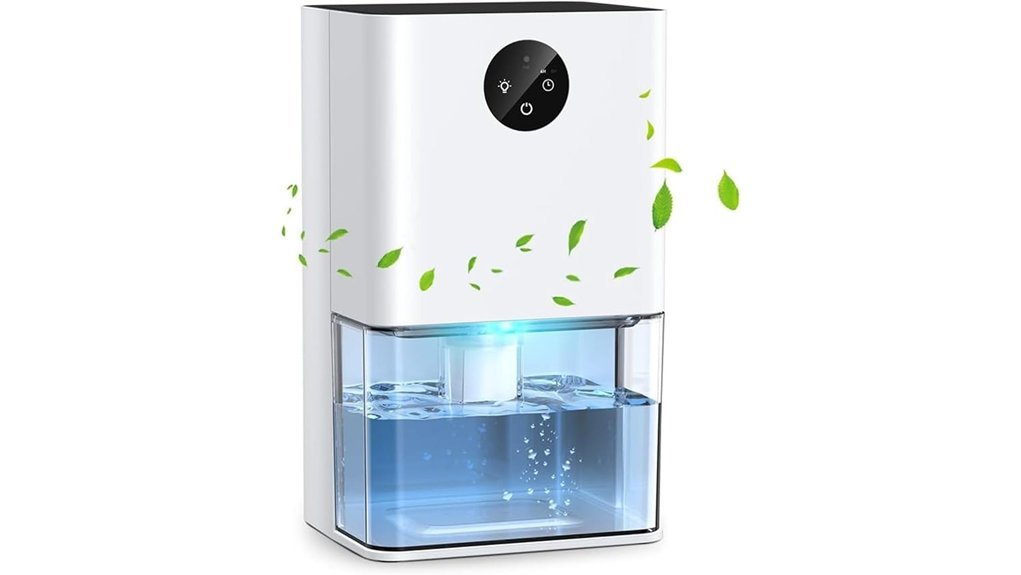
The Deyagoo DY501 has a 1500 ml transparent tank, making it easy to see when water is collecting and when the reservoir needs attention. The listing states a maximum extraction rate of 300 ml in 24 hours at 86°F and 80% relative humidity, operation around 30 dB, auto shut-off, and power consumption below 1 kWh per day. It is a reasonable choice for localized moisture in a small motorhome zone.
Why you’ll like it: The large clear tank is easier to monitor than opaque or smaller reservoirs.
Best For: Buyers who value tank visibility and fewer emptying trips.
Who Should Avoid It: Anyone who needs continuous drainage or high-capacity compressor performance.
Pros:
- Large 1500 ml transparent tank.
- Listed 30 dB operation and auto shut-off.
- Compact dimensions suit many RV counters and shelves.
Cons:
- No drain hose.
- Listed 300 ml/day extraction is modest.
- Needs clear space around its air inlet and outlet.
Eva-Dry Wireless Mini Dehumidifier E-333 — Best Cordless Storage Pick
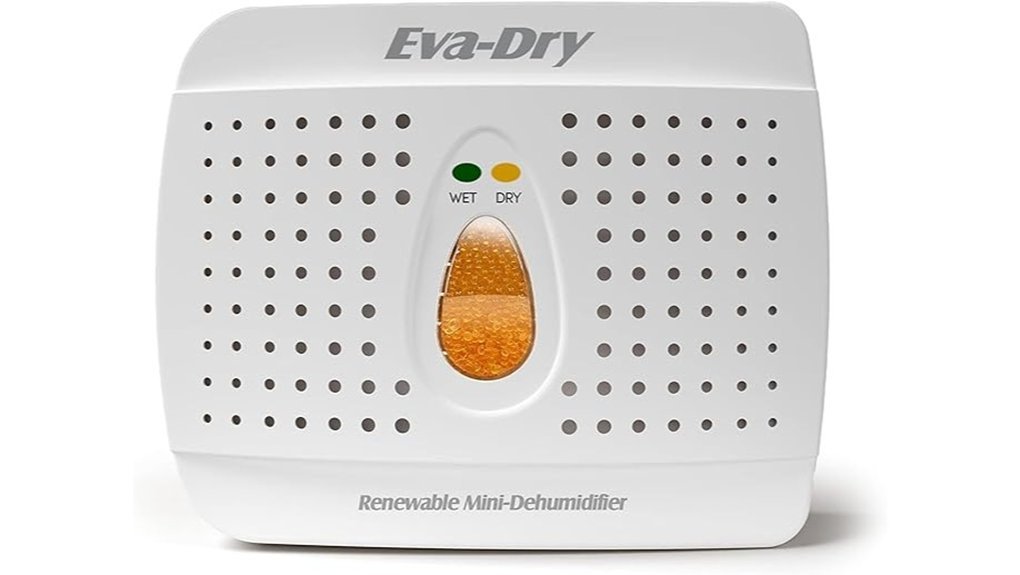
The Eva-Dry E-333 is different from the powered thermoelectric models above. It is a cordless, rechargeable desiccant unit intended for enclosed spaces such as wardrobes, cabinets, storage compartments, and small bathrooms. The listing states that it absorbs up to 6 ounces per recharge cycle and may run for about 20 to 30 days before the silica gel needs to be renewed. It should not be treated as a six-ounce-per-day dehumidifier or as the main humidity solution for an entire motorhome.
Why you’ll like it: It works without a cord, batteries, or a water tank that can spill.
Best For: Closets, cabinets, under-seat storage, and other small enclosed motorhome spaces.
Who Should Avoid It: Buyers needing rapid moisture removal from a living area.
Pros:
- Cordless and renewable.
- Up to 6 ounces of total absorption per recharge cycle.
- Color-changing indicator shows when recharging is needed.
Cons:
- Designed for small enclosed spaces, not whole-RV use.
- Slow compared with powered dehumidifiers.
- Must be plugged in during the regeneration cycle.
NeedDuck 44OZ Dehumidifier — Best with Auto Defrost
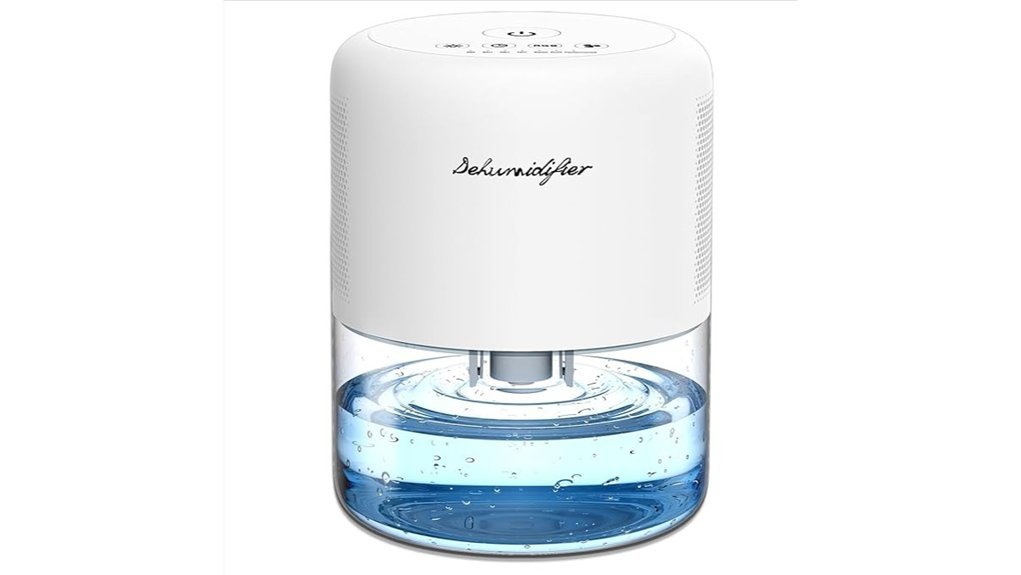
The NeedDuck 44OZ Dehumidifier adds auto defrost to the usual mini-dehumidifier feature set. It also includes auto shut-off, three operating modes, four timer choices, and ten lighting options. Auto defrost can be useful when a motorhome interior runs cooler, but this remains a gradual small-space dehumidifier rather than a full-size compressor unit. Check current seller availability before ordering.
Why you’ll like it: It offers more controls and cooler-condition protection than many basic mini models.
Best For: Small motorhome areas where temperatures can drop enough to reduce thermoelectric performance.
Who Should Avoid It: Buyers who need a drain hose or a verified whole-RV solution.
Pros:
- Auto defrost and automatic full-tank shut-off.
- Three modes and four timer settings.
- Compact 44-ounce tank design.
Cons:
- No continuous drainage.
- Current featured-offer availability may vary.
- Gradual moisture removal may be too slow for severe dampness.
Litever Portable Dehumidifier with Drain Hose — Best for Continuous Drainage
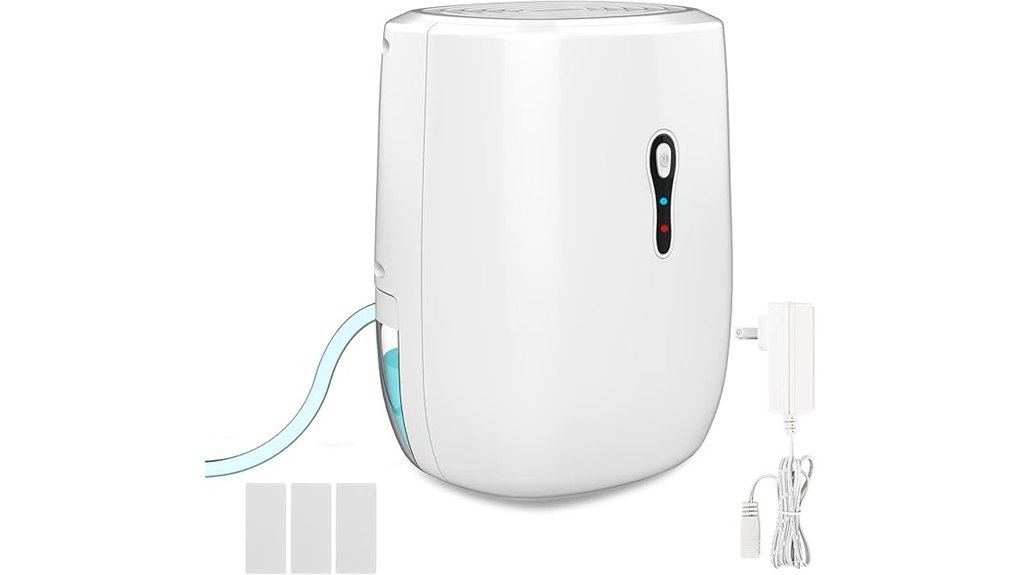
The Litever Portable Dehumidifier is the most practical option here for buyers who want continuous drainage. Its listing states that it can collect up to 360 ml in 24 hours at 86°F and 80% relative humidity and is intended for spaces below 108 square feet. The included four-foot hose can reduce manual emptying, provided the hose runs continuously downhill to a safe drain point and cannot leak inside the motorhome.
Why you’ll like it: The drain hose is convenient for longer stays or storage periods when you can route water safely.
Best For: A parked RV, trailer, bathroom, or wardrobe area with a suitable gravity-drain location.
Who Should Avoid It: Travelers who cannot secure the hose or provide a lower drain outlet.
Pros:
- Includes a four-foot continuous-drain hose.
- Auto shut-off works when the tank is used.
- Compact and easy to position in small spaces.
Cons:
- Limited to localized small-space use.
- Gravity drainage requires careful hose routing.
- Performance depends on warm and humid conditions.
ToLife 95 OZ Dehumidifier — Best Large-Tank Option
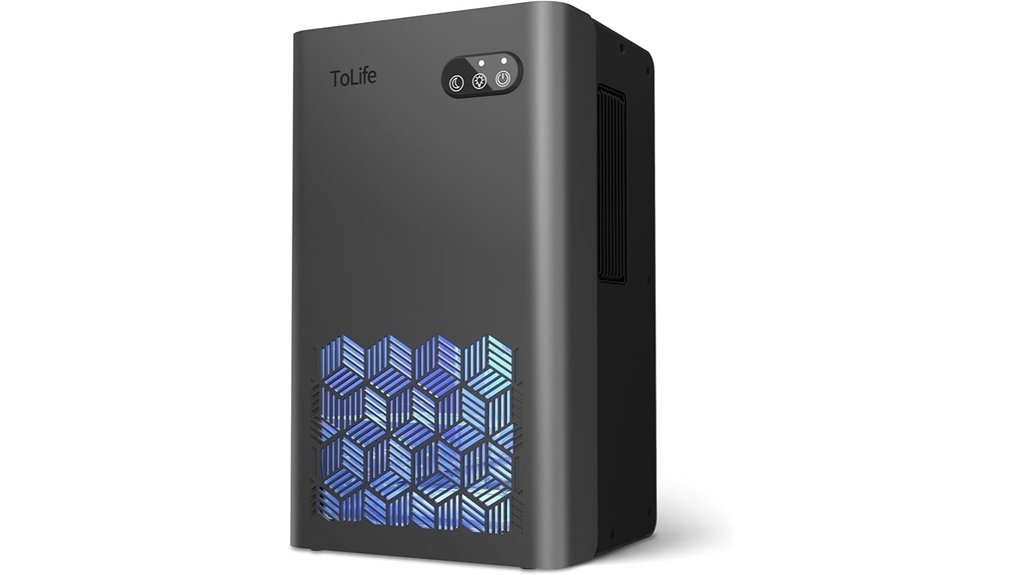
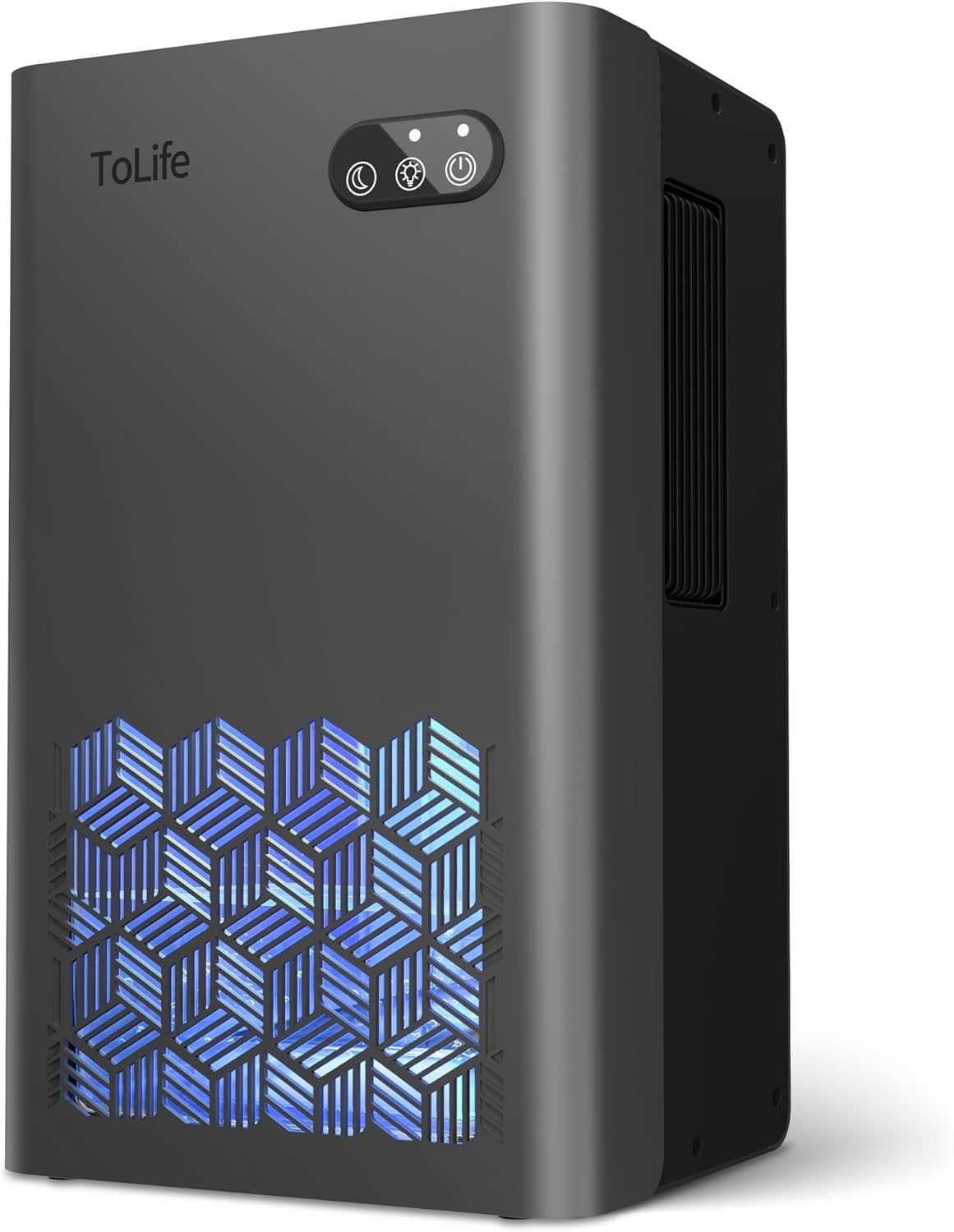
The ToLife Dehumidifier stands out for its 95-ounce tank, low-speed mode, automatic shut-off, carrying handles, and seven-color light. Although the listing advertises broad room coverage, motorhome buyers should judge it primarily as a large-tank thermoelectric unit for a small enclosed zone. The bigger reservoir may reduce how often you empty it, but it also takes up more floor or counter space than the smallest models.
Why you’ll like it: The large reservoir is convenient when frequent tank emptying is your main frustration.
Best For: Parked motorhomes with enough space and steady electrical power.
Who Should Avoid It: Very small campers with limited counter space or off-grid users minimizing power consumption.
Pros:
- Large 95-ounce tank.
- Low-speed mode, handles, and auto shut-off.
- Lighting can be turned off when not wanted.
Cons:
- Larger footprint and weight than many mini models.
- Advertised coverage should not be treated as guaranteed whole-motorhome performance.
- No drain hose is stated for this version.
Factors to Consider When Choosing a Dehumidifier for a Motorhome
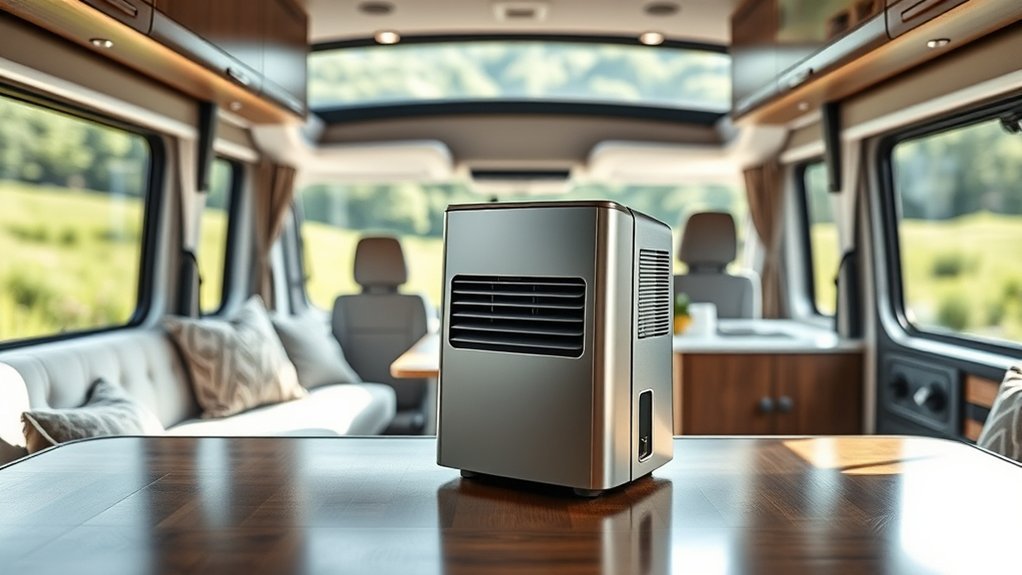
A motorhome dehumidifier must fit a smaller space, work with your electrical setup, and handle the kind of moisture you actually have. Condensation from cooking, showering, wet clothing, breathing, and cold windows may respond to a mini unit, but active leaks or persistent whole-RV dampness require ventilation, repairs, and possibly a higher-capacity dehumidifier.
Match the Unit to the Moisture Problem
Choose a small thermoelectric unit for localized condensation in a bathroom, wardrobe, sleeping area, or storage compartment. Choose a cordless desiccant model for cabinets and closets. For heavy dampness throughout a large motorhome, compare compressor dehumidifiers with a meaningful pint-per-day rating rather than relying on a mini model’s advertised floor-area number.
Power Source and Energy Use
Check the actual wattage and adapter type before buying. Some units use a standard AC adapter, while others use a low-voltage adapter that still plugs into household power. Confirm whether you will run the dehumidifier from shore power, a generator, an inverter, or a battery system, and include inverter losses when estimating off-grid run time. Wattage measures power draw; energy use over time is measured in watt-hours or kilowatt-hours.
Daily Removal Rate and Test Conditions
Mini dehumidifier extraction claims are often measured around 86°F and 80% relative humidity. Collection can fall sharply in cooler or less humid air. Compare the listed milliliters or ounces per day, but also consider the real temperature inside your motorhome and whether the unit will be placed in a closed area.
Tank Size and Drainage
A larger tank needs less frequent emptying, but it also takes up more space and adds weight. A drain hose is useful only when it can run downhill to a safe outlet without kinks, movement, or leakage. Never allow collected water to drain beneath furniture, into wall cavities, or near electrical equipment.
Noise and Night Use
For a sleeping area, look for a true low-speed or sleep mode and check the listed decibel level. Remember that a quiet fan can still be noticeable in the close quarters of a motorhome. Place the unit on a level, stable surface to reduce vibration.
Temperature Limits and Defrost
Thermoelectric models usually work best in warm conditions. If your motorhome is cool, select a model with clear operating-temperature guidance or auto defrost. A unit that performs well in a warm bathroom may collect very little water in a cold storage compartment.
Safe Placement While Traveling
Use the dehumidifier while parked unless the manufacturer specifically permits mobile operation. Secure the unit before driving, empty the tank, disconnect loose hoses, keep vents clear, and prevent the cord from creating a trip or fire hazard. Do not place a powered unit where water can spill onto outlets or electronics.
Before you buy
- Measure the available shelf, floor, or counter space.
- Confirm the wattage, voltage, plug type, and power source.
- Decide whether manual tank emptying or a drain hose is more practical.
- Check the stated daily extraction rate and test conditions.
- Choose auto shut-off and a stable tank design for confined spaces.
- Plan how the unit will be secured and stored before driving.
Frequently Asked Questions
How Often Should I Empty the Dehumidifier in My Motorhome?
Check the tank at least once a day when humidity is high or when you first start using the unit. Empty it whenever the full-tank indicator or auto shut-off activates. The schedule may range from daily to every several days depending on tank size, temperature, humidity, and run time.
Can Dehumidifiers Help Prevent Mold in Motorhomes?
A dehumidifier can reduce moisture conditions that support mold growth, but it cannot guarantee mold prevention. Repair leaks, dry wet materials, use bathroom and kitchen ventilation, and improve airflow behind cushions and inside cabinets.
What Is the Ideal Humidity Level for a Motorhome?
A practical target is generally around 40% to 50% relative humidity, while avoiding long periods above 60%. Use a separate hygrometer because many mini dehumidifiers do not include an accurate humidistat or humidity display.
Are Dehumidifiers Energy-Efficient for RV Use?
Mini thermoelectric models usually draw less power than full-size compressor dehumidifiers, but they also remove much less water. Compare wattage, expected run time, and daily extraction instead of judging efficiency by low power draw alone.
Can I Run a Dehumidifier While Driving?
It is safer to use most portable dehumidifiers while parked. Before driving, empty the tank, disconnect or secure drain hoses, unplug the unit unless the manufacturer allows mobile use, and store it so it cannot tip or become a projectile.
Will a Mini Dehumidifier Dry My Whole Motorhome?
Not always. A mini unit may help one enclosed area or reduce light condensation, but it may be too slow for a large motorhome, cold-weather condensation, wet upholstery, or an active water leak. In those situations, improve ventilation and consider a compressor dehumidifier with a verified pint-per-day capacity.
How Do I Maintain My Motorhome Dehumidifier?
Empty and rinse the tank regularly, wipe the air intake, clean any washable filter according to the manual, inspect the power cord and adapter, and keep the air inlet and outlet unobstructed. Dry the tank before storing the unit to reduce odors and residue.
Final Recommendation
Choose the BREEZOME 60 OZ when you want the best balance of tank size, timer controls, quiet operation, and listed moisture removal for a compact powered model.
Choose the Litever when continuous drainage is more important than tank size.
Choose the Eva-Dry E-333 only for cordless moisture control in a wardrobe, cabinet, or other small enclosed storage space.
No mini dehumidifier can compensate for a roof leak, plumbing leak, blocked vent, or soaked interior material. Match the unit to one specific moisture problem, confirm your power setup, and use a hygrometer to see whether humidity is actually improving.