Affiliate disclosure: As an Amazon Associate, we may earn from qualifying purchases made through links in this article, at no extra cost to you.
Product specifications, seller terms, and availability can change. Confirm the current listing and manual before buying.
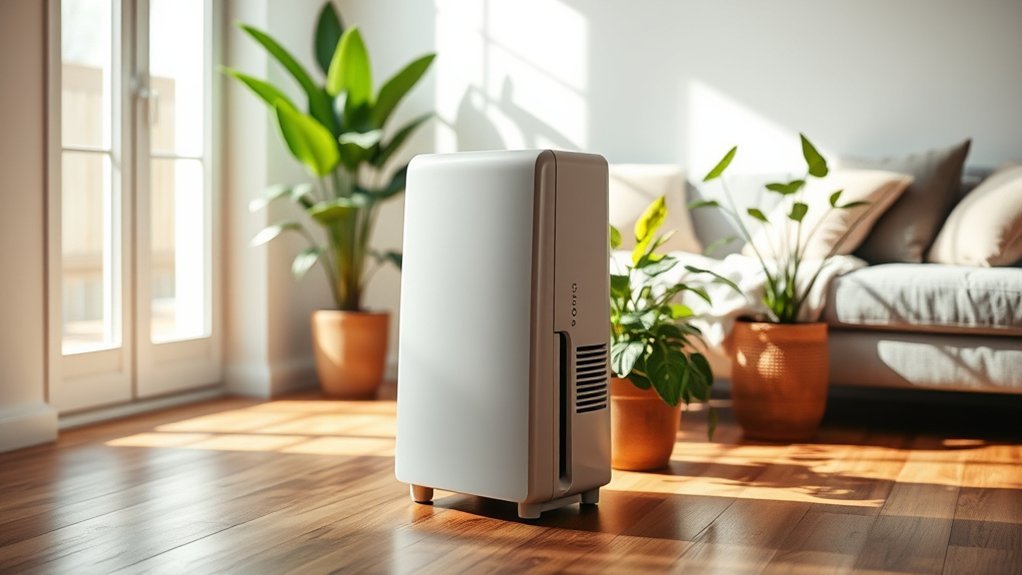
The best office dehumidifier depends on the room’s measured relative humidity, daily moisture load, drainage access, and acceptable noise. For recurring dampness, condensation, or musty odors, a compressor dehumidifier with a humidistat and continuous drain is usually the most practical choice. The AEOCKY RHEA-001 is the strongest overall option in this guide, while the Waykar PD160B is a smaller compressor alternative for a closed office with a lighter moisture load. Compact semiconductor models such as the TABYIK 35 OZ, ToLife 95 OZ, and BeOkay 58 OZ are best treated as light-duty options for small personal offices, not open-plan workspaces.
Quick Verdict
- Best Overall for Persistent Office Humidity: AEOCKY RHEA-001 Dehumidifier
- Best Smaller Compressor Pick: Waykar PD160B Dehumidifier
- Best Budget Mini Pick: TABYIK 35 OZ Dehumidifier
- Best Compact Large-Tank Pick: ToLife 95 OZ Dehumidifier
- Best Compact Pick for Timers and Modes: BeOkay 58 OZ Dehumidifier
How these picks were compared: Priority was given to daily moisture-removal capacity, humidistat control, drainage, tank size, noise-related features, and suitability for a closed office.
Important: This guide compares published product and certification data. It does not claim hands-on testing.
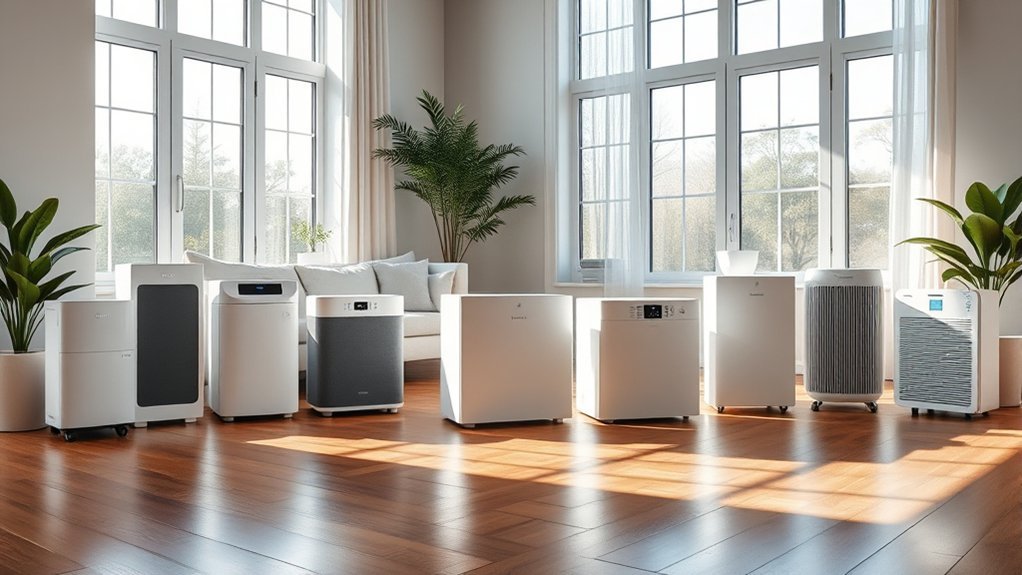
Quick Comparison of Office Dehumidifiers
| Product | Best For | Daily Moisture Removal | Tank | Controls and Drainage | Amazon |
|---|---|---|---|---|---|
| AEOCKY RHEA-001 | Persistent humidity in closed small-to-medium offices | 24.5 pints/day under the ENERGY STAR test method; seller states higher maximum output in hotter, wetter air | 1.45 gallons | Humidistat, timer, auto defrost, tank or drain hose | Check Product Details |
| Waykar PD160B | Closed small offices needing compressor-based control | 9.81 pints/day under the ENERGY STAR test method; seller states up to 34 pints/day at 95°F and 90% RH | 0.66 gallon | Humidistat, timer, auto defrost, tank or continuous hose | Check Current Availability |
| TABYIK 35 OZ | Budget light-duty use in a small personal office | Seller states up to 16 oz/day at 86°F and 80% RH | 35 oz | Auto shutoff, approximately 28 dB stated noise, manual tank | Check Price on Amazon |
| ToLife 95 OZ | Small offices where tank size and quiet operation matter most | Not clearly disclosed on the current listing | 95 oz | Two modes, sleep mode under 30 dB, auto shutoff, manual tank | See Today’s Price |
| BeOkay 58 OZ | Small offices needing timers and several operating modes | Not clearly disclosed on the current listing | 58 oz | Three modes, multiple timers, auto shutoff, manual tank | Check Product Details |
Capacity note: Seller maximums measured in very warm, highly humid air should not be compared directly with standardized capacity ratings. For sizing, prioritize a standardized pints-per-day figure when one is available, then consider room dampness, temperature, air leakage, and drainage.
AEOCKY RHEA-001 Dehumidifier
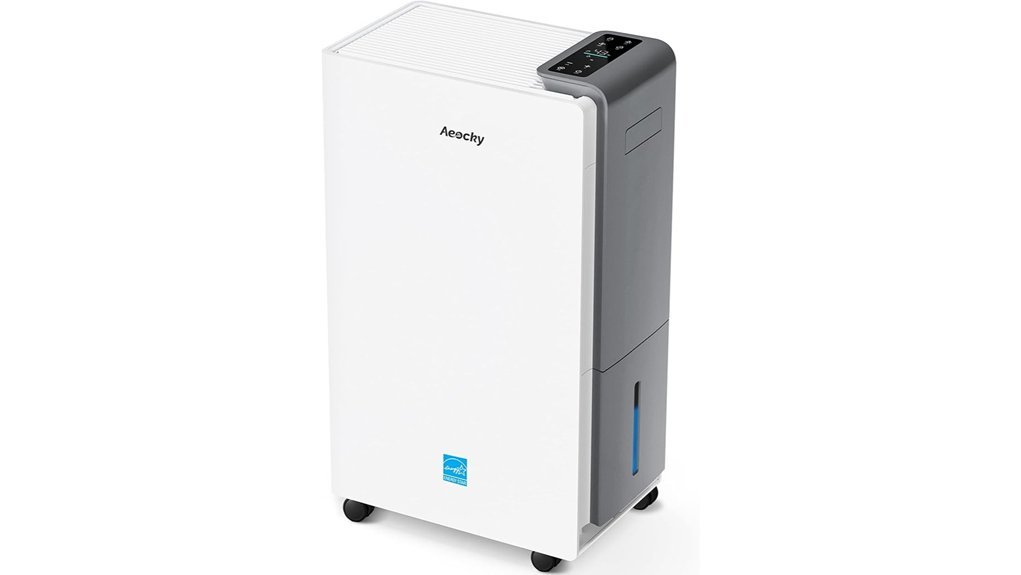
Best Overall for Persistent Office Humidity
The AEOCKY RHEA-001 is the strongest office-focused choice in this group because it combines compressor-based moisture removal, adjustable humidity control, automatic defrost, a drain hose, and a 1.45-gallon tank. Its ENERGY STAR listing reports 24.5 pints per day under the standardized test method. The seller also advertises higher maximum output in unusually hot and humid conditions, but the standardized figure is the safer number for comparing it with other portable dehumidifiers.
Why You’ll Like It: It can target a selected humidity level and drain continuously, so it requires less daily attention than a tank-only mini unit.
Who Should Buy This: Offices with recurring condensation, a musty smell, damp lower-level rooms, or humidity that regularly stays above the desired range.
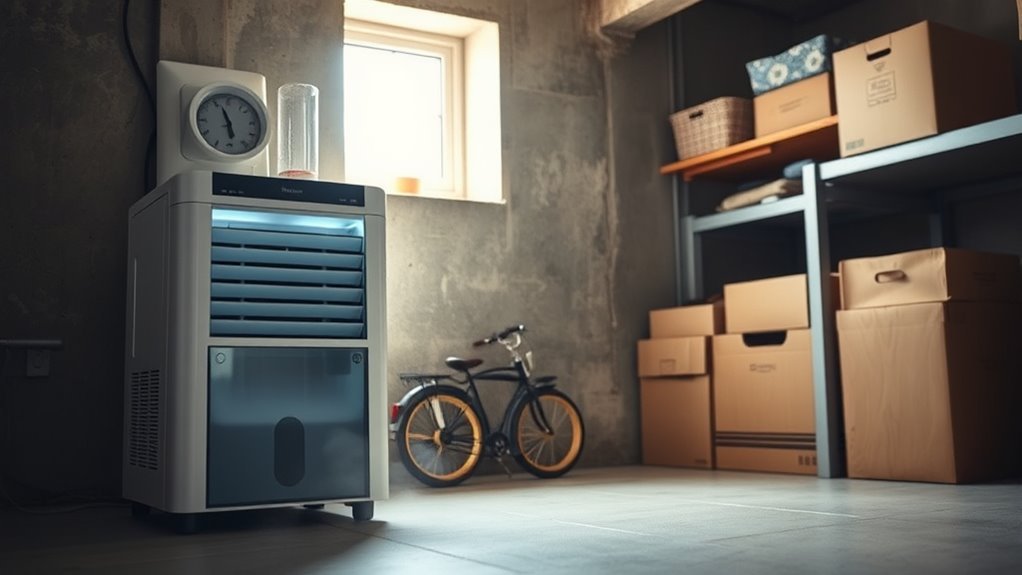
Who Should Avoid This: Tiny quiet offices with only occasional mild humidity, or large open-plan buildings that need an HVAC-level moisture assessment rather than one portable appliance.
Pros:
- Standardized ENERGY STAR capacity is available for more meaningful comparison.
- Humidistat, timer, drain hose, and automatic defrost support long-term office use.
- ENERGY STAR Most Efficient 2025 status is listed for the RHEA-001 model family.
Cons:
- It takes more floor space and produces more compressor noise than a mini semiconductor unit.
- The advertised 80-pint maximum is based on extreme conditions and should not be treated as its normal office output.
- It may be excessive for a dry, climate-controlled personal office.
Waykar PD160B Dehumidifier
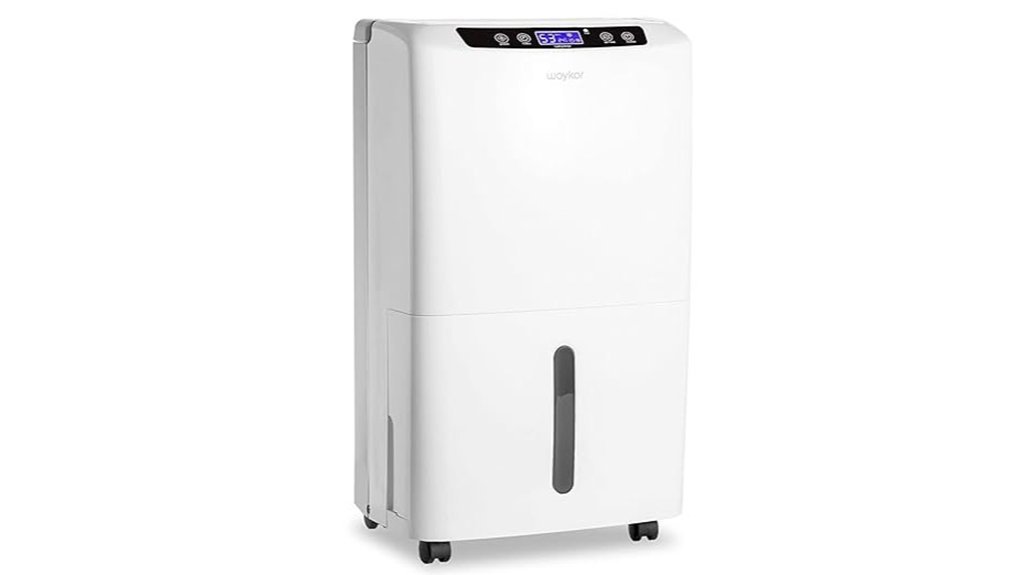
Best Smaller Compressor Pick
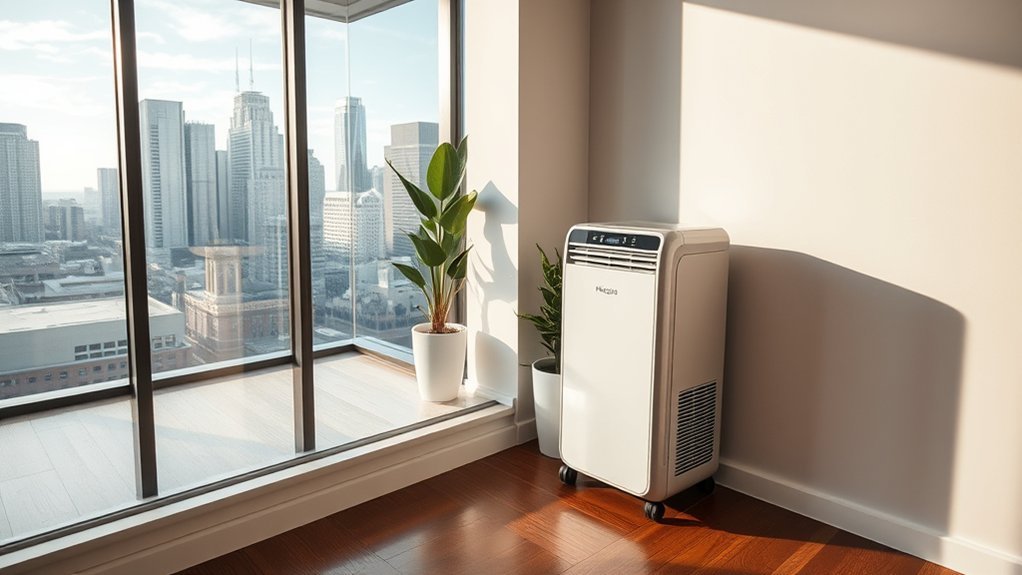
The Waykar PD160B offers features that mini units usually lack, including a built-in humidistat, automatic defrost, timer control, a washable filter, and continuous hose drainage. The current ENERGY STAR listing reports 9.81 pints per day under the standardized test method, while the seller advertises up to 34 pints per day at 95°F and 90% relative humidity. That difference makes this a better fit for a closed office with a modest moisture load than for a large or severely damp workspace.
Why You’ll Like It: It provides automatic humidity control and continuous drainage in a body that is easier to place than a higher-capacity compressor model.
Who Should Buy This: Home offices, private offices, small meeting rooms, and enclosed workspaces that need more control than a desktop mini dehumidifier can provide.
Who Should Avoid This: Large open offices, rooms with water seepage, or spaces that need 20 or more standardized pints of removal per day.
Pros:
- ENERGY STAR certified with a published standardized capacity.
- Continuous drainage reduces bucket-emptying work.
- Adjustable humidity control, timer, and auto restart improve convenience.
Cons:
- The standardized capacity is much lower than the seller’s hot-and-humid maximum.
- The 0.66-gallon tank can fill quickly when a drain hose is not used.
- It is larger and louder than compact semiconductor models.
TABYIK 35 OZ Dehumidifier
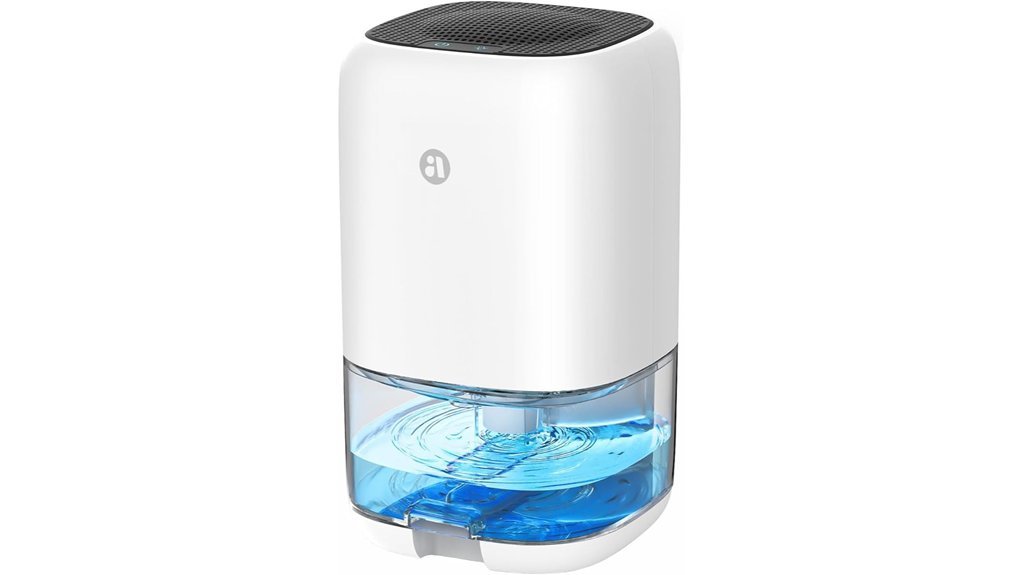
Best Budget Mini Pick for a Personal Office
The TABYIK 35 OZ is a light-duty Peltier dehumidifier for a small closed room. The seller states that it can collect up to 16 ounces per day at 86°F and 80% relative humidity. It also has a transparent 35-ounce tank, automatic shutoff, a carrying handle, and a stated operating noise of about 28 dB.
Why You’ll Like It: It is compact, simple to move, and quiet enough for many desk-based workspaces.
Who Should Buy This: Buyers who want inexpensive help with light seasonal dampness in a small personal office, cabinet area, or other enclosed zone.
Who Should Avoid This: Anyone dealing with persistent high humidity, visible condensation across a room, an open-plan office, or a need for continuous drainage.
Pros:
- Low stated noise suits calls and focused work.
- Transparent tank and automatic shutoff simplify maintenance.
- Compact dimensions make placement easy.
Cons:
- Maximum extraction is measured in very warm, humid conditions.
- No humidistat or drain hose is listed.
- It is not a substitute for a compressor unit when the moisture load is significant.
ToLife Dehumidifier with 95 OZ Tank
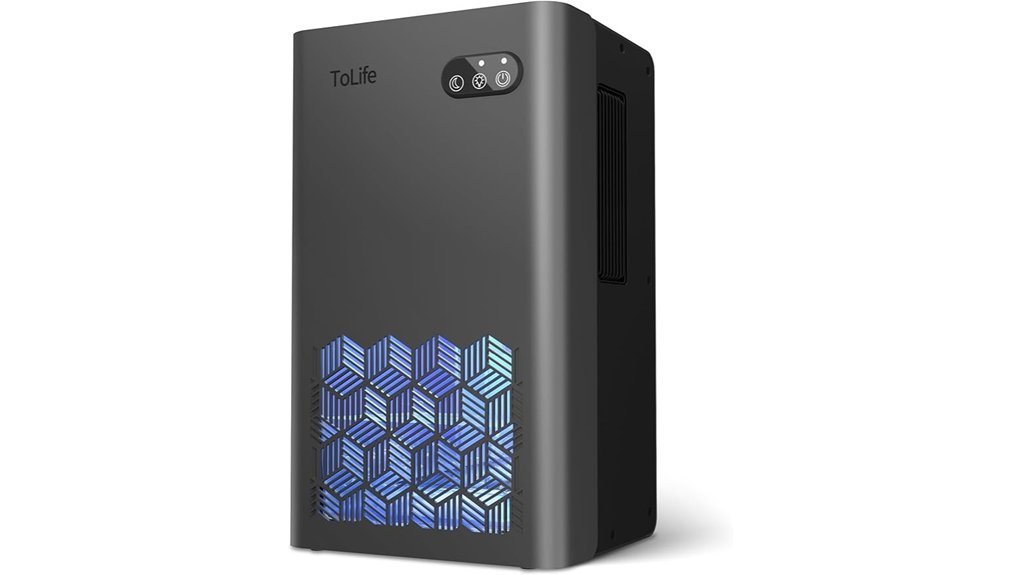
Best Compact Large-Tank Pick
The ToLife compact dehumidifier pairs a 95-ounce removable tank with two operating modes, sleep mode, automatic shutoff, and seven-color lighting. The current listing identifies it as a semiconductor model and states sleep-mode noise below 30 dB, but it does not clearly disclose a daily moisture-removal figure. Its broad square-foot claim should therefore be treated as marketing rather than a sizing specification.
Why You’ll Like It: The larger tank can reduce how often you need to empty the unit during light-duty operation.
Who Should Buy This: People with a small enclosed office who prioritize quiet operation, tank size, and simple controls.
Who Should Avoid This: Buyers who need a verified extraction rate, a built-in humidistat, continuous drainage, or fast moisture removal.
Pros:
- Large tank for a compact semiconductor unit.
- Two modes and low-noise sleep operation.
- Automatic shutoff helps prevent overflow.
Cons:
- No clear daily extraction figure is provided on the current listing.
- No continuous drain or target-humidity control is listed.
- The advertised coverage should not be compared with compressor-unit ratings.
BeOkay 58 OZ Small Dehumidifier with Adjustable Settings
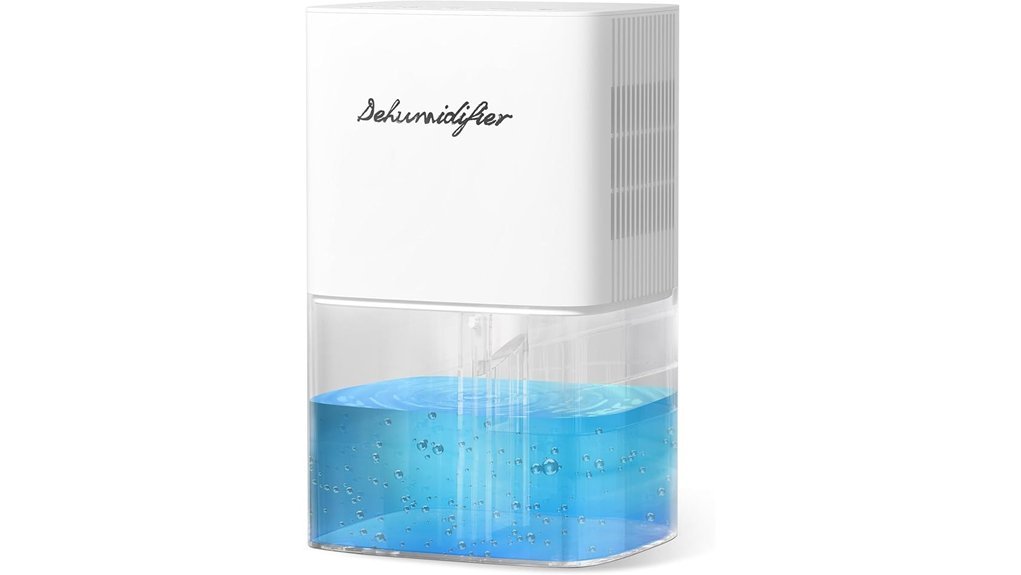
Best Compact Pick for Timers and Modes
The BeOkay small dehumidifier has a 58-ounce tank, three operating modes, automatic shutoff, defrost protection, and timer choices for 24, 48, 72, or 96 hours plus continuous operation. Its listing states that sleep mode stays below 40 dB. The current product page does not clearly provide a daily extraction rate, so its main advantage is control flexibility rather than proven high output.
Why You’ll Like It: The timer and sleep, normal, and performance modes give more scheduling control than many basic mini units.
Who Should Buy This: Small-office users who want scheduled light-duty operation and a larger tank.
Who Should Avoid This: Buyers who need a verified moisture-removal rate, continuous drainage, or control of serious dampness.
Pros:
- Three operating modes and several timer settings.
- 58-ounce tank reduces emptying frequency compared with smaller mini units.
- Automatic shutoff and defrost protection support routine use.
Cons:
- No clear daily extraction capacity is shown on the current listing.
- No humidistat or continuous drainage option is listed.
- Below-40 dB sleep mode is not as quiet as the lowest-noise compact models.
Factors to Consider When Choosing a Dehumidifier for an Office
The best office dehumidifier is not necessarily the model with the largest advertised coverage number. Focus on standardized daily moisture removal, room dampness, drainage, humidity control, temperature, and noise.
Measure the Humidity First
Use a hygrometer before choosing a machine. A practical office target is often around 40% to 50% relative humidity, while EPA indoor-air guidance generally recommends keeping indoor humidity between 30% and 50% and below 60%. Avoid setting the room drier than necessary.
Compressor vs. Semiconductor Dehumidifiers
Compressor models are the better choice for recurring condensation, persistent musty odors, damp lower-level offices, and moisture loads that require pints of removal per day. Semiconductor or Peltier units are quieter and smaller, but their output is measured in ounces and falls sharply in cooler or less humid air.
Standardized Capacity vs. Seller Maximums
ENERGY STAR capacity figures use a defined federal test method, which makes them more useful for comparison. Seller maximums may be measured in hotter and wetter conditions, so a product advertised as “34 pint” or “80 pint” may have a much lower standardized rating. Do not compare the two figures as though they were equivalent.
Room Size and Humidity Severity
Square footage alone is not enough. A closed 150-square-foot office with mild seasonal dampness may need far less capacity than a basement office of the same size with seepage or cold walls. Open doors, high ceilings, frequent outdoor-air exchange, and HVAC airflow increase the workload.
Noise Level
For calls, recording, or concentrated work, check the lowest fan setting and place a compressor model away from desks when possible. Mini units may be quieter, but choosing a quiet machine that cannot remove enough moisture will not solve the underlying problem.
Drainage and Maintenance
A continuous drain hose is valuable for a busy office. If you choose a tank-only model, assign someone to empty and rinse the tank regularly. Clean filters and air inlets as directed, keep the unit level, and leave enough clearance for airflow.
Humidistat and Automatic Controls
A built-in humidistat lets the unit cycle around a selected humidity level. Auto defrost helps in cooler rooms, auto restart restores operation after a power interruption, and auto shutoff is essential for any bucket-based model.
Before You Buy:
- Measure the office and current relative humidity.
- Check whether the dampness comes from air humidity, a plumbing leak, seepage, or an HVAC problem.
- Choose a standardized pints-per-day rating when available.
- Confirm a safe drain route if you want continuous operation.
- Check the manual for clearance, operating temperature, filter care, and electrical requirements.
Frequently Asked Questions
What Humidity Level Is Best for an Office?
A practical target is often around 40% to 50% relative humidity. EPA guidance generally recommends 30% to 50% indoors and keeping humidity below 60%. Offices with archives, instruments, electronics, or specialty materials may have stricter requirements.
What Size Dehumidifier Do I Need for My Office?
Choose by standardized daily moisture-removal capacity and the severity of the dampness, not advertised square footage alone. A small tank-only unit may help with light humidity in a closed personal office, while recurring condensation or musty odors usually call for a compressor model with a humidistat and drain hose.
Can a Mini Dehumidifier Handle an Open-Plan Office?
Usually not. Mini semiconductor models remove ounces of water per day under favorable conditions. Open-plan spaces normally need a properly sized compressor dehumidifier or evaluation of the building’s HVAC and ventilation system.
Can a Dehumidifier Fix Leaks or Mold?
No. A dehumidifier can help control airborne moisture, but it does not repair leaks, stop seepage, or remove established mold. Fix the water source and clean or remediate affected materials as appropriate.
How Do I Maintain My Office Dehumidifier?
Empty and rinse the tank, clean the filter and air inlets according to the manual, inspect the drain hose, and keep furniture away from the intake and exhaust. Disconnect power before cleaning.
Should an Office Dehumidifier Run All Day?
A humidistat-controlled compressor model can cycle as needed. Tank-only mini units may run for long periods, but they should have automatic shutoff and adequate airflow. Follow the manufacturer’s placement and operating instructions.
Final Recommendation
Choose the AEOCKY RHEA-001 when the office has recurring humidity and you want a compressor model with a standardized 24.5-pint capacity, humidistat, and continuous drainage. Select the Waykar PD160B for a smaller enclosed office with a lighter moisture load and limited floor space.
For mild humidity in a small personal office, the TABYIK 35 OZ is the clearest budget option because its seller-stated extraction conditions are disclosed. The ToLife 95 OZ is more attractive when tank size and quiet operation matter most, while the BeOkay 58 OZ is the better compact choice for timers and multiple modes.
Whichever model you choose, rely on measured humidity and daily moisture-removal capacity—not a broad square-foot claim—and address leaks or HVAC problems separately.