
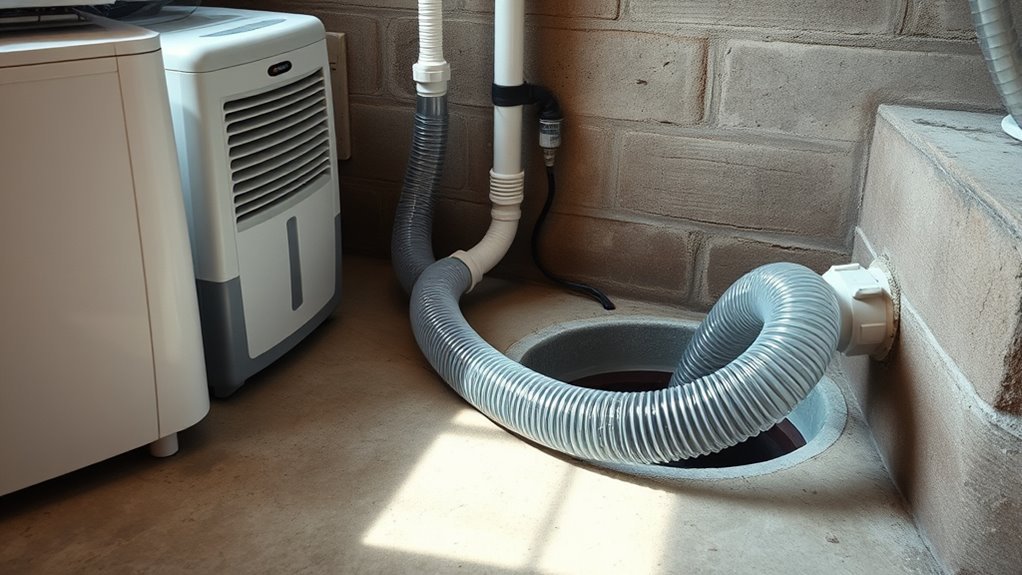
To connect a dehumidifier to a sump pump, route the dehumidifier’s continuous-drain water into the sump basin rather than attaching a hose to the sump-pump motor. If the sump opening is lower than the dehumidifier and the hose can stay continuously downhill, use gravity drainage. If the route must rise, use the dehumidifier’s built-in pump when the model has one; otherwise use a separate condensate pump.
Last updated: August 19, 2026
Quick Answer
Drain the dehumidifier directly into the sump basin when the hose can run continuously downhill. If water must travel uphill, use the dehumidifier’s built-in pump if the model has one, or add a separate condensate pump when it does not. Keep a gravity-hose outlet above the normal standing-water level, keep every hose away from the sump-pump float, and test the full drainage path before unattended use.
Key Takeaways
- The dehumidifier hose normally drains into the sump basin, not into an inlet on the sump pump.
- Use direct gravity drainage when the entire hose can remain below the dehumidifier’s drain outlet.
- If the route must rise, use the dehumidifier’s built-in pump when available and stay within its model-specific hose, lift, and length limits.
- Use a separate condensate pump when gravity cannot reach the basin and the dehumidifier has no suitable internal pump.
- Keep electrical connections dry, preserve any sealed sump lid, and test the drainage line and pump floats before leaving the system unattended.
At a Glance
| Time Required | Varies by layout; a simple gravity-hose setup is faster than adding a pump or modifying a sealed sump lid |
| Best Drain Method | Gravity when the full route is downhill; a built-in pump when the unit has one and the route rises; an external condensate pump when gravity is impossible and no suitable internal pump is available |
| Difficulty | Easy for gravity drainage; moderate when adding a condensate pump or sealed sump-lid port |
| Tools Needed | Compatible drain hose or pump tubing, washer or adapter, tubing cutter or utility knife, screwdriver, and clamps for barbed fittings if required |
| Critical Check | Keep the gravity outlet above normal standing water, keep hoses clear of the sump-pump float, and preserve the airtight seal on any radon-mitigation sump lid |
Why Use a Sump Pump With a Dehumidifier
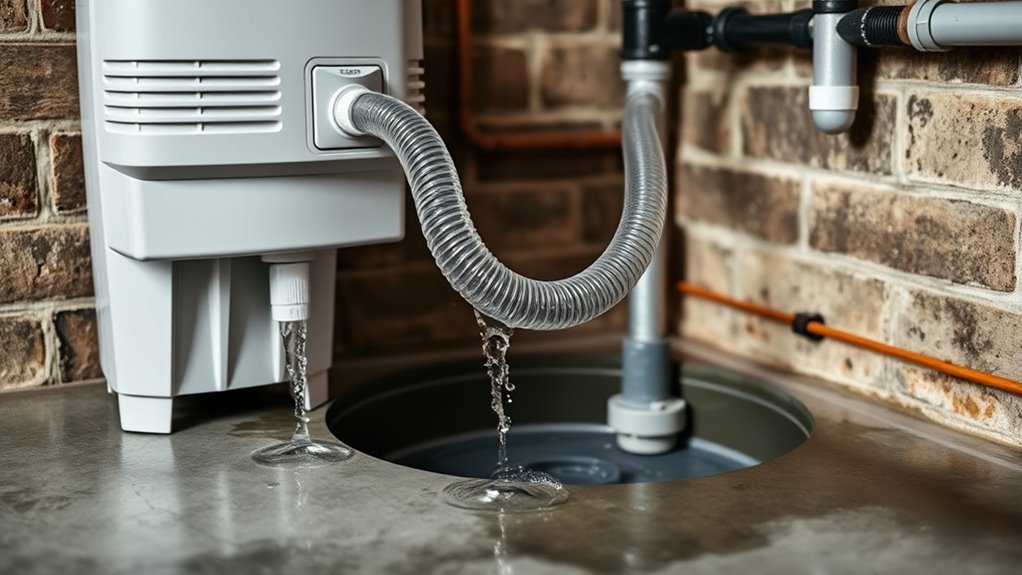
Routing dehumidifier condensate to a sump basin allows the dehumidifier to operate without repeated bucket emptying. Water flows into the basin, and the existing sump pump removes it when the water level rises and raises the pump’s float switch.
This arrangement is useful in damp basements, laundry areas, and crawl-space service areas where a suitable sump system is already installed. According to ENERGY STAR, some dehumidifiers can drain through a hose directed to a floor drain or sump, eliminating the need to empty the collection bucket manually.
Automatic drainage does not fix a foundation leak, failed vapor barrier, plumbing leak, or other moisture source. It only removes water collected from the air. The U.S. Environmental Protection Agency recommends keeping indoor relative humidity below 60% and ideally between 30% and 50%, while also correcting the underlying source of unwanted moisture.
A sump pump removes water from the sump basin. It does not normally provide a small inlet connection for a dehumidifier hose.
Choose Gravity Drainage, a Built-In Pump, or a Condensate Pump
Before buying additional equipment, compare the height of the dehumidifier’s drain outlet with the sump opening and check whether the dehumidifier already has an internal pump.
Recommended Products
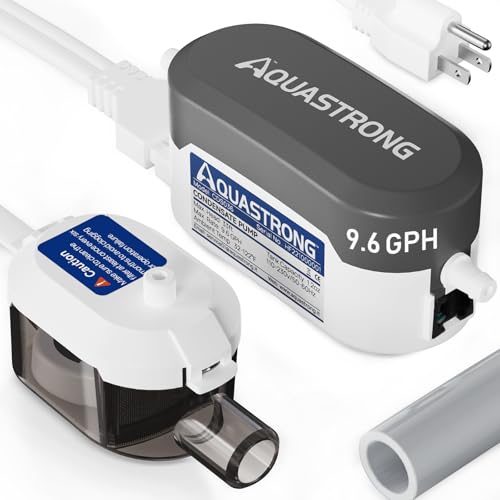
High Performance: Automatic condensate pump features an efficient thermally protected motor, providing quick draining and ultra-silent operation (20 dB) with max. flow 9.6 GPH or max. head 33ft. Reliable hall switch ensures auto operation and long service life. Ideal for removing condensate from collector pans of AC units, furnaces and dehumidifiers
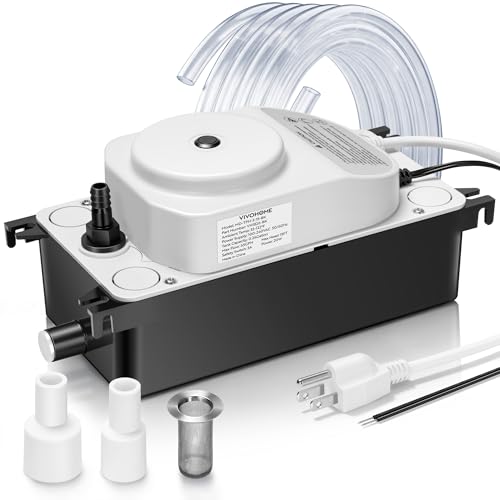
QUIET & POWERFUL & ENERGY-SAVING: Enjoy peace and savings with low-noise DC motor; The VIVOHOME condensate pump moves up to 65 GPH or lifts water up to 15 ft vertically, operating at only 25 dB and 20W for quick, quiet, and energy-efficient drainage

AUTOMATIC CONDENSATE PUMP: features a vertical-type switch to reduce footprint and is designed to automatically remove condensate produced by boilers, furnaces, air conditioners and de-humidifiers
Option 1: Direct Gravity Drainage
Use direct gravity drainage when the sump opening is lower than the dehumidifier’s drain outlet and the hose can remain downhill for its entire length. This is usually the least complicated setup because it does not add another powered pump.
The hose should:
- Connect to the dehumidifier’s designated continuous-drain port.
- Remain below the drain outlet from beginning to end.
- Run as straight as practical without loops, upward rises, or crushed sections.
- Terminate securely inside the sump basin without interfering with the sump-pump float.
- Stay above the normal standing-water level unless the dehumidifier manual specifically allows another outlet arrangement.
Frigidaire’s drainage guidance similarly advises keeping a gravity-drain hose below the unit, as straight as possible, and free of kinks.
Option 2: Use the Dehumidifier’s Built-In Pump
If the sump opening is higher than the dehumidifier, first check whether the dehumidifier already has a built-in drain pump. A pump-equipped model can move condensate uphill through its specified pump hose, so a second condensate pump may not be necessary.
Built-in pump instructions vary by model. Use the manufacturer’s pump outlet and tubing, enable pump mode when required, keep the bucket installed if the manual requires it, and stay within the published hose-length and lift limits. GE Appliances’ dehumidifier drainage guidance lists a sump as a suitable destination for pump-equipped models and distinguishes pump drainage from ordinary gravity drainage.
Secure the pump-hose outlet inside the sump basin so it cannot fall out, become submerged unnecessarily, or interfere with the sump-pump float.
Option 3: Drain Through a Condensate Pump
Use a separate condensate pump when the sump basin is above the dehumidifier outlet, the route must cross an obstruction or rise, gravity drainage is not practical, and the dehumidifier does not have a suitable built-in pump.
In this arrangement:
- The dehumidifier drains by gravity into the condensate pump’s reservoir.
- The condensate pump activates when its reservoir reaches the operating level.
- The pump sends the water through its discharge tubing to the sump basin or another approved drain point.
Choose a model approved for dehumidification equipment and compare its maximum lift, flow at the required lift, tubing size, duty rating, and safety-switch features. For example, the Little Giant VCMA-20 series is intended for situations where gravity drainage is not possible or practical. Its current performance table lists 80 GPH at 1 foot of head and 48 GPH at 10 feet, while 20 feet is the 115-volt model’s shutoff head with zero flow. This illustrates why you should compare required lift with the full performance table rather than relying only on the maximum-head number.
Note: Do not modify or tee small condensate tubing into the sump pump’s discharge pipe unless the equipment manufacturer and local plumbing requirements specifically allow that arrangement. Sending dehumidifier water into the sump basin is normally easier to inspect and avoids altering the sump-pump discharge system.
What You Need for the Drain Connection
Check the dehumidifier manual before selecting a hose. Some units use a threaded garden-hose connection, while others require a model-specific adapter or smaller tubing.
Recommended Products

Multi-Purpose Hose, 6ft Cut-to-Fit:This 6-foot hose is designed for various applications, including dehumidifier drainage and gardening tasks. It can be easily cut to the desired length for flexible use. Please confirm the required length before purchase.
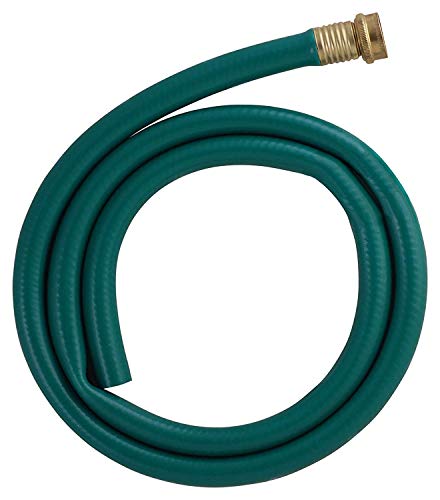
FUNCTIONALITY: This 5ft Drain Hose will provide you convenience as this can help you with any small maintenance job around your house, garden, garage or to reach hanging house plants. It can also use as dehumidifier drain hose.

Excellent Compatibility: The dehumidifier drain hose features an internally threaded end, and the 3/4 Inch FHT connection, brass Interface is compatible with the majority of dehumidifier brands.
For Direct Gravity Drainage
- A hose that matches the dehumidifier’s continuous-drain connection
- A sound rubber or plastic washer for a threaded hose fitting
- A suitable adapter if the drain port and hose do not match
- A clip, bracket, or strap to keep the hose inside the sump basin
- A sealed grommet or purpose-made port if the sump has an airtight lid
For Built-In Pump Drainage
- The pump hose or tubing size specified for the dehumidifier model
- Any manufacturer-supplied pump fitting, connector, or adapter
- A clip, bracket, or strap to secure the discharge end inside the sump basin
- A sealed grommet or purpose-made lid port if the hose passes through an airtight sump cover
For Condensate-Pump Drainage
- A condensate pump approved for dehumidifier condensate
- A gravity hose from the dehumidifier to the pump reservoir
- Discharge tubing in the size specified by the pump manufacturer
- The pump’s required check valve, which may be built into its discharge fitting
- Clamps or locking fittings for barbed connections
- An optional high-water safety switch or alarm where overflow could damage finished space
Do not force mismatched fittings together. Threaded garden-hose connections normally seal with a washer, while flexible tubing attached to a barb may require a clamp. If water leaks from a threaded connection, inspect the washer before overtightening the fitting.
Warning: Unplug the dehumidifier and any condensate pump before routing hoses or opening covers. Keep plugs, receptacles, power strips, and cord connections away from possible leaks. Use properly grounded receptacles and follow the equipment manual and local GFCI requirements. Do not use an extension cord unless the manufacturer expressly allows it.
Place the Dehumidifier and Drainage Equipment Correctly
Place the dehumidifier on a stable, level surface with the airflow clearances required by its manual. The existing submersible sump pump should remain installed in the sump basin. If you use a separate condensate pump, place its reservoir level and lower than the dehumidifier’s gravity-drain outlet.
Recommended Products

AUTOMATIC CONDENSATE PUMP: features a vertical-type switch to reduce footprint and is designed to automatically remove condensate produced by boilers, furnaces, air conditioners and de-humidifiers

AUTOMATIC CONDENSATE PUMP: features a vertical-type switch to reduce footprint and is designed to automatically remove condensate produced by boilers, furnaces, air conditioners and dehumidifiers

AUTOMATIC CONDENSATE PUMP: features a vertical-type switch to reduce footprint and is designed to automatically remove condensate produced by boilers, furnaces, air conditioners and dehumidifiers
Level Surface Placement
A tilted dehumidifier may not direct collected water toward its drain port correctly. A tilted condensate pump may also affect its float operation or cause water to collect unevenly in the reservoir.
- Check that the dehumidifier does not rock or lean.
- Keep the air intake and exhaust openings clear.
- Place an optional condensate pump on a solid, level surface.
- Keep all equipment accessible for cleaning, testing, and repair.
- Make sure each hose can reach without pulling on its fitting.
Do not place the dehumidifier where a sump overflow could submerge it. If the basement is vulnerable to flooding, elevate the dehumidifier on a strong platform without creating an unstable setup or blocking airflow.
Downward Hose Path
A gravity hose between the dehumidifier and the sump basin or an external condensate-pump reservoir must remain continuously downhill. A dehumidifier’s built-in pump or the discharge side of an external condensate pump can move water uphill, but only within that pump’s model-specific operating limits.
For gravity drainage, maintain a continuous descent with no upward loops. A low spot can hold water and collect sediment, while an upward rise can stop gravity drainage completely. Keep the hose away from sharp edges, hot pipes, foot traffic, and storage items that could crush it.
Pro Tip: Before making the final gravity connection, hold the hose along its planned route and pour a small amount of clean water through it. This simple check can reveal hidden uphill sections, flattened areas, and slow drainage.
Protect a Sealed or Radon-Mitigation Sump Lid
Some sump basins have airtight covers as part of a radon-control system. Do not leave the lid open or drill an unsealed hole through it. EPA radon mitigation standards specify airtight sump covers and airtight sealing around cover penetrations for wiring and pipes.
Use a purpose-made drain port, bulkhead fitting, or correctly sized grommet that preserves the seal. If the lid is part of an active radon system or you are unsure how it should be modified, have a qualified radon or plumbing professional complete the penetration.
How to Connect a Dehumidifier to a Sump Pump
Method 1: Connect Directly to the Sump Basin
- Turn off the equipment. Unplug the dehumidifier before working on the drain connection.
- Locate the continuous-drain port. Remove the bucket or drain cover only as directed by the dehumidifier manual.
- Inspect the fitting. Confirm that the adapter, threads, and sealing washer are clean and undamaged.
- Attach the hose. Hand-tighten a threaded connection until snug. Do not cross-thread or overtighten plastic fittings.
- Route the hose downhill. Keep it straight, supported, and free of loops or kinks.
- Place the outlet in the sump basin. Keep a gravity-hose outlet above the normal standing-water level and away from the sump-pump float, switch, intake, and discharge pipe.
- Secure the outlet. Use a bracket or strap so vibration or accidental contact cannot pull the hose out of the basin.
- Restore power and test. Confirm that water leaves the dehumidifier without leaking or backing up.
Method 2: Use the Dehumidifier’s Built-In Pump
- Confirm that the model has a built-in pump. Check the owner’s manual rather than assuming the ordinary gravity-drain connection is pressurized.
- Use the specified pump hose. Connect the tubing or fitting required for the model’s pump outlet.
- Check the operating limits. Stay within the manufacturer’s maximum hose length, lift, and routing requirements.
- Keep the bucket in place if required. Some pump-equipped dehumidifiers need the bucket correctly seated for pump operation.
- Route the pump hose to the sump basin. Secure the outlet away from the sump-pump float, switch, intake, and discharge pipe.
- Enable pump mode if required. Follow the model’s control instructions.
- Test a complete pump cycle. Confirm that the dehumidifier collects water, starts its pump at the intended level, discharges to the sump, and stops normally.
Method 3: Connect Through a Condensate Pump
- Place the condensate pump. Set it level, below the dehumidifier outlet, and within reach of an approved receptacle.
- Connect the gravity hose. Run the dehumidifier drain hose downhill into one of the pump reservoir’s approved inlet openings.
- Install the discharge fitting. Fit the manufacturer-specified check valve and discharge tubing.
- Route the discharge tubing. Stay within the pump’s maximum lift and recommended run length. Avoid tight bends and heat sources.
- Terminate the tubing in the sump basin. Secure it so it cannot fall out or interfere with the sump-pump float.
- Connect an overflow safety switch if provided. Follow the pump manual or have a qualified technician make any equipment-control wiring connection.
- Restore power. Plug the condensate pump and dehumidifier into suitable receptacles.
- Test the reservoir and discharge. Add clean water according to the condensate-pump instructions and confirm automatic startup and shutoff.
Keep every gravity-fed hose continuously downhill. For a built-in or external pump discharge, follow the pump’s lift, tubing, and hose-length limits instead of relying on gravity slope.
Test the Pump and Check for Leaks
Do not rely on the installation until you have tested the complete water path. The test differs slightly depending on whether the setup uses gravity, a built-in dehumidifier pump, or a separate condensate pump.
| Check | What to Confirm |
|---|---|
| Dehumidifier drain | Water leaves through the intended hose instead of backing up or leaking. |
| Gravity hose | The hose drains steadily with no uphill section, kink, submerged outlet, or backup. |
| Built-in dehumidifier pump | Pump mode is enabled when required, the hose stays within the model’s limits, water discharges, and the pump stops normally. |
| External condensate pump | The reservoir float starts the pump, water discharges, and the pump shuts off normally. |
| Sump-pump float | The added hose and tubing do not obstruct the float’s full movement. |
| Sump operation | Adding enough clean water to the basin raises the float and activates the sump pump as described in its manual. |
| Connections | No fitting, hose, reservoir, lid penetration, or discharge tube leaks. |
| Final discharge | The sump system sends water to its approved discharge location without short cycling or backup. |
Observe at least one complete pump cycle if a built-in or external pump is being used. Also test the sump pump by adding water to the basin or using the manufacturer’s approved test method. Never run a pump dry merely to see whether its motor turns.
Inspect the installation again after several hours of dehumidifier operation. Slow leaks may not appear during a brief initial test.
Troubleshoot a Dehumidifier That Will Not Drain
| Problem | Likely Cause | What to Do |
|---|---|---|
| Water still fills the bucket during gravity drainage | Drain mode is not engaged, the hose is uphill, the outlet is submerged, or the port is blocked | Reinstall the bucket and drain adapter as the manual specifies, lower the hose, raise the outlet above standing water, and flush the line. |
| Leak at the dehumidifier fitting | Missing washer, damaged threads, loose adapter, or cross-threading | Unplug the unit, inspect the washer and fitting, and reconnect without overtightening. |
| Built-in pump does not discharge | Pump mode is off, the bucket is not seated, the pump hose is kinked, or model-specific hose limits are exceeded | Follow the dehumidifier manual for pump mode, bucket position, hose routing, maximum lift, and maximum hose length. |
| Condensate pump runs but little water exits | Blocked tubing, excessive lift, kinked line, or faulty check valve | Clean the tubing, reduce lift or bends, and inspect the check valve according to the pump manual. |
| Condensate pump cycles repeatedly | Backflow through the discharge tube or a leaking check valve | Confirm the check valve is installed in the correct direction and closes fully. |
| Sump pump does not start | No power, stuck float, blocked switch movement, or water below the normal start level | Check the breaker and receptacle, remove float obstructions, and follow the sump-pump manual’s test procedure. |
| Slime or odor develops in the line | Dust and biological buildup in standing condensate | Flush the hose and clean the condensate-pump reservoir using products and methods allowed by the manufacturer. |
If the sump setup is correct but the dehumidifier still sends water to its bucket or will not move water through the hose, see why your dehumidifier is not draining through the hose for model-side hose, washer, blockage, and drain-port troubleshooting.
Keep the Drain System Running Smoothly
Inspect the drain system monthly during periods of frequent dehumidifier use and after any basement flooding, power outage, or equipment movement.
- Confirm that the dehumidifier and optional condensate pump remain level.
- Check the gravity hose for kinks, low spots, algae, sediment, and accidental crushing.
- Check built-in pump tubing for kinks, loose connections, or routing that exceeds the model’s instructions.
- Inspect threaded fittings for worn washers and barbed fittings for loose tubing.
- Flush the drain hose with clean water when buildup appears.
- Clean the condensate-pump reservoir and float according to its manual.
- Confirm that the sump-pump float moves freely and is not touching the added hose.
- Test any overflow alarm, high-water switch, or battery backup.
- Check that a sealed sump-lid penetration remains airtight.
A continuously draining dehumidifier can keep producing water during humid weather even if the sump pump loses power. In a finished basement, consider a high-water alarm, condensate-pump safety switch, sump-pump backup, or another overflow-control measure appropriate for the space.
Note: Verify that the sump system’s final discharge location complies with local rules. Some jurisdictions restrict discharging sump water into sanitary sewer piping, and requirements vary by location.
Frequently Asked Questions
Can you hook up a dehumidifier to a sump pump?
Yes, but the hose normally drains into the sump basin rather than attaching to the sump pump itself. The sump pump then removes the collected water when the basin level raises its float. Keep the hose outlet secure and away from the float, switch, and pump intake.
Do I need a condensate pump?
Not when the sump basin is lower than the dehumidifier and the drain hose can run downhill continuously. If the route must rise, check whether the dehumidifier already has a built-in pump before adding a separate condensate pump.
Can a dehumidifier drain hose go uphill?
A gravity-drain hose cannot reliably move water uphill. If the route must rise, use a dehumidifier with a built-in pump or a separate condensate pump and stay within that pump’s published lift and hose limits.
Can I connect a dehumidifier drain to the sump pump discharge pipe?
Do not modify or tee into the sump-pump discharge pipe unless the pump manufacturer and local plumbing requirements specifically allow the connection. Routing dehumidifier water into the sump basin is normally simpler to inspect and does not alter the sump-pump discharge system.
How do you connect a dehumidifier to a condensate pump?
Run a continuously downhill hose from the dehumidifier’s gravity-drain port into an approved reservoir inlet. Attach the manufacturer-specified discharge tubing and check valve, route the tubing to the sump basin within the pump’s lift rating, secure the outlet, and test automatic startup and shutoff with clean water.
Can I pass the hose through a sealed sump lid?
Yes, but the penetration must preserve the lid’s seal, especially when the sump is part of a radon-mitigation system. Use a purpose-made port, bulkhead fitting, or airtight grommet. Have a qualified professional modify an active radon system if you are unsure.
Conclusion
The simplest way to connect a dehumidifier to a sump pump is to run a compatible continuous-drain hose directly into the sump basin when the full hose path can stay downhill. If water must travel uphill, use the dehumidifier’s built-in pump when available or add a separate condensate pump when necessary. Keep every hose clear of the sump-pump float, keep gravity outlets above normal standing water, protect electrical connections, preserve sealed sump covers, and test the complete drainage system before relying on unattended operation.
Sources
- ENERGY STAR: Dehumidifiers — dehumidifier drainage options, humidistats, capacity, and recommended operating guidance.
- U.S. EPA: A Brief Guide to Mold, Moisture and Your Home — indoor humidity and moisture-control guidance.
- Frigidaire: Dehumidifier Not Draining — gravity-hose placement, hose sizing for applicable models, cleaning, and blockage guidance.
- GE Appliances: Dehumidifier Draining Options — gravity drainage, built-in pump drainage, and suitable drainage locations including a sump.
- Little Giant: VCMA-20 Condensate Pump — condensate-pump use, discharge size, safety-switch options, flow, and lift performance.
- U.S. EPA: Radon Mitigation Standards — airtight sump covers and sealed pipe or wiring penetrations.

[…] a sump system: see how to connect a dehumidifier to a sump pump before choosing that […]