You can recycle a dehumidifier safely by checking whether it can still be reused, unplugging and emptying it, and then finding a local appliance recycler, municipal collection program, or other service that accepts equipment containing refrigerant. Do not cut refrigerant lines, puncture the sealed system, or intentionally release refrigerant. Local collection rules vary, so confirm acceptance before you transport the unit.
Quick Answer
To recycle a dehumidifier, unplug it, empty and dry the water tank, leave the sealed refrigerant system intact, and contact a local appliance recycler or waste authority that accepts refrigerant-containing equipment. Call first to confirm fees and requirements. Do not dismantle the compressor or release refrigerant yourself.
Key Takeaways
- Working dehumidifiers may be candidates for repair, reuse, or donation before recycling.
- A refrigerant-containing dehumidifier should go through an approved appliance-disposal or recycling route rather than being casually placed in household trash.
- Do not cut, puncture, crush, or open the refrigeration circuit to prepare the appliance for disposal.
- EPA refrigerant rules apply nationally, while collection methods, fees, appointments, and curbside rules vary by location.
- Retailer programs change, so always verify that your exact type of dehumidifier is accepted before making a trip.
At a Glance
| Time Required | About 10–20 minutes to prepare the unit, plus travel or pickup time |
| Difficulty | Easy for basic preparation; refrigerant handling should be left to the receiving/recovery service |
| Tools Needed | Cloth, mild cleaner, cord tie or tape, and the owner’s manual if available |
| Cost | Varies by municipality, recycler, retailer, and pickup service; confirm before visiting |
Why Recycle a Dehumidifier
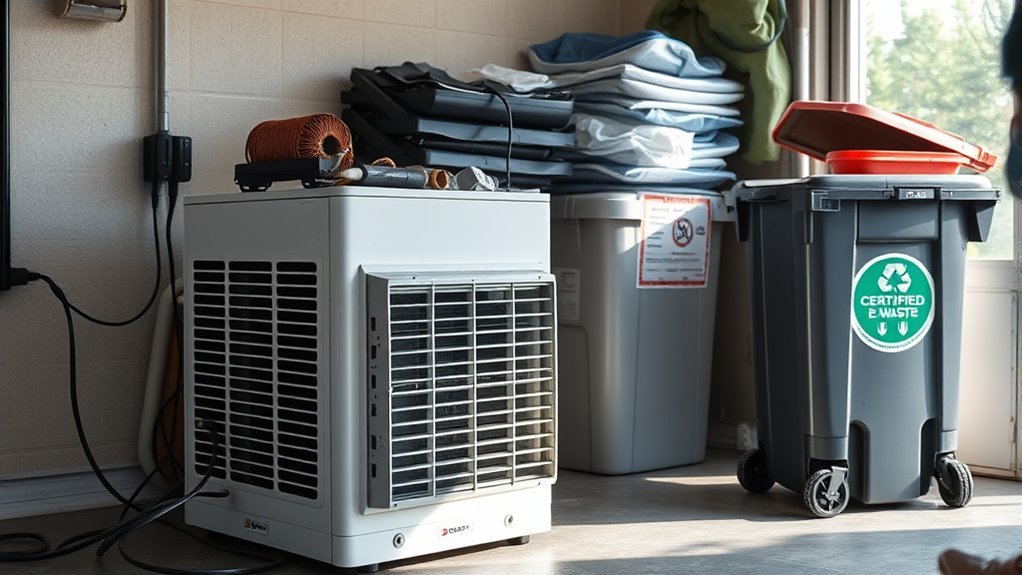
Recycling a dehumidifier matters because most compressor-based household units contain a sealed refrigeration system. Older refrigerated appliances may contain CFC or HCFC refrigerants that can damage the ozone layer if released, while other refrigerants can contribute to climate change. The U.S. Environmental Protection Agency’s appliance-disposal guidance explains why refrigerant must be managed properly when refrigerated household appliances reach the end of their life.
Proper appliance recycling can also recover metals and other usable materials while allowing components such as compressor oil and certain hazardous parts to be handled through appropriate waste streams. This is safer than dismantling the appliance at home or sending an intact refrigerant system into an unsuitable waste stream.
EPA’s definition of a “small appliance” includes qualifying factory-sealed dehumidifiers containing five pounds or less of refrigerant.
Check Whether Your Dehumidifier Still Works
Before recycling the unit, decide whether it is truly at the end of its useful life. A working dehumidifier may still be suitable for continued use, repair, or reuse. Start with basic checks that do not require opening the appliance.
Test Basic Functions
Plug in the dehumidifier only if the power cord and housing appear safe. Confirm that it powers on, the controls respond, and the fan operates without unusual grinding, burning smells, sparking, or repeated shutdowns. Run it in a humid room and check whether water begins collecting in the bucket over time.
Inspect the filter, bucket, drain connection, and accessible air passages. A dirty filter, incorrectly seated bucket, clogged drain hose, or unsuitable humidity setting can sometimes make a working dehumidifier appear faulty.
Warning: Stop using the unit if the plug or cord is damaged, you smell burning, the housing is badly cracked, or the appliance shows signs of serious electrical damage. Do not open the sealed refrigerant circuit while troubleshooting.
Decide Repair Or Recycle
If the dehumidifier has a simple problem, compare the repair estimate with the age, condition, warranty status, energy efficiency, and price of a suitable replacement. There is no universal rule that a repair must cost less than a particular percentage of a new unit.
If the appliance works reliably and is safe to use, keeping or reusing it can delay unnecessary waste. If major refrigeration components have failed, the cabinet is badly damaged, repair is uneconomical, or the unit has reached the end of its useful life, recycling is usually the more practical choice.
Pro Tip: Before giving away a working older unit, check its model number for any unresolved safety recall and make sure the recipient understands its condition.
Prepare Your Dehumidifier for Recycling
Preparation should focus on making the appliance clean, dry, and safe to transport. You do not need to dismantle the refrigeration system before taking it to a qualified recycling or disposal program.
Empty And Clean Unit
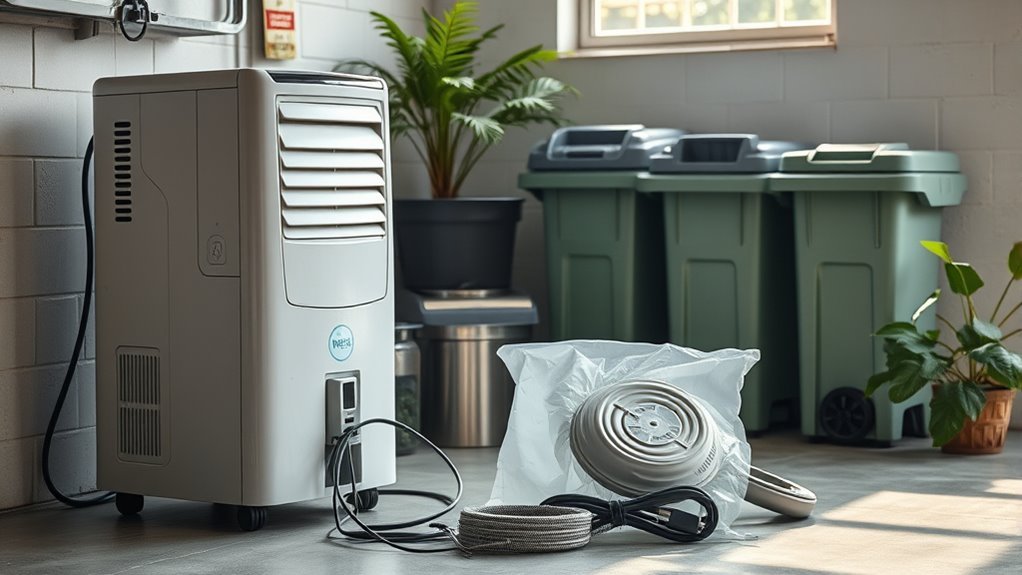
First, unplug the dehumidifier. Remove and empty the water tank, then wipe the bucket and accessible surfaces clean. Let wet areas dry before transport so water does not leak into a vehicle or create mold and odor.
Remove loose accessories such as an external drain hose if the recycler asks you to separate them. You can clean dust from the filter and exterior vents, but there is no need to make the appliance look new.
Disconnect And Inspect Safely
Inspect the cabinet, power cord, drain fitting, and accessible exterior parts for damage. Secure the cord so it cannot catch on other objects while the appliance is being moved. Keep the compressor and refrigerant tubing intact.
Check the owner’s manual for model-specific transportation or disposal warnings. If a recycler gives you special preparation instructions, follow those instructions instead of dismantling the appliance yourself.
Warning: Never drill, puncture, saw, crush, cut, or intentionally open the refrigerant tubing or compressor. Do not vent refrigerant into the air. Take the appliance to a disposal route that can meet applicable refrigerant-recovery requirements.
Find Dehumidifier Recycling Near You
The best local option depends on where you live. Start with your city, county, solid-waste district, or municipal recycling website. Search specifically for refrigerant-containing appliances, appliance recycling, white goods, or dehumidifiers rather than assuming a general electronics drop-off will accept them.
- Check your municipal or county solid-waste website for appliance recycling or special collection.
- Look for local scrap or appliance recyclers that specifically accept refrigerant-containing equipment.
- Ask whether a utility or community program offers appliance collection or scheduled recycling events.
- Check retailer or manufacturer programs only after confirming that dehumidifiers are an accepted category.
- Arrange pickup if the local program offers it and transporting the appliance is difficult.
Before leaving home, call or check the program’s current website and ask whether it accepts your type of dehumidifier, whether refrigerant may remain in the unit, whether proof of residency is required, whether there is a fee, and whether an appointment is necessary.
Note: An approved curbside or bulk-appliance program may be acceptable if your local waste authority specifically tells residents to use it. The important point is to follow the designated refrigerant-containing-appliance process rather than placing the unit in ordinary household trash without checking.
Use Retailer Drop-Off and Pickup Options
Retailers can sometimes provide another disposal route, especially when they deliver replacement appliances or operate paid recycling services. However, accepted products differ by retailer, service type, state, and location.
For example, Best Buy publishes current recycling and appliance haul-away information, but its national accepted-product lists should be checked before assuming that a dehumidifier qualifies for a particular service. A program that accepts refrigerators or window air conditioners does not automatically accept every refrigerant-containing appliance.
Use the same approach with Home Depot, Lowe’s, local appliance dealers, and manufacturer programs: verify the exact item, fee, pickup conditions, and purchase requirements before loading the dehumidifier into your vehicle.
Dispose of Broken Dehumidifiers Safely
A broken dehumidifier should normally remain intact until it reaches a recycler or disposal service prepared to handle refrigerant-containing appliances. Empty the bucket, let wet areas dry, secure loose parts, and move the appliance carefully.
- Unplug the dehumidifier and empty all collected water.
- Secure the cord, hose, filter, and other removable accessories.
- Do not puncture or dismantle the compressor or refrigerant lines.
- Secure the appliance during transport so it cannot roll, fall, or be crushed.
- Deliver it to the confirmed recycling, collection, or disposal location.
EPA’s safe-disposal requirements place responsibilities on the final disposal chain to ensure regulated refrigerant is properly recovered. For a homeowner, the simplest approach is usually to give the intact unit to a program that specifically handles this type of appliance.
Know Dehumidifier Recycling Laws
Federal refrigerant rules and local waste-collection rules are related but not identical. Under Section 608 of the Clean Air Act and its implementing regulations, refrigerant-containing equipment must meet safe-disposal requirements designed to prevent refrigerant releases.
The EPA’s Section 608 definitions classify qualifying factory-sealed dehumidifiers containing five pounds or less of refrigerant as small appliances. EPA also explains that a person recovering refrigerant from a small appliance solely for disposal is not required to hold Section 608 technician certification. However, the recovery equipment and recovery process must still satisfy the applicable disposal requirements.
This is different from servicing or repairing a refrigeration system. A person who opens a refrigerant circuit during covered maintenance, service, or repair generally falls under EPA technician-certification requirements.
State, county, and city rules can add separate requirements for appliance collection, landfill acceptance, scrap recycling, or household waste. That is why you should check the rules for your location instead of assuming that every community handles dehumidifiers the same way.
What Not to Do With an Old Dehumidifier
- Do not intentionally vent refrigerant.
- Do not cut or puncture refrigerant lines to make the unit easier to scrap.
- Do not remove the compressor yourself unless you are operating under the applicable refrigerant-recovery requirements and have appropriate equipment.
- Do not assume every e-waste site accepts dehumidifiers. Many electronics programs do not handle appliances containing refrigerant.
- Do not leave a leaking or damaged appliance unsecured. Contact the receiving facility for instructions if you suspect serious damage to the sealed refrigeration system.
- Do not rely on an old retailer-policy article. Check the current accepted-products list before traveling.
How Refrigerant Is Handled at Disposal
Household dehumidifiers use a sealed refrigeration circuit to cool a surface below the dew point so moisture condenses from the air. When that appliance reaches the waste stream, refrigerant must be managed under applicable EPA safe-disposal rules rather than intentionally released.
EPA explains that the final processor of a small appliance must either recover the refrigerant properly or obtain the required verification when refrigerant was recovered earlier in the disposal chain. This is one reason taking an intact dehumidifier to the right facility is preferable to dismantling it at home.
Sources
- U.S. EPA — Appliance Disposal — environmental concerns, consumer disposal guidance, refrigerant recovery, and appliance components.
- U.S. EPA — Stationary Refrigeration Safe Disposal Requirements — federal requirements governing refrigerant-containing equipment entering the waste stream.
- U.S. EPA — Definitions of Section 608 Terms — definition of small appliances and dehumidifiers.
- U.S. EPA — Safe Disposal Procedures for Household Appliances That Use Refrigerants — official safe-disposal resources.
- Best Buy — Electronics and Appliances Recycling — current retailer recycling and haul-away information that should be checked for product-specific eligibility.
Frequently Asked Questions
How Do You Dispose of Old Dehumidifiers?
Unplug the unit, empty and dry the water tank, keep the refrigeration system intact, and contact your municipal waste agency or an appliance recycler that accepts refrigerant-containing equipment. Confirm the program’s fees, hours, residency rules, and refrigerant requirements before transporting it.
How to Throw Away a Disposable Dehumidifier?
First identify what you have. A disposable moisture absorber that uses crystals or liquid is different from an electric compressor dehumidifier and does not contain a refrigeration circuit. Follow the product label and local waste instructions for the absorber and its liquid. If it is an electric refrigerant-containing dehumidifier, use an approved appliance-disposal route instead.
Does Home Depot Dispose of Dehumidifiers?
Do not assume that a Home Depot location will accept a dehumidifier. Appliance haul-away and recycling services can depend on the item being purchased, the delivery service, and the local market. Contact your local store or check its current service terms and specifically ask whether a dehumidifier is accepted.
Will Best Buy Recycle My Dehumidifier?
Best Buy operates recycling and appliance haul-away programs, but its accepted products and service conditions vary. Its current national lists do not provide a simple nationwide guarantee that every dehumidifier is accepted. Check the current recycling page or contact the store before taking the unit there.
Can You Put a Dehumidifier in the Regular Trash?
Do not place an intact refrigerant-containing dehumidifier in ordinary household trash without checking local rules. Your municipality may require appliance recycling, a special drop-off, or an approved bulk-collection service that routes the appliance through proper refrigerant recovery.
Should I Remove the Refrigerant Before Recycling a Dehumidifier?
A typical homeowner should not open the sealed refrigeration circuit just to prepare a dehumidifier for recycling. Keep the system intact and ask the receiving recycler or waste program how it handles refrigerant recovery. EPA safe-disposal rules govern the recovery process and the final disposal chain.
Conclusion
Recycling your dehumidifier safely is mainly about choosing the correct disposal route and leaving the refrigerant system intact. Check whether the appliance can still be used or repaired, unplug and clean it, then confirm a municipal, recycler, retailer, or pickup program that accepts refrigerant-containing equipment. Because collection rules differ by location, call before you go. Proper handling keeps refrigerant from being intentionally released and allows useful appliance materials to move into appropriate recycling streams.