
Affiliate disclosure: As an Amazon Associate I earn from qualifying purchases. This article contains affiliate links to Amazon, so we may earn a commission if you buy through them, at no extra cost to you.
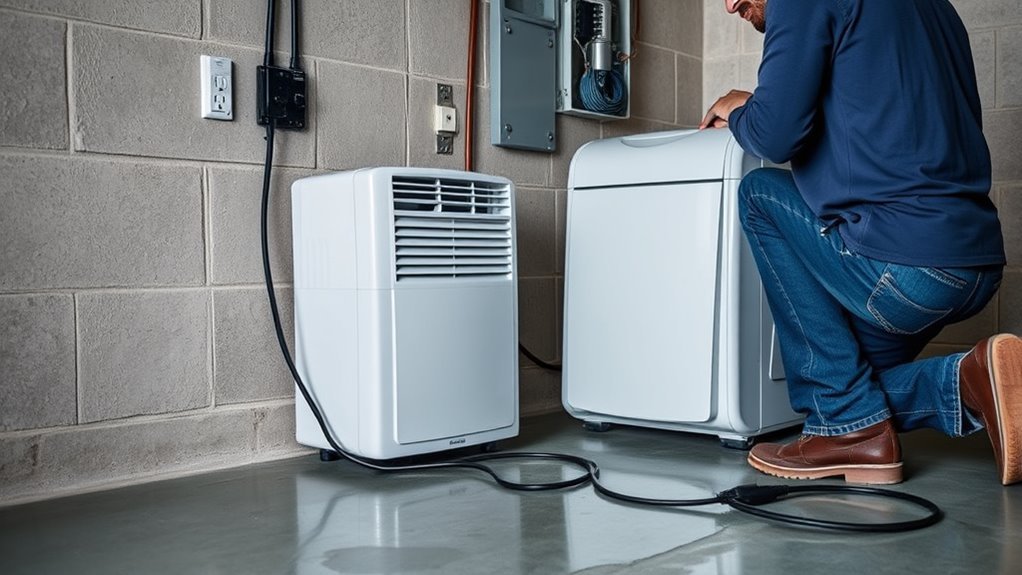
A dehumidifier tripping breaker issue usually points to an overloaded shared circuit, where your unit and other appliances draw more current than the wiring allows. However, a trip can also warn you of a damaged cord, worn outlet, moisture-triggered ground fault, arc fault, or failing internal compressor. Start with safe external checks while the unit is unplugged, and never repeatedly reset a tripping breaker.
Quick Answer
Unplug the dehumidifier and remove other devices sharing the circuit. Inspect the power cord, plug blades, wall outlet, and air filter for damage or blockages. Plug the unit directly into a grounded wall receptacle—never an extension cord or power strip—and reset the breaker once. If it trips again, stop using the unit and call a professional.
Last checked: October 14, 2026. Dates and figures were verified against official sources.
Key Takeaways
- Most portable dehumidifiers draw 2.6 to 6.8 running amps (300 to 750+ watts), with brief compressor startup spikes of 2 to 3 times that draw that can overload a shared 15-amp circuit.
- Class A GFCI outlets and breakers trip at just 4 to 6 milliamps (mA) of current leakage, making damp basements and aging compressor windings common triggers.
- Always connect the appliance directly to a grounded three-prong wall outlet; extension cords, surge protectors, and multi-outlet adapters can overheat and cause voltage drop.
- Never swap a 15-amp breaker for a 20-amp breaker to stop tripping, as doing so can overheat 14-gauge house wiring and create a severe fire risk.
- Verify your unit’s brand, model number, and date code against active CPSC recalls—covering over 7 million Gree, New Widetech, and Midea units—before paying for repairs.
Why Is My Dehumidifier Tripping the Breaker?
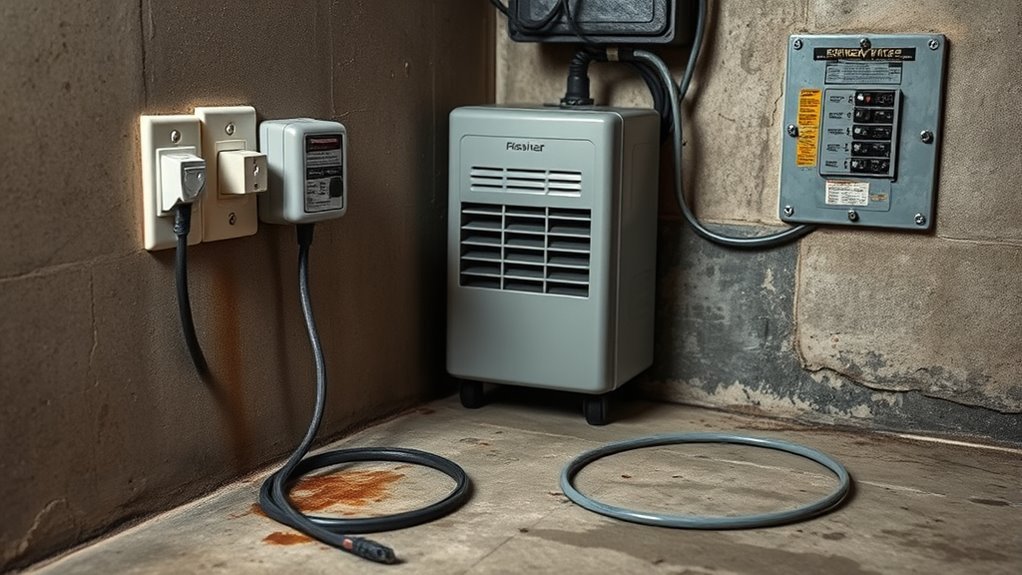
A dehumidifier trips a circuit breaker when the protective device detects unsafe electrical current flow and cuts power to prevent overheated wires, shocks, or fires. Depending on whether you have a standard thermal-magnetic breaker, GFCI, or AFCI, the trip points to one of six main causes.
- Shared-circuit overload: A standard 15-amp, 120-volt household circuit handles 1,800 watts maximum, or 1,440 watts (12 amps) for continuous loads running 3 hours or more. Because portable dehumidifiers typically pull 300 to 1,000 watts and briefly surge to 2–3 times their running amps when the compressor starts, sharing the line with a freezer, sump pump, microwave, or space heater easily pushes the circuit past its limit.
- Short circuit: Melted insulation, pinched wiring, a burned plug blade, or a failed internal component lets electricity bypass normal resistance, creating an instant high-current spike.
- Ground fault: Moisture inside the electrical housing or degraded motor insulation lets small amounts of current leak toward ground, tripping a GFCI outlet or GFCI breaker.
- Arc fault: Loose wire connections, a worn wall receptacle, or a frayed cord creates dangerous electrical sparking that trips an AFCI or dual-function breaker.
- Internal component failure: A seized compressor, shorted capacitor, bad fan motor, or damaged relay draws excessive current as soon as the component engages.
- Faulty outlet, house wiring, or breaker: Loose terminal screws, scorched outlet contacts, or a weakened circuit breaker can trip even when the dehumidifier itself is healthy.
Warning: Unplug the dehumidifier immediately if you notice a burning smell, smoke, sparks, melted plastic, a hot or discolored outlet, buzzing sounds, a loose plug fit, or a tingling sensation when touching the unit. Do not reset the breaker again; call a licensed electrician or appliance technician.
A breaker trip is a vital safety warning, not an inconvenience to bypass. The Electrical Safety Foundation International (ESFI) home electrical guide advises unplugging connected appliances before resetting a tripped breaker once—and calling an electrician if it trips again.
Identify What Tripped: Breaker, GFCI, AFCI, or Plug Device
Before testing your dehumidifier, look closely at which protective device shut off the power. Each device monitors a different electrical hazard, which immediately narrows down whether you are dealing with too many amps, moisture leakage, or sparking wires.
- Standard thermal-magnetic breaker: Located in the main electrical panel with a simple ON/OFF handle. It uses a thermal element for sustained overloads and a magnetic trip for instant short circuits.
- GFCI receptacle or GFCI breaker: Identified by `TEST` and `RESET` buttons on the wall outlet or panel breaker. As outlined in ESFI’s GFCI safety guidance, these devices cut power within a fraction of a second when current leaking to ground reaches 4 to 6 milliamps (mA). Because electric compressor motors naturally produce 1 to 3 mA of capacitive leakage, slight condensation or another motor on the same GFCI line can trigger a trip.
- AFCI breaker: Installed in modern service panels to detect series and parallel arcing in cords, outlets, and branch wiring. According to ESFI’s AFCI fire-prevention data, AFCIs can prevent more than 50% of residential electrical fires each year.
- Dual-function AFCI/GFCI breaker: Combines arc-fault and 5 mA ground-fault protection in one breaker, often with diagnostic LED lights that show why the last trip occurred.
- Plug-mounted LCDI or GFI device: Many portable dehumidifiers include a Leakage Current Detection Interrupter (LCDI) with `TEST` and `RESET` buttons built right into the power plug. Haier’s dehumidifier GFI/LCDI plug guide notes that the plug button can pop out due to a loose wall outlet, shared-circuit disturbance, or cord fault; if it trips repeatedly on a tight, dedicated outlet, the unit needs professional service.
What the Trip Timing Can Tell You
Noting the exact moment the power cuts out helps you and your technician separate a dead short from a circuit overload or overheating motor. Match what you observe to the scenarios below before touching the breaker panel.
| When It Trips | Likely Cause | Safe Next Step |
|---|---|---|
| Instantly when plugged in (even turned off) | Dead short or ground fault in the power cord, plug, outlet, or main control board | Unplug immediately; do not reset the breaker with the unit connected |
| 3 minutes after startup (when compressor kicks on) | Compressor startup surge overloading a shared circuit, bad start capacitor, or grounded compressor winding | Unplug shared loads and test once; if it trips again, call an appliance tech |
| After 10 to 30+ minutes of running | Sustained thermal overload on the circuit, restricted airflow overheating the unit, or loose outlet connection heating up | Unplug, let cool for 30 minutes, check outlet warmth, and clean the air filter |
| Only when another appliance turns on | Shared branch circuit exceeding its 15-amp (1,800W) or 20-amp (2,400W) rating | Relocate the other high-draw appliances or use a separate branch circuit |
| While the dehumidifier is completely unplugged | Faulty house wiring, damaged wall receptacle, bad breaker, or another faulty device on the line | Leave the breaker off and contact a licensed electrician |
Check for Circuit Overload First
A shared-circuit overload is the most common—and easiest—cause to rule out at home. Basic visual and load-isolation checks take about 15 to 30 minutes, cost $0, and require only your owner’s manual, a flashlight, a soft vacuum brush, and a clean cloth (plus an optional hygrometer).
- Unplug the dehumidifier from the wall outlet.
- Note every light, outlet, and appliance in your basement, laundry room, garage, or adjacent rooms that lost power when the breaker tripped.
- Unplug all other portable appliances on that branch circuit, especially sump pumps, chest freezers, vacuums, irons, dehumidifiers, or space heaters.
- Check your dehumidifier’s rating sticker (usually on the back or side cabinet) to confirm its running amps and required circuit size.
- Inspect the cord, plug, and wall outlet for any heat marks or damage, and make sure the unit plugs directly into a three-prong grounded wall outlet.
- Switch the tripped breaker firmly to the full OFF position, then flip it back to ON once, and run the dehumidifier by itself.
| Isolation Test | Result | What It Means |
|---|---|---|
| Other circuit loads unplugged | Dehumidifier runs normally without tripping | The combined amperage of the shared devices overloaded the circuit |
| Dehumidifier running alone on the circuit | Breaker, GFCI, or AFCI trips again | Stop using the unit; the dehumidifier or branch circuit has a fault requiring a pro |
| Dehumidifier left unplugged | Breaker trips immediately or will not reset | The house wiring, wall outlet, or breaker itself is faulty; call an electrician |
Note: Moving the plug to a different wall outlet in the same room rarely changes circuits. Most bedrooms, basements, and living areas wire multiple receptacles to a single breaker.
Inspect the Power Cord and Outlet
Damaged cords, adapters, and loose wall receptacles create high electrical resistance, intense heat, and arcing that trip breakers or melt plugs. Always unplug the dehumidifier before inspecting the cord and outlet, and never remove the outlet faceplate or appliance cabinet yourself.
Check the Cord for Damage
Run a flashlight along the entire length of the power cord, the strain relief where it enters the unit, and the three-prong plug head. Look for:
- Cuts, pinched or flattened sections, brittle jacket insulation, or exposed copper wire
- Blistered, melted, or darkened plastic around the plug body
- Bent, loose, corroded, or arc-pitted metal prongs
- A missing or modified round grounding pin
Never wrap electrical tape around a damaged dehumidifier cord. Have the cord assembly replaced with an OEM part by a qualified technician.
According to GE Appliances’ extension cord and surge protector policy, dehumidifiers must plug directly into a grounded three-prong wall receptacle—never into an extension cord, surge protector, or multi-outlet adapter. Frigidaire’s 115-volt power troubleshooting guide gives the same warning because thin cords and power strips drop voltage, overheat under continuous compressor loads, and trip breakers. Our guide on plugging a dehumidifier into an extension cord explains why standard cords fail and what safety rules apply.
Examine the Outlet for Wear
Inspect the wall faceplate for brown scorch marks, hairline cracks, melted slots, or a faint fishy or burning plastic odor. When you insert the dehumidifier plug, the internal metal contacts should grip the blades firmly with zero sagging or wiggle.
Over time, outlet tension springs weaken, especially in damp basements or garages. A loose grip causes micro-arcing (which trips AFCI breakers) and heat buildup (which can trip LCDI plugs or thermal breakers). If the outlet feels warm, loose, or discolored, stop using it and have a licensed electrician replace the receptacle.
Clean the Filter and Accessible Airflow Path
When dust clogs the air filter or furniture blocks the vents, the fan motor and compressor work harder and run hotter for longer periods. While a dirty filter alone will not cause an instant short-circuit trip, restricted airflow combined with high room heat can push a heavily loaded circuit or overheating compressor over its thermal limit.
Clean the Air Filter
Unplug the dehumidifier and let it cool for at least 20 minutes before removing the filter. As noted in GE Appliances’ 250-hour air filter maintenance guide, most portable units turn on a filter reminder light every 250 operating hours (roughly every 2 to 4 weeks of continuous summer use).
- Remove the water bucket first if your model’s filter slides out from behind or above the bucket cavity.
- Slide out the mesh air filter and vacuum loose lint with a soft brush attachment.
- Wash reusable mesh filters in warm, soapy water (never in a dishwasher), rinse thoroughly, and let the filter air-dry completely before reinstalling.
- Reinstall the dry filter and bucket, then press and hold the Filter reset button for 3 seconds if your model has a timer indicator.
| Airflow Condition | Effect on Operation and Electrical Draw |
|---|---|
| Clean filter and 12–18 inches of open clearance | Normal coil heat exchange, shorter run cycles, and steady rated amperage |
| Clogged filter, iced coils, or blocked grille | Higher internal cabinet heat, non-stop compressor runtime, and potential thermal overload |
| Breaker still trips immediately after cleaning | Airflow is not the root cause; an electrical or internal component fault is present |
Vacuum Accessible Coil Surfaces Carefully
Behind the removable filter, inspect the metal evaporator fins with a flashlight. Gently whisk away surface dust using a soft vacuum brush without pressing between or bending the thin aluminum fins, and never spray water or chemical cleaners near internal wiring.
Also check your room temperature. According to GE Appliances’ ideal operating conditions guide, standard portable dehumidifiers require room temperatures between 41°F (5°C) and 90°F (32°C) and at least 18 inches of air space on all sides (Frigidaire manuals specify at least 12 inches). Below 41°F, frost coats the coils and forces the unit into repeated defrost cycles; above 90°F, compressor head pressure and amp draw rise sharply.
Pro Tip: If you use your dehumidifier in a laundry room, place it away from the clothes dryer exhaust and verify the dryer vents outdoors. Warm, moist air near 90°F raises compressor head pressure and current draw.
Check Whether the Compressor Is the Problem
A failing compressor, start relay, or run capacitor is the prime suspect when the fan runs for about 3 minutes and the breaker trips the exact second the compressor tries to engage. When compressor motor windings short to the metal shell or seize mechanically, the locked-rotor current spikes far above 15 amps or leaks current to ground.
Do not open the sealed cabinet or probe capacitors and compressor terminals yourself, as capacitors store dangerous voltage even after the unit is unplugged. Schedule an appliance technician or replace the unit if you notice:
- The breaker or GFCI trips every time the compressor clicks on, even on an isolated circuit.
- A loud humming or buzzing noise for 2 to 5 seconds followed by a sharp metallic click (the internal thermal overload protector opening) or a tripped panel breaker.
- The fan spins normally, or fails to spin at all while the compressor overheats.
- A hot electrical smell coming from the rear exhaust grille.
If your unit powers on without tripping the breaker but fails to collect water, follow our dehumidifier stopped working diagnosis guide instead.
Recommended Products

Widely Applicable: Overload Protectors for Air Conditioner Compressor Dehumidifier AC RV System

- Suitable for 2HP air conditioners and dehumidifiers

High-Efficiency Overload Protection: Air conditioner dehumidifier compressor overload protector features a built-in sensitive bimetallic protection element. When the compressor draws excessive current or experiences an abnormally high temperature, it quickly shuts off the circuit, preventing burnout and damage
Have the Breaker and Circuit Load Tested
If your dehumidifier trips a breaker when no other portable appliances appear to be running, hidden hardwired loads or a weak breaker may be to blame. A licensed electrician can test the branch circuit safely under load.
- Circuit mapping: Identifying overhead lighting, sump pumps, radon fans, garage door openers, or outdoor outlets tied to the same breaker.
- Inrush and running amp clamp tests: Measuring exact startup and continuous amperage against the dehumidifier’s nameplate rating.
- Voltage drop testing: Checking whether long wire runs or loose neutral/hot connections cause voltage to sag below 115V when the compressor starts, which drives amperage up.
- Breaker and GFCI/AFCI health: Verifying whether an older circuit breaker has weakened mechanically or if a worn GFCI receptacle is nuisance-tripping below its 4–6 mA UL 943 specification.
Warning: Never replace a 15-amp breaker with a 20-amp breaker to stop tripping. A 15-amp circuit uses 14-gauge copper wire, which can dangerously overheat and ignite inside your walls before a 20-amp breaker ever trips.
Recommended Products
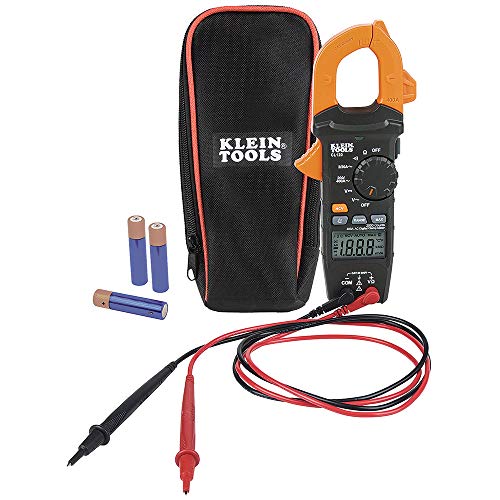
VERSITILE CLAMP METER: Measures AC current and NCVT via clamp; AC/DC voltage, resistance, and continuity via test-leads

Digital clamp meter measures AC current to 400 amp, AC and DC voltage to 600 v, and resistance to 4 kilo ohms. Does not measure DC current

VERSATILE CLAMP METER: CL120 measures AC current and NCVT via clamp; AC/DC voltage, resistance, and continuity via test-leads
Use the Correct Circuit, Not Just Another Outlet
Most residential portable dehumidifiers specify a 115-volt, 60 Hz, 15-amp grounded circuit, though larger 50- to 70-pint models with built-in condensate pumps leave very little headroom for other appliances. Understanding your model’s electrical draw helps you see why shared circuits fail.
| Dehumidifier Capacity | Typical Running Draw (115V) | Est. Compressor Startup Surge | Remaining Continuous Capacity on 15A Circuit (12A / 1,440W Safe Limit) |
|---|---|---|---|
| Small (20–30 pints/day, e.g., GE 22-pint) | 2.6 to 4.5 A (300–500 W) | 6 to 11 A | 7.5 to 9.4 A (900–1,140 W) |
| Medium (35–50 pints/day, e.g., GE 35- to 50-pint) | 3.5 to 6.8 A (400–750 W) | 8 to 16 A | 5.2 to 8.5 A (690–1,040 W) |
| Large / Whole-Home (60–70+ pints/day) | 6.5 to 8.5+ A (700–1,000+ W) | 14 to 20+ A | 3.5 to 5.5 A (dedicated 15A or 20A circuit recommended) |
A dedicated circuit serves only the dehumidifier from the breaker panel with no other outlets or lights attached. If your basement or utility room shares a single 15-amp breaker with a sump pump or freezer, having an electrician install a dedicated 15-amp or 20-amp grounded circuit permanently eliminates shared-load trips.
Check for a Dehumidifier Recall
Before spending money on an electrician or appliance technician, check your dehumidifier’s brand, model number, pint size, and manufacturing date code on the rear rating sticker. Millions of portable dehumidifiers sold under major retail brands have been recalled for overheating, smoking, melting, and catching fire.
- Gree Electric Appliances (2013–2016 and August 2023 recalls): The U.S. Consumer Product Safety Commission’s dehumidifier recall notice warns that earlier recalled Gree-built units (~2.5 million units across brands like Danby, De’Longhi, Fedders, Fellini, Frigidaire, GE, Gree, Kenmore, Norpole, Premiere, Seabreeze, SoleusAir, and SuperClima) have been linked to more than 2,000 overheating incidents, about 450 fires, four reported fatalities, and over $19 million in property damage. Separately, on August 16, 2023, CPSC and Gree recalled another 1.56 million dehumidifiers across 42 models (manufactured January 2011 through February 2014 under Kenmore, GE, SoleusAir, Norpole, and Seabreeze) after 688 overheating incidents and 23 fires.
- New Widetech (August 4, 2021 recall): The CPSC New Widetech dehumidifier recall covers 2 million 25- to 74-pint units manufactured between February 2009 and August 2017 under more than 20 brand names, including AeonAir, Amana, Danby, De’Longhi, Edgestar, Friedrich, Haier, Honeywell, Idylis, Ivation, Perfect Aire, Vremi, and Whirlpool, following 107 overheating/fire incidents and $17 million in property damage.
- GD Midea (November 2016 recall): The CPSC Midea dehumidifier recall covers 3.4 million U.S. units manufactured between January 2003 and December 2013 across roughly 50 brands after 38 reports of smoke and fire and $4.8 million in property damage.
If your unit appears on any recall list, unplug it immediately and contact the recall administrator for a refund or replacement. For more warning signs of overheating units, see our dehumidifier fire-risk guide.
A breaker that repeatedly trips is protecting your home’s wiring from a real electrical fault. Never defeat that protection with repeated resets, a cheater plug, or an oversized breaker.
When to Replace a Dehumidifier Tripping Breaker Repeatedly
When a portable dehumidifier still trips a properly wired, dedicated circuit after external checks, replacing the appliance is usually safer and more cost-effective than repairing it. Because most portable 20- to 50-pint dehumidifiers cost $160 to $350 new, out-of-warranty compressor or control-board repairs rarely make financial sense.
Replace the dehumidifier rather than repairing it when:
- The model and date code match an active CPSC safety recall.
- The power cord, plug, outlet area, or plastic cabinet shows melting, charring, or smoke residue.
- The compressor or fan motor has grounded windings or a locked rotor outside the manufacturer’s warranty period (typically 1 year limited warranty on portable units).
- Water has leaked onto the internal control board or relay housing, causing corrosion and recurring GFCI trips.
- OEM replacement parts are discontinued, or your manufacturer does not offer out-of-warranty portable dehumidifier servicing.
Who Should Diagnose the Problem?
Calling the right specialist saves you a wasted service fee. Use the results of your load-isolation test to decide between a licensed electrician and an appliance repair technician.
| Call a Licensed Electrician When | Call an Appliance Technician When |
|---|---|
| The breaker or GFCI trips even with the dehumidifier unplugged | The breaker trips only when the dehumidifier is plugged in or when its compressor starts |
| The wall outlet is loose, warm, buzzing, cracked, or discolored | The unit hums loudly, clicks off, smells hot, or displays an error code |
| Other appliances or lights flicker or trip the same circuit | The unit is under warranty and needs a cord, fan motor, relay, or capacitor replacement |
| You need a dedicated 15-amp or 20-amp circuit installed for your basement or utility room | A whole-home or commercial dehumidifier requires internal sealed-system diagnostics |
Frequently Asked Questions
Why does my dehumidifier keep tripping the breaker?
A dehumidifier usually keeps tripping the breaker because it shares an overloaded 15-amp circuit with other appliances, or because it has a short circuit, ground fault, damaged cord, loose outlet, or failing compressor. Unplug other devices on the circuit and test the unit once in a grounded wall outlet. If it trips again, unplug it and have an electrician or technician inspect the system.
How many amps does a portable dehumidifier draw?
Most portable household dehumidifiers draw between 2.6 and 6.8 running amps (about 300 to 750 watts) on a 115-volt circuit, while large 70-pint units can draw 7 to 8.5 amps (up to 1,000 watts). When the compressor first starts, amperage briefly spikes to 2 to 3 times the running rating, which can trip a shared 15-amp breaker.
Can I keep resetting the breaker?
No, you should never repeatedly reset a circuit breaker or GFCI that keeps tripping. After unplugging shared loads and checking the cord and outlet for damage, reset the breaker only once. Repeatedly forcing a reset against a short circuit or ground fault can weld breaker contacts, melt wiring insulation, or start an electrical fire.
Should a dehumidifier be on a dedicated circuit?
Yes, a dedicated 15-amp or 20-amp grounded circuit is recommended whenever a medium or large dehumidifier shares a basement, garage, or laundry circuit with high-draw appliances like a freezer or sump pump. Always check your owner’s manual and rating sticker for model-specific circuit requirements, and never install a larger breaker on existing 14-gauge wiring.
Can I use an extension cord or power strip?
No, major manufacturers including GE Appliances and Frigidaire instruct against using extension cords, surge protectors, power strips, or multi-outlet adapters with a dehumidifier. Plug the appliance directly into a grounded three-prong wall receptacle to prevent voltage drop, overheated cords, and nuisance breaker trips.
Why does my dehumidifier trip the GFCI?
A GFCI outlet or breaker trips when it senses 4 to 6 milliamps of electrical current leaking toward ground. In a dehumidifier, this leakage usually comes from internal moisture reaching electrical terminals, worn compressor motor winding insulation, a damaged cord, or multiple motor-driven appliances sharing one sensitive GFCI circuit.
Should I replace a dehumidifier that keeps tripping the breaker?
Yes, replacing the dehumidifier is the safest choice if the unit is part of a CPSC recall, shows heat or burn damage, or continues tripping a properly functioning, uncrowded circuit after cleaning. For out-of-warranty portable units, replacing a shorted compressor or control board typically costs more than a new ENERGY STAR dehumidifier.
Conclusion
When your dehumidifier trips the breaker, unplug it right away and work through safe external checks first: remove other appliances sharing the circuit, inspect the cord and wall outlet for heat damage, plug the unit directly into a grounded three-prong receptacle, and clean the mesh filter. Reset the breaker only once after clearing an obvious overload.
If the breaker, GFCI, AFCI, or plug-mounted reset button trips a second time, leave the dehumidifier unplugged. Check your model number against the CPSC recall list, call a licensed electrician if the outlet or house circuit is suspect, or replace the unit if an out-of-warranty internal fault is confirmed.
Sources
- Electrical Safety Foundation International: Understanding Your Home Electrical System — supports safe breaker-reset procedures and calling a qualified electrician when trips persist.
- U.S. Consumer Product Safety Commission: Dehumidifier Recalls — provides official recall, overheating, fire, and property-damage figures for Gree-manufactured dehumidifiers.
- GE Appliances: Dehumidifier Extension Cord and Surge Protector Guidance — confirms that dehumidifiers must plug directly into a grounded three-prong wall outlet without extension cords, surge protectors, or multi-outlet adapters.
- GE Appliances: Dehumidifier Ideal Operating Conditions — supports 15-amp circuit requirements, 41°F–90°F operating temperatures, and 18-inch clearance guidelines.
- Frigidaire: Dehumidifier Power Troubleshooting — supports 115-volt grounded outlet requirements, GFCI/AFCI checks, and avoiding extension cords and power strips.
- Electrical Safety Foundation International: Ground Fault Circuit Interrupters — explains GFCI shock-prevention operation and leakage-current detection.
- Electrical Safety Foundation International: Arc-Fault Circuit Interrupters — explains series and parallel arcing detection and CPSC fire-prevention estimates.
- Haier Appliances: Dehumidifier GFI/GFCI Plug Issues — explains plug-mounted LCDI/GFI reset trips, outlet fit checks, and dedicated circuit recommendations.
- GE Appliances: Dehumidifier Air Filter Maintenance — supports the 250-hour air filter cleaning interval and washing instructions.
- U.S. Consumer Product Safety Commission: New Widetech Dehumidifier Recall — supports recall details for 2 million 25- to 74-pint dehumidifiers sold across 20+ brands.
- U.S. Consumer Product Safety Commission: Midea Dehumidifier Recall — supports recall details for 3.4 million dehumidifiers manufactured between 2003 and 2013.

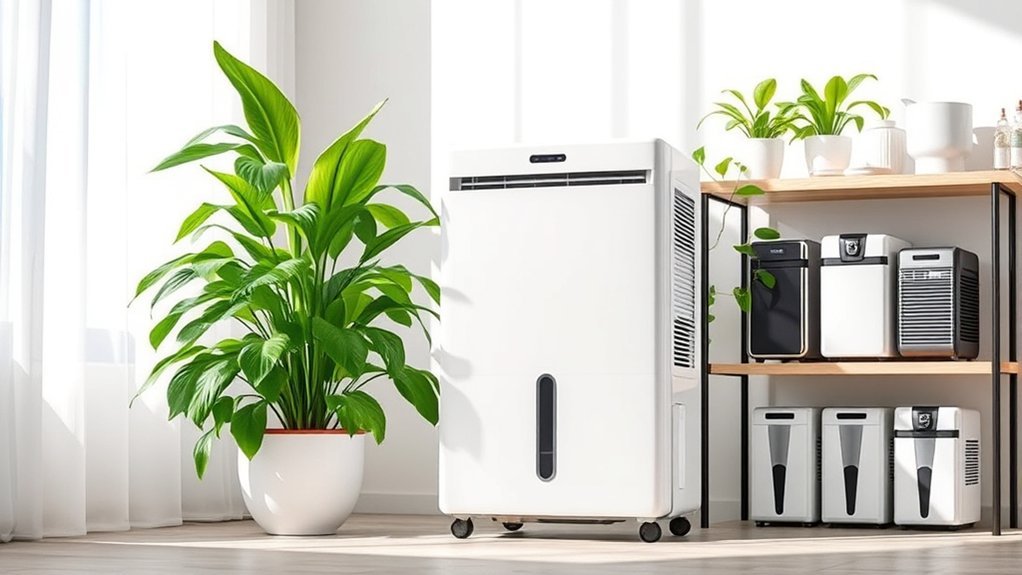

[…] it. Repeated trips can indicate an electrical or appliance fault. See the related guide on why a dehumidifier trips the breaker before using the appliance […]
[…] Cease operation immediately if the wall plug fits loosely, the receptacle hums, the faceplate is warm, or the breaker trips repeatedly. Do not repeatedly reset a tripped circuit breaker; recurring trips signal an active overload, short circuit, or failing motor. Our guide explains why a dehumidifier trips the breaker. […]