Updated August 2026.
If you searched for industrial dehumidifier hire, first decide whether a short-term rental or an outright purchase better fits the job. Hiring is often practical for a one-time flood, construction project, or urgent drying job. Buying may offer better long-term value for restoration contractors, property managers, warehouses, storage facilities, and recurring basement or jobsite moisture problems.
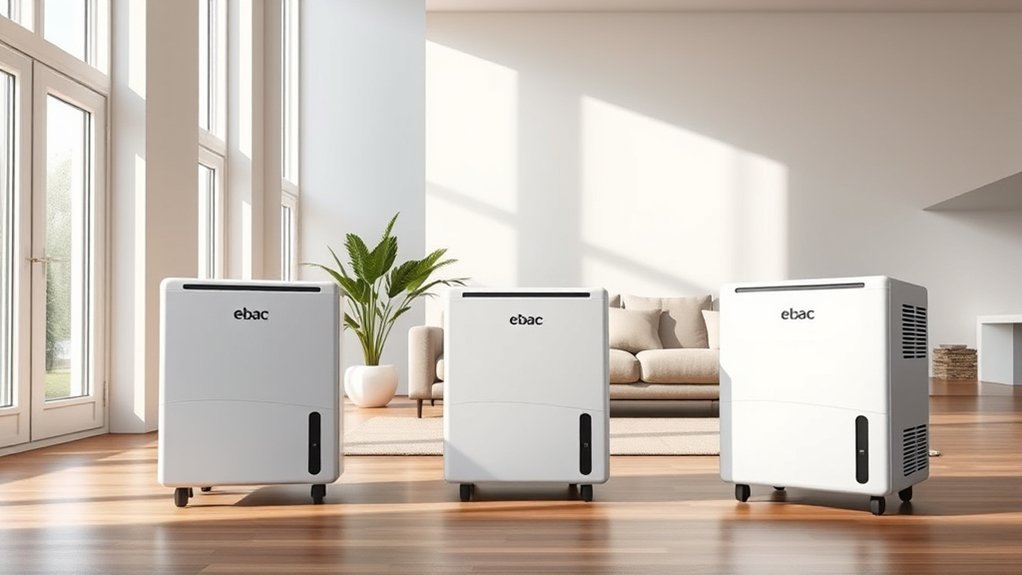
The three commercial units below are purchase options rather than local hire listings. The MOUNTO 180 Pint LGR is the closest match to a mobile rental-fleet machine because it combines wheels, a built-in condensate pump, strong airflow, and a published AHAM capacity. The Airzentti 155 Pint is a pump-equipped choice for large spaces and semi-permanent installations, while the VEVOR 125 Pint is a compact gravity-drain option for buyers with a suitable low drain. Compare AHAM output, drainage, portability, airflow, electrical requirements, and service support before choosing.
Quick Comparison
| Model | Published Capacity | Drainage | Best Fit | Amazon |
|---|---|---|---|---|
| MOUNTO 180 Pint LGR | 180 PPD at 95°F/90% RH; 95 PPD AHAM | Built-in pump with listed 15-ft lift | Restoration work and frequent transport | Check Availability |
| Airzentti 155 Pint | 155 max PPD; 70 PPD AHAM | Built-in pump or gravity drain | Large spaces needing flexible drainage | View Product Details |
| VEVOR 125 Pint | 125 max PPD; 60 PPD AHAM | Gravity drain | Compact commercial and fixed jobsite use | View Product Details |
Capacity note: Maximum or saturation ratings are measured in hotter, wetter conditions than AHAM ratings. Use AHAM figures when available for a more realistic side-by-side comparison. Treat advertised coverage as general guidance rather than a drying guarantee.
Industrial Dehumidifier Hire vs Buying
Hiring usually makes sense when the equipment is needed for only a few days or weeks, the job requires several machines, or delivery, setup, pickup, and rapid replacement support are important. Rental suppliers may also bundle air movers, hoses, meters, and other drying equipment.
Buying may be more practical when humidity control is recurring, the machine will be used across multiple properties or projects, or immediate access matters. Compare the expected rental period, delivery and pickup fees, damage waivers, downtime, maintenance, storage, warranty coverage, and the cost of owning the correct accessories.
MOUNTO 180 Pints Industrial Dehumidifier with Pump
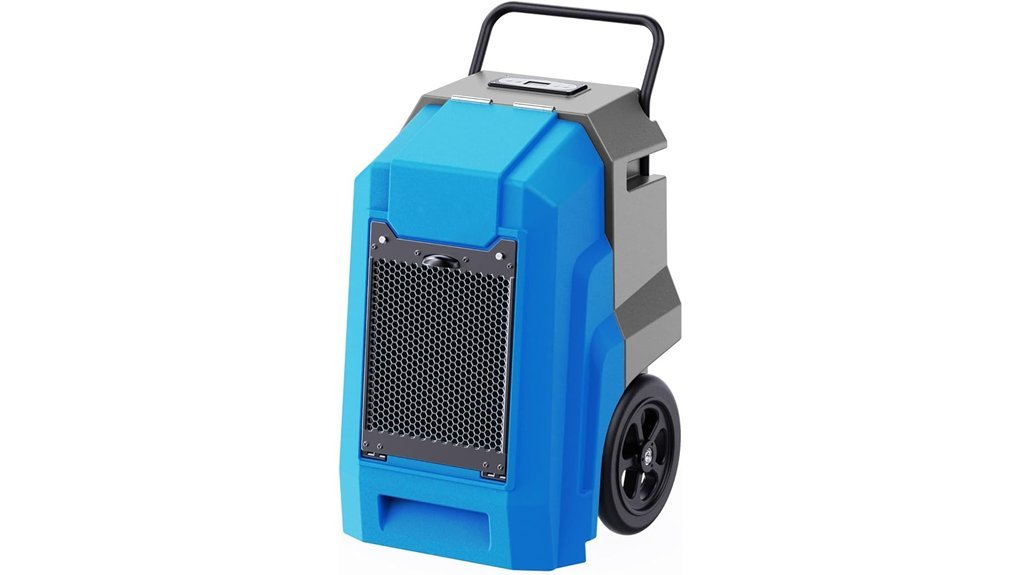
Best overall for restoration and mobile jobsites. The MOUNTO DH95 is the closest match here to a traditional industrial-hire machine. It is listed at 180 pints per day at 95°F and 90% relative humidity and 95 pints per day under AHAM conditions, with approximately 350 CFM airflow. Wheels, a built-in condensate pump, and automatic restart make it better suited than a fixed crawl-space unit for movement between work areas.
Why you may like it: It combines higher verified AHAM output with jobsite mobility and pumped drainage. The pump is listed for up to a 15-ft lift, reducing dependence on a nearby floor drain.
Who should buy this: Restoration contractors, property managers, maintenance teams, and buyers who expect to move the machine between rooms or projects.
Who should avoid it: Buyers needing a small low-clearance unit or a lightweight machine for frequent stair carrying. At roughly 95 lb, transport still requires planning despite the wheels.
Pros:
- 95 PPD AHAM output and approximately 350 CFM airflow.
- Wheeled LGR-style cabinet for mobile restoration work.
- Built-in pump with listed 15-ft lift and automatic restart.
Cons:
- Large and heavy compared with horizontal commercial units.
- The 180-pint headline figure is measured in hot, very humid conditions.
- Buyers should confirm current warranty, replacement-part support, and Amazon stock before a time-sensitive project.
Airzentti 155 Pint Commercial Dehumidifier with Pump
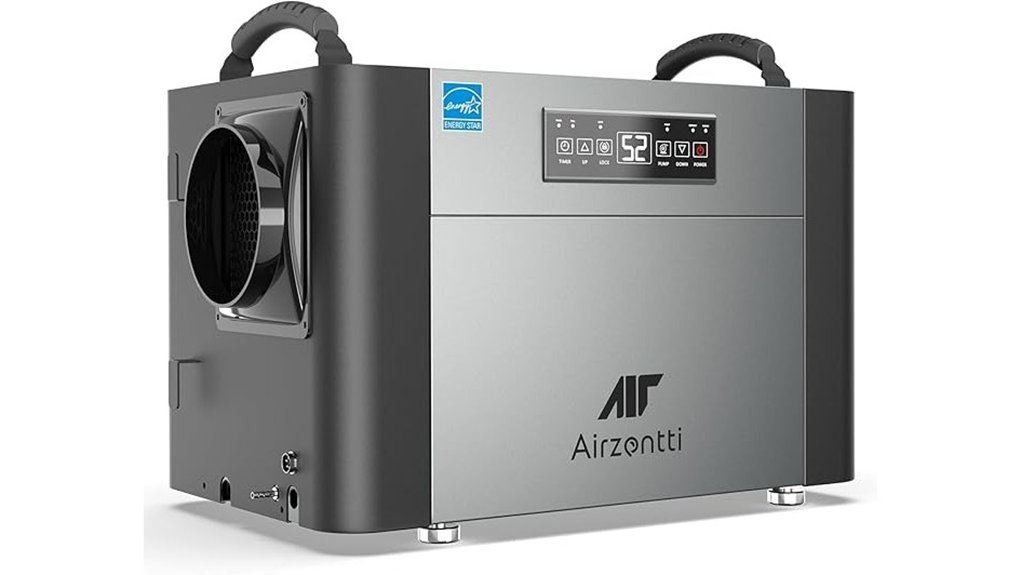
Best low-profile option with flexible drainage. The Airzentti ACD155P is listed at 155 pints per day under near-saturation conditions and 70 pints per day at AHAM conditions, with 220 CFM airflow. Its built-in pump is listed for up to a 16.4-ft vertical lift, and a gravity-drain hose provides a simpler alternative when a low drain is available.
Why you may like it: The combination of pumped drainage, a 6-inch duct collar, automatic restart, automatic defrost, a timer, and a screen lock suits extended operation in basements, storage areas, offices, warehouses, and other commercial spaces.
Who should buy this: Buyers who need a substantial commercial unit with a pump but do not require the wheeled, upright design of a restoration-fleet machine.
Who should avoid it: Rental fleets and critical facilities that need an established local service network, rapid parts access, or a machine designed for repeated rough transport.
Pros:
- 70 PPD AHAM rating and 220 CFM airflow.
- Built-in pump plus gravity-drain option.
- Ductable outlet, auto restart, auto defrost, and adjustable humidity control.
Cons:
- About 60.6 lb and supplied with leveling feet rather than transport wheels.
- The large coverage claim should not replace a moisture-load calculation.
- Warranty terms, commercial-use coverage, parts availability, and local service should be confirmed before deployment.
VEVOR 125 Pints Commercial Dehumidifier with Drain Hose
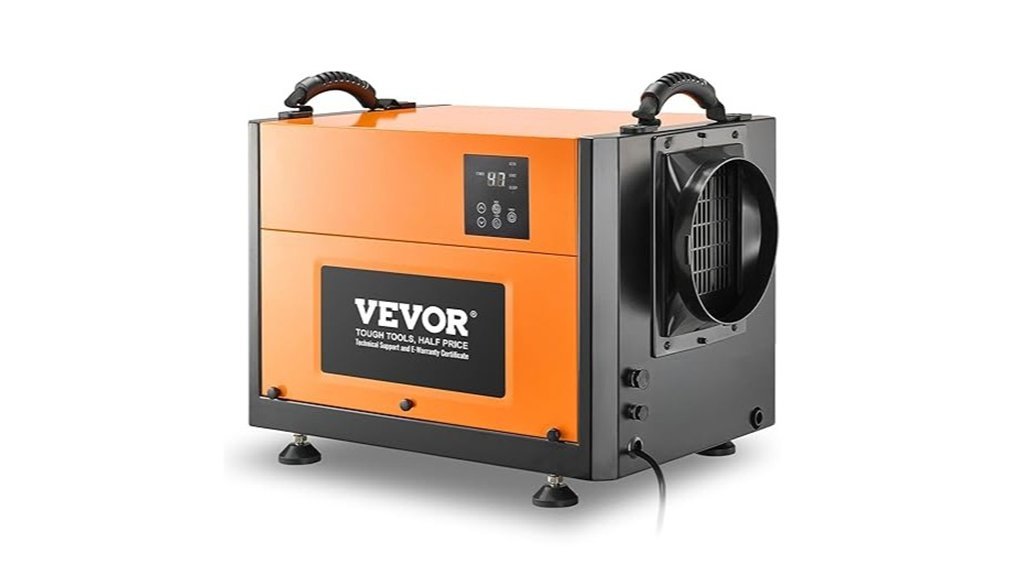
Best compact gravity-drain commercial option. VEVOR lists this model at 125 pints per day under saturation conditions and 60 pints per day at AHAM conditions, with 210 CFM airflow. The galvanized-steel cabinet, automatic defrost, memory function, timer, and continuous gravity drain suit fixed use in basements, storage rooms, garages, crawl spaces, and some jobsite drying setups.
Why you may like it: It provides a clearly stated AHAM rating in a relatively compact cabinet and includes continuous drainage without a collection bucket.
Who should buy this: Buyers with a dependable low drain who want a commercial-capacity unit for a fixed or occasionally moved installation.
Who should avoid it: Choose a pump-equipped unit when condensate must move uphill or across a long route. It is also less convenient than the MOUNTO for frequent relocation.
Pros:
- 60 PPD AHAM rating and 210 CFM airflow.
- Galvanized-steel construction and automatic defrost.
- Continuous gravity drainage and CSA-listed product positioning.
Cons:
- No built-in condensate pump.
- Official specifications list a weight of about 66.8 lb.
- Noise should be confirmed from the current manual or seller because a reliable decibel figure was not verified.
Factors to Consider When Choosing a Commercial Dehumidifier
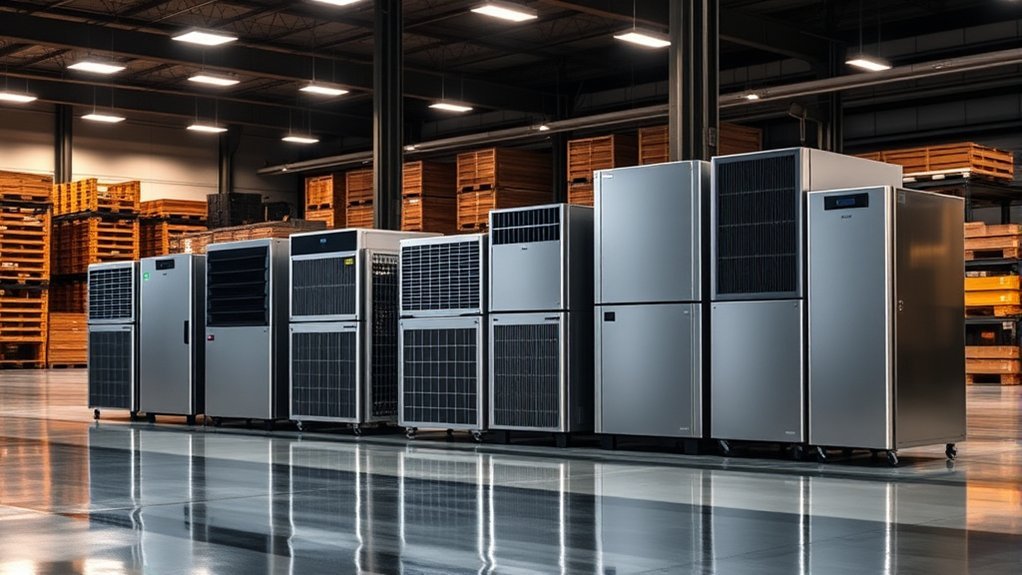
The right machine depends on the actual moisture load, not only the advertised floor area. Compare capacity under the same test conditions, then check drainage, airflow, operating temperature, portability, power supply, accessories, warranty, and service support.
Compare AHAM and Saturation Capacity
A maximum or saturation PPD rating is measured in very warm, humid air and can look much higher than everyday performance. AHAM capacity, commonly stated at 80°F and 60% relative humidity, is the better figure for side-by-side comparison when manufacturers provide it. Do not compare one model’s saturation rating with another model’s AHAM rating.
Match the Unit to the Moisture Load
Square footage is only a starting point. Ceiling height, water intrusion, outdoor-air leakage, building materials, temperature, and required drying time all affect sizing. Active water-damage restoration usually needs more capacity, airflow, and monitoring than maintaining humidity in a sealed basement or storage area.
Choose Pump or Gravity Drainage
Gravity drainage is simple when the hose can slope downward continuously to a floor drain or sump. A built-in pump is more flexible when the discharge point is higher or farther away. Confirm the listed lift height, hose length, routing limits, and approved discharge location before installation.
Check Portability and Jobsite Design
For rental fleets, restoration contractors, and multi-room projects, wheels, handles, impact-resistant construction, accessible filters, automatic restart, cord management, and hose management matter. A low-profile commercial unit may be easier to install but less convenient to move repeatedly.
Review Airflow, Ducting, and Room Layout
Higher CFM can improve air circulation, but only when air can move through the affected area. Closed doors, shelving, partitions, and long rooms may require ducting or separate air movers. Check whether intake or outlet collars, hoses, and adapters are included or sold separately.
Confirm Temperature Range and Defrost
Cold air reduces refrigerant-dehumidifier performance and can cause frost on the coil. Automatic defrost helps, but every model still has an operating-temperature limit. For very cold industrial spaces, confirm whether a refrigerant unit is appropriate or whether a desiccant dehumidifier is needed.
Calculate Running Cost and Electrical Load
Review rated wattage, voltage, current draw, circuit requirements, and expected operating hours. Use a grounded circuit that matches the nameplate and manual. In wet or restoration environments, follow applicable electrical-safety requirements and avoid improvised cord or drainage setups.
Check Warranty, Parts, and Service
Commercial buyers should read the complete warranty rather than relying on a headline term. Confirm coverage for parts, labor, the compressor, coils, shipping, pumps, and commercial use. Also check filter availability, service turnaround, refrigerant support, and access to technical help after the return period.
Frequently Asked Questions
How Do I Size a Commercial Dehumidifier?
Measure the space, note the temperature and current relative humidity, identify active water sources, and decide how quickly the area must dry. Compare AHAM PPD and airflow rather than relying only on maximum PPD or square-foot claims. Severe water damage may require a professional drying plan with multiple dehumidifiers, air movers, and moisture meters.
Is It Better to Hire or Buy an Industrial Dehumidifier?
Hire for short, urgent, or one-time jobs when delivery, setup, extra machines, and rapid replacement support add value. Buy when the equipment will be used repeatedly, immediate access matters, or long rental periods would cost more than ownership. Compare the full rental quote with purchase, storage, maintenance, and downtime costs.
What Does Industrial Dehumidifier Rental Cost?
Rental cost varies by location, machine class, rental length, delivery, pickup, accessories, and damage-waiver terms. Ask local equipment-rental or restoration suppliers for a written quote and confirm whether drain hoses, pumps, air movers, meters, setup, and collection are included.
Is a Built-in Pump Worth It?
A pump is valuable when the drain is above the machine, across the room, or otherwise unsuitable for a continuous downward hose run. Gravity drainage is simpler when a nearby low drain is available.
What Does PPD Mean on a Dehumidifier?
PPD means pints per day. Always check the test condition attached to the number. A saturation rating and an AHAM rating can differ substantially, so compare like with like.
Can a Commercial Dehumidifier Dry Flood Damage?
It can help remove moisture from the air and materials after standing water is extracted, but it is only one part of structural drying. Stop the water source, remove standing water, address contaminated materials safely, use adequate airflow, and seek professional restoration help when the loss is extensive.
What Maintenance Do Commercial Dehumidifiers Need?
Inspect and clean the filter, keep intake and exhaust openings clear, check the drain hose and pump for blockages, clean the coil as the manual directs, and verify the humidistat reading. Before storage, drain and dry the unit and inspect the power cord, wheels or feet, hoses, and housing.
Conclusion