Choosing a dehumidifier is easier when you match the machine to the moisture problem rather than relying on an advertised room-size number alone. This guide compares four dehumidifiers linked to Amazon.com listings, ranging from compact semiconductor models for light, localised moisture to compressor units for larger, persistently damp spaces. We focus on moisture-removal capacity, tank and drainage options, noise, portability, energy information, and the type of room each model suits best.
Quick Comparison
| Product | Best Use | Technology | Key Buying Point | Amazon |
|---|---|---|---|---|
| VEAGASO VG500 | Large rooms, basements, laundry areas | Compressor | High moisture-removal rating and continuous drain option | Check Price |
| Ukoke UDH0125 | Medium rooms and energy-conscious use | Compressor | ENERGY STAR certified with automatic or continuous drainage | Check Price |
| ToLife 95 OZ | Light moisture in bedrooms, bathrooms, and closets | Semiconductor | Large tank for its compact class and quiet-use mode | Check Price |
| Deyagoo DY501 | Small bedrooms, closets, bathrooms, and RVs | Semiconductor | Compact 1.5-litre tank model with auto shut-off | Check Price |
VEAGASO VG500 Smart Compressor Dehumidifier
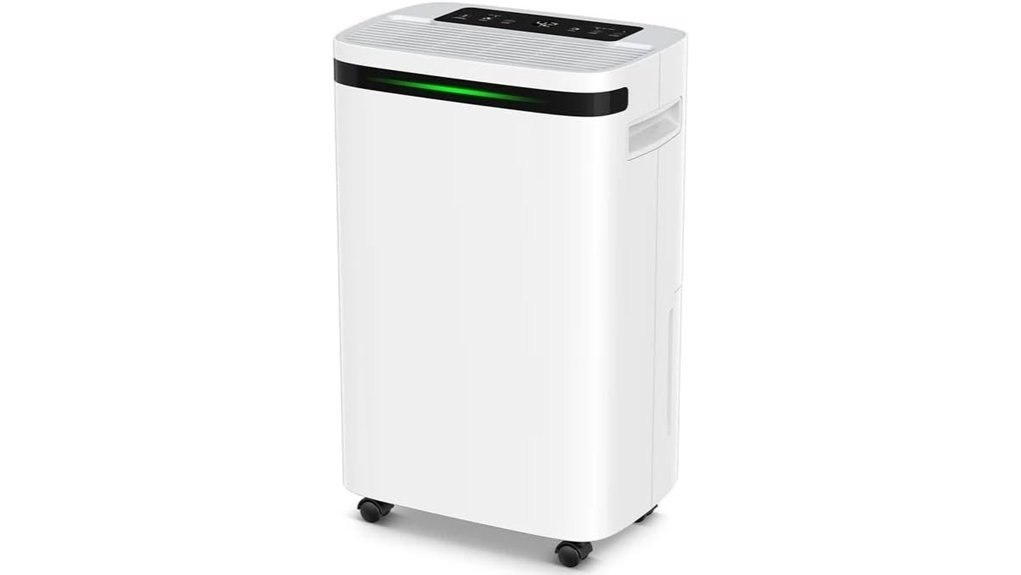
Best Overall for Large Damp Spaces
The VEAGASO VG500 is the most capable dehumidifier in this comparison for basements, laundry areas, and larger rooms with ongoing dampness. Its compressor system is rated to remove up to 58 pints of moisture per day under the maker’s stated conditions, and the advertised coverage reaches up to 4,000 sq. ft. Real performance will depend on room temperature, humidity, airflow, and how much moisture is entering the space.
The control panel offers DEHU mode for maintaining a selected humidity level, DRY mode for faster moisture removal around laundry, and CONT mode for continuous operation. You can empty the bucket manually or connect a drain hose when a suitable gravity drain is available. Caster wheels and a recessed handle make it easier to reposition than its size might suggest.
Who Should Buy This: Homeowners dealing with persistent basement humidity, a damp utility room, frequent indoor laundry drying, or a large room where a small semiconductor unit would be underpowered.
Who Should Avoid This: Anyone wanting a tiny bedside appliance or who is highly sensitive to fan and compressor noise. It also takes more floor space than the compact models below.
Pros:
- Highest stated moisture-removal capacity in this comparison.
- Manual and continuous drainage options.
- Dedicated humidity-control, clothes-drying, and continuous modes.
- Wheels and handle improve portability.
Cons:
- Larger and heavier than semiconductor models.
- Compressor and fan operation will be more noticeable in a quiet bedroom.
- The internal tank can fill quickly in very damp conditions unless continuous drainage is used.
Ukoke UDH0125 ENERGY STAR Dehumidifier
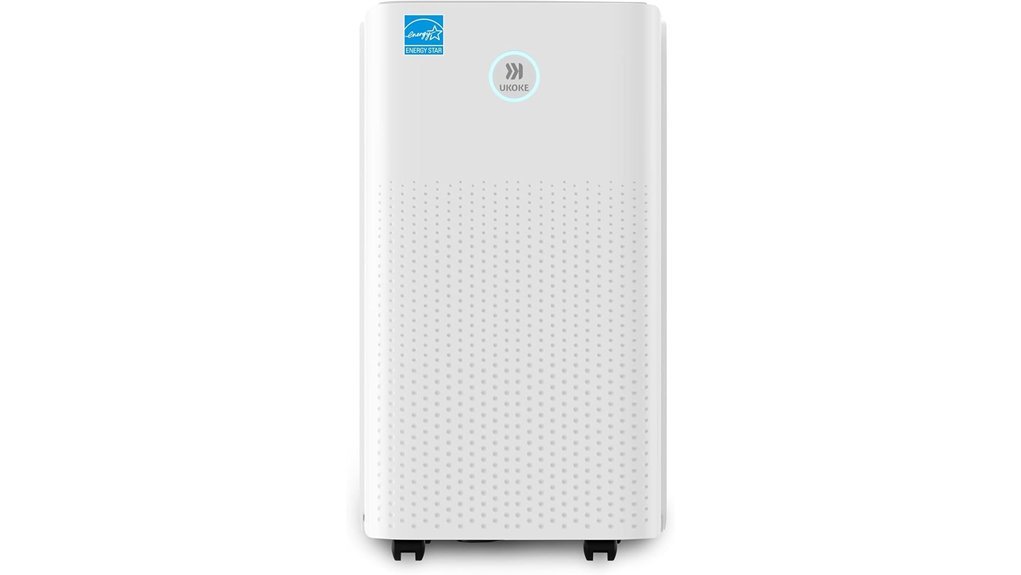
Best Energy-Certified Pick
The Ukoke UDH0125 is a portable compressor dehumidifier designed for medium-sized spaces. Its product name may use a higher “32-pint” maximum figure, while the ENERGY STAR database lists a water-removal capacity of 9 pints per day under its standard test method. That difference is why buyers should compare test conditions instead of treating every pint figure as directly interchangeable.
The unit includes a built-in humidistat, selectable operating modes, a removable tank, and support for continuous drainage. It is marketed for spaces up to 1,750 sq. ft., but room size alone should not determine your choice. A smaller, very wet basement can require more capacity than a larger room with only mild seasonal humidity.
Who Should Buy This: Buyers who want automatic humidity control, compressor-level moisture removal, and an energy-certified option for a bedroom, living space, office, RV, or moderately damp basement.
Who Should Avoid This: Buyers who need the highest extraction rate for a wet basement, flood drying, or severe moisture intrusion. Those jobs require fixing the water source and may call for a higher-capacity or commercial unit.
Pros:
- ENERGY STAR certified model.
- Built-in humidistat and multiple operating modes.
- Supports continuous drainage for less frequent tank emptying.
- More suitable for ongoing room humidity control than a small Peltier unit.
Cons:
- Different test conditions can make the advertised pint figures confusing.
- Still larger and louder than a compact semiconductor model.
- A drain hose may need to be purchased separately depending on the current package.
ToLife Dehumidifier with 95 OZ Water Tank
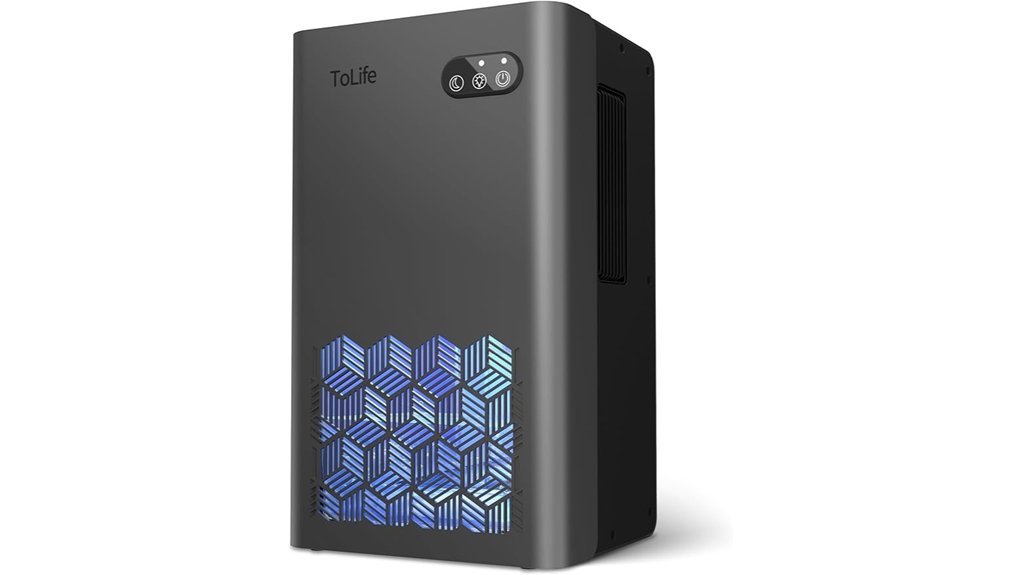
Best Large-Tank Compact Pick
The ToLife is a semiconductor dehumidifier with a 95 oz water tank, two operating modes, automatic shut-off, and seven-colour ambient lighting. The listing advertises use in spaces up to 1,000 sq. ft.; however, semiconductor units are generally best treated as light-duty moisture collectors for a local area rather than substitutes for a compressor dehumidifier in a seriously damp basement.
Use the stronger mode when you want faster collection in a closed bathroom, bedroom, closet, or RV. The lower-speed mode is better suited to overnight operation. The larger tank reduces how often you need to empty the unit compared with many mini dehumidifiers, while auto shut-off helps prevent overflow when the tank reaches its limit.
Who Should Buy This: People managing mild condensation, a musty closet, or light seasonal humidity in a small enclosed area.
Who Should Avoid This: Anyone with visible water intrusion, a wet basement, widespread mould, or a need to pull several litres of water from the air each day.
Pros:
- Large 95 oz tank for a compact semiconductor unit.
- Two operating modes for faster or quieter use.
- Automatic shut-off helps prevent tank overflow.
- Compact design is easy to move between rooms.
Cons:
- The advertised 1,000 sq. ft. figure should not be treated as guaranteed effective coverage.
- Lower extraction capability than compressor dehumidifiers.
- Ambient lighting may not appeal to users who want a completely dark bedroom.
Deyagoo DY501 1500ML Small Dehumidifier
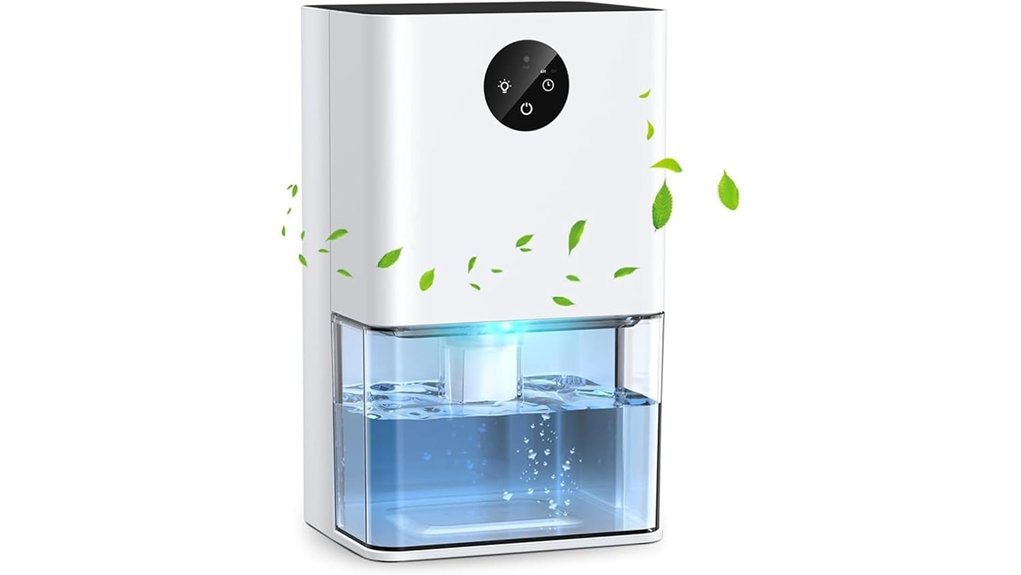
Best for Small Spaces
The Deyagoo DY501 is a compact semiconductor dehumidifier with a 1.5-litre transparent tank. Its listing states a maximum collection rate of about 300 ml per day in warm, very humid test conditions of 86°F and 80% relative humidity. In a cooler or less humid room, expect it to collect less water.
Its small footprint is useful on a bathroom shelf, bedroom dresser, inside an RV, or near a problem closet. The listing specifies 30 dB operation, seven-colour lighting, and automatic shut-off when the tank is nearly full. The transparent tank makes the water level easy to check without removing it.
Who Should Buy This: Apartment dwellers, RV owners, or anyone who wants a small unit for a closet, compact bathroom, or bedside area with light humidity.
Who Should Avoid This: Buyers expecting fast whole-room drying, laundry drying, or meaningful control of a wet basement.
Pros:
- Compact and easy to move.
- Transparent 1.5-litre tank.
- Automatic shut-off reduces overflow risk.
- Low-power semiconductor design suits occasional light-duty use.
Cons:
- Maximum extraction is measured under warm, high-humidity conditions.
- Not powerful enough for heavy damp or large open-plan rooms.
- No continuous drain or smart-home control.
Factors to Consider When Choosing a Dehumidifier
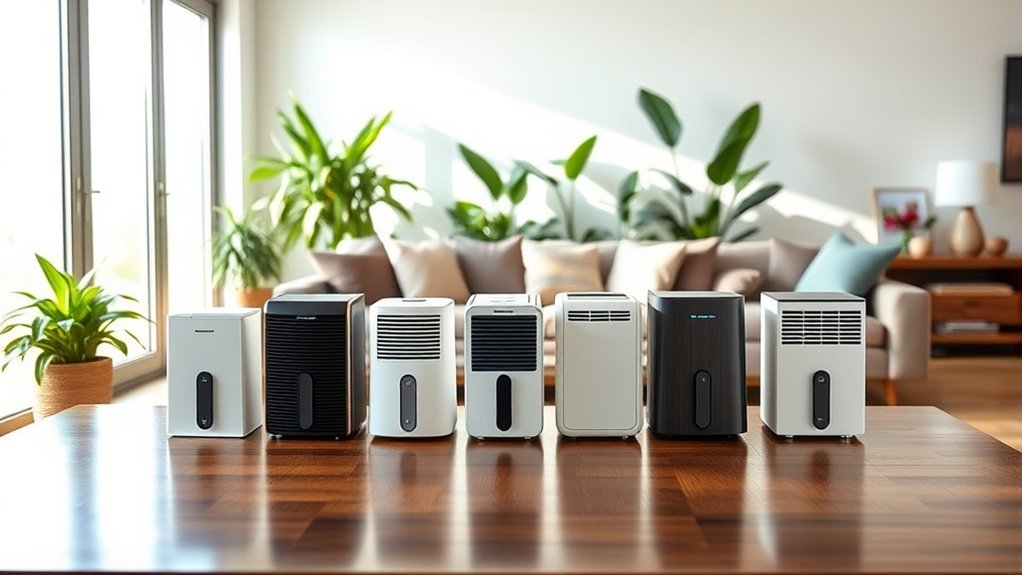
The best dehumidifier is the one that can handle your actual moisture load, fit the room, drain conveniently, and run at a sound level you can live with. Start with a hygrometer reading and look for the cause of the dampness before choosing a model.
Match Capacity to Dampness, Not Floor Area Alone
Daily moisture-removal capacity is more useful than an advertised coverage figure. A mildly humid bedroom and a wet basement of the same size require very different machines. Compressor models generally suit persistent humidity and larger spaces, while semiconductor models are better for mild moisture in a small enclosed area. When in doubt, choosing slightly more capacity is usually safer than relying on an undersized unit that must run continuously.
Compressor vs Semiconductor Dehumidifiers
Compressor dehumidifiers move more air and remove substantially more water, making them the better choice for basements, utility rooms, and ongoing damp. Semiconductor or Peltier dehumidifiers are compact and often quieter, but their daily collection rate is much lower. They work best for closets, RVs, compact bathrooms, or a local condensation problem.
Consider Room Temperature and Airflow
Dehumidifier output falls when conditions are cooler or less humid than the manufacturer’s test environment. Leave the required clearance around the air intake and exhaust, keep doors and windows closed while the unit is working, and clean the filter when the manual recommends it. For a cool basement, confirm the operating-temperature range and automatic defrost feature before buying.
Water Tank and Drainage
A large tank means fewer trips to the sink, but it also makes the bucket heavier when full. Continuous drainage is valuable in a persistently damp room, provided the hose slopes correctly to a safe drain. Auto shut-off is important for bucket operation, but it is not a substitute for checking the unit and following the installation instructions.
Noise Level Assessment
Compact semiconductor models are normally easier to tolerate beside a bed, while compressor units produce fan and refrigeration noise. Do not rely only on a single decibel number: fan speed, floor vibration, compressor cycling, and room acoustics also affect how loud the unit feels. A sleep or low-fan mode can help in bedrooms, but it may reduce moisture-removal speed.
Energy Efficiency and Running Time
Look for a built-in humidistat so the machine can cycle off after reaching the selected relative humidity. ENERGY STAR certification makes compressor-model efficiency easier to compare. A tiny low-watt unit is not automatically the most economical choice if it is too weak and must run continuously without controlling the room.
Portability and Placement
Check the unit’s dimensions, weight, handle, and wheels before buying. A portable machine is useful when you need to move it between a bathroom and bedroom, but frequent relocation can be inconvenient if the tank contains water. Place the dehumidifier on a level, stable surface and keep fabric, curtains, and furniture away from the air openings.
Safety and Moisture-Source Control
Useful safeguards include a full-tank shut-off, correctly seated bucket sensor, automatic defrost, and child lock where needed. A dehumidifier can help manage airborne moisture, but it will not repair a leaking pipe, failed waterproofing, roof leak, or groundwater entry. Fix the source promptly and seek professional help for extensive water damage or widespread mould.
Electrical and Market Compatibility
The affiliate links in this article lead to Amazon.com listings. Buyers outside the United States should verify plug type, voltage, frequency, warranty coverage, import costs, and whether the manufacturer supports use in their country. Do not use a basic travel adapter with a high-power compressor appliance unless the manufacturer explicitly approves that setup.
- Measure the room and note whether it feels slightly damp, very damp, or wet.
- Check relative humidity with a hygrometer.
- Choose compressor power for persistent damp; choose semiconductor only for light local moisture.
- Confirm tank size, drain-hose support, and access to a suitable drain.
- Check operating temperature, noise controls, dimensions, and electrical compatibility.
- Read the current Amazon listing and manufacturer manual because included accessories can change.
Frequently Asked Questions
How Do I Maintain My Dehumidifier for Optimal Performance?
Turn the unit off and unplug it before cleaning. Empty and wash the water tank regularly, clean or replace the air filter as directed, remove dust from the intake and exhaust, and check the drain hose for kinks or blockages. Keep the machine upright on a level surface with the clearance specified in its manual.
What Relative Humidity Should I Aim For?
A practical indoor target is generally around 30% to 50% relative humidity. Avoid over-drying the room, and use a separate hygrometer if the dehumidifier does not display an accurate humidity reading.
What Is the Average Lifespan of a Dehumidifier?
There is no guaranteed lifespan because build quality, operating hours, room temperature, maintenance, and moisture load vary. Regular filter cleaning, unobstructed airflow, careful tank handling, and correct storage can help reduce avoidable wear.
Are Dehumidifiers Energy-Efficient?
Efficiency varies by technology and capacity. An ENERGY STAR certified compressor model provides a clearer efficiency benchmark. A low-watt mini model uses less power at one moment, but it may be poor value if it cannot lower the room’s humidity and must run continuously.
Can I Leave a Dehumidifier Running While I Am Away?
Only do so when the manufacturer’s manual allows unattended operation and the setup is safe. Use a correctly installed continuous drain or a reliable full-tank shut-off, keep the unit away from obstructions, and never rely on it to control an active leak. For a long absence, arrange for someone to inspect the property.
Why Is My Small Dehumidifier Collecting Very Little Water?
Compact semiconductor models collect less water when the room is cool, the humidity is only moderate, doors or windows are open, or the unit is placed in a large open area. Compare the room conditions with the listing’s test conditions and use a hygrometer to see whether the humidity is actually high.
Can a Dehumidifier Remove Mould?
No. A dehumidifier can help reduce the excess moisture that supports mould growth, but it does not remove existing mould or fix the water source. Address leaks and condensation, clean or remediate affected materials appropriately, and seek professional advice for extensive contamination.
Conclusion
For a large or persistently damp space, the VEAGASO VG500 is the strongest choice in this group because of its compressor capacity and continuous drainage. The Ukoke UDH0125 is the better fit for buyers who want an ENERGY STAR certified compressor model for ongoing humidity control. Choose the ToLife when you want a compact unit with a larger tank for light moisture, or the Deyagoo DY501 for a small closet, bathroom, RV, or bedside area.
Whichever model you choose, measure the humidity, compare realistic daily extraction, and correct leaks or ventilation problems first. That approach will do more for comfort and moisture control than choosing a dehumidifier based only on a bold room-size claim.