Affiliate disclosure: As an Amazon Associate, we earn from qualifying purchases at no extra cost to you.
Last updated: August 2026
The best portable dehumidifier for a car should absorb moisture without creating a spill, cable, or charging hazard inside the cabin. For most drivers, a reusable silica-gel bag is the simplest choice because it works passively while the vehicle is parked. Larger 500 g packs suit recurring condensation, while smaller packs and USB-C-regenerated units are easier to place in compact cabins. These products are supporting moisture-control tools rather than repairs for leaks, soaked carpets, or ventilation faults. This guide compares five suitable options and explains the tradeoffs before you buy.
How We Compared These Car Dehumidifiers
The picks were compared by in-car operating method, desiccant size, reactivation method, indicator visibility, placement flexibility, and suitability for light or recurring condensation. Preference was given to products that absorb passively inside the vehicle and can be regenerated safely outside it.
Quick Verdict
Best Overall: Wisedry 500 g 2-Pack for drivers who want two high-capacity, microwave-reactivated bags.
Best High-Capacity Alternative: Wisesorb 500 g 2-Pack for reusable moisture control with a visible saturation window.
Best No-Microwave System: Afloia TOPZ 4+1 for households that prefer a dedicated heating base.
Best Compact Supplemental Option: Kiorafoto RD-1-JWM for light moisture control in a small cabin or enclosed storage compartment.
Best Lightweight Pair: FURWEY 100 g 2-Pack for limited space and lighter condensation.
Quick Comparison of Portable Car Dehumidifiers
| Label | Product | Format | Pack Size | Reactivation | Best For | Main Limitation | Amazon |
|---|---|---|---|---|---|---|---|
| Best Overall | Wisedry 500 g 2-Pack | Two fabric silica-gel bags | 2 × 500 g | Microwave or oven, following the included instructions | Recurring window condensation | Bulkier than compact pods | Check on Amazon |
| High-Capacity Alternative | Wisesorb 500 g 2-Pack | Two indicating desiccant bags | 2 × 500 g | Microwave or oven, following the supplied directions | Drivers who want a visible status window | Needs periodic heat reactivation | Check on Amazon |
| Best No-Microwave System | Afloia TOPZ 4+1 | Multiple cordless silica-gel sticks | 4 sticks + 1 base | Dedicated PTC heating base | Multiple vehicles or small spaces | Base adds storage and setup | Check on Amazon |
| Best Compact Supplemental Option | Kiorafoto RD-1-JWM | Rigid indicating desiccant pod | 1 pod / 70 g silica gel | USB-C heater used outside the vehicle | Light moisture in small cabins or compartments | Lower desiccant capacity | Check on Amazon |
| Best Lightweight Pair | FURWEY 100 g 2-Pack | Two small silica-gel bags | 2 × 100 g | Microwave, following the included instructions | Small cars and mild condensation | Less capacity than 500 g bags | Check on Amazon |
Wisedry Rechargeable Silica Gel Car Dehumidifier (2-Pack)
Best Overall
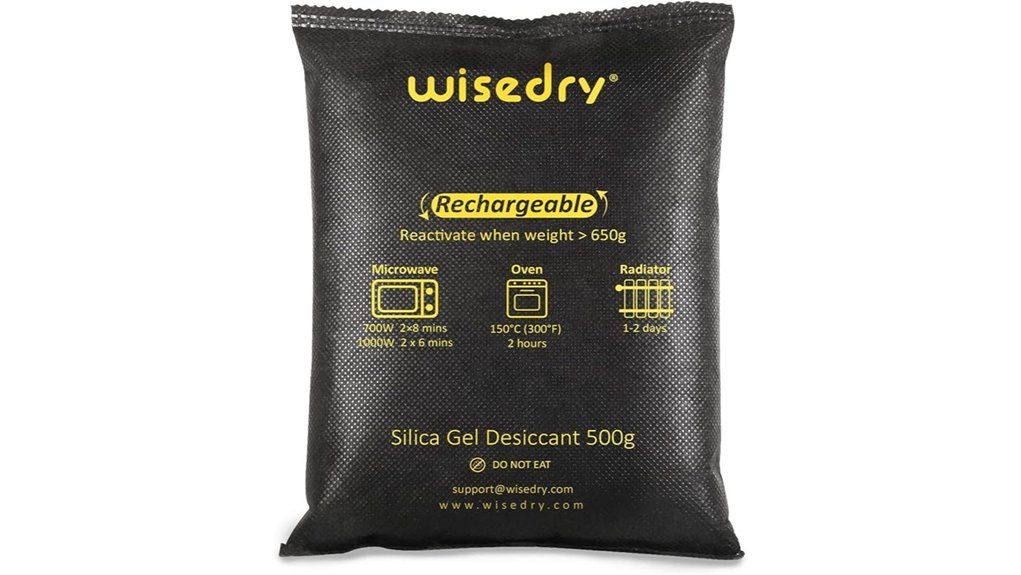
The Wisedry 2-pack is the strongest all-around fit for drivers dealing with regular overnight condensation. Each bag contains 500 g of silica gel, so the pair gives you more passive absorbing material than the smaller options below. One bag can sit in the passenger area while the other is placed in the cargo area or kept dry as a rotation spare.
The color indicator and heat-reactivation design make maintenance straightforward. The manufacturer states that each 500 g bag can absorb about 150 g of moisture, with a stated maximum of 180 g, before reactivation. Follow the supplied microwave or oven directions carefully, allow the bag to cool, and return it to the vehicle only after the heating cycle is complete.
Best For: Drivers with recurring windshield condensation, damp carpets, or a vehicle that sits unused for several days.
Why You’ll Like It: The two large bags provide useful coverage without a water tank, cable, or powered operation inside the car.
Who Should Avoid It: Buyers who have very little placement space or do not want to use a microwave or oven for regeneration.
Pros:
- Two reusable 500 g bags for flexible placement.
- Color indication helps show when reactivation is due.
- No power, fan, or liquid reservoir while absorbing moisture.
Cons:
- Larger than compact desiccant pods.
- Needs careful heat reactivation outside the vehicle.
- Cannot fix an active water leak or saturated carpet by itself.
Wisesorb Rechargeable Desiccant Packs (2pcs)

Best High-Capacity Alternative
The Wisesorb set is another two-bag option for drivers who want substantial desiccant capacity. Each pack is listed at 500 g and includes a transparent indicator area, so you can check the bead color without opening the bag. That makes it easier to rotate the packs before they become fully saturated.
This model is a sensible alternative when you want large reusable bags but prefer the Wisesorb format. The product is designed for microwave or oven reactivation, but the exact time and temperature can vary. Use the directions supplied with this ASIN rather than copying settings from another brand.
Best For: Cars, SUVs, vans, and stored vehicles that benefit from two large passive absorbers.
Why You’ll Like It: The visible indicator reduces guesswork, and the fabric-pack format does not create an open liquid container in the cabin.
Who Should Avoid It: Buyers wanting a very small unit for a glove box or center-console compartment.
Pros:
- Two large rechargeable desiccant packs.
- Transparent indicator window for easier monitoring.
- Passive operation with no battery or cable in the car.
Cons:
- Bulkier than small pods and 100 g bags.
- Requires periodic reactivation outside the vehicle.
- Exact absorption performance depends on cabin humidity and air exchange.
Afloia TOPZ 4+1 Rechargeable Cordless Dehumidifier
Best No-Microwave System
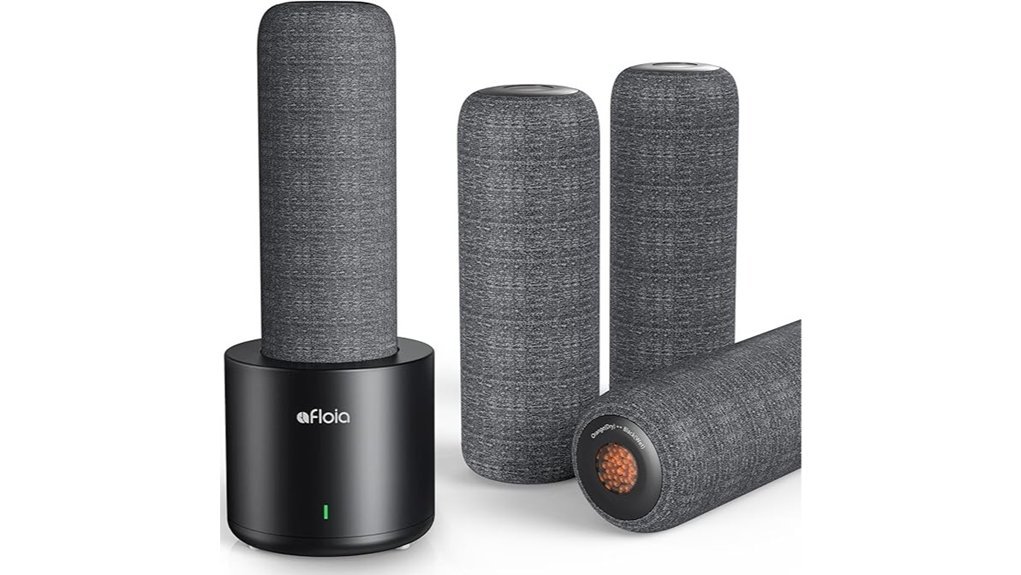
The Afloia TOPZ 4+1 bundle uses multiple cordless silica-gel sticks and a separate PTC heating base. The sticks absorb moisture passively, so they do not need a wire or battery while sitting in the vehicle. When the indicator changes from its dry color to the saturated color, the stick is placed on the base for regeneration.
This setup works especially well when you want to rotate absorbers between more than one vehicle, a trunk, a closet, or another small enclosed space. The dedicated base is more convenient for buyers who do not want to heat fabric packs in a kitchen appliance, although it adds another component to store.
Best For: Multi-car households and buyers who prefer a dedicated recharging base.
Why You’ll Like It: Several small sticks are easier to distribute around a vehicle than one large bag.
Who Should Avoid It: Buyers seeking the highest desiccant mass in a single unit or the simplest one-piece design.
Pros:
- Cordless, battery-free moisture absorption inside the car.
- Multiple sticks support rotation and flexible placement.
- Dedicated base provides a separate regeneration method.
Cons:
- Heating base requires household power and storage space.
- Each stick has less capacity than a large 500 g bag.
- Sticks must be secured so they cannot roll near pedals or controls.
Kiorafoto RD-1-JWM Rechargeable Dehumidifier with USB-C Cable
Best Compact Supplemental Option
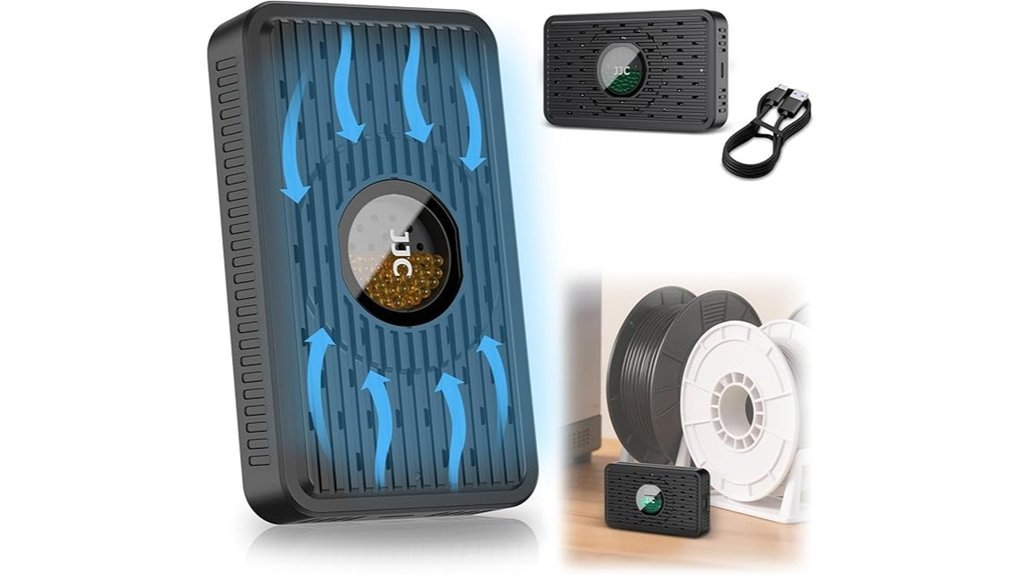
The Kiorafoto RD-1-JWM is a compact rigid desiccant unit with 70 g of color-indicating silica gel. It absorbs moisture passively during use, then uses an internal USB-C-powered heater to dry the beads. Its listed enclosed-space rating is up to 90 cubic feet, so it is best treated as a supplemental option for light moisture rather than a primary solution for a large or persistently damp cabin.
Its biggest advantage is convenience for buyers who do not want to use a microwave or oven. However, regeneration must be treated as a separate process: remove the unit from the car, keep it upright in a ventilated location, and do not use it for dehumidification while it is heating.
Best For: Small cabins, enclosed cargo compartments, camera-gear cases kept in a vehicle, and light seasonal condensation.
Why You’ll Like It: The compact shell and USB-C regeneration method make it easy to manage without loose fabric bags.
Who Should Avoid It: Drivers with a large cabin, soaked carpets, active leaks, or heavy daily condensation.
Pros:
- Compact rigid body with a visible color indicator.
- USB-C regeneration avoids kitchen-appliance use.
- No cable or battery is needed while it absorbs moisture.
Cons:
- Lower desiccant capacity than 500 g car bags.
- Regeneration can take several hours.
- Must not be recharged in an enclosed vehicle or storage compartment.
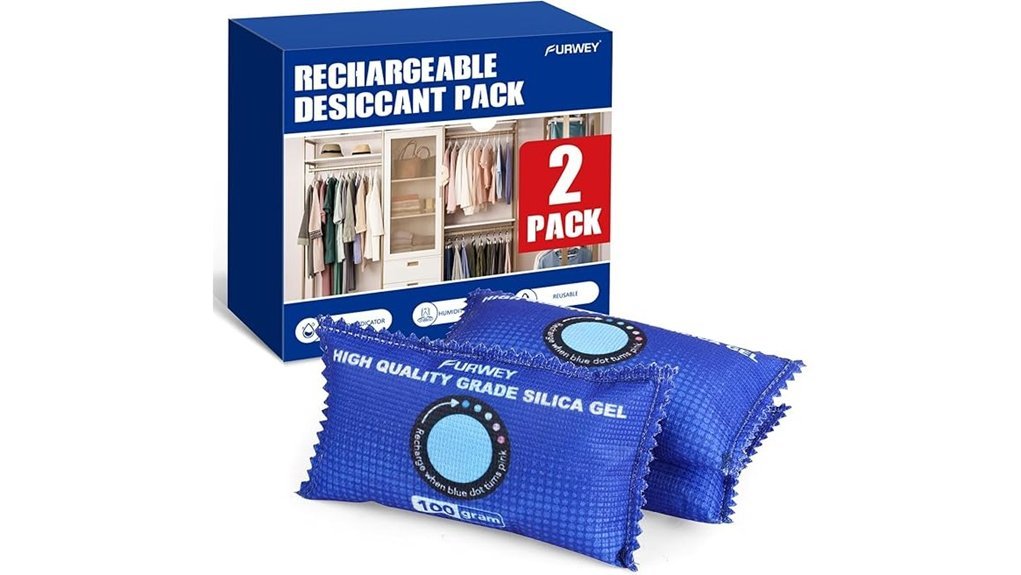
FURWEY Rechargeable Desiccant Packs (2 Pack)
Best Lightweight Pair
The FURWEY set includes two 100 g indicating silica-gel bags. Their smaller size makes them easier to position in a compact cabin, center-console cubby, or cargo compartment. The color change provides a simple reminder that the bags need regeneration.
These packs are most useful for mild condensation or as supplemental absorbers. They contain much less desiccant than the 500 g options, so drivers in very humid conditions may need to recharge them more often or use more than one pack at a time.
Best For: Small vehicles, limited placement space, and drivers with occasional rather than severe condensation.
Why You’ll Like It: The two-pack format is light, compact, and easy to distribute around the cabin.
Who Should Avoid It: Buyers who need the longest interval between reactivation cycles.
Pros:
- Compact 100 g bags fit where larger packs may not.
- Color indicator helps show when regeneration is needed.
- Reusable design avoids an open liquid reservoir.
Cons:
- Lower total capacity than larger car dehumidifier bags.
- May saturate quickly in a very damp vehicle.
- Requires monitoring and microwave reactivation.
Before You Buy
- Check for an active leak, wet carpet, or blocked drain before relying on a moisture absorber.
- Choose larger desiccant packs for recurring condensation and smaller units for limited space or mild moisture.
- Confirm that the reactivation method fits your routine: microwave, oven, heating base, or USB-C.
- Plan a secure placement point away from pedals, airbags, seat rails, vents, and driver controls.
- Check the indicator frequently during the first few weeks so you learn how quickly the product saturates in your vehicle.
Factors to Consider When Choosing a Portable Car Dehumidifier
A car dehumidifier is a supporting moisture-control tool, not a repair for a leaking door seal, blocked drain, wet carpet, or failed air-conditioning system. Start by finding the source of excess water, then use a passive absorber to help control the remaining humidity.
Passive vs. Powered Design
For normal car use, passive silica-gel bags and sticks are usually the simplest choice. They absorb moisture without drawing from the vehicle battery and do not need to operate from a socket while parked. A recharging heater, microwave, oven, or heating base should be used outside the vehicle and only as directed by the manufacturer.
Desiccant Capacity and Cabin Size
Do not confuse the weight of the desiccant with the amount of water it can hold. A 500 g bag contains more absorbing material than a 100 g bag, but its actual moisture uptake will be lower than its total product weight. Larger packs generally suit persistent condensation, while smaller packs are easier to place and rotate.
Reactivation Method
Choose the regeneration method you will realistically use. Microwave-reactivated bags can be quick, dedicated heating bases avoid putting packs in a kitchen appliance, and USB-C units are convenient but may take longer. Never copy the time or power setting from a different product.
Placement and Spill Risk
Select a stable location away from pedals, seat rails, airbags, vents, and driver controls. Secure rigid units so they cannot roll during braking. Fabric silica-gel bags are generally easier to manage in a moving vehicle than open containers that collect liquid.
Indicator Visibility
A clear color indicator makes maintenance easier, but it must be visible enough to check. Learn what the dry and saturated colors mean for the exact product because brands use different color combinations.
Find the Moisture Source
Persistent fogging can come from wet floor mats, a leaking windshield or door seal, a blocked sunroof drain, damp items left in the cabin, or a ventilation problem. Dry removable mats, inspect for water under the carpet, and use the vehicle’s defogging system as needed. A desiccant pack alone will not correct an active leak.
Safety Note: Do not recharge a dehumidifier inside a closed vehicle. Keep all absorbers away from children and pets, inspect fabric packs for damage, and follow the product-specific heating instructions.
Frequently Asked Questions
Can I Leave a Car Dehumidifier in the Vehicle Overnight?
Yes, a passive silica-gel bag or stick can generally remain in a parked car when it is intact, stable, and positioned according to the manufacturer’s directions. Remove it before any microwave, oven, USB-C, or heating-base regeneration cycle.
Can I Use a Dehumidifier While Driving?
A passive absorber can stay in the car if it is secured and cannot interfere with pedals, seat movement, airbags, or controls. Do not operate a regeneration heater while driving, and do not place loose rigid units where they can become projectiles during sudden braking.
How Often Should I Recharge a Car Dehumidifier?
Recharge it when the indicator reaches the saturated color or when the manufacturer’s weight-based guidance says it is full. The interval depends on humidity, cabin size, ventilation, wet materials, and how often the doors are opened.
How Long Does a Car Dehumidifier Take to Work?
There is no fixed timetable because performance depends on cabin size, humidity, temperature, ventilation, and the amount of wet material inside the vehicle. Passive absorbers work gradually and are most useful when left in a parked car between trips. Heavy condensation or soaked materials require drying and leak repair as well.
Will a Car Dehumidifier Stop Windshield Condensation?
It can help reduce the moisture that contributes to overnight condensation, but it cannot guarantee a clear windshield in every condition. Use the vehicle’s defogger, remove wet items, dry the carpet, and repair leaks for a complete solution.
Which Type of Car Dehumidifier Is Best?
Choose a large reusable bag for recurring dampness, a compact bag or pod for mild condensation and tight spaces, or a heating-base system when you want several small absorbers that can be rotated between vehicles.
Are Car Dehumidifiers Safe Around Children and Pets?
They should be kept out of reach and used only when the casing or fabric is undamaged. Do not allow the contents to be swallowed or handled, and follow the manufacturer’s safety and disposal directions.
Conclusion
For most drivers, the Wisedry 500 g 2-Pack offers the best balance of desiccant size, reusable operation, and flexible placement. The Wisesorb 500 g 2-Pack is a strong alternative, while the Afloia TOPZ 4+1 is the better fit when you prefer a dedicated heating base. Choose the smaller FURWEY bags for mild condensation and tight placement areas, or the Kiorafoto pod when compact USB-C reactivation matters more than maximum capacity. Whichever design you select, secure it properly, regenerate it outside the vehicle, and address any underlying leak or wet carpet rather than relying on a desiccant alone.
Final Recommendation: Start with the Wisedry 500 g 2-Pack when you want a simple, high-capacity passive solution for recurring car-window condensation.