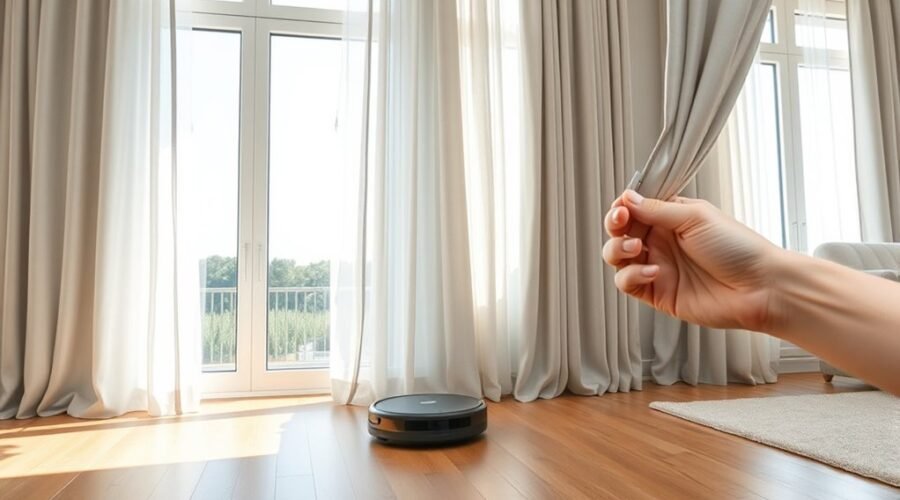
Curtains and robot vacuums often clash at the floor line, where a loose hem can drag, snag, or confuse sensors. The simplest fix starts with measuring the curtain drop, then lifting the fabric with clips, ties, or a slight tuck away from the path. A clear cleaning zone helps, but the finer details matter more than most people expect. One overlooked adjustment can change everything.
Why Curtains Snag Robot Vacuums
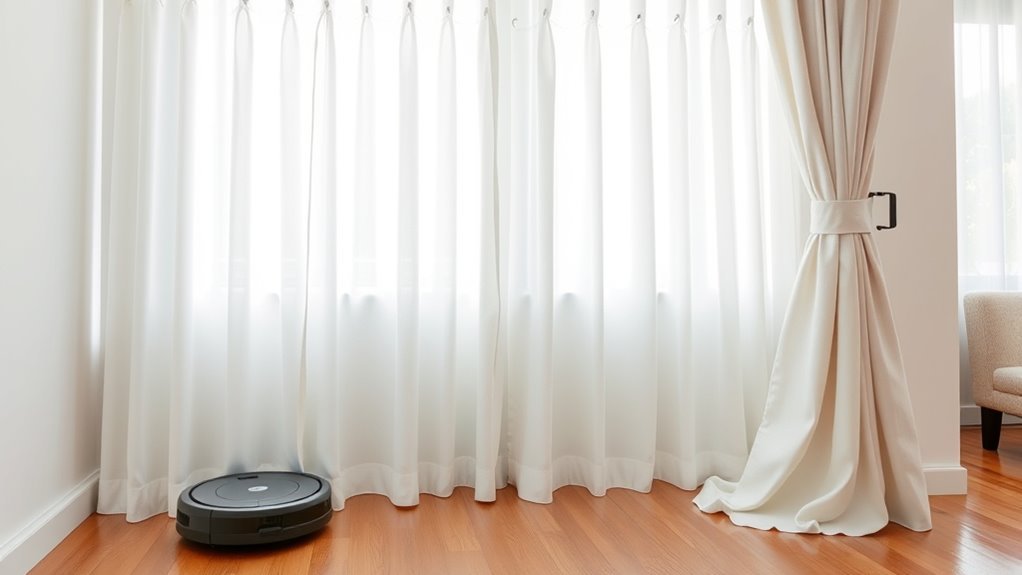
Curtains often snag robot vacuums because their loose, flowing fabric can drop into the machine’s path and catch in the brushes or wheels.
In motion, the hem can sway like a soft barrier, turning an ordinary sweep into a stubborn obstacle. Sensors may read the fabric as a solid object, so robot vacuums pause, hesitate, or stall beside it.
Decorative tassels and fringes add another layer of risk, threading themselves into rollers and seams with quiet efficiency. Heavy or high-pile curtains can also narrow the route, forcing the machine to circle awkwardly or miss dust along the edge.
Tassels and fringes can snag with quiet efficiency, while heavy curtains narrow the path and leave dust behind.
The result is less freedom for the device and less thorough cleaning for the room. When curtains hang low and unrestrained, they shape the floor like an unseen fence.
Their movement is subtle, but enough to confuse navigation and invite entanglement.
Check Curtain Length Before Cleaning
Before starting a cleaning cycle, the curtain hem should be checked against the floor, with at least 4 inches of clearance to give the robot vacuum an unobstructed path. A quick look at curtain length reveals whether the fabric will drift into the machine’s route or remain gracefully out of reach. This small habit preserves freedom of movement and reduces entanglement before it begins.
- Measure each panel from rod to hem.
- Adjust longer drapes with clips or ties.
- Choose lightweight, streamlined fabrics.
- Inspect hems for fraying or loose strands.
When curtain length is set correctly, the room feels open, composed, and ready for effortless cleaning. The robot vacuum can move beneath the window line with calm precision, without brushing against fabric or catching a wandering thread.
Such preparation protects both the curtains and the machine, while keeping the space visually light and physically free.
Tuck Drapes Away From the Floor
Tucking drapes away from the floor keeps a robot vacuum from snagging on loose fabric and helps it move through the room without interruption.
Tucking drapes off the floor helps a robot vacuum move smoothly, free from snags and interruptions.
For long curtains, the hem should sit at least 4-6 inches above the ground, creating a clear path beneath the fabric. This simple lift allows the robot vacuum to glide through with confidence, keeping the room obstacle-free and the cleaning cycle steady.
Curtain clips or ties can gather excess material into a neat line, preventing pooling that might invite tangles. Where needed, a fabric weight or adhesive hook can hold the edge in place, preserving a clean silhouette along the wall.
Before each run, the curtains should be checked and adjusted so they remain lifted, orderly, and free of drag. In this way, the room stays open, refined, and ready for effortless cleaning.
Secure Tassels and Loose Trim
Loose tassels and trim should be kept close to the curtain’s body so they do not slip into a robot vacuum’s brushes. A simple, graceful adjustment can keep the room open, calm, and free for movement. Secure the tassels with small, discreet fixes, and let the fabric fall in clean lines.
- Tuck decorative tassels under rugs when they hang near the floor.
- Use adhesive clips or command hooks to secure loose trim along the curtain edge.
- Inspect tassels and trim regularly for snags, then reset them before cleaning.
- Choose shorter tassels, or none at all, for a smoother path.
Weighted curtain chains can also steady flowing fabric without adding visual clutter.
The goal is freedom through order: curtains that drift elegantly, yet remain beyond the vacuum’s reach. When tassels and trim stay secure, cleaning becomes quiet, uninterrupted, and visually refined.
Use Curtain Clips or Tiebacks
Curtain clips can fasten fabric neatly above the floor, keeping tassels and loose ends out of a robot vacuum’s path.
Tiebacks offer a simple sweep of clearance, drawing the panels aside to leave a clean channel for efficient movement.
With adjustable styles, the curtains stay gathered and the setup can be quickly reset after each cleaning run.
Secure Curtains With Clips
Clipping long curtains back with curtain clips or tiebacks keeps the fabric lifted clear of the floor, where a robot vacuum’s brushes are likely to snag it.
With curtain clips, the folds can be raised to a chosen height, granting the room open lines and free movement.
To secure curtains well, a simple rhythm works:
- Attach curtain clips evenly along the hem.
- Adjust each clip to match the robot vacuum’s clearance.
- Check the hold after cleaning cycles.
- Keep the look smooth and composed.
Wall-mounted tiebacks or adhesive hooks can mark a quiet resting place for fabric, combining elegance with utility.
This small act protects the path, preserves the drape, and lets the room breathe with ease.
Use Tiebacks for Clearance
A few well-placed tiebacks can lift curtain fabric just enough to clear a robot vacuum’s path, keeping the hem from brushing the floor or catching in the brushes.
Adjustable tiebacks give the room flexible clearance, allowing curtains to rise neatly while preserving a clean, refined line. When positioned at strategic heights, they hold fabric back where the vacuum turns most often, creating open passage without sacrificing style.
Curtain clips can serve the same purpose, securing the panels with a firmer grip when needed. Light, non-draping fabrics respond especially well, moving freely instead of pooling.
Compatibility matters, since some curtains favor one fastening method over another. With the right tiebacks, curtains gain poise, the floor stays open, and daily cleaning moves with quiet ease.
Lift Long Curtains for Vacuum Runs
Before each cleaning run, long curtains should be lifted clear of the floor and secured out of the robot vacuum’s path.
Tucked under furniture or clipped above reach, the fabric stays still, and the machine moves through the room without snagging.
A clean sweep begins with a simple lift.
Raise Curtains Before Cleaning
Lifted away from the floor, long curtains can stay clear of a robot vacuum’s brushes and wheels, reducing the chance of tangles and snagged fabric. Raising the curtains before cleaning creates a clear path and lets the robot vacuum move with unhurried ease.
- Use curtain clips or ties to lift fabric above floor level.
- Check for pooling hems and adjust length before each run.
- Tuck tassels and fringe beneath the drape to remove loose ends.
- A higher rod position can keep curtains naturally out of the way.
This simple habit lends rooms a lighter, freer flow, while the curtains remain graceful and the robot vacuum works without interruption.
Secure Fabric Out Of Reach
Long curtains should be secured well out of the vacuum’s path, tucked neatly under furniture or held higher with command hooks so they remain free of snag points as the machine moves through the room.
This secure fabric keeps the robot vacuum gliding in clean lines instead of wrestling with hems. Adjustable curtain rods offer another quiet freedom: the drape rises before cleaning, then returns without permanent change.
Curtains with tassels or heavy embellishments should be set aside, since loose details invite brushes to catch. Each room benefits from a quick visual check, since navigation patterns shift with furniture and light.
Set a No-Curtain Cleaning Zone
A clear no-curtain cleaning zone can be created in the robot vacuum’s app by drawing a virtual barrier around draped areas, or by laying magnetic boundary strips along the floor where the curtains fall. This simple arrangement grants the machine a clean path while preserving the softness of the room.
The no-go zones should trace the curtain line with care, keeping the vacuum from brushing fabric or reaching loose hems.
- Mark each curtain edge with the app’s virtual barrier.
- Place boundary strips where drapes touch the floor.
- Keep curtain lengths lifted with tiebacks or tucked fabric.
- Adjust cleaning times when curtains are still and settled.
When the boundary is clear, the room reads as orderly and open, with movement flowing freely beneath protected textiles. Curtains remain poised, and the vacuum moves with disciplined grace, never straying into their reach.
Run a Quick Test Pass
A brief test pass reveals whether the robot vacuum can move cleanly around the curtains without catching on fabric or hesitating at the edges.
In a chosen room, the vacuum should glide forward, trace its path, and return as if reading the air. Curtains must already be tucked away or secured, so the test shows true behavior, not a preventable snag.
During this test pass, attention should remain on the machine’s sensors and steering: do they register curtain movement, pause, or correct course with ease?
If the vacuum tangles, the curtain length may need shortening, or tiebacks may restore open space. The goal is not control for its own sake, but freedom of motion—clean floors, untroubled fabric, and a room that yields to order without feeling trapped.
Afterward, any point of hesitation can guide a small adjustment, making future cleaning smoother and quieter.
Check for Snags After Each Clean
After each cleaning session, the curtains should be inspected closely for snags, tangles, or frayed spots left by the robot vacuum’s brushes. A quick check for snags preserves the fabric’s freedom and keeps the room looking untroubled. The eyes should move from hem to seam, where a robot vacuum may have caught threads or tassels.
- Look along the bottom edge of the curtains for pulled fibers.
- Feel seams and tassels for tight loops or twisted strands.
- Lift away any debris or hair with a lint roller or soft brush.
- Repair small damage with fabric glue or a few careful stitches.
When long fabric or tassels are tucked neatly under the curtains, the risk of repeated entanglement falls away. With each calm inspection, the curtains remain graceful, and the robot vacuum can continue its path without stealing the textile’s ease.
Keep Sensors and Fabric in Clear View
A clear line of sight helps the robot vacuum read the room without hesitation, so curtains should hang several inches above the floor and stay free of loose edges.
Tiebacks, clips, or a neat tuck under furniture keep fabric lifted and out of the brushes’ path.
Clean sensors and an uncluttered curtain area give the machine a smooth, unbroken route.
Sensor Line Of Sight
At least one meter of open space in front of a robot vacuum’s sensors helps preserve a clear line of sight, allowing it to detect walls, furniture, and other obstacles with greater accuracy.
This simple margin gives navigation a steadier, freer path through the room, especially where curtains hang near windows.
- Keep curtains outside the sensor range.
- Clean sensors regularly to remove dust.
- Use hooks or ties to lift long fabric.
- Test routes to confirm unobstructed detection.
When fabric falls into the field of view, the machine can hesitate or miss edges, narrowing its reach.
A clear visual corridor lets it move with calm precision, reclaiming floor space without entanglement.
Curtain Clearance Tips
With sensor sight kept open, the next concern is the fabric itself: long curtains should be tucked under nearby furniture or weighted so they do not trail across the floor, while clips, ties, or higher rod placement lift drapes into a cleaner line above the vacuum’s path.
For freer movement, curtain clips help hold panels aloft, and shorter lengths reduce brush snags.
| Method | Effect |
|---|---|
| tuck long curtains | Clears the floor edge |
| curtain clips | Raises fabric from sensors |
Higher rods create a vertical sweep, elegant and unobstructed. Regular assessments keep this order intact, especially after washing or rearranging drapes. When the curtain line stays disciplined, the vacuum glides with ease, and the room feels open, calm, and unbound.
Frequently Asked Questions
What Are Some Creative Ways to Hide My Robot Vacuum?
Creative hideaways include console tables, built-in shelves, decorative baskets, furniture skirts, and potted plants. Curtain clips, decorative barriers, and discreet vacuum stations can preserve elegance while keeping the machine accessible and visually liberated.
What Are the Most Common Problems With Robot Vacuums?
Common complications cluster around clogged brushes, navigation issues, weak suction power, and shortened battery life. Cords, carpets, curtains, and clutter can trap the machine, while dust dulls sensors, demanding regular, vigilant maintenance for smooth, liberated cleaning.
Should You Leave Your Robot Vacuum Plugged in All the Time?
Usually, yes; it can remain plugged in safely. Smart charging habits prevent overcharge, while occasional unplugging may improve battery lifespan. For energy efficiency and freedom from worry, follow the manufacturer’s guidance and monitor battery health.
Do Robot Vacuums Go Over Rugs?
Yes—most robot vacuums glide over low-pile rugs, depending on rug types, rug height, and rug materials. Thick shag or high-pile surfaces can snag wheels, so clear edges or set virtual barriers before cleaning.
Conclusion
Keeping curtains clear of a robot vacuum is mostly a matter of simple preparation. When drapes are lifted, trimmed, and secured, the floor becomes an open lane instead of a tangled maze. Clips, tiebacks, and no-go zones work like quiet guardians, steering the machine safely past fabric edges. With a quick test run and regular checks, the vacuum can move smoothly, and the curtains can hang undisturbed, graceful and out of harm’s way.