Robot vacuums often slip under sofas, beds, and cabinets because their sensors read the space as open floor. When the clearance is too low, they can wedge themselves in place or lose traction. Several practical fixes can reduce that risk, from changing furniture height to creating simple barriers and no-go zones. The most effective option depends on the layout, and some solutions are easier to apply than others.
Why Robot Vacuums Get Stuck Under Furniture?
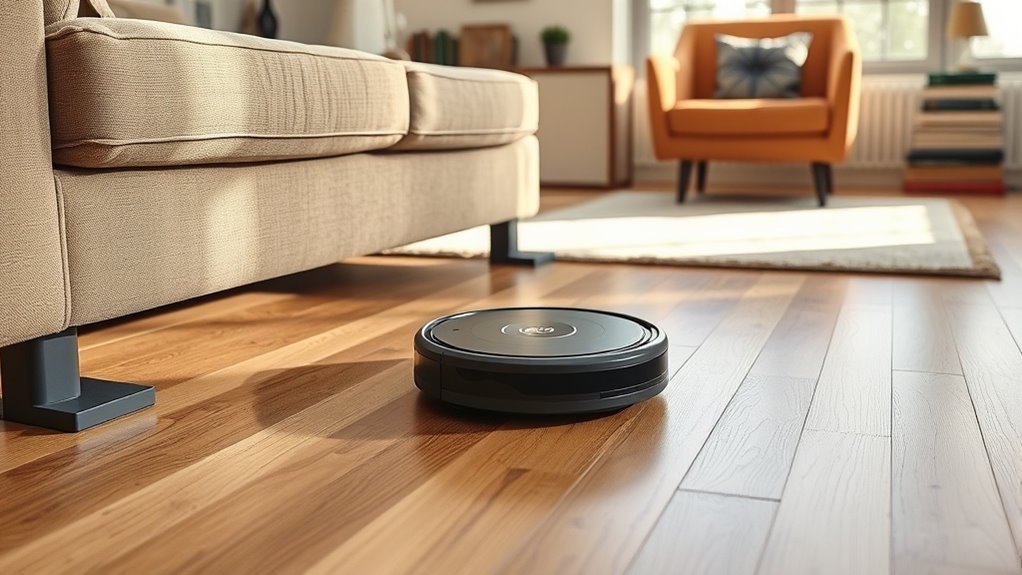
Robot vacuums commonly get stuck under furniture when low clearance leaves too little room for safe passage, especially if uneven legs or sensor errors cause height misjudgment. In these conditions, getting stuck under furniture becomes a predictable failure mode rather than a rare event.
Obstacle detection can misread shadows, frame edges, or curved supports, leading the machine into spaces it cannot exit cleanly. Toys, wires, and uneven flooring add friction to navigation, forcing repeated stops or stalled turns. Brushes and suction channels may snag on upholstery, while slippery hardwood reduces traction in tight gaps, compounding the problem.
Obstacle detection can misread shadows and edges, sending the vacuum into tight spaces it cannot escape.
Small errors in mapping or sensor cleanliness can amplify each other, narrowing tolerance for movement. Regular sensor cleaning and sensitivity adjustment improve obstacle detection, but the core issue remains physical mismatch between machine profile and furniture geometry.
Understanding that constraint helps users avoid needless cycles, protect autonomy, and keep cleaning systems operating with fewer interruptions.
Raise Furniture for Better Clearance
Raising furniture by about one inch can improve robot vacuum clearance and reduce the risk of entrapment under low-profile pieces.
Taller furniture legs or stable risers can provide the needed height, while cork sliders or other protective supports help maintain floor safety.
Under-couch clearance should be checked after adjustment to confirm that the vacuum can pass through without contact.
Choose Taller Furniture Legs
Increasing furniture leg height by about one inch can greatly improve robot vacuum clearance and reduce the chance of entrapment under low-profile couches and chairs.
To choose taller furniture legs, selection should focus on matching the existing frame and adding enough space for free passage beneath low-profile furniture.
Adjustable legs sold on Amazon provide a practical way to fine-tune height without replacing the entire piece. Cork sliders can also lift couch legs slightly while limiting scratches on hardwood floors.
The target is simple: raise the base above the robot’s width, usually 3 to 4 inches, so navigation remains unblocked.
With the proper leg height, furniture stops acting as a trap and starts supporting cleaner, more autonomous movement.
Add Stable Risers
Furniture risers can add about one inch of stable clearance under low-profile sofas, beds, and chairs, giving robot vacuums enough space to pass without snagging. Properly chosen stable risers, in plastic or wood and in standard sizes, fit most furniture legs and raise the frame evenly.
When installed correctly, they help maintain balance, reduce sliding, and support a safer area for pets and children. The added height can improve navigation for a robot vacuum, allowing it to move cleanly around and beneath furniture without repeated obstruction.
This approach also makes routine floor cleaning easier, since dust can be removed from previously cramped spaces. Many risers are designed to blend with decor, so the adjustment stays functional without sacrificing a tidy appearance.
Check Under-Couch Clearance
A clear gap beneath the couch is essential for reliable robot vacuum movement, with about 3 inches of under-furniture clearance serving as a practical minimum for most models.
If the measurement falls short, raise the frame by at least one inch to improve passage and reduce entrapment. This creates physical barriers only where needed, while preserving open access elsewhere.
- Measure clearance at multiple points, not just the center.
- Use furniture risers or cork sliders for discreet lift and floor protection.
- Recheck height after shifting cushions or adjusting legs.
Regular clearance checks help maintain a clean path and free the vacuum from avoidable obstruction.
Block Access With Physical Barriers
When a robot vacuum repeatedly enters tight spaces beneath couches or cabinets, simple physical barriers can prevent entrapment and reduce unnecessary wear.
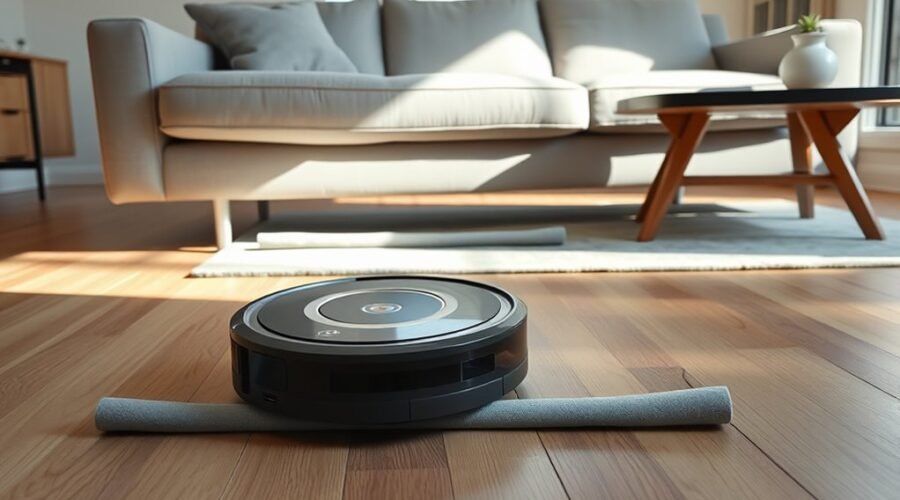
To block access, heavy objects such as books or sturdy boxes can be positioned at the base of low furniture, denying entry without permanent modification. Foam pool noodles or PVC pipes can be laid along the furniture edge to form a low, continuous obstruction that the vacuum cannot pass.
Heavy objects, foam noodles, or PVC pipes at furniture bases can block robot vacuums without permanent changes.
Where appearance matters, magnetic strips or boundary tape can create an effective virtual no-go cue while remaining unobtrusive. In some setups, risers or similar supports can raise the furniture and improve clearance instead, allowing the machine to move freely.
The best method depends on floor layout, furniture height, and the vacuum’s dimensions. Proper placement should preserve open movement elsewhere while keeping the robot outside hazardous gaps that trap brushes, wheels, and the frame.
Set Up Virtual Walls and No-Go Zones
Virtual barriers offer a cleaner, software-based way to keep a robot vacuum out of low-clearance furniture zones. Through the mobile app, users can draw a virtual wall or define no-go zones around beds, couches, and cabinets, giving the machine a clear boundary without physical clutter.
Models such as the i6 and similar units let users resize these restricted areas as layouts change, preserving freedom from constant manual intervention.
- Mark only the spaces that trap the vacuum.
- Use app-based no-go zones for quick adjustments.
- Rely on boundary strips when app control is unavailable.
This method improves navigation efficiency and reduces stuck events under furniture. Regular firmware updates can further sharpen restriction handling, making the barrier system more dependable over time.
For households seeking control and independence, virtual limits deliver a precise, low-effort safeguard that keeps cleaning routes open while protecting tight spaces from intrusion.
Adjust Robot Vacuum Sensors
Robot vacuum sensors should be cleaned regularly to maintain accurate obstacle detection and reduce the risk of getting stuck under furniture.
Navigation settings should then be calibrated through the device’s available controls to improve path accuracy and clearance handling.
These two adjustments help the unit respond more reliably in confined spaces.
Clean Sensors Regularly
Regularly cleaning a robot vacuum’s sensors helps maintain accurate obstacle detection and reduces the risk of misreading furniture edges, heights, or gaps.
When owners clean sensors regularly, obstacle avoidance becomes more reliable, especially around low-profile furniture that can trap the unit. Dust, lint, and smudges can block cliff sensors, bumper sensors, and optical modules, causing false readings and poor routing.
A quick wipe with a dry microfiber cloth restores clearer input and supports freer movement across the home.
- Inspect sensor windows weekly for buildup.
- Remove debris without using liquids or abrasives.
- Confirm sensor areas stay unobstructed before each run.
Calibrate Navigation Settings
Navigation settings can be calibrated to improve how a robot vacuum interprets furniture edges, floor height changes, and low-clearance spaces. To calibrate navigation settings, access the app or onboard menu and verify ultrasonic sensors, cliff sensors, and detection range.
| Action | Effect |
|---|---|
| Clean sensors | Restores accuracy |
| Run calibration | Refines navigation |
| Adjust range | Avoids low furniture |
| Use opaque tape | Reduces cliff sensitivity |
| Update firmware | Improves algorithms |
If the device still yields under beds, reduce cliff sensor sensitivity with opaque tape where supported. Firmware updates often improve obstacle logic and sensor response. Each adjustment grants more control over movement, letting the vacuum resist unnecessary entry under furniture. Precise tuning supports cleaner paths, fewer stalls, and stronger autonomy.
Try DIY Couch Blockers
DIY couch blockers can be an effective way to keep a robot vacuum out of low-clearance spaces. Simple DIY couch blockers, such as foam pool noodles or PVC pipes cut to size, can be placed along the base of a couch to prevent it from going underneath.
DIY couch blockers, like foam noodles or PVC pipes, can keep robot vacuums out of low-clearance spaces.
For stronger resistance, vertical stops made from wood or rubber blocks can be fixed to the furniture edge, creating a firm physical limit.
- Adjustable furniture risers can lift low couches enough for safe passage.
- Magnetic strips or boundary tape can mark invisible no-go zones.
- Cork sliders or small hand weights can raise legs while protecting flooring.
These options are practical, low-cost interventions that preserve open access and reduce the need for constant intervention. Each method should be matched to the furniture profile and floor type.
The goal is straightforward: create a barrier that keeps the vacuum free to move elsewhere, without trapping it, scratching surfaces, or compromising the room’s overall function and visual order.
Maintain Your Robot Vacuum
Even with couch blockers or other physical limits in place, a robot vacuum will perform better when kept in good working order.
To maintain your robot vacuum, clean sensors and brushes regularly so obstacle detection stays accurate and debris does not reduce suction. Check wheels for hair, lint, and grit, and clear clogs in the dust path to keep the vacuum moving freely.
Periodic firmware updates can improve navigation logic, route planning, and stuck detection, giving the machine more independence from furniture traps. Use built-in obstacle avoidance settings and custom cleaning routes to steer it away from risky low-clearance zones.
Removing small items from floors and arranging furniture with open pathways also reduces interference. Routine inspection is not maintenance theater; it preserves function and limits avoidable labor.
A well-kept unit is more capable, more efficient, and less likely to disappear under a sofa.
Frequently Asked Questions
Which Robot Vacuum Doesn’t Get Stuck Under Furniture?
The Neato D8, with its D-shape robot design, often avoids furniture traps, while the Roborock S7 and S6 LIDAR models improve mapping; higher-clearance Shark IQ units also enhance cleaning efficiency and reduce entrapment.
Do Robot Vacuums Go Under Furniture?
Yes, many do. Robot vacuum design often targets low-clearance navigation, and furniture clearance determines whether entry occurs. If clearance is sufficient, the machine may pass underneath; otherwise, sensors may misjudge and cause stalling or entrapment.
How to Make Roomba Not Go Under a Couch?
To prevent a Roomba from entering a couch void, they should use furniture barriers and height adjustments, such as risers or boundary tape. Cleaning sensors and updating firmware further improves navigation and reduces unwanted access.
Why Does My Roomba Keep Going Back to the Base?
Because it is “helpful,” the Roomba often returns to the base due to low battery, Roomba navigation issues, obstacles, sensor confusion, firmware faults, or completed schedules; base station placement may also trigger premature docking.
Conclusion
In the ongoing comedy of domestic robotics, the robot vacuum often mistakes low furniture for a thrilling cave expedition. The practical fix is less dramatic: raise clearance to about three inches, block hazardous gaps with physical barriers, and use app-based no-go zones. Clean sensors, tune navigation, and maintain the machine so it learns, or at least remembers, where not to go. A few simple adjustments can spare both the vacuum and the furniture from repeated embarrassment.