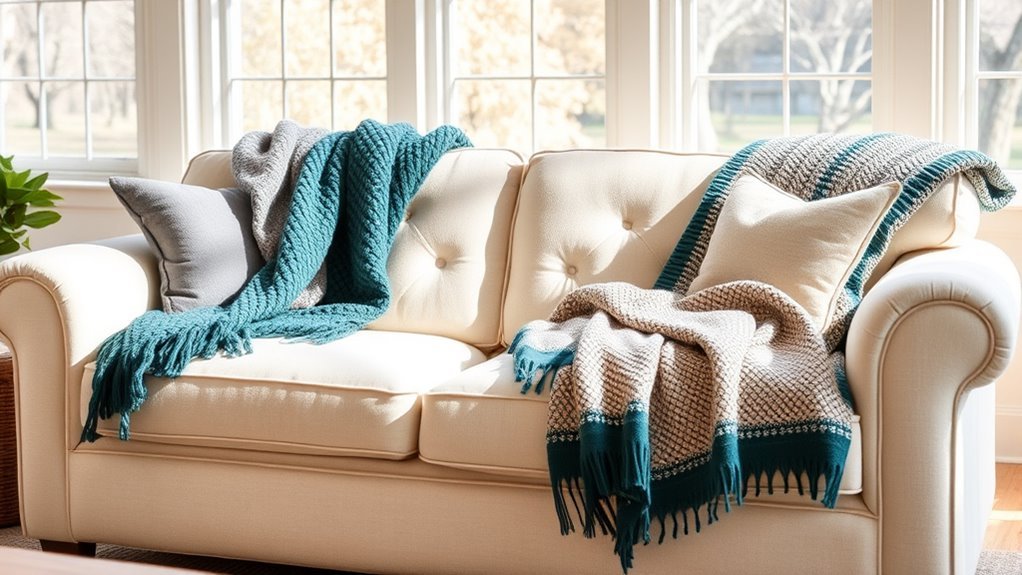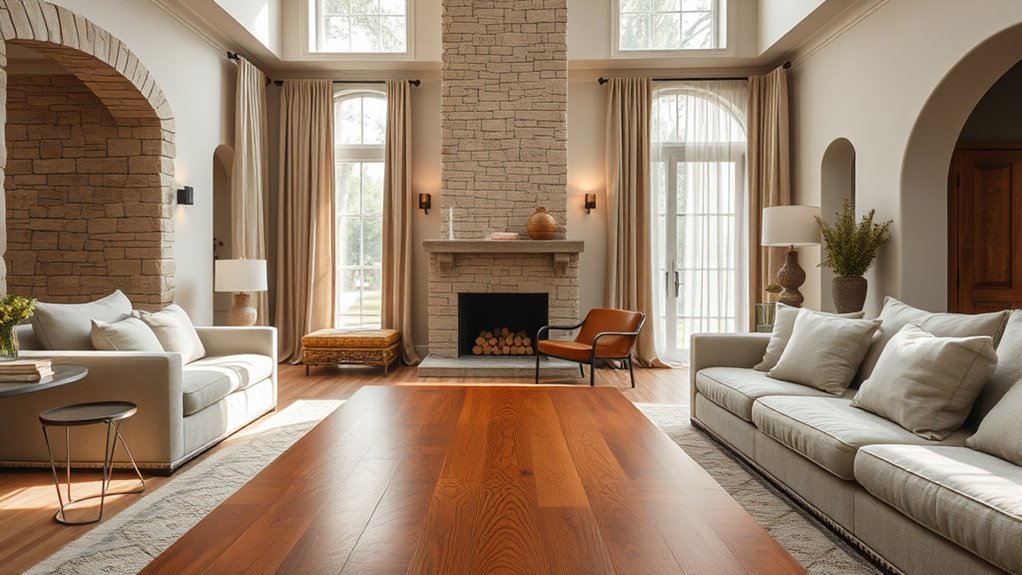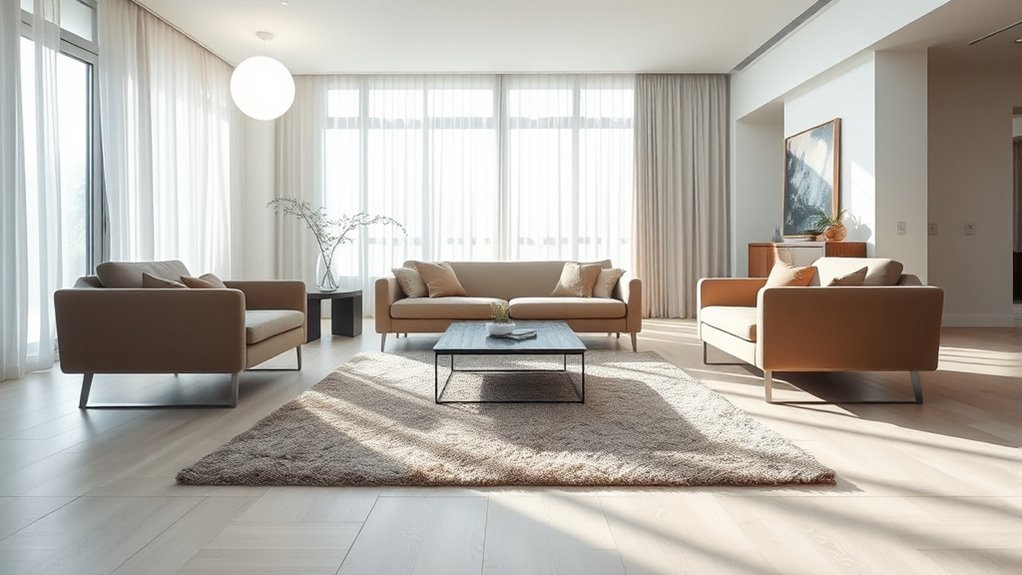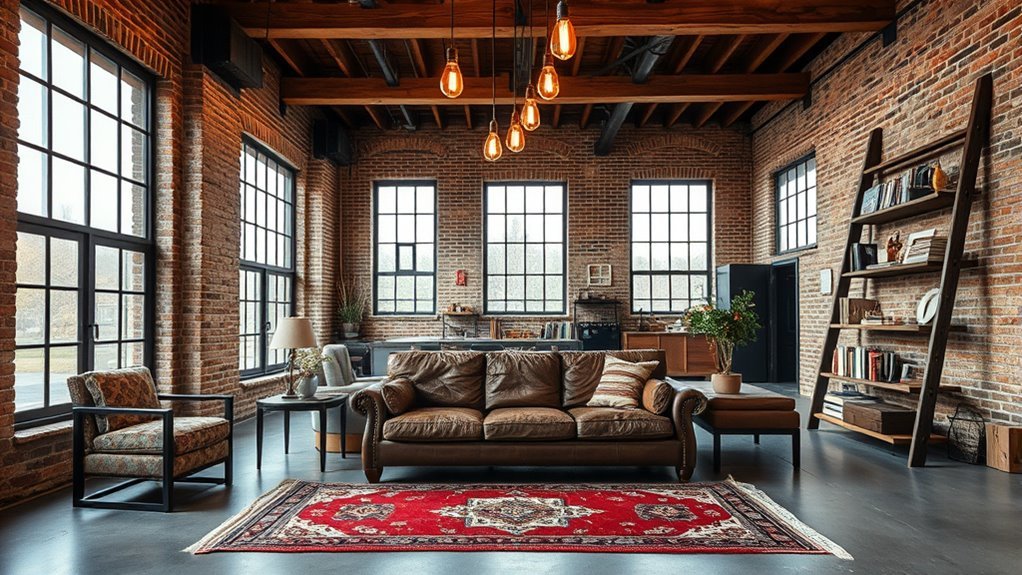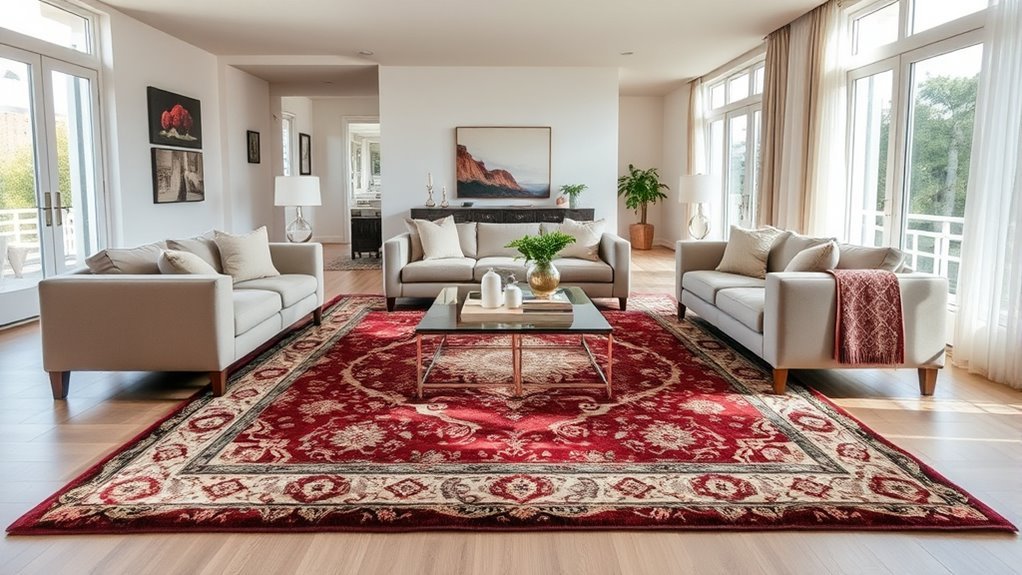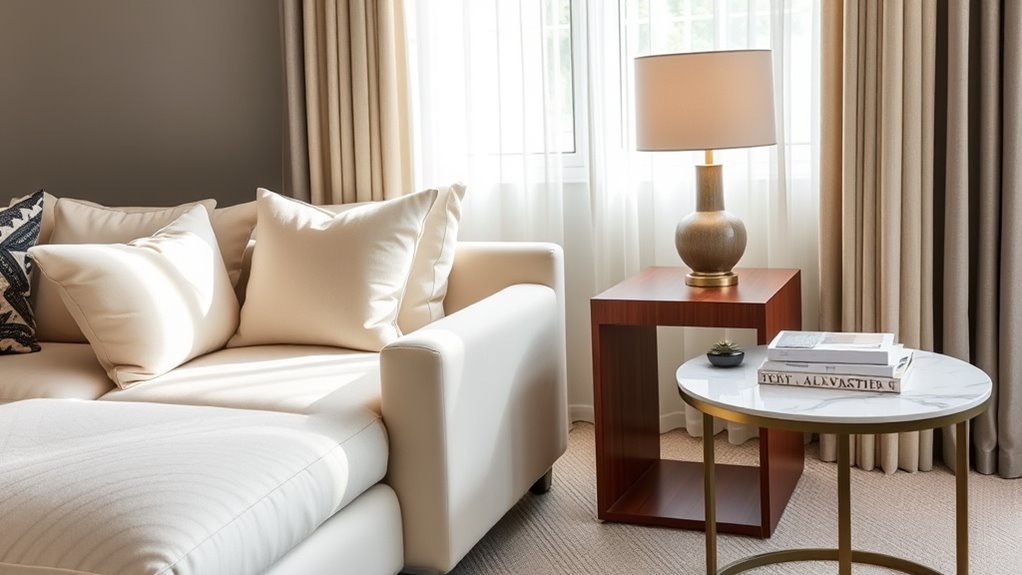
Choosing and placing living room side tables gets much easier when you treat them as part of your seating plan rather than random accent pieces. The right side tables sit close enough to reach from your sofa or armchair, align comfortably with the armrest height, and fit the floor space without crowding walkways. Start by measuring your sofa arm height and the footprint beside each seat, then pick a shape, material, and storage style that fits your daily routine.
Quick Answer
Choose a living room side table that sits level with or 1 to 2 inches below your sofa or chair arm (typically 20 to 26 inches tall), leaves a 2- to 3-inch gap beside the seat, and never extends past the front of the sofa cushion. Keep at least 30 to 36 inches of clear walkway around your seating arrangement.
At a Glance
| Time Required | 20–45 minutes to measure, tape the footprint, and test reach |
| Difficulty | Easy |
| Tools Needed | Tape measure, painter’s tape, notebook or phone notes, optional cardboard template |
| Cost | $0 to plan; side table prices vary by size, material, and storage features |
Why Side Tables Are Essential for Your Living Room’s Functionality and Aesthetic
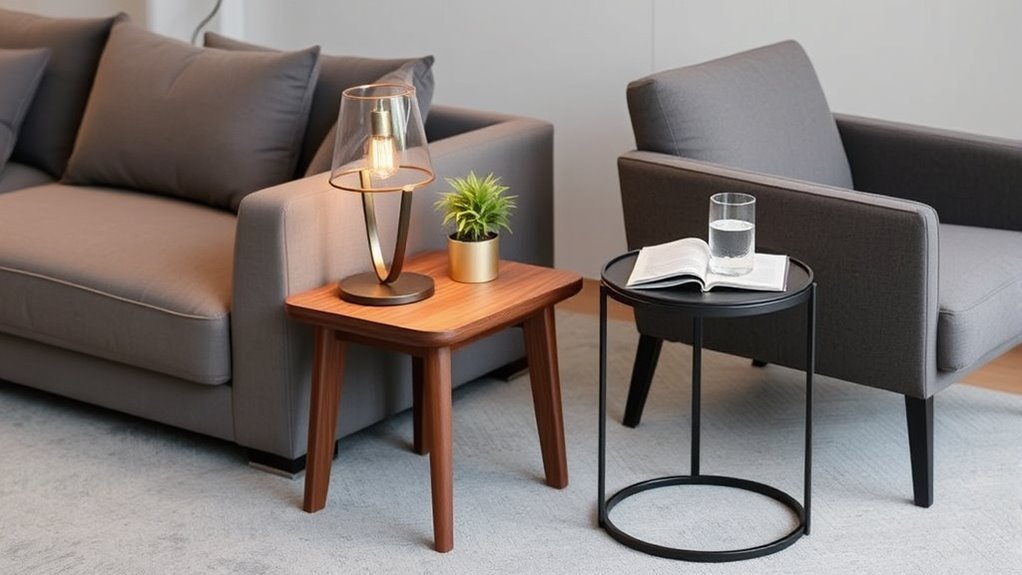
Living room side tables anchor your seating area both practically and visually. They provide an immediate landing spot for a drink, book, remote, phone, coaster, or reading lamp within arm’s reach of every seat. Without a nearby surface, even a spacious sofa arrangement feels inconvenient because guests have to lean forward over a coffee table or hold their glasses.
Side tables also frame the ends of a sofa or pair of chairs so the furniture layout looks grounded rather than floating. A sofa with an empty, exposed end often looks unfinished, especially when its armrest faces an open walkway.
Think of side tables as compact workhorses that bridge seating, task lighting, hidden storage, and room texture without taking up a large footprint.
How to Measure Before Buying a Side Table
Before you shop, record three measurements next to your seating: the armrest height from the floor, the open floor width and depth beside the seat, and your natural seated reach. Taking five minutes to measure prevents buying a table that looks great online but feels too tall, too deep, or too cramped beside your couch.
Recommended Products

Floor Lamp with 3-Tier Side Table: More than just a floor lamp, this space-saving lamp and table combo provides 3 open shelves for books, drinks, décor, electronics and everyday essentials. Each shelf easily supports up to 60 lbs, providing sturdy and reliable storage for your daily items. Measuring 18.9"D x 13.39"W x 59.45"H, it fits naturally beside a sofa, bed or reading chair while adding useful storage without requiring a separate end table.

Modern Form, Lasting Appeal: Clean lines and balanced simplicity define this end table, combining a steel frame with rustic panels to create visual depth and pair effortlessly with matching storage units for a cohesive, modern interior

👍𝗦𝗧𝗬𝗟𝗜𝗦𝗛 & 𝗦𝗔𝗙𝗘 𝗥𝗢𝗨𝗡𝗗𝗘𝗗 𝗗𝗘𝗦𝗜𝗚𝗡 — Prioritizing safety and style, this small round end table features smooth, rounded edges to prevent injuries, particularly in homes with children or elderly family members. Its contemporary aesthetic complements any living space while offering peace of mind.
Measure the Sofa or Chair Arm Height
Measure vertically from the floor to the top surface of your sofa or chair arm. Your side table should sit level with the armrest or 1 to 2 inches below it, and never more than 2 inches above it. Most standard sofas have arm heights between 22 and 28 inches, while low-profile modern platform sofas sit closer to 16 to 20 inches.
A table that towers more than 2 inches above the arm feels like a wall beside your shoulder and makes you lift your elbow awkwardly to set down a mug. For an armless sofa or slipper chair, measure from the floor to the top of the seat cushion (typically 17 to 19 inches) and add 4 to 6 inches so the tabletop meets your natural resting elbow height.
Measure the Available Floor Space
Measure the clear floor width and depth beside your sofa, armchair, or sectional. Standard side tables measure 16 to 24 inches wide and 18 to 24 inches deep, while compact drink tables need only 10 to 15 inches of width. Always measure the depth of your sofa from its back frame to the front edge of the seat cushion—your side table should never stick out past the front of the sofa.
Note: If household accessibility matters, prioritize generous pathways around furniture. The U.S. Access Board’s accessible-route guidance specifies a 36-inch minimum clear width for accessible walking surfaces (with 32 inches permitted at doorways and brief pinch points). Aiming for 30 to 36 inches of clear walkway keeps any living room comfortable to navigate.
Check Reach, Not Just Spacing
Position your side table with a 2- to 3-inch gap between the sofa arm and the edge of the tabletop. Unlike a coffee table—which needs 14 to 18 inches of clearance in front of the sofa for knees and legroom—a side table sits right alongside the seat so your hand lands on the center of the surface without leaning.
Use this seated reach test: sit all the way back against the sofa cushion, drop your shoulders, and extend your forearm over the armrest. If you have to lean forward, twist your torso, or lock your elbow to reach the coaster spot, move the table closer or pick a slightly taller model.
Finding the Right Style and Height for Side Tables
Choosing the right style and dimensions for living room side tables comes down to matching the table’s height, width, and visual weight to your specific seating piece. Start with the exact measurements for your chair or sofa type, then choose materials that balance the heaviness of your upholstery.
| Seating Type | Typical Arm Height | Ideal Side Table Height | Recommended Width & Depth | Best Table Styles |
|---|---|---|---|---|
| Low-profile or platform sofa | 16–20 in. | 15–20 in. | 16–20 in. wide × 18–22 in. deep | Low drum, pedestal, or minimalist cube |
| Standard track-arm or modern sofa | 22–25 in. | 20–25 in. | 18–24 in. wide × 20–24 in. deep | Square, round, or 1-drawer rectangular table |
| Traditional rolled-arm or deep sofa | 26–30 in. | 24–28 in. | 22–28 in. wide × 22–26 in. deep | Tall two-tier table, cabinet end table, or nesting set |
| Small accent or reading chair | 22–26 in. | 20–25 in. | 10–16 in. diameter | Round drink table, pedestal table, or slim C-table |
| Armless sofa or slipper chair | 17–19 in. (seat top) | 21–24 in. | 14–18 in. wide × 16–20 in. deep | Round open-leg table or C-table |
Recommended Products

Modern Form, Lasting Appeal: Clean lines and balanced simplicity define this end table, combining a steel frame with rustic panels to create visual depth and pair effortlessly with matching storage units for a cohesive, modern interior

𝐀𝐥𝐰𝐚𝐲𝐬 𝐛𝐲 𝐘𝐨𝐮𝐫 𝐒𝐢𝐝𝐞. 𝐎𝐯𝐞𝐫𝐚𝐥𝐥 𝐃𝐢𝐦𝐞𝐧𝐬𝐢𝐨𝐧𝐬: 𝟐𝟑.𝟔"𝐋 𝐱 𝟏𝟏.𝟖"𝐖 𝐱 𝟐𝟑.𝟖"𝐇

Hassle-Free Storage: With 2 non-woven drawers and 2 open shelves, this side table measures 11.8"L x 18.9"W x 23.6"H and offers sufficient space for you to store different life supplies and household gadgets tidily, keeping home neat and organized
Side Table Height Guide
Use the sofa or chair arm as your primary height anchor. When choosing between two tables that sit slightly above or slightly below your sofa arm, interior designers recommend going 1 to 2 inches shorter rather than taller so the table visually tucks beside the upholstery.
- Ideal target: Level with the armrest or 1 to 2 inches lower (within a ±2-inch window).
- Avoid overly tall tables: Anything more than 2 inches above the armrest creates a visual barrier and risks elbow bumps.
- Avoid coffee-table heights: Tables under 16 inches beside a standard 24-inch sofa arm force an uncomfortable downward reach.
Choose the Right Width and Depth
Match the tabletop footprint to what you actually keep beside you. A 12-inch Martini or drink table holds a coffee mug and paperback beside a reading chair, but a family sofa needs at least 20 to 24 inches of width to fit a table lamp base, coaster, and remote without knocking things onto the floor.
- Small accent chair: 10- to 16-inch round drink table or C-table that takes minimal floor space.
- Standard sofa: 18- to 24-inch wide table whose depth stays 2 to 4 inches shorter than the sofa’s seat depth.
- Large sectional: 24- to 28-inch wide table, nesting pair, or storage end table that balances deep cushions.
- Recliner: 12- to 16-inch wide table set 2 to 3 inches outside the armrest path so it never blocks the extending footrest or swivel base.
Match the Material to the Room
Select a material that contrasts with or complements your sofa’s texture and leg style. If your sofa is a heavy, skirted, or boxy sectional, pair it with an airy open-frame metal or glass table; if your seating has slim, exposed legs, ground the corner with a solid wood or stone drum table.
- Solid or veneered wood: Warm, timeless, and forgiving of everyday wear; add coasters to prevent moisture rings.
- Powder-coated metal or brass: Sleek, durable, and slim-profiled for modern, transitional, or industrial spaces.
- Tempered glass or acrylic: Visually weightless in tight rooms; verify that any glass top meets ASTM safety standards for tempered glass tabletops so it resists shattering into sharp shards.
- Stone, marble, or travertine: Heavy and low-center-of-gravity stable, though porous natural stone requires sealing against acidic drink spills.
- Rattan or woven cane: Softens angular rooms with coastal or organic texture; pair with a flat tray on top to keep wineglasses steady.
Measuring Space for Optimal Side Table Placement
Before ordering a table, test its exact footprint on your living room floor to make sure it clears door swings, rug borders, and walking paths. A table that fits the gap beside your couch on paper can still wobble on a thick rug edge or block foot traffic.
Identify Available Space Dimensions
Outline the exact width and depth of your candidate table on the floor using painter’s tape or a cardboard cutout, then live with the layout for a day. Check how the footprint interacts with your area rug, wall outlets, and room entryways.
- Tape the footprint: Mark the table’s exact width and depth 2 to 3 inches away from the sofa or chair arm.
- Check the area rug edge: Make sure all table legs sit either completely on the rug or completely on the bare floor; straddling a thick rug border causes lightweight tables to tilt and wobble.
- Test door swings and drawers: Open nearby entry doors, closet doors, and media cabinet drawers fully to confirm at least 2 inches of clearance.
- Walk the main pathways: Verify that 30 to 36 inches of open walkway remains between the taped corner and opposite furniture or walls.
- Mock up the tabletop: Set your lamp base, a book, and a mug inside the cardboard template to confirm at least one-third of the surface stays open.
Consider Table Height Preferences
When a single side table sits between two seats with different arm heights—such as a 23-inch sofa arm and a 26-inch wingback chair—size the table to the taller armrest or split the difference at 24 to 25 inches. Nesting tables with staggered heights (for example, 24 inches and 21 inches) solve uneven seating heights effortlessly.
If your household includes wheelchair users or older adults with limited mobility, consult the U.S. Access Board’s reach-range guidance, which places comfortable unobstructed reach between 15 and 48 inches above the floor (and limits side reach over an obstruction to 34 inches high and 24 inches deep) alongside a 30-by-48-inch clear floor space.
Positioning Side Tables for Maximum Functionality and Accessibility
Position living room side tables so every seat in your layout has an effortless landing spot within 14 to 18 inches of the sitter’s hand. Prioritize daily use and traffic flow over strict symmetry.
Beside a Sofa
Place a side table 2 to 3 inches outside one or both ends of the sofa, aligning the back edge of the table with the back of the sofa frame or the rear edge of the side cushion. Leave 1 to 2 inches between the back of the table and the wall so lamp cords drop freely without pinching plugs or scuffing paint.
Between Two Chairs
Set a single shared side table between two accent chairs angled 15 to 30 degrees toward each other for conversation. Following classic furniture arrangement guidelines, a round table 18 to 22 inches in diameter works best between angled chairs because its curved edge eliminates sharp corners and stays equidistant from both armrests.
Next to a Sectional
Large L-shaped or U-shaped sectionals usually need two or three surfaces so middle and chaise sitters are not stranded. Place a standard side table at the open sofa arm, slide a C-table with a 1- to 2-inch low profile base under the chaise lounge or armless middle seat, and add a narrow 8- to 12-inch deep console table behind an exposed floating sectional back.
In Small Living Rooms
In compact apartments or narrow living rooms, choose tables with open frames, pedestal bases, or clear glass and acrylic tops that let you see the floor underneath. Visually open bases preserve a sense of spaciousness while maintaining at least 18 to 24 inches of pass-through clearance in tight secondary paths.
Pro Tip: If a standard 20-inch side table crowds a tight corner, use a pair of nesting tables. Keep the smaller table tucked underneath day-to-day, then pull it beside the center sofa cushion whenever guests need an extra spot for drinks.
Choosing Side Table Shapes for Your Layout
The shape of your side table controls both usable surface area and how smoothly people move around your seating corner. Pick rounded edges where walkways curve and straight edges where tables sit flush against walls or wide sofa arms.
- Round tables (14–24 in. diameter): Best for high-traffic walkways, homes with young children, and spots between two angled chairs because they have zero sharp corners to catch hips or shins.
- Square tables (18–24 in. square): Offer more corner surface area than round tables of the same width; ideal for framing structured, boxy sofas or filling a 90-degree corner between two sofas.
- Rectangular tables (14–18 in. wide × 22–26 in. deep): Ideal when floor width beside the sofa is narrow but the sofa is deep, giving you front-to-back space for a lamp in the back and drinks in the front.
- C-tables (10–15 in. wide × 16–20 in. deep): Built with a cantilevered frame that slides under a sofa needing just 1.5 to 2 inches of under-frame clearance, pulling the surface right over your lap for a laptop or coffee mug.
- Drum or cylinder tables (16–22 in. diameter): Add sculptural weight and hide floor cords behind a solid base, working best alongside leggy sofas or armchairs.
- Nesting tables: Provide two or three graduated surfaces in the footprint of a single table for flexible entertaining.
Use Decorative Elements to Enhance Your Side Tables’ Appeal
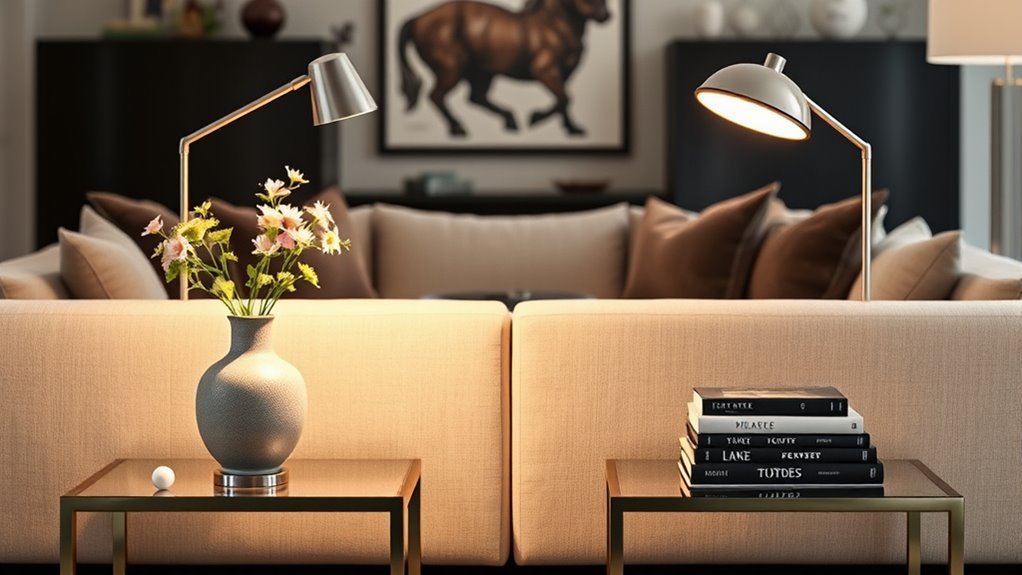
Styling a side table works best when you anchor it with functional essentials first and leave at least 30% to 40% of the tabletop completely empty. An over-styled table leaves nowhere to set a teacup or smartphone without knocking over decor.
Choose Complementary Colors
Pull one or two hues from your sofa pillows, area rug, curtains, or wall art and echo them on the tabletop. This visual repetition connects mismatched side tables to the rest of the room without requiring a matching furniture set.
- Echo existing finishes: Repeat a warm oak wood tone, matte black iron, or brushed brass finish already present in your coffee table or light fixtures.
- Build light-dark contrast: Style a dark walnut or black metal table with a cream ceramic lamp or travertine coaster set so objects stand out clearly.
- Mix surface sheens: Pair matte linen book covers and raw pottery with one reflective element, such as a glass candleholder or brass tray.
- Preserve negative space: Keep the front-inner quadrant nearest the armrest open for drinks and phones.
Incorporate Textured Accessories
Follow the classic interior designer rule of three—grouping three items of varied heights and textures—to create depth without clutter. As Better Homes & Gardens’ end-table styling guide emphasizes, balancing a tall vertical element with low horizontal layers and negative space keeps the surface practical:
- One functional anchor: A table lamp, small catchall tray, or stack of four coasters.
- One vertical accent: A ceramic bud vase with stems, a candlestick, or a sculptural object of varying height.
- One low horizontal base: One or two hardcover books laid flat (doubling as a riser for a small candle or dish) or a lidded box to hide remotes.
Warning: Top-heavy pedestal tables and unanchored drawer or shelf units can tip if a young child climbs or pulls on them. Follow Anchor It! furniture safety guidelines from the U.S. Consumer Product Safety Commission: store heavy items in lower drawers or bottom shelves, secure tall or multi-drawer tables to wall studs, and keep tempting items or dangling lamp cords out of children’s reach.
Side Table Lighting, Storage, and Everyday Use
A hard-working side table handles reading light, hidden storage, and device charging in one compact footprint. Sizing your lamp correctly and routing power cords safely prevents eye glare and tripping hazards.
Recommended Products

3-Drawer Farmhouse Nightstand: Storage your daily essentials neatly organized with 3 spacious drawers while adding a rustic warm brown charm to your bedroom or living room space

[Night Stand with Charger Station]: 1 USB port, 2 outlets and 1 Type-C port are on the nightstand for bedrooms. Imagine plugging in your lamp, phone or watch before sleep, power is just within your reach, then be happy to greet the morning with fully charged devices. Plus: Contain patent pending drawer slide

Nightstand with Charging Station: This white night stand comes with built-in 2 outlets and 2 USB ports, as well as a 4.9 foot power cord. Provide a convenient charging place for your mobile phone, Bluetooth earphones, watches, lamp and laptop, everything is within your arm's reach.
Using Side Tables With Lamps
When pairing a side table with a reading lamp, aim for a combined floor-to-top-of-lamp height of 58 to 64 inches. On a standard 24-inch side table, choose a table lamp 26 to 32 inches tall so the bottom edge of the lampshade sits around 40 to 42 inches above the floor—right at or slightly below seated eye level to shield your eyes from bulb glare. Make sure the lampshade diameter is at least 2 inches narrower than the tabletop width so nobody brushes against the shade walking by.
Choosing Storage Side Tables
Match the table’s storage style to the clutter that accumulates around your sofa. A single top drawer (at least 3 to 4 inches deep inside) hides TV remotes, reading glasses, and charging cables out of sight. An open lower shelf holds a woven basket for throw blankets or oversized art books while keeping the table lighter than a solid cabinet base.
Planning for Outlets and Cords
Locate your wall outlets before finalizing table placement, and fasten lamp or phone charger cables along the back of a table leg using adhesive cord clips. Follow U.S. Consumer Product Safety Commission electrical fire prevention rules by never running lamp or extension cords underneath area rugs or across walking paths, where foot traffic crushes insulation and traps heat. If a floating sofa sits far from wall outlets, use a rechargeable cordless LED table lamp (typically offering 8 to 24 hours of warm 2700K light per charge).
Are Your Side Tables Doing Their Job?
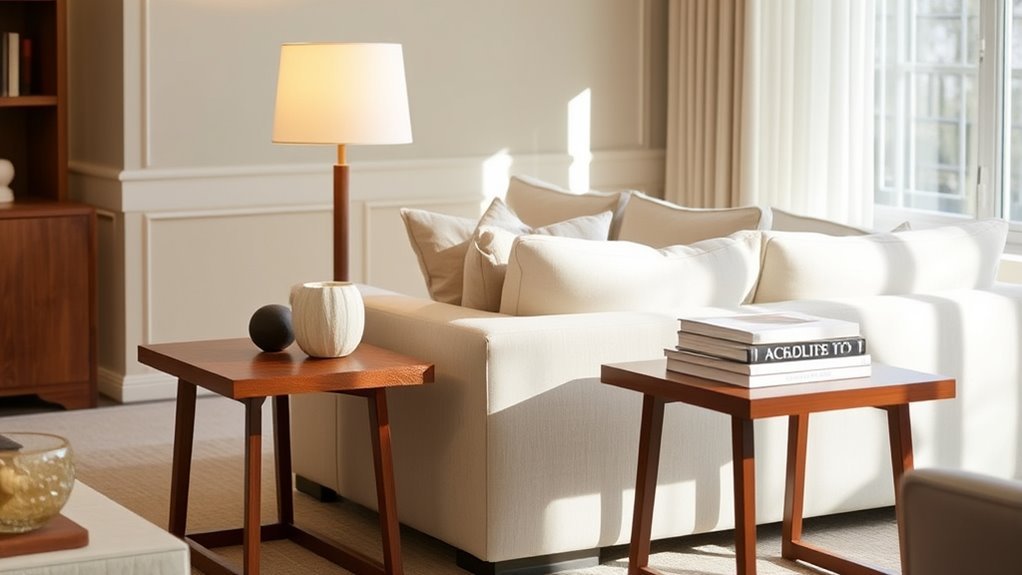
Evaluate your current living room side tables while sitting in your favorite spot rather than standing in the doorway. Run through this seven-point ergonomic and layout check:
- Seated reach: Can you set down a full glass with your back against the cushion and your shoulder relaxed?
- Armrest alignment: Does the tabletop sit level with or up to 2 inches below the sofa or chair arm?
- Depth check: Is the front edge of the table flush with or behind the front edge of the sofa seat cushion?
- Usable landing space: Is at least 30% to 40% of the tabletop clear for a drink, book, and phone?
- Walkway clearance: Do main pathways around the table maintain 30 to 36 inches of unobstructed width?
- Level stability: Do all table legs rest firmly on the same floor or rug surface without wobbling?
- Glare-free lighting: Does the bottom of the lampshade sit at or slightly below seated eye level (about 40 to 42 inches off the floor)?
Common Side Table Mistakes and How to Fix Them
When a side table feels awkward in daily use, the culprit is almost always height mismatch, excessive depth, or surface clutter. Most issues can be solved by swapping positions or adding a simple organizer before buying new furniture.
The Table Is Too Low
If your table sits more than 3 inches below your sofa arm, reaching down strains your shoulder and increases spills. Repurpose that low table beside a low-slung accent chair or use a thick 2-inch wooden or woven box tray on top for a minor boost, and replace the main sofa end table with a model within 1 to 2 inches of the armrest.
The Table Is Too Tall
A table rising more than 2 inches above the armrest looks top-heavy and blocks sideways movement. Move the taller table to a bedroom nightstand spot (where mattresses sit 24 to 28 inches high) or use it as a corner plant stand, and choose a lower table for the sofa.
The Table Crowds the Room
Heavy square or cube tables in tight walkways shrink the room visually and catch shins. Swap a bulky square table for a 14- to 18-inch round table, an acrylic or glass-top piece, a cantilevered C-table, or a narrow wall-mounted floating shelf beside the sofa arm.
The Top Is Always Cluttered
When remotes, mail, and cords pile up on a flat tabletop, corral small items inside a single 8-by-10-inch tray or lidded box. Keep only your lamp and a coaster set on the open surface, and store extra items in a drawer or a woven basket on the lower shelf.
Key Takeaways
- Match side table height to your sofa or chair arm (usually 18 to 24 inches, or up to 28 inches for traditional rolled arms), erring 1 to 2 inches shorter rather than taller.
- Keep side table depth shorter than your sofa’s seat depth so the front corners never jut out into the room.
- Size table lamps so the combined table-and-lamp height hits 58 to 64 inches from the floor, placing the lower shade edge at seated eye level.
- Choose round, nesting, or C-shaped tables in tight rooms to protect a 30- to 36-inch main walkway.
- Leave 30% to 40% of the tabletop empty for daily use and route lamp cords safely with clips instead of hiding them under rugs.
Frequently Asked Questions
How tall should a living room side table be?
A living room side table should sit level with or 1 to 2 inches below your sofa or chair arm, which is typically 18 to 24 inches tall for standard sofas and 24 to 28 inches for tall traditional arms. Going slightly shorter than the armrest is more comfortable and visually balanced than going more than 2 inches taller.
How far should a side table be from a sofa?
Place a side table 2 to 3 inches away from the outside of the sofa arm so the tabletop stays within easy seated reach without rubbing the upholstery. Unlike coffee tables, which require 14 to 18 inches of legroom in front of the seat, side tables should sit right beside the armrest.
What is the standard width and depth for an end table?
Most standard end tables measure 16 to 24 inches wide and 18 to 24 inches deep, while compact drink tables measure 10 to 15 inches across. Choose at least 20 to 24 inches of width if you want to hold a table lamp, coaster, and book, and never exceed the depth of your sofa.
Do side tables need to match each other?
No, side tables do not need to be an identical pair. Matching tables create formal symmetry on both ends of a sofa, while mismatched tables look intentional when they share a similar height, color tone, wood finish, or visual weight.
What type of side table is best for a small living room?
Round tables (12 to 18 inches across), nesting tables, C-tables that slide under the sofa frame, and clear glass or acrylic tables work best in small living rooms. Their compact footprints and open bases preserve sightlines and protect walkway clearance.
Can I use only one side table in a living room?
Yes, a single side table works well if one end of the sofa sits near a corner or another seat has a C-table or coffee table within reach. Balance the opposite end of the sofa visually with an arc floor lamp, a tall potted plant, or a woven storage basket.
What should I put on a side table?
Start with functional essentials like a properly scaled reading lamp, coasters, and a small tray or lidded box for remotes. Add one vertical accent such as a bud vase or candle, and leave 30% to 40% of the surface open for drinks and phones.
Conclusion
Sizing and placing living room side tables comes down to three numbers: matching the tabletop within 1 to 2 inches of your armrest height, keeping the table depth shorter than your sofa, and leaving 2 to 3 inches of breathing room beside the seat. Grab a tape measure and painter’s tape today to mark the footprint next to your favorite seat before you shop.
Sources
- Better Homes & Gardens: End Table Styling Tips: Supports end-table height, scale, rule-of-three styling, lamps, and negative space.
- Better Homes & Gardens: Furniture Arrangement Guidelines: Supports general furniture spacing, shared tables between chairs, and traffic-flow planning.
- U.S. Access Board: Chapter 4 Accessible Routes: Supports 36-inch minimum clear walking route benchmarks.
- U.S. Access Board: Chapter 3 Building Blocks: Supports 15-to-48-inch unobstructed reach ranges and clear-floor-space considerations.
- U.S. Consumer Product Safety Commission: Tempered Glass Safety Alert: Supports ASTM tempered glass safety standards for horizontal tabletops.
- U.S. Consumer Product Safety Commission: Anchor It! Campaign: Supports anchoring drawer/shelf furniture and placing heavy items low to prevent tip-overs.
- U.S. Consumer Product Safety Commission: Home Electrical Safety Guidelines: Supports keeping lamp and extension cords out from under rugs and away from foot traffic.