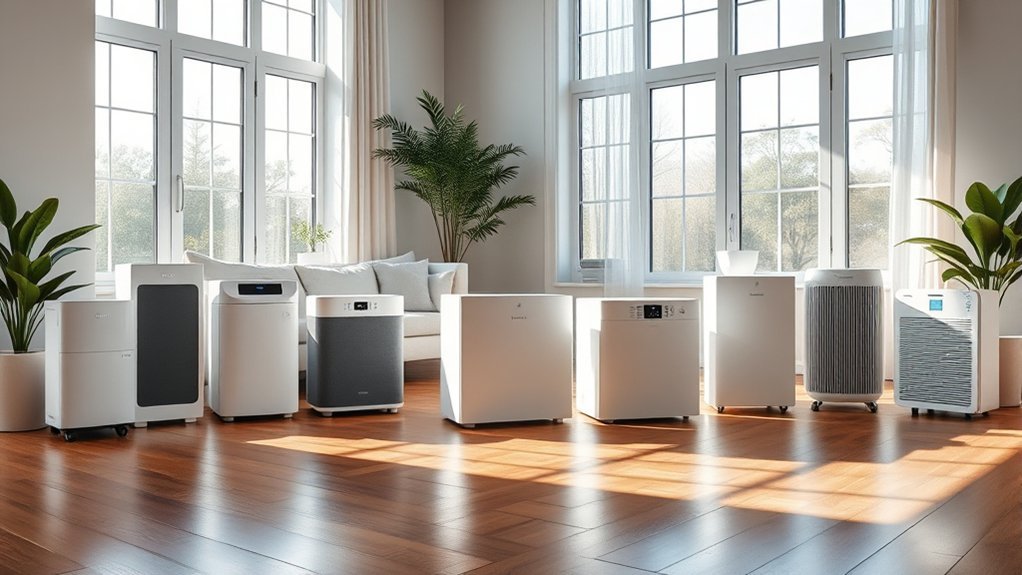
If you are comparing the best 30-pint dehumidifiers with a drain hose, focus on more than the largest square-foot number. A useful model should have an adjustable humidistat, reliable gravity drainage, automatic shutoff, auto-defrost, and controls that suit the room where it will run.
For most buyers, the Aiusevo AS300 offers the strongest balance of moisture control, portability, and drainage options. The Inetra smart dehumidifier is the better choice when app control matters, while the HUMILABS OL12 is a practical option for bedrooms and finished basements where lower advertised noise is important.
Quick verdict
Best overall: Aiusevo AS300. Best smart option: Inetra 1,500 Sq. Ft model. Best quiet-room option: HUMILABS OL12. Best established simple option: AIRPLUS AP1907.
Quick Comparison
| Product | Best For | Advertised Removal | Advertised Coverage | Drainage | Standout Feature |
|---|---|---|---|---|---|
| Aiusevo AS300 | Best overall | Up to 30 pints/day | Up to 2,500 sq. ft. | 0.52-gal tank + 3.28-ft hose | Three operating modes |
| Inetra Smart Dehumidifier | App control | Up to 30 pints/day | Up to 1,500 sq. ft. | 1.6L tank + drain hose | Wi-Fi app controls |
| HUMILABS OL12 | Bedrooms and finished basements | Up to 30 pints/day | Up to 2,000 sq. ft. | 0.53-gal tank + drain hose | Advertised 36 dB operation |
| AIRPLUS AP1907 | Simple everyday operation | Up to 30 pints/day | Up to 1,500 sq. ft. | Tank + hose drainage | Drying, Raining, and Sleep modes |
| OLIXIS 30-Pint | At-a-glance humidity monitoring | Up to 30 pints/day | Up to 2,000 sq. ft. | 2L tank + 3.28-ft hose | Color humidity ring |
| LUKO 30-Pint | Large rooms with floor drains | Up to 30 pints/day | Up to 2,000 sq. ft. | 0.528-gal tank + 3.3-ft hose | Two fan speeds and dry-clothes mode |
| Dravonic DA101 | Basic smart humidity control | Up to 30 pints/day | Up to 2,000 sq. ft. | 0.4-gal tank + 3.28-ft hose | Real-time humidity display |
Selection note: Rankings are based on topic fit, drainage design, control options, portability, stated specifications, and how clearly each model helps a buyer solve a specific humidity problem. No hands-on testing is claimed.
Aiusevo AS300 30-Pint Dehumidifier — Best Overall
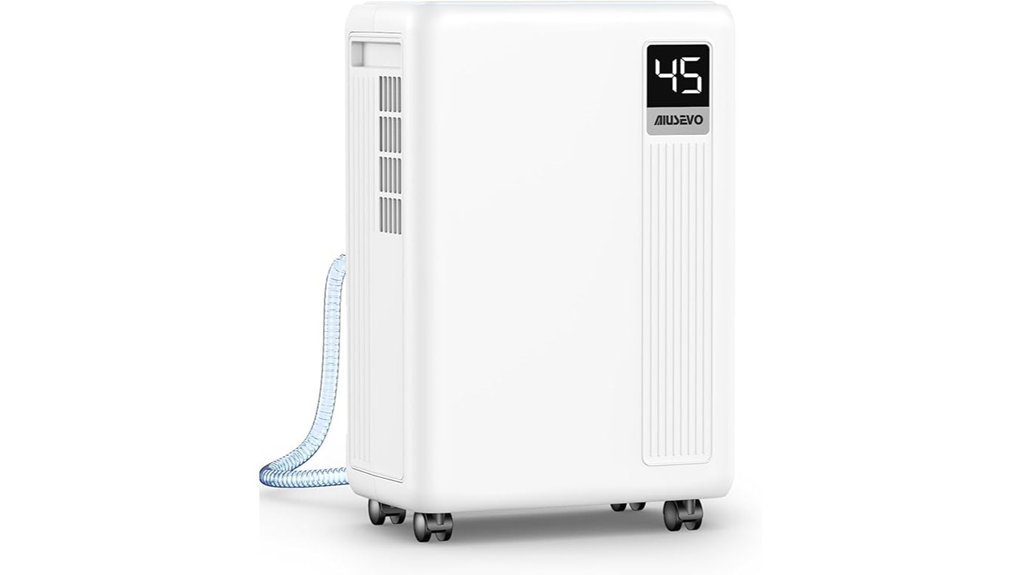
The Aiusevo AS300 is the most balanced option in this lineup for a basement, laundry room, bedroom, bathroom, garage, office, or RV. The listing advertises removal of up to 30 pints per day in warm, highly humid conditions and coverage up to 2,500 sq. ft. It includes DEHU mode for adjustable humidity, DRY mode for laundry, and CONT mode for continuous operation.
The included 3.28-foot hose supports gravity drainage, while the 0.52-gallon tank provides a manual option when a floor drain is unavailable. A child lock, automatic shutoff, auto-defrost, washable filter, timer, display, handle, and casters make it easier to use as an everyday home appliance.
Best For: Buyers who want a versatile 30-pint compressor dehumidifier with several modes and straightforward continuous drainage.
Who Should Avoid It: Buyers expecting one portable unit to control several separated rooms or an entire multi-level home.
Pros:
- Three useful modes for normal humidity control, laundry drying, and continuous operation.
- Includes a 3.28-foot gravity drain hose and a backup tank.
- Portable design with casters, handle, washable filter, timer, and child lock.
Cons:
- The 0.52-gallon tank can fill quickly in a damp room when the hose is not used.
- The 2,500-square-foot figure is an advertised maximum, not a guarantee for every basement.
- No app or voice control for buyers who want remote access.
Inetra 1,500 Sq. Ft Smart Dehumidifier — Best App Control
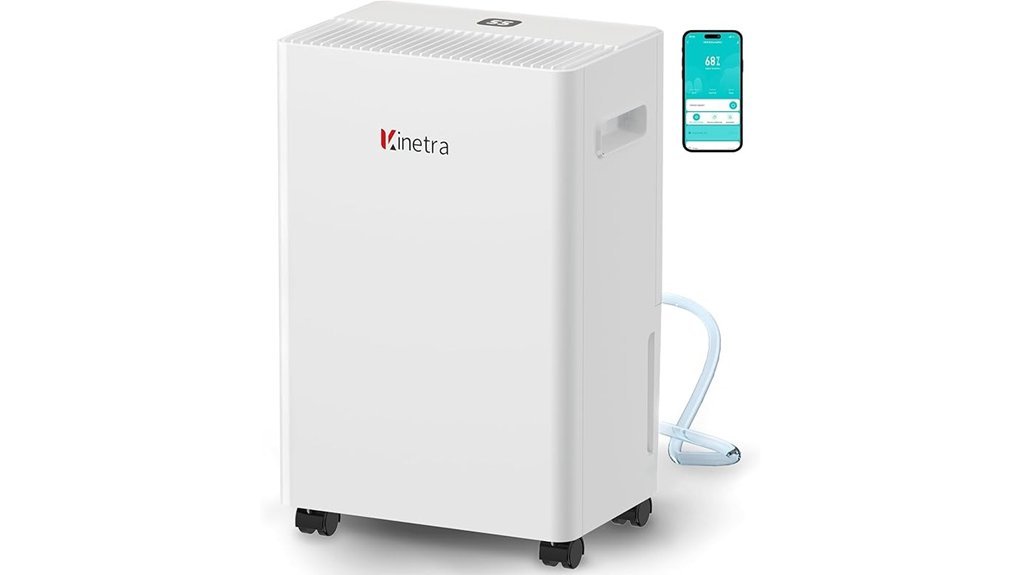
This Inetra model is designed for buyers who want to check settings or make adjustments from a phone. The listing advertises up to 30 pints of daily removal, coverage up to 1,500 sq. ft., a 1.6-liter tank, continuous hose drainage, a 24-hour timer, and adjustable humidity from 20% to 90%.
Auto mode is intended to maintain about 55% relative humidity, while the laundry setting increases drying effort. The compact body, casters, and side handle help when moving it between a bedroom, office, bathroom, laundry area, or small basement.
Best For: Buyers who value Wi-Fi app control more than a large water bucket.
Who Should Avoid It: Anyone with unreliable Wi-Fi or no suitable downhill drain who does not want to empty a small tank frequently.
Pros:
- App-based monitoring and control for humidity, modes, and timers.
- Compact footprint with casters and a side handle.
- Continuous hose drainage supports hands-off operation when correctly installed.
Cons:
- The 1.6-liter tank is small for a persistently damp space.
- Smart features add setup steps and depend on network compatibility.
- Advertised 1,500-square-foot coverage may be optimistic in cool or very wet basements.
HUMILABS OL12 30-Pint Dehumidifier — Best for Quiet Rooms
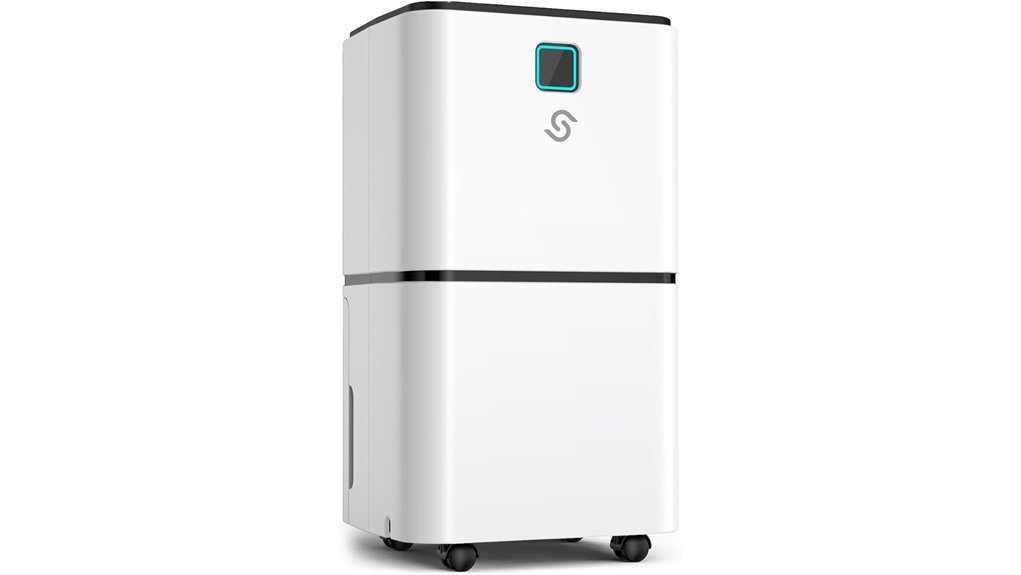
The HUMILABS OL12 targets buyers who need a compact compressor dehumidifier near a bedroom, living space, or finished basement. Published specifications list up to 30 pints of daily moisture removal, coverage up to 2,000 sq. ft., a 0.53-gallon tank, and advertised operation around 36 dB.
Automatic, fast-drying, and sleep modes give it a practical mix of everyday settings. The removable filter, 360-degree wheels, tank shutoff, and continuous drain connection reduce routine effort, although the hose should always run downhill without kinks.
Best For: Bedrooms, offices, finished basements, and living areas where noise is a major buying concern.
Who Should Avoid It: Buyers who need app control, a built-in condensate pump, or commercial-grade extraction.
Pros:
- Advertised 36 dB operation with a dedicated sleep mode.
- Up to 30 pints per day with automatic, drying, and sleep settings.
- Continuous drain connection, washable filter, wheels, and removable tank.
Cons:
- Noise can vary by fan speed, compressor cycle, room acoustics, and placement.
- The small tank is better treated as a backup to the hose in damp rooms.
- No built-in pump for drains located above the outlet.
AIRPLUS AP1907 30-Pint Dehumidifier — Best Simple Option
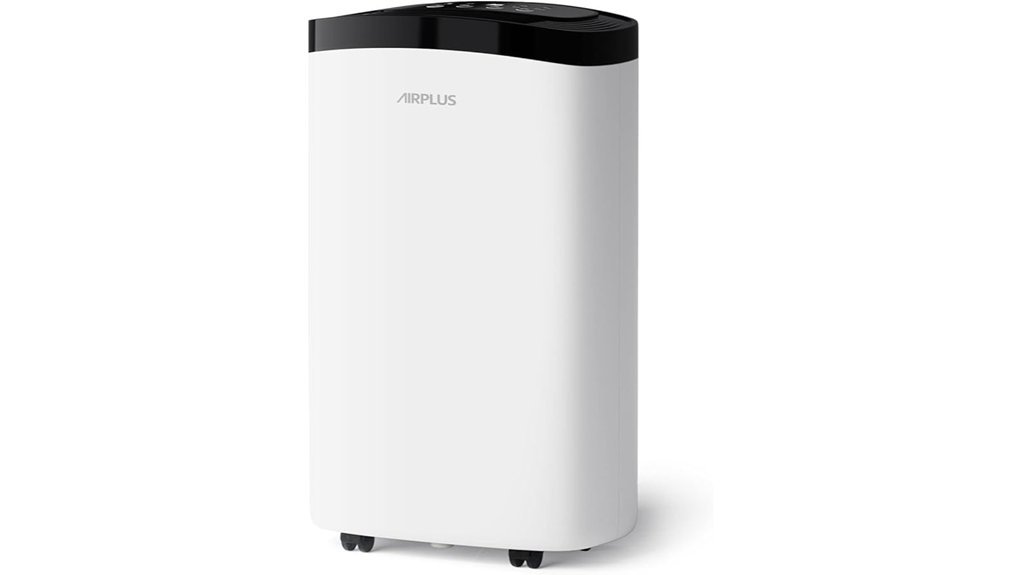
The AIRPLUS AP1907 is an established, straightforward option for buyers who do not need Wi-Fi or a complex control panel. Its listing advertises removal of up to 30 pints per day in specified warm and humid conditions and coverage up to 1,500 sq. ft.
Drying, Raining, and Sleep modes provide simple presets, and the 1-to-24-hour timer can schedule automatic starts or stops. A full-tank shutoff, hose-ready drainage, and four casters make it practical for basements, bedrooms, living rooms, kitchens, closets, and parked RVs with suitable power and ventilation.
Best For: Buyers who want familiar controls, continuous drainage, and a proven model without smart-home setup.
Who Should Avoid It: Buyers who need exact app-based humidity tracking or a built-in pump.
Pros:
- Simple preset modes and a 1-to-24-hour timer.
- Tank shutoff and hose-ready continuous drainage.
- Four casters help move the unit between rooms.
Cons:
- No Wi-Fi, app control, or advanced scheduling.
- The tank may require frequent emptying without a drain hose.
- Its maximum moisture-removal claim uses specific test conditions that may not match a normal room.
OLIXIS 30-Pint Dehumidifier — Best Humidity Display
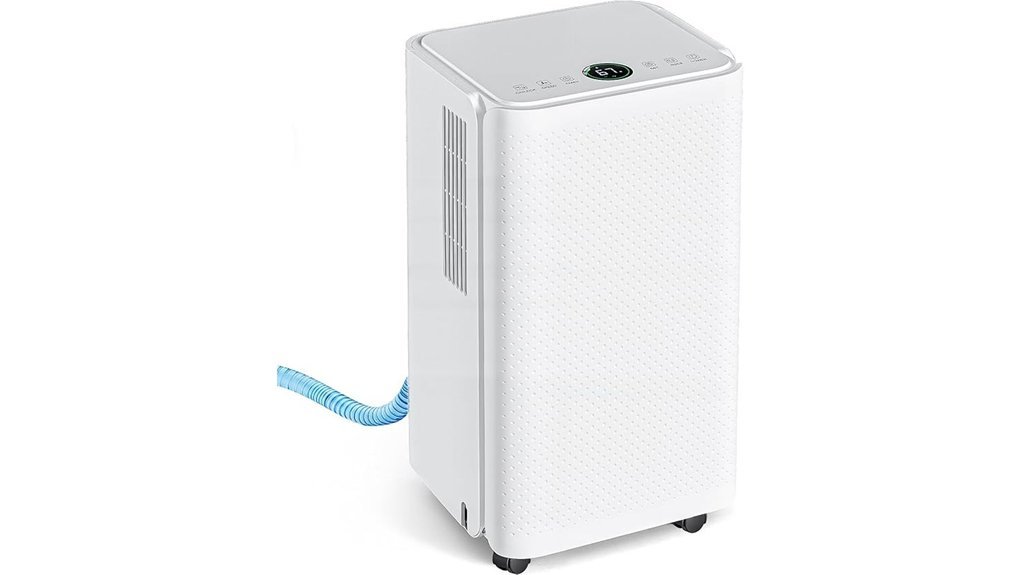
The OLIXIS model stands out for its color humidity ring and four operating modes: Auto, Drying, Sleep, and Air Purification. The listing advertises up to 30 pints per day, coverage up to 2,000 sq. ft., a 2-liter tank, lower-noise operation, a 24-hour timer, casters, child lock, auto-defrost, and a 3.28-foot drain hose.
Its listing also promotes ENERGY STAR Most Efficient status. Because certification is tied to an exact model number and standardized test method, confirm the model shown on the Amazon page against the current ENERGY STAR Product Finder before treating the badge or pint figure as directly comparable with another unit.
Best For: Buyers who want multiple modes and an easy visual humidity indicator.
Who Should Avoid It: Buyers who do not want to verify model-specific certification or who need a larger tank.
Pros:
- Color-coded humidity ring for quick room-status checks.
- Auto, Drying, Sleep, and Air Purification modes.
- Includes a drain hose, timer, child lock, casters, and washable filter.
Cons:
- The 2-liter tank may fill quickly without continuous drainage.
- Energy and capacity labels can differ by exact model and test standard.
- Air Purification mode should not be treated as a substitute for a dedicated air purifier.
LUKO 30-Pint Dehumidifier — Best for Large Rooms
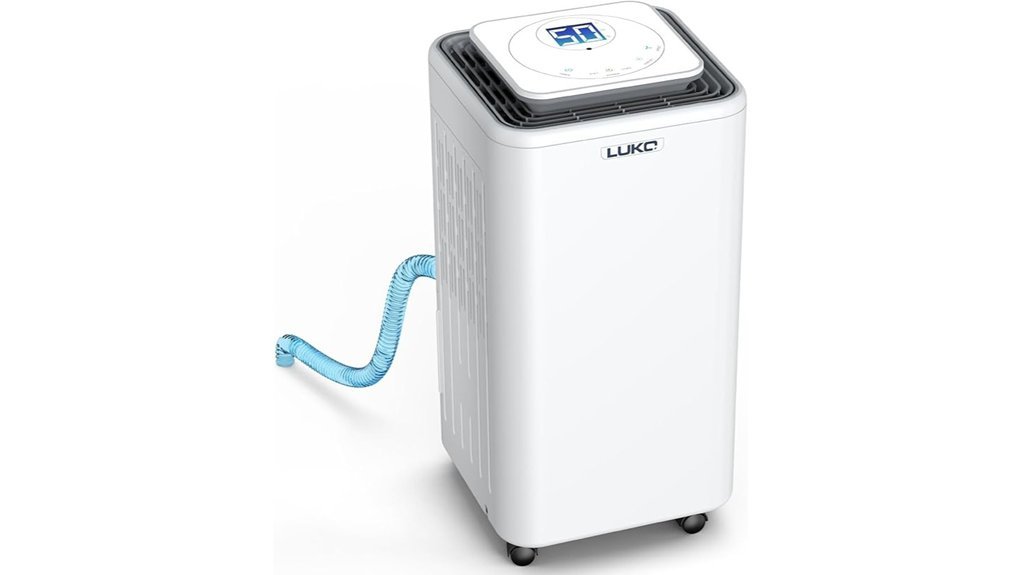
The LUKO 30-pint model is aimed at larger single rooms and basements where continuous drainage is available. The listing advertises removal of up to 30 pints per day at 95°F and 90% relative humidity, coverage up to 2,000 sq. ft., adjustable humidity from 30% to 80%, two fan speeds, auto-defrost, a 24-hour timer, and a dry-clothes mode.
The 0.528-gallon tank includes a full indicator and automatic shutoff. For hands-off use, connect the included 3.3-foot hose to a drain below the outlet. Casters and handles help with movement, although this type of compressor appliance should remain upright before operation after transport.
Best For: Basements, laundry rooms, and large open rooms with a nearby floor drain.
Who Should Avoid It: Very noise-sensitive sleepers or users who need a built-in pump.
Pros:
- Adjustable humidistat, two fan speeds, timer, and dry-clothes mode.
- 0.528-gallon tank plus an included 3.3-foot hose.
- Auto-defrost, washable filter, wheels, and handles.
Cons:
- Advertised 45 dB operation may be noticeable in a quiet bedroom.
- The 2,000-square-foot rating depends heavily on temperature and moisture load.
- No remote app control or condensate pump.
Dravonic DA101 30-Pint Dehumidifier — Best Basic Smart Controls
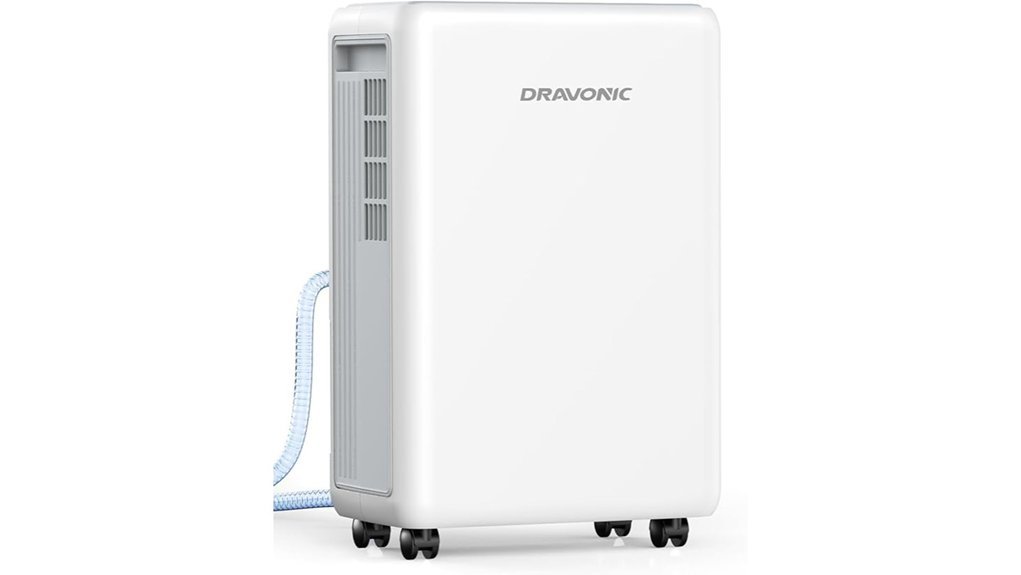
The Dravonic DA101 is a compact option for buyers who want real-time humidity information and automatic on/off control without Wi-Fi. Its listing advertises up to 30 pints of daily removal under warm, humid test conditions, coverage up to 2,000 sq. ft., target humidity from 30% to 80%, a 24-hour timer, comfort mode, continuous mode, and a quick-dry setting.
The included 3.28-foot hose supports gravity drainage, while the 0.4-gallon tank provides automatic shutoff when full. Casters, handles, child lock, auto-defrost, and a washable mesh filter improve daily usability.
Best For: Bedrooms, bathrooms, laundry areas, and small-to-medium basements where a compact unit and continuous drain hose are preferred.
Who Should Avoid It: Buyers who want a large bucket or remote app control.
Pros:
- Real-time humidity display with automatic on/off control.
- Comfort, continuous, and quick-dry settings.
- Included drain hose, child lock, casters, timer, and washable filter.
Cons:
- The 0.4-gallon tank is the smallest in this comparison.
- No app, voice control, or built-in pump.
- Brand support and warranty terms should be confirmed before purchase.
Factors to Consider When Choosing a 30-Pint Dehumidifier With Drain Hose
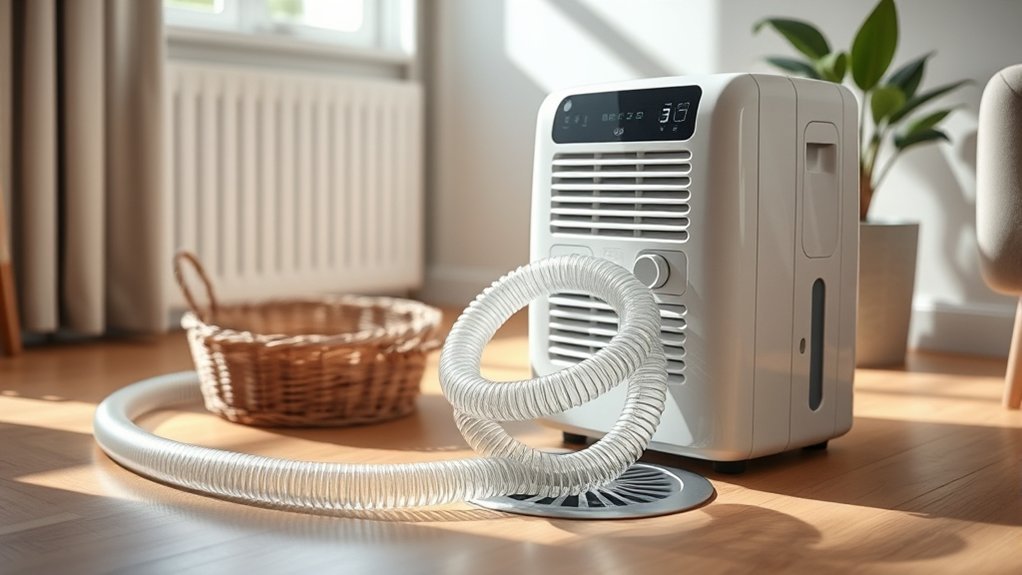
A good drain-hose dehumidifier should match the room’s moisture load, temperature, drainage location, and noise tolerance. The following checks are more useful than choosing the listing with the highest square-foot number.
Compare Capacity Test Conditions
Two models can both be advertised as “30 pint” while using different temperature and humidity conditions. A rating measured at 95°F and 90% relative humidity will be much higher than the amount collected in a cool basement. Look for the exact test condition, model number, and current standardized capacity when available. This helps prevent misleading comparisons between models that use different rating methods.
Treat Coverage Area as a Starting Point
Square-foot coverage is a marketing estimate, not a complete sizing calculation. Ceiling height, outdoor air leakage, room temperature, standing water, laundry, showers, foundation moisture, and how often doors open all affect performance. A 30-pint model can work well in a moderately damp open room but struggle in a cold, wet basement even when the floor area appears to fit the listing.
Check the Drainage Path
Most models in this guide use gravity drainage. The hose must slope continuously downward to a floor drain, sump, or other approved outlet. Avoid upward loops, kinks, crushed sections, and submerged hose ends. A longer hose may work when the manufacturer allows it, but added length increases the chance of poor flow. Choose a model with a built-in pump if the water must travel upward.
Consider Real-World Noise
Advertised ratings in the mid-30s to mid-40s dB can help narrow the list, but compressor cycling, fan speed, floor vibration, and room acoustics change what you hear. For a bedroom or office, prioritize sleep mode, low fan speed, stable placement, and enough clearance around the air intake and outlet. Do not assume “whisper quiet” means silent.
Choose Useful Humidity Controls
An adjustable humidistat lets the unit cycle instead of running continuously. Auto mode is useful for daily comfort, while continuous mode is better for an active moisture problem or laundry drying. A child lock, power-loss restart, tank-full shutoff, washable filter, and clear display are usually more useful than decorative smart features.
Check Minimum Operating Temperature
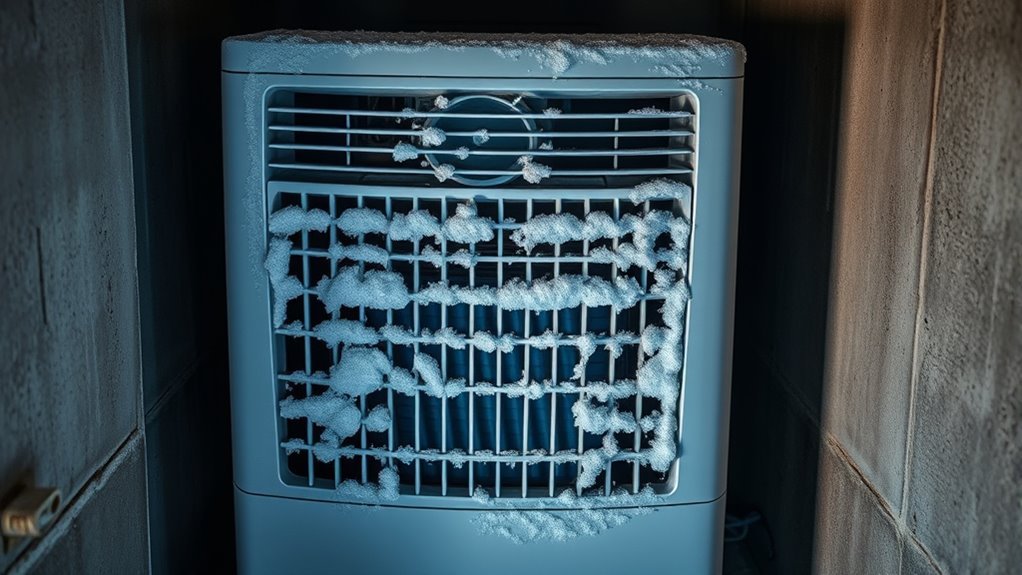
Compressor dehumidifiers collect less water as room temperature falls. Auto-defrost can protect the coils from frost, but it does not guarantee strong extraction in a cold basement. Confirm the manufacturer’s minimum operating temperature and consider a low-temperature or desiccant solution when the room stays unusually cool.
Verify Energy Efficiency by Exact Model
ENERGY STAR certification applies to an exact model, not every product sold under a brand or shared Amazon variation. Check the model number on the listing and rating label against the current ENERGY STAR Product Finder. Also compare timer controls, auto cycling, standardized capacity, and efficiency rather than relying only on a badge shown in marketing images.
- Measure the room and note whether it is cool, moderately damp, or visibly wet.
- Confirm that the hose can run downhill to a safe drain.
- Check the exact model number, test conditions, warranty, and included hose length.
- Plan enough clearance around the air inlet and outlet.
- Use a separate hygrometer if precise humidity monitoring matters.
Frequently Asked Questions
How Often Should I Clean the Dehumidifier Filter?
Follow the manual first. For many homes, checking the filter every two to four weeks is reasonable, with more frequent cleaning when the unit runs daily, the room is dusty, or pets are present. Turn off and unplug the unit before removing the filter.
Can I Use a Longer Drain Hose Safely?
Only when the manufacturer permits it and the hose can maintain a continuous downhill slope. Extra length, narrow tubing, kinks, and upward loops can slow or stop gravity drainage. A standard gravity-drain model cannot push water to a sink or drain above the outlet.
Will It Work Efficiently in Cold Basement Temperatures?
Performance usually drops as the room gets colder. Auto-defrost helps manage coil frost, but moisture removal may still be much lower than the advertised maximum. Check the minimum operating temperature and compare models using the same test conditions.
Does Continuous Drainage Reduce Energy Consumption?
Not by itself. A drain hose mainly prevents the unit from stopping when the bucket fills. Because the dehumidifier can run for longer periods, total energy use may stay similar or even increase depending on the humidity setting and moisture load. Auto mode and a sensible target humidity are more important for energy control.
How Do I Prevent Buildup in the Drain Hose?
Keep the hose sloped, free of kinks, and out of standing water. Inspect it regularly and flush it with warm water and a manufacturer-approved mild cleaning solution. Rinse thoroughly, and replace tubing that stays cloudy, cracked, blocked, or difficult to clean.
Is a 30-Pint Dehumidifier Enough for a Basement?
It can be enough for a small or moderately damp basement, especially with continuous drainage. A large, cold, leaky, or visibly wet basement may need a higher standardized capacity, better drainage, air sealing, or correction of the underlying water source.
Conclusion
The Aiusevo AS300 is the best all-around choice in this group because it combines three practical modes, portable controls, a drain hose, and a backup tank. Choose the Inetra when app control is the priority, the HUMILABS OL12 for a quieter occupied room, or the AIRPLUS AP1907 for simple preset operation.
Whichever model you choose, confirm the exact capacity test conditions and make sure the drain hose can run continuously downhill. Correct sizing and drainage setup will make a bigger difference than an inflated square-foot claim.