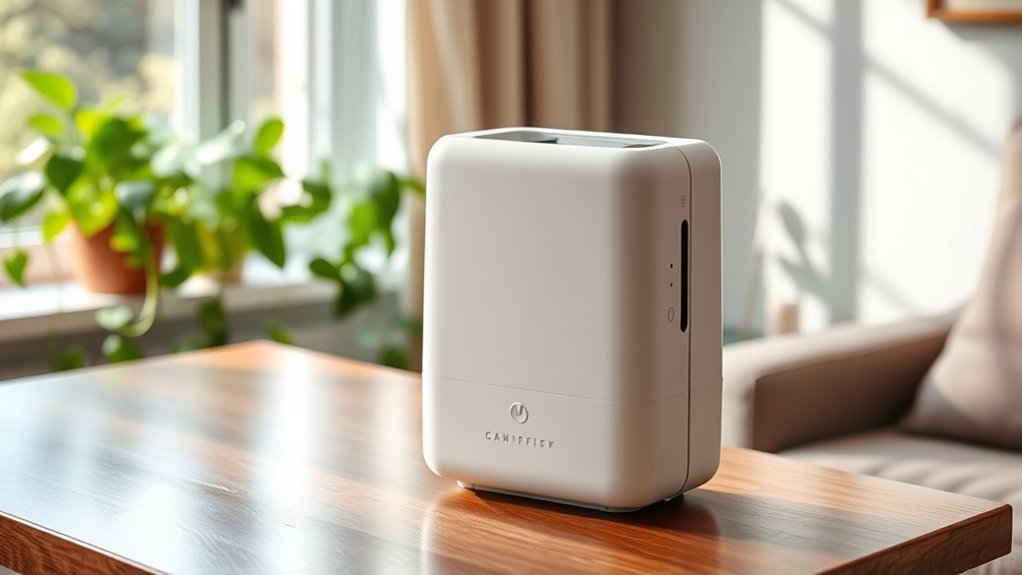
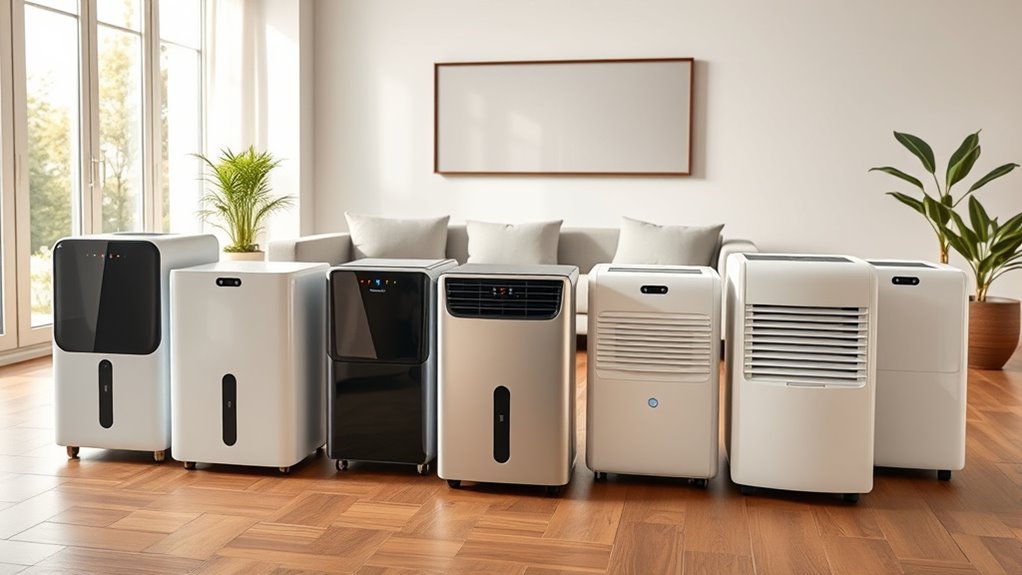
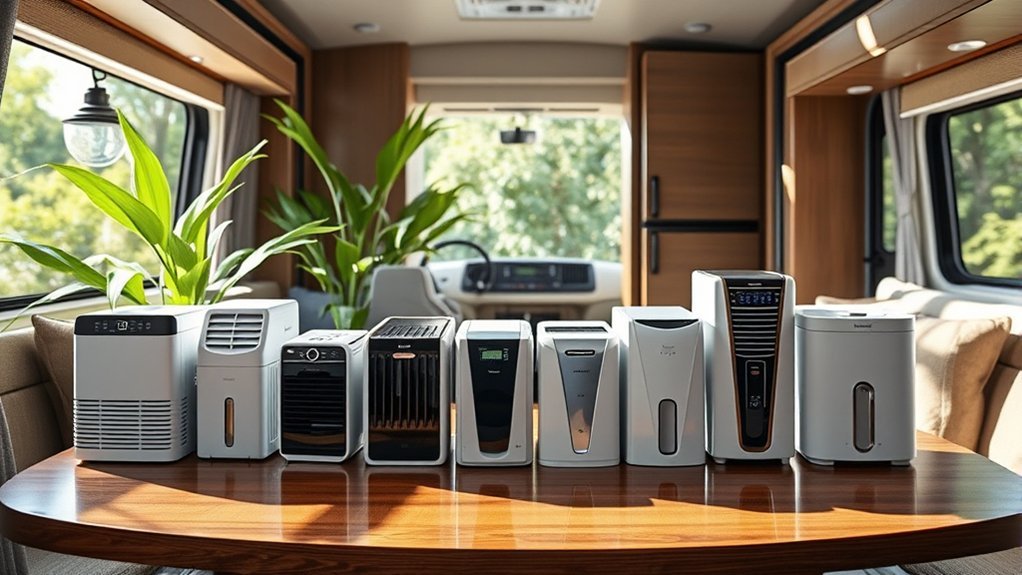
If you are comparing the best 30- to 35-pint dehumidifiers for 2026, focus on more than the largest number in the product title. Tank size, drainage, room conditions, controls, noise, and the test method behind the capacity rating can all affect real-world performance. The five models below are portable compressor dehumidifiers intended for bedrooms, basements, laundry rooms, garages, and other residential spaces.
Important capacity clarification
A true 30-liter-per-day dehumidifier removes about 63.4 US pints per day. The products in this guide are instead marketed as 30- to 35-pint-per-day models, generally using hot and very humid test conditions. They should not be described as 30L dehumidifiers. Where certification data is available, the current DOE-tested capacity may be much lower than the maximum number used in the product title.
Quick Verdict
- Best Overall Verified Option: Waykar PD160B
- Best Mode Selection: Aiusevo AS300
- Best Long Drain Hose: AIRVIP 34-Pint
- Best for Quieter Rooms: Uhome UDL5-30P
- Best Compact Waykar: Waykar CTH30A
These labels are editorial comparisons based on available product specifications. They are not hands-on testing awards.
Quick Comparison
| Product | Advertised Maximum | Current DOE/ENERGY STAR Context | Advertised Coverage | Tank and Drainage | Best For | Amazon |
|---|---|---|---|---|---|---|
| Waykar PD160B | 34 pints/day at 95°F and 90% RH | 9.81 pints/day in the official ENERGY STAR entry | Up to 2,000 sq. ft. | 0.66-gallon tank; gravity hose drainage | Verified efficiency and flexible controls | Check Details |
| Aiusevo AS300 | 30 pints/day at 95°F and 90% RH | No current DOE capacity verified for this exact listing | Up to 2,000 sq. ft. in the available manual | 0.52-gallon tank; 3.28-foot hose | Multiple operating modes | Check Details |
| AIRVIP 34-Pint | 34 pints/day under seller-stated hot, humid conditions | No current DOE capacity verified for this exact listing | Up to 2,441 sq. ft. seller-stated | 0.67-gallon tank; 6.56-foot hose | Long gravity-drain setup | Check Details |
| Uhome UDL5-30P | 30 pints/day at 90°F and 90% RH | No current DOE capacity verified for this exact listing | Up to 1,500 sq. ft. | 1.7-liter tank; 23.6-inch hose | Bedrooms and smaller basements | Check Details |
| Waykar CTH30A | 30 pints/day under high-temperature conditions | About 9.2 pints/day for certified CTH30-family models; verify the exact suffix | Up to 2,000 sq. ft. | 0.4-gallon tank; 6.56-foot hose | Compact placement and easy drainage | Check Details |
Coverage figures are manufacturer or seller guidance rather than guarantees. Room temperature, starting humidity, water intrusion, airflow, and layout can substantially change performance.
Waykar 34 Pints Energy Star Dehumidifier
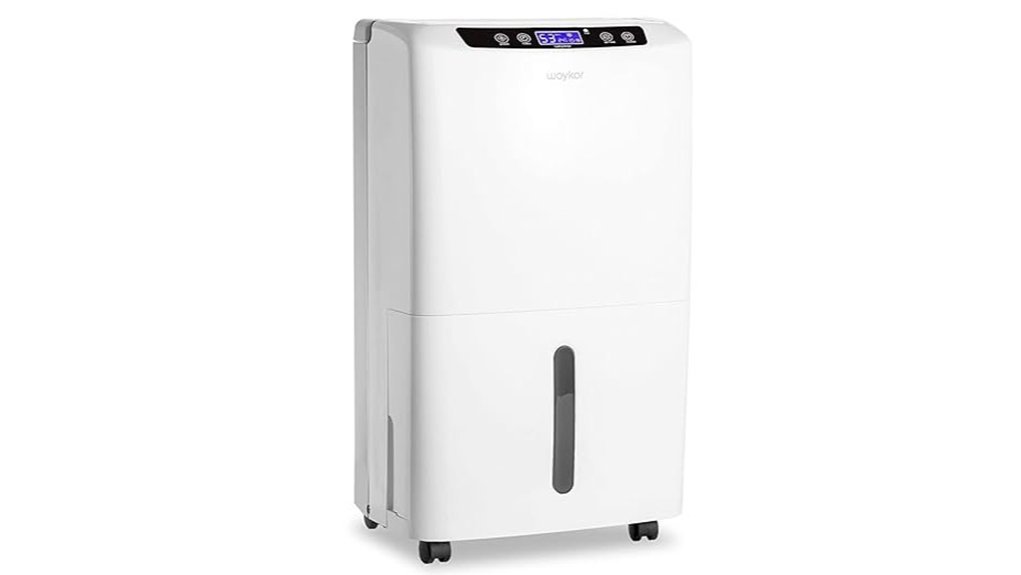
The Waykar PD160B is the strongest all-around choice here when you want a model with a verifiable ENERGY STAR record, adjustable humidity control, and both tank and hose drainage. The product is advertised to remove up to 34 pints per day at 95°F and 90% RH and to serve spaces up to 2,000 sq. ft.
Its current ENERGY STAR entry lists a lower 9.81-pint-per-day DOE-tested capacity. That does not mean the product title is necessarily fabricated; it means the two figures come from different testing conditions. The DOE figure is the more useful standardized number when comparing certified products.
The unit includes a 0.66-gallon removable tank, gravity-drain connection, two fan speeds, a 24-hour timer, automatic restart, automatic shutoff, a washable filter, caster wheels, and humidity adjustment from 30% to 80% RH.
Best For: Buyers who value verified energy certification, straightforward controls, and flexible drainage for a moderately damp residential room.
Skip It If: You need true 30-liter-per-day extraction, a built-in condensate pump, or enough capacity for serious water intrusion.
Pros:
- Official ENERGY STAR certification can be verified for the PD160B.
- Offers both a 2.5-liter tank and continuous gravity drainage.
- Includes two fan speeds, a timer, automatic restart, and adjustable humidity.
Cons:
- The 34-pint headline uses much hotter and wetter conditions than the current DOE test.
- The advertised 2,000-square-foot figure is not a performance guarantee.
- The tank may require frequent emptying in a persistently damp space.
Aiusevo AS300 30-Pint Dehumidifier
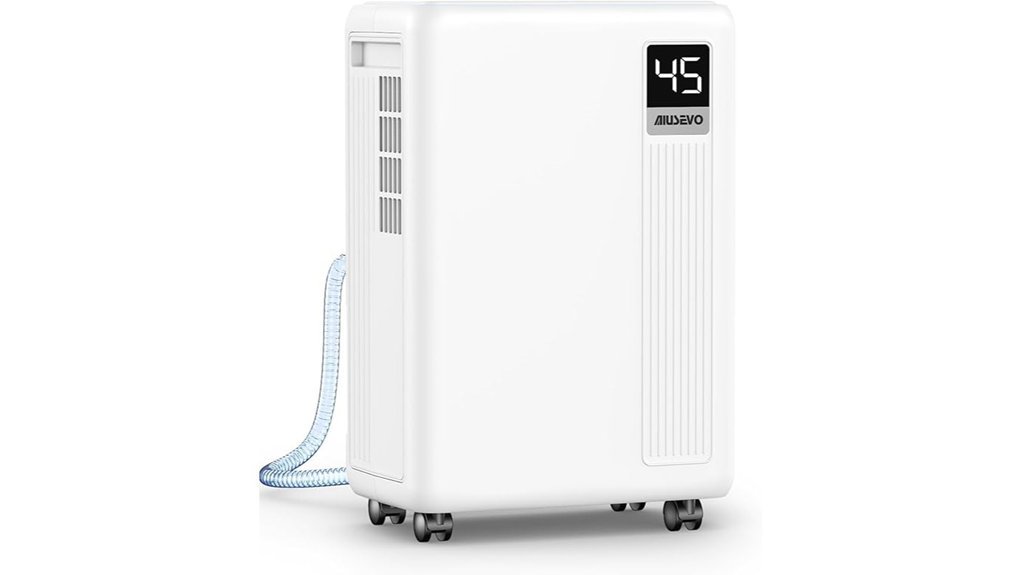
The Aiusevo AS300 is a practical option for buyers who want several operating modes without moving to a larger machine. Its available manual lists a maximum extraction rate of 30 pints per day at 95°F and 90% RH and coverage of up to 2,000 sq. ft.
DEHU mode lets you choose a target between 30% and 80% RH. DRY mode is intended to assist with indoor laundry drying, while CONT mode keeps the compressor operating for demanding conditions. The approximately 40 dB seller-stated noise level, child lock, washable filter, digital display, two fan speeds, timer, automatic defrost, and caster wheels make it suitable for everyday residential use.
The 0.52-gallon tank automatically stops the machine when full. An included 3.28-foot hose supports gravity drainage when a suitable floor drain or sink is below the outlet.
Best For: Bedrooms, laundry rooms, home offices, and moderately damp basements where operating-mode flexibility matters.
Skip It If: You need a large bucket, a long drain hose, a pump, or verified ENERGY STAR performance for the exact model.
Pros:
- DEHU, DRY, and continuous modes address different household needs.
- Includes a child lock, timer, washable filter, automatic defrost, and two fan speeds.
- The included hose makes unattended gravity drainage possible when installed correctly.
Cons:
- The 30-pint maximum is based on hot, very humid test conditions.
- The 2-liter tank can fill quickly in a damp basement.
- Marketplace sources give inconsistent coverage, weight, and dimension figures.
AIRVIP 34-Pint Dehumidifier with Drain Hose
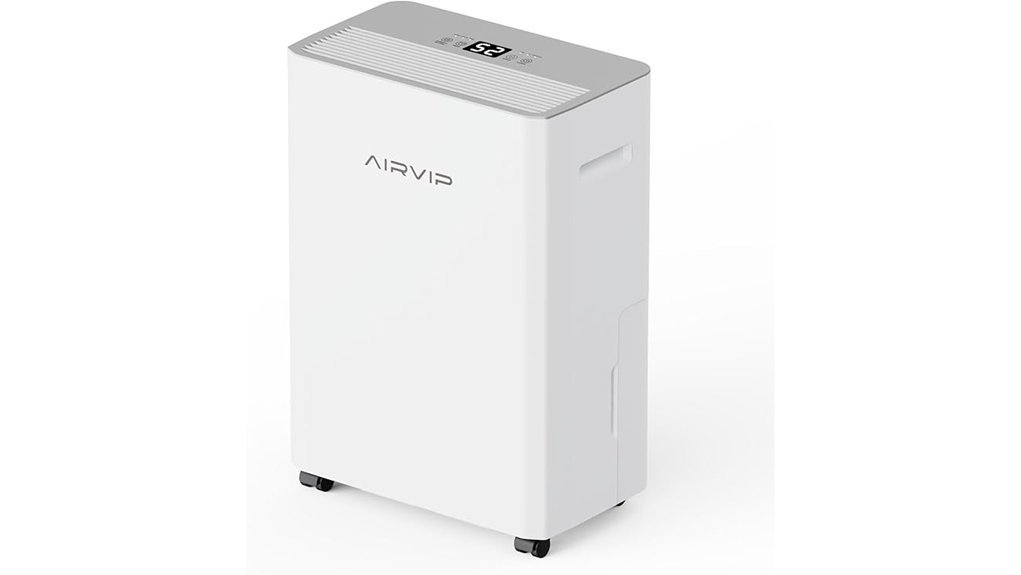
The AIRVIP model stands out mainly for its included 6.56-foot gravity-drain hose. That extra length can make placement easier when the nearest floor drain is not directly beside the appliance. Seller listings advertise a maximum extraction rate of 34 pints per day under hot, very humid conditions and coverage of up to 2,441 sq. ft.
The unit has continuous, comfort, and manual operating modes. Its manual setting is advertised with a 30%–90% RH range, while the 0.67-gallon tank includes a full-tank warning and automatic shutoff. A handle and caster wheels help with same-floor movement.
Best For: Buyers who prioritize a longer included gravity hose and want a choice of basic automatic and manual modes.
Skip It If: You require independently verified efficiency, a published DOE capacity, a confirmed low-noise figure, or a built-in pump.
Pros:
- The 6.56-foot hose offers more placement flexibility than short included hoses.
- The 2.5-liter tank provides a reasonable backup when hose drainage is unavailable.
- Includes continuous, comfort, and manual humidity modes.
Cons:
- Important performance information relies primarily on seller-provided specifications.
- The advertised square-foot coverage should not be treated as guaranteed capacity.
- No current standardized DOE capacity was verified for the exact model.
Uhome 30 Pint Dehumidifier for Basement, 1500 Sq Ft
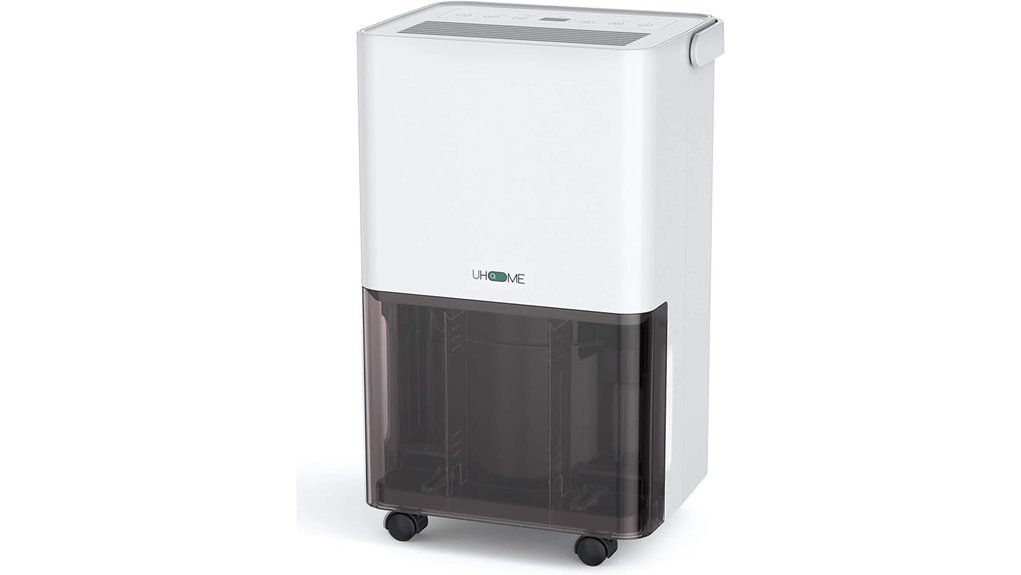
The Uhome UDL5-30P is a compact choice for bedrooms, offices, laundry rooms, and smaller basements. Its manual states that it can remove up to 30 pints per day at 90°F and 90% RH, with advertised coverage of up to 1,500 sq. ft.
A seller-stated 39 dB sound level, Sleep mode, child lock, automatic defrost, automatic restart, caster wheels, and a built-in handle make it easier to use in occupied rooms. Its activated-carbon filter may help with some odors passing through the machine, but it should not be treated as a substitute for a dedicated air purifier.
The removable tank holds 1.7 liters, so continuous drainage is preferable in a persistently damp room. The included hose is approximately 23.6 inches long, which may limit placement unless you purchase a compatible longer hose.
Best For: Buyers who want a compact unit for a bedroom, home office, or smaller basement and value a published low-noise figure.
Skip It If: You need a large water bucket, a long included hose, or capacity for a wet basement with active seepage.
Pros:
- Seller-stated 39 dB operation and Sleep mode suit quieter living spaces.
- Includes automatic humidity control, continuous operation, child lock, and automatic defrost.
- Compact dimensions, wheels, and a handle make same-floor movement easier.
Cons:
- The 1.7-liter tank is the smallest among several products in this comparison.
- The included drain hose is relatively short.
- The headline output is measured under much warmer and wetter conditions than many bedrooms or basements.
Waykar CTH30A 2000 Sq. Ft. Dehumidifier
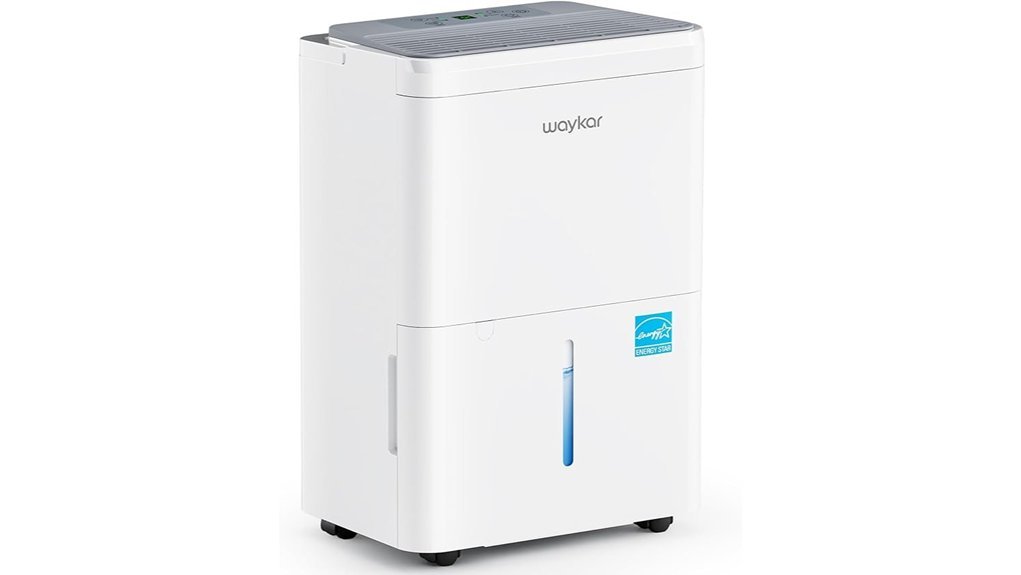
The Waykar CTH30A is smaller than the taller PD160B and may fit more easily beside furniture, in a laundry area, or near a gravity drain. The listing markets it as a 30-pint dehumidifier for spaces up to 2,000 sq. ft. and includes a 6.56-foot drain hose, three fan speeds, automatic defrost, automatic restart, and a seller-stated 35 dB operating level.
The product listing uses a high-temperature maximum capacity. Certification records associated with closely related CTH30-family model suffixes report about 9.2 pints per day under current DOE conditions. Because model suffixes can affect certification, compare the label on the machine with the current ENERGY STAR Product Finder rather than relying only on the Amazon title.
The 0.4-gallon tank is compact and will require regular emptying when the hose is not connected. Although the controls may allow very low numerical humidity settings, most homes should begin around 45%–50% RH rather than trying to reach an unrealistic 15% or 20% RH.
Best For: Buyers who want a compact Waykar model with a long hose, several fan speeds, and easy placement in a moderately damp room.
Skip It If: You need a large tank, a condensate pump, or a true 30-liter-per-day commercial machine.
Pros:
- Compact cabinet is easier to place than many taller compressor models.
- Includes a 6.56-foot hose and three fan-speed settings.
- Automatic defrost and restart are useful in basements and after power interruptions.
Cons:
- The 0.4-gallon tank may fill quickly without continuous drainage.
- The advertised 30-pint figure is not the same as the current DOE-tested family rating.
- Buyers must check the exact model suffix when confirming ENERGY STAR certification.
Factors to Consider When Choosing a 30- to 35-Pint Dehumidifier
Choosing a dehumidifier requires more than matching a square-foot number. Compare the standardized capacity where available, the dampness of the space, drainage access, tank size, operating temperature, sound level, and how precisely the humidistat maintains your target.
Understand the Capacity Test
Capacity is the amount of water a dehumidifier can remove in 24 hours under stated temperature and humidity conditions. A product advertised at 30 or 34 pints under 90°F–95°F and 90% RH may remove substantially less water in a cooler basement. When an ENERGY STAR or DOE-tested figure is available, use that standardized figure to compare certified units more fairly.
Do not confuse 30 pints with 30 liters. Thirty US pints is only about 14.2 liters, while 30 liters is approximately 63.4 US pints.
Room Size and Dampness
Advertised coverage is only a starting point. A closed 1,500-square-foot area that is slightly damp presents a different load from a 1,500-square-foot basement with wet walls, laundry drying, or ongoing seepage. Larger open layouts, frequent door opening, and moisture entering through foundations can require more capacity.
Use a separate hygrometer to measure the room rather than relying only on the machine’s display. If humidity remains above your target after several days of continuous operation, check for blocked airflow, open doors, incorrect drainage, low room temperature, or a capacity shortfall.
Energy Efficiency
For certified products, compare the Integrated Energy Factor, or IEF, rather than relying on vague “energy-saving” language. A higher IEF means that the machine removes more liters of water per kilowatt-hour under the standardized test.
To estimate electricity use, multiply the unit’s wattage by the number of operating hours and divide by 1,000. For example, a 200-watt machine running for eight hours uses up to 1.6 kWh before accounting for compressor cycling. Actual use depends on room conditions and the selected target.
Noise Level
Check whether the published decibel figure applies to the lowest fan setting, the highest setting, or an unspecified mode. Compressor cycling, vibration, flooring, and placement near walls can make the machine sound louder than the laboratory number suggests.
For a bedroom or office, place the unit on a level, solid surface and leave the manufacturer-required clearance around the air inlet and outlet. Sleep mode usually reduces fan noise but may also slow moisture removal.
Drainage Options
A removable tank works for occasional operation, but a small tank may fill several times per day in a wet room. Automatic shutoff helps prevent the bucket from overflowing, but it also stops moisture removal until the tank is emptied.
Gravity drainage is more convenient when the hose can run continuously downhill to a floor drain, sink, or sump opening. Avoid upward sections, kinks, loose connections, and submerged hose ends. None of the remaining products should be assumed to pump water uphill unless the current listing explicitly includes a condensate pump.
Humidity Control Range
A practical starting target for many homes is approximately 45%–50% RH. Lower the setting slightly if condensation persists, but do not assume that an extremely low control-panel setting is achievable or beneficial. Indoor comfort, outdoor climate, and cold surfaces all affect the best target.
If the built-in humidistat seems inaccurate, place a separate hygrometer several feet away from the machine and compare readings after the room has stabilized.
Portability and Placement
Wheels make same-floor movement easier, but compressor dehumidifiers can still be awkward on stairs. Empty the tank, unplug the unit, and keep it upright while moving it. After transportation or tilting, follow the manual’s standing-time instructions before restarting the compressor.
Do not place the unit against a wall, under clothing, or where curtains can block airflow. A central position may improve circulation, while placement near a drain may be more practical for continuous use.
Before You Buy
- Confirm whether the capacity is a high-temperature maximum or a current DOE rating.
- Measure the room and judge whether it is moderately damp, very damp, or wet.
- Check the tank size and the included drain-hose length.
- Confirm that gravity drainage can run downhill from the outlet.
- Verify the exact model number and ENERGY STAR record where applicable.
- Review operating-temperature limits before using it in a cold basement or garage.
- Use a grounded wall outlet and follow all clearance instructions in the manual.
Frequently Asked Questions
Is a 30-Pint Dehumidifier the Same as a 30-Liter Model?
No. A 30-pint dehumidifier removes about 14.2 liters at its stated test condition. A true 30-liter-per-day machine is equivalent to approximately 63.4 US pints per day and belongs in a much higher capacity category.
How Often Should I Clean the Dehumidifier Filter?
Inspect the filter every two to four weeks during regular use and clean it according to the manual. Homes with pets, construction dust, or heavy daily operation may require more frequent cleaning. Reduced airflow can lower extraction and increase noise.
Can a 30-Pint Dehumidifier Run Overnight?
Many models are designed for extended operation, but follow the manufacturer’s instructions. Place the machine on a level surface, use a grounded outlet, keep the airflow clear, and confirm that the tank is seated correctly or that the drain hose is secure and running downhill.
Does a 30-Pint Unit Work Well in Cold Rooms?
Compressor dehumidifiers generally collect less water as the air becomes colder. Automatic defrost can protect the coil from ice buildup, but it does not make the unit perform like a cold-weather desiccant dehumidifier. Check the model’s minimum operating temperature before using it in an unheated space.
Can a 30-Pint Dehumidifier Handle 2,000 Square Feet?
It may manage a moderately damp, enclosed area, but square footage alone is not enough to size the machine. A very damp or wet 2,000-square-foot basement can require substantially more standardized capacity. Monitor the room with a hygrometer and address leaks or standing water separately.
How Much Electricity Does a 30-Pint Dehumidifier Use?
Check the wattage on the product label or manual. Multiply watts by operating hours and divide by 1,000 to estimate maximum kWh use. The compressor normally cycles after reaching the selected humidity, so actual consumption may be lower than a calculation that assumes nonstop operation.
Can I Use a Dehumidifier Without the Drain Hose?
Yes. The collected water will enter the removable tank, and the machine should stop when the tank is full. You must empty and reinstall the tank before dehumidification resumes. Continuous drainage is usually more convenient in persistently damp rooms.
Conclusion
Final Recommendation
The Waykar PD160B is the most defensible overall choice because its ENERGY STAR record, standardized capacity, tank, controls, and drainage arrangement can be checked more clearly. The Uhome UDL5-30P is better suited to buyers prioritizing compact dimensions and a published 39 dB figure, while the Aiusevo AS300 offers the most useful selection of operating modes.
Choose the AIRVIP primarily for its longer included hose, but verify its seller-provided specifications carefully. Consider the Waykar CTH30A when compact placement matters, and confirm the exact model suffix before relying on ENERGY STAR claims. None of these products is a true 30-liter-per-day dehumidifier.
The best purchase is the model that can maintain your target humidity in your actual room—not the one with the largest marketing number. Compare standardized capacity where available, use continuous drainage when practical, monitor the room with a hygrometer, and fix active leaks rather than expecting a portable dehumidifier to solve structural water problems.