Updated August 2026.
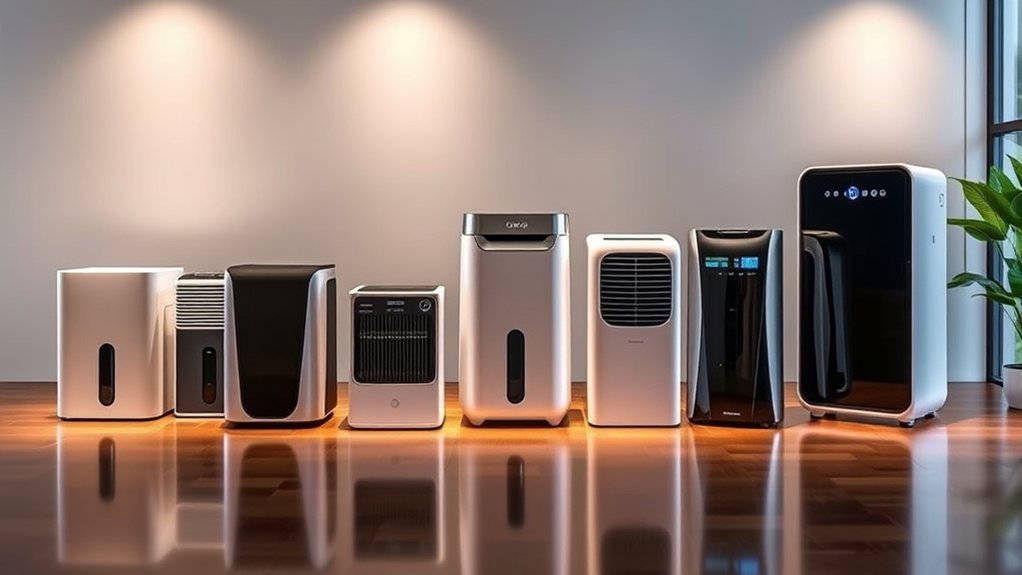
If you are comparing the best 45-pint dehumidifiers, focus on more than the headline room-size claim. The most useful differences are tank size, drain-hose length, noise level, humidity controls, auto-restart, and how easily the unit moves between rooms. After removing higher-capacity and duplicate listings, the three models below are the closest matches for shoppers specifically seeking a 45-pint portable dehumidifier for a basement, bedroom, garage, laundry area, or other damp indoor space.
Important capacity note: These products are advertised as removing 45 pints per day under hot, very humid test conditions, commonly 95°F and 90% relative humidity. That seller-stated figure is not necessarily the same as a current DOE Appendix X1 capacity rating. Check the model label, manual, and current ENERGY STAR product listing before treating two capacity numbers as directly comparable.
Quick verdict: Choose the Trazico for the strongest all-around balance of tank size, portability, and documented controls. Pick the WPSOERT when a longer included drain hose, child lock, and quiet operation matter most. Consider model B0FPCHTFLC when you want the largest advertised coverage, but verify its current certification and model details before ordering.
Quick Comparison of the Best 45-Pint Dehumidifiers
| Model | Best For | Advertised Coverage | Tank / Hose | Key Controls | Amazon |
|---|---|---|---|---|---|
| Trazico TZ01 | Best overall balance | Up to 4,000 sq. ft. | 2.2L tank / 4.9-ft hose | 35%–80% RH, timer, auto-restart | Check Price |
| WPSOERT WP05 | Quiet drainage setup | Up to 4,000 sq. ft. | 2L tank / 6.56-ft hose | Three modes, timer, child lock | Check Price |
| 45-Pint Model B0FPCHTFLC | Larger advertised coverage | Up to 4,500 sq. ft. | 0.8-gal. tank / 3.3-ft hose | 30%–80% RH, three modes, timer | Check Price |
Trazico 45-Pint Dehumidifier for Home and Basement
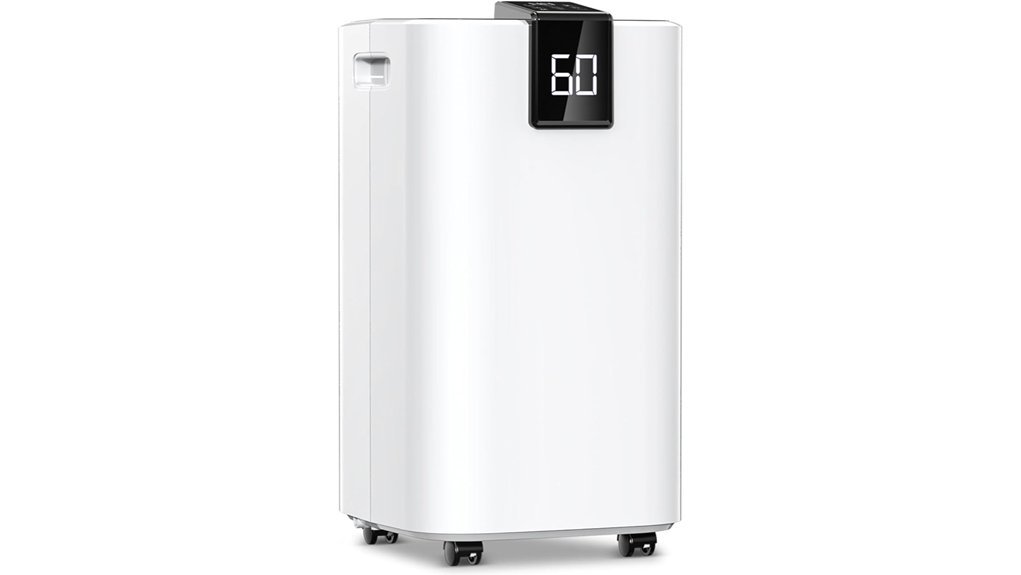
The Trazico TZ01 is the most balanced option in this group for buyers who want a practical 45-pint basement dehumidifier without relying on vague smart-home claims. It is advertised for spaces up to 4,000 sq. ft. and offers adjustable humidity settings from 35% to 80% RH, two fan speeds, a 24-hour timer, auto defrost, auto shut-off, and auto-restart after a power interruption.
Its 2.2-liter tank is slightly larger than the WPSOERT tank and is clearly documented in the available manual, which can reduce how often you empty it during lighter use. For longer operation, the included 4.9-foot hose supports gravity drainage. At about 23.9 pounds, with caster wheels and a built-in handle, it is also the easiest of the documented models to reposition.
Why You’ll Like It: It combines a useful tank size, clear humidity controls, continuous drainage, automatic restart, and manageable weight in one straightforward portable unit.
Who Should Buy This: Buyers managing persistent dampness in a basement, bedroom, laundry room, garage, or similar enclosed area who want both manual and continuous drainage.
Who Should Avoid This: Anyone who needs a built-in pump, verified Wi-Fi control, or a ducted whole-home system. The included hose relies on gravity and must run downhill to a suitable drain.
Pros:
- Advertised 45-pint-per-day moisture removal at 95°F and 90% RH.
- Adjustable 35%–80% humidity range with DEHU and DRY modes.
- 2.2L removable tank plus an included 4.9-foot gravity drain hose.
- Auto-restart, auto defrost, timer, two fan speeds, wheels, and handle.
Cons:
- The advertised 4,000-sq.-ft. coverage will vary with temperature, layout, air leakage, and moisture load.
- No built-in condensate pump or verified app control.
- The tank can still fill quickly in a very wet space if the drain hose is not used.
WPSOERT WP05 45-Pint Dehumidifier with Drain Hose
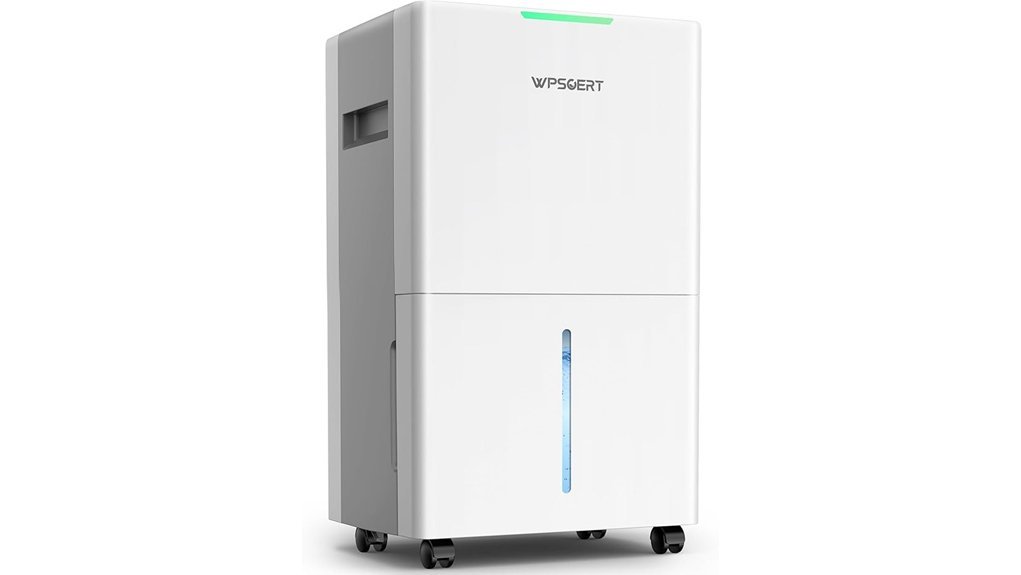
The WPSOERT WP05 is a strong fit for buyers who expect to use a drain hose most of the time. It is advertised to remove up to 45 pints per day at 95°F and 90% RH and to serve areas up to 4,000 sq. ft. Its included 6.56-foot hose gives you more placement flexibility than the shorter hoses supplied with the other retained models.
You can choose DEHU mode for a target humidity, DRY mode for continuous moisture removal, or CONT mode for extended operation. The unit also includes a 24-hour timer, two fan speeds, auto defrost, a washable filter, child lock, caster wheels, handles, and a 2-liter tank with automatic shut-off. The listed operating noise is 40 dB or lower, although real-world sound can vary by fan speed, floor surface, and room acoustics.
Why You’ll Like It: The longer drain hose, quiet-use features, child lock, and three operating modes make it convenient for a basement, bedroom, office, or laundry space with a nearby gravity drain.
Who Should Buy This: Buyers who want low-maintenance continuous drainage and a simple control panel rather than Wi-Fi or voice control.
Who Should Avoid This: Anyone who cannot place the unit above a drain point. This model does not advertise a built-in pump, so the hose cannot send water uphill.
Pros:
- Advertised 45-pint capacity for larger damp rooms and basements.
- Long 6.56-foot included hose for gravity drainage.
- Three modes, two fan speeds, timer, child lock, auto defrost, and washable filter.
- Listed at 40 dB or lower for quieter living-space use.
Cons:
- The 2L tank is relatively small for heavy moisture removal without the hose.
- At about 26.9 pounds, it is heavier than the Trazico model.
- Its 4,000-sq.-ft. claim should be treated as an upper marketing figure, not a guarantee for every damp space.
45-Pint Dehumidifier with Drain Hose (ASIN B0FPCHTFLC)
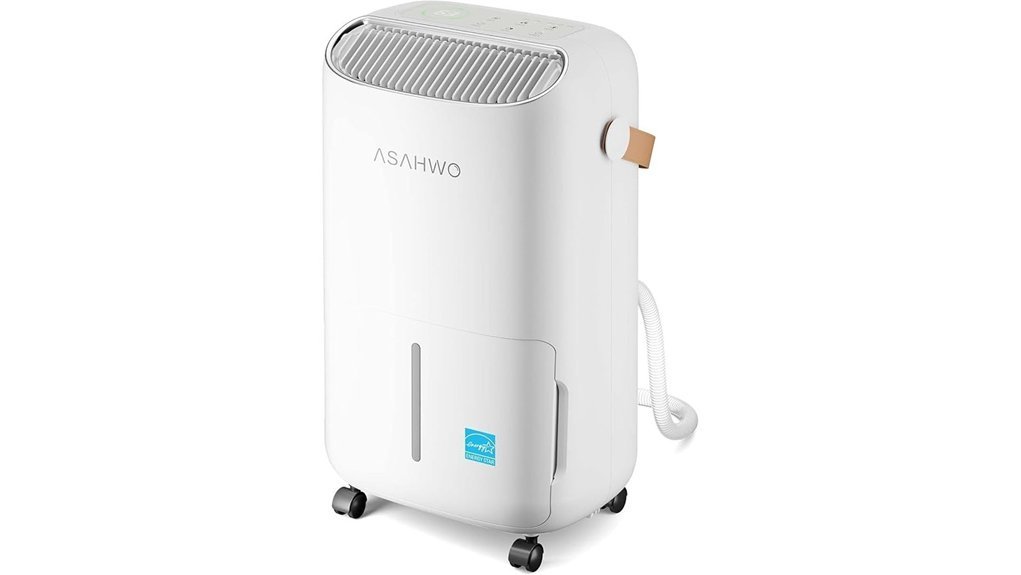
This listing is advertised as a 45-pint compressor dehumidifier for spaces up to 4,500 sq. ft. It includes a target humidity range of 30% to 80%, dehumidify, clothes-drying, and continuous modes, a 24-hour timer, auto defrost, overflow protection, a removable filter, a 0.8-gallon tank, and a 3.3-foot gravity drain hose.
The seller also promotes quiet operation at 40 dB or lower. However, the article could not independently match the listing’s ENERGY STAR or “Most Efficient” language to a clearly identified brand-and-model record in the official product directory. Treat that certification claim as something to verify on the current product page, packaging, and ENERGY STAR database before purchase.
Why You’ll Like It: It offers the largest advertised coverage and the widest listed humidity-setting range among the retained products, along with both tank and hose drainage.
Who Should Buy This: Buyers who want an exact 45-pint listing with a larger tank than the WPSOERT and who are comfortable confirming certification and warranty details before ordering.
Who Should Avoid This: Buyers who require fully verified ENERGY STAR documentation, an established manufacturer support network, a built-in pump, or app-based control.
Pros:
- Advertised 45-pint capacity and coverage up to 4,500 sq. ft.
- 0.8-gallon tank is larger than the WPSOERT tank.
- Three operating modes, 24-hour timer, auto defrost, and overflow protection.
- Includes a 3.3-foot hose for continuous gravity drainage.
Cons:
- ENERGY STAR and Most Efficient claims need model-level verification.
- The brand, warranty, and long-term support information are less clearly documented.
- The 3.3-foot hose offers less drainage-placement flexibility than the other two models.
Factors to Consider When Choosing a 45-Pint Dehumidifier
A good 45-pint dehumidifier for a basement should match the actual moisture load, not just the room’s square footage. Compare the rating method, drainage layout, operating temperature, tank capacity, noise, controls, portability, and manufacturer support before deciding.
Capacity Rating and Test Conditions
Capacity is the amount of water a unit can remove in 24 hours under specified test conditions. The retained products advertise 45 pints per day at 95°F and 90% RH, which is a hot and extremely humid condition. Current DOE Appendix X1 ratings use different conditions intended to better represent basement use. Because the methods differ, do not assume a seller-advertised 45-pint number is identical to a current official 45-pint rating.
Coverage Area and Moisture Load
Advertised coverage figures of 4,000 to 4,500 sq. ft. are best treated as upper estimates. A cool basement with seepage, wet walls, open stairways, or frequent laundry drying can require more capacity than a warmer, enclosed room of the same size. Measure the space, check the starting humidity with a separate hygrometer, and consider air leakage and the source of the moisture.
Drainage Options
A removable tank is convenient when no drain is nearby, but a 45-pint machine can fill a small tank quickly in a wet area. Continuous drainage is easier for basements and laundry rooms, provided the hose slopes downward without kinks. None of the three retained models advertises a built-in pump, so they cannot reliably push water upward to a sink or window.
Humidity Controls
Look for an adjustable humidistat rather than a unit that only runs continuously. A practical indoor target is usually around 40% to 50% RH, adjusted for comfort and condensation conditions. Very low settings can increase runtime and energy use without solving the underlying source of water.
Noise Level
The listings promote noise levels around 40 dB, but seller measurements may not reflect every fan speed or room. Compressor cycling, vibration on hard floors, and contact with walls or furniture can make a unit sound louder. For a bedroom or office, place it on a level surface and leave the clearance required by the manual.
Energy Efficiency
Do not rely only on words such as “efficient” or “smart.” Check the exact brand and model in the current ENERGY STAR product finder and look for an Integrated Energy Factor, or IEF. Certification applies to a specific model, not automatically to every product sold under a similar title.
Temperature and Auto Defrost
Refrigerant dehumidifiers remove less water in cool air and may develop frost on the coils. Auto defrost helps protect operation, but it does not make a standard portable dehumidifier suitable for freezing conditions. Check the manual’s minimum operating temperature and avoid running the unit where water in the tank or hose can freeze.
Portability Features
Wheels and handles help on a single floor, but a 24- to 27-pound appliance can still be awkward on stairs. Empty the tank before moving it, keep the unit upright, and allow it to stand as directed by the manufacturer after transport before switching it on.
Before You Buy Checklist
- Confirm the exact brand, model number, capacity test method, and warranty.
- Measure the room and identify the moisture source before trusting a square-foot claim.
- Decide whether the tank is practical or whether you need continuous drainage.
- Make sure a gravity hose can run downhill to a floor drain or suitable container.
- Verify the minimum operating temperature for a cool basement or garage.
- Check the current ENERGY STAR directory rather than relying only on listing badges.
- Use a grounded outlet and follow the manual’s placement and clearance instructions.
Frequently Asked Questions
What Size Room Is Ideal for a 45-Pint Dehumidifier?
There is no single ideal square footage because humidity severity matters as much as floor area. A 45-pint unit can be appropriate for a large, very damp room or basement, but a wet space with seepage may need more capacity or multiple moisture-control measures. Use the advertised coverage only as a starting point.
Can a 45-Pint Dehumidifier Run Continuously?
Yes, when the model has a continuous mode and the hose is installed correctly. The hose must remain unobstructed and slope downward because these retained models use gravity drainage rather than a built-in pump. Follow the manual and do not run the unit in freezing conditions.
How Often Should I Clean a 45-Pint Dehumidifier Filter?
Check the filter every two to four weeks during regular use and more often in dusty rooms or homes with pets. Clean it according to the manual, let it dry fully, and reinstall it before operating the dehumidifier.
How Much Electricity Does a 45-Pint Dehumidifier Use Monthly?
Monthly use depends on wattage and runtime. Use this formula: watts ÷ 1,000 × hours per day × 30. For example, a 260-watt unit running eight hours per day uses about 62.4 kWh per month. Actual compressor cycling may make consumption lower or higher.
Do 45-Pint Dehumidifiers Reduce Musty Odors?
Lower humidity can reduce the damp conditions that support musty smells, but a dehumidifier does not remove existing mold, contaminated materials, or the source of a leak. Fix water intrusion, dry wet materials, clean affected surfaces safely, and improve ventilation where needed.
Is Smart Humidity Control the Same as Wi-Fi Control?
No. In many product listings, “smart humidity control” simply means the unit senses room humidity and cycles to maintain a target. It does not necessarily include an app, Wi-Fi, Alexa, or Google Assistant. None of the three retained models has verified app control in the reviewed documentation.
Final Recommendation
Choose the Trazico TZ01 for the best overall balance of documented features, a 2.2L tank, auto-restart, portability, and continuous drainage.
Choose the WPSOERT WP05 when a longer 6.56-foot drain hose, child lock, and quiet-operation claim are more important than tank size.
Consider the 45-pint model B0FPCHTFLC for its larger advertised coverage and 0.8-gallon tank, but verify the exact ENERGY STAR record, warranty, and seller support before buying.
The right model is the one that fits your drainage path, room temperature, and real moisture load. Whichever unit you select, use a separate humidity gauge, aim for a comfortable indoor range, clean the filter regularly, and fix leaks or water intrusion rather than asking the dehumidifier to solve the source of the problem by itself.