Affiliate disclosure: This article contains Amazon affiliate links. If you buy through these links, we may earn a commission at no extra cost to you.
UK buyer note: The product links below currently point to Amazon.com listings. Before ordering for use in the UK, confirm UK delivery, 220–240V/50Hz input compatibility, plug requirements, warranty/support, and the manufacturer’s instructions for safe use around bathrooms.
Quick verdict: For light to moderate condensation in a small bathroom, a compact electric Peltier or semiconductor dehumidifier can be convenient. For persistent heavy damp, repeated showers, laundry drying, or a poorly ventilated room, a higher-capacity compressor or desiccant dehumidifier may be more appropriate. A dehumidifier should support, not replace, ventilation and moisture-source repairs.
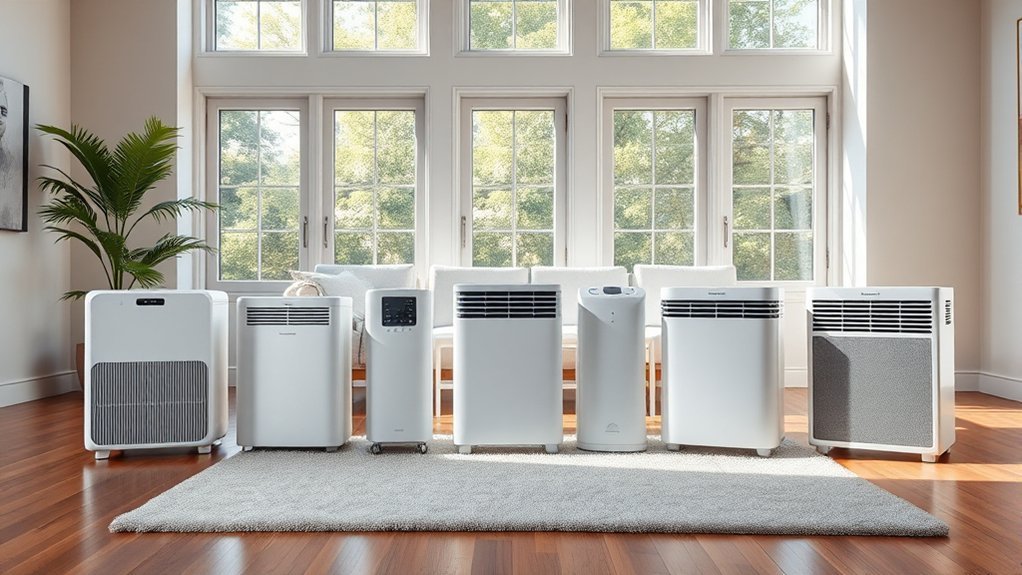
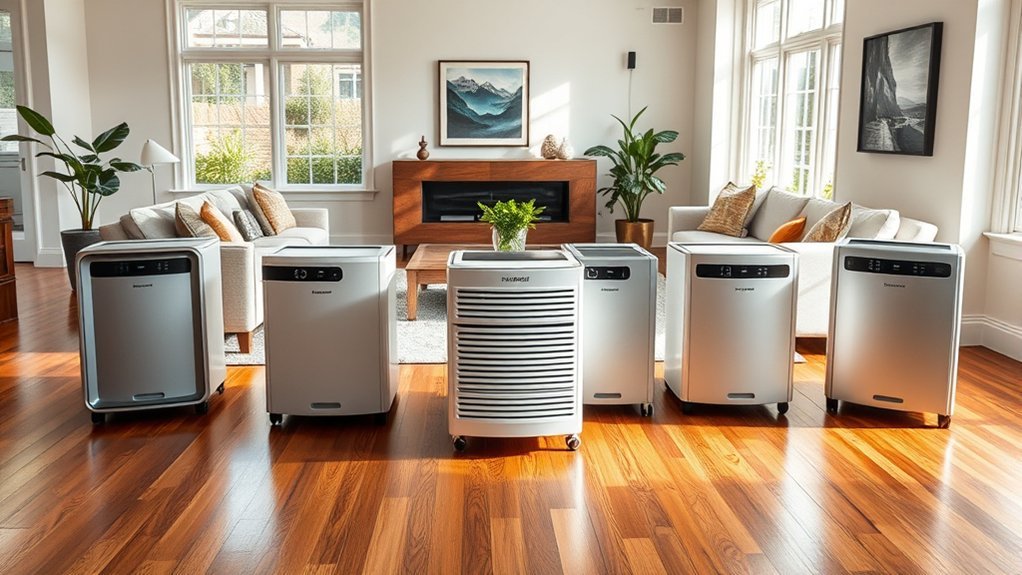
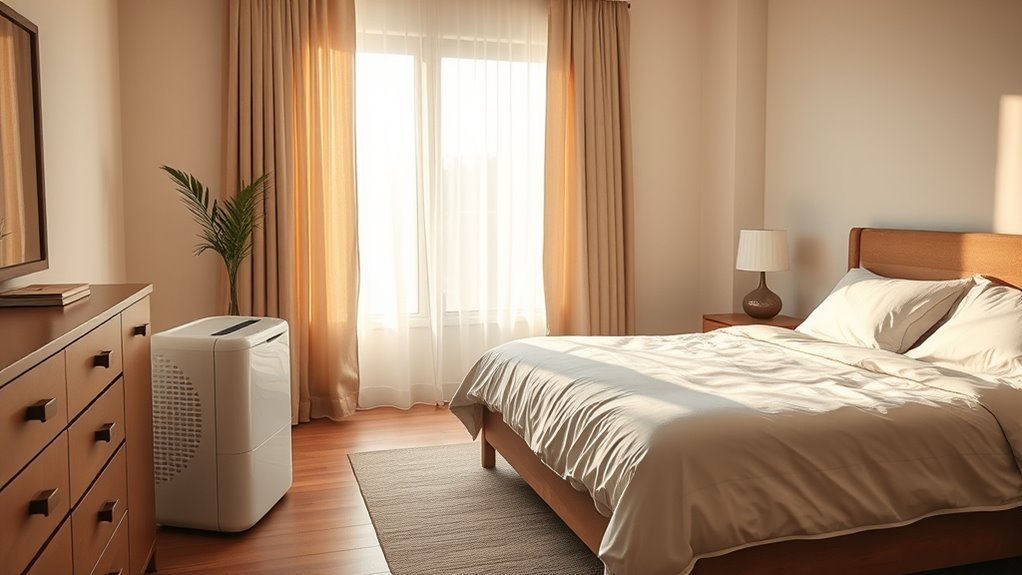
If your bathroom mirror stays wet long after a shower, your window keeps dripping, or the room smells musty, a compact bathroom dehumidifier can help remove airborne moisture after the room is no longer being used. The seven electric models below are the relevant compact options from the original list. They differ in tank size, noise claims, extraction rate, controls, drainage features, and portability.
Do not rely on a large square-foot coverage number by itself. Mini Peltier and semiconductor models are designed for relatively light moisture loads, and their advertised extraction figures are usually measured under warm, humid test conditions. If condensation remains severe, improve ventilation and consider a higher-capacity dehumidifier rather than expecting a mini unit to solve the problem alone.
Quick Picks: Best Compact Bathroom Dehumidifiers
- Best compact overall: CLEVAST Small Quiet Dehumidifier for low-noise, small-space moisture control.
- Best simple auto shut-off pick: TABYIK 35 OZ Dehumidifier for straightforward daily use.
- Best quiet night-use pick: Lonxfy 35 oz Dehumidifier for sleep mode and compact rooms.
- Best with humidity display: KeepGlad Dehumidifier for buyers who want a display and continuous-drain option.
- Best for tight corners: NeedDuck B-2 for a compact footprint and multiple operating modes.
Before you buy:
- Confirm the unit’s current extraction rate, tank size, operating-temperature guidance, and warranty on the product page.
- For a UK home, confirm voltage/frequency compatibility and plug requirements before importing from an Amazon.com listing.
- Do not assume a product described for a “bathroom” is waterproof or approved for use in a wet zone. Follow the manufacturer’s placement and electrical-safety instructions.
- Choose a larger-capacity compressor or desiccant model if you have persistent damp, multiple daily showers, or condensation that a mini unit cannot clear.
Bathroom Dehumidifier Comparison Table
Use this table to compare the remaining electric options. The “best for” column is intentionally conservative because compact Peltier and semiconductor models are better judged by moisture load and extraction rate than by headline room-size claims alone.
| Product | Type | Best For | Key Detail | Amazon |
|---|---|---|---|---|
| CLEVAST Small Quiet Dehumidifier | Compact semiconductor | Small rooms with light to moderate moisture | 30 oz tank; 24 dB quiet mode; up to 10 oz/day under stated test conditions | Check Details |
| TABYIK 35 OZ Dehumidifier | Compact Peltier | Small bathrooms, bedrooms, closets, and RVs | 35 oz tank; 28 dB; up to 16 oz/day at 86°F and 80% RH | Check Details |
| Lonxfy 35 oz Dehumidifier | Compact electric dehumidifier | Night-use and small-room moisture control | 35 oz tank, sleep mode, 7-colour light, auto shut-off | Check Details |
| KeepGlad Dehumidifier | Semiconductor model with display | Buyers who want humidity monitoring and drain-hose flexibility | 98 oz tank, digital display, continuous draining, auto defrost | Check Details |
| NeedDuck B-2 | Compact electric dehumidifier | Tight spaces and flexible operating modes | 44 oz tank, three modes, auto defrost, auto shut-off | Check Details |
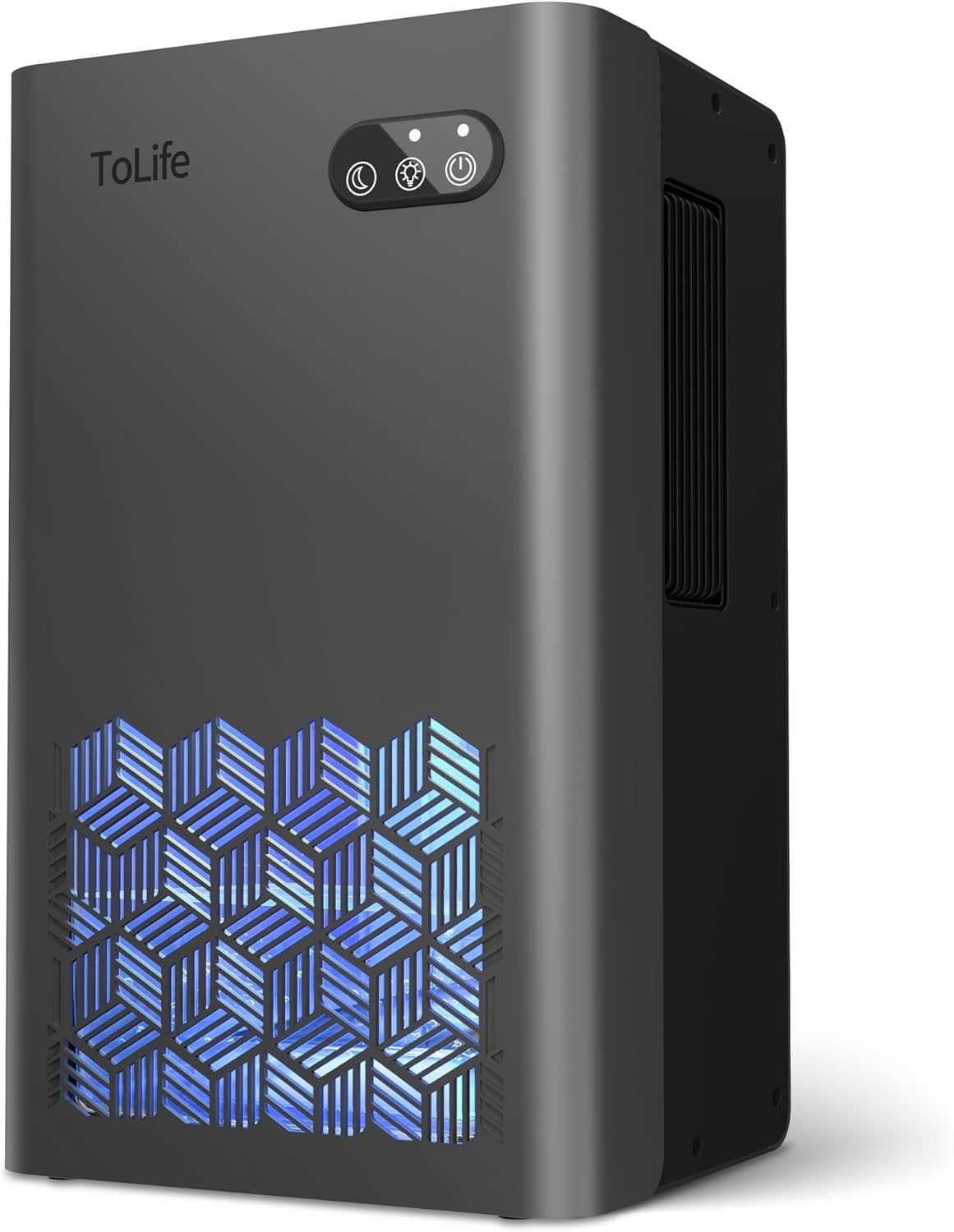
| ToLife Dehumidifier | Semiconductor model | Small rooms where a larger tank is useful | 95 oz tank, auto shut-off, sleep mode, 7-colour LED | Check Details |
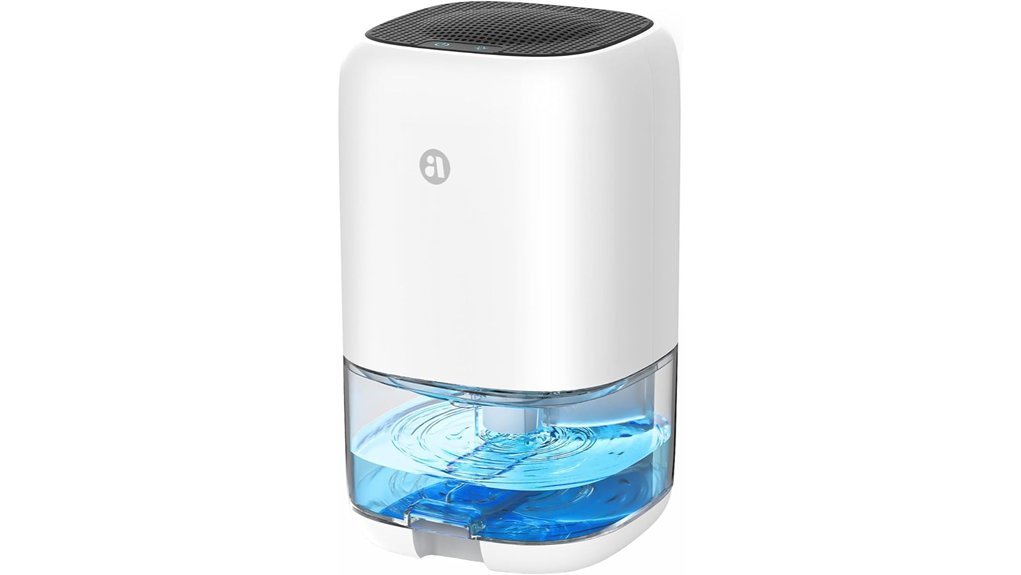
| avylo 42 oz Dehumidifier | Compact Peltier | Small rooms with light to moderate humidity | 42 oz tank; up to 16 oz/day at 86°F and 80% RH; auto defrost | Check Details |
How to Choose the Right Bathroom Dehumidifier
Start with your moisture load, not just the room’s floor area. A mini Peltier or semiconductor unit can make sense for a small room with light condensation, but a bathroom that stays wet for hours, has several showers each day, or also dries laundry may need a much higher extraction rate. Compare litres or ounces removed per day and read the test conditions used for that figure.
Next, compare tank size, noise, auto shut-off, auto defrost, drainage options, and how easy the tank is to remove. A humidity display can help you track whether conditions are improving. Continuous drainage can reduce emptying, but only use a drain hose where the manufacturer permits it and where the appliance can be positioned safely.
UK electrical safety note: A bathroom is a wet environment. Do not assume a generic plug-in dehumidifier is waterproof or suitable beside a bath, shower, or sink. Keep the unit and power connection away from water, never handle it with wet hands, and follow the manufacturer’s instructions plus UK bathroom electrical-safety requirements. If safe in-room placement cannot be assured, use the appliance from a safer position outside the wet area after showering.
CLEVAST Small Quiet Dehumidifier for Home and Bathroom
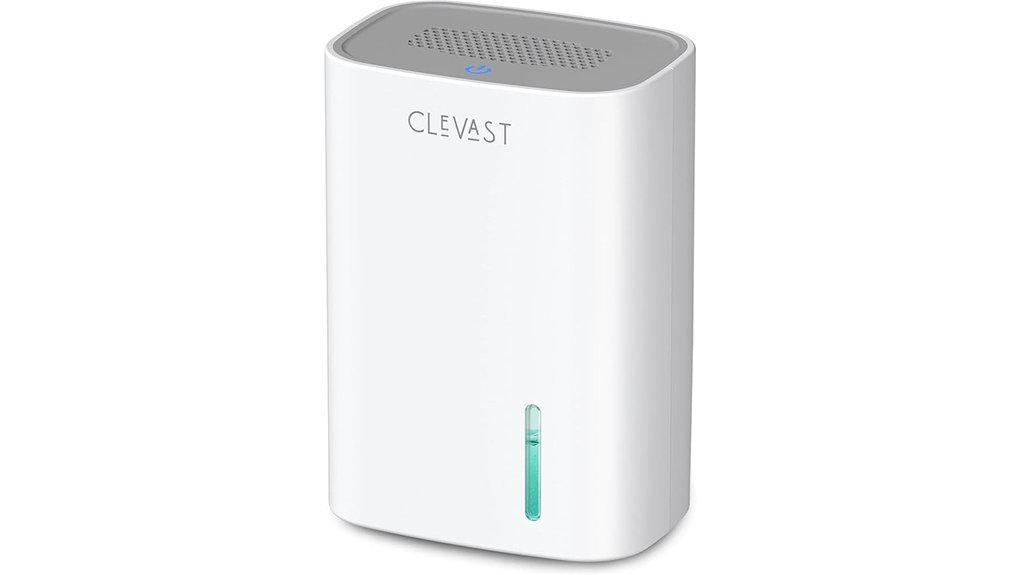
The CLEVAST is one of the clearest matches for a small-space dehumidifier. Its current listing specifies a 30 oz tank and up to 10 oz (295 ml) of moisture removal in 24 hours in a closed room at 86°F and 85% relative humidity. Quiet Mode is listed at 24 dB, and the unit also includes automatic shut-off and overheat protection.
Why You’ll Like It: It combines a small footprint, low stated noise, and simple tank-based operation without pretending to be a heavy-duty dehumidifier.
Best For: Small bathrooms or nearby rooms with light to moderate condensation where compact size and quiet operation matter.
Who Should Avoid It: Skip it for persistent damp, repeated showers, cold rooms, leak recovery, or situations that need fast extraction.
Pros:
- 24 dB Quiet Mode is suitable for noise-sensitive rooms.
- 30 oz removable tank, auto shut-off, and overheat protection support easy daily use.
- Compact and lightweight enough to move between small rooms.
Cons:
- Its maximum extraction claim is measured in warm, humid test conditions and real-world performance can be lower.
- Mini semiconductor output is modest compared with full-size compressor or desiccant units.
- The tank may need frequent emptying in a consistently damp room.
TABYIK 35 OZ Dehumidifier with Auto Shut Off
The TABYIK 35 OZ is a compact Peltier dehumidifier with a 1000 ml tank. The current listing states up to 16 oz (450 ml) of water collection in 24 hours in a closed room at 86°F and 80% relative humidity, plus 28 dB operation and automatic shut-off when the tank approaches full.
Why You’ll Like It: The transparent tank and red full-tank alert make it easy to see when the unit needs attention, while the built-in handle helps with moving it.
Best For: Small bathrooms, bedrooms, closets, or RVs with light to moderate moisture.
Who Should Avoid It: Avoid it if you need fast drying after several showers a day or have a persistent mould and damp problem.
Pros:
- 35 oz tank with automatic shut-off and a visible full-tank alert.
- 28 dB stated operating noise is low for a small fan-based unit.
- Compact body and handle make it easy to reposition.
Cons:
- The 16 oz/day figure is a maximum under warm, high-humidity test conditions.
- Peltier extraction is modest compared with higher-capacity dehumidifiers.
- The decorative light may be unnecessary for buyers who want a plain appliance.
Lonxfy 35 oz Small Quiet Dehumidifier
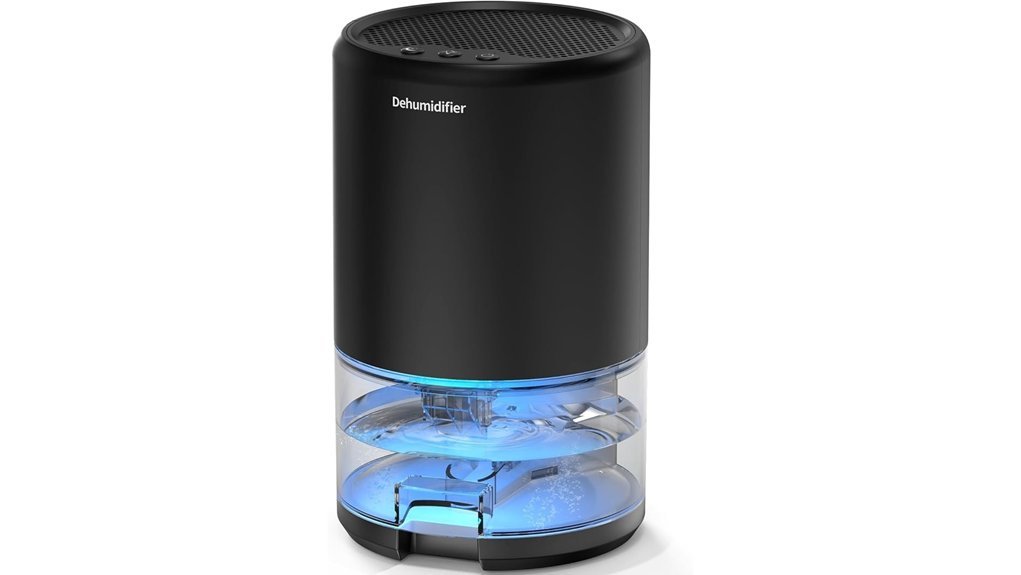
The current Amazon listing identifies this as a Lonxfy 35 oz small dehumidifier with sleep mode, 7-colour lighting, and automatic shut-off. That feature mix suits buyers who want simple moisture control in a compact room without the louder sound of many larger appliances.
Why You’ll Like It: Sleep mode and one-touch-style operation keep the experience simple, while the tank is larger than the smallest 30 oz options here.
Best For: Small bathrooms, bedrooms, closets, and other compact rooms where low-noise operation matters.
Who Should Avoid It: Skip it if your main concern is fast extraction from a very wet bathroom or if you want a full-size compressor machine.
Pros:
- 35 oz tank with automatic shut-off.
- Sleep-focused operation suits bedrooms and bathrooms near sleeping areas.
- Compact format is easy to place in smaller rooms.
Cons:
- Not intended for severe or whole-home damp problems.
- Decorative lighting may not suit every buyer.
- Check the current listing for the exact extraction rate and warranty wording before ordering.
KeepGlad Dehumidifier for Home with Humidity Display
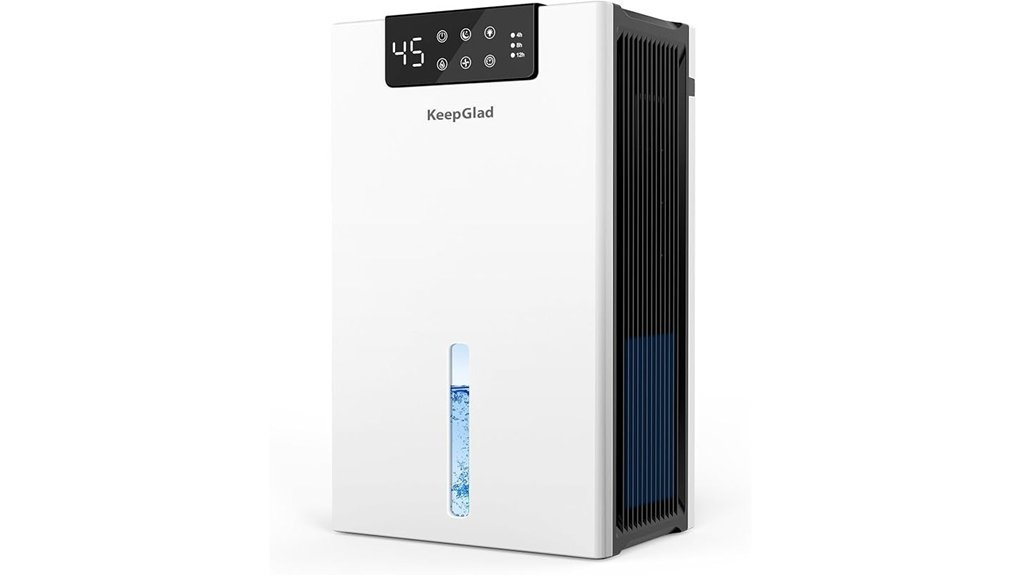
KeepGlad is the more feature-rich option in this group. The current listing specifies a 98 oz tank, digital humidity display, timer, automatic shut-off, automatic defrost, washable filter, and continuous draining. Those controls make it easier to monitor conditions rather than judging humidity only by fogged glass or damp surfaces.
Why You’ll Like It: The display and drain-hose option are useful if you want more feedback and less tank-emptying than a basic mini model.
Best For: Buyers who want humidity monitoring, a larger tank, and flexible drainage in a small to medium moisture-control setup.
Who Should Avoid It: Skip it if you want the simplest, smallest appliance or if your damp problem requires a genuinely high-capacity compressor unit.
Pros:
- 98 oz tank gives more storage capacity than most mini models in this roundup.
- Humidity display, timer, auto shut-off, and auto defrost improve control.
- Continuous-drain option can reduce manual emptying where a safe setup is possible.
Cons:
- More controls and a larger body may be unnecessary in a very small cloakroom.
- Semiconductor extraction is still different from the capacity of full-size compressor machines.
- UK buyers should confirm mains compatibility and safe drain-hose placement before importing.
NeedDuck B-2 44 oz Dehumidifier
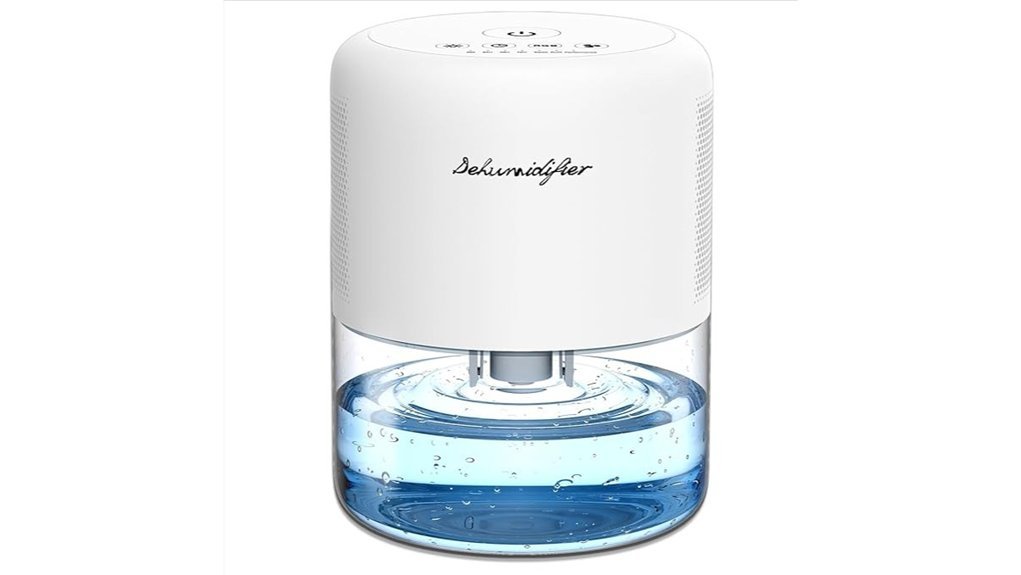
The NeedDuck B-2 is a compact 44 oz model with Sleep, Auto, and Performance modes, timer settings, automatic shut-off, and automatic defrost. Its listing also identifies it as a small-space model, making it a more realistic fit for tight rooms than for serious whole-home damp control.
Why You’ll Like It: Multiple modes let you prioritise lower-noise use, automatic operation, or stronger output without moving to a much larger appliance.
Best For: Small bathrooms, bedrooms, RVs, and tight spaces where a compact footprint matters.
Who Should Avoid It: Avoid it for large wet rooms, leak recovery, or persistent condensation that needs higher daily extraction.
Pros:
- 44 oz tank offers more capacity than the smallest mini models.
- Three operating modes and timer controls add flexibility.
- Auto shut-off and auto defrost are useful convenience features.
Cons:
- Still a small-space appliance rather than a heavy-duty dehumidifier.
- Decorative lighting may not matter to buyers focused only on moisture removal.
- Check current extraction-rate details before comparing it directly with higher-capacity machines.
ToLife Dehumidifier with 95 oz Tank
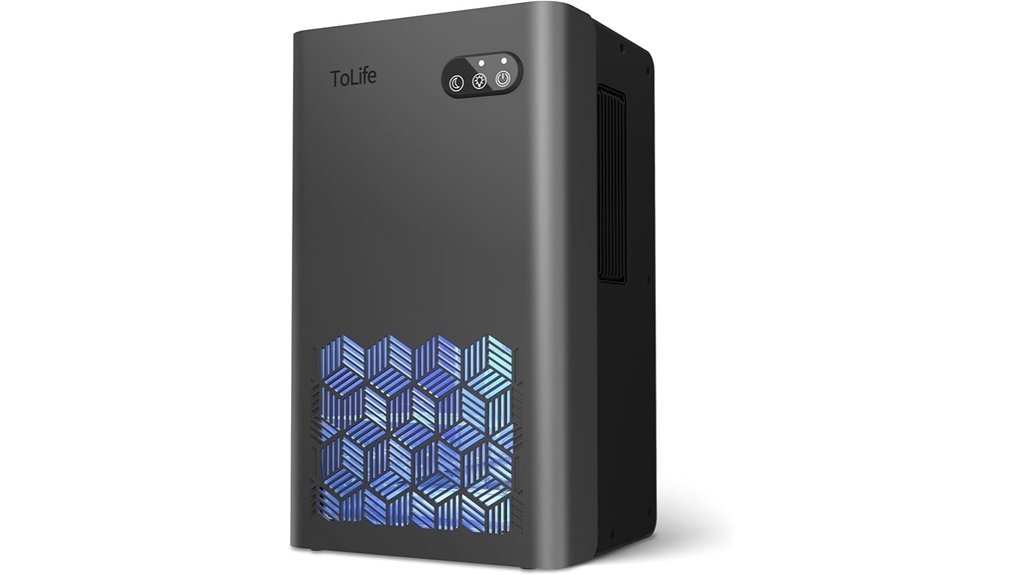
The ToLife model combines a 95 oz tank with semiconductor condensation, powerful and sleep modes, automatic shut-off, and 7-colour LED lighting. The current listing promotes a large coverage figure, but for a compact semiconductor unit it is safer to judge suitability by actual moisture load and extraction performance rather than square footage alone.
Why You’ll Like It: You get a larger tank than many mini units while keeping a portable form factor and a quieter sleep setting.
Best For: Small bathrooms and other compact rooms where tank capacity and quiet operation matter more than heavy-duty extraction.
Who Should Avoid It: Avoid it if you have serious damp, need rapid laundry drying, or want smart-home controls.
Pros:
- 95 oz tank reduces emptying compared with 30–44 oz mini models.
- Powerful and sleep modes give basic control over operation.
- Auto shut-off and 7-colour lighting are built in.
Cons:
- Semiconductor technology is not equivalent to a high-capacity compressor dehumidifier.
- Do not choose it on the advertised square-foot figure alone.
- UK buyers should verify voltage, frequency, plug, and warranty compatibility before importing.
avylo 42 oz Dehumidifier with Auto Shut Off
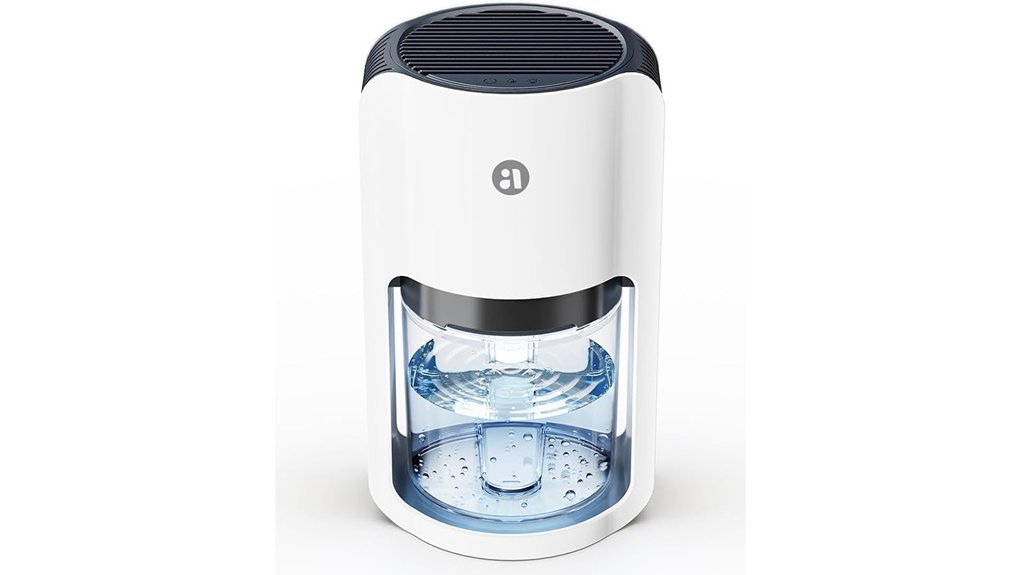
The supplied ASIN is currently sold under the avylo brand. Its listing specifies a 42 oz (1200 ml) transparent tank, Peltier technology, automatic shut-off, automatic defrost, and up to 16 oz (450 ml) per day at 86°F and 80% relative humidity.
Why You’ll Like It: The transparent tank makes water collection easy to monitor, while auto defrost is useful for a compact unit that may be moved between rooms.
Best For: Small bathrooms, bedrooms, closets, RVs, and home offices with light to moderate humidity.
Who Should Avoid It: Avoid it if you need fast moisture removal in a cold, poorly ventilated, or persistently wet bathroom.
Pros:
- 42 oz transparent tank with automatic shut-off.
- Automatic defrost adds protection as conditions cool.
- Listing states approximately 28 dB operation and includes a 7-colour night light.
Cons:
- The 16 oz/day extraction figure is a maximum under warm, humid test conditions.
- Peltier technology is slower than higher-capacity compressor systems for heavy damp.
- Regular tank emptying is still necessary in consistently humid conditions.
Factors to Consider When Choosing a Dehumidifier for Bathroom UK
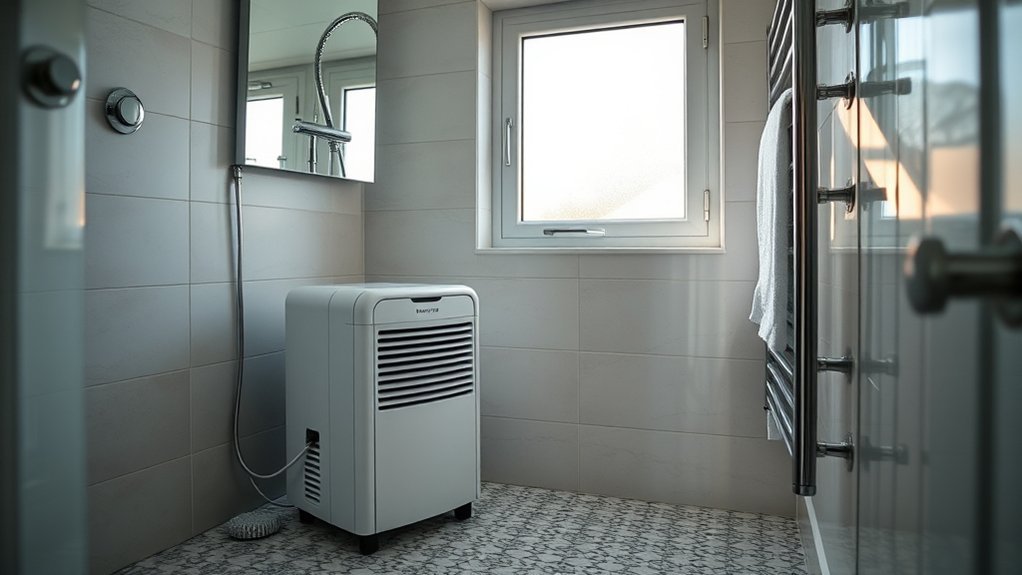
A good bathroom dehumidifier should match the amount of moisture you need to remove, your available safe placement, and how often you are willing to empty the tank. For compact models, extraction rate and test conditions matter more than a large marketing coverage number.
Bathroom Size and Moisture Load
Measure the room, but also think about how much water enters the air. One short shower in a small, ventilated room is a very different job from several daily showers in a windowless bathroom. Treat square-foot claims as a rough guide only, especially when comparing compact semiconductor models.
Moisture Removal Rate
Compare how much water the unit can remove in 24 hours and note the temperature and relative humidity used for testing. Several mini models in this roundup advertise roughly 10–16 oz per day under warm, humid test conditions. Real performance may be lower in cooler UK rooms. If you need substantially faster moisture removal, move up to a higher-capacity compressor or desiccant dehumidifier.
Noise Level
If the bathroom is beside a bedroom, compare the stated dB figure and whether the unit has a sleep mode. Lower noise is useful, but do not trade away the extraction capacity you actually need just to gain a few decibels.
Auto Shut-Off
Auto shut-off prevents the unit from continuing to collect water after the tank reaches its designed limit. It is a useful convenience feature, but it does not make an appliance waterproof or automatically safe for any bathroom location.
Tank Capacity and Drainage
A larger tank usually means fewer emptying trips. If you choose continuous drainage, confirm that the model includes or supports the required hose and that the route can be set up without creating an electrical or trip hazard.
Energy Use and Running Cost
Do not rely on vague claims such as “pennies per hour.” Check the appliance wattage and your electricity tariff. To estimate running cost, convert watts to kilowatts, multiply by hours used, then multiply by your electricity unit rate. This gives you a calculation based on your real tariff rather than an outdated national estimate.
Portability and Size
Check the actual dimensions, tank-removal clearance, handle position, and where the intake and exhaust vents sit. Leave the ventilation clearance required by the manufacturer, and do not squeeze a unit against a wall or cabinet just because the body itself fits.
Safety and UK Compatibility
Look for automatic shut-off, overheat protection where provided, and automatic defrost if you expect cooler conditions. For imported Amazon.com models, verify 220–240V/50Hz compatibility, plug requirements, warranty support, and manufacturer guidance before use. Keep electrical equipment away from baths, showers, sinks, direct splashes, and wet hands.
Mini vs Full-Size Dehumidifiers
Mini Peltier and semiconductor units are compact, quiet, and convenient for lighter moisture loads. Full-size compressor or desiccant dehumidifiers are usually the better direction when you have persistent condensation, regular laundry drying, multiple daily showers, or a room that stays damp for hours. If you have water ingress, plumbing leaks, or recurring mould, fix the moisture source as well.
Pro tip: After showering, use the extractor fan and wipe standing water from glass and tiles. Run a dehumidifier only from a safe, manufacturer-approved location once the room is no longer being used for bathing or showering.
Extra tip: If condensation returns every day despite ventilation and dehumidification, check extractor-fan performance, window ventilation, cold surfaces, leaks, and other moisture sources instead of simply running the unit for longer.
Frequently Asked Questions
How Often Should I Empty a Bathroom Dehumidifier?
Empty the tank whenever it reaches the manufacturer’s full level. Frequency depends on humidity, extraction rate, and tank size. Check it regularly at first so you can learn how quickly it fills in your home.
Can a Dehumidifier Stop Bathroom Mould?
A dehumidifier can help reduce excess airborne moisture, which may lower the conditions that encourage mould, but it is not a complete mould treatment. Use effective ventilation, clean existing mould safely, repair leaks, and address persistent condensation or cold-surface problems.
How Do I Estimate Dehumidifier Running Cost in the UK?
Use the product’s wattage and your current electricity tariff. Divide watts by 1,000 to get kilowatts, multiply by the number of hours used, then multiply by your tariff per kWh. This is more reliable than using a fixed “pennies per hour” estimate that can quickly become outdated.
When Should I Run a Dehumidifier After a Shower?
Use ventilation during and after the shower, then run the dehumidifier from a safe, manufacturer-approved position once the bathing area is no longer in use. Wiping standing water first can reduce the amount of moisture the appliance has to deal with.
Can I Leave a Dehumidifier On Overnight?
Only do so if the manufacturer permits unattended or overnight operation and the unit is positioned safely, away from water and wet zones. Auto shut-off is useful for a full tank, but it does not replace electrical-safety requirements.
Where Should I Place a Bathroom Dehumidifier?
Follow the manufacturer’s required clearances and place the unit on a stable, dry surface where the intake and outlet remain unobstructed. Keep the appliance and its plug or adapter away from baths, showers, sinks, direct splashes, and wet hands. If the bathroom does not offer a safe location, operate it from outside the wet area rather than improvising an unsafe setup.
Is a Mini Dehumidifier Enough for a Steamy Bathroom?
Sometimes, but only for lighter moisture loads. If the mirror and windows stay wet for hours, the room has several showers each day, or mould and musty odours keep returning, a mini Peltier unit may be too slow. Improve ventilation and consider a higher-capacity compressor or desiccant dehumidifier.
Final Recommendation
Choose the CLEVAST Small Quiet Dehumidifier if you want the strongest compact all-round fit from this list, with a 30 oz tank, low stated noise, and clearly published extraction conditions. Choose the TABYIK 35 OZ Dehumidifier if you prefer a transparent tank, simple auto shut-off, and a slightly larger reservoir.
Choose KeepGlad if a humidity display and continuous-drain option matter more than minimal size. For heavier or persistent bathroom damp, skip the mini category and choose a properly sized higher-capacity dehumidifier instead.
Conclusion
The best compact bathroom dehumidifier for a UK home depends on your actual moisture load, safe placement, tank routine, and noise tolerance. The models above are best treated as light-to-moderate moisture-control options rather than substitutes for a powerful dehumidifier, an effective extractor fan, or repairs to the source of damp. Compare extraction rate under stated test conditions, verify UK electrical compatibility, and follow the manufacturer’s bathroom-safety guidance before you buy or use any imported unit.